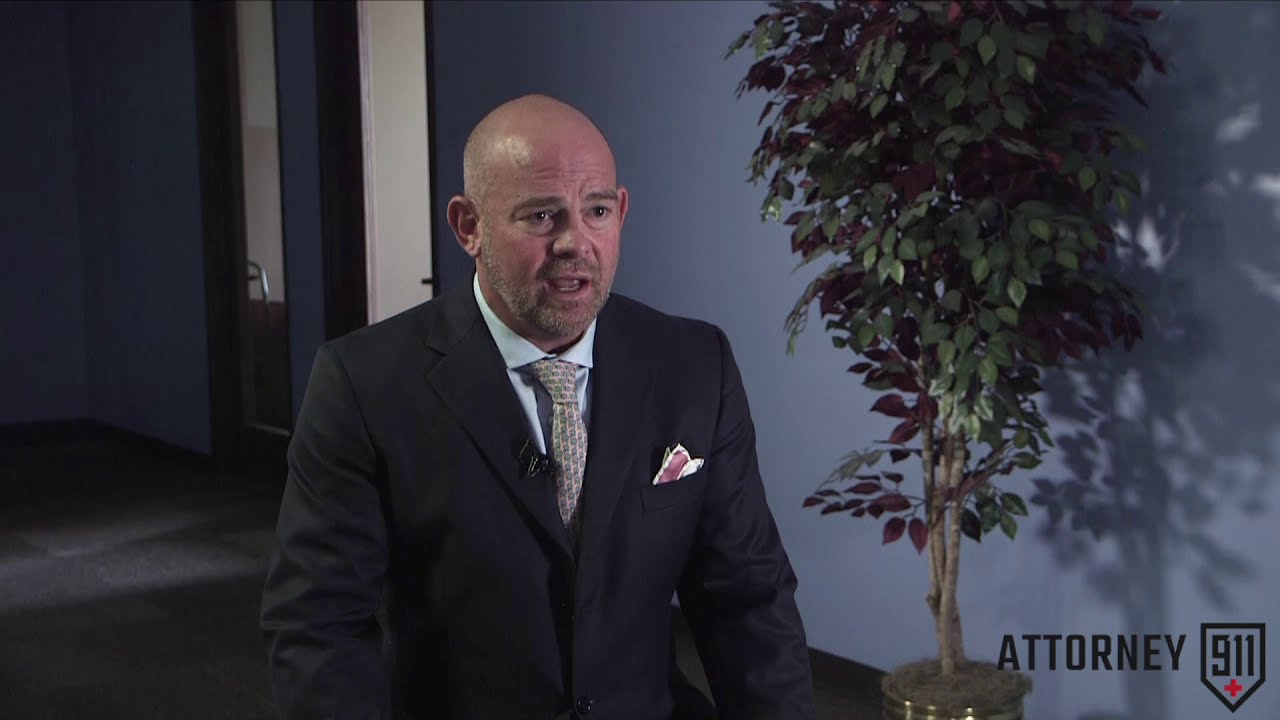
📹 Watch the Highlight
🎬 Watch the Full Video
Yes, Insurance Companies Can and Do Refuse to Pay Car Accident Claims in Texas. Here’s What You Must Do.
If you’re reading this, you’ve likely been injured in a car accident and are now facing a shocking reality: the at-fault driver’s insurance company is refusing to pay your claim. The immediate questions are overwhelming. Can they do that? Why would they? What are my options now? As Ralph Manginello, founder of Attorney911 with over 25 years of experience handling personal injury cases across Texas, I can tell you this scenario is tragically common. Insurance companies are for-profit corporations, and their primary goal is to minimize payouts to maximize shareholder returns. They employ entire departments dedicated to finding reasons to deny, delay, or underpay valid claims. In this comprehensive guide, we’ll dissect exactly why insurers refuse to pay, what you can do about it, and how our firm—with a former insurance defense attorney on our team—fights back to secure the compensation you deserve. If you’ve received a denial letter, call our legal emergency line immediately at 1-888-ATTY-911. Time is not on your side.
The #1 Reason for Claim Denials: The At-Fault Driver’s Non-Cooperation
As highlighted in our video, a frequent trigger for claim denial is the at-fault driver’s refusal to cooperate with their own insurance company. Under Texas law and standard insurance policies, policyholders have a contractual duty to cooperate with their insurer’s investigation. When they cause an accident, they must give a statement, provide details, and assist in the process. However, many drivers, fearing premium increases or believing they weren’t at fault, will stonewall. They tell their insurer, “I don’t know what happened,” “It wasn’t my fault,” or even deny the accident occurred entirely. Faced with an uncooperative policyholder, the insurance company seizes the opportunity to deny the third-party claim against them. They claim they cannot investigate liability without their insured’s cooperation. This leaves you, the injured victim, holding the bag. This is a calculated business decision, not a legal inevitability. At Attorney911, we don’t accept this excuse. We immediately file a lawsuit against the at-fault driver directly, which often forces their insurance company to engage or risk a default judgment against their policyholder. Our experience in federal and state courts across Houston, Austin, and Beaumont means we know how to apply the right pressure.
Step-by-Step: What to Do Immediately After an Insurance Claim Denial
Receiving a formal denial letter in the mail is a pivotal moment. What you do next determines the entire trajectory of your recovery—both physical and financial. Do not lie down and accept it. That is precisely what the insurance adjuster hopes you will do.
1. Preserve the Denial Letter and All Correspondence
The denial letter is now a key piece of evidence. It outlines the insurance company’s stated reason for refusal. Keep the original and request a duplicate copy if needed. This document will be critical for your attorney to analyze the insurer’s position and identify potential bad faith tactics. Bring this letter, along with the police report, all medical records, photos of the scene, and any other documentation to your free consultation with a reputable personal injury lawyer.
2. Do Not Waste Energy on Empty Threats
As frustrating as it is, yelling over the phone or threatening to sue without an attorney has zero effect. Insurance companies deal with angry claimants daily. They have protocols for it. They will not take your claim seriously until you have legal representation and they receive a formal demand letter or lawsuit. This is a hard truth from our insider perspective. Lupe Peña, our associate attorney who spent years working for a national defense firm, explains: “Adjusters are trained to placate unrepresented claimants. Their goal is to keep you talking until the statute of limitations runs or you accept a lowball offer. Once a demand letter from a firm like ours arrives, the file gets escalated to a different unit with higher settlement authority.”
3. Contact a Personal Injury Attorney Who Prepares for Trial
The insurance company’s tune changes the moment you hire an attorney who is prepared to file a lawsuit and take your case to a jury. At Attorney911, we prepare every case as if it’s going to trial. This mindset shift is crucial. Insurance companies have software that evaluates a law firm’s likelihood of taking a case to verdict. Firms known as “settlement mills” that never try cases get lower offers. Our track record of readiness, including Ralph Manginello’s admission to the U.S. District Court for the Southern District of Texas and our involvement in complex litigation like the BP Texas City explosion case, signals that we are not bluffing. Call 1-888-ATTY-911 to start the fight.
Navigating the Insurance Maze: Your Policy vs. Their Policy
A common point of confusion after a Texas car accident is knowing where to file a claim. The answer, as we stress, is both.
Filing with Your Own Insurance Company
You have a contractual duty to promptly notify your insurer of any accident. This is true even if you were not at fault. Reporting to your company protects you in several ways: it can trigger your Personal Injury Protection (PIP) or MedPay coverage for immediate medical bills, and it puts your Uninsured/Underinsured Motorist (UM/UIM) coverage into play if the at-fault driver has no insurance or insufficient limits. However, remember that you are required to cooperate with your own insurer’s investigation. This is a key distinction.
Filing with the At-Fault Driver’s Insurance Company
You should also report the claim to the other driver’s insurer to initiate the third-party liability process. Here, you have NO duty to help them. This is a critical legal boundary. You are not obligated to give them a recorded statement, sign broad medical authorizations, or provide a narrative of the accident. If they ask for a recorded statement, our advice is unequivocal: politely decline and state your attorney will contact them. These statements are designed to trap you into inconsistencies or admissions that can be used to reduce the value of your claim. As Lupe Peña, our former defense attorney, notes, “I’ve taken hundreds of these statements. Every question is crafted to find a reason to deny or devalue the claim. ‘How fast were you going?’ ‘Did you look both ways?’ ‘Were you on your phone?’ They’re building a comparative fault case from minute one.”
Texas is a “Fault” State: What That Means for Your Recovery
Texas follows a modified comparative fault system (Texas Civil Practice & Remedies Code § 33.001). This means your compensation is reduced by your percentage of fault. If you are found 51% or more at fault, you are barred from recovery. This is why the insurance company of the other driver will aggressively look for any reason to assign blame to you. It’s also why evidence collection at the scene is non-negotiable. The driver who is less responsible recovers from the at-fault driver’s policy. This system makes proving liability paramount.
The Attorney911 Evidence Protocol: Building an Unshakable Case
To combat the insurance company’s inevitable attempts to distort fault, you must become a meticulous evidence collector at the scene. Our firm’s success in securing multi-million dollar settlements, like the one for a client who suffered a leg amputation after a car accident, is rooted in superior evidence.
- Photograph Everything: Your vehicle, their vehicle, all angles of damage, license plates, VINs, the entire scene including skid marks, debris, and traffic control devices. Take pictures of street signs, weather conditions, and road defects.
- Photograph the People: This is an Attorney911 insider tip. Take a clear picture of the other driver. We’ve had cases where the person presenting identification and insurance wasn’t the actual driver. A client’s photo of the driver helped us successfully pursue their claim when the registered owner tried to claim someone else was driving.
- Exchange Information Smartly: Use your phone to take pictures of the other driver’s license, insurance card, and registration. Don’t just jot it down.
- Witnesses are Gold: Get names and phone numbers of any witnesses. Their unbiased accounts are powerful.
- Call the Police: A police report creates an official, contemporaneous record. In Texas, you must file a Crash Report (Form CR-2) within 10 days if the accident resulted in injury, death, or property damage of $1,000 or more and no police report was made.
“Am I At Fault?” Why You Should Never Admit Blame at the Scene
Even if you think you might bear some responsibility, never say you’re sorry or admit fault at the scene. Emotions are high, adrenaline is pumping, and you are in no condition to make a legal assessment. Determining fault is a complex process involving traffic laws, witness statements, and physical evidence. That task falls to the insurance companies, attorneys, and potentially a court. You should file a claim with your own insurance even if you believe you are at fault, as your policy may provide coverage for your liability and legal defense. However, let the investigation run its course. We’ve seen countless cases where initial impressions were wrong.
Can You Prevent a Denial? The Hard Truth and Proactive Defense
The sobering reality is you cannot guarantee an insurance company won’t deny your claim. Their business model incentivizes denial. However, you can make it exponentially harder for them to do so credibly by following the steps above and adding one more critical action: seek immediate medical attention.
Go to the emergency room, an urgent care, or your doctor immediately after the accident. Many injuries, like whiplash, soft tissue damage, concussions, and even internal bleeding, have delayed symptoms due to shock and adrenaline. A medical record created the same day as the accident establishes a direct link between the collision and your injuries. Insurance companies pounce on gaps in treatment. If you wait a week, they will argue your injuries must have come from something else. Document every ache and pain. The more thorough your medical documentation, the easier it is for your Houston personal injury lawyer to prove the full extent of your damages.
The Settlement Offer Trap: Why “Quick Cash” is Your Enemy
Sometimes, instead of an outright denial, you’ll receive a surprisingly fast, low settlement offer. This is equally dangerous. Insurance companies are trying to minimize their risk by getting you to settle before you know the true extent of your injuries and before you hire an attorney. They will often ask you to sign a broad release waiving all future claims in exchange for a check that seems tempting. Do not do this.
Without diagnostic testing, specialist consultations, and reaching “maximum medical improvement,” you cannot possibly know the long-term impact of your injuries. What if that back pain is a herniated disc requiring surgery? What if the headaches are a sign of a traumatic brain injury? If you sign their release, you are forever barred from seeking compensation for future medical bills, lost earning capacity, or ongoing pain and suffering. As client Donald Wilcox experienced before coming to us, other firms may turn away complex cases. “One company said they would not accept my case. Then I got a call from Manginello…I got a call to come pick up this handsome check.” An experienced attorney evaluates the full value of your claim, including future damages, and negotiates from a position of strength. In most cases, the eventual settlement with an attorney far exceeds the initial lowball offer, even after accounting for legal fees.
Timelines and Deadlines: The Texas Clock is Ticking
Two critical deadlines control your car accident claim in Texas:
- The Crash Report Deadline: As mentioned, file Form CR-2 within 10 days if necessary.
- The Statute of Limitations: Texas Civil Practice & Remedies Code § 16.003 gives you exactly two years from the date of the accident to file a personal injury lawsuit. Miss this deadline by one day, and your claim is permanently barred, regardless of its merit. Insurance companies know this and will delay negotiations, hoping you’ll run out of time.
The timeline for settlement varies. Simple cases may resolve in months; complex cases involving severe injuries like the brain injury with vision loss we handled from a logging accident can take longer. We cannot guarantee a timeframe or amount, but we can guarantee we will use every day of that two-year period strategically to build leverage and maximize your recovery.
18-Wheeler and Commercial Truck Accidents: A Different Ballgame
If your accident involved a semi-truck, the stakes and complexity multiply. These accidents are often catastrophic, and trucking companies carry massive insurance policies—sometimes $10 million or more. The potential recovery is significant, but so is the defense. Trucking companies have legal teams on retainer. Federal regulations governing driver hours, maintenance logs, and cargo securing come into play. Plaintiffs tend to recover more when there is evidence of egregious fault: a drunk or fatigued driver, willful negligence, or violations of safety rules. In these cases, having an attorney with federal court experience is essential. Attorney911 specializes in Texas trucking accidents. As we secured millions for a family in a wrongful death case involving an 18-wheeler, we know how to investigate the company’s compliance history and preserve the electronic logging device (ELD) data that often proves violation.
Why Attorney911 is Your Strategic Advantage Against Insurance Denials
When an insurance company refuses to pay, you need more than just a lawyer; you need a strategic partner with insider knowledge and a proven record of winning. Here is what sets our Texas firm apart:
1. The Insider Advantage: A Former Insurance Defense Attorney on Your Side
This is our most powerful weapon. Lupe Peña worked for years at a national defense firm, learning firsthand how large insurance companies value claims, select IME doctors, use surveillance, and build arguments for trial. He knows their playbook because he used to run it. Now, he uses that knowledge to anticipate their moves and counter them effectively for our clients. As Lupe says, “I’ve reviewed hundreds of surveillance videos as a defense attorney. They take one frame of you moving ‘normally’ and ignore the ten minutes of struggle. We don’t let them get away with that.”
2. 25+ Years of Courtroom Authority Led by Ralph Manginello
Ralph Manginello, admitted to the Texas Bar in 1998, brings over a quarter-century of litigation experience. His admission to the U.S. District Court, Southern District of Texas, and involvement in the BP explosion litigation demonstrate a capacity for high-stakes, complex cases against formidable opponents. He doesn’t just settle; he prepares for trial. As client Jamin Marroquin testified, “Mr. Manginello guided me through the whole process with great expertise…tenacious, accessible, and determined.”
3. A Record of Multi-Million Dollar Results
We don’t just make promises; we have documented results. From the multi-million dollar settlement for the logging brain injury client to the significant settlement for the maritime back injury case, our results speak. We are currently litigating a $10 million lawsuit against the University of Houston and a fraternity, showing our willingness to take on institutional defendants.
4. Client-Centered Service That Feels Like Family
With over 251 Google reviews averaging 4.9 stars, our clients consistently praise our communication and care. Paralegals like Leonor are mentioned over 80 times for keeping clients informed. As client Chad Harris said, “You are FAMILY to them.” We offer bilingual services in Spanish, ensuring all Texas families can access quality representation.
5. Contingency Fee: No Financial Risk to You
We work on a contingency fee (33.33% before trial, 40% if a trial is necessary). You pay nothing upfront, and we cover all case costs. We only get paid if we win compensation for you. This aligns our interests completely with yours.
If you’re in Houston, Austin, Beaumont, or anywhere in Texas, and an insurance company is refusing to pay your car or truck accident claim, don’t wait. Evidence disappears, memories fade, and the statute of limitations ticks away. Call the Legal Emergency Lawyers™ at 1-888-ATTY-911 for your free, no-obligation consultation. Let us put our insider knowledge and proven track record to work for you. Visit attorney911.com to learn more about our firm. We are here to fight so you can focus on healing.
Frequently Asked Questions: Insurance Claim Denials in Texas
What is the first thing I should do after my car accident claim is denied?
Secure the denial letter and immediately contact an experienced personal injury attorney. Do not communicate further with the insurance company. An attorney will review the denial reason, assess the strength of your case, and advise on the next steps, which typically involve filing a lawsuit before the two-year statute of limitations expires. Call Attorney911 at 1-888-ATTY-911 for a free case evaluation.
Should I give a recorded statement to the other driver’s insurance company?
Absolutely not. You have no legal obligation to help the other side’s insurance company investigate the claim. Recorded statements are designed to trap you into saying something that can be used to reduce your compensation. Politely decline and state that your attorney will contact them. This is a standard protective measure we advise all our clients to take.
How long does it take to resolve a claim after a denial?
Once a claim is denied and a lawsuit is filed, the timeline expands. The discovery process, mediation, and potential trial can take a year or more for complex cases. However, filing a lawsuit often forces the insurance company to engage in serious settlement negotiations. The key is to start the legal process quickly to preserve evidence and leverage. We work efficiently to move your case forward while ensuring we fully develop its value.
What if I was partially at fault for the accident in Texas?
Texas follows a “modified comparative fault” rule (51% bar). If you are found 50% or less at fault, you can still recover damages, but your compensation will be reduced by your percentage of fault. If you are 51% or more at fault, you cannot recover. Insurance companies will aggressively argue to increase your fault percentage. Having a skilled attorney to counter these arguments is essential to protect your right to compensation.
Can I handle a denied claim without a lawyer?
While technically possible, it is highly inadvisable. Once a claim is denied, you are in the realm of litigation. Insurance companies have teams of lawyers and adjusters. Navigating court procedures, rules of evidence, and negotiation tactics without legal training puts you at a severe disadvantage. Most victims who proceed alone accept far less than their case is worth or miss critical deadlines. Our contingency fee means you have expert representation with no upfront cost.
Why should I choose Attorney911 over other personal injury firms?
Attorney911 combines the deep trial experience of Ralph Manginello with the unique insider insurance defense perspective of Lupe Peña. We are not a settlement mill; we prepare every case for trial, which gives us leverage in negotiations. Our documented multi-million dollar results, 4.9-star Google rating from 251+ clients, and commitment to personalized communication (exemplified by staff like Leonor) set us apart. We are a Texas-based firm that fights for Texans. Call us at 1-888-ATTY-911 to experience the difference.
Frequently Asked Questions
Can an insurance company legally refuse to pay my car accident claim in Texas?
Yes, insurance companies frequently deny claims for various reasons, including arguing their driver wasn’t at fault or that their policyholder isn’t cooperating. However, a denial is not the final word. With an experienced Texas personal injury attorney, you can fight the denial through a lawsuit and negotiation.
What should I do first if the insurance company denies my claim?
1. Preserve the denial letter. 2. Stop communicating directly with the insurance adjuster. 3. Immediately contact a personal injury lawyer for a free consultation. Time is critical due to the two-year statute of limitations in Texas. Call Attorney911 at 1-888-ATTY-911 to discuss your denied claim.
Should I file a claim with my own insurance if I was in a Texas car accident?
Yes, you should always notify your own insurance company promptly. This can activate important coverages like PIP or MedPay for medical bills and protect your rights under uninsured motorist coverage. You have a duty to cooperate with your own insurer, but not with the at-fault driver’s insurer.
How can I make it harder for the insurance company to deny my claim?
Gather robust evidence at the scene: take extensive photos, get witness contact information, call the police for a report, and seek medical attention immediately—even if you feel fine. Detailed documentation creates a factual record that makes it difficult for an insurer to dispute liability or the severity of your injuries.
Is it a bad idea to accept the insurance company’s first settlement offer?
Almost always, yes. The first offer is typically a lowball designed to close the case quickly before you know the full extent of your injuries or hire a lawyer. Accepting it often requires signing a release that forever bars you from seeking more compensation, even for future medical problems related to the accident.
What is the time limit to sue for a car accident in Texas?
The statute of limitations for personal injury from a car accident in Texas is two years from the date of the crash (Texas Civil Practice & Remedies Code § 16.003). If you do not file a lawsuit within this period, you lose your legal right to seek compensation forever, regardless of the merits of your claim.