🎬 Watch the Full Video
From Adult Daycare to Burning Buildings: A Houston Hero’s Journey and What It Teaches Us About Preventing Tragedies
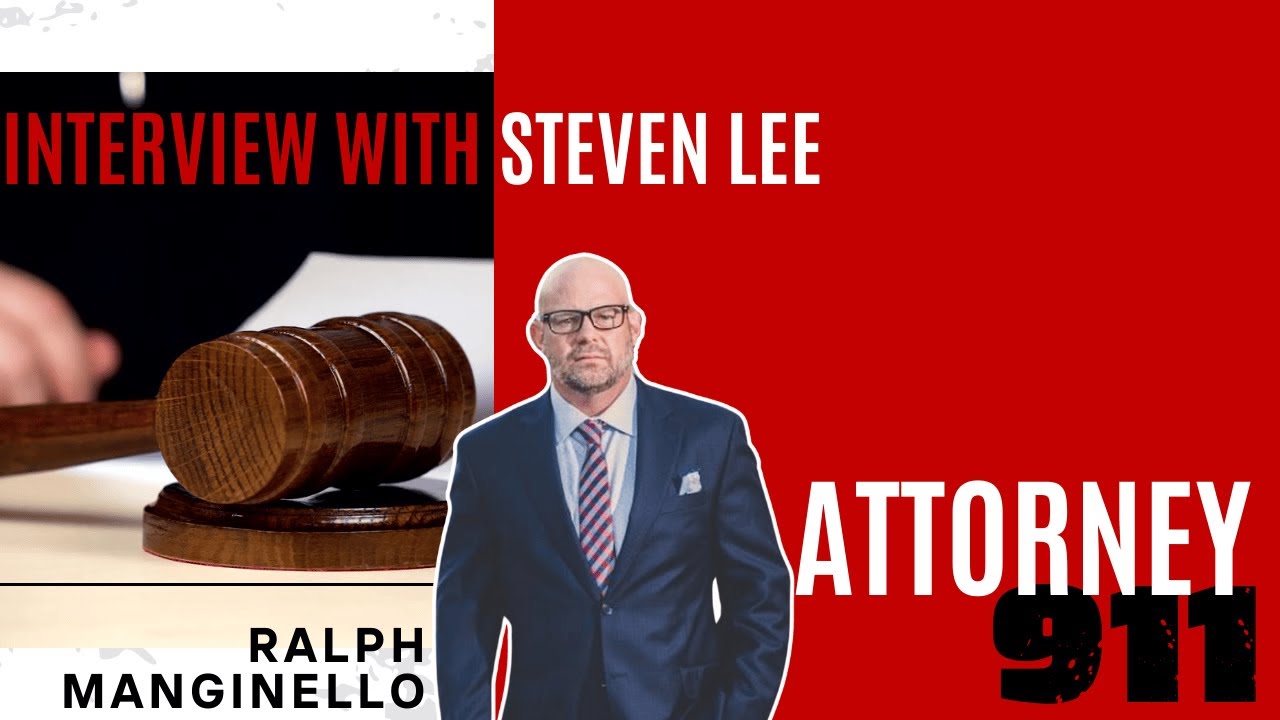
On a recent episode of the Attorney 911 podcast, I sat down with my great friend Steven Lee—a successful commercial real estate professional, dedicated family man, and a volunteer firefighter/medic who has seen the absolute best and worst of our Houston community. Our conversation was a powerful reminder of the thin line between a normal day and a life-altering catastrophe. As personal injury attorneys who have handled over 20,000 cases, my team at Attorney911 sees the devastating aftermath of negligence every single day. But Steven sees it in real-time, at the scene, in the moments when seconds count. His unique perspective, spanning from his family’s adult day activity center to the front lines of emergency medical response, provides invaluable lessons for every Texan on how to stay safe and what to do when the unthinkable happens.
Steven’s story is one of service. For 19 years, his family has operated an adult day activity and health services center—what many call adult daycare—in our community. This isn’t about babysitting; it’s about providing elderly and disabled adults with physical and mental exercise, socialization, and nutritious meals during the day so they can continue living at home, where they thrive. “We are a non-residential facility for elderly and disabled adults to attend during the day,” Steven explained. “The goal is to keep these folks within the community… You don’t want to be in a nursing home prematurely.” This work prevents medical emergencies through early detection of issues like dementia symptoms or untreated health declines. It’s proactive care that aligns perfectly with his volunteer work, which is reactive emergency response.
For over a decade, Steven has served as a suppression lieutenant with a volunteer fire department covering 26 square miles and about a quarter-million residents on Houston’s west side. He leads teams into burning structures and responds to medical emergencies, holding the same credentials and facing the same dangers as career firefighters. “If you call 911,” he noted, “you would not know if it was a career person or a volunteer that was actually coming out to you.” This dedication mirrors our philosophy at Attorney911: when you have a legal emergency, you need a first responder who is equally prepared, credentialed, and committed, regardless of the hour. Just as Steven answers the call for physical emergencies, we answer the call for legal emergencies at 1-888-ATTY-911.
The Unseen Dangers Inside Your Car: A First Responder’s Warning
Our conversation turned to the collisions Steven sees weekly—what he and we in the legal field no longer call “accidents.” As Steven put it, “We don’t even call them motor vehicle accidents no more. We call them motor vehicle incidents… because a lot of them have been just due to negligence.” I couldn’t agree more. In my 25+ years practicing personal injury law in Texas, I’ve seen that nearly every crash results from someone’s failure to exercise reasonable care. That’s negligence, and it forms the basis of every injury claim we handle.
Steven identified the top culprits he witnesses on scene:
- Distracted Driving: “Texting and driving or people watching YouTube while they’re driving… is a cause of a lot of these accidents.” He described the all-too-common sight of someone driving 75 mph on a Houston freeway in the rain while looking at their phone. This isn’t just dangerous; under Texas law, it can constitute negligence per se if it violates statutes like Texas Transportation Code § 545.425, which prohibits electronic device use in school zones. Beyond that, it’s a breach of the duty of care every driver owes to others on the road.
- Failure to Wear Seatbelts: “Until you see someone that’s been ejected from a car… you take it upstairs,” Steven said solemnly. Ejection often leads to catastrophic traumatic brain injuries, spinal cord damage, or death. Texas has a primary seatbelt law (Texas Transportation Code § 545.413), but more importantly, seatbelts are your first line of defense. What many don’t realize is that in a crash, there are three impacts: vehicle to object, body to vehicle, and organs to skeleton. A seatbelt mitigates the second impact dramatically.
- Loose Objects in the Vehicle: This warning shocked even me. Steven recounted a case from about a decade ago: “We actually had someone suffer a huge traumatic head injury from a Kleenex box.” A compact car was struck hard from behind by a Lincoln Navigator, and the cardboard tissue box became a projectile that struck the occupant in the head, requiring a Life Flight evacuation. Think about your golf clubs, books on the dash, or even a heavy water bottle. In a collision, these items become dangerous missiles.
Steven also gave an insider’s tip on what first responders look for to gauge injury severity: “We actually look at everything from the A-frame, which is the front windshield of the vehicle, all the way back to the last pillar. And if there’s any intrusion into that… that’s what will tell you what the extent of the injuries to the person is.” This is critical knowledge for your attorney, too. When we investigate a crash, we look for this intrusion evidence and often work with accident reconstruction experts to prove the forces involved and correlate them to our client’s injuries.
Why “Accident” Is the Wrong Word: The Legal Reality of Negligence
Both Steven and I emphasize that most crashes aren’t “accidents.” In Texas personal injury law, we must prove four elements: duty, breach, causation, and damages. When a driver chooses to look at their phone instead of the road, they breach their duty to drive safely. If that breach causes a collision that injures you, they are legally liable for your damages. This is why at Attorney911, we call them collisions or incidents. This framing matters because insurance companies love the word “accident”—it implies no one was at fault and minimizes their client’s responsibility. We don’t let them get away with that.
Steven sees the heartbreaking consequences of negligence up close: “The worst part is the passengers in the vehicle… most of the time the drivers [are] hurt or very lightly hurt, but the fatalities usually [are] the passenger or someone in the back seat.” This often happens because backseat passengers are less likely to wear seatbelts, and in a swerve, the passenger side takes the impact. These cases are particularly devastating for families, and they require an attorney who understands both the emotional trauma and the complex liability issues that can arise between the driver, passengers, and other vehicles.
Our firm has seen similar tragedies. In one case, our client’s leg was injured in a car accident, and subsequent staff infections during treatment led to a partial amputation. This case settled in the millions. The initial collision was just the beginning; the medical complications and lifelong disability that followed required extensive legal work to ensure full compensation for future medical care, lost earning capacity, and pain and suffering. When you’re injured, you need a law firm that looks beyond the immediate crash to understand the complete lifetime impact.
Technology on the Front Lines: How AI and Innovation Are Revolutionizing Emergency Response
Steven provided a fascinating look at how technology has transformed his work over the years. “When I first started, things that the kids definitely don’t know, which is what they call key maps,” he said, describing paper maps they had to consult while responding. Now, automated dispatch and MDTs (mobile data terminals) provide critical information faster, allowing crews to better prepare en route. “Technology has touched every part,” he noted, from hydrodynamics of hoses to battery-powered “jaws of life” that weigh far less than their 70-pound predecessors.
But the future lies in artificial intelligence. I asked Steven about AI’s potential role in 911 calls. “I think AI is a tool and it’s a very sharp tool,” he responded. He envisions AI assisting with predictive thinking, analyzing vital signs and historical data to alert EMS personnel to conditions they might not have considered. I added that AI could analyze data from a specific address—like previous call types, building materials, or resident medical histories—to provide responding crews with invaluable situational awareness before they arrive.
“The great thing about AI is it is a Mecca of information,” Steven agreed, while cautioning that “you’ll still need a human element to kind of filter some of that out.” This balance between technology and human judgment is exactly what we embrace at Attorney911. We use advanced technology for case management, legal research, and evidence analysis, but every case decision is made by experienced attorneys like myself and Lupe Peña. For example, in complex litigation like the BP Texas City explosion cases our firm was involved in, technology helped manage millions of documents, but human legal strategy and courtroom experience secured justice for the victims.
When to Call 911: A Medic’s Guide and the Legal Implications of Misuse
With his experience answering thousands of calls, Steven offered clear guidance: “911 should be used when it is an immediate threat… someone has stopped breathing, if something is broken, if you potentially might be having a stroke.” He uses the ABC rule: if you have a patent airway (breathing), aren’t bleeding profusely, and know you’ll survive the next hour, you’re typically okay. He humorously mentioned the perennial “cat in a tree” calls, noting his old chief would say, “You never see a cat skeleton in a tree.”
But he was serious about misuse: “If you stubbed your toe at three o’clock in the morning… or you can’t get your lip piercing out… don’t call me for that.” More importantly, he debunked a dangerous myth: “Just because you called 911, doesn’t mean you get seen faster at the hospital. You’re in line by priority.” This is critical for people to understand. Legally, making a false 911 report is a crime under Texas Penal Code § 42.06, and misuse of emergency services diverts resources from true life-or-death situations.
From a personal injury perspective, knowing when to call 911 is also about preserving your health and your legal claim. If you’re in a collision, even if you feel “okay,” the adrenaline can mask serious injuries like internal bleeding or traumatic brain injury. Calling 911 creates an immediate medical record, documents the scene, and starts the chain of evidence. As Steven noted, first responders look for specific vehicle damage that correlates to injury patterns. This objective evidence is invaluable when insurance companies later try to claim your injuries aren’t severe or aren’t related to the crash.
From the Crash Scene to the Courtroom: How Attorney911 Turns First Responder Insights into Legal Victories
Listening to Steven, I was struck by how his on-scene observations align perfectly with what we must prove in a personal injury case. He sees the negligence; we hold the negligent accountable. He witnesses the injuries; we fight for compensation to cover the lifelong consequences. This synergy between emergency response and legal advocacy is why building relationships with first responders and understanding their protocols is part of our practice at Attorney911.
When you’re injured in a collision in Houston, Texas, the clock starts ticking immediately. Evidence disappears—surveillance footage is often overwritten in 30 days, witnesses forget details, and the insurance company for the at-fault driver begins building a case against you. They may call offering a quick, lowball settlement before you even understand the full extent of your injuries. This is when you need a legal first responder.
Why Attorney911’s Insider Knowledge Makes the Difference
Our firm includes a former insurance defense attorney, Lupe Peña, who spent years working for a national defense firm learning exactly how large insurance companies value claims, defend cases, and minimize payouts. As Steven described the negligence he sees, Lupe can tell you exactly how the insurance company will try to defend it. They’ll argue comparative negligence, claim you were on your phone too, or say your injuries are pre-existing. We know these tactics because Lupe used them. Now, we use that insider knowledge to counter them and fight for maximum compensation.
For example, in a recent case, our client suffered a brain injury with vision loss when a log dropped on him at a logging company. We secured a multi-million dollar settlement by thoroughly investigating the negligence, working with medical experts to document the lifelong impact, and leveraging our knowledge of how insurance companies value such catastrophic injuries. We don’t rely on generic demand software; we build compelling, evidence-rich cases that demonstrate true value.
The Three Critical Actions to Take After Any Collision
Based on Steven’s insights and our legal experience, here are three non-negotiable steps if you’re in a collision:
- Call 911 and Seek Immediate Medical Attention: Even if you feel fine, get checked. Some injuries, like whiplash or concussion symptoms, can appear hours or days later. The medical record created at the emergency room is crucial evidence.
- Document Everything: If you’re able, take photos of the vehicles, the scene, license plates, and your visible injuries. Get contact information for witnesses. Do not admit fault or apologize—this can be used against you later.
- Call Attorney911 Before Talking to Any Insurance Company: The other driver’s insurance adjuster is not your friend. They are trained to get recorded statements that minimize your claim. Let us handle all communication. We offer free consultations, and we don’t get paid unless we win your case.
Remember, Texas has a two-year statute of limitations for personal injury cases (Texas Civil Practice & Remedies Code § 16.003), but waiting even a few weeks can harm your claim. Evidence disappears, memories fade, and the insurance company gains the advantage.
Real Results for Real Texans: Why Houston Trusts Attorney911
When you’re hurt and facing medical bills, lost wages, and pain, you need more than just a lawyer; you need an advocate who will fight like family. At Attorney911, that’s exactly what we provide. Our hundreds of Google reviews (4.9 stars from 251+ clients) tell the story. Client Chad Harris said, “You are NOT a pest to them and you are NOT just some client… You are FAMILY to them.” Client Glenda Walker added, “They make you feel like family and even though the process may take some time, they make it feel like a breeze. They fought for me to get every dime I deserved.”
We’re proud that Houston’s own Trae Tha Truth has recommended our firm, a testament to our deep community roots. I was born in New York but raised in Houston’s Memorial area since I was five, and I’ve built my practice here for over 25 years, fighting for my neighbors. I’m admitted to practice in the U.S. District Court for the Southern District of Texas, and my firm has taken on billion-dollar corporations in complex litigation like the BP explosion cases. We have the experience and resources to handle any case, but we never lose sight of the individual person we’re helping.
If you or a loved one has been injured in a collision in Houston, Austin, Beaumont, or anywhere in Texas, don’t face the insurance companies alone. Their goal is to pay you as little as possible, as slowly as possible. Our goal is to get you the maximum compensation you need to recover and move forward with your life. We handle car accidents, 18-wheeler crashes, motorcycle collisions, wrongful death cases, and more. We also provide bilingual services in Spanish through Lupe Peña and our staff.
You have a legal emergency. We are your legal first responders. Call 1-888-ATTY-911 right now for a free, no-obligation consultation. Remember, there’s no fee unless we win your case. Let us put our experience, insider knowledge, and relentless advocacy to work for you.
Frequently Asked Questions: Insights from a First Responder and Personal Injury Attorney
What’s the biggest misconception about volunteer firefighters/medics?
Steven Lee emphasizes that people often think volunteers just clean the station or have inferior training. In reality, volunteer firefighters in Texas undergo the same rigorous certification (through the Texas Commission on Fire Protection and the Texas Department of State Health Services for EMS) as career personnel. They face the same dangers and provide the same level of emergency care. At Attorney911, we see similar misconceptions about personal injury lawyers—that we’re all “ambulance chasers.” In truth, we are highly credentialed professionals (Ralph Manginello is admitted to federal court and has 25+ years of experience) who provide an essential service, holding negligent parties accountable and helping injured Texans rebuild their lives.
If I’m in a crash but my car doesn’t look badly damaged, could I still be seriously injured?
Absolutely. As Steven noted, first responders look for intrusion into the passenger compartment (the “A-frame” to the last pillar), but even without major intrusion, the forces involved in a collision can cause severe soft-tissue injuries, concussions, or spinal misalignment. The vehicle may be designed to crumple and absorb impact, protecting you from worse injury but still transferring significant force to your body. Never decline medical evaluation at the scene based on vehicle damage alone. From a legal standpoint, these “low-impact” crashes are often aggressively defended by insurance companies, requiring an experienced attorney to correlate the medical evidence with the physics of the collision.
How can AI really help in emergency medical situations?
AI’s potential lies in data synthesis and predictive analytics. For example, AI could analyze a patient’s vital signs transmitted from the ambulance, combine it with their electronic health record history, and suggest potential diagnoses or treatment priorities to the medic en route to the hospital. In the legal context, Attorney911 uses advanced technology to manage complex cases, but human attorney judgment—informed by years of experience—drives strategy. AI is a tool, whether for saving lives in an ambulance or building a compelling personal injury case, but it cannot replace human expertise and compassion.
What should I do if the insurance company calls me right after my crash?
Politely decline to give a statement and refer them to your attorney. The adjuster is likely recording the call and looking for ways to minimize your claim, such as getting you to admit you’re “fine” or that you might have been partially at fault. Under Texas law, you have no obligation to provide a recorded statement to the other party’s insurer. At Attorney911, we handle all communication with insurance companies, using our insider knowledge (Lupe Peña’s defense background) to avoid common traps and negotiate from a position of strength. Call us first at 1-888-ATTY-911.
Why does it matter if I call it an “accident” versus a “collision”?
Language shapes perception. “Accident” implies an unavoidable, blameless event. “Collision” or “incident” is a neutral term that allows for the determination of fault through investigation. In Texas personal injury law, establishing fault (negligence) is essential for recovery. If you call it an accident from the start, you may unconsciously undermine your own claim. Insurance companies encourage the term “accident” for this reason. At Attorney911, we are precise with language because the words we use in demand letters, depositions, and courtrooms matter. We prove collisions are caused by negligence, not chance.
How long do I have to file a lawsuit after a car crash in Texas?
Texas has a two-year statute of limitations for personal injury claims (Texas Civil Practice & Remedies Code § 16.003). This means you generally have two years from the date of the collision to file a lawsuit. However, waiting until the deadline approaches can severely harm your case. Evidence disappears, witnesses become unreachable, and the insurance company has no incentive to offer a fair settlement. It is crucial to consult with an attorney as soon as possible after the crash to begin preserving evidence and building your case. At Attorney911, we often need to act quickly to secure surveillance footage, download vehicle “black box” data, and locate witnesses before time makes it impossible.
Frequently Asked Questions
What is the most common cause of serious car accidents that first responders see?
According to volunteer firefighter/medic Steven Lee, distracted driving—especially smartphone use—has become a primary cause of severe collisions. He notes that what were once called ‘accidents’ are now more accurately ‘incidents’ caused by negligence. From a legal perspective, Attorney911’s Ralph Manginello confirms that proving this negligence is key to securing compensation for victims.
Can loose objects in my car really cause injuries in a crash?
Yes, absolutely. Steven Lee described a case where a standard cardboard Kleenex box became a projectile during a rear-end collision, causing a traumatic head injury requiring air evacuation. Items like books, water bottles, or golf clubs can become dangerous missiles. This underscores the importance of securing all cargo and can also factor into liability and injury severity in a personal injury claim.
How has technology improved emergency response times and outcomes?
Technology has revolutionized EMS, moving from paper ‘key maps’ to automated dispatch and mobile data terminals that provide crews with critical information en route. Advanced, battery-powered extrication tools are lighter and more powerful. Looking ahead, AI promises predictive analytics to assist medics. Similarly, Attorney911 leverages advanced technology for case management and evidence analysis to build stronger claims for clients.
When should I definitely call 911 after a car accident?
Call 911 immediately if there is any loss of consciousness, visible injury, significant pain, or doubt about anyone’s condition. As Steven Lee advises, use the ABC rule: if Airway, Breathing, or Circulation are compromised, call. Legally, a 911 call also creates an official record of the event, documents the scene via first responder reports, and initiates a medical evaluation—all of which are vital evidence for your potential injury claim.
Why is it important to hire a lawyer quickly after a crash, even if I feel okay?
Injuries like whiplash or concussions can have delayed symptoms. More urgently, critical evidence—such as surveillance footage, vehicle ‘black box’ data, and witness memories—disappears rapidly. Insurance companies begin their investigation immediately to minimize their payout. Attorney911 acts as your legal first responder, securing evidence, dealing with insurers, and protecting your rights while you focus on recovery. Call 1-888-ATTY-911 for a free consultation.
What makes Attorney911 different from other personal injury law firms?
Attorney911 combines Ralph Manginello’s 25+ years of experience and federal court litigation background with a unique insider advantage: Associate Attorney Lupe Peña formerly worked for insurance defense firms and knows exactly how they value and defend claims. We prepare every case for trial, have secured multi-million dollar settlements, and treat clients like family, as evidenced by our 4.9-star Google reviews from over 251 clients.