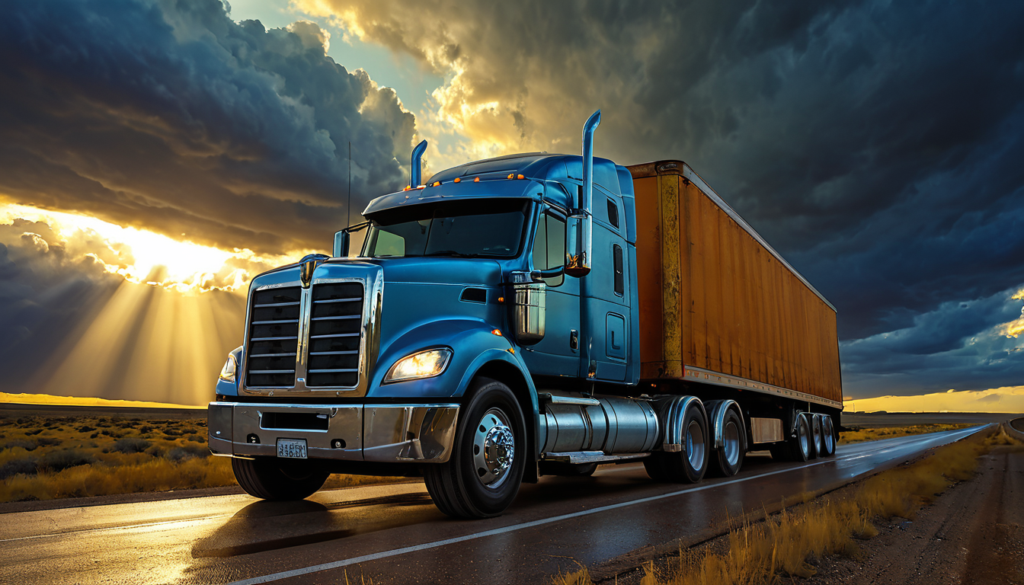
18-Wheeler Accidents in McCamey, Texas: Your Complete Legal Guide
If you or a loved one has been involved in an 18-wheeler accident on McCamey’s highways, you’re facing one of the most challenging experiences of your life. The physical injuries, emotional trauma, and financial burden can feel overwhelming. At Attorney911, we understand what you’re going through because we’ve helped hundreds of McCamey families navigate these same challenges over the past 25 years.
Why McCamey Trucking Accidents Are Different
McCamey sits at a critical juncture in West Texas, where major trucking corridors intersect. The Permian Basin’s oil and gas industry brings heavy commercial traffic through our community, creating unique risks for local drivers. Unlike urban areas where traffic patterns are more predictable, McCamey’s highways see a mix of local commuters, oilfield workers, and long-haul truckers traveling between Midland-Odessa and San Angelo.
The I-10 corridor that passes near McCamey carries some of the heaviest truck traffic in Texas, with vehicles transporting oilfield equipment, hazardous materials, and consumer goods. When accidents happen here, they often involve:
- Oilfield service trucks rushing to drilling sites
- Overloaded tankers carrying hazardous materials
- Fatigued drivers pushing beyond federal hours-of-service limits
- Improperly secured loads from local distribution centers
- Vehicles traveling at high speeds on long, straight stretches
Our firm has handled trucking accident cases throughout Upton County and the surrounding Permian Basin region. We know the local courts, the common accident patterns, and how to build the strongest possible case for McCamey residents.
What to Do Immediately After an 18-Wheeler Accident in McCamey
The moments after a trucking accident are critical for protecting your health and your legal rights. Here’s what you should do if you’re able:
-
Call 911 immediately – Report the accident and request medical assistance. Even if you feel okay, some injuries don’t show symptoms right away.
-
Seek medical attention – Go to McCamey Medical Clinic or the nearest emergency room. Tell medical providers about all your symptoms, no matter how minor they seem.
-
Document the scene – If possible, take photos and videos of:
- Vehicle damage (all vehicles involved)
- Skid marks and debris patterns
- Road conditions and weather
- Traffic signs and signals
- Your injuries
- The truck’s license plate and DOT number
- The trucking company’s name and logo
-
Collect information – Get:
- The truck driver’s name, CDL number, and contact information
- The trucking company’s name and contact information
- Witness names and contact information
- Responding officer’s name and badge number
-
Don’t give statements – Politely decline to give recorded statements to insurance adjusters. Anything you say can be used against you later.
-
Call Attorney911 – Contact us immediately at 1-888-ATTY-911. We’ll send a preservation letter to protect critical evidence before it disappears.
“Every hour you wait, evidence in your McCamey trucking accident case is disappearing. Black box data can be overwritten. Dashcam footage gets deleted. Witnesses forget what they saw. Call Attorney911 NOW at 1-888-ATTY-911 for a free consultation. We’ll send a preservation letter today to protect your evidence.” — Ralph Manginello, Managing Partner
Common Types of 18-Wheeler Accidents in McCamey
McCamey’s unique location and industrial base create specific accident patterns. Here are the most common types of trucking accidents we see in our community:
Jackknife Accidents on I-10 and US-67
Jackknife accidents occur when a truck’s trailer swings out perpendicular to the cab, often blocking multiple lanes. On I-10’s long straightaways, these accidents frequently happen when:
- Drivers brake suddenly on wet or icy roads
- Empty trailers swing more easily in crosswinds
- Drivers take curves too fast, especially near the I-10/US-67 interchange
- Brake systems fail on long descents
The sudden loss of control can cause multi-vehicle pileups, especially in high-traffic periods when oilfield workers are commuting to and from shifts.
Rollover Accidents at Highway Interchanges
McCamey’s highway interchanges see frequent rollover accidents when:
- Trucks take the US-67/I-10 interchange too fast
- Overloaded vehicles become unstable
- Liquid cargo sloshes and shifts center of gravity
- Drivers overcorrect after tire blowouts
These accidents often spill cargo across multiple lanes, creating secondary crashes as other vehicles swerve to avoid debris.
Underride Collisions on Rural Highways
Underride accidents occur when a passenger vehicle slides underneath a truck’s trailer. In McCamey’s rural areas, these often happen:
- At night when visibility is poor
- When trucks make wide turns onto side roads
- When trucks stop suddenly on highways without proper warning
- When rear underride guards fail or are missing
These are among the most deadly accidents, often resulting in decapitation or catastrophic head injuries.
Rear-End Collisions on US-67
Rear-end collisions are common on US-67 where:
- Trucks follow too closely in heavy oilfield traffic
- Drivers are distracted by dispatch communications
- Fatigued drivers fall asleep at the wheel
- Brake systems fail on loaded trucks
A fully loaded 18-wheeler needs up to 525 feet to stop from 65 mph – nearly two football fields. When they can’t stop in time, the results are devastating.
Wide Turn Accidents in Downtown McCamey
McCamey’s downtown area sees frequent wide turn accidents when:
- Trucks swing left before making right turns
- Drivers fail to check mirrors for vehicles in blind spots
- Pedestrians or cyclists are caught in the turning path
- Drivers misjudge the space needed for large trailers
These accidents often crush smaller vehicles between the truck and the curb.
Tire Blowout Accidents on Long Hauls
McCamey’s location on major trucking routes means we see frequent tire blowout accidents caused by:
- Underinflated tires overheating on long hauls
- Overloaded vehicles exceeding tire capacity
- Worn tires not replaced before trips
- Road debris punctures
- Extreme West Texas heat causing tire failure
Blowouts often lead to loss of control, jackknifing, or rollovers.
Brake Failure Accidents on Grades
The terrain around McCamey includes some gradual grades where brake failures occur when:
- Brake systems aren’t properly maintained
- Drivers ride brakes on long descents
- Brake components overheat and fail
- Air brake systems develop leaks
These failures often result in runaway trucks that can’t stop, leading to catastrophic collisions.
Hazmat Spills from Oilfield Trucks
McCamey’s oil and gas industry means we see hazardous material spills when:
- Improperly secured loads shift during transport
- Tankers are overfilled
- Valves fail
- Vehicles roll over on rural roads
These spills create additional dangers from chemical exposure, fires, or explosions.
Why Trucking Accidents Cause Catastrophic Injuries
The physics of 18-wheeler accidents make catastrophic injuries the norm in McCamey truck crashes:
- Size and weight disparity: A fully loaded 18-wheeler can weigh up to 80,000 lbs – 20-25 times more than a passenger car
- Impact force: An 80,000 lb truck traveling at 65 mph carries approximately 80 times the kinetic energy of a car
- Stopping distance: Trucks need 40% more distance to stop than cars
- Trailer height: The average trailer is 13.5 feet tall – higher than most passenger vehicles, leading to underride collisions
Common catastrophic injuries we see in McCamey trucking accidents include:
Traumatic Brain Injuries (TBI)
TBI occurs when the brain impacts the inside of the skull. In McCamey trucking accidents, we see:
- Mild TBI (concussions): Confusion, headaches, memory problems
- Moderate TBI: Extended unconsciousness, cognitive deficits
- Severe TBI: Coma, permanent cognitive impairment
Even “mild” TBIs can have lifelong consequences, affecting memory, concentration, and personality. Many McCamey residents with TBI require ongoing rehabilitation and may never return to work.
Spinal Cord Injuries and Paralysis
Spinal cord damage often results in permanent paralysis:
- Paraplegia: Loss of function below the waist
- Quadriplegia: Loss of function in all four limbs
- Incomplete injuries: Some nerve function remains
- Complete injuries: Total loss of sensation and movement
The lifetime care costs for spinal cord injuries can exceed $5 million, not including lost wages or pain and suffering.
Amputations
Amputations occur when limbs are severed in the crash or when medical professionals must remove severely damaged limbs. Many McCamey residents with amputations require:
- Multiple surgeries
- Prosthetic limbs ($5,000-$50,000 each)
- Ongoing physical therapy
- Home modifications
- Psychological counseling
Severe Burns
Burns occur in McCamey trucking accidents when:
- Fuel tanks rupture and ignite
- Hazmat cargo spills and burns
- Electrical systems short circuit
- Friction creates burns from road contact
Burn injuries often require multiple skin graft surgeries and leave permanent scarring.
Internal Organ Damage
The forces involved in trucking accidents can cause:
- Liver lacerations or rupture
- Spleen damage requiring removal
- Kidney damage
- Lung contusions or collapse
- Internal bleeding
These injuries may not be immediately apparent but can be life-threatening.
Wrongful Death
When trucking accidents prove fatal, surviving family members can pursue wrongful death claims to recover:
- Lost future income
- Loss of companionship and guidance
- Mental anguish
- Funeral expenses
- Punitive damages in cases of gross negligence
Who Can Be Held Liable in McCamey Trucking Accidents
Unlike car accidents where typically only one driver is at fault, trucking accidents often involve multiple liable parties. In McCamey cases, we investigate and pursue claims against:
The Truck Driver
Drivers can be held personally liable for:
- Speeding or reckless driving
- Distracted driving (cell phone use, texting)
- Fatigued driving beyond legal limits
- Impaired driving (drugs, alcohol)
- Failure to conduct proper pre-trip inspections
- Traffic law violations
The Trucking Company
Trucking companies are often the most important defendants because they carry the highest insurance limits. They can be liable for:
- Vicarious liability: Responsibility for their employees’ actions
- Negligent hiring: Hiring unqualified or dangerous drivers
- Negligent training: Inadequate safety training
- Negligent supervision: Failing to monitor driver performance
- Negligent maintenance: Poor vehicle upkeep
- Negligent scheduling: Pressuring drivers to violate hours of service
Cargo Owners and Shippers
The companies that own and ship the cargo can be liable for:
- Providing improper loading instructions
- Failing to disclose hazardous cargo
- Requiring overweight loads
- Pressuring carriers to expedite shipments
Cargo Loading Companies
Third-party loading companies can be liable for:
- Improper cargo securement
- Unbalanced load distribution
- Exceeding weight ratings
- Failure to use proper blocking and bracing
Truck and Parts Manufacturers
Manufacturers can be liable for defective products:
- Brake system failures
- Tire defects causing blowouts
- Steering component failures
- Defective safety systems (ABS, ESC)
- Underride guard failures
Maintenance Companies
Third-party maintenance providers can be liable for:
- Negligent repairs that fail to fix problems
- Failure to identify critical safety issues
- Improper brake adjustments
- Using substandard or incorrect parts
Freight Brokers
Brokers who arrange transportation can be liable for:
- Negligent selection of carriers with poor safety records
- Failure to verify carrier insurance and authority
- Selecting carriers based solely on price despite safety concerns
Government Entities
In limited cases, government entities may be liable for:
- Dangerous road design
- Failure to maintain roads
- Inadequate signage
- Improper work zone setup
FMCSA Regulations: The Key to Proving Negligence
The Federal Motor Carrier Safety Administration (FMCSA) regulations are the foundation of trucking accident cases. When trucking companies violate these rules, they create dangerous conditions that lead to accidents. We use these regulations to prove negligence in McCamey cases.
Hours of Service Regulations (49 CFR Part 395)
Fatigue is a leading cause of trucking accidents. FMCSA limits how long drivers can operate:
- 11-hour driving limit: Maximum 11 hours driving after 10 consecutive hours off duty
- 14-hour duty window: Cannot drive beyond 14th consecutive hour on duty
- 30-minute break: Required after 8 cumulative hours of driving
- 60/70-hour weekly limit: 60 hours in 7 days or 70 hours in 8 days
- 34-hour restart: Can reset weekly clock with 34 consecutive hours off
Violations of these rules are among the most common causes of McCamey trucking accidents. We use ELD data to prove when drivers exceeded these limits.
Driver Qualification Standards (49 CFR Part 391)
Trucking companies must ensure drivers are qualified:
- Minimum age: 21 for interstate drivers
- Medical certification: Must pass physical exam
- CDL requirement: Must have valid commercial driver’s license
- Background check: Must verify driving record and employment history
- Drug testing: Must pass pre-employment and random tests
We subpoena Driver Qualification Files to check for hiring violations.
Vehicle Safety Standards (49 CFR Part 393)
Trucks must be properly equipped and maintained:
- Brake systems: Must meet specific requirements
- Lighting: Must have proper headlamps, tail lamps, reflectors
- Cargo securement: Must meet performance criteria
- Underride guards: Required on trailers manufactured after 1998
Maintenance Requirements (49 CFR Part 396)
Trucking companies must systematically inspect and maintain vehicles:
- Annual inspections: Required for all CMVs
- Driver inspections: Pre-trip and post-trip inspections required
- Record retention: Maintenance records must be kept for 1 year
Electronic Logging Device (ELD) Mandate
Since December 18, 2017, most commercial drivers must use ELDs that:
- Automatically record driving time
- Synchronize with vehicle engine
- Record GPS location and speed
- Cannot be altered after the fact
ELD data is critical evidence in McCamey trucking cases. We send preservation letters immediately to prevent this data from being overwritten.
Evidence Preservation: The 48-Hour Rule
Evidence in trucking accident cases disappears quickly. Trucking companies have rapid-response teams that begin protecting their interests within hours. Critical evidence can be lost forever unless immediate action is taken.
What Evidence Disappears?
| Evidence Type | Destruction Risk |
|---|---|
| ECM/Black Box Data | Overwrites in 30 days or with new driving events |
| ELD Data | May be retained only 6 months |
| Dashcam Footage | Often deleted within 7-14 days |
| Surveillance Video | Business cameras typically overwrite in 7-30 days |
| Witness Memory | Fades significantly within weeks |
| Physical Evidence | Vehicle may be repaired, sold, or scrapped |
| Drug/Alcohol Tests | Must be conducted within specific windows |
Our Evidence Preservation Protocol
When you hire Attorney911 for your McCamey trucking accident case, we implement our 48-hour evidence preservation protocol:
-
Immediate Spoliation Letter
- Sent within 24-48 hours of being retained
- Demands preservation of all evidence related to the accident
- Puts defendants on legal notice of potential litigation
- Creates serious consequences if evidence is destroyed
-
Electronic Data Preservation
- Demand immediate download of ECM/Black Box data
- Request ELD records
- Subpoena GPS and telematics data
- Secure dashcam footage
- Obtain dispatch communications
-
Driver Records
- Subpoena complete Driver Qualification File
- Obtain employment application and background check
- Secure driving record and previous employer verification
- Request medical certification and drug test results
- Obtain training records and certifications
-
Vehicle Records
- Demand maintenance and repair records
- Request inspection reports (pre-trip, post-trip, annual)
- Secure out-of-service orders and repairs
- Obtain tire records and replacement history
- Request brake inspection and adjustment records
-
Company Records
- Subpoena hours of service records for 6 months prior
- Obtain dispatch logs and trip records
- Request bills of lading and cargo documentation
- Secure insurance policies
- Obtain safety policies and procedures
-
Physical Evidence
- Demand preservation of the truck and trailer
- Request failed or damaged components
- Secure cargo and securement devices
- Preserve tire remnants if blowout involved
The Insurance Battle: How We Fight for You
Trucking companies and their insurers have one goal: to pay you as little as possible. They have teams of adjusters, investigators, and lawyers working against you. At Attorney911, we level the playing field.
Our Insider Advantage
Our firm includes Lupe Peña, a former insurance defense attorney who spent years working for a national defense firm. He knows exactly how insurance companies evaluate, minimize, and deny trucking accident claims. Now he uses that knowledge to fight for accident victims.
“Our firm includes Lupe Peña, a former insurance defense attorney who spent years INSIDE the system. He watched adjusters minimize claims. He saw how they train their people to lowball victims. Now he exposes those tactics and uses his insider knowledge to fight for maximum compensation for McCamey families.” — Ralph Manginello
Common Insurance Tactics and Our Counter-Strategies
| Insurance Tactic | Our Counter-Strategy |
|---|---|
| Quick Lowball Settlement Offers | We never accept early offers. We calculate the full future damages first. |
| Denying or Minimizing Injuries | We obtain comprehensive medical documentation and expert testimony. |
| Blaming the Victim | We investigate fully and gather evidence disproving fault allegations. |
| Delaying the Claims Process | We file lawsuits to force discovery and set depositions. |
| Using Recorded Statements Against Victims | We advise clients NEVER to give statements without an attorney present. |
| “Pre-Existing Condition” Defense | We apply Texas law that requires defendants to “take the plaintiff as found.” |
| “Gap in Treatment” Attacks | We document all treatment and explain gaps with medical records. |
| Sending Surveillance Investigators | We advise clients on appropriate conduct and expose unfair surveillance. |
| Hiring “Independent” Medical Examiners | We counter with our client’s treating physicians and independent experts. |
| Drowning Plaintiffs in Paperwork | We use aggressive litigation and motion practice to force resolution. |
Case Results: What’s Possible for McCamey Families
While every case is unique, our experience shows what’s possible when trucking companies are held fully accountable:
- $5+ Million: Logging brain injury settlement
- $3.8+ Million: Car accident amputation settlement
- $2.5+ Million: Truck crash recovery
- $2+ Million: Maritime back injury settlement
- Millions recovered: For families in trucking-related wrongful death cases
These results demonstrate what’s possible when trucking companies are held accountable for their negligence. Insurance companies know that juries in Texas are willing to award substantial damages when presented with clear evidence of negligence.
Why Choose Attorney911 for Your McCamey Trucking Accident Case
When you’re facing the aftermath of a catastrophic trucking accident, you need more than just a lawyer – you need a legal team with the experience, resources, and determination to take on the trucking industry.
25+ Years of Experience
Ralph Manginello has been fighting for injury victims since 1998. Over the past 25 years, he has:
- Recovered $50+ million for Texas families
- Secured multi-million dollar verdicts and settlements
- Taken on Fortune 500 trucking companies
- Handled complex industrial disaster litigation
- Built a reputation that makes insurance companies take notice
Federal Court Experience
We are admitted to practice in the U.S. District Court, Southern District of Texas – critical for interstate trucking cases that can be filed in federal court. This gives us the ability to handle cases involving:
- Interstate trucking companies
- Federal regulation violations
- Complex multi-state litigation
Insider Knowledge of Insurance Tactics
Our team includes a former insurance defense attorney. Lupe Peña knows exactly how insurance companies evaluate claims because he used to work for them. Now he uses that knowledge to fight for accident victims.
Local Knowledge of McCamey
We know McCamey’s trucking corridors, from I-10 to US-67 to the local distribution centers and truck stops. This local knowledge helps us:
- Understand common accident patterns
- Know which intersections and stretches are most dangerous
- Build stronger cases based on local conditions
- Navigate Upton County courts effectively
Proven Track Record
Our results speak for themselves:
- $50+ million recovered for Texas families
- Multiple multi-million dollar settlements
- 251+ Google reviews with 4.9-star average
- 290+ educational videos published
- Active Attorney 911 Podcast across major platforms
Compassionate Representation
We understand that you’re going through one of the most difficult times of your life. We treat every client like family:
“They treated me like FAMILY, not just another case number.”
— Chad Harris, Attorney911 Client
“You are NOT just some client… You are FAMILY to them.”
— Chad Harris
No Fee Unless We Win
We work on a contingency fee basis – you pay nothing unless we win your case. We advance all costs of investigation and litigation. There are no upfront fees, no hidden costs, and no surprises.
The Attorney911 Process for McCamey Trucking Cases
When you hire Attorney911 for your McCamey trucking accident case, here’s what you can expect:
Step 1: Free Consultation
We offer free, no-obligation consultations. During this initial meeting, we’ll:
- Listen to your story
- Evaluate your case
- Explain your legal options
- Answer your questions
- Discuss our fee structure
Step 2: Immediate Evidence Preservation
Within 24-48 hours, we’ll:
- Send spoliation letters to all potentially liable parties
- Demand preservation of ECM, ELD, and other electronic data
- Secure physical evidence before it’s repaired or destroyed
- Begin gathering police reports and witness statements
Step 3: Comprehensive Investigation
We’ll conduct a thorough investigation, including:
- Obtaining all electronic data (ECM, ELD, GPS, dashcam)
- Subpoenaing the Driver Qualification File
- Reviewing maintenance and inspection records
- Analyzing dispatch and hours of service records
- Consulting with accident reconstruction experts
- Reviewing medical records and future care needs
Step 4: Medical Care Coordination
We’ll help you:
- Get the medical treatment you need
- Understand your injuries and prognosis
- Document all medical expenses
- Coordinate with healthcare providers
- Plan for future medical needs
Step 5: Demand Letter and Negotiation
We’ll:
- Prepare a comprehensive demand letter
- Calculate all economic and non-economic damages
- Present the demand to insurance companies
- Negotiate aggressively for fair compensation
Step 6: Litigation (If Necessary)
If we can’t reach a fair settlement, we’re prepared to:
- File a lawsuit in the appropriate court
- Conduct aggressive discovery
- Take depositions of key witnesses
- File motions to compel evidence
- Prepare your case for trial
Step 7: Resolution
We’ll work to resolve your case through:
- Negotiated settlement
- Mediation
- Arbitration
- Trial (if necessary)
Throughout the process, we’ll keep you informed and involved. You’ll have direct access to your legal team, and we’ll answer your questions promptly.
Frequently Asked Questions About McCamey Trucking Accidents
What should I do immediately after an 18-wheeler accident in McCamey?
If you’re able, take these steps:
- Call 911 and report the accident
- Seek medical attention immediately
- Document the scene with photos and videos
- Get the trucking company name, DOT number, and driver information
- Collect witness contact information
- Do NOT give recorded statements to any insurance company
- Call Attorney911 at 1-888-ATTY-911
Should I go to the hospital even if I feel okay?
YES. Adrenaline masks pain after traumatic accidents. Internal injuries, TBI, and spinal injuries may not show symptoms for hours or days. McCamey Medical Clinic and other local hospitals can identify injuries that will become critical evidence in your case. Delaying treatment also gives insurance companies ammunition to deny your claim.
What information should I collect at the accident scene?
Document everything possible:
- Truck and trailer license plates
- DOT number (on truck door)
- Trucking company name and logo
- Driver’s name, CDL number, and contact info
- Photos of all vehicle damage
- Photos of the accident scene, road conditions, skid marks
- Photos of your injuries
- Witness names and phone numbers
- Responding officer’s name and badge number
- Weather and road conditions
Should I talk to the trucking company’s insurance adjuster?
NO. Do not give any recorded statements. Insurance adjusters work for the trucking company, not you. Anything you say will be used to minimize your claim. Our firm includes a former insurance defense attorney who knows exactly how these adjusters are trained to protect the trucking company’s interests.
How quickly should I contact an 18-wheeler accident attorney?
IMMEDIATELY – within 24-48 hours if possible. Critical evidence in trucking cases (black box data, ELD records, dashcam footage) can be destroyed or overwritten quickly. We send spoliation letters within hours of being retained to preserve this evidence before it’s lost forever.
Who can I sue after an 18-wheeler accident in McCamey?
Multiple parties may be liable in trucking accidents:
- The truck driver
- The trucking company/motor carrier
- The cargo owner or shipper
- The company that loaded the cargo
- Truck or parts manufacturers
- Maintenance companies
- Freight brokers
- The truck owner (if different from carrier)
- Government entities (for road defects)
We investigate every possible defendant to maximize your recovery.
Is the trucking company responsible even if the driver caused the accident?
Usually YES. Under the doctrine of respondeat superior, employers are liable for employees’ negligent acts within the scope of employment. Additionally, trucking companies can be directly liable for:
- Negligent hiring (hiring unqualified drivers)
- Negligent training (inadequate safety training)
- Negligent supervision (failing to monitor driver behavior)
- Negligent maintenance (poor vehicle upkeep)
What if the truck driver says the accident was my fault?
Texas uses a modified comparative negligence system. Even if you were partially at fault, you may still recover compensation. Our job is to investigate thoroughly, gather evidence (especially ECM and ELD data), and prove what really happened. Drivers often lie to protect their jobs – the data tells the true story.
What is an owner-operator and does that affect my case?
An owner-operator is a driver who owns their own truck and contracts with trucking companies. This can complicate liability, but both the owner-operator and the contracting company may be liable. We investigate all relationships and insurance policies to ensure you can recover from the responsible parties.
What is a truck’s “black box” and how does it help my case?
Commercial trucks have Electronic Control Modules (ECM) and Event Data Recorders (EDR) that record operational data – similar to airplane black boxes. This data can show:
- Speed before and during the crash
- Brake application timing
- Engine RPM and throttle position
- Whether cruise control was engaged
- GPS location
This objective data often contradicts what drivers claim happened.
What is an ELD and why is it important?
Electronic Logging Devices (ELDs) are federally mandated devices that record driver hours of service. ELD data proves whether the driver violated federal rest requirements and was driving while fatigued. Hours of service violations are among the most common causes of trucking accidents.
How long does the trucking company keep black box and ELD data?
ECM data can be overwritten within 30 days or with new driving events. FMCSA only requires 6 months retention for ELD data. This is why we send spoliation letters immediately – once we notify them of litigation, they must preserve everything.
What records should my attorney get from the trucking company?
We pursue:
- ECM/Black box data
- ELD records
- Driver Qualification File
- Maintenance records
- Inspection reports
- Dispatch logs
- Drug and alcohol test results
- Training records
- Cell phone records
- Insurance policies
- The physical truck and trailer
Can the trucking company destroy evidence?
Once they’re on notice of potential litigation, destroying evidence is spoliation – a serious legal violation. Courts can:
- Instruct juries to assume destroyed evidence was unfavorable
- Impose monetary sanctions
- Enter default judgment in extreme cases
- Award punitive damages
What are hours of service regulations and how do violations cause accidents?
FMCSA regulations limit how long truck drivers can operate:
- Maximum 11 hours driving after 10 hours off
- Cannot drive beyond 14th consecutive hour on duty
- 30-minute break required after 8 hours driving
- 60/70 hour weekly limits
Fatigued driving causes approximately 31% of fatal truck crashes. Drivers who violate these rules are too tired to react safely.
What FMCSA regulations are most commonly violated in accidents?
The top violations we find in McCamey cases:
- Hours of service violations (driving too long)
- False log entries (lying about driving time)
- Brake system deficiencies
- Cargo securement failures
- Drug and alcohol violations
- Unqualified drivers (no valid CDL or medical certificate)
- Failure to inspect vehicles
What is a Driver Qualification File and why does it matter?
FMCSA requires trucking companies to maintain a file for every driver containing:
- Employment application
- Driving record check
- Previous employer verification
- Medical certification
- Drug test results
- Training documentation
Missing or incomplete files prove negligent hiring.
How do pre-trip inspections relate to my accident case?
Drivers must inspect their trucks before every trip. If they failed to conduct inspections or ignored known defects (bad brakes, worn tires, lighting problems), both the driver and company may be liable for negligence.
How much insurance do trucking companies carry?
Federal law requires minimum liability insurance:
- $750,000 for non-hazardous freight
- $1,000,000 for oil, large equipment
- $5,000,000 for hazardous materials
Many carriers carry $1-5 million or more. This higher coverage means catastrophic injuries can actually be compensated.
What types of damages can I recover?
You may recover:
Economic Damages:
- Medical expenses (past and future)
- Lost wages
- Lost earning capacity
- Property damage
- Out-of-pocket expenses
- Life care costs
Non-Economic Damages:
- Pain and suffering
- Mental anguish
- Loss of enjoyment of life
- Disfigurement
- Loss of consortium
- Physical impairment
Punitive Damages:
- Available when the trucking company acted with gross negligence or reckless disregard for safety
How much are 18-wheeler accident cases worth in McCamey?
Case values depend on many factors:
- Severity of injuries
- Medical expenses (past and future)
- Lost income and earning capacity
- Pain and suffering
- Degree of defendant’s negligence
- Insurance coverage available
Trucking companies carry higher insurance ($750,000 minimum, often $1-5 million), allowing for larger recoveries than typical car accidents. We’ve seen verdicts ranging from hundreds of thousands to hundreds of millions.
What if my loved one was killed in a trucking accident?
Texas allows wrongful death claims by surviving family members. You may recover:
- Lost future income
- Loss of companionship and guidance
- Mental anguish
- Funeral expenses
- Punitive damages if gross negligence
Time limits apply – contact us immediately to protect your rights.
How long do I have to file an 18-wheeler accident lawsuit in Texas?
The statute of limitations in Texas is 2 years from the date of the accident. However, you should never wait. Evidence disappears quickly in trucking cases. The sooner you contact us, the stronger your case will be.
How long do trucking accident cases take to resolve?
Timelines vary:
- Simple cases with clear liability: 6-12 months
- Complex cases with multiple parties: 1-3 years
- Cases that go to trial: 2-4 years
We work to resolve cases as quickly as possible while maximizing your recovery.
Will my trucking accident case go to trial?
Most cases settle before trial, but we prepare every case as if it’s going to trial. Insurance companies know which lawyers are willing to go to court – and they offer better settlements to clients with trial-ready attorneys. We have the resources and experience to take your case all the way if necessary.
Do I need to pay anything upfront to hire your firm?
NO. We work on contingency – you pay nothing unless we win your case. We advance all costs of investigation and litigation. You never receive a bill from us. When we win, our fee comes from the recovery, not your pocket.
Contact Attorney911 Today
If you or a loved one has been injured in an 18-wheeler accident in McCamey, Texas, don’t wait. Every hour counts when it comes to preserving evidence and protecting your rights.
Call us 24/7 at 1-888-ATTY-911
Visit our website: https://attorney911.com
Email: ralph@atty911.com
“Free consultation. No fee unless we win. 24/7 availability. One number to remember: 1-888-ATTY-911. Our McCamey trucking accident attorneys offer free consultations and work on contingency – you pay nothing unless we win your case.” — Attorney911
Hablamos Español. Lupe Peña y nuestro equipo bilingüe están listos para ayudarle.
“Si usted o un ser querido ha sido lesionado en un accidente de camión en McCamey, llame a Attorney911 hoy. Hablamos Español. 1-888-ATTY-911.”
At Attorney911, we fight for McCamey families because we are McCamey families. Let us put our 25 years of experience to work for you.