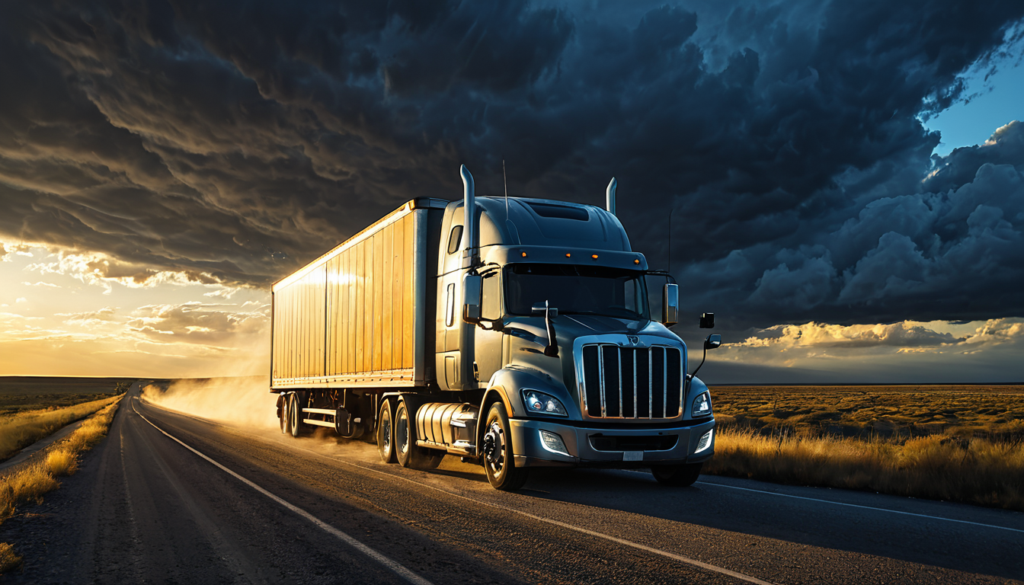
18-Wheeler Accident Lawyers in Wheeler County, Texas
Every year, hundreds of families in Wheeler County face life-altering consequences from 18-wheeler accidents on our local highways. If you or a loved one has been seriously injured in a trucking accident, you need more than just a lawyer – you need a team that understands the unique challenges of Wheeler County’s trucking corridors and knows how to hold negligent trucking companies accountable.
Why Wheeler County Trucking Accidents Are Different
Wheeler County sits at the intersection of major Texas trucking routes, with I-40 cutting through our northern communities and US-83 serving as a vital north-south corridor. Our local economy depends on agriculture, oil and gas, and manufacturing – all industries that generate significant commercial truck traffic. This means:
- Higher truck volume than many rural Texas counties
- Long-haul drivers passing through from Amarillo to Oklahoma
- Local agricultural trucks carrying livestock and produce
- Oilfield equipment moving through our county
- Challenging road conditions that test even experienced drivers
When these massive vehicles collide with passenger cars, the results are often catastrophic. The average 18-wheeler weighs 20-25 times more than a typical car, turning even minor accidents into life-threatening events.
Common Causes of Wheeler County Trucking Accidents
Our attorneys have investigated hundreds of trucking accidents across the Texas Panhandle, and we consistently find the same preventable causes:
Driver Fatigue and Hours of Service Violations
Federal regulations limit commercial drivers to 11 hours of driving after 10 consecutive hours off duty, with mandatory 30-minute breaks after 8 hours of driving. Yet we frequently see:
- Falsified logbooks hiding actual driving hours
- Pressure from dispatchers to meet unrealistic delivery schedules
- Split sleeper berth violations where drivers don’t get proper rest
- Weekly limit violations exceeding 60/70-hour limits
In Wheeler County, where long stretches of highway can lull drivers into drowsiness, these violations become especially dangerous. Our firm includes a former insurance defense attorney who knows exactly how trucking companies manipulate hours of service records to hide fatigue violations.
Equipment Failures
Proper maintenance is critical for safe truck operation, yet we routinely find:
- Brake failures – accounting for nearly 30% of truck accidents
- Tire blowouts – particularly dangerous on I-40’s high-speed stretches
- Lighting and reflector violations – making trucks nearly invisible at night
- Cargo securement failures – causing rollovers and spills
- Steering system defects – leading to loss of control
The Wheeler County Sheriff’s Office and Texas Department of Public Safety frequently cite commercial vehicles for equipment violations during roadside inspections. When these violations contribute to accidents, the trucking company bears legal responsibility.
Improper Loading and Overweight Trucks
Wheeler County’s agricultural and industrial economy means we see many specialized loads:
- Livestock trucks with shifting animal weight
- Oversize loads carrying farm equipment
- Hazardous material shipments from local industries
- Grain trucks with shifting cargo
- Oilfield equipment with unique securement needs
When cargo isn’t properly secured or trucks exceed weight limits, the risk of rollovers, jackknifes, and cargo spills increases dramatically. Our attorneys work with accident reconstruction experts to prove when improper loading caused or contributed to an accident.
Distracted and Impaired Driving
Despite strict regulations, we continue to see:
- Cell phone use – texting while driving is illegal for commercial drivers
- Dispatch system distractions – looking at GPS or messaging systems
- Eating and drinking – taking hands off the wheel
- Drug and alcohol use – despite random testing requirements
- Medical emergencies – drivers with undiagnosed conditions
The FMCSA prohibits commercial drivers from using hand-held mobile devices while driving, yet we frequently find evidence of phone use in the moments leading up to accidents.
Types of Trucking Accidents We Handle in Wheeler County
Jackknife Accidents
When a truck’s cab and trailer fold at an angle like a pocketknife, the trailer can swing across multiple lanes of traffic. These terrifying accidents often occur when:
- Drivers brake suddenly on wet or icy roads
- Empty or lightly loaded trailers lose traction
- Improperly loaded cargo shifts during braking
- Brake systems are unbalanced or malfunctioning
Jackknife accidents are particularly dangerous on I-40’s high-speed sections through Wheeler County, where they can trigger multi-vehicle pileups.
Rollover Accidents
With their high center of gravity, 18-wheelers are prone to rollovers when:
- Taking curves too fast (common on US-83’s rural curves)
- Cargo shifts due to improper securement
- Liquid loads “slosh” during turns
- Drivers overcorrect after running off the road
- Tire blowouts occur at highway speeds
Rollovers frequently result in cargo spills that create additional hazards for other motorists.
Underride Collisions
These horrific accidents occur when a passenger vehicle slides underneath a truck’s trailer, often shearing off the vehicle’s roof. Underride accidents are:
- Deadly – responsible for hundreds of fatalities annually
- Preventable – proper underride guards can prevent most
- Common in Wheeler County – where trucks make sudden stops
Federal law requires rear underride guards on most trailers, but side underride guards are not yet mandatory – despite their proven lifesaving potential.
Rear-End Collisions
The massive stopping distance required for 18-wheelers makes rear-end collisions particularly dangerous. At 65 mph, a fully loaded truck needs approximately 525 feet to stop – nearly two football fields. When trucks follow too closely or have brake failures, the results can be devastating.
Wide Turn Accidents (“Squeeze Play”)
When trucks swing wide to make right turns, they create dangerous gaps that smaller vehicles may try to enter. As the truck completes its turn, it can crush vehicles in the “squeeze zone.” These accidents are common in Wheeler County’s small towns where trucks must navigate tight turns.
Blind Spot Accidents
Commercial trucks have massive blind spots – called “No-Zones” – where drivers cannot see other vehicles. The right side blind spot is particularly large and dangerous. When trucks change lanes without properly checking these areas, catastrophic accidents occur.
Catastrophic Injuries from Wheeler County Trucking Accidents
The sheer size and weight of 18-wheelers mean accidents often result in life-altering injuries:
Traumatic Brain Injuries (TBI)
The violent forces in trucking accidents frequently cause:
- Concussions – often dismissed but potentially serious
- Contusions – bruising of brain tissue
- Diffuse axonal injuries – tearing of brain structures
- Penetrating injuries – from debris or structural intrusion
TBI symptoms may not appear immediately but can include headaches, memory problems, mood changes, and cognitive deficits. Our attorneys work with neurologists and rehabilitation specialists to document the full extent of brain injuries.
Spinal Cord Injuries and Paralysis
The extreme forces in trucking accidents can damage the spinal cord, resulting in:
- Paraplegia – loss of function in the lower body
- Quadriplegia – loss of function in all four limbs
- Incomplete injuries – with partial function remaining
- Complete injuries – with total loss of function below the injury
Spinal cord injuries often require lifelong medical care, home modifications, and assistive technology. Our attorneys fight to secure compensation that covers these extensive needs.
Amputations
Crushing injuries from trucking accidents frequently result in:
- Traumatic amputations – limbs severed at the scene
- Surgical amputations – when limbs cannot be saved
- Upper extremity amputations – arms and hands
- Lower extremity amputations – legs and feet
Amputations require extensive rehabilitation, prosthetic devices, and psychological support. Our attorneys work with life care planners to calculate the full lifetime costs of amputation injuries.
Severe Burns
Trucking accidents often involve:
- Fuel fires from ruptured tanks
- Chemical burns from hazardous cargo
- Electrical burns from damaged wiring
- Friction burns from road contact
Burn injuries require specialized treatment at burn centers, multiple skin graft surgeries, and extensive rehabilitation. The psychological trauma from burn injuries can be as devastating as the physical injuries.
Internal Organ Damage
The blunt force trauma from trucking accidents can cause:
- Liver lacerations – potentially life-threatening
- Spleen ruptures – requiring emergency removal
- Kidney damage – affecting long-term health
- Lung contusions – impairing breathing
- Internal bleeding – often requiring emergency surgery
Internal injuries may not be immediately apparent but can become life-threatening if not promptly treated.
Wrongful Death
When trucking accidents prove fatal, surviving family members may pursue wrongful death claims to recover:
- Lost future income and benefits
- Loss of companionship and guidance
- Mental anguish and emotional suffering
- Funeral and burial expenses
- Medical expenses incurred before death
Nothing can replace a lost loved one, but compensation can help families cope with the financial and emotional aftermath.
Who Can Be Held Liable in a Wheeler County Trucking Accident?
Unlike typical car accidents where only one driver may be at fault, trucking accidents often involve multiple liable parties:
The Truck Driver
Drivers may be personally liable for:
- Speeding or reckless driving
- Distracted driving (cell phone use, dispatch communications)
- Fatigued driving beyond legal limits
- Impaired driving (drugs, alcohol, prescription medications)
- Failure to conduct proper pre-trip inspections
- Traffic law violations (running red lights, failure to yield)
The Trucking Company (Motor Carrier)
Trucking companies bear significant responsibility and typically have the highest insurance limits. They may be liable for:
- Vicarious liability – responsible for drivers’ actions within the scope of employment
- Negligent hiring – hiring unqualified or dangerous drivers
- Negligent training – inadequate safety training
- Negligent supervision – failing to monitor driver performance
- Negligent maintenance – poor vehicle upkeep
- Negligent scheduling – pressuring drivers to violate hours of service rules
The Cargo Owner or Shipper
Companies that own the cargo may be liable for:
- Providing improper loading instructions
- Failing to disclose hazardous cargo properties
- Requiring overweight loading
- Pressuring carriers to meet unrealistic delivery schedules
The Cargo Loading Company
Third-party loading companies may be liable for:
- Improper cargo securement (violating FMCSA regulations)
- Unbalanced load distribution
- Exceeding vehicle weight ratings
- Failure to use proper blocking, bracing, or tiedowns
Truck and Trailer Manufacturers
Manufacturers may be liable for:
- Design defects in vehicle systems
- Manufacturing defects in components
- Failure to warn of known dangers
- Defective safety systems (ABS, ESC, collision warning)
Parts Manufacturers
Companies that manufacture specific parts (brakes, tires, steering components) may be liable for:
- Defective brake components
- Defective tires causing blowouts
- Defective steering mechanisms
- Defective lighting components
Maintenance Companies
Third-party maintenance providers may be liable for:
- Negligent repairs that fail to fix problems
- Failure to identify critical safety issues
- Improper brake adjustments
- Using substandard or incorrect parts
- Returning vehicles to service with known defects
Freight Brokers
Freight brokers who arrange transportation may be liable for:
- Negligent selection of carriers with poor safety records
- Failure to verify carrier insurance and authority
- Failure to check carrier CSA scores
- Selecting the cheapest carrier despite safety concerns
The Truck Owner (If Different from Carrier)
In owner-operator arrangements, the truck owner may have separate liability for:
- Negligent entrustment of the vehicle
- Failure to maintain owned equipment
- Knowledge of the driver’s unfitness
Government Entities
In limited circumstances, government entities may be liable for:
- Dangerous road design contributing to accidents
- Failure to maintain roads (potholes, debris, worn markings)
- Inadequate signage for known hazards
- Failure to install safety barriers
- Improper work zone setup
Our attorneys investigate every potential defendant to maximize your recovery. We understand the complex relationships between these parties and how to navigate the legal challenges they present.
Evidence Preservation: The 48-Hour Rule
In trucking accident cases, evidence disappears quickly. Trucking companies have rapid-response teams that begin protecting their interests within hours of an accident. If you don’t act fast, critical evidence will be lost forever.
Critical Evidence That Disappears Fast
| Evidence Type | Destruction Risk |
|---|---|
| ECM/Black Box Data | Overwrites in 30 days or with new driving events |
| ELD Data | May be retained only 6 months |
| Dashcam Footage | Often deleted within 7-14 days |
| Surveillance Video | Business cameras typically overwrite in 7-30 days |
| Witness Memory | Fades significantly within weeks |
| Physical Evidence | Vehicle may be repaired, sold, or scrapped |
| Drug/Alcohol Tests | Must be conducted within specific time windows |
Our Immediate Evidence Preservation Protocol
Within hours of being retained, we:
- Send formal spoliation letters to the trucking company, their insurer, and all potentially liable parties demanding preservation of all evidence
- Demand immediate download of ECM/black box data before it’s overwritten
- Subpoena ELD records to prove hours of service violations
- Secure cell phone records to prove distracted driving
- Obtain police crash reports and 911 call recordings
- Canvass the accident scene for security camera footage from nearby businesses
- Photograph all damage before vehicles are moved or repaired
- Interview witnesses before memories fade
- Hire accident reconstruction experts for complex crashes
The spoliation letter is a legal notice that puts defendants on formal notice of their obligation to preserve evidence. Destroying evidence after receiving this notice can result in:
- Adverse inference instructions (jury told to assume destroyed evidence was unfavorable)
- Monetary sanctions
- Default judgment in extreme cases
- Punitive damages for intentional destruction
FMCSA Regulations: Your Legal Advantage
The Federal Motor Carrier Safety Administration (FMCSA) regulates all commercial motor vehicles operating in interstate commerce. These regulations create legal standards that trucking companies must follow – and when they don’t, they can be held liable for resulting accidents.
Key FMCSA Regulations That Apply in Wheeler County
Part 391 – Driver Qualification Standards
Trucking companies must maintain a Driver Qualification File for every driver containing:
- Employment application with 10-year driving history
- Motor vehicle record from state licensing authority
- Road test certificate or equivalent
- Medical examiner’s certificate (valid for 2 years)
- Annual driving record review
- Previous employer inquiries (3-year history)
- Drug and alcohol test records
When companies fail to maintain proper DQ files or hire drivers with poor safety records, they can be held liable for negligent hiring.
Part 392 – Driving of Commercial Motor Vehicles
Key rules include:
- § 392.3 – Ill or Fatigued Operators: Drivers cannot operate while fatigued
- § 392.4 – Drugs and Other Substances: Prohibits possession or use of controlled substances
- § 392.5 – Alcohol: Prohibits alcohol use within 4 hours of driving
- § 392.6 – Speeding: Companies cannot schedule runs requiring excessive speed
- § 392.11 – Following Too Closely: Requires safe following distances
- § 392.82 – Mobile Phone Use: Prohibits hand-held phone use while driving
Violations of these rules create strong evidence of negligence.
Part 393 – Parts and Accessories for Safe Operation
Critical requirements include:
- Cargo Securement: Working load limits, proper tiedowns, specific requirements by cargo type
- Brakes: Properly functioning service brakes on all wheels
- Lighting: Required headlamps, tail lamps, clearance lamps, and reflectors
- Tires: Minimum tread depth (4/32″ on steer tires, 2/32″ on others)
Equipment violations frequently contribute to accidents and create liability for maintenance companies and trucking carriers.
Part 395 – Hours of Service Regulations
The most commonly violated regulations:
| Rule | Requirement | Violation Consequence |
|---|---|---|
| 11-Hour Driving Limit | Max 11 hours driving after 10 consecutive hours off duty | Fatigue-related accidents |
| 14-Hour Duty Window | Cannot drive beyond 14th consecutive hour after coming on duty | Driver exhaustion |
| 30-Minute Break | Mandatory break after 8 cumulative hours of driving | Impaired alertness |
| 60/70-Hour Weekly Limit | 60 hours/7 days OR 70 hours/8 days | Cumulative fatigue |
| 34-Hour Restart | Can restart 60/70-hour clock with 34 consecutive hours off | Inadequate recovery |
Fatigue causes approximately 31% of fatal truck crashes. Hours of service violations are among the most powerful evidence in trucking accident cases.
Part 396 – Inspection, Repair, and Maintenance
Requirements include:
- Systematic inspection, repair, and maintenance programs
- Driver pre-trip and post-trip inspection reports
- Annual comprehensive inspections
- Maintenance record retention for 1 year
Poor maintenance is a factor in nearly 30% of trucking accidents. When companies fail to maintain proper records or defer critical repairs, they create liability.
The Attorney911 Advantage for Wheeler County Trucking Accident Victims
When you’re facing the aftermath of a catastrophic trucking accident, you need more than just a lawyer – you need a team with the experience, resources, and local knowledge to fight for you. At Attorney911, we offer:
25+ Years of Trucking Litigation Experience
Our managing partner, Ralph Manginello, has been fighting for trucking accident victims since 1998. With over two decades of experience handling commercial vehicle accident cases, he has:
- Recovered multi-million dollar settlements for trucking accident victims
- Litigated against Fortune 500 trucking companies including Walmart, Amazon, FedEx, and UPS
- Handled complex federal court cases in the Southern District of Texas
- Been involved in major industrial disaster litigation including the BP Texas City explosion
Insider Knowledge of Insurance Company Tactics
Our team includes a former insurance defense attorney who knows exactly how commercial trucking insurers evaluate, minimize, and deny claims. This insider knowledge gives us a significant advantage in:
- Identifying lowball settlement offers
- Countering insurance company tactics
- Maximizing your recovery
- Knowing when to push for trial
Federal Court Experience
Trucking cases often involve federal regulations and can be filed in federal court. Ralph Manginello is admitted to practice in the U.S. District Court, Southern District of Texas, giving us the ability to handle complex interstate trucking cases.
Wheeler County Local Knowledge
We understand Wheeler County’s unique trucking landscape:
- Our highways: I-40, US-83, and local routes like FM 1047 and FM 2473
- Our industries: Agriculture, oil and gas, manufacturing
- Our courts: Wheeler County Court and the 100th Judicial District
- Our communities: Shamrock, Wheeler, Allison, and surrounding areas
This local knowledge helps us build stronger cases for Wheeler County residents.
Spanish Language Services
Wheeler County has a significant Hispanic population, and many trucking accident victims speak Spanish as their primary language. Our associate attorney Lupe Peña is fluent in Spanish and provides direct representation without interpreters. Hablamos Español.
Contingency Fee Representation
We work on contingency – you pay nothing unless we win your case. This means:
- No upfront costs
- No hourly fees
- No risk to you
- We advance all litigation expenses
Our fee comes from the recovery, not your pocket. This allows