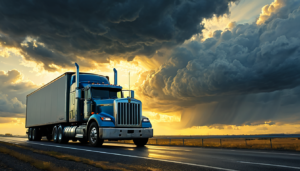
District of Columbia Truck Accident & Commercial Vehicle Injury Attorneys
The impact is sudden, violent, and life-altering. One moment you are navigating the busy commuters on I-295 or New York Avenue NE; the next, 80,000 pounds of steel—an 18-wheeler, a massive delivery van, or a heavy construction dump truck—slams into your lane. In District of Columbia, where the narrow streets of Georgetown meet the high-speed corridors of the Anacostia Freeway, truck accidents happen in the blink of an eye, but their consequences last a lifetime.
When you are hit by a commercial vehicle in District of Columbia, you aren’t just fighting a driver; you’re fighting a multi-billion dollar corporate machine. These companies have rapid-response teams, investigators, and an army of lawyers deployed before the ambulance even reaches the hospital. To protect your family and your future, you need a fighter who has seen their playbook from the inside.
At Attorney911, led by managing partner Ralph Manginello, we have spent over 25 years holding trucking companies accountable. Our firm brings federal court experience and a unique insider advantage: our team includes associate attorney Lupe Peña, who previously worked in insurance defense. We know how the industry evaluates, minimizes, and denies claims because we’ve been behind those closed doors. Now, we use that knowledge to fight for you.
If you have been injured in a District of Columbia truck accident, the clock is already ticking. Evidence like black box data can be overwritten in as little as 30 days. Don’t let the trucking company control the narrative. Call us 24/7 at 1-888-ATTY-911 for a free, confidential consultation.
Why Experience Matters in District of Columbia Truck Accident Cases
District of Columbia is a unique legal environment. Unlike most places in America, District of Columbia still follows a strict contributory negligence rule. This means that if you are found to be even 1% at fault for the accident, you could be barred from recovering any compensation. Trucking companies and their insurers know this, and they will use every tactic to shift even a tiny fraction of the blame onto you.
With over 25 years of experience, Ralph Manginello understands how to build a “zero-fault” case for our clients. We don’t just look at the police report; we dig into the layers of corporate negligence that led to the crash. Since 1998, our firm’s founder has secured multi-million dollar recoveries for victims of catastrophic injury, including traumatic brain injuries and amputations.
We are not a “volume” firm. We treat our clients like family. As our client Chad Harris noted, “You are NOT a pest to them and you are NOT just some client… You are FAMILY to them.” We take that responsibility seriously, especially when you are up against Fortune 500 defendants like Amazon, Walmart, or major construction fleets operating in District of Columbia.
Call 1-888-ATTY-911 now. We offer free consultations and work on a contingency fee basis—you pay nothing unless we win your case.
Understanding the Federal Motor Carrier Safety Regulations (FMCSR)
Interstate trucking is a privilege governed by strict federal laws. The Federal Motor Carrier Safety Administration (FMCSA) sets the standards that every commercial carrier must follow. In District of Columbia, where trucks move between Maryland, Virginia, and the District, compliance with these regulations often determines the outcome of a lawsuit.
49 CFR Part 395: Hours of Service (HOS)
Fatigue is the leading cause of District of Columbia truck wrecks. Drivers are often pressured by companies to “push through” to meet delivery windows at distribution hubs.
- Driving Limit: Property-carrying drivers are limited to 11 hours after 10 consecutive hours off-duty (49 CFR § 395.3).
- 14-Hour Window: A driver cannot drive beyond the 14th consecutive hour after coming on duty.
- 30-Minute Break: Drivers must take a 30-minute break after 8 cumulative hours of driving.
When a driver coming from a long-haul route on I-95 reaches the District of Columbia city limits, they are often at the tail end of these limits. If they exceed them, they are effectively driving impaired.
49 CFR Part 391: Driver Qualifications
Trucking companies have a duty to ensure their drivers are qualified. This means verifying their CDL, checking their driving history (MVR), and ensuring they have a current medical examiner’s certificate. We subpoena the Driver Qualification File for every District of Columbia crash we investigate. If a company hired a driver with a history of DUIs or reckless driving, they are liable for negligent hiring.
49 CFR Part 396: Inspection and Maintenance
Every truck on District of Columbia roads must be “systematically inspected, repaired, and maintained” (49 CFR § 396.3). This includes daily post-trip reports (DVIRs) and annual deep-dive inspections. Many 18-wheeler accidents in District of Columbia are caused by out-of-adjustment brakes or worn steer tires—defects that should have been caught during a pre-trip inspection.
49 CFR Part 393: Vehicle Safety and Cargo Securement
Improperly secured cargo can cause a truck to roll over on the sharp curves of the E Street Tunnel or lose its load on a busy District of Columbia thoroughfare. Federal law mandates specific weight-rated tiedowns and performance criteria to withstand deceleration forces (49 CFR § 393.100-136).
Learn more in our video guide: The Definitive Guide To Commercial Truck Accidents at https://www.youtube.com/watch?v=iEEeZf-k8Ao
Complex Truck Accident Types in District of Columbia
The physics of an 80,000-pound truck colliding with a 4,000-pound car are devastating. Because District of Columbia is an urban hub with high-speed highway connectors, we see a wide variety of accident mechanics.
Blind Spot “No-Zone” Crashes
Commercial trucks have four massive blind spots: the front (20 feet), the rear (30 feet), the left (one lane), and the right (two lanes). In District of Columbia’s dense traffic, cars often get “lost” in these zones. However, 49 CFR § 393.80 requires trucks to be equipped with mirrors that provide a clear view to the rear. If a driver changes lanes into you because they didn’t check their mirrors—or didn’t have properly adjusted equipment—they are negligent.
Wide Turn “Squeeze Play” Accidents
Trucks must swing wide to make certain turns in District of Columbia’s historic neighborhoods. If a driver fails to signal or check their mirrors, they can crush a smaller vehicle or a cyclist caught in the “squeeze.” These accidents often result in traumatic amputations and crush injuries.
Underride Collisions
Among the most lethal accidents, an underride occurs when a passenger vehicle slides under the rear or side of a trailer. While federal law (49 CFR § 393.86) requires rear underride guards, side guards are still not mandated. These crashes often lead to decapitation or severe traumatic brain injury (TBI).
Jackknife and Rollover
A jackknife happens when the trailer swings out perpendicular to the cab, usually due to improper braking or cargo shifting. Rollovers are common on the exit ramps of I-395 and I-695 when a driver takes a curve too fast for their high center of gravity.
If you’ve been hit, don’t wait. 888-ATTY-911 is available 24/7 for District of Columbia accidents.
The 48-Hour Evidence Preservation Window
In District of Columbia, the most important evidence in your case is electronic, and it belongs to the trucking company. They have no legal obligation to keep it for you unless we demand it.
- Black Box (ECM): Records speed, braking, and throttle position in the 30 seconds before a crash. This data is often overwritten if the truck returns to service.
- Electronic Logging Device (ELD): These devices replaced paper logs in 2017. They provide an unalterable record of how long the driver had been awake.
- Dashcam/Netradyne: Many corporate fleets like Amazon use AI cameras that monitor the driver and the road. This footage can vanish within days.
- Dispatch Records: These show if the company was pressuring the driver to violate safety hours to make a delivery in District of Columbia.
Within 24 to 48 hours of being hired, Attorney911 sends formal “spoliation letters” to all liable parties. This legal notice freezes the evidence and creates severe penalties for the trucking company if they overwrite or destroy it. As client Angel Walle said, “They solved in a couple of months what others did nothing about in two years.” We move with speed and precision to lock down your recovery.
Who is Liable for Your District of Columbia Truck Accident?
Most lawyers only sue the driver. We investigate the entire chain of command. Identifying every liable party is the only way to maximize your insurance recovery.
- The Driver: For direct negligence like speeding, fatigue, or impairment.
- The Trucking Company: Under respondeat superior (employer liability) and for negligent training or supervision.
- The Maintenance Company: If a third-party mechanic failed to fix a known brake defect.
- The Cargo Loader: For unbalanced or overweight loads that caused a rollover.
- The Freight Broker: For hiring a carrier with a known history of safety violations.
- Corporate Parent Companies: When an Amazon DSP van hits you, Amazon may be liable for the “right to control” the driver’s schedule and route.
- Government Entities: If poor road design or unmaintained signals on District of Columbia streets contributed to the crash.
Learn more about insurance in our video: The Definitive Guide To MCS 90 Auto Endorsements at https://www.youtube.com/watch?v=auB5NWcwyag
Catastrophic Injuries and the Path to Maximum Recovery
A truck accident doesn’t just result in cuts and bruises; it results in permanent trauma. Our firm has secured settlements in the millions for families dealing with:
- Traumatic Brain Injury (TBI): $1.5M to $9.8M range. These injuries affect cognitive function, emotional stability, and the ability to work.
- Spinal Cord Injury: $4.7M to $25.8M range. Paralysis requires a lifetime of nursing care and home modifications.
- Amputations: $1.9M to $8.6M range. Beyond the physical loss, victims face phantom limb pain and high prosthetic costs.
- Wrongful Death: $1.9M to $9.5M range. When a family loses a breadwinner or a child, we fight for the full value of the life lost.
We work with life care planners and economists to calculate the TRUE cost of these injuries. We don’t just look at the bills on your table today; we look at the bills you will have 20 years from now.
Dealing with Corporate Defendants in District of Columbia
District of Columbia is a hub for massive corporate delivery operations. When you are hit by a branded vehicle, you are fighting a corporate giant.
Walmart Truck Accidents
Walmart operate one of the largest private fleets in the world. They are highly sophisticated and self-insured for the first several million dollars of every claim. Their internal risk management teams are notoriously aggressive. Ralph Manginello has gone toe-to-toe with Fortune 500 corporations, including litigation against BP during the Texas City refinery disaster. He isn’t intimidated by their size.
Amazon Delivery Van Wrecks
Amazon’s Delivery Service Partner (DSP) model is designed to shield Amazon from liability. They claim the driver is an “independent contractor.” We know how to pierce that shield. If Amazon controls the driver’s route, monitors them with cameras, and sets their delivery quotas, the law may treat them as the employer regardless of the contract language.
UPS and FedEx Crashes
FedEx Ground and FedEx Freight operate differently, as do UPS drivers who are typically company employees. Each requires a different legal strategy to navigate their specific insurance layers and liability structures.
Hablamos Español. Llame al 1-888-ATTY-911. Our associate attorney Lupe Peña is fluent in Spanish and provides direct representation to District of Columbia’s Hispanic community.
District of Columbia Truck Accident FAQ
How long do I have to file a claim in District of Columbia?
In District of Columbia, the statute of limitations for personal injury is generally three years from the date of the accident. However, for wrongful death, you only have two years. If your accident involved a government vehicle—like a WMATA bus—the notice requirements are even shorter. You should never wait until the last minute. Evidence disappears long before the legal deadline.
What is the 1-percent rule in District of Columbia?
District of Columbia follows “contributory negligence.” This is a harsh rule. If you are even 1% responsible for the accident, the insurance company can try to deny your claim entirely. This is why having an attorney who knows insurance defense tactics is critical. We build your case to prove the truck driver and company were 100% responsible.
How much insurance does the trucking company have?
Federal law (49 CFR § 387.33) requires commercial trucks to carry at least $750,000 in liability insurance for general freight. For hazardous materials, that minimum jumps to $5 million. Many corporate fleets carry excess and umbrella policies that provide $10 million to $50 million in total coverage.
What if I was rear-ended by a truck on I-295?
Rear-end collisions involving 18-wheelers are almost always caused by driver fatigue, distraction, or brake failure. Because of the weight discrepancy, these impacts often cause “whiplash” that is actually a herniated disc or traumatic brain injury. Don’t let the adjuster minimize your pain.
See more answers in our video: What Should You Not Say to an Insurance Adjuster? at https://www.youtube.com/watch?v=9UKRbFprB0E
Our Winning Approach for District of Columbia Families
Since 1998, the Manginello Law Firm has recovered over $50 million for injury victims. We aren’t just lawyers; we are fighters. As client Donald Wilcox said, “One company said they would not accept my case. Then I got a call from Manginello… I got a call to come pick up this handsome check.”
We have litigated against the largest companies on the planet—Walmart, Amazon, Coca-Cola, BP—and we have made them pay. Our team brings federal court admission and the “Insurance Defense Advantage” to every case. We know the formulas they use to undervalue your life, and we know how to break them.
You have been through enough. Let us handle the lawyers, the adjusters, and the investigators. Your only job is to focus on healing and your family.
Put a Fighter in Your Corner
If you or a loved one has been hurt in a District of Columbia trucking accident, don’t face the corporate machine alone. The trucking company is already building their case. It’s time to build yours.
- 25+ Years of Courtroom Experience
- Insider Insurance Defense Knowledge
- Multi-Million Dollar Track Record
- 24/7 Availability
- No Fee Unless We Win
Call Attorney911 at 1-888-ATTY-911 or (888) 288-9911 right now. Whether you were hit on the Capital Beltway, the Suitland Parkway, or a local District of Columbia street, we are ready to respond. We treat you like family, and we fight tooth and nail for every dime you deserve.
Attorney911: Your first responder to a legal emergency in District of Columbia.
Detailed Breakdown of Truck Accident Types and Locations in District of Columbia
District of Columbia’s geography creates specific trucking hazards that require local knowledge to litigate successfully. Our firm understands how traffic flows from Maryland and Virginia through the heart of the District and where the most frequent violations occur.
Urban Congestion and “Last Mile” Delivery
In denser areas of District of Columbia like Capitol Hill or Adams Morgan, we see a massive influx of smaller commercial vehicles. Amazon delivery vans, UPS trucks, and Sysco food distribution trucks are constantly stopping, backing up, and navigating narrow streets.
These “last mile” vehicles often violate 49 CFR § 392.11, which governs following too closely, or Section 392.2, which requires drivers to obey local traffic laws regarding parking and yielding. When an Amazon van double-parks on a busy District of Columbia street, it creates a visual obstruction that leads to secondary crashes. We hold both the driver and the corporate parent accountable for these systemic safety failures.
High-Speed Highway Connectors
The Anacostia Freeway (I-295), I-395, and the I-695 Southeast Boulevard are the primary arteries for 18-wheeler traffic in District of Columbia. These roads are notorious for “bottlenecks” where trucks must merge quickly.
When a driver is fatigued from a 10-hour haul, their reaction time for these merges is dangerously slow. We use 49 CFR Part 395 violations to prove that the driver was “over hours” and shouldn’t have been on District of Columbia roads at the time of the crash.
Learn more in our video: Can I Sue for Being Hit by a Semi Truck? at https://www.youtube.com/watch?v=J0MT3CKbUb4
Vulnerable Road Users: Pedestrians and Cyclists
District of Columbia is a walking and biking city. When a commercial vehicle with massive “No-Zones” turns onto a residential street, pedestrians are at extreme risk. Wide-turn accidents at District of Columbia intersections often involve a truck driver failing to yield to someone in a crosswalk.
We represent pedestrians and cyclists who have suffered life-changing injuries. Because of District of Columbia’s contributory negligence rules, the trucking company will almost always try to blame the pedestrian for “stepping out” or the cyclist for “not being visible.” We use forensic accident reconstruction and local surveillance footage to prove the truck driver was the negligent party.
The Liable Parties: Who Really Pays?
Successfully litigating a District of Columbia truck accident means following the money. The driver’s personal assets are rarely enough to cover a catastrophic injury. We identify the “solvent defendants” with deep pockets.
1. The Motor Carrier (The Trucking Company)
The primary defendant is usually the company operating the truck. They are responsible for the driver’s actions under the doctrine of respondeat superior. We look for violations of their internal safety programs, many of which (like those at Walmart or UPS) actually exceed federal FMCSA minimums. When a driver violates the company’s own rules, it is powerful evidence for a jury.
2. Corporate Parent and Brand Owners
Does the truck say Amazon, FedEx, or Sysco? We don’t just sue the shell company; we pursue the brand owner. We look at the “right to control” everything from the driver’s uniform to their GPS-monitored speed. If the parent company dictates how the work is done, they can’t hide behind a contract.
3. Maintenance and Parts Manufacturers
Did the steer tire blow out because of a defect? Were the brakes improperly adjusted by a third-party mechanic? We look at 49 CFR § 393.75 (Tires) and § 393.40 (Brakes) to identify these technical failures. If a part was defective, we bring a product liability claim against the manufacturer.
4. Freight Brokers
Brokers who connect shippers with carriers have a duty to vet that carrier’s safety record. If a broker hired a carrier with an “unsatisfactory” FMCSA rating to save money, they are liable for negligent selection.
Ready to hold them accountable? Call 888-ATTY-911 today.
The Insurance Battle: Our Insider Advantage
Dealing with a commercial insurer is not like dealing with your personal car insurance. These companies use “Colossus” and other claims-valuation software designed to pay out as little as possible.
Our associate attorney, Lupe Peña, spent years working for these firms. He knows:
- How they train adjusters to ask “trick” questions.
- The “formulas” they use to value pain and suffering.
- When they are bluffing about a “final offer.”
- How to force them to the table by being trial-ready.
Most District of Columbia personal injury lawyers have never stepped foot inside an insurance defense firm. We have. That insider knowledge is why we are “The Firm Insurers Fear.” We reject first offers because they are always lowballs. We prepare every case for trial, which is exactly why most of our cases result in high-value settlements without ever having to go to court.
Understanding Your Damages Under District of Columbia Law
When you are injured by a truck, you are entitled to “make whole” compensation. In District of Columbia, this includes both economic and non-economic damages.
Economic Damages (The Calculable Cost)
These are the bills that arrive in your mailbox.
- Medical Bills: From the initial ER visit to future surgeries.
- Lost Wages: Income you missed while recovering.
- Loss of Earning Capacity: If your injury means you can never return to your high-paying job.
- Life Care Expenses: Modifications to your home, prosthetic replacements, and personal care assistants.
Non-Economic Damages (The Quality of Life)
These are the losses that don’t have a price tag.
- Pain and Suffering: The physical agony of your injuries.
- Mental Anguish: The anxiety, depression, and PTSD that follow a catastrophic crash.
- Loss of Consortium: The damage to your relationship with your spouse.
- Loss of Enjoyment of Life: No longer being able to play with your children or enjoy the hobbies that made your life meaningful.
Punitive Damages
If the trucking company’s conduct was especially egregious—like a driver being intoxicated or the company knowingly destroying evidence—we may pursue punitive damages. These are designed to PUNISH the wrongdoer and prevent others from doing the same.
Learn more in our video: What Is Fair Compensation for Pain and Suffering? at https://www.youtube.com/watch?v=LG07vbB4cdU
Immediate Action Steps Checklist
If you are reading this after a District of Columbia truck accident, please take these steps now:
- Seek Medical Care: Do not “tough it out.” Go to a District of Columbia trauma center immediately.
- Report the Crash: Ensure a police report is filed. Note the officer’s name.
- Document the Scene: Take 50+ photos of EVERYTHING. The trucks, the road, the debris.
- Do Not Sign Anything: The insurance company might offer you a check today. It is a trap. Accepting it usually waives your right to any further money even if your injuries turn out to be worse.
- Call Attorney911: The faster we can send a spoliation letter, the better your chance of a multi-million dollar recovery.
Frequently Asked Questions (FAQ)
What if my accident involved a government vehicle in District of Columbia?
If your crash involved a USPS truck, an Army vehicle, or a District of Columbia public works truck, you must follow the Federal Tort Claims Act (FTCA) or the District’s specific Tort Claim Act. These have much shorter notice deadlines—sometimes as short as 6 months. Failure to file a proper “notice of claim” can end your case before it starts.
Can I sue if I was hit by a rented U-Haul or Penske truck?
Yes. Moving truck crashes are unique because the driver often has ZERO commercial experience. While the Graves Amendment generally protects rental companies from vicarious liability, we can still sue them for negligent maintenance or negligent entrustment if they rented to an unfit driver.
Does it matter if I was partially at fault in District of Columbia?
Because of District of Columbia’s contributory negligence rule, fault is the most important battleground. The trucking company’s defense will be that you were 1% responsible. We use data from the truck’s black box and expert accident reconstruction to prove their driver was the sole cause of the crash.
How much does it cost to hire an 18-wheeler accident lawyer?
You pay nothing out of pocket. We work on a contingency fee basis. Our fee is a percentage of the final settlement or verdict. We take all the financial risk—if we don’t win, you don’t owe us a dime for our time or the thousands of dollars we spend investigating your case.
What are “hidden damages”?
Hidden damages include things like lost employer retirement matches, the cost of household services you can no longer perform (like mowing the lawn or childcare), and the loss of career advancement opportunities. An experienced District of Columbia trucking attorney knows how to find and prove these losses.
Find more answers in our video: The Ultimate Guide to Car Accident Settlements at https://www.youtube.com/watch?v=subYAvjsgk4
We Fight for the Families of District of Columbia
A truck accident is a family tragedy. It’s not just about one person being hurt; it’s about the stress, the bills, and the uncertainty that affects everyone you love. At Attorney911, we take that burden off your shoulders.
Ralph Manginello and his team have the resources to take on the largest corporations in the world. We have the “Million Dollar Member” credentials and a 4.9-star average from clients who we now consider family.
Don’t let a trucking company’s negligence dictate your family’s future. Reach out to a team that is powerful, proven, and ready to fight for you.
Call 1-888-ATTY-911 or (888) 288-9911.
Direct Houston Office: (713) 528-9070.
Email: ralph@atty911.com
Available 24/7. Hablamos Español.
Deep Dive: Specialized Commercial Vehicles in District of Columbia
While 18-wheelers often dominate the headlines, District of Columbia roads are filled with a variety of specialized commercial vehicles. Each has unique handling characteristics, and crashes involving them require specialized legal strategies.
Dump Trucks and Construction Vehicles
District of Columbia is always evolving, which means the city is full of heavy dump trucks hauling gravel and construction debris. These vehicles often weigh 60,000 pounds or more when loaded.
- The Overload Hazard: Many dump truck accidents are caused by overloading, which affects the truck’s braking distance and rollover stability.
- Blind Spots: Dump trucks have massive blind spots to the rear. If they back up without a spotter or backup camera, they can strike pedestrians or smaller cars with fatal force.
- Liability: We investigate the construction company and the general contractor on the project to ensure all responsible parties are included in the suit.
Delivery Vans (Amazon, FedEx, etc.)
The explosive growth of e-commerce has led to a surge in delivery vans on District of Columbia streets. These drivers are under intense pressure to meet quotas.
- Fatigue and Distraction: Drivers often check their GPS and delivery apps while driving, leading to high-speed rear-end collisions.
- The Independent Contractor Defense: As discussed, Amazon and FedEx Ground often claim their drivers aren’t employees. We use Lupe Peña’s insider knowledge of insurance structures to defeat these claims.
Public Transit and School Buses
District of Columbia’s public transit network, including Metrobus and charter tour buses, creates a unique set of liability issues.
- Sovereign Immunity: Suing a government entity like WMATA requires following strict notice of claim procedures. We have experience navigating these complex requirements to ensure our clients don’t lose their right to sue.
- Multiple Victims: Bus accidents often injure 10 to 30 people at once. We act quickly to ensure our clients’ claims are prioritized when dealing with limited insurance pools.
Learn more in our video: How Do I Make a Claim Against a Bus Company? at https://www.youtube.com/watch?v=Y0fugEAzuAs
Garbage and Sanitation Trucks
Residential garbage collection involves constant starts, stops, and backing maneuvers.
- The Right-to-Control: If a city contracts with a private company like Waste Management, both the private company and the municipality may share liability.
- Mechanical Failure: Hydraulic arms and compaction equipment add complexity to these vehicles. If a mechanical failure caused the crash, we bring a product liability claim against the manufacturer.
The Physical Reality of Catastrophic Injuries
When an 80,000-pound truck slams into your car, the “force dissipation” happens through your body. We handle the medical and legal complexities of the most severe injuries.
Traumatic Brain Injuries (TBI)
TBI can occur even without a direct blow to the head. The sheer force of the truck impact causes the brain to strike the inside of the skull (coup-contrecoup).
- Diagnostic Challenges: TBIs don’t always show up on a standard CT scan. We work with neurologists who use advanced DTI (Diffusion Tensor Imaging) to prove the microscopic damage to the brain’s white matter.
- Life Impact: TBI victims often lose their ability to concentrate, regulate their emotions, and maintain their employment. These cases routinely result in multi-million dollar settlements because they represent a total change in the victim’s quality of life.
Spinal Cord Injuries (SCI)
A truck impact can crush vertebrae and sever the spinal cord, leading to permanent paralysis (paraplegia or quadriplegia).
- Lifetime Care Costs: A 25-year-old suffering from quadriplegia will face estimated lifetime medical and care costs exceeding $5 million.
- The Life Care Plan: We retain medical experts to build a “Life Care Plan” that accounts for every wheelchair replacement, nursing hour, and home modification you will ever need.
Amputations and Severe Crush Injuries
Many District of Columbia truck accidents involve “squeeze play” or underride mechanics that crush the occupants’ limbs.
- Surgical Challenges: Amputation isn’t just one surgery; it’s a lifetime of revisions and prosthetic adjustments.
- Phantom Limb Pain: The neurological trauma of losing a limb often results in chronic, excruciating pain. We ensure the jury understands this invisible, lifelong burden.
Learn more in our video: The Ultimate Guide to Brain Injury Lawsuits at https://www.youtube.com/watch?v=GBYAHi5aiEQ
How Insurance Companies Minimize Your Claim
Because trucking policies are so large, insurance companies fight these cases with everything they have. They don’t want to pay what your case is worth; they want to save their shareholders money.
- The “Gap in Treatment” Tactic: If you wait 48 hours to see a doctor because you thought you just had a “sore neck,” the insurer will argue that your injuries weren’t caused by the truck accident. This is why we tell every District of Columbia victim to seek medical help immediately.
- Social Media Surveillance: Insurance companies will hire private investigators to watch your social media. If you post a photo of yourself smiling at a family dinner, they will argue you aren’t “really” in pain.
- The Lowball Quick-Pay: Moving truck and delivery fleet adjusters often try to offer a “quick check” of $10,000 or $20,000 within days of the crash. This is almost never enough to cover even your first week of hospital bills.
Attorney911 insider tip: Having an attorney on your team who previously worked in insurance defense is like having the opponent’s playbook. We stop their attempts to devalue your case before they even start.
Wrongful Death in District of Columbia Trucking Accidents
Losing a loved one is an unbearable tragedy. When a life is taken by a trucking company’s negligence, the law provides a way to seek justice for the family left behind.
In District of Columbia, a wrongful death claim can be brought by the surviving spouse, children, or parents. You are entitled to recover:
- Loss of Future Income: What the deceased would have earned over their remaining working life.
- Loss of Companionship: The emotional value of the relationship that was lost.
- Mental Anguish: The psychological suffering of the survivors.
- Funeral and Burial Expenses.
- Survival Damages: Compensation for the pain and suffering the deceased experienced in the moments before they passed.
We handle these cases with the utmost compassion and the highest level of aggression toward the trucking company. No amount of money can bring your loved one back, but it can provide security for your children and hold the company accountable so they think twice before putting a dangerous driver on the road again.
Why Choose Ralph Manginello and Attorney911?
You have many choices for a lawyer in District of Columbia. Here is why we are different:
- Results-Driven: We have recovered tens of millions of dollars for victims of catastrophic injury. One of our recent active litigations involves a landmark $10 million lawsuit against a major institution. We know how to handle high-stakes cases.
- Personal Attention: You get Ralph’s cell phone number. You get Lupe’s cell phone number. As client Dame Haskett said, “Ralph reached out personally.” You aren’t just a file number here.
- Insider Advantage: Our insurance defense background is used as a weapon for you. We know how to navigate the “Colossus” software and how to force adjusters to pay top dollar.
- No Risk: We advance all costs. If we don’t recover money for you, you don’t pay us anything.
- 24/7 Availability: Legal emergencies don’t happen between 9 and 5. We are ready to take your call right now.
Call 1-888-ATTY-911 or (888) 288-9911 for your FREE District of Columbia Truck Accident Consultation.
A Message to Those Suffering Right Now
We know that if you are reading this, you are likely in pain, afraid for your future, and overwhelmed by calls from adjusters and doctors. You didn’t ask for this. You were just driving to work, to school, or home to your family.
You don’t have to face this alone. Since 1998, Ralph Manginello has stood by families in their darkest moments. We take the legal burden of “fighting the giants” so you can focus on what matters most—your recovery.
Our firm is powerful, proven, and dedicated to justice in District of Columbia. We have litigated against Walmart, Amazon, FedEx, and the major trucking fleets that cross our city every day. We know their lawyers, we know their tactics, and we know how to win.
The trucking company has already started their investigation. Shouldn’t you?
Call 1-888-ATTY-911.
Hablamos Español.
We Answer 24/7.
Your fight is our fight.
Summary of FMCSA Reference for District of Columbia Litigators
When building your District of Columbia trucking case, we focus on several key pillars of federal law that provide the foundation for winning multi-million dollar verdicts.
1. Controlled Substances and Alcohol (49 CFR Part 382)
Every commercial driver must pass random drug and alcohol screenings. If a driver involved in a District of Columbia crash was under the influence or if the company failed to perform the mandated tests, it is evidence of gross negligence.
2. Commercial Driver’s License Standards (49 CFR Part 383)
Driving an 18-wheeler requires specialized skills. If a company allowed a driver with an expired CDL or the wrong endorsements to operate a heavy vehicle in the District, they have violated federal safety standards and are liable for all resulting harm.
3. Transportation of Hazardous Materials (49 CFR Part 397)
If the truck that hit you was carrying hazardous materials—fuel, chemicals, or industrial waste—they must follow specific routing requirements and carry $5 million in insurance. These cases are highly complex and require an attorney with experience in HAZMAT litigation.
Learn more in our video: Truck Tire Blowouts and When You Need a Lawyer at https://www.youtube.com/watch?v=RCTumr1looc
The “1% Defense” and How We Defeat It
Because District of Columbia follows contributory negligence, the insurance company will look for ANY reason to blame you.
- “You weren’t wearing a seatbelt.” (Doesn’t prove YOU caused the crash).
- “You were speeding slightly.” (We use black box data to prove the truck’s speed was the primary cause).
- “You could have avoided it.” (We use accident reconstruction to show a 4,000-pound car can’t avoid an 80,000-pound truck jackknifing in their path).
We are prepared for these defenses. We use expert testimony, high-resolution scene mapping, and digital simulations to prove that the trucking company and its driver were 100% at fault. We don’t settle for “shared blame” settlements that rob our clients of their recovery.
High-Volume Commercial Routes in District of Columbia
We are deeply familiar with the accident patterns on the city’s most dangerous corridors:
- I-295 (Anacostia Freeway): Heavy truck volume from Maryland ports heading south. High speeds meet sharp merges.
- I-395 (Southwest Freeway): The primary route into the heart of the District. Congestion leads to frequent rear-end collisions.
- New York Avenue NE: A major freight corridor into and out of the city, plagued by aggressive merging and heavy intersections.
- Benning Road and Kenilworth Avenue: Busy industrial zones where dump trucks and delivery fleets are in constant motion.
If your accident happened on any of these roads, call us immediately. We know the terrain, we know the typical violations, and we know how to secure the evidence you need.
Take the First Step Toward Justice
The insurance company is hoping you’ll take a lowball offer and go away. Don’t do it. Your life, your career, and your family’s future are worth more than a quick settlement.
Ralph Manginello and the team at Attorney911 have been making trucking companies pay for over 25 years. We have the experience of a large firm and the personal touch of a boutique practice. We aren’t just your lawyers; we are your advocates.
Call us 24/7 at 1-888-ATTY-911 or (888) 288-9911.
There is no fee unless we win.
Your free District of Columbia truck accident consultation is one call away.
Attorney911: Powerful. Proven. Professional. Legal Emergency Lawyers™.