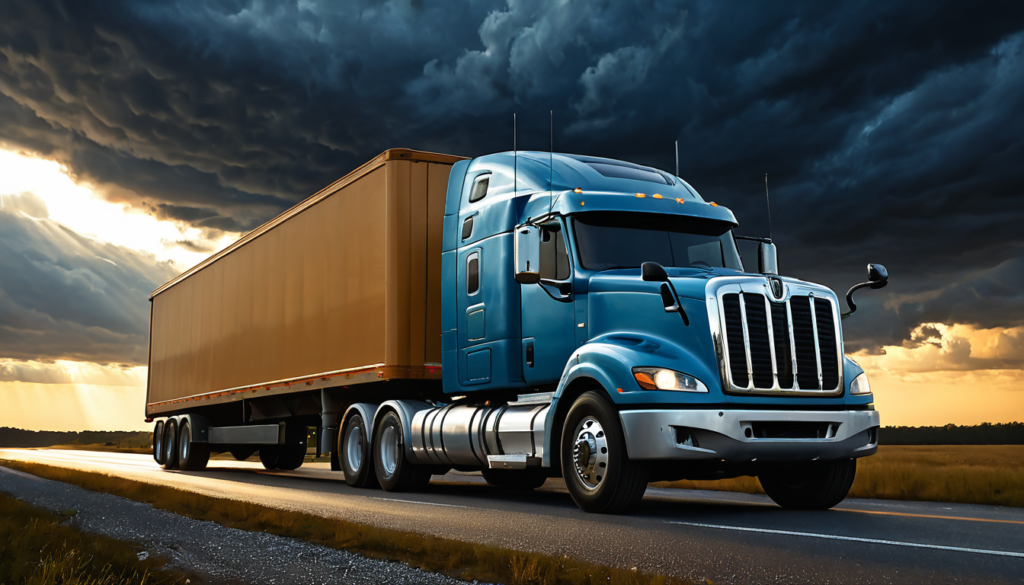
Every 16 minutes, someone in America is injured in a commercial truck crash. If you’re reading this, you might be one of them—or you’re here because a loved one’s life changed forever on one of Mobile County’s busy highways.
The truck that hit you weighed 80,000 pounds. Your sedan weighs 4,000. That’s not a fair fight, and it never was. Since 1998, Attorney911 has stood beside victims in Mobile County and across Alabama, fighting to hold trucking companies accountable for the devastation they cause. Our managing partner, Ralph Manginello, brings 25 years of courtroom experience to every case—experience that has translated into multi-million dollar settlements for families just like yours. And we don’t stand alone: our associate attorney Lupe Peña spent years working inside the insurance industry before joining our firm, giving us an insider’s view of every tactic they’ll use against you.
If you’ve been hurt in an 18-wheeler accident anywhere in Mobile County—whether it was on I-10 near the Port of Mobile or on I-65 heading north toward Montgomery—you need an ally who understands the stakes. Call us at 1-888-ATTY-911 today. Evidence disappears fast, and the trucking company has already started building their defense.
Why 18-Wheeler Accidents in Mobile County Are Different
Mobile County sits at a critical crossroads of American commerce. With the Port of Mobile ranking among the nation’s busiest deep-water ports and interstates I-10 and I-65 carrying freight from the Gulf Coast to the heartland, our roads see nearly constant 18-wheeler traffic. That volume creates unique dangers you won’t find in every community.
When an 80,000-pound truck traveling at 65 miles per hour slams into a passenger vehicle, the physics alone guarantee catastrophe. A fully loaded tractor-trailer needs 525 feet to stop—nearly two football fields—40% more distance than your family car requires. But the dangers multiply in Mobile County, where port-generated traffic creates distinct risks: improperly secured cargo spills from container trucks making tight turns near the port, overweight violations overwhelm aging brakes on route to distribution centers, and long-haul drivers pushing through I-10’s straight stretches violate federal rest requirements.
These accidents devastate lives. Over 5,000 Americans die annually in truck collisions, with 76% of those fatalities occurring in the smaller vehicle. In Alabama, the risks intensify under contributory negligence laws—meaning if you’re found even 1% at fault, you recover nothing. That’s not just unfair; it’s why you need a team with Ralph Manginello’s 25-plus years of federal court experience and admitted practice in both Texas and New York. We understand how to prove fault unambiguously.
The Attorney911 Advantage: Experience That Wins
A Fighter’s Background
Ralph P. Manginello didn’t just stumble into trucking law—he built his career fighting for the injured since 1998, after earning his Juris Doctor from South Texas College of Law. Over two decades, we’ve gone toe-to-toe with the world’s largest corporations, including BP in the Texas City Refinery explosion litigation that claimed 15 lives and injured 170 workers. Those years in the trenches taught us something crucial: trucking companies will spend millions to avoid responsibility.
We bring that same tenacity to Mobile County cases. When we say we prepare every case for trial, we mean it. Insurance companies know which lawyers actually show up to court, and they offer better settlements to clients with trial-ready attorneys. We currently maintain offices in Houston, Austin, and Beaumont, extending our reach across the Southeast while maintaining the personal touch that earned us 251 Google reviews averaging 4.9 stars.
The Insurance Defense Insider
Here’s what makes us different from other firms you’ll find in Mobile County: Lupe Peña, our associate attorney, spent years defending insurance companies before joining Attorney911. He knows the training manuals they use to minimize your pain, the software they employ to calculate lowball offers, and the pressure tactics adjusters deploy when they think you’re unrepresented.
As Lupe often explains, insurance companies categorize claimants into two groups: those with lawyers and those without. We’re here to put you in the first category—the one that gets taken seriously.
Results That Matter
We don’t deal in hypotheticals. Our firm has recovered over $50 million for injury victims, including:
- $5 million+ for traumatic brain injury victims struck by falling logs
- $3.8 million+ for car accident amputation cases
- $2.5 million+ for commercial truck crash recoveries
- $2 million+ for maritime back injury settlements under the Jones Act
Currently, we’re litigating a $10 million lawsuit against the University of Houston involving fraternity hazing—demonstrating our capacity to take on institutional defendants with deep pockets. For Mobile County trucking victims, this means we have the resources to hire accident reconstructionists, medical experts, and specialists who can translate technical failures into jury verdicts.
Client Voices
Don’t take our word for it. Here’s what our clients say about how we treat families, not case numbers:
Chad Harris told us: “You are NOT a pest to them and you are NOT just some client… You are FAMILY to them.”
Donald Wilcox, after another firm rejected his case, said: “One company said they would not accept my case. Then I got a call from Manginello… I got a call to come pick up this handsome check.”
Glenda Walker put it simply: “They fought for me to get every dime I deserved.”
Angel Walle noted the difference speed makes: “They solved in a couple of months what others did nothing about in two years.”
The 10 Liable Parties You Can Pursue
Most people think trucking accidents involve just the driver. At Attorney911, we know better. Mobile County’s port traffic, manufacturing facilities, and distribution networks mean multiple companies may share responsibility for your injuries.
1. The Truck Driver
The most obvious defendant, but investigating them means digging deeper than a police report. We examine their:
- Commercial Driver’s License status and restrictions
- Medical certifications (required under 49 CFR § 391.41)
- Hours of Service compliance (49 CFR Part 395)
- Drug and alcohol test results (49 CFR Part 382)
- Cell phone records at time of crash (49 CFR § 392.82 prohibits handheld use)
- Previous accident history and safety violations
2. The Trucking Company / Motor Carrier
Under respondeat superior—Latin for “let the master answer”—employers are liable for employees’ negligent acts within the scope of employment. But we also pursue trucking companies for:
- Negligent hiring: Failing to check driving history before putting a dangerous driver on the road
- Negligent training: Inadequate instruction on cargo securement, hours of service, or defensive driving
- Negligent supervision: Ignoring ELD violations or driver fatigue complaints
- Negligent maintenance: Systematic deferral of brake repairs or tire replacements
In Mobile County, many carriers operate under tight deadlines to serve the Port of Mobile. When companies prioritize speed over safety, we hold them accountable.
3. Cargo Owner / Shipper
The company that arranged shipment may be liable if they:
- Required overweight loading exceeding federal limits
- Failed to disclose hazardous cargo properties
- Provided improper loading instructions that caused imbalance
Given Mobile County’s role as a cargo hub, shipping companies frequently pressure carriers to expedite deliveries beyond safe limits.
4. Cargo Loading Company
Third-party loaders at the Port of Mobile or distribution centers often cause accidents through:
- Improper cargo securement violating 49 CFR § 393.100 (requiring cargo be immobilized against 0.8 g deceleration forces)
- Failure to use adequate tiedowns (must withstand 50% of cargo weight for loose items)
- Unbalanced weight distribution causing rollovers on Mobile County’s curved interchanges
5. Truck and Trailer Manufacturer
When brake systems fail despite proper maintenance, or when stability control systems malfunction, manufacturers face liability under product defect theories. Alabama’s contributory negligence rule makes these complex cases, but Ralph Manginello’s federal court admission and experience with technical litigation positions us to take on major manufacturers.
6. Parts Manufacturer
Defective tires, brake components, or coupling devices can trigger catastrophic failures. We preserve failed components for metallurgical testing and subpoena manufacturing records to identify defect patterns.
7. Maintenance Company
Third-party mechanics who perform negligent repairs—whether at fleet maintenance facilities along I-10 or independent shops in Mobile County—can be liable when their work causes crashes. We examine work orders and parts receipts to identify shortcuts.
8. Freight Broker
Brokers who arrange transportation between shippers and carriers must exercise reasonable care in selecting safe carriers. If a broker selected a carrier with a history of Hours of Service violations or a poor safety rating (available through FMCSA’s SAFER system), they share liability.
9. Truck Owner (If Different from Carrier)
In owner-operator arrangements common in the Southeast, the individual owning the truck may bear separate liability for negligent entrustment or maintenance failures.
10. Government Entities
While Alabama sovereign immunity laws limit suits against state agencies, poor road design or inadequate signage on Mobile County highways may justify claims against responsible government bodies. We navigate these procedural minefields, including strict notice requirements, to maximize your recovery.
Understanding Catastrophic 18-Wheeler Accident Types in Mobile County
Jackknife Accidents
Picture an 18-wheeler folding like a pocket knife—cab facing forward, trailer swung perpendicular across three lanes of I-10. These occur when drivers brake improperly, especially on the wet pavement common during Mobile County’s summer thunderstorms or approaching the Port of Mobile’s tight turns.
The Evidence: We download ECM data to show brake application timing, analyze skid mark angles, and review Driver Qualification Files for training adequacy. Under 49 CFR § 393.48, brake system malfunctions constitute negligence.
Rollover Accidents
Mobile County’s position near the coast means relatively flat terrain, but rollovers still occur when drivers take I-65 ramps too quickly or when improperly secured cargo shifts during turns near distribution centers. A 50% rollover statistic stems from speed-related curve negotiation.
The Evidence: Cargo manifests reveal weight distribution; ELD data proves excessive speed; 49 CFR § 393.100-136 violations regarding cargo securement provide the legal framework for liability.
Underride Collisions
The deadliest crashes involve passenger vehicles sliding beneath 18-wheeler trailers, often shearing off tops and causing decapitation. Despite federal requirements for rear impact guards (49 CFR § 393.86), many trailers lack adequate protection, and side underride guards remain unmandated.
The Evidence: We photograph underride guard deformation, inspect maintenance records for guard replacements, and analyze trailer lighting compliance—crucial on Mobile County’s dark rural stretches of I-65 north of Prichard.
Rear-End Collisions
With 525-foot stopping distances, fatigued or distracted truckers slam into stopped traffic. Alabama’s contributory negligence rule means the trucking company will argue you stopped short—we rebut this with ECM data showing following distances and reaction times.
The Evidence: Under 49 CFR § 392.11, following too closely violates federal law. We pair this with 49 CFR § 392.3 fatigue violations when ELD logs show excessive hours.
Wide Turn Accidents (“Squeeze Play”)
Trucks requiring wide right turns create gaps tempting to passenger vehicles. In Mobile County’s industrial zones near the port, these accidents occur frequently when truckers fail to signal intentions or check mirrors before swinging left.
The Evidence: Mirror adjustment records, turn signal activation data from ECMs, and driver training documentation on trailer tracking.
Blind Spot Accidents (“No-Zones”)
18-wheelers have massive blind spots: 20 feet in front, 30 feet behind, one lane on the driver’s side, and two lanes on the passenger side. When truckers change lanes without clearing these zones on congested I-10, passenger vehicles get crushed.
The Evidence: 49 CFR § 393.80 mandates mirrors providing clear rear views. We check mirror conditions and subpoena dashcam footage when available.
Tire Blowout Accidents
Mobile County’s heat and humidity degrade rubber, while port area debris punctures tires. When steer tires blow, drivers lose control immediately. 49 CFR § 393.75 requires minimum tread depths (4/32″ front, 2/32″ rear)—violations we document through forensic examination of tire remnants.
Brake Failure Accidents
Brake problems factor into 29% of truck crashes. In Mobile County’s agricultural and industrial sectors, deferred maintenance saves trucking companies money at the expense of safety. 49 CFR Part 396 requires systematic inspection and maintenance—records we subpoena to prove negligence.
Cargo Spill Accidents
Unique to port communities like Mobile County, improperly secured containers spill onto I-10 during sudden stops or sharp turns. 49 CFR § 393.100 requires cargo securement systems to withstand 0.8 g deceleration—failure to meet these standards proves negligence.
Head-On Collisions
When fatigued drivers drift across I-65 centerlines or overcorrect on rain-slicked surfaces, head-on impacts occur at combined speeds often exceeding 130 mph. These are almost always fatal under 49 CFR § 392.3‘s prohibition on impaired alertness.
The Evidence Crisis: Why You Must Act Within 48 Hours
Here’s what the trucking company won’t tell you: evidence disappears fast. Critical data can be overwritten, destroyed, or “lost” within days of your accident.
The 30-Day Black Box Danger
Commercial trucks contain Electronic Control Modules (ECMs) recording speed, braking, throttle position, and fault codes. This data overwrites in as little as 30 days or with subsequent ignition cycles. We send spoliation letters within 24 hours of retention, legally compelling preservation of:
- ECM/EDR data
- Electronic Logging Device (ELD) records (6-month retention required under FMCSA, but data quality degrades)
- Dashcam footage (often deleted within 7-14 days)
- Driver Qualification Files (3-year retention post-employment)
- Maintenance records required under 49 CFR § 396.3
Without immediate action, the proof of Hours of Service violations, speeding, or mechanical neglect vanishes.
Spoliation Letters: Your Legal Shield
When Attorney911 sends formal preservation notices to the carrier, insurer, and all potentially liable parties, we invoke legal duties under Alabama law. If defendants destroy evidence after receiving our letter, courts may:
- Instruct juries to assume destroyed evidence was unfavorable to the defendant
- Impose monetary sanctions
- Issue default judgments in egregious cases
- Award punitive damages for intentional destruction
The clock is already ticking. If you’ve been in a Mobile County trucking accident, call 1-888-288-9911 immediately.
Catastrophic Injuries: The Human Cost
Traumatic Brain Injury (TBI)
When an 80,000-pound truck strikes a passenger vehicle, occupants’ brains impact skull interiors, causing contusions, hemorrhages, and diffuse axonal injury. Symptoms—headaches, confusion, personality changes, memory loss—may not appear for days.
Settlement Ranges: TBI cases typically settle between $1.548 million and $9.838 million, depending on cognitive impairment severity and lifelong care needs. We work with neurologists to project decades of medical expenses and lost earning capacity.
Spinal Cord Injury and Paralysis
Complete spinal transections result in paraplegia or quadriplegia. The lifetime cost of quadriplegia exceeds $5 million for medical care alone. We pursue not just current expenses, but home modification costs, vehicle adaptation, and 24-hour attendant care projections.
Amputation
Whether traumatic (severed at scene) or surgical (complications require removal), amputation changes everything. Phantom limb pain, prosthetic costs ($5,000-$50,000 per device with replacements every 3-5 years), and vocational retraining require substantial recovery. Our range: $1.945 million to $8.63 million.
Severe Burns
Fuel tank ruptures and hazmat spills cause third and fourth-degree burns requiring skin grafting, contracture release surgeries, and psychological treatment for disfigurement trauma.
Wrongful Death
Under Alabama’s Wrongful Death Act, surviving spouses, children, and parents may recover compensation for the loss of their loved one’s companionship, support, and guidance. These cases range from $1.91 million to $9.52 million or higher, depending on the decedent’s age and earning capacity.
Alabama Law: Navigating Contributory Negligence
Mobile County sits within one of only five contributory negligence jurisdictions in America (Alabama, Maryland, North Carolina, Virginia, and Washington D.C.). This harsh rule means if you’re found even 1% at fault for your accident, you recover nothing.
This makes experienced representation critical. We investigate aggressively to prove 100% truck driver or company negligence, utilizing:
- ECM data contradicting “he said/she said” scenarios
- ELD logs proving fatigue violations under 49 CFR Part 395
- Maintenance records showing systematic neglect
- Expert accident reconstruction establishing sole truck liability
The Two-Year Clock
Alabama’s statute of limitations gives you two years from the accident date (or date of death in wrongful death cases) to file suit. But waiting risks evidence destruction and witness memory degradation. The sooner we can send preservation letters, the stronger your position.
Damage Caps
While Alabama caps punitive damages at the greater of three times compensatory damages or $500,000 (hybrid cap), there is no general cap on economic or non-economic compensatory damages in trucking cases. This means your full medical expenses, lost wages, and pain and suffering are recoverable.
Mobile County’s Dangerous Trucking Corridors
Every community has its danger zones. In Mobile County, we see particular patterns:
Interstate 10 (East-West)
Connecting Jacksonville to Los Angeles, I-10 carries massive port traffic through Mobile County. Jackknives occur frequently during our summer thunderstorms when sudden braking meets slick pavement. The stretch near the Wallace Tunnel and through downtown Mobile sees chronic congestion increasing rear-end collision risks.
Interstate 65 (North-South)
This freight corridor connects Mobile to Montgomery and the Midwest. Long-haul drivers pushing shipment deadlines through the night create fatigue-related crash clusters near exit ramps at Saraland and Prichard. Runaway trucks have devastated families at the I-65/I-10 interchange.
The Port of Mobile
As a major container and bulk cargo port, the surrounding industrial zones generate thousands of heavy truck movements daily. The mix of local passenger vehicles, port drayage trucks, and 18-wheelers creating dangerous speed differentials. Tight turns onto Water Street and congested routes to I-10 increase wide-turn and blind-spot accidents.
State Route 59 and Secondary Highways
Rural county roads connecting to I-65 see high-speed truck traffic mixed with farm equipment and local commuters, creating head-on collision dangers on two-lane stretches.
What to Do After a Mobile County Truck Accident
If you’re able, take these steps immediately:
- Call 911 – Establish official documentation; Alabama law requires reporting injuries
- Seek immediate medical evaluation – Even if you “feel fine”; adrenaline masks injuries, and documentation links your condition to the crash
- Document everything – Photograph all vehicles (exterior and interior damage), skid marks, debris fields, street signs, traffic signals, and your visible injuries
- Gather information – Truck DOT number (on the door), driver license, insurance cards, witness names and phones, company names on the truck
- Do NOT give recorded statements – Insurance adjusters are trained to minimize your claim; refer them to your attorney
- Contact Attorney911 at 1-888-ATTY-911 – Before evidence disappears, before logs are falsified, before they destroy the black box
The FMCSA Regulations That Protect You
Federal law provides the framework for proving negligence. We cite these regulations in every case:
Hours of Service (49 CFR Part 395)
- 11-hour limit: Cannot drive more than 11 hours following 10 consecutive hours off-duty
- 14-hour window: Cannot drive beyond the 14th consecutive hour after coming on duty
- Break requirement: 30-minute break after 8 cumulative hours driving
- Weekly caps: 60 hours in 7 days or 70 hours in 8 days
Violations prove fatigue—contributing to 31% of fatal truck crashes.
Driver Qualification (49 CFR Part 391)
- Medical exams every 24 months (§ 391.45)
- Commercial Driver’s License verification
- Background checks of driving history (§ 391.23)
- Drug testing (§ 391.103)
Vehicle Safety (49 CFR Part 393)
- Brake performance standards (§ 393.40)
- Cargo securement (§ 393.100-136)
- Lighting requirements (§ 393.11)
- Mirror specifications (§ 393.80)
Inspection and Maintenance (49 CFR Part 396)
- § 396.3: Systematic inspection and maintenance required
- § 396.11: Driver post-trip reports
- § 396.13: Pre-trip inspections
- § 396.17: Annual vehicle inspections
When trucking companies violate these rules, they’re not just breaking the law—they’re putting your family at risk.
Frequently Asked Questions About Mobile County 18-Wheeler Accidents
How long do I have to file a lawsuit in Mobile County?
Two years under Alabama law for personal injury and wrongful death. But waiting is dangerous—evidence disappears and witness memories fade. Call us today.
Can I still recover if I was partially at fault?
Alabama follows pure contributory negligence. If you’re found even 1% at fault, you cannot recover. This makes aggressive investigation and representation critical to prove 100% truck driver responsibility.
How much is my case worth?
Values depend on injury severity, medical costs, lost wages, and insurance coverage. Trucking companies carry $750,000 minimum coverage (often $1-5 million), allowing substantial recoveries for catastrophic injuries. We’ve secured results ranging from hundreds of thousands to multi-millions.
Will my case go to trial?
Most settle, but we prepare every case as if it’s going to court. Insurance companies know which lawyers actually try cases—and adjust offers accordingly. With 25 years of trial experience, Ralph Manginello ensures you’re taken seriously.
What if the trucking company calls me?
Refer them to your attorney. Do not discuss fault, injuries, or settlement. They record conversations to use against you later. As client Ernest Cano said, we’ll fight “tooth and nail” once retained.
Do you handle Spanish-speaking clients?
Absolutely. Associate Attorney Lupe Peña is fluent in Spanish and provides direct representation without interpreters. Hablamos Español. Llame al 1-888-ATTY-911.
How much does it cost to hire you?
Nothing upfront. We work on contingency—33.33% if settled pre-trial, 40% if tried. You pay nothing unless we win. We advance all costs for experts and investigations. The trucking company has lawyers working for free (for them); you deserve the same advantage.
What’s the first thing you do when hired?
Within 24 hours, we send spoliation letters to preserve ECM data, ELD logs, maintenance records, and physical evidence. We then subpoena the Driver Qualification File and company safety records to build your case.
Can you help if my loved one died in the accident?
Yes. We handle wrongful death claims for spouses, children, and parents under Alabama law. These cases require proving the full lifetime economic and emotional loss of your loved one.
Why Mobile County Victims Choose Attorney911
We’re not a billboard firm churning through volume. We’re fighters who know that when an 18-wheeler hits a family car, the devastation lasts a lifetime.
Ralph Manginello has spent 25 years—since 1998—learning every tactic trucking companies use to avoid responsibility. He’s admitted to federal court, which matters when interstate carriers try to move cases to federal jurisdiction. He’s stood against BP and Fortune 500 companies, securing multi-million dollar results while maintaining the personal touch that led client Chad Harris to say, “You are FAMILY to them.”
Lupe Peña brings insider knowledge from his years defending insurance companies. He knows what adjusters look for when evaluating claims—and more importantly, what makes them increase offers. For Spanish-speaking families in Mobile County, Lupe provides direct cultural and linguistic access that builds trust and ensures accurate communication.
We have offices in Houston, Austin, and Beaumont, but we serve Mobile County with the same dedication. We offer 24/7 availability because trucking accidents don’t happen during business hours.
Your Next Step: Protect Your Family’s Future
The trucking company has already called their lawyers. Their insurance adjuster has already started looking for ways to pay you less. What are you doing to protect yourself?
If you’ve been hurt in an 18-wheeler accident in Mobile County—whether in Mobile, Prichard, Saraland, or anywhere along I-10 or I-65—call 1-888-ATTY-911 now. Or call (888) 288-9911. Either way, you’ll reach a team that answers 24/7.
You deserve an attorney who will fight for every dime you deserve. As Glenda Walker told us, we’ll fight for “every dime” you’re owed. And as Angel Walle discovered, we’ll solve in months what other firms dragged out for years.
Don’t let the trucking company win. Don’t let evidence disappear. Don’t wait until it’s too late.
Call 1-888-ATTY-911 now. Your consultation is free. You pay nothing unless we win. And we’ll start protecting your evidence today.