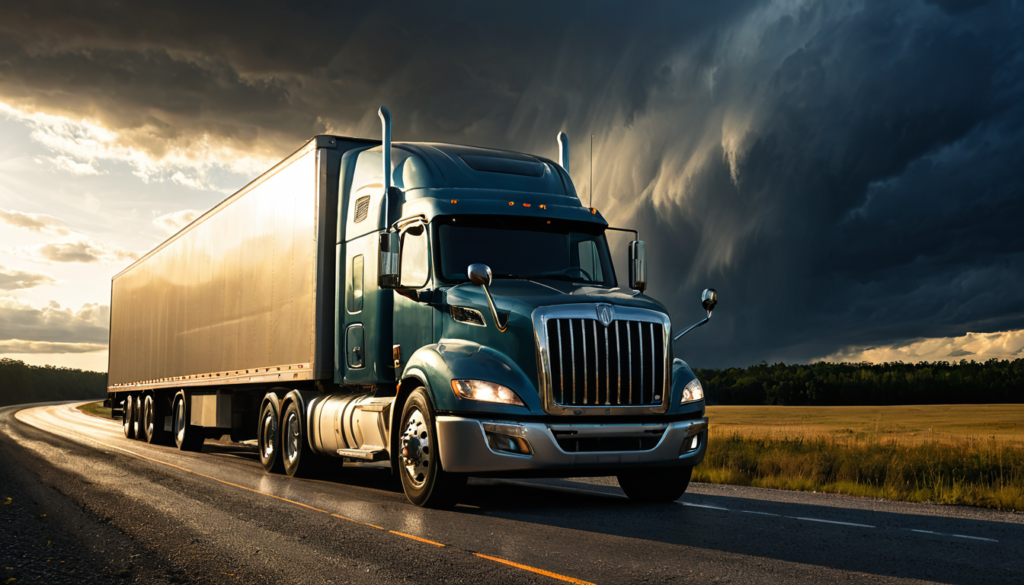
When an 80,000-pound semi-truck changes your life on a Pike County highway, everything changes in an instant. One moment you’re driving home to Troy on US-231 or heading toward Montgomery on the county roads you know by heart. The next, you’re facing catastrophic injuries, mounting medical bills, and a trucking company that already has lawyers working to protect their interests—not yours.
We’re Attorney911, and we’ve been fighting for families across Alabama for over 25 years. Our managing partner Ralph Manginello has spent more than two decades holding trucking companies accountable, and our team includes a former insurance defense attorney who knows exactly how these companies try to minimize your claim. We understand the unique dangers of Pike County’s rural highways, the agricultural trucking corridors that serve our peanut and cotton farmers, and the harsh reality of Alabama’s contributory negligence laws that can bar recovery if you’re found even 1% at fault.
If you or someone you love has been hurt in an 18-wheeler accident anywhere in Pike County—from the streets of Troy to the rural stretches of US-431—you need to act fast. Evidence disappears quickly, and Alabama’s two-year statute of limitations means the clock is already ticking. Call us today at 1-888-ATTY-911 for a free consultation. We work on contingency—you pay nothing unless we win.
Why 18-Wheeler Accidents in Pike County Are Different
Most folks think a truck accident is just a bigger car wreck. That couldn’t be further from the truth. When a fully loaded semi weighing up to 80,000 pounds collides with a 4,000-pound passenger vehicle on a Pike County road, the physics alone guarantee catastrophic results. The force of impact isn’t just doubled—it’s multiplied by a factor of twenty or more when that truck is traveling at highway speeds.
Pike County sits in the heart of Alabama’s Wiregrass region, crisscrossed by major trucking routes including US-231, US-431, and State Route 10. These highways carry everything from agricultural products—our famous peanuts, cotton, and timber—to manufactured goods heading toward Montgomery, Dothan, and the ports of Mobile. The mix of heavy commercial traffic with rural two-lane roads creates unique hazards that experienced trucking attorneys understand.
The Alabama Advantage—or Disadvantage
Here’s something critical you need to understand about trucking accidents in Pike County: Alabama is one of only a handful of states that still follows contributory negligence, the harshest fault rule in America. Under Alabama law, if you’re found even 1% at fault for the accident, you recover absolutely nothing. That means if an insurance adjuster can convince a jury you were slightly speeding, failed to signal, or made any minor error, your entire case could be barred.
This makes having an experienced trucking attorney absolutely essential. Ralph Manginello has navigated Alabama’s contributory negligence waters for 25 years, building cases that withstand these aggressive defenses. We know how to prove the truck driver and trucking company were 100% responsible—because anything less means you get zero in Alabama.
Ralph Manginello: 25 Years Fighting for Pike County Families
Ralph Manginello didn’t just go to law school—he’s been in the trenches since 1998. As managing partner of Attorney911, Ralph brings something rare to Pike County trucking cases: federal court admission to the U.S. District Court for the Southern District of Texas, plus active membership in both the Texas and New York State Bars. When your case involves interstate trucking companies—which many do—this federal experience matters.
Ralph’s resume includes involvement in the landmark BP Texas City Refinery litigation following the 2005 explosion that killed 15 workers and injured 170 more. He’s gone toe-to-toe with Fortune 500 corporations and their armies of lawyers—and won. Currently, he’s litigating a $10 million lawsuit against the University of Houston and Pi Kappa Phi fraternity, demonstrating our firm’s capacity to handle high-stakes, complex litigation.
But what matters most to Pike County families is Ralph’s track record of recoveries. Our firm has secured multi-million dollar settlements for traumatic brain injury victims ($1.5 million to $9.8 million range), amputation cases ($1.9 million to $8.6 million), and wrongful death claims ($1.9 million to $9.5 million). When a logging accident left one client with a traumatic brain injury and vision loss, we recovered over $5 million. When a car wreck led to a partial leg amputation due to staph infection complications, we secured $3.8 million. These aren’t just numbers—they’re the resources families need to rebuild their lives.
The Insurance Defense Advantage: Lupe Peña Knows Their Playbook
Here’s what most personal injury firms in Alabama can’t offer: Our associate attorney Lupe Peña spent years working at a national insurance defense firm before joining Attorney911. He defended trucking companies and their insurers. He sat in their strategy meetings. He knows exactly how they train adjusters to minimize your claim, which defenses they deploy first, and when they’re bluffing about their “final offer.”
Now Lupe uses that insider knowledge against them. When the trucking company’s adjuster calls trying to get a quick recorded statement, Lupe knows the loaded questions they’re trained to ask. When they claim your injuries were “pre-existing,” he knows how to counter that narrative with medical evidence. When they offer pennies on the dollar, he knows when they have millions in coverage they’re hiding.
Lupe is also a third-generation Texan fluent in Spanish. For Pike County’s Hispanic community—many of whom work in agriculture and trucking—this means direct communication without interpreters. Hablamos Español. Llame a Lupe Peña directamente al 1-888-ATTY-911.
Federal Trucking Regulations: The Rules They Broke
Every 18-wheeler on Pike County roads must comply with Federal Motor Carrier Safety Administration (FMCSA) regulations under 49 CFR Parts 390-399. When trucking companies violate these rules—and they often do—they create liability that strengthens your case. Here are the critical regulations we investigate in every trucking accident:
Part 390: General Applicability
Applies to all commercial motor vehicles over 10,001 pounds operating in interstate commerce. If that truck crossed state lines carrying cargo, these federal rules apply, regardless of where the accident occurred in Pike County.
Part 391: Driver Qualification Standards
Trucking companies must maintain a Driver Qualification File for every operator containing:
- Employment application and three-year background check
- Current medical examiner’s certificate (renewed every 2 years maximum)
- Valid CDL documentation
- Annual driving record reviews
- Pre-employment drug testing results
Why this matters for your case: If the driver who hit you on US-231 had a suspended license, failed a recent drug test, or the company never checked his background, that’s negligent hiring—and the trucking company is directly liable.
Part 392: Driving Rules
- § 392.3: No driver shall operate while fatigued or impaired. “Fatigue” includes violating hours-of-service limits or simply being too tired to safely drive.
- § 392.4: Prohibits operating under the influence of drugs.
- § 392.5: Prohibits alcohol use within 4 hours of duty and mandates .04 BAC limit (half the standard for cars).
- § 392.11: Following too closely (tailgating) is prohibited.
- § 392.82: No hand-held mobile phone use while driving.
Part 393: Vehicle Safety & Cargo Securement
Critical for Pike County’s agricultural trucking:
- § 393.100-136: Cargo securement rules requiring tiedowns to withstand 0.8g forward deceleration and 0.5g lateral acceleration.
- § 393.75: Tire requirements—minimum tread depth 4/32″ on steer tires.
- § 393.86: Rear impact guards (underride protection) required on trailers.
When a logging truck overturns on a Pike County curve or a cotton hauler spills its load across SR-10, these regulations determine whether the trucking company followed safety protocols or cut corners to save money.
Part 395: Hours of Service (HOS) Regulations
The most commonly violated trucking rules:
- 11-hour driving limit: Cannot drive more than 11 hours after 10 consecutive hours off duty.
- 14-hour duty window: Cannot drive beyond the 14th consecutive hour after coming on duty.
- 30-minute break: Required after 8 cumulative hours of driving.
- 60/70-hour rule: No driving after 60 hours in 7 days or 70 hours in 8 days.
Electronic Logging Devices (ELDs) have been mandatory since December 2017. These devices track location, speed, and driving time automatically. The data they capture—GPS routes through Pike County, hours of service violations, hard braking events—can prove the driver was fatigued or speeding before the crash.
Part 396: Inspection & Maintenance
- § 396.3: Requires systematic inspection, repair, and maintenance of all commercial vehicles.
- § 396.11: Drivers must complete written post-trip inspection reports covering brakes, steering, tires, and lighting.
- § 396.13: Pre-trip inspections required before every driving day.
Brake problems contribute to approximately 29% of large truck crashes. If the Pike County truck that hit you had worn brakes, skipped inspections, or deferred maintenance to save money, we will find that violation and use it to prove negligence.
The 15 Types of 18-Wheeler Accidents We Handle
Not all trucking accidents are the same, and each type requires specific investigative techniques and legal strategies. Here are the accident types we see on Pike County roads:
1. Jackknife Accidents
Occurs when the trailer skids sideways, folding at an angle like a pocket knife. Common on wet roads or when drivers brake improperly on curves. On Pike County’s rural highways with limited shoulders, a jackknifed trailer often blocks both lanes, causing multi-vehicle pileups. We analyze ECM data for speed and brake application timing.
2. Rollover Accidents
Tanker trucks and high-center-of-gravity loads are prone to rolling on curves—particularly dangerous on the tight turns of county roads near Troy or the uneven shoulders of US-431. Cargo shifts (liquid surge or unbalanced agricultural loads) are frequent causes. We secure loading records and weight distribution documentation.
3. Underride Collisions
Among the deadliest accidents: when a smaller vehicle slides under the trailer. Rear underride occurs when trucks stop suddenly; side underride happens during lane changes or turns. While 49 CFR § 393.86 mandates rear impact guards on newer trailers, many trucks still lack adequate side underride protection. These accidents often cause decapitation or catastrophic head trauma.
4. Rear-End Collisions
An 80,000-pound truck requires nearly 525 feet—almost two football fields—to stop from 65 mph. When truck drivers follow too closely on I-85 connectors or US-231, they can’t stop in time for traffic slowing through Troy. We download ECM data to prove following distance and reaction time.
5. Wide Turn Accidents (“Squeeze Play”)
18-wheelers swing wide left before making right turns to avoid hitting curbs. Unsuspecting Pike County drivers may enter the gap on the right, only to be crushed when the truck completes its turn. Common at intersections near shopping centers and industrial zones.
6. Blind Spot (“No-Zone”) Accidents
Trucks have massive blind spots: 20 feet in front, 30 feet behind, and vast areas on both sides (especially the right). When changing lanes on US-231 or merging onto US-431, truck drivers who fail to check mirrors can sideswipe passenger vehicles. 49 CFR § 393.80 requires proper mirrors—missing or poorly adjusted mirrors constitute violations.
7. Tire Blowout Accidents
Hot Alabama summers and long hauls on US-231 generate heat that degrades tires. When semi-truck tires blow, drivers often lose control, or debris creates secondary accidents. We examine tire maintenance records and inflation logs.
8. Brake Failure Accidents
Defective or poorly maintained braking systems cause high-speed rear-end collisions. Given Pike County’s rolling terrain approaching the Piedmont, brake fade on long descents is a real risk. We demand inspection reports and mechanic work orders.
9. Cargo Spill & Shift Accidents
When improperly secured peanuts, cotton, or timber shifts during transport, the sudden weight transfer can cause rollovers. Spilled cargo on dark rural roads creates deadly hazards. 49 CFR § 393.100 regulates cargo securement—violations prove negligence.
10. Head-On Collisions
Often occur when fatigued drivers drift across the centerline on two-lane highways like SR-10 or SR-87. ELD data showing hours-of-service violations becomes critical evidence.
11. T-Bone Accidents
Intersection crashes when trucks run red lights or fail to yield, common at congestated crossings in Troy and on US-231.
12. Sideswipe Accidents
Lane departure without proper signaling or mirror checks, often pushing smaller vehicles off narrow rural shoulders.
13. Override Accidents
Similar to underride but the truck drives over the vehicle in front, often due to complete brake failure or driver inattention in traffic.
14. Lost Wheel/Detached Trailer Accidents
Catastrophic mechanical failures where wheels or trailers separate at highway speeds. Maintenance records reveal whether the trucking company ignored warning signs.
15. Runaway Truck Accidents
On the eastern edge of Pike County where terrain becomes hillier, brake fade on long grades can lead to runaway trucks. These often result in massive multi-vehicle pileups at the bottom of hills.
All 10 Liable Parties: Who Can You Sue?
Unlike a simple car accident, trucking cases often involve multiple defendants with multiple insurance policies. We investigate every potentially liable party to maximize your recovery:
1. The Truck Driver: Direct negligence for speeding, distraction, fatigue, or impairment. We subpoena cell phone records and drug test results.
2. The Trucking Company (Motor Carrier): Vicarious liability under respondeat superior makes them responsible for their employee’s negligence. Plus direct liability for negligent hiring, training, supervision, or maintenance. Most carry $750,000 to $5 million in coverage.
3. The Cargo Owner/Shipper: Companies loading agricultural products or manufactured goods may be liable if they demanded unrealistic delivery schedules (causing HOS violations) or failed to disclose hazardous cargo.
4. The Loading Company: Third-party warehouses that loaded the trailer may be liable for improper weight distribution or insecure cargo causing shifts or spills.
5. The Truck Manufacturer: Defective brake systems, steering mechanisms, or fuel tank placement causing fires can trigger product liability claims against manufacturers like Freightliner, Peterbilt, or Kenworth.
6. Parts Manufacturers: Companies producing defective tires, brake components, or lighting systems.
7. The Maintenance Company: Third-party repair shops that performed negligent brake adjustments or tire installations may share liability.
8. The Freight Broker: Brokers connecting shippers with carriers may be liable for negligent selection—hiring a carrier with poor safety records or inadequate insurance.
9. The Truck Owner: In owner-operator situations, the individual or leasing company owning the equipment may have separate insurance and liability.
10. Government Entities: If poor road design, missing guardrails, or inadequate signage contributed to the accident on a Pike County road, the county or state may bear partial responsibility (though sovereign immunity limits apply in Alabama).
Catastrophic Injuries & Alabama Damage Caps
Trucking accidents cause life-changing injuries. Our firm has recovered multi-million dollar settlements for:
Traumatic Brain Injury (TBI)
Even “mild” concussions can cause permanent cognitive changes. Moderate to severe TBI may require lifetime care. Our settlements for TBI cases range from $1.5 million to $9.8 million, covering medical expenses, lost earning capacity, and pain and suffering.
Spinal Cord Injury & Paralysis
Complete spinal cord injuries causing paraplegia or quadriplegia require extensive home modifications, wheelchairs, and personal care. Settlements typically range from $4.7 million to $25.8 million depending on age and severity.
Amputation
Traumatic limb loss or surgical amputation due to crush injuries changes everything. We secure funds for prosthetics (which need replacement every few years), rehabilitation, and home modifications. Ranges: $1.9 million to $8.6 million.
Severe Burns
Fuel fires and hazmat spills cause third-degree burns requiring skin grafts and reconstructive surgery.
Wrongful Death
When trucking accidents kill Pike County residents, surviving family members may recover $1.9 million to $9.5 million or more for lost income, loss of consortium, and mental anguish.
Alabama Punitive Damage Limits
Alabama caps punitive damages at three times compensatory damages or $500,000, whichever is greater. However, given the potential for multi-million dollar compensatory awards in trucking cases, substantial punitive damages remain available when trucking companies act with reckless disregard for safety.
The 48-Hour Evidence Emergency
Critical evidence in trucking accidents disappears fast—often within days. While Alabama gives you two years to file suit, waiting even two weeks can destroy your case.
What disappears:
- ECM/Black Box Data: Overwritten in 30 days or with subsequent ignition cycles.
- ELD Logs: FMCSA only requires 6 months retention, but some systems overwrite sooner.
- Dashcam Footage: Often deleted within 7-14 days.
- Driver Qualification Files: May be “lost” if the company fears litigation.
- Witness Statements: Memories fade; rural witnesses may be hard to locate later.
What we do immediately:
Within 24-48 hours of being retained, we send spoliation letters to the trucking company, driver, and any maintenance companies demanding preservation of:
- Electronic logging devices and ECM downloads
- Driver qualification files and employment records
- Maintenance and inspection logs
- Dispatch records and delivery schedules
- Cell phone records and Qualcomm data
- The physical truck and trailer (before repairs)
If they destroy evidence after receiving our letter, Alabama courts can impose sanctions or instruct the jury to assume the destroyed evidence was unfavorable to the trucking company.
What To Do After a Pike County Trucking Accident
If you’re reading this from a hospital bed or dealing with the aftermath of a crash on US-231, here’s your immediate action plan:
- Seek Medical Attention: Internal injuries and TBIs may not show symptoms immediately. Get checked at Troy Regional Medical Center or Baptist South in Montgomery.
- Document Everything: Photograph all vehicles, damage, license plates, the truck’s DOT number, and your injuries.
- Don’t Speak to Insurance: The trucking company’s insurer will call quickly. Do not give recorded statements. Anything you say will be used to minimize your claim.
- Call Attorney911: Reach us 24/7 at 1-888-ATTY-911 or (888) 288-9911.
Hablamos Español. For Spanish-speaking clients in Pike County, Lupe Peña provides direct representation without interpreters.
Frequently Asked Questions for Pike County Trucking Accident Victims
How long do I have to file a trucking accident lawsuit in Alabama?
Alabama’s statute of limitations is two years from the accident date for both personal injury and wrongful death claims. However, you should contact an attorney immediately because evidence disappears long before the deadline.
What if I was partially at fault for the accident?
Alabama follows contributory negligence—harshly. If you’re found even 1% at fault, you recover nothing. This makes hiring an experienced attorney critical to prove the truck driver was 100% responsible.
How much is my Pike County trucking accident case worth?
Values depend on injury severity, medical costs, lost wages, and insurance coverage. Trucking companies carry $750,000 to $5 million in federal minimum insurance. Our firm has recovered settlements ranging from hundreds of thousands to millions.
Who pays my medical bills while the case is pending?
We can help you find medical providers who accept Letters of Protection—treating you now and getting paid from your settlement later. We also pursue the trucking company’s insurance for immediate relief.
Can I sue the trucking company if the driver was an independent contractor?
Often yes. We investigate whether the company exercised control over the driver and whether they should be held liable under vicarious liability or negligent hiring theories.
What if the truck was carrying hazardous materials?
Hazmat carriers must carry $5 million in insurance minimums. These cases involve additional FMCSA regulations (Part 397) and often cause severe burn or chemical exposure injuries.
Will my case go to trial?
Most settle, but we prepare every case as if it’s going to the Pike County Circuit Court or federal court. Insurance companies offer better settlements when they know your lawyer will actually try the case—and Ralph Manginello has the federal court experience to do just that.
How do contingency fees work?
You pay zero upfront. We advance all investigation costs. Our fee is 33.33% if settled before trial, 40% if trial is necessary. If we don’t recover for you, you owe us nothing.
Why Pike County Families Choose Attorney911
Don’t just take our word for it. Our clients say it best:
Chad Harris put it simply: “You are NOT just some client… You are FAMILY to them.”
Donald Wilcox knows what happens when other firms give up: “One company said they would not accept my case. Then I got a call from Manginello… I got a call to come pick up this handsome check.”
Glenda Walker understood our commitment: “They fought for me to get every dime I deserved.”
Ernest Cano described our approach: “Mr. Manginello and his firm are first class. Will fight tooth and nail for you.”
Kiimarii Yup experienced the full recovery: “I lost everything… my car was at a total loss, and because of Attorney Manginello and my case worker Leonor, 1 year later I have gained so much in return plus a brand new truck.”
Angel Walle appreciated our efficiency: “They solved in a couple of months what others did nothing about in two years.”
With 251+ Google reviews maintaining a 4.9-star average, our reputation speaks for itself.
Educational Resources: Learn More
We believe informed clients make better decisions. Watch our educational videos:
- “The Victim’s Guide to 18-Wheeler Accident Injuries” — Understanding your rights after a commercial truck crash.
- “Can I Sue for Being Hit by a Semi Truck?” — Steps to take immediately after a trucking accident.
- “Truck Tire Blowouts and When You Need a Lawyer” — 11,000+ crashes yearly caused by tire failures.
- “The Definitive Guide To MCS 90 Auto Endorsements” — Understanding trucking insurance minimums.
- “What Should You Not Say to an Insurance Adjuster?” — Protecting your claim from common traps.
Call Attorney911 Today: Your Pike County Trucking Accident Attorneys
The trucking company already has lawyers working to minimize your claim. They may have investigators at the scene before the police finish their report. You need someone fighting just as hard for you.
At Attorney911, we bring:
- 25+ years of trucking litigation experience (Ralph Manginello)
- Former insurance defense insider knowledge (Lupe Peña)
- Multi-million dollar verdicts and settlements
- Federal court experience for interstate cases
- Three offices serving Alabama and beyond (Houston, Austin, Beaumont)
- 24/7 availability at 1-888-ATTY-911
- Spanish-speaking representation
The clock is ticking. Evidence is disappearing. And Alabama’s contributory negligence laws mean you cannot afford to make a single mistake.
If you’ve been hurt in an 18-wheeler accident in Pike County—whether on US-231 through Troy, US-431 near the county line, or any rural road in between—call us now. One call could be the difference between struggling with unpaid medical bills and securing the financial future your family needs.
Call 1-888-ATTY-911 (1-888-288-9911) now. Free consultation. No fee unless we win.
Hablamos Español. Llame hoy al 1-888-ATTY-911.
We’re Attorney911. When trucking companies strike Pike County families, we strike back.