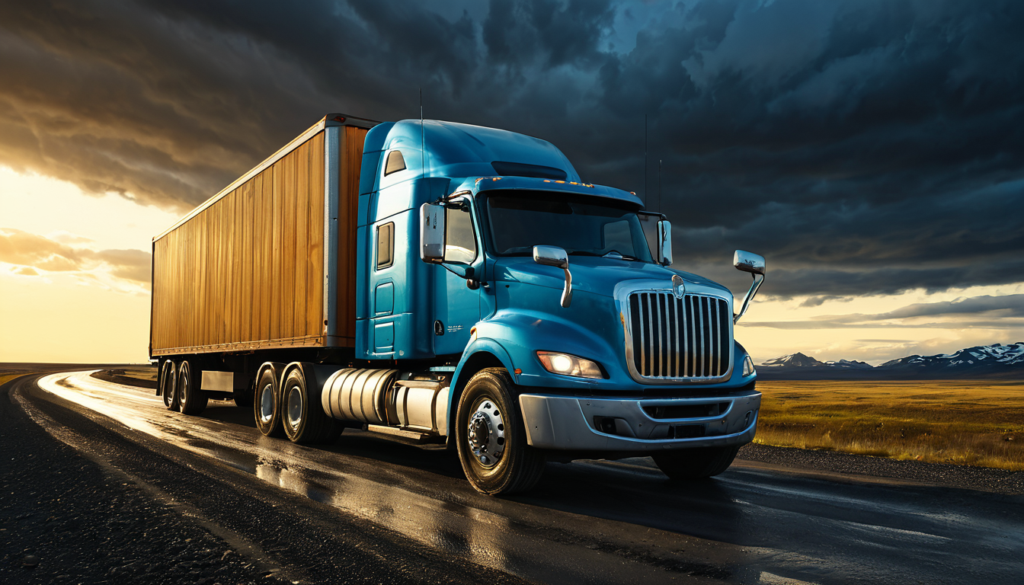
18-Wheeler Accident Attorneys in North Slope Borough: Fighting for Justice on Alaska’s Haul Roads
When 80,000 Pounds Meets Arctic Conditions: Your Recovery Starts Here
The Dalton Highway stretches north from Livengood toward Prudhoe Bay, cutting through 414 miles of some of the most unforgiving terrain in North America. When an 80,000-pound rig hauling oil field equipment loses control on black ice near Deadhorse, or when a tanker jackknifes in whiteout conditions on the North Slope, the devastation is immediate—and the legal battle that follows requires a law firm that understands both federal trucking regulations and the unique challenges of Alaska’s Arctic frontier.
If you’ve been injured in an 18-wheeler accident in North Slope Borough, you already know what makes these cases different from standard car crashes. The remoteness. The extreme cold that destroys evidence within hours. The oil field traffic that never stops. The trucking companies that think they can hide behind Alaska’s vast distances to avoid accountability.
At Attorney911, we don’t let them hide. Ralph Manginello has spent over 25 years taking on trucking companies and winning, including federal court experience that matters deeply in Alaska’s unique legal landscape. From our offices in Houston, Austin, and Beaumont, we handle catastrophic trucking accidents nationwide—including the hard-fought cases on Alaska’s North Slope where other firms won’t venture. And with Lupe Peña, our associate attorney who used to work for insurance companies, we bring insider knowledge of exactly how trucking insurers try to minimize claims from remote locations like North Slope Borough.
Call now: 1-888-ATTY-911.
Understanding the North Slope Borough Trucking Landscape
North Slope Borough isn’t like anywhere else in America. Covering over 94,000 square miles of Arctic tundra, this region has no Interstate highways—instead, it relies on the Dalton Highway (also known as the Haul Road), the Alaska Highway, seasonal ice roads, and the Prudhoe Bay oil fields’ extensive logistics networks.
The trucking industry here isn’t just about freight—it’s about survival. Everything from food to medical supplies to drilling equipment moves by truck through some of the most hazardous driving conditions on Earth. Temperatures regularly drop to -40°F. Black ice forms without warning. Wildlife—including massive moose—cross roads unexpectedly. And the sun either doesn’t set for months or doesn’t rise at all, creating whiteout and blackout driving conditions that test even the most experienced drivers.
Major trucking corridors in North Slope Borough include:
- The Dalton Highway: The primary artery to Prudhoe Bay, notorious for steep grades, sharp curves, and extreme weather
- The Elliot Highway: Connecting to the Dalton, serving remote communities
- Alaska Route 11: The official designation for the Dalton’s northern stretches
- Ice Roads: Seasonal routes across frozen tundra that require specialized equipment and training
The carriers operating here—companies like Carlile Transportation, Lynden Transport, and numerous oil field contractors—face challenges unknown in the lower 48. But those challenges don’t excuse negligence. When they cut corners on maintenance, push drivers beyond their limits, or fail to secure cargo against Arctic winds, innocent people pay the price.
Why North Slope Borough Trucking Accidents Demand Immediate Legal Action
The most dangerous words after a North Slope truck accident might be “Let’s wait and see.” In the Arctic environment, evidence disappears faster than almost anywhere else on Earth. Black box data can be overwritten within 30 days. Skid marks become invisible under fresh snow within hours. Witnesses in remote oil camps scatter across the country. And the harsh conditions—extreme cold, wind, and ice—can destroy physical evidence if not preserved immediately.
That’s why Attorney911 acts immediately when we take a North Slope Borough case. Within 24 hours, we send spoliation letters to preserve:
- ECM/Black box data from the truck
- ELD logs proving hours of service violations
- Driver Qualification Files (critical in Alaska where CDL requirements are stringent)
- Maintenance records (especially regarding cold-weather equipment)
- GPS and telematics data from remote locations
As Ralph Manginello often tells prospective clients: “The trucking company has lawyers working right now to protect their interests. What are you doing to protect yours?”
We know the North Slope. We understand that your case might involve a collision near the Sag River, a rollover on Franklin Bluffs, or a cargo spill at Prudhoe Bay. And we know that the trucking companies operating here often rely on Alaska’s remoteness to discourage victims from pursuing justice. We don’t discourage— we fight harder.
Types of 18-Wheeler Accidents We Handle on the North Slope
Jackknife Accidents on Ice
When a truck driver brakes too hard on the Dalton Highway’s icy curves, the trailer swings out perpendicular to the cab—a jackknife. On the North Slope, these accidents often block the only road for miles, creating secondary collisions as other vehicles slide into the wreck. 49 CFR § 392.6 requires drivers to adjust speed for conditions. When they fail to slow down for ice, and their 49 CFR § 393.48 brake systems aren’t properly maintained for Arctic conditions, we hold them accountable.
Evidence we pursue: ECM data showing speed through curves, brake inspection records proving inadequate cold-weather maintenance, driver training records regarding ice driving.
Brake Failure in Extreme Cold
Brake systems fail differently at -40°F. Air lines freeze. Moisture in the system creates ice blockages. Hydraulic fluids thicken. 49 CFR § 396.3 requires systematic inspection and maintenance, but on the North Slope, maintenance often gets deferred because “it’s too cold to work on the truck.” When that deferred maintenance causes a brake failure descending Atigun Pass, the results are catastrophic.
Evidence we pursue: Maintenance records showing skipped cold-weather inspections, mechanic work orders, parts replacement history, driver post-trip inspection reports (49 CFR § 396.11).
Cargo Spills on Ice Roads
The oil fields require constant resupply—pipes, machinery, chemicals, fuel. When 49 CFR § 393.100 cargo securement standards aren’t met, and a load shifts on a curve or the truck’s center of gravity changes on ice, the truck rolls or spills its cargo. Hazmat spills on the tundra create environmental disasters alongside personal injuries.
Evidence we pursue: Cargo manifest, loading company records, tiedown specifications, weigh station records, bills of lading.
Underride Collisions
In the perpetual darkness of Arctic winter, visibility is already compromised. When a truck stops suddenly on the Dalton Highway and a passenger vehicle slides underneath because 49 CFR § 393.86 rear impact guards were inadequate or missing, the results are often fatal. Side underride—particularly dangerous on narrow ice roads—can decapitate vehicle occupants.
Evidence we pursue: Guard inspection records, lighting compliance documentation, visibility studies from the accident moment, post-crash guard deformation analysis.
Wildlife Collisions and Secondary Impacts
Moose and caribou migrate across North Slope highways. When a truck swerves to avoid wildlife and jackknifes, or when a fatigued driver (49 CFR § 395.3 violations) doesn’t see the animal until it’s too late, catastrophic chain-reaction collisions follow.
Evidence we pursue: ELD data showing fatigue, dispatch records regarding route timing, driver cell phone records, wildlife migration pattern data.
Rollovers on Grades
The Brooks Range descents—including Atigun Pass—feature steep grades and sharp curves. An 80,000-pound truck traveling too fast for these conditions (49 CFR § 392.6) can roll, especially if cargo shifts (49 CFR § 393.100) or brakes overheat and fade.
Evidence we pursue: ECM speed data, cargo securement documentation, driver qualification files proving mountain driving training (or lack thereof), road design specifications.
Who’s Liable for Your North Slope Borough Truck Accident
Trucking accidents involve a web of potentially liable parties—far more complex than a simple car crash. We investigate every angle to maximize your recovery:
1. The Truck Driver
Speeding on ice, driving while fatigued beyond 11-hour federal limits, distracted driving, or operating under the influence. We subpoena ELD logs, cell phone records, and drug test results (49 CFR § 392.4, 392.5).
2. The Trucking Company/Motor Carrier
Under respondeat superior, employers are liable for their drivers’ negligence. But we also look for negligent hiring (hiring drivers without cold-weather experience), negligent training (failing to train for Arctic conditions), and negligent maintenance (skipping winterization). Alaska’s pure comparative fault rule means even if you were partially at fault, you can recover (damages reduced by your percentage).
3. The Oil Company or Cargo Owner
When the cargo is oil field equipment bound for Prudhoe Bay, the oil company may have specified unsafe loading or delivery schedules that contributed to driver fatigue. They may have required overweight loads that compromised stability on ice.
4. The Loading Company
Third-party companies loading at Deadhorse or Prudhoe Bay facilities. When they fail to secure cargo against FMCSA standards or overload trailers for Arctic hauls, they share liability.
5. Maintenance Companies
Specialized Arctic maintenance is required in North Slope conditions. When a third-party shop fails to winterize brakes, fuel systems, or tires, or returns a vehicle to service with known defects (49 CFR § 396.3), they’re liable.
6. Freight Brokers
Brokers arranging transport to the North Slope oil fields must verify carrier safety records. When they select the cheapest carrier with poor CSA scores or inadequate Arctic experience, they may be liable for negligent selection.
7. Truck/Parts Manufacturers
Defective anti-lock brake systems (ABS) designed for temperate climates that fail in Arctic conditions. Defective tires rated for extreme cold. Failures in steering mechanisms on the Dalton Highway’s sharp curves.
8. Government Entities
The Alaska Department of Transportation maintains these remote highways. When inadequate signage, missing guardrails on dangerous grades, or failure to clear ice contributed to the crash, sovereign immunity may still allow recovery (though limited by Alaska’s governmental liability caps).
The FMCSA Regulations That Protect North Slope Drivers
Federal Motor Carrier Safety Administration (FMCSA) regulations apply with full force on Alaska’s North Slope. These aren’t just technicalities—they’re lifelines designed to prevent exactly the type of catastrophic accidents that occur here.
Hours of Service (49 CFR Part 395)
Alaska has a 2-year statute of limitations for personal injury and wrongful death claims—longer than some states, but evidence disappears much faster in Arctic conditions. The Hours of Service rules are critical here:
- 11-hour driving limit maximum after 10 consecutive hours off duty
- 14-hour duty window—cannot drive beyond the 14th consecutive hour
- 30-minute break required after 8 cumulative hours driving
- 60/70-hour weekly limits
In the “Land of the Midnight Sun” or during the polar night, circadian rhythms are disrupted. Fatigue is constant. When drivers violate these limits to meet oil field delivery schedules, they create deadly hazards on the Dalton Highway.
Driver Qualification (49 CFR Part 391)
North Slope trucking requires specialized skills. The Driver Qualification File must contain:
- Valid CDL with proper endorsements
- Medical examiner’s certificate (critical for Arctic health conditions)
- Previous employer inquiries for 3-year driving history
- Verification of cold-weather and ice-road training
- Drug and alcohol testing records (49 CFR Part 382)
When trucking companies hire drivers unfamiliar with Arctic conditions or fail to verify their ability to handle black ice and whiteouts, they’ve committed negligent hiring.
Vehicle Safety and Maintenance (49 CFR Parts 393 & 396)
Arctic trucking requires specialized equipment:
- Tire chains or studded tires for ice
- Cold-weather fuel additives to prevent gelling
- Block heaters and battery warmers
- Reinforced underride guards for moose collisions
49 CFR § 396.3 requires systematic inspection and maintenance. Every pre-trip inspection (49 CFR § 396.13) in North Slope conditions should include checking these cold-weather systems. Post-trip reports (49 CFR § 396.11) must document any defects. When these inspections are skipped because “it’s too cold to check the truck,” and that negligence causes an accident, the liability is clear.
Cargo Securement (49 CFR § 393.100-136)
Arctic winds on the North Slope can exceed 60 mph. Ice roads have limited traction. The performance criteria for cargo securement—withstanding 0.8g deceleration forward, 0.5g rearward and lateral—become critical when a truck hits ice. Improper securement causes rollovers and spills that shut down the only road to Prudhoe Bay.
Catastrophic Injuries: The Reality of North Slope Truck Accidents
When a passenger vehicle collides with an 80,000-pound 18-wheeler on the Dalton Highway, the physics are devastating. Add in the remoteness—where emergency medical help might be an hour or more away, and medevac requires landing a helicopter in -40°F conditions—and injuries become catastrophic.
Traumatic Brain Injury (TBI)
The impact forces in truck accidents cause the brain to strike the inside of the skull, even without direct head contact. TBI settlements typically range from $1.5 million to $9.8 million+, depending on severity. In North Slope cases, the delayed medical response often exacerbates TBI severity—hypothermia complicates brain swelling, and evacuation delays mean secondary injuries.
Spinal Cord Injury and Paralysis
Quadriplegia and paraplegia settlements range from $4.7 million to $25.8 million+. On the North Slope, these injuries present unique challenges—accessing specialized spinal cord rehabilitation in Anchorage or Seattle while living in a remote Arctic community creates extraordinary expenses.
Amputations
Crushing injuries frequently require amputation. Settlements range from $1.9 million to $8.6 million. Prosthetics in Arctic climates require specialized design—standard prosthetics fail in extreme cold. The lifetime cost of Arctic-adapted prosthetic limbs far exceeds standard projections.
Wrongful Death
When the unthinkable happens and a loved one is killed on the Dalton Highway or elsewhere in North Slope Borough, wrongful death settlements range from $1.9 million to $9.5 million+. Alaska’s 2-year statute of limitations applies, but given the remote location of many North Slope accidents, investigations take longer—making immediate legal action critical.
The Insurance Battle: Why You Need an Insider on Your Side
Federal law requires trucking companies to carry minimum liability insurance:
- $750,000 for non-hazardous freight
- $1,000,000 for oil and equipment transport (common on the North Slope)
- $5,000,000 for hazardous materials
But here’s the truth trucking companies don’t want you to know: they don’t want to pay, especially in remote Alaska cases where they think you’ll give up or settle cheap because of the distance and difficulty.
This is where Lupe Peña changes everything. As our associate attorney and a former insurance defense lawyer, Lupe spent years inside the system watching adjusters minimize claims, deny legitimate injuries, and use algorithms to lowball settlements. He saw how they specifically target remote cases—thinking Alaskan victims won’t have the resources to fight.
Now he uses that insider knowledge against them. He knows:
- How they evaluate claims using software like Colossus
- When they’re bluffing about “policy limits”
- How they train adjusters to get recorded statements that harm your case
- Why they rush to settle before the full extent of Arctic-related injuries (like frostbite complications or hypothermia alongside trauma) becomes apparent
Hablamos Español. For Spanish-speaking victims and families in North Slope Borough’s diverse workforce, Lupe provides direct representation without interpreters. Llame al 1-888-ATTY-911.
Immediate Actions After a North Slope Truck Accident
If you’re reading this in the aftermath of a truck accident in North Slope Borough—whether near Prudhoe Bay, Deadhorse, or along the Dalton Highway—here’s what you need to know:
Immediate Medical Care
North Slope Borough has limited medical facilities. You may have been treated at the Samuel Simmonds Memorial Hospital in Utqiagvik (Barrow) or flown to Fairbanks or Anchorage. Do not refuse follow-up care because of distance. Insurance companies will use delayed treatment to deny claims—don’t let Arctic geography become their excuse.
Document Everything
In Arctic conditions, evidence preservation is critical but difficult:
- Photograph the scene before snow covers skid marks
- Document ice conditions and weather immediately
- Get witness information from oil field workers who may leave the state quickly
- Ensure the truck’s “black box” and ELD are preserved
Do Not Speak to Trucking Company Insurance
The trucking company’s insurer may try to get a recorded statement while you’re still in shock from the accident or facing Arctic medical evacuation stress. Do not give recorded statements. They are trained to minimize your claim, especially in remote Alaska cases where they hope you’ll take a quick settlement just to cover immediate medevac costs.
Call Attorney911 Immediately: 1-888-ATTY-911
We understand the urgency of North Slope cases. We send immediate preservation letters to prevent spoliation of evidence, and we have the resources to handle claims involving Alaska’s unique logistics.
Common Questions About North Slope Borough Truck Accidents
How long do I have to file a lawsuit in North Slope Borough?
Alaska has a 2-year statute of limitations for personal injury and wrongful death cases. However, waiting is dangerous—evidence disappears quickly in Arctic conditions, and witnesses scatter. Contact us immediately.
What if I was partially at fault for the accident?
Alaska follows pure comparative negligence. You can recover damages even if you were 99% at fault (though reduced by your percentage). Don’t let the trucking company convince you that because you were driving on ice or in whiteout conditions, you have no case.
Can I sue if the accident happened on an ice road or private oil field road?
Yes. While this complicates jurisdiction, FMCSA regulations often still apply, and different liability rules (like premises liability) may actually strengthen your case. We’ve handled cases involving private North Slope oil field roads.
What if the truck driver was an independent contractor?
Many North Slope drivers are owner-operators. This doesn’t eliminate liability—the trucking company that contracted them may still be vicariously liable, or the driver may have independent insurance coverage. We investigate all possibilities.
How much is my case worth?
There is no “average” settlement for North Slope truck accidents. Factors include: severity of injuries, permanent disability, medical evacuation costs (which can reach $50,000+ in Alaska), lost wages in the high-paying oil field sector, and degree of negligence. We’ve recovered multi-million dollar settlements for catastrophic trucking injuries.
Do you handle cases involving Alaska Native-owned corporations?
Yes. Many North Slope transportation companies are owned by Alaska Native corporations. These cases require sensitivity and understanding of unique corporate structures while aggressively pursuing justice for victims.
What if I live in Texas but was injured on the North Slope?
We frequently represent workers from Texas and the lower 48 injured while working Alaska’s oil fields. Our federal court admission allows us to handle these interstate cases seamlessly.
Will my case go to trial?
Most settle, but we prepare every case as if it’s going to trial. For North Slope cases, we bring in Alaska-specific experts—accident reconstructionists familiar with Arctic conditions, medical experts who understand cold-weather trauma complications, and local investigators.
Why Trucking Companies Fear Attorney911
Ralph Manginello didn’t become one of the most respected trucking accident attorneys by accepting lowball settlements. Since 1998, he’s been admitted to federal court (Southern District of Texas), handled cases against Fortune 500 companies like BP, and recovered $50 million+ for clients.
But beyond the numbers, trucking companies fear us because of our investigation intensity. We don’t just accept the police report from Alaska State Troopers—we send our own investigators to the North Slope. We:
- Download ECM data before it overwrites
- Preserve ELD logs showing hours of service violations
- Subpoena maintenance records from Arctic maintenance facilities
- Interview witnesses before they rotate out of the oil fields
- Retain engineers to analyze black ice and cold-weather mechanical failures
Our contingency fee structure means you pay nothing unless we win. We advance all investigation costs—including the substantial expenses of North Slope experts and travel. You focus on healing; we focus on winning.
As Glenda Walker, one of our clients, said: “They fought for me to get every dime I deserved.” That’s the Attorney911 promise—whether your case is in Houston, Austin, Beaumont, or the frozen reaches of the North Slope Borough.
The Sooner You Call, The Stronger Your Case
In North Slope Borough, the clock ticks differently than in the lower 48. Evidence freezes, then melts. Witnesses leave on rotating shifts. Black box data is overwritten as trucks continue operating on the Dalton Highway. The trucking company has already called their lawyers—have you called yours?
Call Attorney911 now: 1-888-ATTY-911 (888-288-9911)
We’re available 24/7 because we know truck accidents don’t wait for business hours—especially not on the North Slope, where the sun doesn’t rise for months or doesn’t set for months, and the trucks roll 24/7 to keep the oil fields operating.
With 25+ years of experience, federal court capability, and a former insurance defense attorney on your side, we have the tools to take on the trucking giants—even in the Arctic wilderness of North Slope Borough.
Hablamos Español. Para consulta gratuita, llame al 1-888-ATTY-911 y pregunte por Lupe Peña.
Don’t let the trucking company tell you that because you’re in North Slope Borough, you’re too remote for justice. At Attorney911, we bring the fight to them—wherever they are.
1-888-ATTY-911