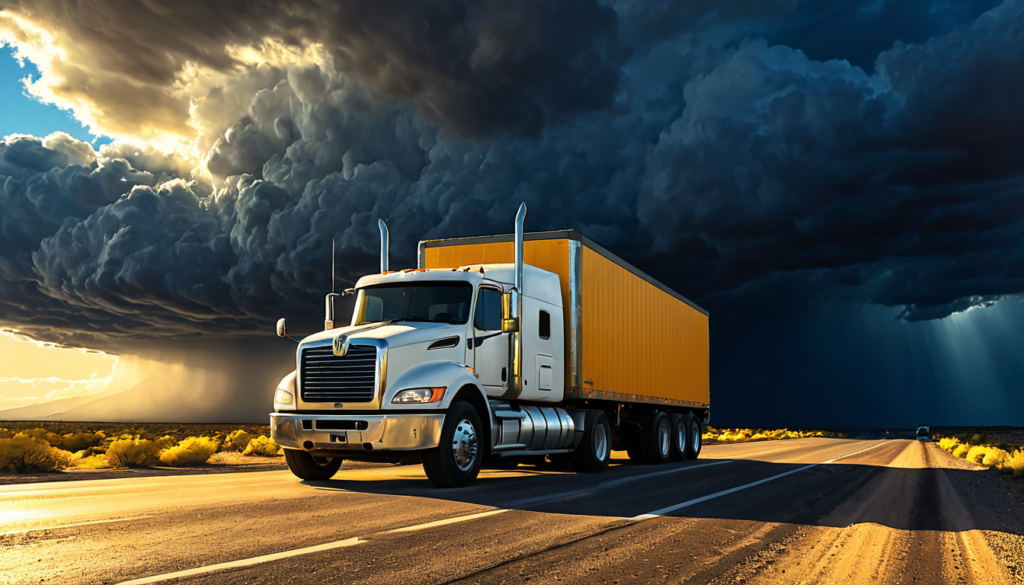
The 80,000-pound behemoth looms in your rearview mirror as you traverse I-10 through Cochise County, the desert sun blazing off its chrome grille. In that split second before impact, you realize a terrifying truth—your sedan is no match for twenty tons of steel hurtling across the Arizona desert. When the dust settles and the emergency responders arrive, you’re left facing injuries that will reshape your life, medical bills climbing toward six figures, and a trucking company that’s already working to minimize what they owe you.
We are Attorney911, and we’ve spent over 25 years fighting for trucking accident victims across Cochise County and throughout Arizona. When an 18-wheeler crash changes everything, you need a legal team that moves fast. Evidence in Cochise County commercial truck cases can vanish within days—black box data gets overwritten, driver logs “disappear,” and maintenance records mysteriously develop gaps. That’s why we send preservation letters within 24 hours of your call. Reach us now at 1-888-ATTY-911 if you’ve been hurt anywhere in Cochise County.
Why Trucking Accidents in Cochise County Demand Immediate Action
Cochise County’s unique position along the U.S.-Mexico border and the I-10 corridor creates a perfect storm for catastrophic trucking accidents. The interstate cuts through desert terrain where triple-digit temperatures bake asphalt to scorching temperatures, where sudden monsoons turn highways into hydroplaning hazards, and where long-haul truckers pushing from California toward Texas often violate federal hours-of-service regulations to make delivery deadlines.
Ralph Manginello, our managing partner who has fought for injury victims since 1998, knows the Cochise County trucking corridors intimately. With federal court admission to the Southern District of Texas and experience litigating against Fortune 500 corporations like BP, Ralph understands how trucking companies operate. But here is what makes us different from any other firm advertising in Cochise County—our team includes Lupe Peña, a former insurance defense attorney who spent years inside the system working for trucking insurers. Lupe knows exactly how commercial carriers evaluate claims, how they train adjusters to minimize payouts, and when they’re bluffing about their settlement authority. Now he uses that insider knowledge against them.
As Donald Wilcox told us after we took his case other firms rejected: “One company said they would not accept my case. Then I got a call from Manginello… I got a call to come pick up this handsome check.” That is the Attorney911 difference—we see what other firms miss, and we fight harder because we know their playbook.
The Cochise County Trucking Landscape: Where Danger Meets Commerce
Interstate 10 serves as the primary artery through Cochise County, connecting the ports of Los Angeles and Long Beach to the distribution centers of the East Coast. This isn’t just any highway—it is one of the busiest freight corridors in North America, carrying everything from Mexican produce through the Douglas Port of Entry to manufactured goods heading west. The stretch between Benson and the New Mexico border sees consistent heavy truck traffic, often compounded by agricultural vehicles moving between Willcox and the border regions.
The geography itself creates hazards unique to southeastern Arizona. Long grades through the Dragoon Mountains test braking systems. Summer temperatures regularly exceed 110 degrees, causing tire blowouts and radiator failures that lead to sudden stops in the travel lane. During monsoon season, flash flooding creates treacherous conditions on Highway 191 and local routes feeding into I-10. Dust storms—haboobs—reduce visibility to near zero in seconds, creating multi-vehicle pileups when truckers fail to adjust for conditions under 49 CFR § 392.14, which requires extreme caution in hazardous weather.
Border traffic adds another layer of complexity. Commercial vehicles crossing at Douglas, Arizona must navigate complex customs procedures, often facing delays that pressure drivers to make up time by speeding through Cochise County or driving beyond the 11-hour limits mandated by 49 CFR Part 395. The combination of fatigued drivers, unfamiliar routes, and inspection stations creates bottlenecks where accidents happen.
Types of 18-Wheeler Accidents We Handle in Cochise County
Tire Blowouts and Heat-Related Failures
The Arizona desert is brutal on truck tires. When the mercury climbs past 115 degrees on I-10 near Willcox, tire blowouts become common—and deadly. Under 49 CFR § 393.75, tires must have minimum tread depth and be properly inflated, yet we frequently find trucking companies skipped pre-trip inspections to save time. When a steer tire blows at highway speed, the driver often loses control, causing the truck to jackknife into adjacent lanes or roll over into the median.
Evidence we gather includes tire maintenance records showing deferred replacements, pressure check logs (or lack thereof), and the failed tire itself for defect analysis. These aren’t just accidents—they are often predictable failures caused by violations of 49 CFR § 396.11, which requires drivers to inspect tires before every trip.
Jackknife Accidents on I-10
The long, steep grades entering Cochise County from the west create perfect conditions for jackknife accidents. When a driver brakes improperly on a downgrade, the trailer swings perpendicular to the cab, sweeping across all lanes. These accidents often involve multiple vehicles and result in catastrophic injuries.
We examine ECM data to determine if the driver was speeding for conditions, a violation of 49 CFR § 392.6, which prohibits operating at speeds that are unsafe for roadway conditions. We also check if the trailer was properly loaded under 49 CFR Part 393—an improperly balanced load increases jackknife risk exponentially.
Underride Collisions
Some of the most horrific accidents in Cochise County involve underride collisions, where a passenger vehicle slides under the trailer. While 49 CFR § 393.86 mandates rear impact guards on trailers manufactured after 1998, many trucks on the road lack adequate protection, and side underride guards remain unregulated despite their lifesaving potential.
These accidents often result in decapitation or severe head trauma. We immediately investigate whether the trucking company maintained proper rear lighting (49 CFR § 393.11) and whether the impact guards met federal standards. When guards fail or are missing entirely, the trucking company and maintenance providers face liability.
Brake Failure on Mountain Grades
The descent into the Sulphur Springs Valley tests brake systems. Overheated brakes lead to fade—or total failure—sending 80,000 pounds of truck careening downhill with no way to stop. Under 49 CFR § 393.40, all commercial motor vehicles must have adequate braking systems, yet we frequently find evidence of deferred maintenance, improper brake adjustments, or the use of substandard parts.
We subpoena maintenance records going back months to show patterns of neglect. The post-trip inspection reports required by 49 CFR § 396.11 often reveal the driver knew about brake issues but was pressured to keep driving.
Cargo Spills and Hazmat Incidents
Cochise County sees significant hazardous materials traffic moving between California and Texas ports. When cargo spills—whether from improper securement under 49 CFR § 393.100 or from collisions—it creates secondary accidents and exposure risks. We investigate the loading company, the shipper who certified the load, and the driver who accepted an improperly secured trailer.
Driver Fatigue and Hours-of-Service Violations
The long stretch of I-10 through rural Cochise County tempts drivers to push beyond legal limits. The Electronic Logging Device (ELD) mandate under 49 CFR § 395.8 was supposed to end paper log fraud, but drivers still find ways to cheat the system. We download ELD data immediately to prove violations of the 11-hour driving limit, the 14-hour duty window, or the required 10-hour off-duty period.
Fatigue-related accidents often manifest as drifting across lanes, failure to brake for stopped traffic, or head-on collisions after crossing the median. These are preventable tragedies caused by trucking companies prioritizing delivery schedules over safety under 49 CFR § 392.3, which prohibits operating while fatigued.
Who Can Be Held Liable in Your Cochise County Trucking Accident?
Most victims assume only the driver is responsible. We dig deeper. In Cochise County 18-wheeler accidents, multiple parties often share liability, creating multiple insurance pools for your recovery:
The Truck Driver: For speeding, distraction, impairment, or fatigue. We examine cell phone records, drug test results (required under 49 CFR Part 382), and driving history.
The Motor Carrier: Under the doctrine of respondeat superior, the trucking company is liable for their employee’s negligence. We also investigate direct negligence—49 CFR Part 391 requires proper driver qualification files, and missing documentation proves negligent hiring.
The Freight Broker: Brokers arranging transport across the border sometimes hire carriers with poor safety records to save money. When they fail to verify the carrier’s authority or insurance, they face liability for negligent selection.
The Cargo Owner/Shipper: Companies loading produce at Douglas or manufactured goods in Sierra Vista must ensure proper weight distribution and securement. Violations of 49 CFR § 393.100 make them liable.
The Maintenance Company: Third-party mechanics who performed brake work or tire replacements in Cochise County shops may have performed negligent repairs.
The Truck/Parts Manufacturer: Defective brake systems, tires, or electronic controls can trigger product liability claims.
The Truck Owner: In owner-operator situations, the individual who owns the tractor may bear separate responsibility from the company hauling the freight.
Government Entities: When poor road design, inadequate signage, or lack of runaway truck ramps contribute to accidents, the Arizona Department of Transportation or Cochise County may share liability—though strict notice requirements apply.
The 48-Hour Evidence Preservation Protocol
The trucking company has already called their lawyers. Before the ambulance even left the scene of your Cochise County accident, the carrier dispatched a rapid-response team to protect their interests. You need to move just as fast.
Critical Evidence Disappears Fast:
- ECM/Black Box Data: Overwrites in as little as 30 days or with new ignition cycles
- ELD Logs: FMCSA only requires 6-month retention, but we need them now
- Dashcam Footage: Often deleted within 7-14 days
- Driver Qualification Files: Must be requested immediately under spoliation statutes
- Surveillance Video: Nearby businesses overwrite cameras every 7-30 days
- Physical Evidence: The truck itself may be repaired, sold, or scrapped
When you call 888-ATTY-911, we send spoliation letters within hours. These legal notices put the trucking company on notice that destroying evidence constitutes spoliation, which can result in adverse inference instructions (the jury is told to assume destroyed evidence was unfavorable to the defense), monetary sanctions, or even default judgment.
We deploy accident reconstruction experts to Cochise County immediately, download ECM data before it disappears, and secure the driver’s cell phone records to prove distraction. We obtain the driver’s qualification file to check for 49 CFR § 391.11 violations—did they have a valid CDL? Did they pass a physical exam? Did the carrier verify their driving history?
Catastrophic Injuries and Your Recovery
An 80,000-pound truck against a 4,000-pound passenger vehicle is not a fair fight. Cochise County trucking accidents leave victims with life-altering injuries requiring millions in lifetime care.
Traumatic Brain Injuries (TBI): The force of impact causes the brain to collide with the skull. Moderate to severe TBIs result in settlement ranges of $1,548,000 to $9,838,000+ depending on cognitive impairment and care needs. Symptoms include memory loss, personality changes, and loss of executive function.
Spinal Cord Injuries: Paraplegia and quadriplegia from rollover or underride accidents require lifetime medical care. Settlement ranges run $4,770,000 to $25,880,000+ for complete paralysis cases.
Amputations: Crush injuries from override accidents or compromised vehicle compartments often result in limb loss. These cases settle between $1,945,000 and $8,630,000, accounting for prosthetics, rehabilitation, and lost earning capacity.
Severe Burns: Fuel-fed fires from ruptured tanks cause disfigurement and require multiple skin grafts and reconstructive surgeries.
Wrongful Death: When a Cochise County trucking accident takes a loved one, surviving family members may recover $1,910,000 to $9,520,000+ depending on the decedent’s earning capacity and family circumstances.
Understanding Arizona Law and Your Rights
Cochise County follows Arizona’s pure comparative fault system. This means even if you were partially responsible for the accident, you can still recover damages—reduced by your percentage of fault. Unlike Texas where being 51% at fault bars recovery, in Arizona you could be 99% responsible and still recover 1% of your damages. However, maximizing your recovery requires proving the truck driver and company’s share of fault.
Statute of Limitations: Arizona gives you 2 years from the date of the accident to file a personal injury lawsuit under Arizona Revised Statutes § 12-542. Wrongful death claims must also be filed within 2 years. Wait too long, and evidence evaporates along with your legal rights.
No Caps on Damages: Unlike some states, Arizona imposes no caps on compensatory or punitive damages in trucking accident cases. When a company acts with gross negligence—such as knowingly employing a driver with a history of safety violations or falsifying ELD records—juries can award unlimited punitive damages to punish the wrongdoer.
Insurance Requirements: Federal law mandates trucking companies carry minimum liability coverage of $750,000 for non-hazardous freight, $1,000,000 for oil and large equipment, and $5,000,000 for hazardous materials. Many carriers maintain $1-5 million in coverage, providing substantial pools for recovery.
Frequently Asked Questions for Cochise County Victims
How long do I have to file a lawsuit after a trucking accident in Cochise County?
Two years from the accident date under Arizona law. But waiting is dangerous. Evidence critical to proving FMCSA violations disappears within weeks. Contact us immediately at 1-888-288-9911 to preserve your case.
What if the truck driver claims I caused the accident?
Do not admit fault or give recorded statements to insurance adjusters. Arizona’s pure comparative fault system allows recovery even with shared fault, and our investigation often reveals the truck driver violated 49 CFR § 392.2 (failure to obey traffic laws) or 49 CFR § 392.11 (following too closely). ELD and ECM data often contradict the driver’s story.
Can I afford an attorney for a Cochise County trucking accident?
Absolutely. We work on contingency—you pay nothing unless we win. We advance all investigation costs, expert fees, and litigation expenses. Your initial consultation is free. As Glenda Walker told us, “They fought for me to get every dime I deserved.”
Who investigates commercial truck accidents in Cochise County?
The Arizona Department of Public Safety typically investigates interstate accidents, while local sheriff’s departments handle incidents on state routes. However, their reports focus on criminal liability and traffic citations, not the civil violations that prove your case. We conduct independent investigations focusing on 49 CFR violations, negligent hiring, and corporate policies.
What is an MCS-90 endorsement and how does it help me?
The MCS-90 endorsement guarantees minimum insurance coverage applies even if the trucking company’s policy has exclusions. Required under 49 CFR § 387, it ensures injured parties in Cochise County accidents can recover at least the federal minimums regardless of policy technicalities.
What if the trucking company is from out of state?
We handle interstate trucking cases regularly. Ralph Manginello’s federal court admission allows us to pursue cases in federal court when appropriate, and we coordinate with local Cochise County counsel to ensure compliance with Arizona procedural rules. Distance does not protect negligent carriers from accountability.
Do you handle cases in Spanish?
Sí. Hablamos Español. Lupe Peña provides fluent Spanish representation without interpreters, serving the Hispanic community across Cochise County. Llame al 1-888-ATTY-911 para hablar con Lupe directamente.
What makes a trucking accident case worth millions?
Several factors: clear violations of 49 CFR safety regulations (hours of service, maintenance, driver qualification), catastrophic injuries requiring lifetime care, multiple liable parties with deep insurance coverage, and gross negligence warranting punitive damages. Our record includes multi-million dollar settlements for TBI, amputation, and wrongful death cases.
Should I accept the insurance company’s first offer?
Never. First offers are calculated to minimize payout, not compensate fairly. They arrive before you know the full extent of your injuries—before the doctors confirm whether your spinal damage is permanent or whether you’ll need a second surgery. As client Chad Harris advised: “You are NOT a pest to them and you are NOT just some client… You are FAMILY to them.” We treat you like family by refusing to let insurance companies take advantage.
How do I know if the truck driver was fatigued?
We download ELD data per 49 CFR § 395.8 to see exactly how long the driver was on duty. We examine dispatch records to identify unrealistic delivery schedules. We review the Driver Qualification File to see if the carrier checked for sleep disorders during the 49 CFR § 391.41 medical exam. Fatigue leaves digital fingerprints—we know where to look.
Your Next Step: Call Attorney911 Today
The trucking company has resources. They have lawyers. They have insurance adjusters trained to minimize your claim. You deserve someone who levels the playing field.
Ralph Manginello has spent over 25 years holding trucking companies accountable, from Fortune 500 corporations to local carriers cutting corners on Cochise County routes. With offices serving Arizona and a team that includes a former insurance defense attorney who knows every trick the other side plays, we bring the expertise and resources needed for complex 18-wheeler litigation.
But we cannot help if you wait too long. That black box data is disappearing. Those witness memories are fading. The trucking company is already building their defense.
Call 1-888-ATTY-911 right now. We answer 24/7. We speak Spanish. We work on contingency—you pay nothing unless we win. Let us send that spoliation letter today, preserve the evidence that proves your case, and start fighting for the compensation you need to rebuild your life after a Cochise County trucking accident.
Your future depends on what you do in the next 48 hours. Make the call.
Attorney911 | Ralph Manginello, Managing Partner
25+ Years Fighting for Injury Victims
1-888-ATTY-911 | (888) 288-9911
Available 24/7 for Cochise County Trucking Accidents
Hablamos Español. Consulta gratis.