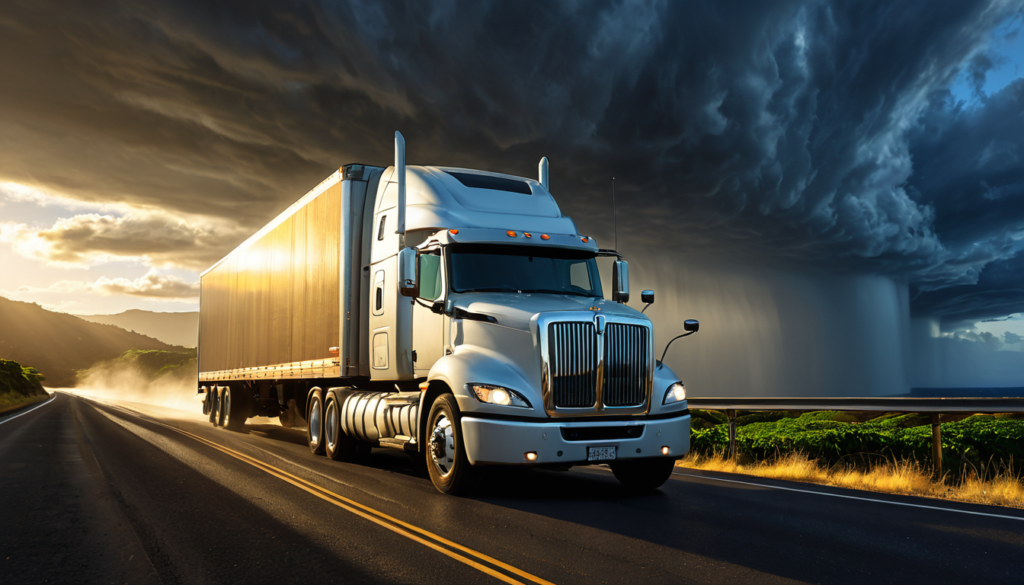
Hawaii 18-Wheeler Accident Attorneys: Your Fight for Justice After a Commercial Truck Crash
When a Truck Changes Everything—We’re Here to Help You Fight Back
You were driving along H-1 near downtown Honolulu, or maybe passing through the port area on Oahu, or navigating the winding roads of the Big Island near Hilo. Suddenly, 80,000 pounds of steel and cargo slammed into your vehicle. In that split second, your life changed forever. The medical bills are mounting, you can’t work, and the trucking company’s insurance adjuster keeps calling with questions you don’t know how to answer.
At Attorney911, we know exactly what you’re going through. We’ve spent over 25 years fighting for trucking accident victims across the United States, including right here in Hawaii. Our managing partner, Ralph Manginello, has been standing up to commercial carriers since 1998, securing multi-million dollar settlements for families just like yours. When an 18-wheeler or commercial truck causes catastrophic injuries in Honolulu, Pearl City, or anywhere across the Hawaiian islands, you need a legal team that understands both federal trucking regulations and the unique challenges of Hawaii’s island-specific logistics.
Hawaii’s trucking industry operates unlike anywhere else in America. Every single piece of freight that enters the islands arrives by ship or air before being transferred to trucks. The Port of Honolulu handles massive container traffic that feeds into the H-1 corridor. Kahului Harbor on Maui sees agricultural products and construction materials moving daily. Hilo Harbor on the Big Island processes everything from volcanic rock to tourist supplies. These unique supply chains create specific dangers—tight turns near port facilities, overloaded trucks on narrow island roads, and drivers unfamiliar with Hawaii’s terrain navigating hairpin turns on volcanic slopes.
If a commercial truck driver caused your injuries anywhere in Hawaii—from Oahu’s urban sprawl to Kauai’s rural highways—you have rights. But those rights have strict time limits. Hawaii law gives you just two years from the date of the accident to file a personal injury lawsuit. Evidence disappears even faster. Black box data from the truck’s ECM can overwrite in 30 days. Dashcam footage gets deleted. Witnesses forget what they saw. Every hour you wait, the trucking company builds their defense while you’re trying to heal.
That’s why we act immediately. The moment you call, we send spoliation letters to preserve critical evidence. Our team includes Lupe Peña, a former insurance defense attorney who spent years inside the industry learning exactly how trucking companies minimize claims. Now he uses that insider knowledge to fight for you. We don’t charge a penny unless we win your case—no upfront costs, no hidden fees. Just aggressive, experienced representation when you need it most.
When you’re ready to fight for what you deserve, we’re standing by 24/7. Call 1-888-ATTY-911 (1-888-288-9911) or 888-ATTY-911 right now.
Why Hawaii 18-Wheeler Accidents Demand Immediate Legal Action
Hawaii’s highways present unique dangers you won’t find on the mainland. The H-1 is Hawaii’s busiest and most dangerous freeway, carrying freight from the Port of Honolulu through heavily populated areas with limited space for evasive maneuvers. The Pali Highway, Likelike Highway, and routes across the Big Island’s volcanic terrain require specialized driving skills that many mainland truckers simply don’t possess. When you combine these challenging roadways with tight delivery schedules, the result is often catastrophic.
Federal law requires commercial trucks to carry minimum liability insurance of $750,000 for non-hazardous freight and up to $5 million when transporting hazardous materials. That’s significantly more coverage than a typical car accident, but accessing those funds requires knowing exactly how to prove negligence under the Federal Motor Carrier Safety Regulations (49 CFR Parts 390-399).
We’ve seen what happens when trucking companies cut corners. In Hawaii, where construction trucks, tourism buses, and agricultural haulers share narrow roads with passenger vehicles, a single moment of negligence can cause permanent damage. TBI settlements in our firm’s experience have ranged from $1.5 million to $9.8 million. Amputation cases have settled between $1.9 million and $8.6 million. Wrongful death cases have recovered between $1.9 million and $9.5 million. These aren’t just numbers—they represent real people whose lives were shattered by negligent trucking companies.
As client Glenda Walker told us after her case settled, “They fought for me to get every dime I deserved.” That’s our commitment to you. We don’t settle for what the insurance company initially offers. We dig deeper.
The Evidence Clock Is Ticking
Unlike car accidents where you might have some time to sort things out, 18-wheeler cases demand immediate preservation. The truck’s Electronic Control Module (ECM) records speed, brake application, and throttle position in the seconds before impact—but that data can be overwritten within 30 days. Electronic Logging Devices (ELD) track whether the driver violated federal Hours of Service regulations—showing if they drove beyond the legal 11-hour limit or skipped mandatory rest breaks. Driver Qualification Files contain employment history, medical certifications, and previous accident records that prove whether the trucking company properly screened their driver.
We send preservation letters within 24 hours of being retained. If the trucking company destroys evidence after receiving our notice, courts can impose severe sanctions or even award punitive damages. But we have to act fast—before the evidence is gone.
Call Attorney911 today at 1-888-288-9911. Hablamos Español. Llame hoy.
Understanding Liability: Who Can Be Held Responsible for Your Hawaii Truck Accident?
Unlike a simple fender-bender where usually just one driver is at fault, 18-wheeler accidents involve multiple potentially liable parties. In Hawaii’s unique logistics environment—where freight brokers arrange shipments from the mainland, stevedores load cargo at Honolulu Harbor, and multiple trucking companies might handle a single container from port to final destination—the web of responsibility is complex.
The Truck Driver
The person behind the wheel may be personally liable for negligent driving—speeding on the tight curves of Highway 11 on the Big Island, texting while navigating Honolulu traffic, or driving while fatigued after a long haul from the mainland. Under 49 CFR § 392.3, no driver shall operate while their ability is impaired through fatigue, illness, or any cause. Hawaii’s modified comparative negligence rule means you can recover damages as long as you’re not more than 50% at fault, but the driver’s negligence must be proven.
The Trucking Company (Motor Carrier)
This is where deep pockets usually reside. Under the doctrine of respondeat superior, employers are responsible for their employees’ negligent acts within the scope of employment. But trucking companies can also be directly liable for negligent hiring ( failing to check a driver’s Hawaii Commercial Driver’s License status or background), negligent training (not teaching drivers about Hawaii’s unique terrain and weather), negligent supervision (ignoring Hours of Service violations), or negligent maintenance (skipping brake inspections required under 49 CFR § 396.3).
Our firm’s founder, Ralph Manginello, has been admitted to federal court in the Southern District of Texas since 1998, giving us direct access to federal jurisdiction when interstate commerce is involved—a common scenario when trucks are transporting goods between Honolulu Harbor and distribution centers across the islands.
Cargo Owners and Loaders
In Hawaii’s port-driven economy, third-parties often load trucks. Under 49 CFR § 393.100-136, cargo must be properly secured to prevent shifting that affects vehicle stability. When a container shifts during transport from the Port of Honolulu to a retail location in Pearl City, causing a rollover on the H-1, the loading company may share liability.
Vehicle and Parts Manufacturers
If brake failure, tire blowouts, or defective underride guards contributed to your accident, the manufacturer may be liable under product liability theories. Given Hawaii’s salt air and harsh coastal conditions, equipment corrosion is a real concern that manufacturers must account for.
Freight Brokers
Companies that arrange transportation but don’t own the trucks may be liable for negligent carrier selection—choosing a trucking company with a poor safety record or inadequate insurance just to save money.
Maintenance Companies
Third-party mechanics who performed negligent brake repairs or tire changes on commercial vehicles in Hawaii may share responsibility when their shoddy work causes accidents.
We investigate every possible defendant because more defendants means more insurance coverage. As client Donald Wilcox discovered when another firm rejected his case, “One company said they would not accept my case. Then I got a call from Manginello… I got a call to come pick up this handsome check.” We don’t turn away difficult cases—we win them.
The Physics of Devastation: Why 18-Wheeler Accidents Cause Catastrophic Injuries
An average passenger vehicle weighs 4,000 pounds. A fully loaded commercial truck in Hawaii can weigh up to 80,000 pounds—that’s 20 times heavier than your car. When that much mass collides with a passenger vehicle at highway speeds on the H-1 or H-2, the laws of physics dictate catastrophic outcomes.
Traumatic Brain Injuries (TBI) occur when the brain impacts the skull during sudden deceleration. Symptoms may not appear immediately—victims often report feeling “fine” immediately after the crash, only to develop headaches, confusion, memory loss, and personality changes days later. Moderate to severe TBI cases in our firm’s history have settled for between $1.5 million and $9.8 million, accounting for lifetime medical care, lost earning capacity, and reduced quality of life.
Spinal Cord Injuries often result from the crushing forces of underride collisions or rollovers. Hawaii’s narrow roadways leave little room for escape when a truck jackknifes or loses control on wet volcanic roads. Paraplegia and quadriplegia require lifetime care costing millions.
Amputations occur when limbs are crushed beyond repair or when severe infections develop after traumatic injuries. In one case, our firm secured over $3.8 million for a client who suffered a partial leg amputation following a car accident where subsequent medical treatment led to staph infection.
Severe Burns from fuel fires—particularly common when trucks carrying diesel or hazardous materials crash on Hawaii’s highways—cause permanent scarring and require multiple skin graft surgeries.
Internal Organ Damage may not show immediate symptoms but can be life-threatening. The force of impact can cause liver lacerations, kidney damage, or internal bleeding that requires emergency surgery at Hawaii trauma centers like the Queen’s Medical Center in Honolulu or Hilo Medical Center on the Big Island.
Wrongful Death claims arise when truck accidents claim lives. Hawaii families can recover for lost future income, loss of companionship, mental anguish, and funeral expenses. These cases often settle between $1.9 million and $9.5 million, depending on the decedent’s earning capacity and the circumstances of the crash.
Your injuries aren’t just medical records—they’re the rest of your life. As client Kiimarii Yup shared after we resolved her case, “I lost everything… my car was at a total loss, and because of Attorney Manginello and my case worker Leonor, 1 year later I have gained so much in return plus a brand new truck.” We fight for complete recovery, not just quick settlements.
Hawaii’s Unique Trucking Hazards: Accidents by Type
Jackknife Accidents
On Hawaii’s narrow highways—particularly during tropical rainstorms or when trade winds create sudden gusts—trucks can jackknife when drivers brake improperly or lose traction. The trailer swings perpendicular to the cab, sweeping across all lanes. On Oahu’s limited freeway system, there’s often nowhere for other drivers to go. These accidents often indicate 49 CFR § 393.48 brake system violations or improper driver training for Hawaii’s wet conditions.
Underride Collisions
When a passenger vehicle strikes the rear or side of a trailer and slides underneath, the top of the vehicle is often sheared off at windshield level. Hawaii is particularly vulnerable to these accidents near the Port of Honolulu where trucks make frequent stops and starts in heavy traffic. While 49 CFR § 393.86 requires rear impact guards on trailers manufactured after 1998, many trucks lack adequate underride protection, and side underride guards remain unregulated by federal law.
Rollover Accidents
Hawaii’s terrain features steep grades, sharp curves, and narrow shoulders—perfect conditions for rollovers when trucks are speeding or improperly loaded. Cargo shifts during transport from Kahului Harbor to upcountry Maui or from Hilo to Kona can suddenly change a truck’s center of gravity. Under 49 CFR § 393.100, cargo must be secured to prevent shifting that affects stability. When pineapple harvests or macadamia nut shipments move across the islands during peak season, overloaded trucks create deadly rollover risks.
Rear-End Collisions
A fully loaded truck needs approximately 525 feet to stop from 65 mph—nearly two football fields. On the congested H-1 during Honolulu rush hour, or when traffic backs up near the airport, truck drivers following too closely cause devastating rear-end impacts. 49 CFR § 392.11 prohibits following more closely than is reasonable and prudent, yet we see this violation constantly in our practice.
Cargo Spills and Hazmat Incidents
Given Hawaii’s dependence on imported goods and local agriculture, trucks carry everything from construction materials to chemicals to refrigerated food products. When cargo spills on the Pali Highway or hazardous materials leak near sensitive watersheds, secondary accidents and environmental damage compound the initial crash. These cases involve complex regulations under 49 CFR § 397 for hazardous materials transportation.
Blind Spot Accidents (“No-Zone” Crashes)
Commercial trucks have massive blind spots extending 20 feet in front, 30 feet behind, and significant zones along both sides. In Hawaii’s dense urban traffic or on narrow two-lane roads like those connecting Hilo to Volcano, drivers lingering in these “No-Zones” risk being sideswiped when trucks change lanes or turn.
Tire Blowouts
Hawaii’s hot pavement and volcanic roads stress truck tires. When a steer tire blows at highway speed, the driver may lose control immediately. Under 49 CFR § 393.75, tires must have adequate tread depth (4/32″ for steer tires), yet deferred maintenance saves trucking companies money while costing lives.
Brake Failure
Descending from Hawaii’s elevations—whether coming down from the volcanoes or navigating mountain passes—requires proper brake maintenance. Brake fade from overheating or complete failure from neglected maintenance (49 CFR § 396.3) causes runaway truck accidents that rarely end without catastrophic injury.
Whatever type of accident caused your injuries, we know how to investigate it. Our associate attorney Lupe Peña spent years working for insurance defense firms before joining Attorney911. He knows exactly how trucking companies will try to blame you, claim your injuries are pre-existing, or argue that Hawaii’s roads—not their driver—caused the crash. That insider knowledge is your advantage.
Call 888-288-9911 today.
The Federal Regulations That Prove Negligence
Commercial trucking isn’t just big business—it’s heavily regulated business. When trucking companies violate federal safety standards, those violations automatically establish negligence in Hawaii courts.
Hours of Service Violations (49 CFR Part 395)
Driver fatigue causes approximately 31% of fatal truck crashes. Federal law strictly limits driving time:
- Maximum 11 hours driving after 10 consecutive hours off-duty
- No driving beyond the 14th hour after coming on duty
- Mandatory 30-minute break after 8 cumulative hours driving
- 60 hours in 7 days or 70 hours in 8 days, then 34-hour restart
Electronic Logging Devices (ELDs) record these hours automatically since the 2017 mandate. When we subpoena ELD data, we often find drivers who exceeded these limits to meet impossible delivery schedules—particularly problematic for trucks trying to catch ferries between islands or meet port schedules in Honolulu.
Driver Qualification Requirements (49 CFR Part 391)
Before hiring a driver, trucking companies must verify:
- Valid Commercial Driver’s License (CDL)
- Medical examiner’s certificate (max 2 years)
- Three-year driving history from previous employers
- No disqualifying criminal or traffic violations
When companies skip these steps to fill seats quickly—common during Hawaii’s tourism and construction booms—they commit negligent hiring.
Vehicle Maintenance Standards (49 CFR Part 396)
Every truck must undergo systematic inspection, repair, and maintenance. Drivers must complete pre-trip inspections covering brakes, tires, lights, and steering. Annual inspections are mandatory. Maintenance records must be kept for 14 months.
Given Hawaii’s salt air corrosion and volcanic dust that clogs air filters and damages brakes, maintenance is critical. Yet we’ve seen trucking companies defer repairs to save money, leading to brake failures and tire blowouts on busy island roads.
Cargo Securement (49 CFR Part 393)
Cargo must withstand 0.8g deceleration forward and 0.5g acceleration rearward and laterally. Tiedowns must have adequate working load limits. When Matson or Young Brothers containers shift during transport because of inadequate securing, rollovers occur.
Drug and Alcohol Testing (49 CFR Part 382)
Drivers must pass pre-employment drug tests and random testing. A positive test or refusal automatically disqualifies a driver, yet some companies look the other way when they need drivers for Hawaii’s tight labor market.
Violations of these regulations aren’t just technicalities—they’re proof of negligence that can support punitive damages when companies knowingly endanger public safety.
Proving Your Case: Evidence We Preserve Within 48 Hours
The trucking industry knows that evidence destroys cases. That’s why they dispatch rapid-response teams to accident scenes within hours—sometimes before the ambulance leaves. You need a legal team that moves just as fast.
When you hire Attorney911, we immediately deploy our 48-hour evidence preservation protocol:
Electronic Data
- ECM/Black Box Downloads: Speed, brake application, throttle position, and fault codes from the seconds before impact
- ELD Records: Proof of Hours of Service violations showing driver fatigue
- GPS/Telematics: Location history proving the truck was where the driver claimed
- Dashcam Footage: Many trucks have forward-facing and inward-facing cameras that show exactly what the driver was doing
Driver Records
- Driver Qualification File: Complete employment history, training records, and previous accidents
- Medical Records: Sleep apnea diagnoses, prescription medications, or disqualifying conditions
- Cell Phone Records: Proof of distracted driving at the moment of impact
- Drug/Alcohol Tests: Required post-accident testing under federal regulations
Vehicle Records
- Maintenance Logs: When brakes were last inspected, tire replacements, and repair histories
- Inspection Reports: Pre-trip and post-trip driver vehicle inspection reports (DVIRs)
- Cargo Documentation: Bills of lading showing weight, loading companies, and securement methods
Physical Evidence
- Truck and Trailer Preservation: Preventing repair or disposal that destroys evidence
- Photographic Documentation: Scene analysis, skid mark measurements, and road conditions specific to Hawaii’s unique geography
- Witness Interviews: Before memories fade or witnesses leave the islands
Our spoliation letters put the trucking company on notice that destroying any of this evidence will result in court sanctions and adverse inference instructions—meaning the jury will be told to assume the destroyed evidence would have been unfavorable to the trucking company.
As client Chad Harris explained after working with us, “You are NOT a pest to them and you are NOT just some client… You are FAMILY to them.” We treat your case with the urgency it deserves because we know what’s at stake.
Insurance, Damages, and What Your Case Is Worth
Federal law mandates that commercial trucks carry substantial insurance:
- $750,000 minimum for general freight
- $1,000,000 for oil, large equipment, or motor vehicles
- $5,000,000 for hazardous materials
These high policy limits mean that when you’re hit by an 18-wheeler in Hawaii, there’s potentially serious money available for your recovery—unlike typical car accidents where drivers might carry only Hawaii’s minimum $20,000/$40,000 coverage.
Economic Damages
These are calculable losses: past and future medical expenses (including surgeries, rehabilitation, and lifelong care), lost wages, reduced earning capacity, and property damage. For catastrophic injuries like TBI or paralysis, lifetime care costs can exceed $3-5 million.
Non-Economic Damages
Pain and suffering, mental anguish, loss of enjoyment of life, and disfigurement. Hawaii caps non-economic damages for pain and suffering at $375,000 in some contexts, but there’s no cap on economic damages or punitive damages in cases of gross negligence.
Punitive Damages
When trucking companies act with conscious indifference to public safety—falsifying logbooks, knowingly hiring drivers with DUIs, or ignoring maintenance requirements—Hawaii courts may award punitive damages to punish the wrongdoer and deter similar conduct.
Recent jury verdicts across the country demonstrate what’s possible when trucking companies are held accountable: a $462 million verdict in Missouri for an underride decapitation, a $160 million verdict in Alabama for a rollover causing quadriplegia, and a $1 billion verdict in Florida for negligent hiring. While every case is different, these verdicts show that juries are fed up with trucking companies putting profits over safety.
Our firm has recovered over $50 million for clients across all practice areas, including a $5 million settlement for a traumatic brain injury caused by a falling log, a $3.8 million amputation settlement, and a $2.5 million truck crash recovery. We don’t promise specific results, but we do promise to fight for every dollar you deserve.
Hawaii’s Legal Landscape: Statutes, Rules, and Deadlines
Statute of Limitations
You have two years from the date of your Hawaii trucking accident to file a personal injury lawsuit. For wrongful death claims, the clock starts when the person passes away. Miss this deadline, and you lose your right to compensation forever—regardless of how clear the liability or how severe the injuries.
Comparative Negligence
Hawaii follows a modified comparative negligence rule under Hawaii Revised Statutes § 663-31. You can recover damages as long as you are not more than 50% at fault. However, your recovery will be reduced by your percentage of fault. If you’re found 30% at fault for an accident on a rainy H-1, you can still recover 70% of your damages. But if you’re 51% at fault, you recover nothing. This makes thorough investigation and evidence preservation critical—the trucking company will try to shift blame to you.
Government Claims
If your accident involved a government-owned truck (military vehicles are common in Hawaii, and state/city trucks maintain roads), you must file a notice of claim within just six months under Hawaii law. These claims have strict procedural requirements that require immediate legal action.
Venue and Jurisdiction
Depending on where the accident occurred—whether on Oahu, Maui, the Big Island, or Kauai—your case may be filed in Hawaii’s First Circuit (Honolulu), Third Circuit (Hilo), or other circuits. Federal court jurisdiction may apply under the Federal Motor Carriers Safety Regulations if the truck was engaged in interstate commerce.
Frequently Asked Questions About Hawaii Trucking Accidents
How soon after my accident should I call a lawyer in Hawaii?
Immediately. Black box data can be overwritten in 30 days. Witnesses leave the islands. The trucking company is building their defense right now. Call Attorney911 at 1-888-ATTY-911 as soon as possible after receiving medical treatment.
Who can be sued besides the truck driver?
Potentially the trucking company, cargo owner, loading company, freight broker, maintenance company, vehicle manufacturer, and parts manufacturers. Hawaii’s port logistics mean multiple companies often touch the cargo before it reaches you.
What if the trucking company is from the mainland?
That’s common in Hawaii freight. We can pursue out-of-state defendants, and our federal court admission allows us to handle interstate commerce cases. Distance doesn’t protect negligent companies from accountability.
Do I need a Hawaii-based attorney?
You need an attorney licensed in Hawaii or one who can associate with local counsel. More importantly, you need an attorney who understands FMCSA regulations and has the resources to take on major trucking companies—whether they’re based in Honolulu or Houston.
What’s the difference between a truck accident and a car accident case?
Everything. Commercial trucks carry higher insurance, are subject to federal safety regulations, involve complex liability chains, and cause catastrophic injuries. The settlement values are typically 10-50 times higher than car accidents—but only if you have an attorney who knows how to access those policies.
Can I afford an attorney?
Absolutely. We work on contingency—33.33% if settled before trial, 40% if we go to court. You pay nothing upfront. We advance all costs. If we don’t win, you owe us nothing. As client Angel Walle noted, “They solved in a couple of months what others did nothing about in two years.” We’re efficient because we’re experienced.
What if I was partially at fault?
Under Hawaii’s comparative negligence law, you can recover as long as you’re 50% or less at fault. Don’t let the trucking company’s insurance adjuster convince you that you can’t recover simply because you were in their blind spot or slowed down suddenly. Let us investigate.
How long will my case take?
Simple cases with clear liability and moderate injuries may settle in 6-12 months. Complex cases involving catastrophic injuries, multiple defendants, or disputes over Hawaii’s unique road conditions may take 18-36 months. We balance speed with maximizing your recovery.
What if my loved one died in the accident?
We handle wrongful death claims for Hawaii families. You can recover funeral expenses, lost future income, loss of companionship, and mental anguish. These are emotionally devastating cases, and we handle them with the sensitivity and aggression they deserve.
Do you handle cases on the outer islands?
Yes. Whether your accident occurred on Oahu, Maui, Kauai, or the Big Island, we can help. We understand the logistics of island travel and work with local resources to preserve evidence wherever the crash occurred.
What if the truck was carrying hazardous materials?
Hazardous materials cases involve $5 million insurance minimums and complex evacuation or environmental damage issues. Given Hawaii’s sensitive ecosystems and limited escape routes, these cases require immediate specialized handling.
Can undocumented immigrants file claims?
Yes. Immigration status has no bearing on your right to recover for injuries caused by someone else’s negligence. We protect all Hawaii residents regardless of documentation status.
Hablamos Español?
Sí. Lupe Peña es un abogado bilingüe que puede ayudarle directamente sin intérpretes. Llame al 1-888-ATTY-911 para una consulta gratuita en español.
Why Choose Attorney911 for Your Hawaii Trucking Case
25+ Years of Experience
Ralph Manginello has been fighting for injury victims since 1998. He’s admitted to federal court, has litigated against Fortune 500 corporations like BP in the Texas City Refinery explosion litigation that resulted in $2.1 billion in industry settlements, and has recovered millions for clients. That experience means we know every trick the trucking companies will try.
Former Insurance Defense Attorney on Your Side
Lupe Peña used to work for the insurance companies. He knows exactly how they evaluate claims, train adjusters to minimize payouts, and calculate settlement offers. Now he uses that knowledge against them. That’s an unfair advantage—for you.
Proven Results
From $5 million brain injury settlements to $3.8 million amputation cases, we’ve delivered results for clients other firms turned away. As client Ernest Cano said, “Mr. Manginello and his firm are first class. Will fight tooth and nail for you.”
Three Offices Serving Hawaii and Beyond
While our main office is at 1177 West Loop S, Suite 1600 in Houston, with additional locations in Austin and Beaumont, we handle cases nationwide. Our federal court admission means we can represent you in Hawaii regardless of where the trucking company is headquartered.
Family Treatment
We don’t treat you like a case number. Client Chad Harris told us, “You are FAMILY to them.” We return calls promptly, explain every step, and keep you informed. Dame Haskett noted our “consistent communication and not one time did I call and not get a clear answer… Ralph reached out personally.”
Contingency Fee—No Risk to You
You pay nothing unless we win. We advance all investigation costs, expert witness fees, and court expenses. The trucking company has lawyers working right now. You deserve the same level of representation without financial risk.
24/7 Availability
Legal emergencies don’t wait for business hours. Call 1-888-ATTY-911 or 888-288-9911 anytime, day or night. We’re here when you need us.
If you’ve suffered catastrophic injuries in a Hawaii trucking accident—whether on the H-1 in Honolulu, near the Port of Kahului on Maui, or on the volcanic roads of the Big Island—don’t face the trucking company alone. The evidence is disappearing. The insurance company is preparing their defense. You need a fighter in your corner.
Call Attorney911 now at 1-888-ATTY-911 (1-888-288-9911) or fill out our online form for a free consultation. Remember: No fee unless we win. Zero upfront costs. Maximum dedication to your recovery.
Your fight starts now. Your justice starts here. Your family deserves the best—and we’re ready to deliver.
Attorney911. Legal Emergency Lawyers™. Serving Hawaii and handling 18-wheeler accident cases nationwide.
Disclaimer: Past results do not guarantee future outcomes. Every case is unique and depends on specific facts and circumstances. Contact us to discuss the details of your potential claim.
Contact Information:
Attorney911
The Manginello Law Firm, PLLC
1-888-ATTY-911 (1-888-288-9911)
(713) 528-9070
Houston Office:
1177 West Loop S, Suite 1600
Houston, TX 77027
Austin Office:
316 West 12th Street, Suite 311
Austin, TX 78701
Beaumont Office:
Available for client meetings
Email: ralph@atty911.com
Web: https://attorney911.com
Hablamos Español. Consulta gratuita disponible.