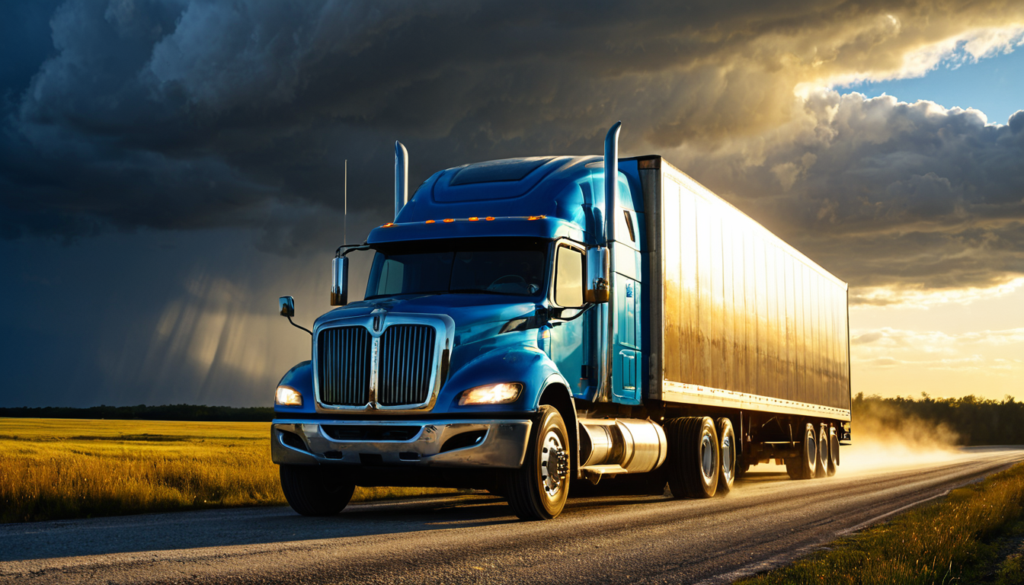
When an 80,000-pound tractor-trailer loses control on I-57 north of Watseka, there’s no such thing as a minor accident. Your car weighs 4,000 pounds. That truck outweighs you by twenty times. In the blink of an eye—on the frozen curves near Gilman, the narrow two-lanes outside Onarga, or the busy intersections where US-24 meets US-45—your life changes forever.
If you or someone you love has been hit by an 18-wheeler in Iroquois County, you’re not just dealing with a car accident. You’re facing an entirely different legal battle. Trucking companies have teams of lawyers. They have rapid-response investigators who arrive at the scene before the ambulance leaves. They have insurance policies worth millions—and they have one goal: to pay you as little as possible.
We’re here to stop them.
Attorney911 has been fighting for trucking accident victims across Illinois and beyond for over 25 years. Our founder, Ralph Manginello, has been admitted to federal court and has recovered multi-million dollar verdicts against Fortune 500 companies. Our associate attorney Lupe Peña used to work for insurance companies—now he uses that insider knowledge to fight against them. And we’re ready to fight for you.
Call 1-888-ATTY-911 right now. Free consultation. No fee unless we win.
Why Iroquois County 18-Wheeler Accidents Demand Specialized Legal Expertise
Trucking accidents in Iroquois County aren’t like fender-benders in Chicago or parking lot scrapes in Champaign. The injuries are catastrophic. The laws are federal. The defendants are corporations with unlimited resources. And the evidence—if you don’t act fast—disappears.
Iroquois County sits at the crossroads of major agricultural freight corridors. I-57 cuts through the county carrying produce, grain, and livestock between Chicago and the Gulf States. US-24 handles heavy equipment and manufacturing freight moving east toward Indiana. And the county’s rural highways—narrow, winding, often iced-over in winter—create perfect conditions for devastating truck crashes.
Ralph Manginello, our managing partner since 1998, has spent 25 years in federal and state courts holding trucking companies accountable. We’ve gone toe-to-toe with the world’s largest corporations, including BP in the Texas City explosion litigation that resulted in over $2.1 billion in settlements. We’ve recovered $5 million for a traumatic brain injury victim struck by a falling log, $3.8 million for a client who lost a limb after a car crash, and millions more for families devastated by commercial truck accidents.
But here’s what matters most: We know Iroquois County. We know that the grain elevators in Cissna Park see dozens of overloaded trucks during harvest season. We know that US-45’s intersections have limited sightlines. We know that winter black ice on US-24 has caused jackknife after jackknife. And we know that local hospitals like Iroquois Memorial Hospital in Watseka may not have the trauma capabilities to handle the most catastrophic injuries, which means victims often need transfer to Carle Foundation Hospital in Urbana or trauma centers in Kankakee.
Insurance companies think they can push Iroquois County families around. They think rural jurors won’t award big verdicts. They think you’ll accept their first lowball offer because you’re hurting and the bills are piling up.
They’re wrong.
As our client Glenda Walker said after we fought for her maximum recovery, “They fought for me to get every dime I deserved.”
That’s what we do.
The Attorney911 Advantage: 25 Years of Fighting for Trucking Accident Victims
When you hire Attorney911 for your Iroquois County truck accident case, you’re getting more than a lawyer. You’re getting a team that includes a former insurance defense attorney who knows exactly how commercial trucking insurers evaluate, minimize, and deny claims.
Lupe Peña, our associate attorney, spent years working at a national defense firm. He watched adjusters minimize legitimate claims. He saw how they train their people to lowball victims. He learned their algorithms and their manipulation tactics. Now he uses that insider knowledge to expose exactly what they’re doing to you—and to fight for maximum compensation.
We’re not a billboard firm that treats you like a case number. As client Chad Harris told us, “You are NOT a pest to them and you are NOT just some client… You are FAMILY to them.”
You get Ralph Manginello’s 25 years of experience, including his federal court admission to the Southern District of Texas. You get our team’s track record of $50 million-plus recovered for clients. You get our 4.9-star rating from 251 Google reviews. And you get our promise: You pay nothing unless we win.
We have offices in Houston, Austin, and Beaumont, Texas, and we handle trucking accident cases nationwide, including throughout Illinois. With dual-state licensure in Texas and New York, we can handle complex jurisdictional issues that arise when interstate trucking companies cause crashes in Iroquois County.
Hablamos Español. Lupe Peña provides fluent Spanish representation—no interpreters needed. If you’re more comfortable speaking Spanish, llame al 1-888-ATTY-911.
Why 18-Wheeler Accidents in Iroquois County Are Different
Every 16 minutes, someone in America is injured in a commercial truck crash. But in Iroquois County, the risk is heightened by specific local factors:
Agricultural Freight Surges: During harvest season (September through November), Iroquois County roads see a massive increase in grain trucks, combines on trailers, and livestock carriers. These trucks are often overloaded, pushing the 80,000-pound federal limit. They’re driven by operators trying to get crops to market before weather changes. And they’re frequently on narrow county roads not designed for heavy truck traffic.
Winter Weather Hazards: From December through March, I-57 and US-24 can become ice sheets. The flat prairie land creates wind tunnels that blow snow across roads, creating whiteouts. Black ice forms overnight on US-45 north of Watseka. And truck drivers unfamiliar with these conditions—often from warmer states—cause catastrophic jackknife accidents when they brake too hard on ice.
Limited Trauma Care: Iroquois Memorial Hospital provides excellent care, but severe trauma often requires transport to Level I or Level II trauma centers. That means air ambulance flights from Watseka Municipal Airport or ground transport to Carle Foundation Hospital in Urbana or Presence St. Mary’s Hospital in Kankakee. Delayed treatment can worsen outcomes—and trucking companies know this. They’ll argue that the secondary transport caused your injuries, not their driver.
Rural Road Geometry: Many of Iroquois County’s secondary roads are narrow two-lane highways with soft shoulders. When an 18-wheeler drifts onto the shoulder—distracted, fatigued, or speeding—the driver often over-corrects, causing a jackknife or rollover into oncoming traffic.
We know these roads. We know how trucking companies try to blame victims for “rural driving conditions.” And we know how to prove that their driver—not the road—was at fault.
The 15 Types of 18-Wheeler Accidents We See in Iroquois County
Not all truck accidents are the same. The type of accident determines what evidence we gather, what FMCSA regulations apply, and who might be liable. In Iroquois County, we see distinct patterns based on our geography:
Jackknife Accidents
The most terrifying sight on winter I-57: A tractor-trailer cab facing north while the trailer slides south across all three lanes. Jackknives happen when the trailer swings out of alignment—usually because the driver locked up the brakes on ice or was traveling too fast for the curve on US-24 near Gilman.
The Physics: When a driver brakes suddenly on a low-traction surface, the trailer’s momentum continues while the cab slows. The trailer pivots on the fifth wheel, creating a sweeping motion that clears everything in its path.
The Evidence: We download the ECM (Electronic Control Module) data to prove the driver applied brakes improperly. We check the Driver Qualification File to see if they were trained for winter conditions. And we review the 49 CFR § 393.48 brake inspection records.
The Injuries: Multi-vehicle pileups, crushing injuries, traumatic brain injuries when vehicles are swept aside.
Rollover Accidents
Iroquois County’s flat terrain might seem safe, but the combination of high winds and top-heavy grain trucks creates deadly rollover conditions. On the east-west stretches of US-24, sudden gusts can catch empty trailers, and sharp turns at rural intersections can cause a fully loaded grain truck to tip.
The Physics: The center of gravity on a loaded grain truck is dangerously high. A turn taken at just 5 mph over the safe speed can generate enough centrifugal force to lift the wheels.
The Evidence: We subpoena the cargo manifest to check if the load was properly secured per 49 CFR § 393.100-136. We check the truck’s stability control system. And we review ELD data to see if driver fatigue caused delayed reaction time.
The Injuries: Ejection if no seatbelt, crushing injuries, often fatal.
Underride Collisions
The deadliest accidents in Iroquois County often happen at night on US-45 or US-24, when a passenger vehicle crashes into the rear of a slow-moving truck and slides underneath. The trailer height shears off the roof of the car, causing decapitation or catastrophic head trauma.
The Physics: The bottom edge of a trailer sits at roughly 48 inches—perfectly aligned with the windshield of a sedan. Without a proper rear impact guard, the car becomes a convertible in the worst possible way.
The Evidence: We inspect the underride guards to see if they met 49 CFR § 393.86 standards. We check the truck’s lighting—was the reflective tape visible? We review the accident reconstruction to see if the truck made a sudden stop without adequate warning.
The Injuries: Almost always fatal or result in severe traumatic brain injury.
Rear-End Collisions
An 80,000-pound truck traveling at 65 mph needs nearly 525 feet to stop—that’s almost two football fields. On I-57, when traffic slows for construction or weather, tired truckers often plow into stopped vehicles.
The Physics: A fully loaded truck has 20-25 times the kinetic energy of a car. When it hits you from behind, it doesn’t just cause whiplash—it pushes your vehicle into whatever is in front of you, causing multi-car pileups.
The Evidence: We pull the ELD data to check for Hours of Service violations under 49 CFR § 395. We review the ECM for following distance calculations. We check cell phone records for distracted driving—49 CFR § 392.82 prohibits handheld phone use.
The Injuries: Spinal cord compression, facial trauma from airbags, traumatic brain injury from the head snapping back and forth.
Wide Turn Accidents (“Squeeze Play”)
At the intersection of US-24 and IL-1 in Watseka, or near the grain elevators in Onarga, trucks making right turns often swing left first to gain room. Unsuspecting drivers think the truck is turning left, pull alongside, and get crushed when the trailer cuts the corner.
The Evidence: We review dashcam footage if available. We check the driver’s training records—did they know proper wide turn procedures? We measure the intersection to see if poor design contributed.
The Injuries: Crushing injuries to passenger side occupants, often fatal for motorcyclists or cyclists.
Blind Spot Accidents (“No-Zone”)
18-wheelers have massive blind spots. Ten feet in front, thirty feet behind, and huge swaths on both sides—especially the right side where mirrors can’t reach. On I-57’s merge lanes, trucks often change lanes directly into passenger vehicles.
The Evidence: We check mirror placement and adjustment—49 CFR § 393.80 requires proper mirrors. We review the driver’s blind spot check procedures from their training file.
The Injuries: Sideswipe injuries causing loss of control and secondary crashes.
Tire Blowout Accidents
“Road gators”— strips of shredded tire rubber—litter I-57 during summer months. When a truck’s tire blows at 70 mph, the driver often loses control, or the debris strikes vehicles behind.
The Evidence: We inspect the tire maintenance logs under 49 CFR § 396.3. We check tread depth—49 CFR § 393.75 requires minimum tread. We look for signs of overloading or heat buildup from excessive speed.
The Injuries: Debris strikes causing facial trauma, loss of control rollovers.
Brake Failure Accidents
Brake problems contribute to 29% of large truck crashes. In Iroquois County’s stop-and-go agricultural traffic, brakes overheat. On the flat stretches of US-24, drivers ride their brakes downhill. By the time they reach Watseka, the brakes are gone.
The Evidence: We subpoena the maintenance records—were inspections skipped? We check the pre-trip inspection reports under 49 CFR § 396.13. We analyze the ECM for “brake fade” indicators.
The Injuries: High-speed collisions with stopped traffic, often fatal chain-reactions.
Cargo Spill and Cargo Shift Accidents
When a grain truck overturns on US-45, it spills thousands of bushels of corn across the roadway. When a livestock trailer jackknifes, animals escape onto the interstate. And when a hazmat truck leaks, entire sections of I-57 shut down for hours.
The Evidence: We examine the cargo securement under 49 CFR § 393.100-136. We check if the load exceeded the truck’s GVWR. We review the shipper’s loading instructions—did they properly balance the load?
The Injuries: Secondary crashes from spilled cargo, crushing from shifted loads, chemical burns from hazmat.
Head-On Collisions
When a fatigued truck driver drifts across the centerline on IL-49 or overcorrects on US-45, they cause head-on crashes with closing speeds exceeding 130 mph.
The Evidence: We check ELD data for Hours of Service violations. We test for drug and alcohol use—49 CFR § 382. We review the driver’s medical certification for sleep apnea or other conditions.
The Injuries: Almost always fatal or cause catastrophic TBI and spinal cord injuries.
Additional Accident Types
T-Bone/Intersection Accidents: Running red lights at rural intersections where traffic lights are infrequent.
Sideswipe Accidents: Mirror-to-mirror contact on narrow two-lane roads.
Override Accidents: Truck drives over smaller vehicle in front—often when the truck can’t stop in time.
Lost Wheel/Detached Trailer: Poor maintenance causes wheels or trailers to separate, striking oncoming traffic.
Runaway Truck Accidents: Brake failure on the subtle grades of I-57 causes trucks to accelerate uncontrollably.
Federal Motor Carrier Safety Regulations (FMCSA) That Protect You
Every 18-wheeler on Iroquois County roads must follow federal regulations under Title 49 of the Code of Federal Regulations (49 CFR). When trucking companies break these rules, they’re negligent—and liable.
49 CFR Part 391: Driver Qualification
Before a driver can operate a commercial vehicle, the trucking company must verify they are qualified. This means:
- Valid CDL (Commercial Driver’s License)
- Medical examiner’s certificate (maximum 2 years)
- Clean driving record check
- Previous employer verification for 3 years
- Pre-employment drug testing
Why It Matters: If the trucking company hired a driver with a suspended license or failed medical exam, they’re liable for negligent hiring. We subpoena the Driver Qualification File to check every box.
49 CFR Part 392: Driving of Commercial Motor Vehicles
This section contains the rules of the road for truckers:
- § 392.3: No driving while fatigued or ill to the point of unsafe operation
- § 392.4: No drugs or Schedule I substances while on duty
- § 392.5: No alcohol use within 4 hours of driving; no BAC above .04%
- § 392.6: Cannot require drivers to speed to meet schedules
- § 392.11: Must maintain reasonable following distance (no tailgating)
- § 392.82: No handheld mobile phone use while driving
Why It Matters: If we prove the driver was texting, drunk, or following too closely, they’re automatically negligent.
49 CFR Part 393: Parts and Accessories for Safe Operation
This covers equipment standards:
- § 393.40-55: Brake systems must be properly maintained and adjusted
- § 393.75: Tire tread depth minimums (4/32″ on steer tires)
- § 393.80: Mirrors must provide clear rear view
- § 393.86: Rear impact guards (underride protection) required
- § 393.100-136: Cargo must be secured to withstand 0.8g forward deceleration forces
Why It Matters: Equipment violations are proof of negligence. If the brakes were out of adjustment or the cargo shifted, the company broke federal law.
49 CFR Part 395: Hours of Service (HOS)
The most commonly violated regulations—and the ones that cause the most crashes:
- 11-Hour Driving Limit: Cannot drive more than 11 hours after 10 consecutive hours off-duty
- 14-Hour Duty Window: Cannot drive beyond the 14th consecutive hour after coming on-duty
- 30-Minute Break: Required after 8 cumulative hours of driving
- 60/70-Hour Weekly Limit: Cannot drive after 60 hours in 7 days or 70 hours in 8 days
- ELD Mandate: Since December 18, 2017, most drivers must use Electronic Logging Devices that automatically record driving time
Why It Matters: Fatigued driving causes 31% of fatal truck crashes. We download ELD data to prove the driver was over their hours. We check the ELD for “edited” logs—proof the company tried to hide violations.
49 CFR Part 396: Inspection, Repair, and Maintenance
Trucking companies must:
- Systematically inspect, repair, and maintain all vehicles
- Conduct pre-trip inspections before every drive
- Complete annual inspections
- Keep maintenance records for 12 months
Why It Matters: If the company skipped inspections or deferred brake repairs to save money, we prove direct negligence.
The 10 Potentially Liable Parties in Your Iroquois County Truck Accident
Most law firms only sue the driver and the trucking company. We investigate every potential defendant—because more defendants mean more insurance coverage means higher compensation for you.
1. The Truck Driver
Liable for speeding, distracted driving, fatigued driving, impairment, or traffic violations. We subpoena their driving record, cell phone data, and drug test results.
2. The Trucking Company (Motor Carrier)
Liable under respondeat superior (employers are responsible for employees’ negligence) and for:
- Negligent Hiring: Failing to check the driver’s background
- Negligent Training: Inadequate safety training
- Negligent Supervision: Ignoring ELD violations or complaints
- Negligent Maintenance: Failing to keep trucks safe
Trucking companies carry $750,000 to $5 million in insurance—making them the primary target for recovery.
3. The Cargo Owner/Shipper
If the shipper demanded overloaded trucks to maximize profits, or failed to disclose hazardous cargo, they share liability.
4. The Cargo Loading Company
Third-party loaders who failed to secure cargo per 49 CFR § 393.100-136 are liable for rollovers and spills.
5. The Truck or Trailer Manufacturer
Defective brakes, steering systems, or underride guards can trigger product liability claims against manufacturers.
6. The Parts Manufacturer
Defective tires, brake components, or safety systems create liability for parts makers.
7. The Maintenance Company
Third-party mechanics who performed negligent repairs or failed to identify critical safety issues are liable for brake failures and wheel separations.
8. The Freight Broker
Brokers who negligently hire carriers with poor safety records (bad CSA scores) to save money can be held liable for “negligent selection.”
9. The Truck Owner (If Different from Carrier)
In owner-operator arrangements, the owner may be liable for negligent entrustment or failure to maintain equipment.
10. Government Entities
The Illinois Department of Transportation (IDOT) or Iroquois County may be liable for:
- Dangerous intersection design
- Failure to maintain road surfaces
- Inadequate signage for known hazards
- Poor work zone setup
Note: Claims against government entities have special notice requirements and shorter deadlines under Illinois law.
The 48-Hour Evidence Emergency
Here’s the truth that trucking companies hope you never learn: Evidence disappears fast.
Within hours of an Iroquois County truck accident, the trucking company dispatches its “rapid response team”—adjusters, lawyers, and investigators whose only job is to protect the company, not help you.
Within 30 days, the ECM/Black Box data can be overwritten. Within 7 days, dashcam footage gets deleted. Within weeks, witnesses forget what they saw. And once the truck is repaired or sold, the physical evidence is gone forever.
That’s why we act within 24 to 48 hours of being retained. We send spoliation letters immediately to every party—the trucking company, the insurer, the maintenance shop, the shipper—demanding they preserve:
- ECM/Black Box Data: Speed, braking, throttle position, cruise control status
- ELD Data: Hours of service logs, GPS locations, duty status changes
- Driver Qualification File: Employment application, driving record, medical certification, drug tests
- Maintenance Records: Brake inspections, tire logs, repair work orders
- Dispatch Communications: Pressure to violate hours-of-service rules
- Cell Phone Records: Proving distracted driving
- The Physical Truck: Before it’s repaired or scrapped
Under Illinois law, once we put them on notice, destroying this evidence is called spoliation. Courts can sanction the defendants, instruct the jury to assume the destroyed evidence was harmful to the defense, or even enter default judgment.
But we have to act now. The clock started ticking the moment the truck hit you.
As client Angel Walle said, “They solved in a couple of months what others did nothing about in two years.” We move fast because we know what’s at stake.
Catastrophic Injuries: The Real Cost of Iroquois County Truck Accidents
When an 80,000-pound truck hits a 4,000-pound car, the laws of physics dictate catastrophic consequences. We’ve seen the aftermath on I-57, and we know these injuries change lives forever.
Traumatic Brain Injury (TBI)
The force of a truck impact causes the brain to collide with the skull, causing bruising, bleeding, and shearing of neural connections. Symptoms include:
- Memory loss and confusion
- Personality changes
- Chronic headaches
- Cognitive impairment
- Sensitivity to light and sound
Settlement Range: $1.5 million to $9.8 million+ depending on severity and long-term care needs.
Spinal Cord Injury and Paralysis
The impact compression can fracture vertebrae, severing the spinal cord. Resulting paraplegia or quadriplegia requires:
- Lifetime wheelchair use
- Home modifications (ramps, lifts, widened doorways)
- Personal care attendants
- Lost earning capacity
Settlement Range: $4.7 million to $25.8 million+ for lifetime care.
Amputation
Crushing injuries often require surgical amputation of limbs. Phantom pain, prosthetic costs ($50,000+ per prosthetic, replaced every 3-5 years), and permanent disability affect every aspect of life.
Settlement Range: $1.9 million to $8.6 million.
Severe Burns
Fuel fires and hazmat spills cause third-degree burns requiring skin grafts, multiple surgeries, and permanent scarring.
Internal Organ Damage
Blunt force trauma ruptures spleens, lacerates livers, and causes internal bleeding. These injuries often require immediate surgery and cause lifelong complications.
Wrongful Death
When a truck accident kills a loved one, surviving family members in Iroquois County can file wrongful death claims under the Illinois Wrongful Death Act. Damages include:
- Lost income and benefits
- Loss of consortium (companionship, guidance)
- Mental anguish
- Funeral expenses
- Medical bills before death
- Punitive damages for gross negligence
Settlement Range: $1.9 million to $9.5 million+.
Illinois Law: What You Need to Know for Your Iroquois County Case
Statute of Limitations
In Illinois, you have two years from the date of the trucking accident to file a personal injury lawsuit. For wrongful death claims, you also have two years from the date of death.
Do not wait. Two years sounds like a long time, but complex truck accident investigations take months. We need to preserve evidence, interview witnesses, and build your case. If you wait until month 20, critical evidence is already gone.
Modified Comparative Negligence (51% Bar Rule)
Illinois follows a “modified comparative negligence” rule under 735 ILCS 5/2-1116. This means:
- If you are 50% or less at fault, you can recover damages, but your award is reduced by your fault percentage (e.g., 20% fault = 80% of damages).
- If you are more than 50% at fault, you recover nothing.
Trucking companies and their insurers will try to blame you. They’ll say you were speeding, or you merged unsafely, or you were distracted. We fight back with ECM data, ELD logs, and accident reconstruction to prove the truck driver was 100% at fault—and we’ve succeeded even when clients were partially blamed.
Insurance Requirements and Coverage
Federal law requires minimum liability coverage for trucks:
- $750,000 for non-hazardous freight
- $1,000,000 for oil and hazardous materials
- $5,000,000 for certain hazmat categories
Most trucking companies carry $1 million to $5 million in coverage. Unlike car accidents where you might be limited to $30,000 (Illinois minimum for cars), truck accidents have real money available—but only if you know how to access it.
No Caps on Damages
Illinois does not cap compensatory or punitive damages in personal injury cases (the cap on non-economic damages in medical malpractice was struck down in Best v. Taylor Machine Works). This means jury verdicts can reflect the full extent of your suffering.
Frequently Asked Questions About Iroquois County 18-Wheeler Accidents
How long do I have to file a lawsuit after a truck accident in Iroquois County?
Two years from the accident date under Illinois law. But evidence disappears within days. Call us immediately.
What if the trucking company offers me a settlement right away?
Their first offer is always a lowball. They hope you’ll accept before you know the full extent of your injuries. Never accept without consulting an attorney—as client Donald Wilcox learned after another firm rejected his case, we got him a “handsome check” they said was impossible.
Can I sue if I was partially at fault?
Yes, under Illinois law, as long as you are not more than 50% at fault. But expect the trucking company to blame you—we gather evidence to prove their driver was primarily responsible.
What if the truck driver was an independent owner-operator?
We sue both the driver and the motor carrier under “negligent entrustment” theories and vicarious liability. The carrier’s insurance usually covers owner-operators.
How much is my case worth?
Every case is unique. Factors include medical costs, lost wages, pain and suffering, and insurance limits. We’ve recovered multi-million dollar settlements for traumatic brain injuries and amputations.
Will my case go to trial?
Most cases settle, but we prepare every case as if it’s going to trial. That preparation—and our reputation for taking cases to verdict—gets you better settlement offers.
What does it cost to hire Attorney911?
Nothing upfront. We work on contingency—33.33% if settled pre-trial, 40% if we go to trial. You pay zero unless we win.
Do you handle cases in Watseka and Iroquois County if you’re based in Texas?
Yes. We handle trucking accident cases nationwide. We work with local counsel when necessary, and we travel to Iroquois County for depositions and trial. With federal court admission, we can handle interstate cases anywhere.
What if I don’t have health insurance to pay for treatment?
We help you find doctors who will treat you on a “Letter of Protection”—they get paid when your case settles. Don’t let lack of insurance delay your care.
How do I know if the truck driver violated federal regulations?
That’s our job. We subpoena ELD data, maintenance records, and driver files to find FMCSA violations. Most accidents involve at least one violation.
Can I recover if my loved one died in the accident?
Yes, under the Illinois Wrongful Death Act. Spouses, children, and parents can recover for loss of companionship, financial support, and mental anguish.
What if the accident happened on a rural road outside Watseka?
We investigate accidents anywhere in Iroquois County—from the streets of Gilman to the highways near Crescent City. Rural crashes often involve county road maintenance issues, which can add government defendants.
Should I talk to the trucking company’s insurance adjuster?
No. Anything you say will be used against you. Refer them to your attorney.
What if the truck was carrying hazardous materials?
Hazmat accidents involve stricter regulations under 49 CFR Part 397. Higher insurance minimums ($5 million) often apply, and we investigate chemical exposure injuries.
How quickly can you start my case?
Immediately. We’ll send spoliation letters within 24 hours to preserve evidence.
What if I was a passenger in the car?
You have the same rights as the driver, and potentially claims against both the truck driver and your own driver if both were negligent.
Do you handle underride accidents?
Yes. These often involve defective rear impact guards or side underride issues. We investigate the trailer manufacturer as well as the trucking company.
What if the truck driver was texting?
49 CFR § 392.82 prohibits handheld phone use. We subpoena cell phone records to prove distraction.
Can I get punitive damages?
Under Illinois law, punitive damages are available for “willful and wanton misconduct”—like driving drunk, falsifying logs, or knowingly putting a dangerous driver on the road.
What if the accident happened during harvest season?
Agricultural trucks during harvest often violate weight limits and hours of service. We investigate overloaded trucks and pressure from grain elevators to rush deliveries.
Do you handle cases involving livestock carriers?
Yes. Accidents involving cattle or hog trailers present unique cargo shift dangers and livestock escape hazards.
What if the truck had a tire blowout?
We inspect tire maintenance records. Defective tires or improper inflation create liability for the maintenance company or tire manufacturer.
How do you prove the driver was fatigued?
ELD data showing hours-of-service violations, combined with dispatch records showing unrealistic schedules, proves fatigue. We also review the driver’s medical history for sleep apnea.
What if the trucking company is bankrupt?
Their insurance policy still exists. We pursue the insurer directly under the MCS-90 endorsement.
Can you help if I’m undocumented?
Yes. Immigration status does not affect your right to compensation in Illinois. We protect your privacy, and Lupe Peña speaks Spanish if you’re more comfortable communicating in Spanish.
What if the accident was caused by bad weather?
Truck drivers must adjust for conditions. Driving 65 mph on ice is negligent regardless of the speed limit. We prove the driver failed to exercise reasonable care for weather conditions.
Do you handle motorcycle vs. truck accidents?
Yes. These are often the most catastrophic given the size disparity and the rider’s exposure.
What if I need surgery but can’t afford it?
We work with medical providers who accept liens—payment from your settlement. Don’t delay necessary treatment.
How do I choose the right truck accident lawyer?
Look for federal trucking law experience, track record of multi-million dollar verdicts, and personal attention. As client Ernest Cano said, we “fight tooth and nail for you.”
What makes truck accidents different from car accidents?
Federal regulations, higher insurance limits, multiple liable parties, and catastrophic injuries. You need a lawyer who knows 49 CFR Parts 390-399, not just traffic law.
Can you handle cases against major carriers like Walmart or FedEx?
Yes. We’ve litigated against Fortune 500 trucking operations and understand their defense tactics.
What if the accident happened at night?
Night accidents often involve fatigued drivers and inadequate lighting. We check the truck’s lighting compliance and the driver’s hours of service.
Do you investigate cargo spills?
Yes. Improperly secured cargo under 49 CFR § 393.100 creates liability for the shipper and loader.
What if I was injured in a work zone?
Work zone accidents involving trucks have special federal penalties. We investigate whether the driver reduced speed as required.
How do I start?
Call 1-888-ATTY-911 right now. The consultation is free, and we’re available 24/7. If you’re in Iroquois County, we’ll travel to you. If you speak Spanish, ask for Lupe Peña.
Hablamos Español. Llame al 1-888-ATTY-911.
Why Trucking Companies Fear Attorney911
They know our reputation. They know Ralph Manginello has 25 years of experience in federal court. They know Lupe Peña used to work for them—and now knows every trick they use.
They know we send spoliation letters within hours, preserving evidence they hoped would disappear. They know we hire the best accident reconstruction experts and download ECM data they thought they could delete. And they know we don’t settle for less than our clients deserve.
As client Kiimarii Yup told us after we helped him recover from a total loss, “1 year later I have gained so much in return plus a brand new truck.”
That’s the Attorney911 difference. We treat you like family. We fight like hell. And we win.
Call Now: 1-888-ATTY-911
If you’ve been hurt in an 18-wheeler accident in Watseka, Gilman, Onarga, Cissna Park, or anywhere in Iroquois County, Illinois, call us now. The trucking company already has lawyers working for them. You deserve someone working for you.
1-888-ATTY-911
(888) 288-9911
24/7 Availability
Free Consultation
No Fee Unless We Win
Attorney911
The Manginello Law Firm, PLLC
Houston | Austin | Beaumont
Serving Iroquois County and Nationwide
Hablamos Español. Contacte a Lupe Peña para asistencia inmediata.