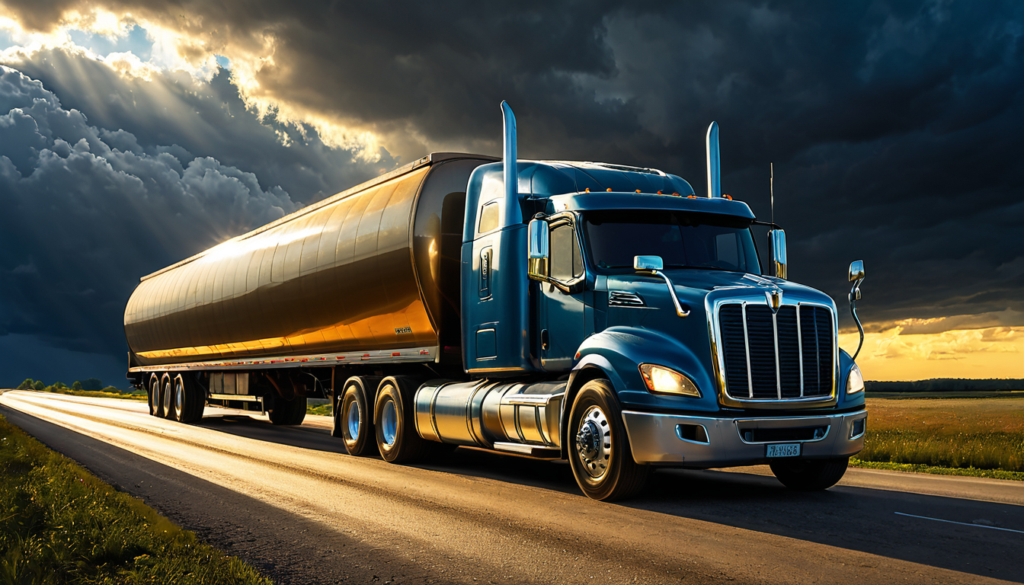
The physics of an 80,000-pound truck hitting a 4,000-pound sedan on a rural Illinois highway is not a fair fight. It is a catastrophe. And if you are reading this from a hospital bed in Perry County—or from your kitchen table while trying to make sense of why your life changed in an instant—you already know this truth.
We are Attorney911, and we have spent over 25 years standing between hardworking families and the trucking companies that try to minimize their suffering. Ralph Manginello, our managing partner, has been fighting for injury victims since 1998. He is admitted to federal court in the Southern District of Texas, and he has gone toe-to-toe with Fortune 500 corporations like BP in the Texas City refinery litigation that claimed 15 lives. We have recovered over $50 million for families across America, including multi-million dollar settlements for traumatic brain injuries, amputations, and wrongful deaths. Currently, we are litigating a $10 million hazing lawsuit against the University of Houston, demonstrating the kind of aggressive, complex litigation we bring to every case.
But right now, this is about you. This is about what happened on the roads serving Pinckneyville, Du Quoin, and the rural stretches of Perry County where agricultural freight, coal haulers, and interstate traffic converge on winding two-lane highways and state routes like IL-13 and IL-15.
When 80,000 Pounds Changes Everything
An 18-wheeler does not just hit you. It overwhelms you. At 65 miles per hour, a fully loaded semi needs nearly two football fields—525 feet—to come to a complete stop. Your sedan needs less than half that. When a truck driver is fatigued, distracted, or speeding through the curves near the Du Quoin State Fairgrounds, that difference in stopping distance means the difference between life and death.
Every 16 minutes, someone in America is injured in a commercial truck crash. In Perry County, where IL-127 connects rural communities to Interstate 64 and Interstate 57, the risk is amplified by geography. We see jackknife accidents on black ice during January storms. We see rollover crashes on the curving roads near Pyramid State Recreation Area. We see rear-end collisions where a distracted truck driver plows into stopped traffic at the intersection of IL-13 and IL-14.
These are not “car accidents.” These are catastrophic events that cause traumatic brain injuries, spinal cord damage, amputations, and wrongful death. And within hours of the crash, while you are still in shock, the trucking company has already dispatched a rapid-response team to protect their interests. They are photographing the scene. They are interviewing witnesses. They are downloading black box data. They are building their defense.
What are you doing?
Why Perry County Trucking Accidents Demand Specialized Attorneys
Trucking litigation is not personal injury law—it is a specialized battlefield. Federal Motor Carrier Safety Administration (FMCSA) regulations govern every aspect of commercial trucking, from how many hours a driver can operate to how cargo must be secured. When trucking companies violate these rules, they create the dangerous conditions that devastate Perry County families.
We know these regulations because we have built our practice around holding trucking companies accountable. Under 49 CFR Part 395, drivers are limited to 11 hours of driving after 10 consecutive hours off duty. They cannot drive beyond the 14th consecutive hour after coming on duty. They must take a 30-minute break after 8 cumulative hours of driving. Yet time and again, we see drivers in Perry County violating these hours-of-service rules, pushing through fatigue to make delivery deadlines, and causing catastrophic head-on collisions on rural routes.
Our firm includes Associate Attorney Lupe Peña, who spent years working as an insurance defense attorney for a national firm. He knows exactly how commercial trucking insurers evaluate claims, how they train adjusters to minimize payouts, and when they are bluffing. That insider knowledge is your advantage. When Lupe negotiates with the insurance company that hit you on IL-15 near Pinckneyville, he already knows their playbook—because he used to run it.
We speak Spanish. Hablamos Español. For many families in Perry County’s Hispanic communities, Lupe Peña provides direct representation without interpreters, building trust and ensuring nothing is lost in translation. Llame al 1-888-ATTY-911.
The Evidence Race: You Have 48 Hours
Here is what the trucking company does not want you to know: critical evidence disappears fast. The Electronic Control Module (ECM)—the truck’s “black box”—can overwrite data in as little as 30 days. Electronic Logging Device (ELD) records, which prove whether the driver violated federal hours-of-service regulations, may only be retained for six months. Dashcam footage is often deleted within weeks. Witness memories fade. Physical evidence at the scene washes away with the next rain.
That is why we send spoliation letters within 24 hours of being retained. These formal legal notices put the trucking company, their insurer, and all potentially liable parties on notice that they must preserve:
- ECM and black box data showing speed, braking, and throttle position before impact
- ELD logs proving hours-of-service violations
- Driver Qualification Files (DQF) containing CDL records, medical certifications, and drug test results
- Maintenance records under 49 CFR Part 396, including brake inspections and tire logs
- Dispatch records showing pressure to violate safety regulations
- Cell phone records proving distracted driving
- Dashcam and surveillance footage from nearby businesses in Perry County
If they destroy this evidence after receiving our letter, courts can instruct juries to assume the destroyed evidence was unfavorable to the trucking company. We can seek sanctions, adverse inference instructions, and even punitive damages for intentional spoliation.
Who Can Be Held Liable? Everyone Who Failed You
Most people assume only the truck driver is responsible. In reality, 18-wheeler accidents involve a web of corporate defendants, each with separate insurance policies stacked between $750,000 and $5 million. In Perry County, we investigate every potentially liable party, including:
The Truck Driver: For speeding, distracted driving, fatigue, or impairment. We subpoena their driving record, ELD data, and cell phone records to prove negligence.
The Trucking Company (Motor Carrier): Under the doctrine of respondeat superior, employers are responsible for their employees’ negligent acts. Additionally, they can be directly liable for negligent hiring (failing to check the driver’s criminal or driving history), negligent training (inadequate safety instruction), and negligent supervision (ignoring Hours of Service violations). Under 49 CFR Part 391, they must maintain a Driver Qualification File for every driver. When these files are missing or incomplete, it proves systemic safety failures.
The Cargo Owner and Loading Company: In Perry County’s agricultural economy, grain haulers and livestock trucks often transport unstable loads. Under 49 CFR Part 393, cargo must be secured to withstand 0.8g deceleration forces. When loaders fail to properly secure thousands of pounds of grain or heavy equipment, causing rollovers or spills on IL-127, they share liability.
Maintenance Companies: Third-party mechanics who negligently repaired brakes or tires. 49 CFR Part 396 requires systematic inspection and repair. Brake failures cause 29% of truck accidents—often due to deferred maintenance.
Truck and Parts Manufacturers: Defective brakes, steering mechanisms, or tire blowouts caused by manufacturing defects create product liability claims.
Freight Brokers: Under the Federal Aviation Administration Authorization Act (FAAAA), brokers can be liable for negligent selection of carriers with poor safety records (low CSA scores).
Government Entities: For dangerous road design on Perry County highways, inadequate signage on rural curves, or failure to maintain safe conditions.
Each defendant carries separate insurance. More defendants mean more insurance coverage means higher compensation for your medical bills, lost wages, and pain and suffering.
The Accidents We See in Perry County
Jackknife Accidents: On the winding stretches of IL-15 near the Washington County line, sudden braking on wet pavement causes the trailer to swing perpendicular to the cab, blocking multiple lanes and creating pileups.
Rollover Crashes: When grain trucks take curves too fast or encounter shifting cargo on the route to Pinckneyville, 80,000 pounds of metal and grain can crush smaller vehicles.
Rear-End Collisions: On I-64 and I-57, truckers following too closely—violating 49 CFR § 392.11—cannot stop in time for Perry County traffic slowed by agricultural equipment or construction.
Underride Collisions: The most fatal type of trucking accident. When a smaller vehicle slides under the trailer, the roof is sheared off. Despite 49 CFR § 393.86 requiring rear impact guards, many trucks have inadequate protection, leading to decapitation and fatal head trauma.
Wide Turn Accidents: In downtown Pinckneyville or at rural intersections, trucks swinging wide to complete right turns crush vehicles in the “squeeze play” zone.
Tire Blowouts: Extreme summer heat on Illinois highways causes tire failures. Under 49 CFR § 393.75, tires must have adequate tread depth (4/32″ on steer tires). When trucking companies defer replacement to save money, “road gators” shred tires across lanes, causing loss of control.
Brake Failures: On the descents near Pyramid State Recreation Area, overheated brakes fade, leading to runaway trucks. 49 CFR Parts 393 and 396 mandate brake inspections—violations are commonplace.
Cargo Spills: Unsecured agricultural loads, construction materials, or hazardous chemicals that spill onto Perry County roads, causing secondary accidents and chemical exposure injuries.
Catastrophic Injuries and Life-Altering Consequences
The settlements we pursue reflect the reality of these injuries. We have secured:
- $5+ million for traumatic brain injury victims (logging accident)
- $3.8+ million for amputation cases (car accident with medical complications)
- $2.5+ million for trucking accident victims
- $1.9-$9.5 million ranges for wrongful death cases
These figures are not random. They represent the lifetime cost of care for:
Traumatic Brain Injuries (TBI): Cognitive impairment, personality changes, inability to work, requiring 24/7 supervision. Lifetime costs can exceed $3 million.
Spinal Cord Injuries: Paraplegia or quadriplegia requiring wheelchairs, home modifications, and constant medical care. Lifetime costs range from $1.1 million to $5 million+.
Amputations: Surgical removal of limbs crushed in the accident, requiring prosthetics ($50,000+ per limb), rehabilitation, and retraining.
Severe Burns: From fuel fires or hazmat spills, requiring skin grafts, reconstructive surgery, and treatment for chronic pain.
Wrongful Death: When a Perry County family loses a breadwinner, we pursue damages for lost future income, loss of consortium, mental anguish, and funeral expenses.
Illinois Law: Your Rights and Deadlines
In Illinois, where Perry County sits within the Fifth Judicial Circuit Court, you have two years from the date of the accident to file a personal injury lawsuit. For wrongful death claims, the clock starts at the date of death. This sounds like a long time—it is not. Evidence preservation must happen immediately.
Illinois follows modified comparative negligence under 735 ILCS 5/2-1116. You can recover damages as long as you are not more than 50% at fault. Your recovery is reduced by your percentage of fault. If you are 20% at fault, you recover 80% of your damages. If you are 51% at fault, you recover nothing. This is why documenting the scene, securing black box data, and proving the truck driver’s negligence is critical.
Unlike some states, Illinois does not cap compensatory damages in personal injury cases (medical malpractice has caps, but trucking accidents do not). Punitive damages are available under 735 ILCS 5/2-604.1, capped at three times compensatory damages in most cases, but obtainable when trucking companies act with “willful and wanton conduct”—such as knowingly keeping a dangerous driver on the road or falsifying logbooks.
The Insurance Reality: Why These Cases Are Different
Federal law requires trucking companies to carry minimum liability insurance of $750,000 for non-hazardous freight, $1 million for oil and heavy equipment, and $5 million for hazardous materials. Many national carriers carry $1-5 million in coverage.
This is why trucking companies hire aggressive defense counsel. This is why they send rapid-response teams. They have millions to protect, and they will use every tactic to minimize your claim—denying injury severity, blaming you for the accident, claiming “independent contractor” status to avoid liability, or offering quick, lowball settlements before you know the full extent of your injuries.
As client Glenda Walker told us after we settled her trucking case, “They fought for me to get every dime I deserved.” That is what we do. We do not let insurers push Perry County families around.
What to Do If You Have Been Hit in Perry County
-
Seek Immediate Medical Attention: Go to Pinckneyville Community Hospital, Marshall Browning Hospital in Du Quoin, or the nearest trauma center. Internal injuries and TBIs often have delayed symptoms. Documentation creates the causal link between the accident and your injuries.
-
Document Everything: Photograph the truck’s DOT number (usually on the door), license plates, all vehicle damage, the scene, skid marks, and your injuries. Get witness names.
-
Do Not Give Recorded Statements: The trucking company’s insurer is not your friend. Anything you say will be used to minimize your claim.
-
Call Attorney911 Immediately: 1-888-ATTY-911. We work on contingency. You pay nothing unless we win. We advance all costs.
Frequently Asked Questions: Perry County Trucking Accidents
How long do I have to file a lawsuit in Illinois?
Two years from the accident date for personal injury, two years from death for wrongful death. But evidence must be preserved immediately.
What if I was partially at fault?
Under Illinois modified comparative negligence, you can recover as long as you are 50% or less at fault. Your percentage reduces your award.
Who pays my medical bills while I wait?
We can help arrange treatment under a Letter of Protection (LOP), where doctors treat you now and get paid from your settlement. Your health insurance or MedPay coverage may also apply.
How much is my case worth?
It depends on injury severity, medical costs, lost wages, and insurance coverage. Trucking cases typically settle for higher amounts than car accidents due to larger policies and catastrophic injuries.
Will my case go to trial?
Most settle, but we prepare every case for trial. Insurance companies offer better settlements when they know your attorney will take them to court.
What is a spoliation letter?
A legal notice demanding preservation of evidence. We send these within 24 hours to prevent the trucking company from destroying black box data, maintenance records, and driver files.
Do you handle cases on contingency?
Yes. Our standard fee is 33.33% pre-trial, 40% if trial is necessary. You pay nothing upfront.
Your Fight Starts Now
The trucking company has lawyers working right now to protect their interests. They have investigators. They have insurance adjusters trained to minimize your suffering. You need someone in your corner who knows their playbook—because they used to run it.
Ralph Manginello has spent 25 years fighting for families just like yours. We have offices in Houston, Austin, and Beaumont, and we handle trucking accident cases across Illinois, including Perry County. We know the local courts, the agricultural freight patterns on IL-13 and IL-127, and the federal regulations that trucking companies violate daily.
Do not let them convince you that your pain is worth less than it is. Do not let them destroy evidence while you are healing.
Call Attorney911 now at 1-888-ATTY-911 (1-888-288-9911). Hablamos Español. We answer calls 24/7. The consultation is free. The fight for justice starts with one call. Make it now.