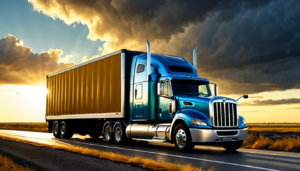
18-Wheeler Accident Attorneys in Saline County, Illinois
When 80,000 Pounds Changes Your Life Forever
The impact was devastating. One moment you’re navigating I-57 near Harrisburg, heading home after a long day in the coal fields or returning from tending crops in the rich agricultural lands of Saline County. The next moment, an 18-wheeler has crossed the centerline, blown a tire on the rural highways, or jackknifed across your path. In Saline County, Illinois, where I-57 serves as a vital artery connecting Chicago to the Gulf Coast and local routes carry heavy agricultural and mining equipment, trucking accidents aren’t just statistics—they’re catastrophic events that devastate families.
We’ve seen what happens when trucking companies prioritize profits over safety. At Attorney911, we’ve spent over two decades holding these companies accountable. Ralph Manginello, our managing partner since 1998, has secured multi-million dollar settlements for catastrophic injury victims—including $5 million for a traumatic brain injury victim and $3.8 million for a client who suffered an amputation. Our associate attorney, Lupe Peña, spent years inside insurance defense firms. He knows exactly how trucking insurers evaluate claims—and now he uses that insider knowledge to fight for Saline County families like yours.
If you or a loved one has been injured in an 18-wheeler accident anywhere in Saline County—from Harrisburg to Eldorado, from Carrier Mills to Galatia—you need immediate legal protection. Evidence disappears fast, and trucking companies deploy rapid-response teams within hours. Call 1-888-ATTY-911 now. We’re available 24/7, and we don’t charge a penny unless we win your case.
Why Saline County Truck Accidents Demand Specialized Legal Experience
Saline County sits at a critical junction in southern Illinois. Interstate 57 cuts through the eastern portion of the county, carrying thousands of commercial trucks daily between Chicago and Memphis. Interstate 24 touches our southern border, funneling heavy freight from the East Coast toward the Midwest. U.S. Route 45 runs straight through Harrisburg, carrying coal haulers, agricultural equipment, and freight traffic through the heart of our community.
This unique geography creates dangerous conditions. The mix of high-speed interstate traffic with rural county roads means truck drivers often transition from 70 mph highways to narrow, winding roads without adequate adjustment. During harvest season, agricultural trucks share space with passenger vehicles on Routes 13, 45, and 142. Winter weather brings treacherous conditions to the Shawnee National Forest foothills, where steep grades and sharp curves test even experienced drivers.
According to national data, over 5,000 people die annually in U.S. trucking accidents, with 76% of those fatalities occurring in passenger vehicles. While Saline County’s population may be modest, our location at the crossroads of major freight corridors means our residents face disproportionate risk. Every 16 minutes, someone in America is injured in a commercial truck crash—and Saline County’s position along these vital shipping routes makes our highways particularly dangerous.
The Physics of Catastrophe: Why Truck Accidents Differ
An 80,000-pound tractor trailer isn’t just a bigger car—it’s a weapon when operated negligently. The physics are terrifying:
- Weight disparity: Your sedan weighs roughly 4,000 pounds. A fully loaded 18-wheeler scales 80,000 pounds. That’s a 20-to-1 weight advantage in a collision.
- Stopping distance: At 65 mph, a truck needs 525 feet to stop—nearly two football fields. On the wet pavement of Saline County’s rural roads during a spring thunderstorm, that distance extends even further.
- Blind spots: Trucks have four “no-zones” where they cannot see passenger vehicles. The right-side blind spot is particularly deadly on narrow rural highways where trucks swing wide to make turns.
- Underride crashes: When a smaller vehicle slides beneath a trailer—common during rear-end collisions on I-57—the roof shears off, often causing instant decapitation or catastrophic head injuries.
These aren’t fender-benders. These are life-altering events that require immediate, aggressive legal representation to preserve evidence and protect your family’s financial future.
We’ve Recovered Millions for Truck Accident Victims
Ralph Manginello isn’t new to this fight. Since founding Attorney911 in 1998, he’s built a reputation as one of the most aggressive truck accident litigators in the business. He’s admitted to the U.S. District Court for the Southern District of Texas, giving him federal jurisdiction to handle complex interstate trucking cases that cross state lines.
Our results speak for themselves:
- $5+ million for a traumatic brain injury victim struck by a falling log
- $3.8+ million for a car accident victim who suffered a partial leg amputation following a staph infection after the crash
- $2.5+ million for truck crash recoveries
- $2+ million for a maritime back injury case
But numbers only tell part of the story. Client Glenda Walker put it best: “They fought for me to get every dime I deserved.” Chad Harris told us, “You are NOT a pest to them and you are NOT just some client… You are FAMILY to them.” That’s how we operate. With 251 Google reviews maintaining a 4.9-star average, we treat every Saline County client like family, not a case number.
Our current $10 million litigation against the University of Houston demonstrates our willingness to take on powerful institutions when negligence causes harm—just as we do with Fortune 500 trucking companies like Walmart, Amazon, FedEx, UPS, and Coca-Cola, all of which we’ve successfully litigated against.
The Insurance Defense Advantage: Knowing Their Playbook
Here’s what most Saline County accident victims don’t know: trucking companies have teams of lawyers and adjusters working against you before the police even finish their report. They send rapid-response investigators to the scene to collect evidence favorable to their defense—and potentially “lose” evidence that’s damaging to them.
That’s why we have Lupe Peña on our team. Before joining Attorney911, Lupe spent years at a national insurance defense firm. He sat in the meetings where adjusters learned to minimize payouts. He reviewed the training manuals that teach insurance representatives to ask trick questions designed to make you admit fault. He knows the Colossus software they use to algorithmically undervalue your pain and suffering.
Now he turns that insider knowledge against them. When Lupe evaluates a trucking accident case in Saline County, he knows exactly what the opposing adjuster is thinking, what their settlement authority really is, and when they’re bluffing. That advantage translates directly into higher settlements for our clients.
Understanding Illinois Trucking Law
Saline County falls under Illinois jurisdiction, which means specific rules govern your case:
Statute of Limitations: You have two years from the date of your accident to file a personal injury lawsuit in Illinois. For wrongful death claims, you have two years from the date of death. Miss this deadline, and you lose your right to compensation forever—regardless of how severely you were injured.
Comparative Negligence: Illinois follows a modified comparative negligence rule with a 51% bar. This means you can recover damages as long as you were 50% or less at fault for the accident. However, your recovery will be reduced by your percentage of fault. If you’re found 20% at fault, your $100,000 settlement becomes $80,000. If you’re 51% at fault, you recover nothing. Trucking companies will try to blame you—don’t let them.
Punitive Damages: Unlike some states that cap punitive damages, Illinois allows juries to award unlimited punitive damages (subject to constitutional due process limits) when trucking companies act with gross negligence, willful misconduct, or conscious indifference to safety. This is crucial in Saline County cases where companies knowingly put tired drivers on dangerous rural roads or fail to maintain brakes.
The Federal Motor Carrier Safety Regulations That Protect You
Every 18-wheeler on Saline County roads must comply with strict federal regulations codified in 49 CFR Parts 390-399. When trucking companies violate these rules, they create liability that strengthens your case.
49 CFR Part 390: General Applicability
These regulations apply to all commercial motor vehicles (CMVs) operating in interstate commerce—essentially any truck weighing over 10,001 pounds or transporting hazardous materials. “Interstate commerce” includes trucks traveling through Saline County even if they don’t stop here, making these federal rules applicable to virtually all 18-wheeler accidents in our area.
49 CFR Part 391: Driver Qualification Standards
Before a driver can legally operate an 18-wheeler, they must meet strict qualifications:
- Minimum age of 21 for interstate commerce (or 18 for intrastate)
- Ability to read and speak English sufficiently to communicate with the public
- Physical qualification under DOT medical standards
- Valid Commercial Driver’s License (CDL)
- Clean driving record per employer standards
- Current medical examiner’s certificate
Why this matters for your case: If the driver who hit you lacked proper qualifications, had a suspended CDL, or suffered from a medical condition that should have disqualified them, we can pursue negligent hiring and negligent entrustment claims against the trucking company. We subpoena the Driver Qualification File—which federal law requires carriers to maintain for every driver—to find these violations.
49 CFR Part 392: Driving Rules
This section contains the operational rules drivers must follow:
- § 392.3 (Fatigue): “No driver shall operate a commercial motor vehicle… while the driver’s ability or alertness is so impaired… through fatigue… as to make it unsafe to operate.” This is critical in Saline County, where drivers transition from monotonous interstates to challenging rural roads while battling fatigue.
- § 392.4 (Drug Use): Prohibits operating under the influence of Schedule I substances (including marijuana, illegal under federal law regardless of Illinois state law) or any drug that impairs driving ability.
- § 392.5 (Alcohol): Prohibits alcohol use within four hours of duty, alcohol possession while on duty, and operating with a BAC of .04 or higher (half the limit for regular drivers).
- § 392.11 (Following Distance): Requires drivers to maintain “reasonable and prudent” following distances—critical on I-57 where sudden stops can cause catastrophic pileups.
- § 392.82 (Mobile Phones): Prohibits hand-held phone use and texting while driving. We subpoena cell phone records to prove violations.
49 CFR Part 393: Vehicle Safety Equipment
This section mandates specific equipment standards:
- § 393.40-55 (Brake Systems): All CMVs must have properly functioning service brakes, parking brakes, and emergency braking systems. Brake problems contribute to 29% of truck crashes. We examine maintenance records and post-crash brake inspections.
- § 393.75 (Tire Safety): Requires minimum tread depths (4/32″ on steer tires, 2/32″ on others) and prohibits tires with exposed belt material. Given Saline County’s agricultural traffic and debris-covered rural roads, tire blowouts are common causes of accidents here.
- § 393.100-136 (Cargo Securement): Cargo must be secured to prevent shifting, falling, or leaking. This is vital during harvest season when grain trucks and agricultural equipment travel our roads. The rules specify that securement systems must withstand 0.8g deceleration forces—if cargo shifts causing a rollover or jackknife, the loading company violated federal law.
49 CFR Part 395: Hours of Service (HOS)
The most commonly violated trucking regulations involve driving time:
- 11-hour driving limit: Cannot drive more than 11 hours after 10 consecutive hours off-duty
- 14-hour duty window: Cannot drive beyond the 14th consecutive hour after coming on duty
- 30-minute break: Mandatory break after 8 cumulative hours of driving
- 60/70-hour rule: Cannot drive after 60 hours in 7 days or 70 hours in 8 days without a 34-hour restart
- Electronic Logging Device (ELD) mandate: Since December 18, 2017, most trucks must use ELDs that automatically record driving time, speed, and location.
Critical evidence: ELD data proves fatigue violations that cause accidents on Saline County’s roads. This data overwrites in as little as 30 days—another reason to call us immediately.
49 CFR Part 396: Inspection and Maintenance
Trucking companies must systematically inspect, repair, and maintain their vehicles:
- § 396.11: Drivers must complete post-trip inspection reports covering brakes, steering, tires, lights, and emergency equipment
- § 396.13: Pre-trip inspections must confirm the vehicle is safe to operate
- § 396.17: Annual inspections required by certified inspectors
When a Saline County truck accident involves brake failure, tire blowouts, or lighting violations, these maintenance records become the smoking gun proving corporate negligence.
The 10 Liable Parties in Your Saline County Truck Accident
Unlike car accidents where usually only one driver is at fault, 18-wheeler accidents often involve multiple responsible parties. We investigate every possible defendant because more defendants mean more insurance coverage, which means higher compensation for your family.
1. The Truck Driver
Direct negligence includes speeding, distracted driving (texting, eating, adjusting GPS), fatigued driving, impaired driving, or failure to adjust for weather conditions on Saline County’s rural roads. We obtain the driver’s cell phone records, ELD data, and personnel file.
2. The Trucking Company (Motor Carrier)
Employers are vicariously liable for their drivers’ negligence under respondeat superior. Additionally, we pursue direct negligence claims for:
- Negligent hiring: Failing to check the driver’s accident history or CDL status
- Negligent training: Inadequate safety training for rural highway driving
- Negligent supervision: Failing to monitor HOS compliance or driver behavior
- Negligent maintenance: Deferred repairs to save costs
We examine the company’s FMCSA Compliance, Safety, and Accountability (CSA) scores to prove patterns of violations.
3. The Cargo Owner/Shipper
Companies loading goods onto trucks may be liable for:
- Requiring overweight loads that stress brakes and tires
- Failing to disclose hazardous materials
- Pressuring carriers to meet unrealistic delivery schedules that force HOS violations
This is common with agricultural shippers in Saline County during harvest season.
4. The Loading Company
Third-party loaders who improperly secure cargo violate 49 CFR § 393.100-136. When cargo shifts causing a rollover on I-57 or Route 45, the loading company shares liability.
5. Truck Manufacturer
Design defects in brake systems, underride guards, or stability control systems can cause accidents even with careful drivers. We investigate recall notices and similar complaint histories through the NHTSA database.
6. Parts Manufacturer
Defective tires, brake components, or steering mechanisms may trigger product liability claims against component manufacturers.
7. Maintenance/Inspection Companies
Third-party mechanics who negligently repair brakes, fail to identify critical defects, or certify unsafe vehicles for return to service share responsibility for subsequent crashes.
8. Freight Brokers
Brokers who arrange transportation must exercise reasonable care in selecting carriers. Selecting a carrier with poor safety ratings, inadequate insurance, or known violations constitutes negligent selection.
9. Truck Owner (Non-Carrier)
In owner-operator arrangements, the individual truck owner may be liable for negligent entrustment if they allowed an unqualified or dangerous driver to operate their vehicle.
10. Government Entities
Illinois Department of Transportation (IDOT) or Saline County may be liable for:
- Dangerous road design on rural highways
- Failure to maintain safe road conditions (potholes, debris)
- Inadequate signage for steep grades or sharp curves
- Improper work zone setups
Government claims have special notice requirements and shorter deadlines—contact us immediately to preserve these claims.
Types of 18-Wheeler Accidents Common in Saline County
Jackknife Accidents
When the trailer swings perpendicular to the cab—often on I-57 during sudden braking or on the curves of the Shawnee Hills. Caused by improper braking, worn tires, or following too closely. We analyze ECM data to prove the driver braked improperly or was speeding for conditions.
Rear-End Collisions
Trucks need 40% more stopping distance than cars. On congested I-57 or stopped traffic on Route 45, tired or distracted drivers plow into stopped vehicles. These often involve underride crashes where the trailer slices through the car’s passenger compartment, causing decapitation or catastrophic head injuries.
Rollover Accidents
High center of gravity + speed on curves + improperly secured loads = rollovers. Common on the ramps connecting I-57 to rural routes and on the winding roads near the Shawnee National Forest. The 50% of rollovers caused by failure to adjust speed on curves prove FMCSA § 392.6 violations.
Underride Collisions
When a car slides beneath the trailer—front or side—the survival rate is devastating. Federal law requires rear impact guards (49 CFR § 393.86), but side underride guards remain unregulated. We examine guard compliance and lighting adequacy.
Tire Blowouts
Saline County’s mix of interstate speeds and rural debris creates tire failure risks. Underinflated tires (violating § 393.75) overheat and explode, causing loss of control. We preserve the failed tire for defect analysis and examine maintenance records for inspection failures.
Brake Failures
Downhill grades on Saline County’s roads stress braking systems. Lack of maintenance (violating Part 396) causes overheated brakes to fade or fail. Post-crash brake inspections and maintenance logs prove whether the company knew brakes were defective.
Cargo Spills/Shift
Agricultural loads, coal, or manufactured goods that shift during transit cause rollovers or lost loads on highways. We examine Bills of Lading and securement documentation.
Wide-Turn Accidents
Trucks swinging wide to make right turns on narrow Harrisburg streets or rural intersections often crush vehicles in the “squeeze play” zone—particularly dangerous for motorcycles and small cars.
Blind Spot Collisions
The right-side no-zone is largest and most dangerous. When trucks change lanes on I-57 without proper mirror checks (violating § 392.11), they sideswipe or crush vehicles in adjacent lanes.
The 48-Hour Evidence Preservation Crisis
Evidence in trucking accidents disappears faster than you think. Trucking companies know this, and they use it to their advantage. Here’s what’s at risk:
ECM/Black Box Data: Overwrites in 30 days or with subsequent engine starts. This data contains your speed, braking, throttle position, and fault codes—objective evidence that contradicts driver lies about “I was doing the speed limit” or “I hit the brakes immediately.”
ELD Records: May be retained for only 6 months under FMCSA minimums. These prove hours-of-service violations and fatigue.
Dashcam Footage: Often deleted within 7-14 days unless litigation is threatened.
Driver Qualification Files: Must be kept for 3 years after employment ends, but companies may “lose” incriminating documents.
Physical Vehicles: Repaired, sold, or scrapped within weeks.
Witness Memories: Fade within days.
When you hire Attorney911, we send spoliation letters within 24 hours demanding preservation of all evidence. We subpoena ELD downloads immediately. We photograph the trucks before they’re repaired. We canvas for surveillance cameras from businesses near the Saline County crash scene.
The clock started the moment the crash occurred. Every hour you wait, evidence vanishes. Call 1-888-ATTY-911 now.
Catastrophic Injuries and Their Lifetime Costs
The forces involved in Saline County 18-wheeler accidents cause injuries that change everything:
Traumatic Brain Injury (TBI)
From concussions to comas, TBI affects cognition, personality, memory, and motor function. Lifetime care costs: $85,000 to $3,000,000+. Settlements range from $1.5 million to $9.8 million depending on severity.
Spinal Cord Injury/Paralysis
Complete or incomplete spinal damage can cause paraplegia or quadriplegia. Lifetime costs: $1.1 million to $5 million+. These cases regularly settle for $4.7 million to $25.8 million.
Amputations
Whether traumatic (severed at scene) or surgical (due to crush injuries or infection), amputations require prosthetics ($5,000-$50,000+ each, replaced every few years), rehabilitation, and home modifications. Settlements: $1.9 million to $8.6 million.
Severe Burns
Fuel fires from ruptured tanks or hazmat spills cause third and fourth-degree burns requiring skin grafts, multiple surgeries, and lifelong scar management.
Internal Injuries
Organ damage, internal bleeding, and collapsed lungs may not show symptoms immediately but can be life-threatening. Always seek immediate evaluation at Harrisburg Medical Center or another qualified facility.
Wrongful Death
When negligence takes a loved one, surviving family members may recover lost income, loss of consortium, mental anguish, and funeral expenses. Settlements typically range from $1.9 million to $9.5 million for families who have lost breadwinners in Saline County trucking accidents.
Illinois Insurance Requirements and Your Recovery
Federal law mandates minimum insurance coverage for commercial trucks:
- $750,000: Non-hazardous freight (most common)
- $1,000,000: Oil, petroleum, large equipment
- $5,000,000: Hazardous materials
Many carries maintain $1-5 million in coverage. This is why trucking accidents can result in substantial recoveries—unlike standard car accidents with $30,000 policies. However, accessing these funds requires proving liability and damages, which is why experienced legal representation is crucial.
Frequently Asked Questions for Saline County Residents
How soon should I contact a lawyer after a truck accident in Saline County?
Immediately—within 24-48 hours. Evidence disappears quickly, and Illinois’ two-year statute of limitations seems long until you realize how complex trucking litigation is. We need time to investigate, preserve ECM data, and build your case.
What if the trucking company says the accident was my fault?
Don’t admit fault. Illinois uses comparative negligence. Even if you were partially at fault, you may recover if you’re less than 51% responsible. We’ll gather ELD data, black box evidence, and witness statements to prove what really happened on that Saline County road.
Can I afford an attorney?
Absolutely. We work on contingency—you pay nothing unless we win. We advance all investigation costs. The trucking company has lawyers working right now to protect them. You deserve the same. Call 888-ATTY-911.
What if the driver was an independent contractor?
Good question. Even if the driver owns the truck, the company that hired them may still be liable under respondeat superior or negligent hiring theories. We investigate all employment relationships.
How long will my case take?
Simple cases: 6-12 months. Complex litigation: 1-3 years. Catastrophic injury cases requiring life-care planning: 2-4 years. We work to resolve cases efficiently while maximizing value. As client Angel Walle told us, “They solved in a couple of months what others did nothing about in two years.”
What if I don’t have health insurance?
We can help you find medical providers who will treat you under a Letter of Protection—meaning they get paid when your case settles. Don’t delay treatment because of money concerns.
Do you handle Spanish-speaking clients?
Sí. Hablamos Español. Lupe Peña is fluent in Spanish and can provide direct representation without interpreters. Call 1-888-ATTY-911 to speak with him.
What if the trucking company wants me to sign a release?
Never sign anything without legal review. Early settlement offers are always lowball attempts to get rid of you before you understand the full extent of your injuries. We’ve seen offers made while clients were still hospitalized.
Can I sue for emotional distress?
Yes. Illinois recognizes damages for mental anguish, PTSD, and loss of enjoyment of life. Traumatic truck accidents often cause severe psychological injuries alongside physical ones.
What if the accident happened on a rural Saline County road, not the interstate?
We handle accidents throughout Saline County—on I-57, I-24, US-45, IL-13, IL-142, and every rural backroad. The location doesn’t matter; the negligence does.
How do I know if I have a good case?
Call us for a free consultation. We’ll evaluate liability, damages, and insurance coverage. Four things make a strong case: clear liability, documented injuries, available insurance, and the right attorney fighting for you.
What is a spoliation letter?
A formal legal notice we send immediately to trucking companies demanding they preserve evidence. Once they receive this, if they delete black box data or “lose” maintenance records, courts can punish them severely—sometimes even granting default judgment.
Will my case go to trial?
Probably not—95% of cases settle. But we prepare every case as if it’s going to trial. Insurance companies offer better settlements when they know your lawyer is willing to go to court. Ralph Manginello has the federal court experience and trial skills to take your case all the way if necessary.
Can I still recover if I waited to see a doctor?
Yes, but it’s harder. Insurance companies will argue your injuries weren’t caused by the accident. See a doctor immediately after any Saline County truck accident, even if you feel okay. Adrenaline masks pain, and internal injuries can be silent killers.
What if the truck was carrying hazardous materials?
Hazmat accidents require specialized knowledge of 49 CFR Part 397. These cases involve higher insurance requirements ($5 million) and potential punitive damages for dangerous cargo handling.
How do you prove the driver was tired?
ELD data shows driving time versus rest time. We also examine dispatch records, fuel receipts, GPS data, and cell phone records to prove the driver exceeded Hours of Service limits.
What if my loved one died in the accident?
We are deeply sorry for your loss. Wrongful death claims in Illinois allow recovery for loss of consortium, lost income, and mental anguish. Time is critical—contact us immediately to preserve evidence and begin the investigation.
Do you handle cases against government agencies?
Yes, including accidents involving IDOT vehicles or unsafe road conditions maintained by Saline County. These claims have shorter deadlines and special procedures, so call immediately.
Why shouldn’t I just use the insurance company’s lawyer?
The insurance company’s lawyer represents the trucking company, not you. They work to minimize your payout. You need your own advocate who fights exclusively for your interests.
What You Should Do Right Now
If you’re reading this after a Saline County 18-wheeler accident:
- Seek medical attention—even if you feel fine. Document everything.
- Do not speak to the trucking company’s insurance without legal counsel.
- Preserve evidence—photos of the scene, your vehicle, your injuries.
- Call Attorney911 at 1-888-288-9911—available 24/7 for Saline County residents.
Ralph Manginello has been fighting for injured families since 1998. Lupe Peña knows the insurance defense playbook. Together, we’ve recovered over $50 million for clients. We’ve gone toe-to-toe with BP in the Texas City refinery explosion litigation. We’re currently litigating a $10 million case against a major university. We’re not intimidated by big trucking companies, and we don’t settle for less than you deserve.
As client Donald Wilcox said, “One company said they would not accept my case. Then I got a call from Manginello… I got a call to come pick up this handsome check.” That’s what we do. We take cases other firms reject, and we win.
Saline County is our priority. Your family is our family. Your fight is our fight.
Call 1-888-ATTY-911 (1-888-288-9911) right now. The consultation is free. We don’t get paid unless you win. And we’re ready to start protecting your evidence today.
Hablamos Español. Llame al 1-888-ATTY-911 hoy.
Attorney911 serves trucking accident victims throughout Saline County, Illinois, including Harrisburg, Eldorado, Carrier Mills, Galatia, and surrounding communities. With offices in Houston, Austin, and Beaumont, Texas, we bring national-level experience to your local case. Don’t let the trucking company win. Call now.