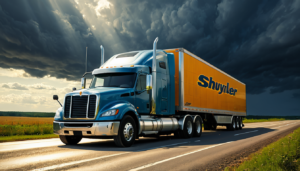
Grant County 18-Wheeler Accident Lawyers: Fighting for Maximum Compensation
An 80,000-pound truck on I-69 outside Marion doesn’t give you a second chance. When a semi truck changes your life in an instant, you need a Grant County legal team that knows how to make trucking companies pay. At Attorney911, we’ve spent over 25 years fighting for families across Indiana who’ve been devastated by commercial vehicle crashes on highways like US 35 and State Road 26. We don’t just handle cases—we treat you like family while we battle for every dollar you deserve.
The Grant County Trucking Danger: Why These Roads Are Risky
Grant County sits at the crossroads of major freight corridors in north-central Indiana. Interstate 69 runs right through the heart of our communities—connecting Indianapolis to Fort Wayne and beyond—carrying thousands of commercial trucks past Marion, Gas City, and Upland every single day. Add US 35, US 331, and the agricultural traffic hauling grain and livestock from the surrounding farmland, and you’ve got a recipe for serious truck accidents.
The statistics are terrifying. Across Indiana, commercial truck crashes cause catastrophic injuries far more often than regular car accidents. When an 18-wheeler hits a passenger vehicle at highway speeds, the physics are brutal: 80,000 pounds of steel against 4,000 pounds of metal. That’s not a collision—it’s annihilation. We know these Grant County roads, we know the trucking companies that use them, and we know how to hold them accountable when they cut corners on safety.
Winter Weather Multiplies the Danger
Grant County winters bring ice, snow, and whiteout conditions that turn I-69 into a nightmare for truck drivers. When semis jackknife on the interstate near the Fairmount exit or slide off US 35 near Sweetser, innocent families pay the price. Truck drivers and their companies are required by federal law to adjust for weather conditions, but too often they prioritize delivery deadlines over safety. When they do, we make sure they answer for it.
Why Grant County Families Choose Attorney911
When you’re lying in a hospital bed at IU Health Marion Hospital wondering how you’ll pay the bills and put your life back together, you don’t need just any lawyer. You need a fighter who knows the trucking industry inside and out. That’s exactly what Ralph Manginello has built at Attorney911 over the past 25 years.
Ralph Manginello has been standing up to trucking companies since 1998. He’s fought—and won—against some of the largest corporations in America, including BP in the Texas City Refinery explosion litigation where 15 workers were killed and 170 more were injured. He’s currently litigating a $10 million lawsuit against the University of Houston for hazing injuries, demonstrating that we take on powerful institutions and win. With admission to federal court in the Southern District of Texas and dual licensure in Texas and New York, Ralph brings sophisticated legal strategies to Grant County cases that local general practice lawyers simply can’t match.
But here’s what really sets us apart: our team includes Lupe Peña, a former insurance defense attorney who spent years working for the very companies that are now trying to pay you less. Lupe knows every trick they use to minimize claims—from lowball offers to spoliation of evidence—and now he uses that insider knowledge to fight for you. As client Donald Wilcox told us after we won his case, “One company said they would not accept my case. Then I got a call from Manginello… I got a call to come pick up this handsome check.”
We Treat You Like Family—Not a File Number
Big billboard firms treat you like a number. We don’t. As Chad Harris said about his experience with our firm, “You are NOT a pest to them and you are NOT just some client… You are FAMILY to them.” When you hire Attorney911 for your Grant County trucking accident, you get Ralph’s cell phone number. You get updates every 2-3 weeks. And you get a team that includes Spanish-speaking attorneys—Hablamos Español—so language is never a barrier to getting justice.
With offices in Houston, Austin, and Beaumont, Texas, we serve clients nationwide, including right here in Grant County, Indiana. We work on contingency—you pay absolutely nothing unless we win. No upfront costs. No hourly fees. Just aggressive representation that puts your recovery first.
How 18-Wheeler Accidents Happen in Grant County
Not all truck accidents are the same, and in Grant County’s mix of interstate highways and rural routes, certain types of crashes happen more often than others. Understanding how your accident happened is crucial to proving who was at fault and why they must pay.
Jackknife Accidents on I-69
When a truck driver hits the brakes too hard on icy patches near the Swayzee exit, the trailer can swing out perpendicular to the cab, creating a deadly wall of steel that sweeps across multiple lanes. Jackknifes often happen because drivers were going too fast for conditions or their brakes weren’t properly maintained. Under 49 CFR § 393.48, trucking companies must maintain brake systems, and under 49 CFR § 392.6, drivers must adjust speed for weather conditions. When they don’t, we prove it.
Underride Collisions: The Deadliest Crashes
Rear underride accidents happen when a passenger vehicle slides under the back of a trailer—shearing off the roof and often killing everyone inside. Side underrides occur when trucks make wide turns onto US 331 or rural routes and smaller vehicles slide underneath. While federal law requires rear impact guards (49 CFR § 393.86), many are poorly maintained or improperly installed. There’s no federal requirement for side underride guards, which makes these cases complex—and devastating.
Tire Blowouts and Maintenance Failures
A blown tire on an 18-wheeler creates instant chaos. The debris alone can cause multi-vehicle pileups on I-69, and the loss of control can send 80,000 pounds of truck careening into your lane. Federal regulations (49 CFR § 393.75) require minimum tread depths and proper tire maintenance, but trucking companies often defer maintenance to save money. When we investigate blowouts, we subpoena maintenance records going back months to prove the company knew the tires were unsafe.
Cargo Spills on Rural Routes
Grant County’s agricultural economy means trucks hauling grain, livestock feed, and equipment share the roads with passenger vehicles. When cargo isn’t properly secured under 49 CFR § 393.100-136, it can shift on curves, causing rollovers, or spill onto the highway, creating hazards that last for miles. We’ve handled cases where spilled grain turned State Road 26 into an ice rink, causing chain-reaction crashes.
Fatigue-Related Crashes
The straight stretches of I-69 and US 35 invite drowsy driving. Federal Hours of Service regulations (49 CFR Part 395) limit commercial drivers to 11 hours of driving after 10 hours off duty, with mandatory 30-minute breaks after 8 hours. But Electronic Logging Devices (ELDs) often reveal drivers and companies cheated these rules, creating exhausted operators who can’t react in time to avoid crashes.
The Federal Regulations That Protect You—and Prove Liability
Trucking isn’t just regulated by Indiana law. The Federal Motor Carrier Safety Administration (FMCSA) imposes strict rules on every commercial vehicle crossing state lines, and these regulations are powerful tools for proving negligence.
Driver Qualification Requirements (49 CFR Part 391)
Before any driver can operate a commercial truck, they must meet strict federal standards. Companies must maintain a Driver Qualification (DQ) File containing:
- Proof the driver is at least 21 years old (for interstate commerce)
- Valid Commercial Driver’s License (CDL) verification
- Medical examiner’s certificate proving physical fitness
- Three-year driving history from previous employers
- Pre-employment drug test results
When trucking companies fail to verify these qualifications—or hire drivers with poor safety records—they’re liable for negligent hiring. We subpoena these files in every case, and we’ve found companies that hired drivers with suspended licenses or recent DUI convictions.
Hours of Service Violations (49 CFR Part 395)
Since December 18, 2017, most trucks must use Electronic Logging Devices (ELDs) that automatically record driving time. These devices are gold mines of evidence proving:
- Whether the driver exceeded the 11-hour driving limit
- If they drove beyond the 14-hour on-duty window
- Whether they took required 30-minute breaks
- How many hours they’d driven in the past 7 or 8 days (60/70 hour limits)
ELD data can be overwritten in as little as 30 days. That’s why we send spoliation letters immediately—often within 24 hours of being hired—to preserve this evidence before it disappears.
Vehicle Maintenance Standards (49 CFR Parts 393 & 396)
Every truck must pass annual inspections (49 CFR § 396.17), and drivers must conduct pre-trip inspections before every shift (49 CFR § 396.13). Post-trip reports must document any defects found. When companies skip these inspections or defer repairs to save money, they create deadly hazards. Brake failures—which cause 29% of truck accidents—are almost always traceable to maintenance negligence.
Cargo Securement Rules (49 CFR § 393.100-136)
Cargo must be secured to withstand:
- 0.8 G deceleration (sudden stop) forward
- 0.5 G acceleration rearward
- 0.5 G lateral forces (side-to-side)
- At least 20% of cargo weight downward if not fully contained
When loaders in Grant County fail to use sufficient tiedowns or proper blocking, they create instability that causes rollovers on turns or spills on highways.
Every Liable Party—Because More Defendants Mean More Insurance
Most law firms only sue the driver and maybe the trucking company. We dig deeper. In Grant County trucking accidents, up to ten different parties might share liability, and each represents a different insurance pool we can access for your recovery.
The Driver: Personally liable for speeding, distraction, impairment, or fatigue.
The Trucking Company (Motor Carrier): Vicariously liable under respondeat superior, and directly liable for negligent hiring, training, supervision, and maintenance.
The Cargo Owner/Shipper: Liable if they demanded unsafe delivery schedules or failed to disclose hazardous cargo conditions.
The Loading Company: Responsible for improper securement that caused cargo shifts or spills.
The Truck/Trailer Manufacturer: Liable for design defects in brakes, tires, or stability systems.
The Parts Manufacturer: Responsible when defective components like brake calipers or tires fail.
The Maintenance Company: Liable for negligent repairs or failure to identify safety issues during service.
The Freight Broker: Can be liable for negligently selecting carriers with poor safety records (CSA scores).
The Truck Owner: If different from the carrier, liable for negligent entrustment.
Government Entities: When dangerous road design or maintenance contributed—though Indiana’s Tort Claims Act limits these claims and requires specific notice procedures within 180 days.
We investigate every potential defendant because trucking companies carry massive insurance—$750,000 minimum for general freight, $1 million for oil and hazardous materials, and $5 million for the most dangerous cargo. But accessing these funds requires knowing where to look and how to prove negligence.
The 48-Hour Evidence Preservation Protocol
Here’s what the trucking company doesn’t want you to know: they have rapid-response teams that arrive at accident scenes within hours, sometimes before the ambulance leaves. Their lawyers and insurance adjusters start building their defense immediately. Meanwhile, critical evidence that could prove your case is disappearing.
Critical Evidence At Risk:
- ECM/Black Box Data: Overwrites in 30 days or less
- ELD Logs: May only be retained for 6 months
- Dashcam Footage: Often deleted within 7-14 days
- Surveillance Video: Nearby businesses typically overwrite cameras weekly
- Witness Statements: Memories fade within days
- Physical Evidence: Trucks get repaired or sold, obscuring damage patterns
When you call Attorney911 at 1-888-ATTY-911, we immediately send spoliation letters to every potential defendant. These legal notices put them on notice that destroying evidence will result in serious consequences—including sanctions, adverse jury instructions, or punitive damages. We demand preservation of:
- All ECM and telematics data
- Complete Driver Qualification Files
- Six months of maintenance records
- Cell phone records showing distraction
- Dispatch records proving schedule pressure
- Post-accident drug and alcohol test results
Don’t wait to call. Every hour that passes makes your case harder to prove.
Catastrophic Injuries: Understanding What You’re Facing
Grant County truck accidents don’t cause minor injuries. They cause life-changing catastrophes that require millions in long-term care. We’ve secured multi-million dollar settlements because we understand the real costs of these injuries.
Traumatic Brain Injury (TBI)
When your head strikes the steering wheel or dashboard, the brain sloshes inside the skull, causing bruising, bleeding, and long-term cognitive damage. Even “mild” TBIs (concussions) can cause permanent personality changes, memory loss, and inability to work. Moderate to severe TBIs often require lifetime care costing millions. We’ve recovered between $1.5 million and $9.8 million for TBI victims.
Spinal Cord Injuries and Paralysis
The force of a truck impact often damages the spine, causing paraplegia (loss of use of legs) or quadriplegia (loss of use of arms and legs). These injuries require wheelchairs, home modifications, 24/7 nursing care, and ongoing medical treatment costing $3-5 million over a lifetime.
Amputation and Loss of Limb
When a truck’s impact crushes a vehicle or when underride accidents shear off limbs, victims face surgical amputation and prosthetic limbs costing $50,000+ each, plus replacement every few years. Beyond the medical bills is the loss of the ability to work, play with children, or live independently.
Severe Burns
Fuel fires from ruptured tanks or hazmat cargo spills cause third and fourth-degree burns requiring skin grafts, reconstructive surgery, and treatment at specialized burn centers like the one at IU Health Methodist in Indianapolis.
Wrongful Death
When a truck accident kills your loved one, Indiana law allows surviving spouses, children, and parents to recover for lost income, loss of companionship, funeral expenses, and mental anguish. These cases often settle between $1.9 million and $9.5 million, depending on the victim’s age, earning capacity, and the egregiousness of the trucking company’s conduct.
As Glenda Walker told us after we settled her case, “They fought for me to get every dime I deserved.” That’s exactly what we do—calculate every penny of past medical bills, future care, lost wages, and pain and suffering to ensure you’re not left bearing the costs of someone else’s negligence.
Indiana Law: What Grant County Accident Victims Must Know
The Two-Year Deadline (Statute of Limitations)
Indiana gives you just two years from the date of the accident to file a lawsuit (Indiana Code § 34-11-2-4). Miss this deadline, and you lose your right to compensation forever—no matter how serious your injuries or how obvious the truck driver’s fault.
For wrongful death claims, the clock starts on the date of death, which may be different from the accident date. And if you’re considering a claim against a government entity for dangerous road conditions, Indiana requires a Notice of Tort Claim within 180 days (or 270 days for state agencies)—a much shorter window.
Modified Comparative Fault: Indiana’s 51% Rule
Indiana uses modified comparative negligence (Indiana Code § 34-51-2-6). This means:
- If you are 50% or less at fault, you can recover damages reduced by your fault percentage
- If you are 51% or more at fault, you recover nothing
Trucking companies and their insurers will try to shift blame onto you—claiming you were speeding, failed to yield, or were distracted. We fight these allegations with ECM data, witness testimony, and accident reconstruction to keep your fault percentage as low as possible.
Damage Caps: Good News for Grant County Victims
Fortunately, Indiana does not cap compensatory damages (economic and non-economic) in personal injury cases against private defendants. While punitive damages are theoretically available for willful or wanton misconduct, Indiana requires 75% of punitive awards to go to the state’s Violent Crime Victim Compensation Fund (Indiana Code § 34-51-3-6), making them rare in trucking cases. However, the lack of caps on compensatory damages means we can pursue the full amount needed for your medical care and lost wages.
Frequently Asked Questions About Grant County Truck Accidents
What should I do immediately after an 18-wheeler accident in Grant County?
Call 911 immediately. Indiana law requires reporting accidents causing injury or vehicle damage. Then, if you’re able, photograph everything—vehicle damage, the truck’s DOT number (usually on the door), cargo, skid marks, and your injuries. Get witness names and the truck driver’s insurance information. Seek medical attention at IU Health Marion Hospital or your local emergency room even if you feel okay—adrenaline masks serious injuries. Then call Attorney911 at 1-888-ATTY-911 before talking to any insurance company.
Who can be held liable for my truck accident?
Potentially up to ten parties: the driver, trucking company, cargo owner, loading company, truck manufacturer, parts maker, maintenance company, freight broker, truck owner (if different), and government entities. We investigate all of them to maximize your recovery.
How much is my Grant County truck accident case worth?
It depends on your injuries, medical costs, lost wages, and the trucking company’s insurance coverage. However, trucking companies must carry at least $750,000 in insurance, often $1-5 million. We’ve recovered multi-million dollar settlements for clients with catastrophic injuries. Call 888-ATTY-911 for a free evaluation of your specific case.
What if the trucking company claims I was partially at fault?
Under Indiana law, you can recover as long as you’re not more than 50% at fault. We gather ECM data, ELD logs, and witness statements to prove the truck driver’s negligence and minimize your fault percentage.
How long do I have to file a lawsuit?
Two years from the accident date for personal injury, two years from death for wrongful death. But don’t wait—evidence disappears fast. Call us immediately.
Do you handle cases where the truck driver was an independent contractor?
Yes. Even if the driver is an “independent contractor,” the trucking company may still be liable for negligent hiring or supervision, and they may have separate insurance coverage we can access.
Can undocumented immigrants file truck accident claims in Indiana?
Yes. Your immigration status does not affect your right to recover compensation for injuries caused by someone else’s negligence. We handle these cases confidentially and compassionately.
What does “Hablamos Español” mean for my case?
It means Lupe Peña and our team can communicate with you directly in Spanish, without interpreters. Legal concepts are complex, and we want you to understand exactly what’s happening with your case in the language you’re most comfortable speaking. Llame al 1-888-ATTY-911.
Will my case go to trial?
Most cases settle, but we prepare every case as if it’s going to trial. Insurance companies offer better settlements when they know your lawyer isn’t afraid to take them to court. Ralph Manginello has 25+ years of trial experience, and that reputation gets results.
How much does it cost to hire Attorney911?
Nothing upfront. We work on contingency—33.33% if we settle before trial, 40% if we go to trial. You pay nothing unless we win. We also advance all costs of investigation and litigation.
Why You Can’t Afford to Wait
The trucking company that hit you has already called their lawyer. Their insurance adjuster is already reviewing ways to minimize your claim. Their rapid-response team is already at work.
Meanwhile, you’re in pain. You’re worried about bills. And you’re wondering if you’ll ever feel normal again.
You need someone fighting for you right now. Not tomorrow. Not next week. Today.
At Attorney911, we don’t just handle cases—we treat you like family while we fight for every dime you deserve. Ralph Manginello brings 25+ years of experience, federal court admission, and a track record of multi-million dollar verdicts against Fortune 500 companies. Luque Peña brings insider knowledge from his years defending insurance companies. Together, we level the playing field against the trucking giants.
We know Grant County. We know I-69, US 35, and the rural routes where these accidents happen. And we know how to make these companies pay.
Call 1-888-ATTY-911 (1-888-288-9911) right now for a free consultation. We’re available 24/7 because we know accidents don’t happen on business hours. Hablamos Español. And remember—you pay nothing unless we win.
Don’t let the trucking company win. Fight back with Attorney911.