When an 80,000-Pound Truck Changes Everything on I-70
One moment you’re driving home on the interstate near Lane County. The next, an 18-wheeler is barreling through your lane, or jackknifing across the highway, or rear-ending you with twenty-five times the force of a regular car. In that split second, your life changes forever.
If you’re reading this from a hospital bed in Lane County—or if you’re caring for a loved one who was injured in a trucking accident on Kansas highways—you need to know something critical: the trucking company already has lawyers working to protect them. Their insurance adjuster has already started building a case to pay you as little as possible. And every hour you wait, evidence that could prove your case is disappearing.
At Attorney911, we’ve spent over 25 years fighting for families devastated by 18-wheeler accidents. Ralph Manginello, our managing partner, has recovered multi-million dollar settlements for clients with traumatic brain injuries, amputations, and spinal cord damage. We’ve gone toe-to-toe with Fortune 500 companies like BP. And our associate attorney Lupe Peña used to work for insurance companies—now he uses that insider knowledge to fight against them.
But here’s the truth: you have limited time to act. Black box data can be overwritten in 30 days. Driver logs disappear. Witnesses forget what they saw. In Kansas, you have just two years from the date of your accident to file a lawsuit—but waiting even weeks can destroy your case.
Call us now at 1-888-ATTY-911 or (888) 288-9911. We answer 24/7, and we work on contingency—you pay nothing unless we win.
Why Lane County Trucking Accidents Are Different
The Physics of 80,000 Pounds
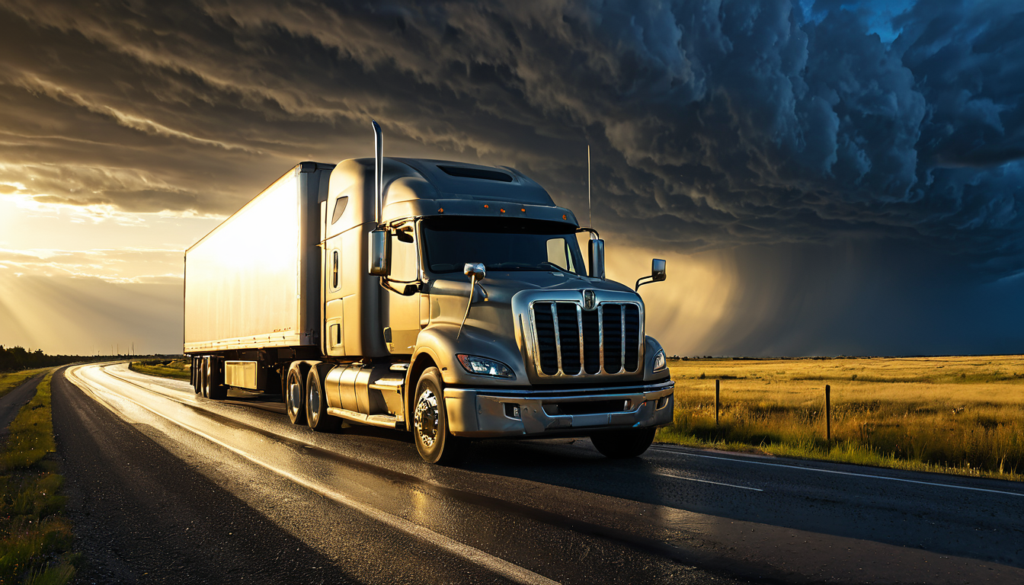
An 18-wheeler isn’t just a big car. It’s a 75-foot-long, 80,000-pound weapon moving at highway speeds. When a fully loaded semi hits a 4,000-pound passenger vehicle on I-70 near Lane County, the physics are devastating.
Here’s what you’re up against:
- Stopping distance: At 65 mph, a truck needs nearly two football fields (525 feet) to stop. A car needs about 300 feet. That extra 225 feet is often the difference between an avoided collision and a catastrophic injury.
- Impact force: An 80,000-pound truck carries approximately 20 times the kinetic energy of a passenger car. In a crash, that energy transfers directly to your vehicle—and your body.
- Blind spots: Commercial trucks have massive “no-zones” on all four sides. If you’re in one of these zones near Lane County, the driver literally cannot see you, even with mirrors.
These aren’t opinions. They’re physics. And trucking companies know this. That’s why they carry between $750,000 and $5 million in insurance coverage—and why they fight so hard to avoid paying what they owe.
The Kansas Difference: Modified Comparative Fault
Kansas follows a “modified comparative negligence” rule with a 50% bar. This means if you’re found 50% or less at fault for the accident, you can still recover damages—but your recovery is reduced by your percentage of fault. However, if you’re found even 51% at fault, you recover nothing.
This is critical for Lane County residents. Insurance companies love to argue that the victim was partially at fault—driving too fast for conditions, following too closely, or not avoiding the accident. We know these tactics because Lupe Peña, our associate attorney, used to use them when he worked for insurance companies. Now he fights against them.
And don’t forget: Kansas has a 2-year statute of limitations for personal injury cases. Wait too long, and you lose your right to sue forever.
The Real Ralph Manginello: 25+ Years Fighting for Trucking Victims
When we say experience matters, we mean it. Ralph Manginello has been practicing personal injury law since 1998—over a quarter century of courtroom experience. He’s admitted to the U.S. District Court, Southern District of Texas, which means he can handle interstate trucking cases that cross state lines.
But experience isn’t just years on a calendar. It’s results:
- $5+ Million recovered for a traumatic brain injury victim struck by a falling log
- $3.8+ Million secured for a client who lost a limb after a car crash led to medical complications
- $2.5+ Million in commercial truck crash recoveries
- $10 Million lawsuit currently active against the University of Houston for hazing-related injuries (demonstrating our ability to take on institutional defendants)
We’ve also stood toe-to-toe with giants. Ralph was involved in litigation against BP following the Texas City Refinery explosion in 2005—one of the few Texas firms to do so. That explosion killed 15 workers and injured 170 more. When we say we know how to handle corporate defendants with deep pockets, we mean it.
Our client Chad Harris put it best: “You are NOT a pest to them and you are NOT just some client… You are FAMILY to them.”
Donald Wilcox, another client, shared: “One company said they would not accept my case. Then I got a call from Manginello… I got a call to come pick up this handsome check.”
And Glenda Walker told us: “They fought for me to get every dime I deserved.”
That family treatment extends to Lane County. With offices in Houston, Austin, and Beaumont, we serve trucking accident victims across Kansas and beyond. And thanks to Ralph’s dual-state licensure in Texas and New York, we have the flexibility to handle complex jurisdictional issues that can arise in interstate trucking cases.
The Attorney911 Advantage: We Know Their Playbook
Here’s something most law firms can’t offer: we have an attorney who used to work for the insurance companies.
Lupe Peña, our associate attorney, spent years at a national insurance defense firm before joining Attorney911. He knows exactly how trucking insurers evaluate claims, train their adjusters to minimize payouts, and use software like Colossus to calculate lowball offers.
When you hire Attorney911 for your Lane County trucking accident, you’re getting someone who knows:
- Which offers are bluffing, and when they’ll actually pay
- How adjusters are trained to manipulate victims into saying things that hurt their case
- The formulas they use to undervalue pain and suffering
- When they’re hiding coverage or umbrella policies
As Lupe says, “If this prevents harm to another person, that’s what we’re hoping to do. Let’s bring this to light. Enough is enough.”
Plus, Lupe is fluent in Spanish. For Lane County’s Hispanic community—particularly agricultural workers and truck drivers who may speak Spanish as a first language—this means direct representation without interpreters. Hablamos Español. Llame al 1-888-ATTY-911.
Common 18-Wheeler Accidents on Kansas Highways
Lane County sits along some of America’s most critical trucking corridors. I-70 runs straight through Kansas, carrying transcontinental freight from Denver to Kansas City. Agricultural trucks haul wheat and grain from local farms to distribution centers. And oil field traffic moves equipment across the state.
Here are the accidents we see most often in Kansas—and how they happen:
Jackknife Accidents
A jackknife occurs when the trailer swings out perpendicular to the cab, folding like a pocket knife. On Kansas highways—particularly I-70 during winter weather or on the curves near the Colorado border—these accidents often happen because:
- Drivers brake improperly on wet or icy roads
- Empty or lightly loaded trailers are more prone to swing
- Equipment failures cause sudden braking
Jackknives are terrifying because the sweeping trailer blocks multiple lanes. There’s often nowhere for other drivers to go. These accidents frequently involve 49 CFR § 393.48 (brake system violations) or § 393.100 (improper cargo securement).
Rollover Accidents
When an 80,000-pound truck tips onto its side or roof, the results are catastrophic. Rollovers happen on Kansas highways when:
- Drivers take curves too fast (especially on I-70 near Hays or the rural stretches west of Lane County)
- Cargo shifts during transport—particularly common with grain haulers and liquid tankers
- Drivers overcorrect after drifting onto the shoulder
Rollovers often violate 49 CFR § 393.100-136 (cargo securement standards) or § 392.6 (speeding for conditions).
Underride Collisions
Perhaps the most deadly type of trucking accident, underrides occur when a smaller vehicle slides underneath the trailer—often shearing off the passenger compartment at windshield level. Rear underrides happen when trucks stop suddenly on the interstate. Side underrides occur during lane changes or intersection turns.
While federal law requires rear impact guards (49 CFR § 393.86), many are improperly maintained or inadequate. And there is no federal requirement for side underride guards—something we’re fighting to change.
Rear-End Collisions
Given the stopping distance we mentioned earlier, rear-end collisions are common on I-70 when traffic slows unexpectedly. Kansas City-bound trucks following too closely (49 CFR § 392.11) simply cannot stop in time.
These accidents often involve:
- Distracted driving (cell phone use violates 49 CFR § 392.82)
- Fatigued drivers exceeding hours of service limits (49 CFR Part 395)
- Brake failures from poor maintenance (49 CFR § 396.3)
Wide Turn Accidents (“Squeeze Play”)
In smaller Lane County towns and at rural intersections, trucks often swing wide before making right turns. When they do, they trap passenger cars in the “squeeze play”—crushing them between the curb and the trailer.
These accidents violate 49 CFR § 392.11 (unsafe lane changes) and often involve failure to properly signal or check mirrors.
Tire Blowouts
Kansas summers get hot. Extreme heat causes tires to deteriorate rapidly, leading to blowouts that send debris flying or cause drivers to lose control. Tire blowouts often reveal violations of 49 CFR § 393.75 (tire requirements) or § 396.13 (failure to conduct pre-trip inspections).
Cargo Spills and Shifts
Grain haulers, equipment transporters, and flatbeds carrying agricultural equipment frequent Lane County roads. When cargo isn’t properly secured per 49 CFR § 393.100-136, it can shift during transport—causing rollovers—or spill onto the roadway, creating chain-reaction crashes.
Brake Failures
Brake problems contribute to approximately 29% of large truck crashes. On Kansas’s long, flat stretches, drivers may ride their brakes, causing “brake fade.” Or companies may defer maintenance to save money. These violations of 49 CFR Parts 393 and 396 are often preventable and therefore evidence of negligence.
All Ten Parties Who May Be Liable For Your Lane County Accident
Most people think the truck driver is the only one responsible. They’re wrong. In 18-wheeler cases, we investigate ten potentially liable parties to ensure you can recover maximum compensation:
- The Truck Driver – For speeding, distraction, fatigue, impairment, or traffic violations
- The Trucking Company/Motor Carrier – Under “respondeat superior” (the employer answers for the employee), plus direct negligence for hiring, training, supervision, or maintenance failures
- The Cargo Owner/Shipper – For improper loading instructions, overweight loads, or hazardous material violations
- The Loading Company – For failing to secure cargo per federal regulations
- The Truck/Trailer Manufacturer – For design defects in brakes, stability control, or fuel tank placement
- The Parts Manufacturer – For defective brakes, tires, or steering components
- The Maintenance Company – For negligent repairs or failure to identify safety issues
- The Freight Broker – For negligent carrier selection (hiring carriers with poor safety records)
- The Truck Owner – If different from the carrier, for negligent entrustment or failure to maintain equipment
- Government Entities – For dangerous road design or failure to maintain highways (though sovereign immunity limits apply)
Under Kansas law, finding multiple liable parties is crucial because it creates multiple insurance pools. While Kansas requires trucking companies to carry minimum liability coverage, accessing the full $750,000 to $5 million available—and any umbrella policies—requires identifying every responsible party.
We subpoena Driver Qualification Files, maintenance records, dispatch logs, and corporate contracts to find every potential defendant. As our client Ernest Cano said, we “fight tooth and nail for you.”
The 48-Hour Evidence Crisis: Why You Must Act Now
Here’s something trucking companies don’t want you to know: critical evidence starts disappearing immediately after a crash.
| Evidence Type | Destruction Risk |
|---|---|
| ECM/Black Box Data | Overwrites in 30 days or with new events |
| ELD Electronic Logs | May be retained only 6 months |
| Dashcam Footage | Often deleted within 7-14 days |
| Surveillance Video | Business cameras overwrite in 7-30 days |
| Witness Memory | Fades significantly within weeks |
| Physical Evidence | Vehicles repaired, sold, or scrapped |
We send spoliation letters within 24-48 hours of being retained. These legal notices put the trucking company on notice that they must preserve all evidence—or face severe sanctions, including adverse jury instructions (where the jury is told to assume destroyed evidence was unfavorable to the trucking company).
What We Preserve
Our spoliation letters demand preservation of:
Electronic Data:
- ECM/Black box data (speed, braking, throttle, fault codes)
- ELD records (hours of service violations)
- GPS and telematics tracking
- Dashcam footage (forward-facing and cabin-facing)
- Cell phone records and text messages
- Dispatch communications
Driver Records:
- Complete Driver Qualification File
- Employment application and background checks
- Medical certifications and drug test results
- Previous accident and violation history
- Training records
Vehicle Records:
- Maintenance and repair logs
- Inspection reports (pre-trip, post-trip, annual)
- Tire and brake replacement records
- Out-of-service orders
Corporate Records:
- Hours of service records for 6 months prior
- Bills of lading and cargo manifests
- Insurance policies (including umbrella coverage)
- Safety policies and CSA (Compliance, Safety, Accountability) scores
This evidence proves violations of 49 CFR Parts 390-399—the Federal Motor Carrier Safety Regulations that govern every commercial truck on American highways.
FMCSA Regulations That Prove Negligence
Federal regulations aren’t just bureaucratic red tape. They’re rules designed to keep you safe. When trucking companies break them, they’ve breached their duty of care to you.
Hours of Service Violations (49 CFR Part 395)
Driver fatigue causes approximately 31% of fatal truck crashes. Federal law limits how long drivers can operate:
- Maximum 11 hours driving after 10 consecutive hours off duty
- 14-hour duty window—cannot drive beyond the 14th consecutive hour after coming on duty
- 30-minute break required after 8 cumulative hours of driving
- 60/70 hour limits—cannot drive after 60 hours in 7 days or 70 hours in 8 days
Since 2017, most trucks must use Electronic Logging Devices (ELDs) that automatically record driving time and synchronize with the engine. This data is objective proof of fatigue violations.
Driver Qualification Failures (49 CFR Part 391)
Trucking companies must maintain a Driver Qualification File for every driver, including:
- Verified driving records from previous employers
- Medical certifications (valid for max 2 years)
- Pre-employment drug test results
- Road test certifications
Hiring a driver without a valid CDL, with a history of DUIs, or with medical conditions that affect driving constitutes negligent hiring—and makes the company directly liable.
Cargo Securement Violations (49 CFR § 393.100-136)
Cargo must be secured to withstand:
- 0.8 g deceleration forward (sudden stop)
- 0.5 g acceleration rearward
- 0.5 g lateral forces (side-to-side)
Grain haulers and agricultural trucks in Kansas often violate these rules, leading to shifts that cause rollovers or spills on I-70.
Brake and Maintenance Failures (49 CFR Parts 393 & 396)
Every truck must have functioning service brakes on all wheels, parking brakes, and proper adjustment. Drivers must conduct pre-trip inspections (§ 396.13) and companies must maintain systematic inspection programs (§ 396.3).
When brake failures cause accidents on Kansas highways, these records often show months of deferred maintenance.
Drug and Alcohol Violations (49 CFR §§ 392.4, 392.5)
Commercial drivers cannot:
- Use alcohol within 4 hours of driving
- Drive with a BAC of .04 or higher (half the legal limit for passenger vehicles)
- Use Schedule I controlled substances
Post-accident drug testing (49 CFR Part 382) is required for fatalities and serious injuries. Positive tests create automatic liability.
Catastrophic Injuries: When Your Life Changes Forever
The settlements we achieve—ranging from $1.9 million to $9.8 million or more—aren’t just numbers. They represent the real cost of catastrophic injuries that trucking accidents cause.
Traumatic Brain Injury (TBI) – $1.5M to $9.8M+
When an 80,000-pound truck hits your vehicle, your brain impacts the inside of your skull. TBI symptoms include:
- Memory loss and confusion
- Chronic headaches and dizziness
- Personality changes and mood swings
- Difficulty concentrating
- Sensory problems (vision, hearing)
Moderate to severe TBI requires lifelong care. The lifetime cost can exceed $3 million. Our firm has recovered over $5 million for TBI victims.
Spinal Cord Injury – $4.7M to $25.8M+
Damage to the spinal cord can result in:
- Paraplegia (loss of function below the waist)
- Quadriplegia (loss of function in all four limbs)
- Chronic pain and loss of sensation
Lifetime care costs range from $1.1 million to over $5 million, depending on the level of injury and age of the victim.
Amputations – $1.9M to $8.6M+
Whether traumatic (at the scene) or surgical (due to crushing injuries or infection), amputation requires:
- Multiple surgeries
- Prosthetic limbs ($5,000-$50,000+ each, replaced every few years)
- Extensive rehabilitation
- Home modifications
Our client who lost a limb after a car accident—where subsequent staph infection developed during treatment—recovered $3.8+ million.
Severe Burns
Fuel fires from ruptured tanks or hazmat spills cause third and fourth-degree burns requiring:
- Skin grafts and reconstructive surgery
- Treatment for infection and chronic pain
- Psychological counseling for disfigurement trauma
Wrongful Death – $1.9M to $9.5M+
When a trucking accident kills a loved one, Kansas law allows surviving family members to recover:
- Lost future income and benefits
- Loss of consortium (companionship, guidance)
- Mental anguish
- Funeral expenses
- Pre-death medical costs
- Pain and suffering endured by the deceased before death
As Kiimarii Yup, one of our clients, shared: “I lost everything… my car was at a total loss, and because of Attorney Manginello and my case worker Leonor, 1 year later I have gained so much in return plus a brand new truck.”
Insurance and Damages: What Kansas Law Allows
Federal law requires trucking companies to carry minimum liability coverage:
| Cargo Type | Minimum Coverage |
|---|---|
| Non-hazardous freight | $750,000 |
| Oil/petroleum products | $1,000,000 |
| Hazardous materials | $5,000,000 |
But here’s the catch: insurance companies don’t pay out easily. They use tactics like:
- Quick lowball settlements before you know the full extent of injuries
- Blaming you for the accident (using Kansas’s comparative fault rules against you)
- Claiming pre-existing conditions
- Surveillance to “catch” you doing activities they claim prove you’re not injured
We know these tactics because we’ve faced them from the inside. Lupe Peña’s insurance defense background means we recognize them immediately and counter them effectively.
Kansas Damage Caps
Unlike some states, Kansas does not cap economic damages (medical bills, lost wages) in trucking cases. However, Kansas does have specific rules regarding punitive damages—damages meant to punish the defendant for gross negligence. These are capped at the lesser of:
- $5 million, OR
- The defendant’s annual gross income
Non-economic damages (pain and suffering) in Kansas are also capped, but the specific limits adjust annually and depend on the date of injury. An experienced attorney can navigate these caps to maximize your recovery within legal limits.
Frequently Asked Questions: 18-Wheeler Accidents in Lane County
How long do I have to file a lawsuit after a trucking accident in Kansas?
You have two years from the date of the accident to file a personal injury lawsuit in Kansas. However, waiting is dangerous. Evidence disappears, witnesses forget, and trucking companies build their defenses. Contact us immediately.
What if I’m partially at fault for the accident?
Kansas uses “modified comparative negligence” with a 50% bar. If you’re 50% or less at fault, you can recover, but your damages are reduced by your percentage of fault. If you’re 51% or more at fault, you recover nothing. Don’t let the insurance company convince you that you’re at fault without talking to us first.
How much is my case worth?
It depends on injury severity, medical costs, lost wages, pain and suffering, and available insurance. Trucking cases typically have higher values than car accidents due to larger insurance policies. We’ve recovered settlements ranging from hundreds of thousands to millions.
Will my case go to trial?
Most cases settle before trial (98%), but we prepare every case as if it’s going to trial. Insurance companies offer better settlements when they know your attorney is willing to go to court. Ralph Manginello has the federal court experience and trial background to take your case all the way if necessary.
How do I pay for a lawyer?
We work on contingency fee. You pay nothing upfront. We advance all costs (investigation, expert witnesses, filing fees). We only get paid if we win—typically 33.33% pre-trial or 40% if we go to trial. If we don’t win, you owe us nothing.
What if the truck driver was an independent contractor?
Both the driver and the trucking company may still be liable. We investigate lease agreements, insurance policies, and the company’s level of control over the driver to determine all responsible parties.
Can undocumented immigrants file personal injury claims?
Yes. Immigration status does not affect your right to compensation in Kansas. At Attorney911, hablamos español—Lupe Peña provides direct Spanish-language representation.
What if the trucking company is from out of state?
Interstate trucking cases often involve federal jurisdiction. Ralph Manginello’s admission to the U.S. District Court, Southern District of Texas (plus his New York bar admission) gives us flexibility to handle complex jurisdictional issues that arise when trucks cross state lines.
Should I talk to the trucking company’s insurance adjuster?
No. Do not give recorded statements. The adjuster is trained to get you to say things that minimize your claim. Let us handle all communications. As Angel Walle told us: “They solved in a couple of months what others did nothing about in two years.”
What makes Attorney911 different from other personal injury firms?
- 25+ years of experience (Ralph Manginello, admitted to federal court)
- Former insurance defense attorney on staff (Lupe Peña knows their tactics)
- Multi-million dollar results ($50+ million recovered total)
- Family treatment (ask Chad Harris—“You are FAMILY to them”)
- 24/7 availability at 1-888-ATTY-911
- Spanish services available
The Lane County Trucking Accident Guide: Your Next Steps
If you’ve made it this far, you understand the stakes. You know that:
- Evidence disappears in days, not months
- Trucking companies have teams of lawyers protecting their interests
- Kansas law gives you 2 years, but waiting weakens your case
- Multiple parties may be liable, creating multiple insurance pools
- The physics of 80,000 pounds against 4,000 pounds creates catastrophic injuries
- Insurance companies use tactics to minimize your recovery—but we know those tactics from the inside
At Attorney911, we don’t just accept cases—we fight for families. We treat you like family because you are family. We’ve recovered over $50 million for Texas and Kansas families, including multi-million dollar settlements for brain injuries, amputations, and wrongful death.
Right now, while you’re reading this, the trucking company is building their defense. What are you doing to protect yourself?
Call 1-888-ATTY-911 (1-888-288-9911) or (888) 288-9911 right now. We’re available 24/7, including weekends and holidays. The consultation is free. You pay nothing unless we win.
If you speak Spanish, ask for Lupe Peña. Hablamos Español. Llame al 1-888-ATTY-911 para una consulta gratis.
Don’t wait until the black box data is gone. Don’t wait until the witnesses forget. Don’t wait until the statute of limitations is staring you down.
Call Attorney911 today. We’re the firm insurers fear. And we’re ready to fight for you.
Attorney911 / The Manginello Law Firm, PLLC
Managing Partner: Ralph P. Manginello (25+ years experience, Texas Bar #24007597, Federal Court Admission)
Associate Attorney: Lupe E. Peña (Former Insurance Defense, Fluent Spanish, Texas Bar #24084332)
Offices: Houston, Austin, Beaumont
Serving Lane County, Kansas and Nationwide
Call 1-888-ATTY-911 • (888) 288-9911 • ralph@atty911.com