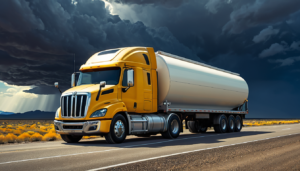
18-Wheeler Accident Attorneys in Sedgwick County, Kansas
When an 80,000-Pound Truck Changes Everything
The moment an 18-wheeler crosses the centerline, runs a red light, or loses control on I-35 through Sedgwick County, lives change in an instant. One second you’re driving through Wichita or heading home to Derby after a long day. The next, you’re facing catastrophic injuries, mounting medical bills, and a trucking company that’s already preparing to minimize what they owe you.
We’ve seen it happen too many times on the busy corridors feeding through Sedgwick County—the Kansas Turnpike stretch of I-35, the agricultural routes carrying wheat and grain across the county, and the industrial corridors serving Wichita’s manufacturing sector. When a commercial truck weighing up to 80,000 pounds collides with a passenger vehicle, the physics are brutal. The average sedan weighs around 4,000 pounds. That weight disparity—twenty to one—explains why trucking accidents in Sedgwick County so often result in traumatic brain injuries, spinal cord damage, amputations, and wrongful death.
At Attorney911, we don’t let trucking companies push Sedgwick County families around. Our managing partner, Ralph Manginello, has spent over 25 years fighting for injury victims since 1998. We’ve recovered multi-million dollar settlements for catastrophic injuries, and our team includes former insurance defense attorney Lupe Peña, who knows exactly how trucking insurers try to minimize your claim—because he used to work for them. Now he fights against them.
If you or a loved one has been injured in an 18-wheeler accident anywhere in Sedgwick County—from Wichita to Haysville, from Valley Center to Mulvane—you need immediate legal protection. Evidence disappears quickly. Black box data can be overwritten in 30 days. And the trucking company already has lawyers working to protect their interests.
Call us now at 1-888-ATTY-911. The consultation is free. We work on contingency—you pay nothing unless we win.
Why 18-Wheeler Accidents in Sedgwick County Are Different
The Physics of Destruction
Think an 18-wheeler is just a big car? Think again. A fully loaded semi-truck traveling at 65 miles per hour needs approximately 525 feet to stop—that’s nearly two football fields. On the straight stretches of I-35 through Sedgwick County, where trucks barrel through at highway speeds, that stopping distance becomes deadly when traffic slows unexpectedly or when winter ice creates havoc.
The force generated in a truck collision is calculated by mass times acceleration. When 80,000 pounds of steel and cargo slam into a 4,000-pound passenger vehicle, the energy transfer is catastrophic. Sedgwick County’s position as a major logistics corridor—connecting Kansas agriculture to national markets and serving Wichita’s aerospace and manufacturing industries—means our roads see heavy commercial traffic year-round.
The Regulatory Maze
Unlike car accidents, 18-wheeler cases involve complex federal regulations. The Federal Motor Carrier Safety Administration (FMCSA) governs every aspect of commercial trucking, and violations prove negligence in court.
49 CFR Part 390 establishes general applicability—defining which vehicles must comply with federal rules. Any commercial motor vehicle over 10,001 pounds operating in interstate commerce falls under these regulations, which includes most trucks traversing Sedgwick County’s highways.
49 CFR Part 391 sets driver qualification standards. Trucking companies must maintain Driver Qualification Files verifying that each driver has a valid CDL, passed medical examinations, completed proper training, and has no disqualifying history. When we investigate Sedgwick County trucking accidents, we immediately subpoena these files. Missing documentation or negligent hiring practices can establish direct liability against the carrier.
49 CFR Part 392 governs driving rules prohibiting operation while fatigued, impaired, or distracted. Section 392.3 specifically bars drivers from operating when their alertness is impaired by fatigue or illness. Given the long-haul nature of Sedgwick County’s I-35 corridor—stretching from Oklahoma through Kansas toward Iowa and Minnesota—fatigue violations are common causes of local accidents.
49 CFR Part 393 mandates vehicle safety standards including cargo securement (sections 393.100-136), brake systems (393.40-55), and lighting requirements. Improperly secured grain loads from Sedgwick County elevators, shifting cargo on curved ramps, or worn brake systems create deadly hazards.
49 CFR Part 395 imposes Hours of Service (HOS) rules limiting drivers to 11 hours of driving after 10 consecutive hours off duty, prohibiting driving beyond the 14th hour on duty, and requiring 30-minute breaks after 8 hours. Since December 2017, Electronic Logging Devices (ELD) track compliance automatically. ELD data showing HOS violations provides compelling evidence of negligence in Sedgwick County crashes.
49 CFR Part 396 requires systematic inspection, repair, and maintenance. Pre-trip inspections, post-trip reports, and annual inspections must be documented. When inadequate maintenance causes brake failures or tire blowouts on Sedgwick County highways, these records prove the trucking company put profit over safety.
Sedgwick County’s High-Risk Trucking Corridors
Sedgwick County sits at the crossroads of major freight routes, creating unique accident risks for local drivers.
The I-35/Kansas Turnpike Corridor
Interstate 35 serves as the primary north-south artery through Sedgwick County, carrying thousands of trucks daily between Laredo, Texas, and the Canadian border. This corridor sees heavy agricultural freight during harvest seasons, oilfield equipment bound for Kansas oil patches, and manufactured goods from Wichita’s industrial sector.
The long, monotonous stretches through Sedgwick County—particularly south of Wichita toward the Oklahoma line and north toward Emporia—create ideal conditions for driver fatigue. When truckers exceed their 11-hour driving limits to meet delivery schedules, Sedgwick County families pay the price in devastating accidents.
Agricultural and Industrial Routes
From September through November, Sedgwick County roads fill with grain trucks hauling wheat and corn from county fields to elevators and rail terminals. These trucks frequently overload, exceed weight ratings, or have inadequately secured cargo. When a loaded grain truck rolls over on a curve or loses its cargo on a rural highway, the resulting accidents can involve multiple vehicles.
Wichita’s status as an aviation manufacturing hub means specialized transport of aircraft components, jet engines, and oversized machinery through Sedgwick County. These loads require specific permits, escorts, and routing. Violations of these requirements—or improper loading—create hazards on local roads and interstates.
Weather Hazards
Sedgwick County experiences severe weather that dramatically affects trucking safety. Winter ice storms create treacherous conditions on I-235 and I-135 loop ramps around Wichita. Spring tornadoes and severe thunderstorms with straight-line winds can overturn high-profile trailers. Summer heat causes tire blowouts on the hot asphalt of Kansas highways.
Truck drivers who fail to adjust for Sedgwick County weather conditions—violating 49 CFR § 392.6 by driving at speeds unsafe for conditions—cause jackknife accidents and rollovers that block interstates for hours and claim lives.
Types of 18-Wheeler Accidents We Handle in Sedgwick County
Jackknife Accidents
A jackknife occurs when the trailer and cab skid in opposite directions, with the trailer swinging perpendicular to the cab like a pocket knife folding. On the curved ramps connecting I-35 to I-135 or on wet winter highways through Sedgwick County, sudden braking can trigger these deadly incidents.
Jackknifes often result in multi-vehicle pileups when the trailer sweeps across multiple lanes. Evidence we gather includes ECM data showing brake timing, skid mark analysis, and maintenance records revealing worn brakes. These accidents frequently involve violations of 49 CFR § 393.48 regarding brake systems.
Rollover Accidents
Rollovers occur when an 18-wheeler tips onto its side or roof, often crushing vehicles beneath it. In Sedgwick County, rollovers happen when drivers take curve ramps too quickly—particularly the cloverleaf interchanges at I-235 and Kellogg—or when improperly secured grain loads shift during transport.
The high center of gravity on loaded trucks makes them susceptible to rolling on the banked curves common to Sedgwick County interchanges. We investigate load distribution records and driver training documentation to prove negligence.
Underride Collisions
Underride accidents—where a passenger vehicle slides beneath the trailer—are among the deadliest crashes. Rear underride occurs when a truck stops suddenly on I-35 traffic; side underride happens during lane changes or turns at Sedgwick County intersections.
While federal law requires rear impact guards (49 CFR § 393.86), many trailers have inadequate or damaged guards. Sedgwick County families deserve trucking companies that maintain proper safety equipment. When they don’t, we hold them accountable.
Rear-End Collisions
An 18-wheeler needs 40% more stopping distance than a passenger car. On congested stretches of I-35 through Wichita or when traffic backs up at the Kellogg construction zones, distracted or fatigued truckers rear-end smaller vehicles with devastating force.
We subpoena ELD data to prove hours of service violations and ECM data to show the trucker never slowed before impact. Cell phone records often reveal distraction in these cases.
Wide Turn Accidents (“Squeeze Play”)
Large trucks must swing wide to complete right turns, often creating gaps that unsuspecting drivers enter. When the truck completes its turn, crushing the vehicle against the curb or another vehicle, catastrophic injuries result. These accidents frequently occur at Sedgwick County intersections with tight turning radii, particularly in older Wichita neighborhoods or near industrial facilities.
Blind Spot Collisions
18-wheelers have four major blind spots: directly in front (20 feet), directly behind (30 feet), and along both sides—particularly the right side extending several lanes. When truckers change lanes on I-35 through Sedgwick County without checking these “no-zones,” they sideswipe passenger vehicles, often pushing them into other lanes or off the road.
Tire Blowouts and Brake Failures
Kansas summer heat and winter temperature fluctuations stress truck tires. Improperly maintained brakes—worn pads, air leaks, or overheated systems on long descents—create deadly hazards. When tire debris litters I-35 or brake failure causes a runaway truck, we examine maintenance records going back years to prove systematic neglect.
Cargo Spills and Shifts
During Sedgwick County’s wheat harvest, overloaded grain trucks and improperly secured agricultural equipment create roadway hazards. Shifting cargo causes rollovers; spilled grain causes secondary accidents as vehicles lose traction. We investigate loading company liability under 49 CFR § 393.100-136 when these accidents injure Sedgwick County families.
Ten Liable Parties in Your Sedgwick County Trucking Accident
Most law firms only sue the driver. We investigate every potentially liable party because more defendants means more insurance coverage means better compensation for you.
1. The Truck Driver: Personally liable for speeding, distraction, impairment, or fatigue.
2. The Trucking Company/Motor Carrier: Vicariously liable under respondeat superior doctrine. Additionally liable for negligent hiring, training, supervision, or maintenance. Motor carriers operating in Sedgwick County must carry minimum insurance of $750,000 for non-hazmat loads, $1,000,000 for oil and equipment, and $5,000,000 for hazardous materials.
3. The Cargo Owner/Shipper: The company that loaded wheat at a Sedgwick County elevator or manufactured parts in Wichita may be liable for improper loading instructions or overweight pressures.
4. The Loading Company: Third-party loaders who failed to secure cargo properly violate 49 CFR § 393 and cause shift accidents.
5. Truck/Trailer Manufacturer: Defective brakes, stability control systems, or fuel tank placements create liability.
6. Parts Manufacturer: Defective tires, brake components, or steering mechanisms cause catastrophic failures.
7. Maintenance Company: Negligent repairs by third-party mechanics servicing Kansas fleets create independent liability.
8. Freight Broker: Brokers who arrange transport but fail to verify carrier safety records or insurance may be liable for negligent selection.
9. Truck Owner: In owner-operator arrangements, the equipment owner bears separate responsibility for maintenance and entrustment.
10. Government Entities: The Kansas Department of Transportation or Sedgwick County may bear liability for dangerous road designs, inadequate signage, or poor maintenance—though sovereign immunity limits and notice requirements apply.
The 48-Hour Evidence Preservation Critical Window
Call us immediately. Evidence in Sedgwick County 18-wheeler accidents disappears fast—sometimes within hours, often within days. Here’s what’s at stake:
ECM/Black Box Data: The engine control module records speed, braking, throttle position, and fault codes for the moments before impact. This data overwrites in as little as 30 days or with subsequent driving events. We send spoliation letters within 24 hours of being retained to preserve this crucial evidence.
ELD Records: Electronic Logging Devices track hours of service compliance, showing whether the driver violated federal fatigue regulations while traversing Kansas highways. FMCSA only requires 6-month retention, but our immediate preservation demands extend that obligation once litigation is anticipated.
Dashcam Footage: Front-facing and cabin cameras capture the moments before impact. Many systems overwrite footage within 7-14 days.
Driver Qualification Files: We demand immediate production of the driver’s complete file—employment applications, background checks, medical certifications, drug test results, and training records. Incomplete files prove negligent hiring.
Maintenance Records: Pre-trip inspection reports, annual inspection documents, and repair work orders reveal deferred maintenance. Under 49 CFR § 396.3, carriers must retain these for specific periods, but destruction after receiving our preservation letter constitutes spoliation—subject to sanctions including adverse inference jury instructions.
Cell Phone Records: Texting, calling, or app usage while driving violates 49 CFR § 392.80 and § 392.82. We subpoena these records immediately.
Physical Evidence: The truck itself must be preserved for inspection. Skid marks fade. Debris gets cleaned up. We deploy investigators to Sedgwick County accident scenes immediately to document conditions before they change.
Catastrophic Injuries and Your Recovery
Traumatic Brain Injury (TBI)
The force of an 18-wheeler collision often causes the brain to impact the skull, resulting in concussions, contusions, or diffuse axonal injuries. TBI symptoms—memory loss, cognitive deficits, personality changes, chronic headaches—may not appear for days. Our Sedgwick County TBI cases have settled for between $1.5 million and $9.8 million depending on severity, reflecting lifetime care needs and lost earning capacity.
Spinal Cord Injuries
Paralysis from spinal damage— paraplegia or quadriplegia—requires lifetime medical care, home modifications, and vocational support. Sedgwick County families facing these injuries need compensation reflecting $4.7 million to $25.8 million in lifetime costs.
Amputations
When crushing forces trap limbs or infections necessitate surgical removal, victims face prosthetic costs, rehabilitation, and permanent disability. Our amputation settlements range from $1.9 million to $8.6 million.
Severe Burns and Internal Injuries
Fuel fires from ruptured tanks or hazmat exposure cause third-degree burns requiring multiple grafts and reconstructive surgeries. Internal organ damage—liver lacerations, spleen rupture, lung contusions—may require emergency surgery and cause lifelong complications.
Wrongful Death
When a Sedgwick County family loses a loved one to trucking negligence, Kansas law allows recovery for lost income, loss of companionship, mental anguish, and funeral expenses. Time limits apply strictly—you have two years from the date of death to file suit in Kansas.
Understanding Kansas Law in Sedgwick County Accidents
Statute of Limitations
You have two years from the date of your Sedgwick County trucking accident to file a personal injury lawsuit. For wrongful death claims, the clock starts at the date of death. Miss this deadline, and you lose your right to compensation forever, regardless of how devastating your injuries.
Comparative Fault
Kansas follows a modified comparative negligence rule with a 50% bar. This means you can recover damages if you’re found less than 50% at fault for the accident. However, your recovery is reduced by your percentage of fault. If a Sedgwick County jury finds you 30% responsible, you recover 70% of your damages. If you’re 50% or more at fault, you recover nothing. Insurance companies will try to shift blame onto you—our job is to prove the truck driver and company bear full responsibility.
Insurance Requirements
Federal law mandates that commercial trucks carry substantial insurance: $750,000 minimum for general freight, $1,000,000 for petroleum and heavy equipment, and $5,000,000 for hazardous materials. Unlike typical Kansas car accidents with $25,000 minimum coverage, trucking accidents offer real recovery potential—but only if you have an attorney who knows how to access these policies.
Why Sedgwick County Families Choose Attorney911
25+ Years of Fighting for Victims
Ralph Manginello has represented injury victims since 1998. He’s admitted to federal court in the Southern District of Texas (and can practice in Kansas federal courts via pro hac vice admission), giving him the capability to handle interstate trucking cases involving Sedgwick County accidents. He’s litigated against Fortune 500 corporations, including involvement in the BP Texas City Refinery explosion litigation—a $2.1 billion disaster case that demonstrated our firm’s capacity to take on the world’s largest companies.
The Insurance Defense Advantage
Our associate attorney, Lupe Peña, spent years working for a national insurance defense firm. He knows exactly how trucking insurers evaluate claims, train adjusters to minimize payouts, and use software like Colossus to undervalue claims. Now he uses that insider knowledge to fight FOR you. When the insurance company tries their tricks in your Sedgwick County case, Lupe recognizes them immediately and counters effectively.
And for our Spanish-speaking neighbors in Sedgwick County—hablamos español. Lupe Peña provides fluent Spanish representation without interpreters, ensuring clear communication during your most stressful moments.
Multi-Million Dollar Results
We’ve recovered substantial settlements for serious injuries:
- $5+ million for a traumatic brain injury victim struck by a falling log
- $3.8+ million for a client who suffered amputation after a car accident
- $2.5+ million in truck crash recoveries
- $2+ million for a Jones Act back injury
- $1.9 million to $9.5 million range for wrongful death cases
Currently, we’re litigating a $10 million hazing lawsuit against the University of Houston, demonstrating our willingness to take on powerful institutions when they harm innocent people.
Three Offices, Service Throughout the Region
While we’re headquartered in Houston with additional offices in Austin and Beaumont, we handle 18-wheeler cases throughout Kansas and nationwide. For Sedgwick County clients, we offer remote consultations, travel to Wichita when necessary, and maintain relationships with local Kansas counsel to ensure your case receives proper local attention while benefiting from our federal trucking expertise.
No Fee Unless We Win
We work on contingency—33.33% pre-trial, 40% if trial becomes necessary. You pay nothing upfront. We advance all investigation costs, expert fees, and litigation expenses. If we don’t win, you owe us nothing. It’s that simple.
What to Do After a Sedgwick County Trucking Accident
Immediately After the Crash:
- Call 911 and report the accident to Sedgwick County emergency services
- Seek immediate medical attention at a Wichita trauma center or local emergency room
- Document the scene with photos: all vehicles, damage, truck DOT number, company name, license plates, road conditions, and your injuries
- Collect witness names and contact information
- Do NOT give recorded statements to trucking company insurance adjusters
- Do NOT sign anything from the trucking company
Within 24-48 Hours:
- Contact Attorney911 at 1-888-ATTY-911 or (888) 288-9911
- We send immediate spoliation letters to preserve black box data, ELD logs, and maintenance records
- Begin documenting all medical treatment and expenses
- Keep a pain journal detailing your daily struggles
Critical Deadlines:
- Kansas requires police notification if injuries or significant property damage occur
- Two-year statute of limitations from accident date
- Potential claims against government entities (like KDOT) have shorter notice requirements
Frequently Asked Questions: Sedgwick County 18-Wheeler Accidents
How long do I have to file a lawsuit in Kansas?
You have two years from the accident date. However, waiting is dangerous—evidence disappears and witnesses’ memories fade. Contact us immediately to preserve your claim.
What if I was partially at fault for the accident?
Kansas allows recovery if you’re less than 50% at fault. Your damages are reduced by your fault percentage. We investigate thoroughly to minimize any attributed fault and prove the truck driver bore primary responsibility.
How much is my Sedgwick County trucking accident case worth?
Values depend on injury severity, medical costs, lost income, and available insurance. Trucking companies carry $750,000 to $5 million in coverage, allowing substantial recoveries for catastrophic injuries. We pursue maximum compensation for past, present, and future damages.
Will my case go to trial?
Most cases settle, but we prepare every case as if going to trial. Insurance companies offer better settlements when they know your attorney has trial experience and resources to fight. Ralph Manginello’s 25+ years of courtroom experience creates leverage in negotiations.
Can I afford an attorney?
Absolutely. We work on contingency—no upfront costs, no hourly fees. We only get paid if we win your case.
What if the truck driver was an independent contractor?
Both the driver and the trucking company may still be liable. We investigate all contractual relationships and insurance policies to identify every source of recovery.
How do you prove the truck driver was fatigued?
We subpoena ELD data showing hours of service violations, examine dispatch records demonstrating unrealistic schedules, and review driver logs for falsification. Fatigue causes approximately 31% of fatal truck crashes—proving it requires technical evidence we know how to obtain.
What if the trucking company is from out of state?
Interstate trucking cases often involve out-of-state defendants. Our federal court experience and admission to multiple state bars (including Texas and New York) allow us to pursue these companies regardless of their headquarters location.
Do you handle cases in Spanish?
Sí. Lupe Peña is fluent in Spanish and provides direct representation for Sedgwick County’s Hispanic community. No interpreters needed—just clear, compassionate legal guidance in your language. Llame al 1-888-ATTY-911.
Your Sedgwick County Trucking Accident Case Deserves Aggressive Representation
The trucking company that hit you has teams of lawyers working right now to protect their interests. They have adjusters trained to minimize your claim. They have investigators at the scene within hours.
What do you have?
You deserve a law firm that levels the playing field. A firm with 25+ years of experience. A firm that includes a former insurance defense attorney who knows their playbook. A firm that has recovered millions for families just like yours.
At Attorney911, we don’t accept lowball offers. We don’t let trucking companies hide evidence. We don’t rest until you get every dime you deserve.
As our client Glenda Walker said, “They fought for me to get every dime I deserved.” Donald Wilcox, another client, told us: “One company said they would not accept my case. Then I got a call from Manginello… I got a call to come pick up this handsome check.” And Chad Harris put it simply: “You are NOT just some client… You are FAMILY to them.”
If you’ve been injured in an 18-wheeler accident in Sedgwick County—whether on I-35, I-135, or a rural county road—call us now. The consultation is free. The advice is priceless. And you pay nothing unless we win.
Call 1-888-ATTY-911 today. We’re available 24/7 because we know accidents don’t wait for business hours. Your fight for justice starts with one call.
Attorney911: Legal Emergency Lawyers™