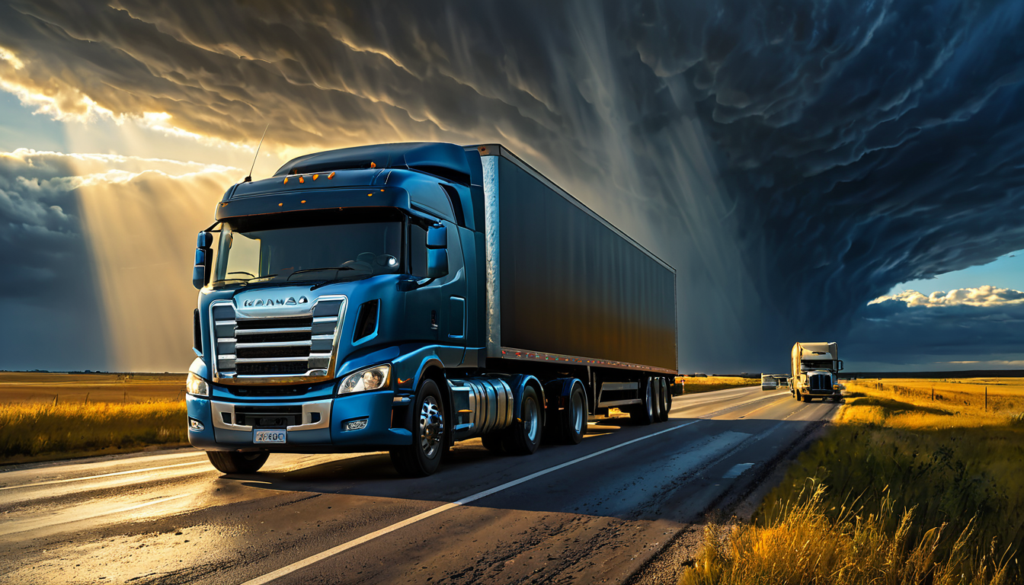
18-Wheeler Accident Attorneys in Washington County, Kansas
When 80,000 Pounds Changes Everything in an Instant
It happened fast. One moment you’re driving through Washington County on your way to Hiawatha or crossing US-36 headed toward the Nebraska border. The next, an 80,000-pound grain hauler jackknifes across the highway, or a tired long-haul driver drifts across the centerline on a rural Kansas road. In an instant, your life changes forever.
If you’re reading this, you or someone you love has likely been hurt in a trucking accident here in Washington County. You’re not alone—and you’re not just facing medical bills and vehicle repairs. You’re facing a system where the trucking company already has lawyers working to protect their interests, while you’re left trying to figure out how to put your life back together.
We’re Attorney911, and we’ve spent over 25 years fighting for families just like yours across Kansas and the Midwest. Our managing partner, Ralph Manginello, has been holding trucking companies accountable since 1998. We’ve recovered multi-million dollar settlements for victims of catastrophic trucking accidents, and we know exactly what it takes to win these cases in Kansas courts—from Washington County District Court to the federal courthouse in Topeka.
But here’s what you need to know right now: evidence in trucking cases disappears fast. Black box data can be overwritten in 30 days. Dashcam footage gets deleted. Witnesses forget what they saw. And the trucking company? They’re already building their defense.
That’s why we answer our phones 24/7 at 1-888-ATTY-911. Call us before the evidence disappears.
Why Washington County Trucking Accidents Are Different
Washington County sits in the heart of rural Kansas, surrounded by some of the most productive wheat fields in the world. We’re the “Breadbasket of America,” and that means our highways—and our county roads—are filled with massive agricultural equipment, grain trucks, and commercial haulers moving product from the fields to the elevators and beyond.
But this vital agricultural economy creates unique dangers:
Agricultural Trucking Hazards
From late spring through fall, Washington County roads see a massive influx of heavy farm equipment and grain trucks. These aren’t just big vehicles—they’re often operated by seasonal drivers, loaded with shifting grain that can cause rollovers, and traveling on rural roads never designed for 80,000-pound vehicles. When a fully loaded grain truck loses control on one of our narrow county roads or drifts across US-36, the results are catastrophic.
The I-70 and US-36 Corridors
While we don’t have an interstate running directly through Washington County, we’re connected to major trucking corridors. I-70 sits just south of us, carrying transcontinental freight from Denver to Kansas City. US-36 cuts east-west across northern Kansas, serving as a vital route for agricultural transport and commercial shipping. These aren’t just roads—they’re lifelines for the trucking industry, and they’re crowded with drivers facing deadline pressure and fatigue.
Kansas Weather Extremes
We all know Kansas weather changes fast. One minute it’s clear skies; the next, we’re facing tornado warnings, blinding thunderstorms, or ice storms that turn US-36 into a skating rink. Truckers who don’t respect Washington County weather—who don’t slow down for our sudden whiteouts or flash flooding—put everyone at risk. And when an 18-wheeler loses traction in a Kansas ice storm, physics takes over. That 80,000-pound truck becomes an uncontrollable missile.
Tornado Alley Trucking
We’re in the heart of Tornado Alley. When severe weather hits, truckers often make dangerous decisions—either pulling over in unsafe locations or pressing on when they should stop. The pressure to meet delivery deadlines in storm conditions has caused countless accidents across rural Kansas, including right here in Washington County.
Kansas Law: What You Need to Know Right Now
The Clock Is Ticking: Kansas Statute of Limitations
In Kansas, including right here in Washington County, you have just two years from the date of your trucking accident to file a lawsuit. That might sound like plenty of time, but when you’re dealing with catastrophic injuries, rehabilitation, and financial stress, two years disappears fast.
But waiting is dangerous for another reason: evidence preservation. The sooner you call us, the sooner we can send spoliation letters to preserve critical evidence like:
- ECM (black box) data showing speed and braking
- Electronic Logging Device (ELD) records proving hours-of-service violations
- Driver qualification files
- Maintenance and inspection records
- Dashcam footage
Once we send these preservation demands—usually within 24 hours of your call—the trucking company is legally obligated to maintain this evidence. Wait too long, and it could be gone forever.
Comparative Negligence: The 50% Rule
Kansas follows a “modified comparative negligence” rule with a 50% bar. This means if you’re found to be 49% or less at fault for the accident, you can still recover damages—but your recovery will be reduced by your percentage of fault. However, if you’re found to be 50% or more at fault, you recover nothing.
This is why evidence matters so much. The trucking company and their insurance adjuster will try to push as much blame onto you as possible. We’ve seen cases where trucking companies claimed our client was speeding or failed to yield, when the black box data proved the trucker was driving fatigued or distracted. That objective electronic evidence is often the difference between a full recovery and walking away with nothing.
Kansas Damage Caps
Unlike some states, Kansas does cap non-economic damages (pain and suffering) in personal injury cases, with adjustments for inflation. However, these caps don’t apply to economic damages like medical bills and lost wages. And here’s the important part: these caps don’t apply to all cases, and an experienced attorney knows how to structure your claim to maximize recovery within Kansas law.
More importantly, we pursue punitive damages when trucking companies act with gross negligence—like knowingly putting a dangerous driver on the road or falsifying logbooks. In Kansas, punitive damages are limited to the lesser of the defendant’s annual gross income or $5 million, but for corporate trucking companies with deep pockets, this can still mean substantial additional compensation.
FMCSA Federal Regulations: The Rules They Broke
Every 18-wheeler on Washington County roads must comply with strict Federal Motor Carrier Safety Administration (FMCSA) regulations. When truckers or their employers violate these rules, they create deadly conditions—and they become liable for the harm they cause.
Part 391: Driver Qualifications
Under 49 CFR § 391.11, no one can drive a commercial motor vehicle unless they:
- Are at least 21 years old for interstate commerce
- Hold a valid Commercial Driver’s License (CDL)
- Are medically qualified with a current Department of Transportation (DOT) physical
- Can read and speak English sufficiently to understand road signs and communicate
- Have passed a road test or equivalent
Trucking companies must maintain a Driver Qualification File for every driver containing employment applications, driving records, medical certifications, and drug test results. We subpoena these files in every case—and we often find that companies hired drivers with histories of DUIs, failed drug tests, or medical conditions that should have disqualified them.
Part 395: Hours of Service (HOS) Regulations
This is where we find violations in most of our Washington County trucking cases. Under 49 CFR § 395.3, property-carrying drivers cannot:
- Drive more than 11 hours after 10 consecutive hours off duty
- Drive beyond the 14th consecutive hour on duty
- Skip the mandatory 30-minute break after 8 cumulative hours of driving
- Exceed 60 hours in 7 days or 70 hours in 8 days (the “weekly limits”)
Since December 18, 2017, most drivers must use Electronic Logging Devices (ELDs) that automatically record driving time and prevent tampering. These devices create objective evidence of violations—and we know how to get that data before it disappears.
Fatigue is a factor in approximately 31% of fatal truck crashes. When we pull ELD records showing a driver exceeded hours-of-service limits or falsified logbooks, we prove negligence that jurors find inexcusable.
Part 393: Vehicle Safety and Cargo Securement
49 CFR § 393.100 requires that cargo be secured to prevent shifting, falling, or spilling. For agricultural haulers hauling grain, this means proper weight distribution and securement—overloaded trucks are unstable and prone to rollovers, especially on Washington County’s rural curves and narrow bridges.
49 CFR § 393.40-55 mandates functioning brake systems. Brake problems are a factor in approximately 29% of large truck crashes. We investigate maintenance records to find when trucking companies deferred critical repairs to save money.
Part 392: Safe Driving Rules
49 CFR § 392.3 prohibits driving while fatigued or ill. Under § 392.4 and § 392.5, no driver can use drugs or alcohol within four hours of duty, or operate with a BAC of .04 or higher (half the legal limit for passenger vehicles).
49 CFR § 392.11 requires trucks follow at a safe distance—yet rear-end collisions remain one of the most common truck accident types on US-36 and I-70. The physics are simple: at 65 mph, an 80,000-pound truck needs approximately 525 feet to stop—nearly two football fields.
Part 396: Inspection and Maintenance
Trucking companies must systematically inspect and maintain their vehicles under 49 CFR § 396.3. Drivers must conduct pre-trip inspections before operating and file post-trip reports noting any defects.
When we find that a trucking company ignored known brake defects, tire wear, or lighting problems—and that defect caused your accident—we prove direct negligence that can lead to punitive damages.
The Devastating Types of 18-Wheeler Accidents We See in Washington County
Jackknife Accidents
A jackknife occurs when the trailer skids and swings out perpendicular to the cab, often sweeping across multiple lanes. On Washington County’s narrow US-36 or rural state highways, there’s nowhere for other drivers to go when a 53-foot trailer blocks the road.
Causes include sudden braking on wet or icy Kansas roads, empty trailers (which are lighter and more prone to swing), and driver inexperience with emergency maneuvers. The data from the truck’s Engine Control Module (ECM) often shows exactly when the driver panicked and locked the brakes.
Rollover Accidents
Kansas agricultural trucks are particularly prone to rollovers—especially when overloaded with grain or making turns on rural roads not designed for high-center-of-gravity vehicles. Washington County’s winding roads and occasional steep grades create perfect conditions for rollovers when drivers take curves too fast or cargo shifts unexpectedly.
49 CFR § 393.100-136 governs cargo securement, yet we regularly find that loading companies failed to properly distribute weight or secure loads. When liquid cargo (like fuel or chemicals) “sloshes” during turns, it can shift the center of gravity instantly, causing a rollover.
Underride Collisions
Perhaps the most horrific trucking accident type, underrides occur when a smaller vehicle slides under the trailer. The trailer edge often hits at windshield level, causing decapitation or catastrophic head trauma.
While 49 CFR § 393.86 requires rear impact guards on trailers manufactured after 1998, many older trailers lack adequate protection. And there is NO federal requirement for side underride guards—meaning when a truck jackknifes across US-36 and a car hits the side of the trailer, there’s nothing to stop the car from sliding underneath.
Rear-End Collisions
Due to their massive weight and long stopping distances, trucks often can’t stop in time when traffic slows on Washington County roads. Whether it’s a sudden slowdown on US-36 or stopped traffic at one of our rural intersections, truck drivers who follow too closely or drive distracted cause devastating rear-end collisions.
We pull ECM data to prove the truck was traveling at excessive speed or the driver failed to apply brakes until it was too late. Cell phone records often show the driver was texting or calling dispatch moments before impact.
Tire Blowouts
Kansas’s extreme temperature swings—from summer heat to winter cold—take a brutal toll on truck tires. Underinflated tires overheat and explode; worn tires fail catastrophically. When a steer tire blows on an 18-wheeler, the driver often loses control completely.
Under 49 CFR § 393.75, trucks must maintain minimum tread depths (4/32″ on steer tires, 2/32″ elsewhere). We investigate maintenance records to prove trucking companies knowingly operated vehicles with unsafe tires to save money.
Brake Failure Accidents
Complete brake failure is almost always the result of systematic maintenance neglect. Under 49 CFR § 396.3, motor carriers must systematically inspect and maintain brake systems. Yet we find cases where companies ignored repeated driver reports of brake problems because “the truck was still running.”
On Kansas’s long, straight stretches like US-36, drivers sometimes ride their brakes excessively, causing “brake fade”—a loss of stopping power from overheating. Proper maintenance and driver training prevent this, but cost-cutting companies often skip both.
Cargo Spills and Hazmat Incidents
Washington County’s agricultural economy means our roads see massive amounts of grain, livestock, and occasionally hazardous materials. When a tanker rolls over or a livestock trailer spills its load on US-36, the resulting chaos causes secondary accidents and serious injuries.
Improper loading, overweight vehicles, and failure to account for Kansas’s high winds contribute to these accidents. 49 CFR Part 393 provides specific securement requirements for different cargo types—and violations prove negligence.
Blind Spot (“No-Zone”) Accidents
Commercial trucks have massive blind spots—20 feet in front, 30 feet behind, and significant areas on both sides. When truck drivers change lanes without checking these “no-zones”—especially on narrow Washington County roads—they sideswipe or crush vehicles they never saw.
49 CFR § 393.80 requires mirrors that provide clear views to the rear, but improperly adjusted or damaged mirrors, combined with driver distraction, cause these devastating accidents.
Wide Turn Accidents
When 18-wheelers make right turns, they must swing wide to the left before cutting back—trapping vehicles in the “squeeze play.” This is particularly dangerous at rural intersections in Washington County where smaller vehicles may not expect a truck to need such wide clearance.
Drivers who fail to signal their intentions or check mirrors before completing wide turns cause crushing injuries when they pin smaller vehicles against curbs or other obstacles.
Every Liable Party We Hold Accountable
Unlike car accidents where usually only one driver is at fault, trucking accidents often involve multiple responsible parties. We investigate and pursue everyone who contributed to your accident:
1. The Truck Driver
Direct negligence includes speeding, distracted driving (cell phones, GPS, dispatch communications), driving while fatigued, impaired driving (drugs/alcohol), and failure to conduct proper pre-trip inspections. We obtain the driver’s cell phone records, ELD data, and drug test results to prove misconduct.
2. The Trucking Company/Motor Carrier
Under Kansas’s respondeat superior doctrine, employers are liable for employees’ negligent acts within the scope of employment. But we also pursue direct negligence claims for:
- Negligent hiring: Failing to check driving records or hiring drivers with histories of DUIs or accidents
- Negligent training: Inadequate safety training, especially for agricultural truck operators
- Negligent supervision: Failing to monitor ELD compliance or ignoring reports of driver fatigue
- Negligent maintenance: Putting trucks on the road with known defects
- Negligent scheduling: Pressuring drivers to violate hours-of-service regulations
We subpoena the company’s Driver Qualification Files, CSA (Compliance, Safety, Accountability) scores, and accident history to prove a pattern of unsafe practices.
3. The Cargo Owner/Shipper
When grain elevators, agricultural cooperatives, or other shippers overload trucks or provide improper loading instructions, they create dangerous conditions. We examine bills of lading, loading instructions, and weight certifications.
4. The Loading Company
Third-party loaders who improperly secure grain, fail to distribute weight evenly, or overload trailers violate 49 CFR § 393 and may be directly liable for resulting accidents.
5. Truck and Trailer Manufacturers
Defective brake systems, inadequate underride guards, faulty tires, or design flaws in the truck’s stability control systems can all contribute to accidents. We work with engineers to identify product defects and pursue product liability claims.
6. Parts Manufacturers
When specific components—like brake assemblies, tires, or steering mechanisms—fail due to manufacturing defects, the parts maker shares liability.
7. Maintenance Companies
Third-party mechanic shops that negligently repair trucks or certify unsafe vehicles as roadworthy can be held liable when their poor workmanship causes accidents.
8. Freight Brokers
Brokers who arrange transportation but don’t own the trucks may be liable if they negligently selected carriers with poor safety records or failed to verify insurance and authority.
9. The Truck Owner (if different from the carrier)
In owner-operator arrangements, the individual who owns the truck may share liability for negligent entrustment or failure to maintain the vehicle.
10. Government Entities
When poorly designed roads, lack of signage, or failure to maintain Washington County highways contributes to accidents, government entities may share liability. This includes inadequate warning signs for steep grades, poor road surface conditions, or dangerous intersection designs.
Catastrophic Injuries: When Life Changes Forever
The physics of an 80,000-pound truck hitting a 4,000-pound passenger vehicle are devastating. We regularly see catastrophic injuries that require millions in lifetime medical care:
Traumatic Brain Injuries (TBI)
Even “minor” TBIs can cause lasting cognitive impairment, personality changes, and inability to work. Severe TBIs may leave victims requiring 24/7 care. Our firm has recovered $1.5 million to $9.8 million for TBI victims, settlements that provide for lifetime medical needs and lost earning capacity.
Symptoms include headaches, memory loss, confusion, mood swings, and sensory problems. The lifetime cost of a severe TBI can exceed $3 million in medical care alone.
Spinal Cord Injuries and Paralysis
Whether paraplegia (loss of leg function) or quadriplegia (loss of all four limbs), spinal cord injuries destroy lives. Victims need wheelchairs, home modifications, ongoing medical care, and assistance with daily living. We’ve secured $4.7 million to $25.8 million for spinal injury victims—because that’s what it takes to provide dignity and care for a lifetime.
Amputations
When crushing injuries from truck accidents require limb amputation, victims face not just physical trauma but phantom limb pain, prosthetic costs ($5,000-$50,000 per prosthetic, replaced regularly), and permanent disability. We recovered $1.9 million to $8.6 million for amputation victims, ensuring they can afford the best prosthetics and rehabilitation available.
Severe Burns
Fuel fires from ruptured tanks or hazmat spills cause third and fourth-degree burns requiring multiple skin grafts, reconstructive surgery, and years of painful rehabilitation. The psychological trauma of disfigurement lasts a lifetime.
Internal Organ Damage
Liver lacerations, spleen ruptures, kidney damage, and lung contusions require emergency surgery and can cause lifelong complications. These injuries often aren’t immediately apparent, which is why immediate medical evaluation is critical.
Wrongful Death
When a trucking accident takes a loved one, Kansas law allows surviving family members to recover for lost income, loss of companionship, mental anguish, and funeral expenses. These cases often result in $1.9 million to $9.5 million settlements, providing financial security for families while holding negligent parties accountable.
As client Chad Harris told us: “You are NOT a pest to them and you are NOT just some client… You are FAMILY to them.” We treat every catastrophic injury case with the compassion it deserves, because we know this isn’t just a case—it’s your life.
The Evidence That Wins Cases: Our 48-Hour Protocol
Trucking companies send rapid-response teams to accident scenes within hours—sometimes before the ambulance leaves. Their goal is to control the narrative and protect their interests.
We fight back with our immediate evidence preservation protocol:
Within 24 Hours:
- Send spoliation letters to trucking companies, insurers, and all liable parties demanding preservation of:
- ECM/Black box data (overwrites in 30 days)
- ELD logs (6-month retention required by FMCSA)
- Driver Qualification Files
- Maintenance and inspection records
- Dispatch logs and delivery schedules
- Cell phone records
- Dashcam footage (often deleted within days)
Critical Evidence We Secure:
- ECM Data: Shows speed, braking, throttle position, and fault codes in seconds before impact
- ELD Records: Proves hours-of-service violations and driver fatigue
- Driver History: Previous accidents, drug test failures, medical disqualifications
- Maintenance Logs: Deferred repairs, ignored safety issues
- Cargo Documentation: Overloading, improper securement
- Witness Statements: Before memories fade
- Physical Evidence: Tire marks, debris patterns, road conditions
This evidence often contradicts the truck driver’s version of events. We’ve seen cases where drivers claimed they “slowed down” for traffic, but ECM data showed they never touched the brakes. That objective data wins cases.
As client Glenda Walker said: “They fought for me to get every dime I deserved.” We can’t fight for you if the evidence is gone—so call 1-888-ATTY-911 immediately.
Kansas Insurance Requirements and Your Recovery
Federal law requires commercial trucking companies to carry substantial insurance:
- $750,000 minimum for non-hazardous freight
- $1,000,000 for oil, petroleum, and large equipment
- $5,000,000 for hazardous materials
These are minimums—many carriers carry $1-5 million in coverage, and we identify every applicable policy, including umbrella coverage and excess policies.
Types of Damages We Recover
Economic Damages (calculable losses):
- Past and future medical expenses (surgeries, rehabilitation, lifetime care)
- Lost wages and lost earning capacity
- Property damage
- Out-of-pocket expenses (transportation, home modifications)
Non-Economic Damages (quality of life):
- Pain and suffering
- Mental anguish and emotional distress
- Loss of enjoyment of life
- Disfigurement and scarring
- Loss of consortium (impact on marriage)
Punitive Damages (punishment for gross negligence):
Available when trucking companies knowingly endanger the public—like hiring drivers with multiple DUIs, falsifying maintenance records, or systematically violating hours-of-service rules.
Why Choose Attorney911 for Your Washington County Trucking Accident
25+ Years of Experience
Ralph Manginello has been fighting for injury victims since 1998. He’s admitted to federal court in the Southern District of Texas—a critical advantage for interstate trucking cases—and has taken on Fortune 500 corporations in major litigation, including involvement with the BP Texas City Refinery explosion litigation that resulted in over $2.1 billion in industry-wide settlements.
The Insurance Defense Advantage
Our associate attorney Lupe Peña spent years working at a national insurance defense firm representing trucking companies and their insurers. Now he uses that insider knowledge to fight for you. He knows exactly how insurance companies evaluate claims, their manipulation tactics, and what pressures them to pay maximum settlements. As we tell clients: “He used to work for the other side. Now he’s on yours.”
Multi-Million Dollar Results
We’ve recovered over $50 million for Texas families, including:
- $5+ million for a traumatic brain injury victim struck by a falling log
- $3.8+ million for a car accident victim who suffered partial leg amputation due to medical complications
- $2.5+ million for commercial truck crash victims
- $2+ million for maritime back injury cases
We’re currently litigating a $10 million lawsuit against the University of Houston and Pi Kappa Phi fraternity—a case that’s generated national media attention and demonstrates our willingness to take on powerful defendants.
Three Office Locations, Kansas Focus
With offices in Houston (1177 West Loop S, Suite 1600), Austin (316 West 12th Street), and Beaumont, we serve trucking accident victims throughout the Midwest, including Kansas and Washington County. We’re not just any personal injury firm—we know the agricultural trucking industry, Kansas weather hazards, and Washington County’s rural roads.
4.9-Star Reviews from Real Clients
With 251+ Google reviews averaging 4.9 stars, our clients consistently mention the personal attention they receive. As Donald Wilcox told us: “One company said they would not accept my case. Then I got a call from Manginello… I got a call to come pick up this handsome check.”
We take cases other firms reject—and we win them.
Hablamos Español
Lupe Peña is fluent in Spanish, providing direct representation for Spanish-speaking clients without interpreters. If you or your family members speak Spanish, you deserve an attorney who can communicate clearly: Llame al 1-888-ATTY-911.
Frequently Asked Questions: Washington County Trucking Accidents
How long do I have to file a lawsuit after a trucking accident in Kansas?
You have two years from the accident date. However, evidence disappears much faster—black box data can be gone in 30 days. Call us immediately.
What if the trucking company says the accident was my fault?
Don’t accept their word. Kansas uses modified comparative negligence—you recover if you’re less than 50% at fault. We investigate independently using ECM data, ELD logs, and accident reconstruction to prove what really happened.
How much is my Washington County trucking accident case worth?
It depends on injury severity, medical costs, lost income, and insurance coverage. Trucking cases often settle for hundreds of thousands to millions because commercial policies are substantial. We offer free consultations to evaluate your specific case.
Will I have to go to court?
Most cases settle before trial, but we prepare every case as if it’s going to trial. Preparation creates leverage—insurance companies know which attorneys will try cases, and they offer those attorneys’ clients better settlements.
What if the driver was an independent contractor, not an employee?
We still pursue the trucking company under various theories, including negligent hiring of an unqualified contractor, vicarious liability under federal regulations, and direct negligence for failing to supervise. We also pursue the driver personally and their insurance.
How do I pay for a lawyer if I can’t work?
We work on contingency fee—you pay nothing unless we win. Standard fees are 33.33% pre-trial and 40% if trial is necessary. We advance all costs for investigation and litigation. You never receive a bill from us.
What should I do if the insurance adjuster calls me?
Don’t give a recorded statement. Tell them your attorney will contact them, then call us at 1-888-ATTY-911. Adjusters are trained to minimize your claim—we handle them so you can heal.
Can I sue if my loved one was killed in a trucking accident?
Yes. Kansas allows wrongful death claims by spouses, children, and parents. We can help you recover compensation for lost income, loss of companionship, mental anguish, and funeral expenses.
What if I was partially at fault?
Under Kansas’s 50% rule, if you’re 49% or less at fault, you can still recover, though your compensation is reduced by your percentage of fault. We work to minimize your attributed fault percentage.
How long will my case take?
Simple cases: 6-12 months. Complex cases with multiple defendants or catastrophic injuries: 1-3 years. We work efficiently while ensuring you don’t settle for less than you deserve.
Your Fight Starts Now
The trucking company has lawyers working right now to minimize what they pay you. They have investigators, claims adjusters, and defense attorneys whose job is to protect their bottom line—not to take care of your family.
You deserve someone fighting just as hard for you.
At Attorney911, we’ve spent 25+ years making trucking companies pay for the damage they cause. We know the FMCSA regulations they broke. We know where to find the evidence that proves negligence. And we know how to secure the multi-million dollar settlements that provide for your future.
If you’ve been hurt in an 18-wheeler accident in Washington County—whether on US-36, near Hiawatha, or anywhere in Kansas—call us now. The evidence is disappearing while you read this.
Call 24/7: 1-888-ATTY-911
Hablamos Español: Lupe Peña está aquí para ayudar
Don’t let the trucking company win. Your family deserves justice. We’ll fight for every dollar you’re owed—because as Ernest Cano said, we’ll “fight tooth and nail for you.”
Attorney911. Because trucking companies shouldn’t get away with it.