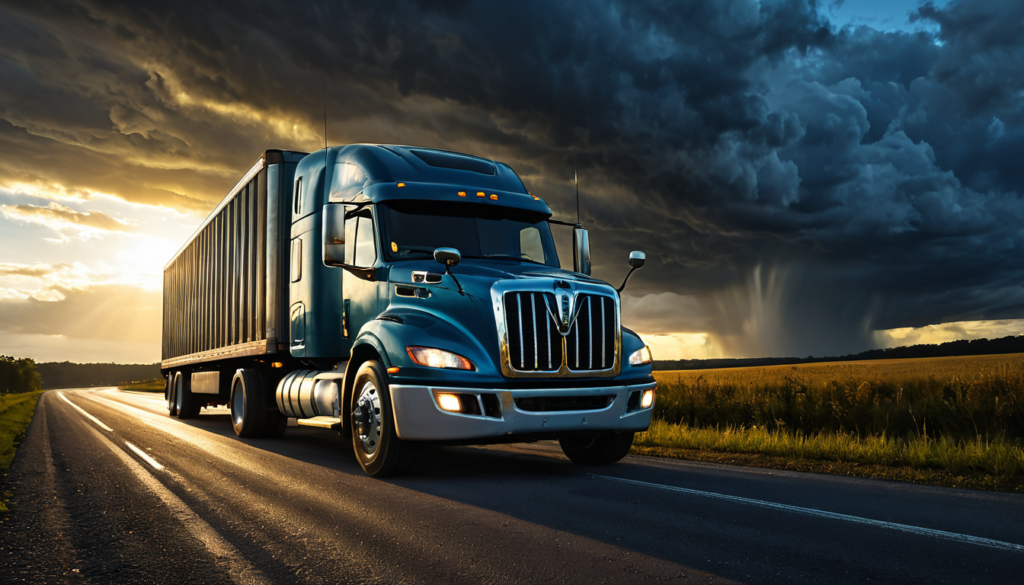
Christian County, Kentucky 18-Wheeler Accident Attorneys: When Trucking Companies Put Profits Over Safety
The Impact Was Catastrophic. 80,000 Pounds Against Your Vehicle on I-24.
One moment you’re driving home from Fort Campbell or heading back from Hopkinsville. The next, an 18-wheeler is jackknifing across three lanes of Interstate 24, or a tired trucker blows past a stop sign on US-41. In Christian County, Kentucky, our highways carry massive commercial freight—grain hauling agricultural loads, military supply trucks, and cross-country interstate traffic—and when something goes wrong, the physics are brutal.
Your car weighs roughly 4,000 pounds. The truck that hit you? Up to 80,000 pounds. That’s not a fair fight. And while you’re dealing with catastrophic injuries, the trucking company already has lawyers working to protect their interests. They have investigators at the scene before the ambulance leaves. They have adjusters trained to minimize your claim. They have teams of attorneys ready to shift blame onto you.
You need someone who fights back. You need Attorney911.
We’ve Recovered Millions for Families Devastated by Truck Accidents
Ralph Manginello has spent over 25 years standing up to trucking companies and winning. Since 1998, he’s taken on Fortune 500 corporations and massive insurance carriers—and secured multi-million dollar settlements for victims just like you. Our firm’s track record includes:
- $5+ million for a traumatic brain injury victim struck by a falling log
- $3.8+ million for a client who lost a limb after a car crash
- $2.5+ million in truck crash recoveries
- $2+ million for a maritime worker with a back injury
- $50+ million total recovered for families across the country
But here’s what really sets us apart: Our associate attorney, Lupe Peña, used to work for insurance companies. He spent years defending trucking carriers and their insurers—now he fights against them. That insider knowledge gives Attorney911 an unfair advantage. We know exactly how adjusters are trained to evaluate claims, what makes them settle, and when they’re bluffing. We know their playbook because we helped write it.
Call 1-888-ATTY-911 immediately. The clock is already ticking, and in Kentucky, you only have one year to file your claim.
Christian County’s Deadly Highways: Why Truck Accidents Happen Here
Christian County sits at a critical intersection of commerce. Interstate 24 cuts directly through our county, serving as a primary corridor between Nashville and St. Louis, carrying thousands of commercial trucks daily. US-41 and US-68 feed into this system, while Fort Campbell generates massive military supply truck traffic. Add in Kentucky’s agricultural economy—tobacco, corn, and soybeans moving from farm to market—and you’ve got a perfect storm for serious truck accidents.
The dangers are specific to our region:
I-24’s Rolling Terrain: The hills and curves through Christian County require precise braking. When truckers exceed speed limits or drive fatigued, runaway trucks and brake failures become deadly realities.
Agricultural Overloading: Grain trucks and farm equipment often exceed weight limits during harvest season. Improperly secured loads shift on rural roads, causing rollovers and cargo spills on KY-109 and KY-171.
Military Convoys: Fort Campbell traffic includes heavy equipment transports with limited maneuverability. Wide turns on narrow county roads create “squeeze play” accidents where civilian vehicles get crushed.
Rural Intersection Dangers: The intersection of major highways with smaller county roads—like Crofton Road or Lafayette Road—creates high-risk zones where trucks blow through stop signs or misjudge turns.
Weather Extremes: Kentucky’s ice storms and flash flooding affect the Pennyrile Parkway and I-24 corridor. Truckers who don’t adjust for black ice cause multi-vehicle pileups.
Every year, thousands of families in Christian County and across Kentucky have their lives changed forever by these crashes. In 2023 alone, commercial vehicle accidents on Kentucky interstates caused hundreds of fatalities, with 76% of those deaths occurring in the smaller, passenger vehicles—not the trucks.
The 18-Wheeler Accidents We See in Christian County
Not all truck crashes are the same. In Christian County’s unique mix of interstate highways, military routes, and agricultural byways, we see distinct patterns:
Jackknife Accidents on I-24
When a trucker brakes too hard on the interstate’s curves near the Tennessee state line, the trailer swings perpendicular to the cab. Suddenly, 53 feet of trailer is blocking three lanes of traffic. These accidents often involve FMCSA violations under 49 CFR § 393.48 (brake system malfunction) or § 393.100 (improper cargo securement that shifts weight). The resulting multi-car pileups leave victims with traumatic brain injuries and spinal cord damage.
Rollovers on Rural Routes
Kentucky’s farmland produces massive harvests, and when grain haulers take curves too fast on US-68 or overloaded trucks hit the soft shoulders of county roads, they roll. The sheer physics of an 80,000-pound vehicle tipping creates catastrophic crushing injuries. These cases often reveal 49 CFR § 392.6 violations—speeding for conditions—and § 393.100-136 cargo securement failures.
Underride Collisions at Intersections
The most deadly accidents happen when smaller vehicles slide underneath trailers. Kentucky roads see these at rural intersections where trucks make wide right turns, or when stopped trucks lack proper rear impact guards. 49 CFR § 393.86 requires rear impact guards, yet many trucks operate with inadequate protection, leading to decapitations and severe head trauma.
Rear-End Collisions Near Fort Campbell
Commercial trucks need 525 feet to stop from 65 mph—that’s nearly two football fields. When distracted or fatigued truckers tailgate on I-24 or US-41 near base traffic, they crash into stopped vehicles with devastating force. These cases typically involve 49 CFR § 392.11 (following too closely) and § 392.3 (operating while fatigued).
Wide Turn Accidents in Hopkinsville
Downtown Hopkinsville and the commercial strips along Fort Campbell Boulevard see trucks swinging wide into opposing lanes. Passenger cars get caught in the “squeeze play” between the cab and curb, suffering crushing injuries. These violations of 49 CFR § 392.11 (unsafe lane changes) often reflect inadequate driver training by the carrier.
Brake Failures on Descents
The rolling hills of western Kentucky test brake systems. When trucking companies defer maintenance to save money, brakes fade or fail entirely, causing runaway trucks. These cases reveal 49 CFR § 396.3 violations—failure to systematically inspect, repair, and maintain vehicles—and § 396.11 failures to conduct pre-trip inspections.
Tire Blowouts at High Speed
Heat buildup on I-24, especially during Kentucky’s humid summers, causes tire failures. “Road gators”—shredded tire debris—create secondary accidents. Improper tire maintenance violates 49 CFR § 393.75 (tread depth requirements) and § 396.13 (pre-trip inspection duties).
Federal Regulations That Protect You—When Followed
Every 18-wheeler on Christian County roads must comply with strict Federal Motor Carrier Safety Administration (FMCSA) regulations under Title 49 of the Code of Federal Regulations. When truckers or their companies break these rules, they create liability that strengthens your case.
Hours of Service Violations (49 CFR Part 395)
Federal law mandates:
- 11-hour driving limit: After 10 hours off-duty
- 14-hour on-duty window: Cannot drive beyond the 14th consecutive hour
- 30-minute break: Required after 8 cumulative hours of driving
- Electronic Logging Devices (ELDs): Federal law requires these digital records since December 2017
Fatigued driving causes approximately 31% of fatal truck crashes. When we subpoena ELD data, we often find drivers violated these limits to meet impossible delivery schedules—a clear sign of negligent supervision by the trucking company.
Driver Qualification Standards (49 CFR Part 391)
Trucking companies must maintain proper Driver Qualification Files proving:
- Valid Commercial Driver’s License (CDL)
- Medical examiner’s certification (good for max 2 years)
- Background checks and previous employer verification
- Negative drug test results before driving
If the driver who hit you shouldn’t have been behind the wheel—that’s negligent hiring under § 391.51, and the company is directly liable.
Vehicle Maintenance Requirements (49 CFR Part 396)
Trucking companies must:
- Systematically inspect, repair, and maintain all vehicles (§ 396.3)
- Conduct pre-trip inspections daily (§ 396.13)
- Complete annual inspections with documentation (§ 396.17)
- Maintain repair records for 1 year
Brake problems factor into 29% of truck crashes. When we find deferred maintenance—worn brakes, bad tires, faulty lights—those violations prove the company prioritized profits over your safety.
Cargo Securement Rules (49 CFR Part 393)
Loads must withstand:
- 0.8g deceleration (sudden stop forces)
- 0.5g lateral (side-to-side forces)
- Proper tiedowns based on cargo weight and length
Christian County’s agricultural trucking often violates these rules—improperly secured grain, shifting hay bales, or overloaded equipment trailers. When cargo shifts and causes rollovers or spills, the shipper and loading company share liability with the driver.
Multiple Parties Can Be Liable—We Find Them All
Unlike car accidents where usually only one driver is at fault, 18-wheeler crashes involve complex webs of responsibility. We investigate every potentially liable party to maximize your recovery:
The Truck Driver: For speeding, distraction, fatigue, or impairment. We subpoena cell phone records, ELD data, and drug test results.
The Trucking Company (Motor Carrier): Under respondeat superior, employers are liable for employees’ negligence. Plus, we pursue negligent hiring, training, and supervision claims when companies:
- Hire drivers with bad safety records
- Fail to train on safe driving in Kentucky’s weather conditions
- Pressure drivers to violate Hours of Service rules
- Ignore FMCSA safety violations
The Cargo Owner/Shipper: When they demand overweight loads (common in agricultural hauls) or fail to disclose hazardous materials, they share liability.
The Loading Company: Third-party loaders who improperly secure cargo—violating 49 CFR § 393.100-136—can be held directly responsible for rollovers and spills.
Truck/Parts Manufacturers: Defective brakes, tire blowouts from manufacturing flaws, or stability control failures create product liability claims against manufacturers.
Maintenance Companies: Third-party mechanics who negligently repair brakes or tires can be liable for subsequent failures.
Freight Brokers: These middlemen who arrange transportation but don’t own trucks can be liable for negligent selection of unsafe carriers.
Government Entities: When Kentucky Transportation Cabinet fails to maintain safe road conditions on I-24 or poorly designed intersections contribute to crashes, we pursue claims against state and local agencies (though sovereign immunity limits apply).
Evidence Disappears Fast—48 Hours Matters
Here’s what the trucking company doesn’t want you to know: Critical evidence can be destroyed or overwritten within days.
- ECM/Black Box Data: Records speed, braking, and throttle position—overwrites in 30 days
- ELD Logs: Prove Hours of Service violations—retained only 6 months
- Dashcam Footage: Often deleted within 7-14 days
- Maintenance Records: Trucking companies may “lose” them
- Driver Qualification Files: Can be altered or hidden
We send spoliation letters immediately—within 24-48 hours of being retained. These legal notices put the trucking company on notice that destroying evidence will result in court sanctions, adverse jury instructions, or default judgments.
In Kentucky’s pure comparative fault system, you can recover damages even if you were 99% at fault—but your recovery is reduced by your percentage of fault. That’s why preserving ECM data showing the trucker was speeding, texting, or driving over hours is crucial. It shifts blame where it belongs: on the trucking company.
Call 1-888-ATTY-911 today. Every hour you wait, evidence disappears.
Catastrophic Injuries: The Life-Changing Reality
The size and weight disparity between an 18-wheeler and a passenger vehicle creates devastating injuries:
Traumatic Brain Injury (TBI)
The force of impact causes the brain to strike the inside of the skull. Moderate to severe TBI cases handled by Attorney911 have settled for $1.5 million to $9.8 million. Victims face:
- Permanent cognitive impairment
- Memory loss and personality changes
- Inability to return to work
- Lifelong care requirements (costing $85,000 to $3+ million)
Spinal Cord Injury & Paralysis
Christian County truck accidents frequently result in paraplegia or quadriplegia. Settlement ranges reach $4.7 million to $25.8 million to cover:
- Wheelchairs and mobility equipment
- Home modifications (ramps, lifts)
- 24/7 nursing care
- Lost earning capacity
Amputation
When vehicles get crushed or underride accidents occur, limbs are severed or damaged beyond repair. We’ve recovered $1.9 million to $8.6 million for amputation victims, covering prosthetics ($5,000-$50,000+ each) and rehabilitation.
Severe Burns
Tanker trucks and hazmat spills on I-24 can cause thermal or chemical burns requiring multiple grafts and reconstructive surgeries. Kentucky’s agricultural chemical transport creates unique burn hazards.
Wrongful Death
When a trucking company’s negligence kills your loved one, Kentucky law allows recovery of:
- Lost future income and benefits
- Loss of consortium (companionship)
- Mental anguish
- Funeral expenses
- Punitive damages (for gross negligence)
Our wrongful death cases have settled for $1.9 million to $9.5 million, though money never replaces your loved one—it holds the company accountable and provides financial security for your family.
Kentucky Law: Your Rights and Deadlines
The One-Year Rule (Critical Warning)
Kentucky has a one-year statute of limitations for personal injury cases—the shortest in the nation alongside Louisiana. This means you have just 365 days from your accident date to file a lawsuit. Wait longer, and you lose your right to recover forever—no matter how serious your injuries or how clearly the trucker was at fault.
This makes immediate legal representation crucial. We need time to investigate, preserve evidence, and negotiate before filing suit.
Pure Comparative Fault
Kentucky follows pure comparative negligence. Even if you were partially at fault—perhaps you were speeding slightly, or didn’t signal—a jury can still award damages reduced by your percentage of fault. If you’re found 20% at fault, you recover 80% of your damages. If you’re 50% at fault, you recover 50%. This system protects victims.
Insurance Coverage: More Than Car Accidents
Federal law requires commercial trucks to carry:
- $750,000 minimum for general freight
- $1,000,000 for petroleum and large equipment
- $5,000,000 for hazardous materials
This is far more than Kentucky’s $25,000/$50,000 minimums for personal vehicles. But accessing these policies requires understanding complex federal regulations—another reason you need an attorney with trucking experience.
Why Christian County Families Choose Attorney911
We Know Federal Court
Ralph Manginello is admitted to the U.S. District Court, Southern District of Texas, and our firm handles interstate trucking cases across the country. FMCSA regulations apply in federal court, and we know how to use them.
We Speak Your Language
Hablamos Español. Associate attorney Lupe Peña provides fluent Spanish representation—no interpreters needed. For Christian County’s Hispanic community, many of whom work in agriculture and trucking, this means clear communication during a crisis.
We’re Available 24/7
Trucking accidents don’t happen during business hours. Call 1-888-ATTY-911 anytime—day, night, weekends. We answer.
No Fee Unless We Win
We work on contingency: 33.33% pre-settlement, 40% if we go to trial. You pay nothing upfront. We advance all investigation expenses. If we don’t win, you owe us nothing.
We Treat You Like Family
As client Chad Harris said: “You are NOT a pest to them and you are NOT just some client… You are FAMILY to them.”
Glenda Walker told us: “They fought for me to get every dime I deserved.”
And Donald Wilcox, whom another firm rejected, said: “One company said they would not accept my case. Then I got a call from Manginello… I got a call to come pick up this handsome check.”
What to Do After a Christian County Truck Accident
If you’re able, take these steps immediately:
- Call 911 and ask for police (Kentucky State Police or Christian County Sheriff)
- Seek medical attention immediately—Christian County Hospital or Tennova Healthcare in Clarksville
- Photograph everything: vehicles, scene, skid marks, road signs, your injuries
- Get the truck’s DOT number and company name
- Collect witness contact information
- Do NOT give a recorded statement to the trucking company’s insurance
- Call Attorney911 immediately: 1-888-ATTY-911
Remember: The trucking company is building their defense right now. They’re downloading black box data, interviewing their driver, and preparing to blame you. You need someone doing the same for you—immediately.
Frequently Asked Questions About Truck Accidents in Christian County
How long do I have to file a lawsuit in Kentucky?
Just one year from the accident date. This is critically short. Evidence disappears and memories fade fast—contact us immediately.
Can I recover if I was partially at fault?
Yes. Kentucky’s pure comparative fault system allows recovery even if you were partially responsible, though your percentage of fault reduces the award.
What if the truck driver was an independent contractor, not an employee?
We still pursue the trucking company under negligent hiring theories, plus investigate if the company exercised control over the driver (which makes them liable regardless of contractor status).
How much is my case worth?
It depends on injury severity, medical costs, lost wages, and liability clarity. Trucking cases typically carry higher values than car accidents due to larger insurance policies and catastrophic injuries. We’ve recovered millions for similar cases.
Will my case go to trial?
Most settle, but we prepare every case for trial. Insurance companies offer better settlements when they know your lawyer will go to court—and Ralph Manginello has 25+ years of trial experience.
Can undocumented immigrants file claims?
Yes. Immigration status does not affect your right to compensation for injuries caused by a negligent truck driver.
What if the trucking company is from out of state?
This is common with interstate carriers. We can sue them in Kentucky federal court using our federal court admission, or pursue them in their home state if necessary.
The Clock Is Ticking. Your Recovery Starts with One Call.
An 18-wheeler accident in Christian County changes everything—your health, your ability to work, your family’s stability. While the trucking company has teams of lawyers protecting them, you need someone fighting for you.
Ralph Manginello and the team at Attorney911 have recovered over $50 million for injury victims. We’ve gone toe-to-toe with Walmart, Amazon, FedEx, UPS, Coca-Cola, and major oil companies like BP in the Texas City explosion litigation. We know how to win against corporate giants.
Lupe Peña’s insurance defense background gives us insider knowledge of how the other side thinks. We know when they’re bluffing, when they’ll settle, and how to maximize your recovery.
Don’t let the trucking company push you around. Don’t accept a lowball settlement that doesn’t cover your future medical needs. Don’t let them destroy evidence while you wait.
Call Attorney911 now at 1-888-ATTY-911 (888-288-9911). Free consultation. No fee unless we win. 24/7 availability.
Hablamos Español—Llame a Lupe Peña al 1-888-ATTY-911 para una consulta gratis.
We answer. We fight. We win. Let us fight for the justice you deserve.