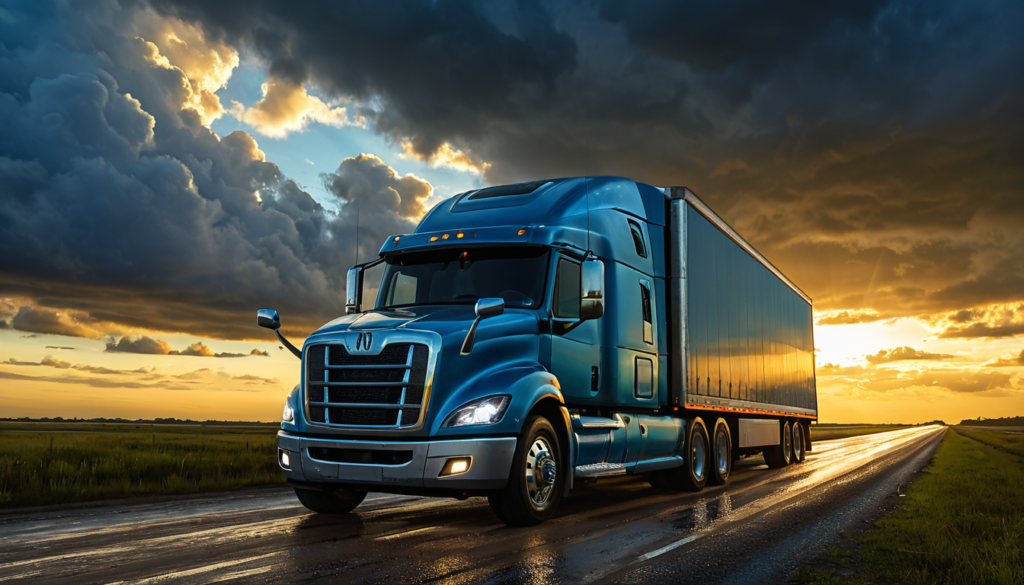
When an 80,000-pound logging truck crosses the centerline on Louisiana Highway 6 near Many, or an oil field hauler loses control on the rural roads outside Zwolle, there’s no time to react. In Sabine Parish, where timber trucks dominate the highways and energy sector vehicles navigate narrow parish roads, these crashes aren’t just accidents—they’re catastrophes that change lives forever.
If you or someone you love has been injured in an 18-wheeler accident in Sabine Parish, you’re not just dealing with a fender-bender. You’re facing off against trucking companies with armies of lawyers, rapid-response teams that arrive before the ambulance, and insurance adjusters trained to pay you as little as possible. You need a fighter who knows how to beat them at their own game.
That’s exactly what we do at Attorney911.
The Sabine Parish Trucking Danger: More Than Just Highway Traffic
Sabine Parish might feel like quiet country living, but our roads carry some of the heaviest truck traffic in Louisiana. We’re talking about massive loads moving through some of the most challenging terrain in the state.
Timber and Logging Operations
The pine forests of Sabine Parish fuel a massive timber industry. Logging trucks hauling heavy loads cross Highway 6, Highway 28, and Highway 171 daily. These aren’t just big trucks—they’re overweight, often traveling rural roads with sharp curves, limited visibility, and minimal shoulder space. When a loaded logging truck loses control near Florien or Fisher, there’s nowhere to go.
Oil Field and Energy Traffic
With the Haynesville Shale and ongoing oil and gas operations, Sabine Parish sees constant heavy truck traffic serving well sites, pipelines, and processing facilities. These oil field trucks often operate on narrow lease roads and rural highways, sometimes hauling hazardous materials or overweight equipment that exceeds safe limits.
The Texas Border Factor
Because Sabine Parish sits right on the Texas border, many of these trucks are crossing state lines on I-49, US-171, and LA-6. That means federal regulations apply, and the trucking companies know which rules they can bend when they think no one’s watching.
Weather and Road Conditions
We deal with Gulf Coast humidity, sudden thunderstorms, and thick fog along the Sabine River basin. Hurricanes and tropical systems bring flooding that compromises road integrity. Truckers unfamiliar with our parish roads often fail to adjust for these conditions, leading to devastating crashes.
Why 18-Wheeler Accidents Are Fundamentally Different
Think a truck accident is just a bigger car wreck? Think again.
The Physics Are Brutal
Your car weighs about 4,000 pounds. A fully loaded 18-wheeler can weigh 80,000 pounds—that’s twenty times heavier. When that mass hits a passenger vehicle at highway speed, the forces involved are catastrophic. A truck traveling at 65 mph needs nearly two football fields (525 feet) to stop. By the time the driver sees you, it’s often too late.
Federal Regulations Create Accountability
Unlike car accidents, commercial trucking is governed by strict Federal Motor Carrier Safety Administration (FMCSA) regulations under Title 49 of the Code of Federal Regulations. These rules cover everything from how long drivers can operate to how cargo must be secured. When trucking companies break these rules—and they do, constantly—they’re not just negligent; they’re breaking federal law.
Multiple Insurance Policies
While Louisiana car drivers might carry $30,000 in coverage, federal law requires commercial trucks to carry $750,000 to $5 million in liability coverage depending on cargo. That means there’s real money available to compensate you for catastrophic injuries—but only if you know how to access it before the trucking company hides evidence or destroys records.
Types of 18-Wheeler Crashes We See in Sabine Parish
Not all truck accidents are the same. In Sabine Parish’s unique environment, certain crash types happen again and again.
Logging Truck Rollovers
Timber trucks have high centers of gravity and frequently travel uneven rural roads. When these trucks take curves too fast on Highway 28 or encounter soft shoulders near Pleasant Hill, they roll. A rolling logging truck doesn’t just crash—it explodes, scattering logs that create secondary accidents and crushing anything in its path.
Oil Field Vehicle Collisions
The oil patch operates 24/7, and fatigued drivers hauling equipment to well sites near Negreet or Converse make deadly mistakes. These trucks often lack proper maintenance, with brake systems pushed beyond their limits on steep grades.
Underride Collisions
When a passenger vehicle rear-ends a tractor-trailer or slides underneath during a jackknife, the results are often fatal. The bottom edge of the trailer shears off the passenger compartment. Despite federal requirements for rear impact guards, many trucks have inadequate protection, and side underride guards aren’t required at all.
Jackknife Accidents
During our sudden Gulf Coast rainstorms or on slick bridges over the Sabine River, truckers who brake improperly cause their trailers to swing perpendicular to their cabs. A jackknifed trailer blocks entire highways, creating multi-car pileups with devastating injuries.
Tire Blowouts
The heat and humidity of western Louisiana, combined with overloaded timber trucks, cause tire failures that send 80,000 pounds of steel and wood careening out of control. “Road gators”—shreds of tire rubber—create hazards for following vehicles.
Wide-Turn Accidents
In small towns like Many or Zwolle, 18-wheelers swinging wide to make right turns often crush vehicles in the “squeeze play” zone. Drivers don’t realize the truck needs that space, and by the time they do, they’re pinned between the trailer and a building.
Fatigue-Related Crashes
Truckers pushing to meet delivery deadlines on long hauls through rural Sabine Parish violate hours-of-service regulations. A driver who’s been awake for 20 hours has reaction times equivalent to a drunk driver.
Hazmat Spills
When tanker trucks carrying chemicals for the oil field overturn on LA-6 or I-49, the danger extends far beyond the initial crash. Chemical burns, toxic inhalation, and environmental contamination create complex emergency situations requiring immediate legal intervention.
Catastrophic Injuries: When Your Life Changes Forever
The aftermath of an 18-wheeler crash in Sabine Parish isn’t a scraped bumper or a sore neck. We’re talking about life-altering, permanent injuries that require millions in lifetime care.
Traumatic Brain Injury (TBI)
The sheer force of a truck impact causes the brain to slam against the skull. TBI victims often face:
- Permanent memory loss and cognitive impairment
- Personality changes and mood disorders
- Inability to work or maintain relationships
- Need for 24/7 supervision
- Settlement Range: $1.5 million to $9.8 million+
Spinal Cord Injury and Paralysis
Crushed vehicles often cause spinal damage resulting in paraplegia or quadriplegia. These victims face:
- Wheelchair dependence
- Loss of bowel and bladder control
- Chronic pain and pressure sore risks
Lifetime Care Costs: $1.1 million to $5 million+ per victim
Amputations
Crushing injuries often require surgical amputation of limbs. Beyond the initial surgery, victims need:
- Multiple prosthetic limbs over their lifetime ($50,000+ each)
- Occupational therapy
- Home modifications
- Settlement Range: $1.9 million to $8.6 million
Severe Burns
When fuel tanks rupture or chemical carriers spill, victims suffer third-degree burns requiring:
- Skin graft surgeries
- Reconstructive procedures
- Permanent scarring and disfigurement
Wrongful Death
When a truck accident kills your loved one, Louisiana law allows surviving family members to recover damages for lost income, loss of companionship, funeral expenses, and mental anguish. Settlement Range: $1.9 million to $9.5 million
Every Party That Could Be Liable—We Find Them All
Most law firms sue the driver and the trucking company and call it a day. That’s a mistake. In Sabine Parish truck accidents, up to ten different parties might share liability, and every one of them has insurance.
1. The Truck Driver
Personal liability for speeding, distracted driving, fatigue, or impairment. We subpoena their driving records, cell phone logs, and drug test results.
2. The Trucking Company (Motor Carrier)
Under respondeat superior (a legal doctrine meaning “let the master answer”), employers are liable for their drivers’ negligence. Plus, we look for:
- Negligent Hiring: Did they check if the driver had a CDL? Any DUIs in his history?
- Negligent Training: Did they teach him how to handle heavy timber loads on wet roads?
- Negligent Supervision: Did they monitor his hours of service violations?
- Negligent Maintenance: Did they defer brake repairs to save money?
3. The Cargo Owner/Shipper
Timber companies or oil field operators who demand unrealistic delivery schedules or overloaded trucks share responsibility.
4. The Loading Company
Third-party loaders who improperly secure logs or oil pipe create unbalanced loads that cause rollovers. 49 CFR § 393 requires specific cargo securement; violations prove negligence.
5. Truck and Trailer Manufacturers
Defective brakes, faulty fuel systems, or inadequate stability controls can trigger product liability claims against manufacturers.
6. Parts Manufacturers
Defective tires or brake components that fail under load create separate liability chains.
7. Maintenance Companies
Third-party mechanics who performed inadequate inspections or used substandard parts can be liable for brake failures or steering system collapses.
8. Freight Brokers
Brokers who hire carriers with known safety violations or inadequate insurance face liability for negligent selection.
9. The Truck Owner (If Different from Carrier)
In owner-operator arrangements, the equipment owner may bear separate responsibility for maintenance failures.
10. Government Entities
Sabine Parish or the State of Louisiana may share liability for poorly designed intersections, inadequate signage on rural highways, or failure to maintain safe road surfaces.
FMCSA Violations That Prove Negligence
Federal trucking regulations exist for a reason. When trucking companies violate them, they’re playing Russian roulette with your life. We prove these violations to establish liability.
Hours of Service Violations – 49 CFR Part 395
The driver can’t operate more than 11 hours after 10 consecutive hours off-duty. But in the oil patch, drivers often push beyond these limits to reach remote well sites. Electronic Logging Devices (ELDs) track this data—and we know how to get it before it’s deleted.
Driver Qualification Failures – 49 CFR Part 391
Every commercial driver must have a valid CDL, pass medical exams, and undergo background checks. We’ve seen trucking companies hire drivers with suspended licenses or recent DUIs. The Driver Qualification File (DQ File) proves what the company knew.
Vehicle Maintenance Failures – 49 CFR Part 396
Brakes must be inspected daily. Tread depth must meet standards (4/32″ on steers, 2/32″ on drives). Lights must work. When companies skip these inspections to keep trucks moving—especially on remote logging roads—people die.
Cargo Securement Violations – 49 CFR Part 393
Logs must be properly blocked, braced, and tied down. Overloaded timber trucks cause rollovers. We subpoena loading records and weigh station data.
Drug and Alcohol Violations – 49 CFR Part 382
Commercial drivers can’t operate with a BAC above .04% (half the legal limit for car drivers) or within four hours of drinking. Post-accident testing is mandatory, but companies sometimes delay tests to hide violations.
Cell Phone Use – 49 CFR § 392.82
Texting while driving is prohibited. We subpoena phone records to prove distraction.
Following Too Closely – 49 CFR § 392.11
Following distance must account for the 525-foot stopping distance. Tailgating trucks cause devastating rear-end collisions.
The 48-Hour Evidence Emergency
Here’s what the trucking company doesn’t tell you: They have lawyers on the scene within hours. While you’re in the hospital, their rapid-response team is:
- Downloading ECM (black box) data that shows speed, braking, and throttle position
- Collecting ELD logs that prove hours-of-service violations
- Securing the driver’s cell phone
- Contacting witnesses to shape their statements
- Moving or repairing the truck to hide mechanical defects
Critical Timeline:
- ECM Data: Overwrites in 30 days or less
- ELD Logs: May be retained only 6 months
- Dashcam Footage: Often deleted within 7 days
- Witness Memories: Degrade within weeks
- Physical Evidence: Trucks get repaired or sold
That’s why we send spoliation letters immediately—within 24 hours of being retained. This legal notice puts the trucking company on notice that they must preserve all evidence or face sanctions, adverse jury instructions, or default judgments.
We also immediately subpoena:
- The Driver Qualification File
- Maintenance and inspection records
- Dispatch records and delivery schedules
- Drug and alcohol test results
- GPS and telematics data
- Surveillance footage from nearby businesses or traffic cameras
Louisiana Law: The One-Year Clock Is Ticking
Sabine Parish residents need to know something critical: Louisiana has the shortest statute of limitations in the nation for personal injury claims.
You have just ONE YEAR from the date of your accident to file a lawsuit. Not two years like Texas. Not three like some states. One year.
If you miss this deadline, you lose your rights forever—no matter how serious your injuries or how clearly the trucker was at fault.
But that’s not the only urgent deadline:
- Preservation letters: Must be sent immediately to stop evidence destruction
- Medical treatment: Gaps in treatment will be used against you by insurance adjusters
- Government claims: If a parish road defect contributed to your crash, you may have just 60-90 days to give notice
Pure Comparative Fault in Louisiana
Louisiana follows “pure comparative fault,” meaning you can recover damages even if you were partially at fault—but your recovery is reduced by your percentage of fault. Even if you’re 99% at fault, you can still recover 1%. However, trucking companies will try to shift as much blame as possible to minimize payouts. That’s why immediate investigation to prove the trucker’s negligence is critical.
Why Sabine Parish Trusts Attorney911
We’re not a billboard firm that takes every case and settles cheap. We’re trial lawyers who prepare every case as if it’s going to court—because that’s how you get maximum settlements.
Ralph Manginello: 25+ Years Fighting for Injury Victims
Since 1998, Ralph has been holding trucking companies and insurance giants accountable. He’s admitted to the U.S. District Court for the Southern District of Texas (critical for interstate trucking cases crossing the Louisiana-Texas border) and has recovered millions for families devastated by catastrophic injuries.
Lupe Peña: The Insurance Defense Insider
Here’s your advantage: Our associate attorney Lupe Peña spent years working for a national insurance defense firm. He knows exactly how adjusters are trained to minimize claims, which excuses they use to deny coverage, and when they’re bluffing about “policy limits.” Now he uses that insider knowledge to fight for you. He’s also fluent in Spanish—Hablamos Español—serving Sabine Parish’s Hispanic community directly without interpreters.
Federal Court Experience Matters
Trucking cases often belong in federal court because they involve interstate commerce. Ralph’s federal court admission means we can pursue your case in the venue that gives you the best chance of full recovery.
Multi-Million Dollar Results
We don’t just talk about big verdicts—we’ve secured them:
- $5+ Million: Traumatic brain injury from falling object
- $3.8+ Million: Amputation following car accident complications
- $2.5+ Million: Commercial truck crash recovery
- $2+ Million: Maritime back injury under the Jones Act
The BP Experience
We’ve gone toe-to-toe with the world’s largest corporations, including BP in the Texas City Refinery explosion litigation. When Fortune 500 companies try to bully injury victims, we push back harder.
Client Care That’s Real
As client Chad Harris said: “You are NOT a pest to them and you are NOT just some client… You are FAMILY to them.”
And Glenda Walker told us: “They fought for me to get every dime I deserved.”
Donald Wilcox, whose case another firm rejected, said: “One company said they would not accept my case. Then I got a call from Manginello… I got a call to come pick up this handsome check.”
What To Do Immediately After a Sabine Parish Truck Accident
If you’re reading this from a hospital room in Shreveport or a couch in Many, here’s your action plan:
-
Get Medical Treatment Now: Internal injuries and TBIs aren’t always immediately apparent. Adrenaline masks pain. Get checked at Sabine Medical Center or Christus St. Michael, or call 911 for severe injuries.
-
Document Everything: If you can, photograph the truck’s DOT number, license plates, damage to all vehicles, skid marks, road conditions, and your injuries.
-
Do Not Give a Recorded Statement: The trucking company’s insurance adjuster will call within hours. They’re trained to get you to say things that minimize your claim. Politely decline and say, “My attorney will contact you.”
-
Call Attorney911 Immediately: The sooner we start, the more evidence we preserve. We’ll send spoliation letters the same day.
Frequently Asked Questions About Sabine Parish Truck Accidents
How long do I have to file an 18-wheeler accident lawsuit in Louisiana?
Just one year from the accident date—Louisiana has the shortest statute of limitations in the country. Don’t wait. Evidence disappears fast, and the trucking company is already building their defense.
What if the truck driver was from Texas or another state?
Federal jurisdiction often applies to interstate trucking accidents. We can pursue your case in federal court, and Ralph Manginello’s admission to the Southern District of Texas is particularly valuable for cross-border cases.
How much is my case worth?
It depends on injury severity, medical costs, lost wages, and available insurance. Trucking companies carry $750K to $5M in coverage. We’ve recovered multi-million dollar settlements for catastrophic injuries.
Can I get compensation if I was partially at fault?
Yes. Louisiana’s pure comparative fault rule allows recovery even if you share blame, though your percentage of fault reduces your award.
What if the driver was an independent contractor, not an employee?
We investigate the relationship. Often, “independent contractors” are actually employees under the law, or the company exercised enough control to be liable regardless.
Should I accept the insurance company’s first offer?
Never. First offers are calculated to get rid of you cheap before you understand the full extent of your injuries. We’ve seen initial offers of $15,000 turn into $1.5 million after proper documentation.
Do I need a lawyer if my injuries seem minor?
Yes. Minor aches often develop into serious herniated discs or traumatic brain injuries. Early documentation protects your rights, and you pay nothing unless we win.
Ready to Fight Back? Call Attorney911 Today
The trucking company has teams of lawyers protecting them. You need your own fighter—someone who knows their playbook because we used to work on their side.
At Attorney911, we don’t just process paperwork; we fight for every dime you deserve. With Ralph Manginello’s 25+ years of experience, Lupe Peña’s insurance defense insider knowledge, and our federal court capability, we have the tools to take on the largest trucking companies—and win.
Call 1-888-ATTY-911 now for a free consultation. We’re available 24/7 because we know accidents don’t happen on business hours.
Hablamos Español. Llame a Lupe Peña al 1-888-ATTY-911.
From our offices in Houston, Austin, and Beaumont, we serve trucking accident victims throughout Louisiana—including Sabine Parish, Many, Zwolle, Florien, and Converse. We’ll come to you if you can’t travel.
Don’t let the trucking company push you around. Call 888-ATTY-911 today.