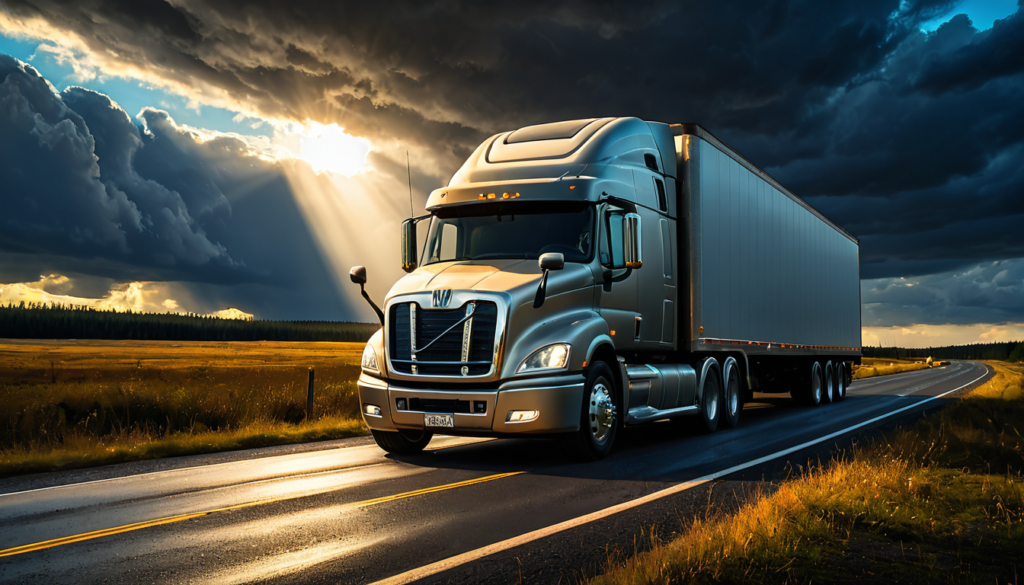
When an 18-wheeler loses control on a logging haul road or skids across black ice on Route 1, there’s no time to react. The impact happens fast. Too fast. One moment you’re driving through Washington County’s rural beauty—past the blueberry barrens or along the Bold Coast—and the next, your life changes forever.
We know because we’ve seen it. Ralph Manginello has spent over 25 years fighting for trucking accident victims, and our team includes Lupe Peña, a former insurance defense attorney who used to work for the very companies we’re now fighting. We understand the devastation these 80,000-pound machines cause when trucking companies cut corners. And we know the specific dangers lurking on Washington County’s winding coastal highways and inland logging routes.
If you or someone you love has been hurt in a trucking accident anywhere in Washington County, you need more than just a lawyer. You need a fighter who knows how to preserve black box data before it disappears, how to expose hours-of-service violations, and how to make trucking companies pay for putting dangerous drivers on the road. You need Attorney911. Call us now at 1-888-ATTY-911 — we’re available 24/7 to protect your rights.
The Unique Dangers of 18-Wheeler Accidents in Washington County
Washington County isn’t like other places in Maine. We’re the easternmost county in the United States, home to rugged coastlines, dense forests, and some of the most challenging driving conditions in New England. When commercial trucks traverse our narrow Route 1 corridors or haul timber and potatoes across our rural highways, the risks multiply.
Our county sees significant commercial truck traffic despite our sparse population. Logging trucks barrel down Route 9 through the woods. Refrigerated trucks haul seafood from ports like Eastport and Lubec. Heavy equipment moves along State Route 192 through Calais toward the Canadian border. And when winter hits—bringing the black ice, snow squalls, and pea-soup fog Washington County is known for—these trucks become deadly weapons.
The physics are brutal. A fully loaded 18-wheeler weighs up to 80,000 pounds—twenty times the weight of your average sedan. At 55 miles per hour on a rain-slicked Route 214, that truck needs nearly two football fields to stop. When a tired driver misses a curve near Machias or a logging truck’s brakes fail on a downhill grade in Columbia Falls, catastrophic injuries follow.
We’ve handled cases where families were devastated by truck accidents on rural Washington County roads. The remoteness complicates everything—emergency response times are longer, trauma centers are miles away, and evidence can vanish before investigators arrive. That’s why we act fast.
Why Trucking Accidents Here Require Immediate Action
Evidence in Washington County trucking accidents disappears quickly. Unlike crashes in urban areas where cameras are everywhere, our rural roads often lack surveillance. That makes the evidence inside the truck—the electronic logging device (ELD), the engine control module (ECM), and the driver’s qualification file—absolutely critical.
Black box data can be overwritten in as little as 30 days. Dashcam footage may be deleted within a week. Driver logbooks can be “lost” or falsified. And the trucking company? They dispatch their lawyers and rapid-response teams immediately—sometimes before the ambulance even reaches the scene at Downeast Community Hospital or Calais Regional Hospital.
When you call Attorney911, we don’t wait. We send spoliation letters within hours, not days, demanding preservation of every scrap of evidence. Our managing partner, Ralph Manginello, has been admitted to federal court since 1998 and knows how to force trucking companies to comply with federal preservation requirements. We’ll subpoena the driver’s cell phone records to prove distraction, analyze the ECM data to prove speeding or fatigue, and examine maintenance records to prove the company knew their truck was dangerous.
Understanding Federal Trucking Regulations (49 CFR)
Every 18-wheeler operating in Washington County must follow strict Federal Motor Carrier Safety Administration (FMCSA) regulations under Title 49 of the Code of Federal Regulations. These aren’t optional guidelines—they’re federal law. When trucking companies violate these rules, they create the dangerous conditions that cause accidents.
Hours of Service Violations (49 CFR Part 395)
Truck drivers cannot drive more than 11 hours after 10 consecutive hours off duty. They can’t be on duty beyond 14 consecutive hours, and they must take a 30-minute break after 8 cumulative hours of driving. Yet we frequently find Washington County trucking accidents caused by drivers who’ve been logging timber or hauling seafood for 16, 18, or 20 hours straight.
The Electronic Logging Device (ELD) mandate requires trucks to record this data automatically. When we retrieve this data—and we do immediately—it often proves the driver was violating federal hours-of-service rules. Fatigued driving causes approximately 31% of fatal truck crashes, and in Washington County’s rural stretches where drivers face long hauls to markets in Bangor or Portland, the temptation to cheat the logs is high.
Driver Qualification Standards (49 CFR Part 391)
Before a trucking company puts a driver behind the wheel, they must maintain a complete Driver Qualification File. This includes:
- A verified employment application
- Three years of driving history investigation
- Current medical certification (renewed every two years)
- Drug and alcohol test results
- Road test certification or equivalent
When we subpoena these records in Washington County cases, we often find companies hired drivers with suspended licenses, failed drug tests, or histories of reckless driving. That’s not just negligence—that’s negligent hiring, and it makes the trucking company directly liable for your injuries.
Vehicle Maintenance Requirements (49 CFR Part 396)
Commercial trucks must undergo systematic inspection, repair, and maintenance. Drivers must perform pre-trip inspections every single day. Brake systems must meet strict standards under 49 CFR § 393.40-55. Tires must have minimum tread depth (4/32″ on steer tires).
In Washington County, we see brake failures caused by steep grades on logging roads and tire blowouts from potholed rural highways. When a truck’s brakes fail on a downhill stretch near Topsfield or a tire shreds on Route 1 in Whiting, we examine the maintenance records. Often, we find companies deferred critical repairs to save money—putting your family at risk.
Cargo Securement Rules (49 CFR § 393.100-136)
Washington County’s economy depends on moving goods—logs, potatoes, blueberries, seafood. Federal law requires cargo to be secured to withstand specific forces: 0.8g deceleration forward, 0.5g acceleration rearward, and 0.5g lateral force. Improperly secured logs or shifting potato loads can cause rollovers or spill cargo across narrow Washington County roads, creating chain-reaction crashes.
The 10 Potentially Liable Parties in Your Washington County Trucking Case
Most law firms only sue the driver and trucking company. That’s a mistake. In Washington County trucking accidents, multiple parties often share blame, and every additional defendant means additional insurance coverage.
1. The Truck Driver
The individual behind the wheel may be liable for speeding, distracted driving, violating hours-of-service rules, or driving under the influence.
2. The Trucking Company (Motor Carrier)
Under the doctrine of respondeat superior, employers are liable for employees’ negligent acts. Plus, companies can be directly liable for negligent hiring, training, supervision, or maintenance. We examine their CSA (Compliance, Safety, Accountability) scores and safety history.
3. The Cargo Owner/Shipper
When a Downeast potato farm pressures a driver to haul overweight loads or a forestry company demands unrealistic delivery schedules, they may share liability.
4. The Loading Company
Third-party loaders who improperly secure logs or produce can be liable when cargo shifts and causes a rollover on Route 9.
5. The Truck/Trailer Manufacturer
Defective brakes, faulty steering systems, or inadequate underride guards (the metal bars meant to stop cars from sliding under trailers) can create product liability claims.
6. The Parts Manufacturer
Defective tires that blow out on Washington County’s rough roads or brake systems that fail can implicate component manufacturers.
7. The Maintenance Company
Third-party mechanics who performed negligent repairs or certified unsafe vehicles as “road-worthy” may be liable.
8. The Freight Broker
Brokers who arrange shipping but fail to verify carrier safety records or insurance can be liable for negligent selection.
9. The Truck Owner (If Different from Carrier)
In owner-operator arrangements, the actual owner of the tractor may bear separate responsibility.
10. Government Entities
When dangerous road design on state routes or inadequate signage contributes to crashes—and when the government entity knew of the hazard but failed to fix it—they may share liability.
We investigate every possible angle because in Washington County, where medical bills can quickly exceed $750,000, maximizing recovery means identifying every insurance policy available.
The Catastrophic Injuries We See in Washington County
The injuries from 18-wheeler accidents aren’t minor bumps and bruises. They’re life-altering, catastrophic traumas that require millions in lifetime care.
Traumatic Brain Injury (TBI)
When a passenger vehicle is struck by an 80,000-pound truck, heads hit windshields, steering wheels, and side windows. TBI can range from concussions to severe brain damage requiring 24/7 care. Symptoms include memory loss, personality changes, chronic headaches, and inability to work. We’ve recovered settlements ranging from $1.5 million to $9.8 million for TBI victims.
Spinal Cord Injury/Paralysis
The force of impact can fracture vertebrae and sever the spinal cord. Paraplegia (loss of function below the waist) and quadriplegia (loss of function in all four limbs) require wheelchairs, home modifications, and lifelong assistance. Lifetime care costs can exceed $4.7 million to $25.8 million.
Amputation
When a truck crushes a vehicle or a logging truck spills its load, limbs may be severed at the scene or require surgical amputation due to irreparable damage. Prosthetics cost $5,000 to $50,000 each and need replacement every few years. We’ve secured $1.9 million to $8.6 million for amputation victims.
Severe Burns
Fuel tank ruptures and fires cause third and fourth-degree burns requiring skin grafts, multiple surgeries, and years of reconstruction. Burns also carry high infection risks and permanent scarring.
Internal Organ Damage
The sheer force of impact can tear organs, cause internal bleeding, and require emergency surgery. These injuries often aren’t immediately apparent, making immediate medical evaluation critical.
Wrongful Death
When a trucking accident takes a loved one, surviving family members face not just grief, but financial devastation. Washington County families have recovered $1.9 million to $9.5 million in wrongful death settlements, covering lost income, funeral expenses, loss of consortium, and mental anguish.
Common 18-Wheeler Accident Types in Washington County
Jackknife Accidents
When a truck driver brakes suddenly on black ice—common on Washington County’s rural roads in winter—the trailer swings perpendicular to the cab, sweeping across all lanes. We see these frequently on Route 1 during nor’easters.
Rollover Accidents
Logging trucks and tankers are particularly prone to rollovers on the curves of Route 192 or when navigating the tight turns in towns like Lubec or Eastport. Speeding on curves is usually the cause.
Underride Collisions
When a smaller vehicle slides under the rear or side of a trailer, the results are catastrophic—often decapitation or fatal head trauma. Federal law requires rear impact guards (49 CFR § 393.86), but many trucks have inadequate or damaged guards.
Rear-End Collisions
Trucks need 40% more stopping distance than cars. When a distracted or fatigued driver follows too closely on US Route 1 traffic headed toward Campobello Island, rear-end crashes happen. Under 49 CFR § 392.11, following too closely is a federal violation.
Wide Turn Accidents (“Squeeze Play”)
Trucks swinging wide to navigate tight intersections in downtown Calais or Machias often crush vehicles in the adjacent lane.
Tire Blowouts
With heavy loads and long hauls, tire failures are common. When a steer tire blows on Route 9, the driver loses control instantly. FMCSA requires minimum tread depths (49 CFR § 393.75) and proper inflation.
Brake Failure
Steep grades on Washington County’s inland roads overheate brakes. When maintenance companies fail to adjust brakes or companies defer repairs, the results are deadly.
The Evidence We Preserve Immediately
The clock starts ticking the moment the crash occurs. In Washington County, where emergency services may take longer to reach rural locations, evidence preservation becomes even more critical.
Electronic Control Module (ECM/Black Box)
Records speed, braking, throttle position, and engine performance. Overwrites in 30 days.
Electronic Logging Device (ELD)
Proves hours-of-service violations. Required retention: 6 months.
Driver Qualification File
Shows if the company checked the driver’s background. Must be kept 3 years after termination.
Maintenance Records
Prove the company knew about dangerous defects. Kept 1 year.
Cell Phone Records
Prove distraction. Must be subpoenaed quickly.
Dashcam Footage
Often deleted within 7-14 days.
We send preservation letters immediately to prevent “spoliation”—the legal term for destroying evidence. Once we notify the trucking company that litigation is anticipated, destroying evidence can result in sanctions, adverse jury instructions, or default judgment against them.
Maine Law Applies to Your Washington County Case
Maine has unique rules that affect your trucking accident claim:
Statute of Limitations
You have 6 years from the accident date to file a personal injury lawsuit in Washington County—the longest timeframe in the nation. For wrongful death, you have 2 years from the date of death.
Comparative Negligence
Maine follows modified comparative fault with a 50% bar. If you’re 49% or less at fault, you can recover damages reduced by your fault percentage. If you’re 50% or more at fault, you recover nothing. That’s why proving the truck driver violated FMCSA regulations is so important—it establishes clear fault.
No Cap on Punitive Damages
Unlike some states, Maine allows juries to award punitive damages to punish trucking companies for gross negligence or reckless disregard for safety.
What to Do After a Trucking Accident in Washington County
Immediately at the Scene:
- Call 911—rural response times mean getting emergency services rolling fast is critical
- Photograph everything: truck’s DOT number, license plates, company logos, damage to all vehicles, road conditions, tire marks, and your injuries
- Get witness information—rural accidents often have few witnesses, so every one counts
- Do NOT give recorded statements to the trucking company’s insurer
Within 24-48 Hours:
- Seek medical evaluation at Calais Regional Hospital, Downeast Community Hospital, or Eastern Maine Medical Center in Bangor
- Contact Attorney911 at 1-888-ATTY-911 to preserve evidence
- Do not post about the accident on social media—insurance companies monitor these
Why You Need Legal Representation Immediately
Trucking companies have teams of lawyers. You need someone fighting just as hard for you. As client Chad Harris told us, “You are NOT just some client… You are FAMILY to them.” And Glenda Walker said we “fought for me to get every dime I deserved.”
Our Proven Track Record
Ralph Manginello has been fighting for injury victims since 1998. We’re one of the few firms with experience litigating against Fortune 500 companies, including our involvement in the BP Texas City Refinery explosion litigation where settlements exceeded $2.1 billion industry-wide.
Our case results include:
- $5+ million for traumatic brain injury victims
- $3.8+ million for amputation cases
- $2.5+ million for truck crash recoveries
- Currently litigating a $10 million lawsuit against a major university
We work on contingency—you pay nothing unless we win. We advance all costs, and we never settle for less than you deserve. Hablamos Español. Lupe Peña provides fluent Spanish representation without interpreters.
Washington County Trucking Corridors We Know
We understand the specific dangers of:
- Route 1: The coastal highway connecting Calais to Machias and beyond, with its sharp curves and seasonal tourist traffic
- Route 9: The “Airline” route through the interior, heavily used by logging trucks
- Route 192: The Canada-bound corridor through Van Buren and Hamlin
- Route 214: Rural connecting roads with poor lighting and maintenance
- Logging haul roads: Private roads with steep grades and limited safety features
Whether your accident happened in Eastport, Lubec, Machias, Calais, or anywhere in Washington County’s unorganized territories, we have the resources to investigate and the experience to win.
Frequently Asked Questions About Washington County Trucking Accidents
How long do I have to file a lawsuit in Washington County?
Maine gives you 6 years for personal injury—the longest in the nation—but don’t wait. Evidence disappears fast.
What if I was partially at fault?
Under Maine’s modified comparative negligence rule, you can recover if you’re 49% or less at fault. Your recovery is reduced by your percentage of fault.
How much is my case worth?
It depends on injury severity, medical costs, lost wages, and available insurance. Trucking companies carry $750,000 to $5 million in coverage.
Will my case go to trial?
Most settle, but we prepare every case for trial. Insurance companies offer better settlements when they know your attorney will go to court.
Can I sue the trucking company even if the driver was an independent contractor?
Often yes. We examine the relationship to see if the company controlled the driver’s work. Also, the company’s insurance usually covers all vehicles they dispatch.
What if the truck driver was from Canada?
We handle cross-border cases. Federal regulations apply to all trucks operating in the U.S., regardless of where the driver is based.
How do I pay for medical treatment?
We can help you find doctors who treat on a lien basis—meaning they get paid when your case settles. Your health comes first.
What if the trucking company denies liability?
We prove liability through ECM data, ELD logs, maintenance records, and expert reconstruction. The data doesn’t lie.
Call Attorney911 Today
You’ve been through enough. The pain. The medical bills. The uncertainty. You don’t have to fight the trucking company alone.
We’re Attorney911, and we’ve recovered over $50 million for families just like yours. Ralph Manginello has fought for injury victims for 25+ years. Lupe Peña knows how insurance companies think because he used to defend them. And we treat you like family, not a case number.
If you’ve been hurt in an 18-wheeler accident in Washington County—whether in Calais, Machias, Eastport, Lubec, or anywhere in between—call us now at 1-888-288-9911. The consultation is free. We work on contingency. And we’re available 24/7 because we know emergencies don’t wait for business hours.
Don’t let the trucking company push you around. We push back harder. Call 888-ATTY-911 today.
Attorney911 — The Manginello Law Firm, PLLC
Serving Washington County, Maine and Beyond
25+ Years Fighting for Trucking Accident Victims
4.9★ Rating (251+ Reviews)
Hablamos Español. Llama al 1-888-ATTY-911.