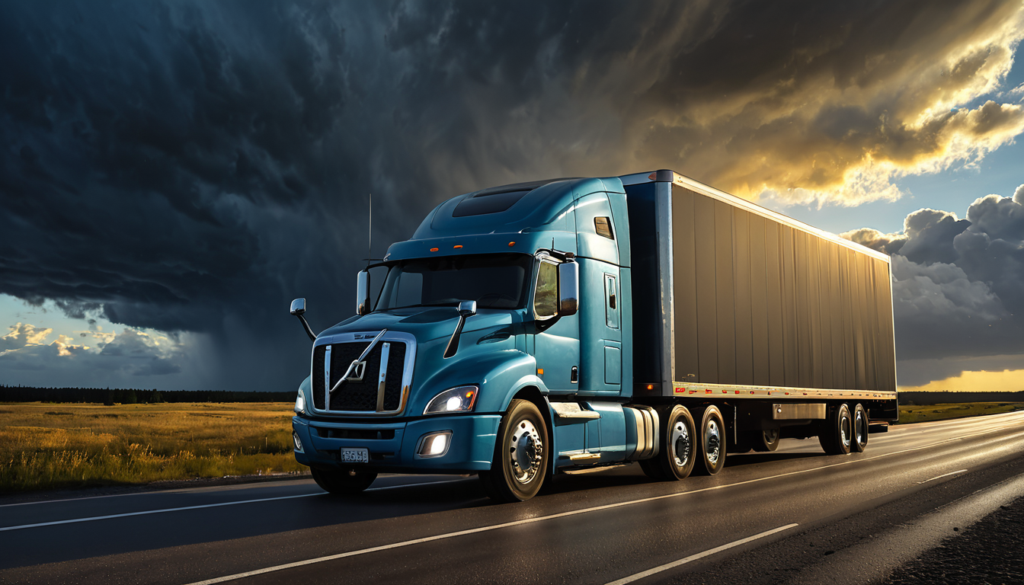
When an 80,000-Pound Truck Changes Everything: Minnesota 18-Wheeler Accident Attorneys Fighting for You
One moment you’re driving to work on I-35 through Minneapolis. The next, an 80,000-pound semi-truck is jackknifing across three lanes of black ice. In that instant, your life changes forever.
If you’re reading this, you or someone you love has been hurt in a trucking accident in Minnesota. You’re facing medical bills that are climbing higher than the ICU towers at Hennepin County Medical Center. You’re dealing with insurance adjusters who treat you like a file number instead of a human being. And you’re wondering how you’ll ever put your life back together.
We get it. We’ve spent over 25 years fighting for families across Minnesota—from the frozen highways of Duluth to the busy corridors of the Twin Cities, from the agricultural routes near Rochester to the industrial zones of Bloomington. We’ve sat across from trucking company lawyers who thought they could intimidate our clients. We’ve seen the devastation these crashes cause. And we know exactly what it takes to hold negligent trucking companies accountable.
This isn’t just another car accident. Minnesota’s winter weather, combined with the massive size disparity between your vehicle and an 18-wheeler, creates deadly conditions. Federal regulations set strict safety standards for commercial trucks, but when drivers and companies cut corners to meet delivery deadlines, innocent people pay the price.
The trucking company that hit you has already called their lawyers. Their insurance adjuster is already building a case to pay you as little as possible. What are you doing right now to protect yourself?
Time is not on your side. Critical evidence—black box data, electronic logs, truck maintenance records—can disappear faster than snow melts in April. You need someone fighting for you immediately. Call Attorney911 at 1-888-ATTY-911 (1-888-288-9911) right now. We answer 24/7, and we don’t charge a dime unless we win your case.
Why Minnesota 18-Wheeler Accidents Are Catastrophically Different
Minnesota’s position as a critical Midwest logistics hub puts thousands of heavy trucks on our roads every day. The Port of Duluth-Superior connects Great Lakes shipping to interstate trucking corridors. Major distribution centers for Target and Best Buy—both headquartered in Minnesota—generate massive freight traffic on our highways. And the agricultural heartland surrounding Rochester and Mankato depends on semi-trucks to move grain and livestock.
But Minnesota’s trucking industry also operates under some of the harshest conditions in the continental United States. Winter temperatures in the Twin Cities regularly drop to -20°F or lower. I-35, I-90, and I-94 become treacherous corridors where brake failures lead to runaway trucks and black ice causes jackknife accidents that shut down highways for hours.
The physics alone make these cases devastating. An average passenger car weighs 4,000 pounds. A fully loaded 18-wheeler can weigh 80,000 pounds—that’s 20 times heavier. When that much mass collides with your vehicle at highway speeds, even relatively “minor” trucking accidents cause catastrophic injuries.
Stopping distances tell the real story. A car traveling at 65 mph needs roughly 300 feet to stop on dry pavement. An 18-wheeler needs nearly two football fields—approximately 525 feet—to come to a complete stop. In Minnesota’s winter conditions, those distances double or triple. When truck drivers fail to adjust their speed for snow and ice, rear-end collisions become unavoidable disasters.
Federal Motor Carrier Safety Administration (FMCSA) regulations exist specifically because trucks are so dangerous. These aren’t suggestions—they’re federal laws codified in Title 49 of the Code of Federal Regulations. When trucking companies operating in Minnesota violate these rules, they put everyone at risk.
Minnesota’s Deadliest Trucking Corridors
Understanding where these accidents happen helps us prove negligence and establish liability. In Minnesota, several highway systems create particularly dangerous conditions for 18-wheeler accidents:
Interstate 35 cuts through the heart of Minnesota, connecting Duluth to the Twin Cities and continuing south toward Iowa. This is one of the busiest freight corridors in the Midwest, carrying everything from consumer goods to agricultural products. The stretch through Minneapolis-St. Paul sees heavy congestion, creating conditions for blind spot accidents and wide-turn collisions at urban intersections.
Interstate 90 runs east-west across southern Minnesota, connecting Sioux Falls to La Crosse. This transcontinental route carries massive freight volume, and the long, rural stretches between towns encourage driver fatigue. When truckers push past the 11-hour federal driving limit to make delivery deadlines, they create deadly risks for everyone sharing these long highway stretches.
Interstate 94 connects the Twin Cities to St. Cloud and continues toward North Dakota. This corridor serves the energy and agricultural sectors, with heavy tanker traffic and grain haulers. The combination of high speeds, winter weather, and heavy truck traffic makes this one of Minnesota’s most dangerous routes for catastrophic collisions.
Interstate 394 and the I-494/I-694 Loop around the Twin Cities create complex interchange systems where wide-turn accidents and merging collisions frequently occur. Tanker trucks serving the refineries and chemical plants in the area navigate these tight urban curves daily, often during rush hour congestion.
The weather compounds everything. Minnesota averages over 100 days per year with measurable precipitation, and winter storms can dump feet of snow on these interstates in hours. When trucking companies fail to train drivers on winter safety protocols or pressure them to maintain schedules regardless of blizzard warnings, tragedies happen on these roads.
Types of 18-Wheeler Accidents We Handle Across Minnesota
Every trucking accident is unique, but certain patterns emerge on Minnesota’s highways. Understanding these accident types helps us identify the federal regulations violated and the liable parties responsible.
Jackknife Accidents on Icy Minnesota Highways
A jackknife occurs when the trailer swings perpendicular to the cab, creating an instant roadblock that sweeps across multiple lanes. On Minnesota’s icy interstates, these accidents often involve multiple vehicles and cause pileups that close highways for hours.
These crashes usually happen when drivers brake too hard on slippery surfaces or navigate curves too fast for winter conditions. Under 49 CFR § 392.6, truckers must reduce speed for adverse weather conditions. When they don’t, and their truck jackknifes across I-94 during a snowstorm, they’ve violated federal law.
The injuries from jackknife accidents are typically catastrophic. Vehicles caught in the swinging trailer’s path suffer crushing damage. Occupants often sustain traumatic brain injuries, spinal cord damage, and fatal crushing injuries. We recently helped a Minnesota family recover substantial damages after a jackknifed tanker on I-35 caused a multi-vehicle pileup during a January blizzard.
Underride Collisions: The Most Fatal Truck Accidents
Underride accidents occur when a smaller vehicle slides under the trailer of an 18-wheeler. These are among the deadliest crashes on Minnesota roads because the trailer shears off the passenger compartment of the car, often at head level.
Rear underrides happen when trucks stop suddenly on dark stretches of highway—common on rural I-90 when drivers don’t maintain proper following distances. Side underrides occur during lane changes or at intersections in Minneapolis and St. Paul when truckers fail to check their blind spots properly.
Federal regulations under 49 CFR § 393.86 require rear impact guards on trailers manufactured after 1998. However, many trucks operate with weakened or missing guards, and there’s currently no federal requirement for side underride guards despite their proven ability to save lives. When we investigate these crashes in Minnesota, we immediately examine whether the trucking company maintained proper underride protection or modified their guards in ways that reduced effectiveness.
Rollover Accidents on Minnesota Curves and Ramps
Minnesota’s highway system includes numerous curved interchanges, mountain passes, and rural highways with tight turns. Rollover accidents happen when truck drivers take these curves too fast, especially when cargo shifts during the turn.
The** Cedar Avenue Curve on I-35E in St. Paul and the** I-394/Highway 100 interchange see frequent rollover accidents involving tankers and cargo trucks. These crashes often spill hazardous materials or create secondary collisions as the overturned truck blocks traffic lanes.
Under 49 CFR § 393.100-136, cargo must be secured to prevent shifting that affects vehicle stability. When liquid cargo “sloshes” in partially filled tankers, it changes the center of gravity and causes rollovers. Loading companies and trucking companies who fail to properly secure cargo or account for liquid dynamics are liable for the devastation they cause.
Rear-End Collisions: Physics Become Deadly
We’ve handled cases where 18-wheelers plowed into stopped traffic on I-494 during rush hour, or failed to stop for construction zones on I-94 near St. Cloud. The massive weight differential means these aren’t fender-benders—these are life-altering or fatal collisions.
Federal regulations under 49 CFR § 392.11 prohibit following too closely, requiring truckers to maintain safe distances. Electronic Control Module (ECM) data from the truck’s black box often proves the driver was following too closely or failed to brake appropriately for traffic conditions.
Given Minnesota’s harsh winters, these accidents become more frequent when truckers fail to account for increased stopping distances on ice. A truck traveling at 60 mph on icy pavement might need 1,000 feet or more to stop—far more than the driver anticipated when traffic slowed ahead.
Tire Blowouts and Equipment Failures
Extreme temperature fluctuations in Minnesota—from summer highs of 90°F to winter lows of -30°F—stress truck tires dramatically. Underinflated tires overheat in summer and lose pressure in winter, leading to blowouts that cause drivers to lose control.
When a steer tire blows at highway speeds on I-35, even experienced drivers struggle to maintain control. The resulting accidents often cause the truck to swerve into oncoming traffic or rollover on the shoulder.
49 CFR § 393.75 establishes minimum tread depth and tire condition requirements. 49 CFR § 396.3 requires systematic inspection and maintenance programs. When trucking companies defer maintenance to save money or drivers fail to conduct proper pre-trip inspections, those violations prove negligence.
Wide Turn Accidents in Urban Minnesota
The tight turns required in downtown Minneapolis, St. Paul, and the warehouse districts of Bloomington create perfect conditions for “squeeze play” accidents. Trucks making right turns must swing left first, creating a gap that passenger vehicles often enter. When the truck completes its turn, it crushes the vehicle in the blind spot.
These accidents frequently occur at distribution centers near the Mall of America or in the industrial zones along the Mississippi River. Under 49 CFR § 392.2, truckers must obey all traffic laws, and under 49 CFR § 392.11, they must ensure lane changes and turns are safe. Failure to check blind spots or signal properly constitutes negligence.
Driver Fatigue Accidents on Long Hauls
Minnesota’s position between the coasts means many truckers are nearing the end of their federally allowed 11 hours of driving time when they cross our borders. Fatigue-related accidents spike on long rural stretches of I-90 and I-94 where monotony sets in and drivers fight to stay awake.
The Electronic Logging Device (ELD) mandate under 49 CFR § 395.8 requires trucks to record driving hours automatically. These devices prevent drivers from falsifying paper logbooks—a practice that was rampant before 2017. When we subpoena ELD data, we often find Minnesota crashes occurred because drivers violated the 11-hour driving limit or the 14-hour on-duty window mandated by 49 CFR § 395.8.
Our associate attorney Lupe Peña spent years working as an insurance defense lawyer before joining our firm. He knows exactly how trucking companies and their insurers try to hide or explain away ELD violations. Now he uses that insider knowledge to expose these dangerous practices and hold companies accountable when they pressure drivers to violate federal hours-of-service regulations.
Who Can Be Held Liable for Your Minnesota Trucking Accident?
Unlike a typical car accident where usually only one driver is at fault, 18-wheeler accidents often involve multiple liable parties. Every entity that contributed to unsafe conditions can be held responsible—and that means multiple insurance policies may be available to compensate you.
The Truck Driver is the most obvious defendant when they were speeding, distracted, fatigued, or impaired. We examine their driving record, training history, and medical certifications to prove they weren’t qualified to operate the vehicle safely.
The Trucking Company/Motor Carrier bears responsibility through several legal theories. Under respondeat superior, employers are liable for their employees’ negligent acts. But we also pursue direct negligence claims for negligent hiring, training, supervision, and maintenance. If a Minnesota company hired a driver with a history of DUIs or safety violations, that’s not just the driver’s fault—it’s corporate negligence.
We obtain the Driver Qualification File required under 49 CFR § 391.51, which must include employment applications, background checks, medical certifications, and drug test results. Missing or incomplete files prove the company cut corners.
The Cargo Owner/Shipper may be liable if they demanded overweight loads that caused brake failures or tire blowouts, or if they failed to disclose hazardous materials. Minnesota’s agricultural industry often ships heavy grain loads that push trucks to weight limits.
The Loading Company is responsible when cargo isn’t secured properly. Under 49 CFR § 393.100-136, tiedowns must meet specific working load limits based on cargo weight and type. When loads shift on Minnesota’s curved highways, causing rollovers, the company that loaded the truck shares liability.
The Truck or Parts Manufacturer faces liability for defective brakes, tire blowouts caused by manufacturing flaws, or stability control system failures. We work with engineers to prove design or manufacturing defects contributed to crashes.
The Maintenance Company can be liable for negligent repairs. If a Minnesota repair shop returned a truck to service with known brake defects or improper tire installations, they’re responsible when that truck causes a fatal accident.
The Freight Broker who arranged the shipment may be liable for negligent carrier selection. If they hired a trucking company with terrible safety scores or a history of violations, they contributed to the dangerous conditions that hurt you.
Government Entities in Minnesota may share liability for dangerous road design or failure to maintain safe conditions. Poor drainage causing ice buildup, inadequate signage for sharp curves, or failure to repair potholes that contribute to loss of control can all create municipal liability.
The more defendants we identify, the more insurance coverage becomes available. Federal law requires trucking companies to carry minimum liability coverage of $750,000 for general freight, $1 million for oil and hazardous materials, and $5 million for the most dangerous cargo. But when multiple parties are liable, we can often stack policies or access umbrella coverage that significantly increases available compensation.
This is why you need attorneys who understand Minnesota’s trucking industry and federal regulations. Most firms only sue the driver and trucking company. We investigate every possible defendant because we know that’s how you get full compensation for catastrophic injuries.
Critical Evidence Disappears Fast: The 48-Hour Rule
If you’ve been hurt in a Minnesota trucking accident, evidence is disappearing right now. While you’re in the hospital or arranging funeral services for a loved one, the trucking company is already working to protect themselves.
Black box data (ECM/EDR) records speed, braking, throttle position, and other critical operational data. This information can prove the truck was speeding or that the driver failed to brake properly before impact. However, this data can be overwritten within 30 days—or even sooner if the truck continues operating and records new “events.”
Electronic Logging Device (ELD) data proves whether the driver violated hours-of-service regulations. While FMCSA requires retention for 6 months, trucking companies might “lose” this data or claim technical failures if not immediately preserved.
Dashcam footage shows exactly what happened before the crash. Many trucks have forward-facing and cab-facing cameras. This footage is often deleted within days or weeks unless specifically preserved.
Maintenance records under 49 CFR § 396.3 must be kept for specific periods, but once litigation is anticipated, the duty to preserve extends beyond minimum retention periods. We send spoliation letters immediately to prevent destruction of these records.
Driver Qualification Files contain the hiring records, background checks, and training documentation that prove negligent hiring. These files can “go missing” if not immediately secured.
When you call Attorney911 at 1-888-ATTY-911, we send preservation demand letters within 24 hours. These letters put the trucking company on notice that destroying evidence will result in severe sanctions, including adverse inference instructions where the jury is told to assume destroyed evidence would have been unfavorable to the trucking company.
We also deploy accident reconstruction experts to Minnesota crash scenes immediately. They photograph evidence, measure skid marks, and download ECM data before weather or traffic eliminates critical clues.
Don’t wait. Every hour you delay allows the trucking company to strengthen their defense. The call is free, and you pay nothing unless we win. Call 1-888-288-9911 right now.
Catastrophic Injuries and Your Minnesota Trucking Accident Case
The injuries sustained in trucking accidents are rarely minor. When an 80,000-pound vehicle collides with a 4,000-pound car, occupants often suffer permanent, life-altering trauma.
Traumatic Brain Injuries (TBI) occur when the head strikes the steering wheel, dashboard, or window, or from the sheer force of rapid deceleration. Even “mild” TBIs (concussions) can cause lasting cognitive issues, emotional changes, and inability to work. Severe TBIs require lifelong care and assistance with daily activities. Our firm has recovered settlements ranging from $1.5 million to $9.8 million for TBI victims, depending on severity and long-term impact.
Spinal Cord Injuries often result in partial or complete paralysis. The cost of lifetime care for a quadriplegic injury can exceed $5 million over a lifetime, not including lost wages or pain and suffering. We’ve seen settlements in the $4.7 million to $25.8 million range for these devastating injuries.
Amputations—whether traumatic (occurring at the scene) or surgical (required due to crushing injuries)—fundamentally alter every aspect of life. Prosthetics require replacement every few years at costs of $5,000 to $50,000 each. Rehabilitation and home modifications add hundreds of thousands more. Our amputation cases have settled between $1.9 million and $8.6 million.
Severe Burns from fuel fires or hazmat spills cause excruciating pain, require multiple skin graft surgeries, and leave permanent scarring. The psychological trauma of disfigurement often exceeds the physical pain.
Internal Organ Damage may not show immediate symptoms but can be life-threatening. Liver lacerations, spleen ruptures, and internal bleeding require emergency surgery and can cause permanent organ dysfunction.
Wrongful Death claims arise when trucking accidents kill Minnesotans. Under Minnesota law, surviving spouses, children, and parents can recover for lost financial support, lost companionship, mental anguish, and funeral expenses. While no amount of money replaces a loved one, we’ve secured settlements between $1.9 million and $9.5 million that provide financial security for families and hold trucking companies accountable for lethal negligence.
The value of your Minnesota trucking accident case depends on many factors: the severity of injuries, the clarity of liability, the number of available insurance policies, and the skill of your legal team. We’ve recovered over $50 million for clients because we know how to build cases that maximize compensation under both Minnesota state law and federal trucking regulations.
Minnesota State Laws Affecting Your Trucking Accident Case
While federal FMCSA regulations apply nationwide, Minnesota state law governs critical aspects of your claim.
Statute of Limitations: Under Minnesota Statutes Section 541.07, you have two years from the date of the accident to file a personal injury lawsuit. For wrongful death claims, Minnesota allows three years from the date of death (Section 573.02). However, waiting even months can destroy your case as evidence disappears and witness memories fade. Contact us immediately to preserve your rights.
Modified Comparative Negligence: Minnesota follows a “modified comparative fault” rule with a 51% bar. This means you can recover damages as long as you are not more than 50% at fault for the accident. However, your compensation is reduced by your percentage of fault. If a jury finds you 20% responsible for the crash, your $1 million award becomes $800,000. If you’re found 51% or more at fault, you recover nothing.
Trucking companies and their insurers love to blame victims. They’ll claim you were speeding, following too closely, or failed to avoid the crash. We counter these tactics with black box data, ECM records, and accident reconstruction that proves the truck driver’s negligence caused the crash, not you.
Damage Caps: Unlike some states, Minnesota does not impose arbitrary caps on economic or non-economic damages in personal injury cases. You can recover full compensation for medical bills, lost wages, pain and suffering, and loss of consortium without statutory limits. However, punitive damages—which punish gross negligence or willful misconduct—require special procedures under Minnesota law, including clear and convincing evidence standards.
No-Fault Insurance: Minnesota is a “no-fault” state for auto insurance, which means your own Personal Injury Protection (PIP) coverage pays initial medical bills and lost wages regardless of fault. However, trucking accidents typically exceed PIP limits quickly due to catastrophic injuries. We coordinate PIP claims with liability claims against the trucking company to ensure all available coverage is accessed.
Sovereign Immunity: If a government entity (like MNDOT or a municipal truck) caused your accident, special rules apply including shorter notice requirements. You must act fast to preserve claims against government defendants.
Federal Regulations That Prove Negligence
The FMCSA regulations exist to prevent exactly the crashes that hurt our Minnesota clients. When we prove violations of these rules, we prove negligence.
49 CFR Part 391 (Driver Qualification) requires drivers to be at least 21 years old, medically certified, proficient in English, and pass road tests. Companies must maintain Driver Qualification Files proving each driver meets these standards. When a company hires an unqualified driver or fails to check a driver’s history of violations, they’re liable for negligent hiring.
49 CFR Part 392 (Driving Rules) prohibits operating while fatigued, under the influence of drugs or alcohol, or while using handheld mobile phones. It requires adjusting speed for weather conditions—a critical violation in Minnesota winters—and prohibits following too closely.
49 CFR Part 393 (Equipment Standards) mandates proper brake systems, lighting, and cargo securement. Every truck must have working headlights, taillights, turn signals, and reflectors—especially important during Minnesota’s dark winter months when visibility is limited.
49 CFR Part 395 (Hours of Service) limits driving to 11 hours after 10 consecutive hours off duty. It requires a 30-minute break after 8 hours of driving and restricts total on-duty time to 14 hours. Drivers cannot exceed 60/70 hours in 7/8 days without a 34-hour restart. These rules prevent the fatigue that causes so many Minnesota highway crashes.
49 CFR Part 396 (Maintenance) requires systematic inspection, repair, and maintenance programs. Drivers must conduct pre-trip inspections checking brakes, tires, lights, and coupling devices. Annual inspections are mandatory. When truckers skip these inspections or companies defer maintenance to save money, they violate federal law.
We obtain maintenance records, inspection reports, and driver logs to prove these violations. In one recent Minnesota case, we discovered a trucking company had falsified maintenance records to hide defective brakes that ultimately caused a fatal crash. That discovery transformed a difficult case into a multi-million dollar settlement.
Why Minnesota Trucking Accident Victims Choose Attorney911
You’ve seen the billboards and TV commercials for big national firms. So why do Minnesota families choose Attorney911 when everything is on the line?
Real Trial Experience: Ralph Manginello has fought for injury victims since 1998. He’s admitted to the U.S. District Court for the Southern District of Texas and has gone toe-to-toe with Fortune 500 companies like BP in major litigation. When a trucking company sees Ralph’s name on a lawsuit, they know we aren’t bluffing about going to trial.
Insider Knowledge: Our associate attorney Lupe Peña used to work for insurance companies. He defended trucking companies and knows every trick they use to minimize payouts. Now he turns that knowledge against them. As Lupe says, “I know their playbook because I helped write it.” This insider advantage helps us anticipate defense strategies and counter them before they’re deployed.
Multi-Million Dollar Results: We’ve recovered over $50 million for clients across all practice areas. Our traumatic brain injury cases have settled between $1.5 million and $9.8 million. Amputation cases range from $1.9 million to $8.6 million. Wrongful death settlements have reached $9.5 million. These aren’t just numbers—they represent financial security for families whose lives were shattered by trucking company negligence.
24/7 Availability: Trucking accidents don’t happen during business hours. That’s why you can reach us at 1-888-ATTY-911 any time, day or night. When you call, you speak with someone who can help, not an answering service that takes a message.
Personal Attention: As our client Chad Harris said, “You are NOT just some client… You are FAMILY to them.” We don’t hand you off to case managers and forget about you. Ralph Manginello personally oversees major cases, and our clients have his direct contact information. Donald Wilcox, another client, told us: “One company said they would not accept my case. Then I got a call from Manginello… I got a call to come pick up this handsome check.”
Spanish Language Services: Hablamos Español. Lupe Peña is fluent in Spanish and provides direct representation without interpreters. If Spanish is your first language, you deserve an attorney who can communicate with you directly about your Minnesota trucking accident case. Llame a 1-888-ATTY-911 para hablar con Lupe Peña.
No Upfront Costs: We work on contingency. You pay nothing—zero—unless we win your case. We advance all investigation costs, expert fees, and litigation expenses. You focus on healing; we focus on winning.
Frequently Asked Questions About Minnesota Trucking Accidents
What should I do immediately after a trucking accident in Minnesota?
Call 911 and request police and medical assistance. Get to a safe location if possible. Take photos of everything—the truck, your vehicle, the scene, skid marks, weather conditions. Get the truck driver’s name, DOT number, insurance information, and company details. Get witness contact information. Then call Attorney911 at 1-888-288-9911 before speaking with any insurance company.
How long do I have to file a lawsuit in Minnesota?
You have two years from the accident date for personal injury claims and three years for wrongful death. But waiting is dangerous. Evidence disappears fast in trucking cases. Call us immediately.
What if the trucking company says I was partially at fault?
Minnesota uses modified comparative negligence. If you were less than 51% at fault, you can still recover damages, though reduced by your fault percentage. Don’t accept the trucking company’s word on fault—we investigate independently using black box data and accident reconstruction.
Can I afford an attorney?
Yes. We work on contingency. You pay nothing upfront and nothing unless we win. We advance all costs.
What if the truck driver was an independent contractor?
Trucking companies often try to avoid liability by claiming drivers are independent contractors. We investigate the actual employment relationship. If the company controlled routes, schedules, or equipment, they may still be liable. Additionally, the driver’s insurance and the truck owner’s insurance may provide coverage.
How much is my Minnesota trucking accident case worth?
It depends on injury severity, medical costs, lost wages, insurance coverage, and liability clarity. Trucking companies carry high insurance limits—often $750,000 to $5 million. We’ve secured settlements ranging from hundreds of thousands to millions depending on case specifics.
What if the trucking company is from out of state?
We handle that regularly. Federal regulations apply nationwide, and we can sue out-of-state companies in Minnesota courts if the accident occurred here or they do business here. Our federal court admission allows us to handle interstate litigation efficiently.
How long will my case take?
Simple cases with clear liability might settle in 6-12 months. Complex cases with catastrophic injuries or multiple defendants can take 1-3 years. We work to resolve cases as quickly as possible while maximizing your recovery.
Will my case go to trial?
Most settle, but we prepare every case as if it’s going to trial. Insurance companies offer better settlements when they know your attorney isn’t afraid of the courtroom. We have the resources and experience to try cases if that’s what it takes.
What if I don’t have health insurance to pay for treatment?
We can help you find doctors who treat on a Letter of Protection (LOP), meaning they get paid when your case settles. Don’t let lack of insurance stop you from getting necessary medical care.
Can undocumented immigrants file trucking accident claims in Minnesota?
Yes. Immigration status does not affect your right to compensation for injuries caused by someone else’s negligence. We handle these cases with discretion and fight for your rights regardless of status.
What do Electronic Logging Devices (ELDs) prove?
ELDs automatically record driving hours, proving whether the driver violated federal hours-of-service regulations. They also record speed, location, and engine data that can prove speeding or improper driving. This data is objective and often contradicts the driver’s version of events.
Why do I need a lawyer who knows trucking law specifically?
Trucking cases involve federal regulations, multiple liable parties, commercial insurance policies, and rapid evidence destruction that don’t apply to regular car accidents. A lawyer who only handles fender-benders won’t know how to obtain ECM data or interpret FMCSA violations.
What if the insurance company offers me a settlement quickly?
Early offers are almost always “lowball” offers designed to pay you less than you deserve before you know the full extent of your injuries. Never accept a settlement without consulting an experienced trucking attorney. Once you settle, you cannot ask for more money later.
Hablamos Español. ¿Puedo hablar con un abogado en español sobre mi accidente de camión en Minnesota?
Sí. Llame a 1-888-ATTY-911 para hablar con el abogado Lupe Peña. Él habla español fluido y puede ayudarle con su caso de accidente de camión en Minnesota.
Call Attorney911 Now: Your Minnesota Trucking Accident Attorneys
The trucking company has lawyers working right now to protect their interests. Their insurance adjuster is looking for ways to deny or minimize your claim. Evidence that could prove your case is being deleted or overwritten as you read this.
You don’t have to face this alone. We’ve spent over 25 years fighting for families across Minnesota—from the icy roads of Duluth to the busy interstates of the Twin Cities, from Rochester to St. Cloud. We know Minnesota’s courts, its trucking corridors, and the federal regulations that hold trucking companies accountable.
When you hire Attorney911, you get a team that includes a former insurance defense attorney who knows every trick the trucking company will try. You get Ralph Manginello’s 25 years of trial experience and federal court admission. You get a firm that has recovered over $50 million for clients and treats you like family, not a file number.
As Glenda Walker, one of our clients, said: “They fought for me to get every dime I deserved.” That’s what we do for every client.
The consultation is free. You pay nothing unless we win. And we’re available 24/7 because legal emergencies don’t wait for business hours.
Call 1-888-ATTY-911 (1-888-288-9911) right now. If you prefer, you can reach Ralph directly at ralph@atty911.com or Lupe at lupe@atty911.com. But don’t wait—evidence disappears fast, and Minnesota’s two-year statute of limitations is shorter than you think.
We’re ready to fight for you. Are you ready to fight for what you deserve?