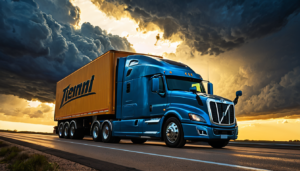
When an 80,000-pound grain truck loses control on an icy stretch of US-12 near Willmar, or a fatigued livestock hauler drifts across the centerline on MN-7 outside Spicer, the devastation is immediate and catastrophic. In Kandiyohi County, where winter blizzards collide with agricultural harvest season and rural highways carry massive farm equipment alongside passenger vehicles, 18-wheeler accidents aren’t just statistics—they’re life-altering tragedies that demand immediate, aggressive legal action.
We’ve seen what happens when trucking companies try to protect their bottom line instead of taking responsibility. At Attorney911, we’ve spent over 25 years fighting for families across Minnesota and beyond, and we know exactly how to hold negligent trucking companies accountable when they cause harm in Kandiyohi County.
Why Kandiyohi County 18-Wheeler Accidents Require Specialized Legal Expertise
The physics alone make these cases different. A fully loaded semi-truck weighs up to 80,000 pounds—that’s 20 to 25 times heavier than the average passenger car. When that much mass collides with a vehicle on an icy patch near New London or Pennock, the results are devastating: traumatic brain injuries, spinal cord damage, amputations, and all too often, wrongful death.
But the complexity extends far beyond the crash itself. Federal Motor Carrier Safety Administration (FMCSA) regulations under Title 49 of the Code of Federal Regulations (49 CFR Parts 390-399) govern every aspect of commercial trucking. These aren’t just suggestions—they’re federal law. When a truck driver violates the 11-hour driving limit under 49 CFR § 395.3, or when a company fails to maintain brake systems as required by 49 CFR § 396.3, they’re not just cutting corners. They’re breaking the law, and they need to pay for the devastation they cause.
Ralph Manginello, our managing partner since 1998, has spent more than two decades mastering these federal regulations. With his admission to the U.S. District Court for the Southern District of Texas and his track record of taking on Fortune 500 corporations like BP in the Texas City Refinery litigation that resulted in over $2.1 billion in industry-wide settlements, he brings a level of federal courtroom experience that most personal injury attorneys simply don’t have. When you’re facing a trucking company with millions in insurance coverage and teams of corporate lawyers, you need that kind of heavyweight experience in your corner.
The Insurance Defense Advantage That Changes Everything
Here’s what most people don’t know about our firm: we literally have someone on the inside. Lupe Peña, our associate attorney, spent years working for a national insurance defense firm before joining Attorney911. He defended trucking companies and their insurers. He learned exactly how they train adjusters to minimize claims, what software they use to lowball settlements (like Colossus), and every dirty trick they pull to avoid paying what victims deserve.
Now Lupe uses that insider knowledge against them. When a trucking company tries to claim their driver was “just tired” or that your injuries are “pre-existing,” Lupe recognizes those tactics immediately because he used to deploy them. That experience is your advantage when we’re negotiating multi-million dollar settlements or taking your case to trial in Kandiyohi County District Court.
And for our Spanish-speaking neighbors in Kandiyohi County—whether you’re working in the agricultural processing facilities near Atwater or driving the harvest routes from Blomkest to Lake Lillian—Lupe provides fluent representation without interpreters. Hablamos Español. Llame al 1-888-288-9911 para una consulta gratuita.
The 48-Hour Evidence Crisis in Kandiyohi County
Every hour matters after a trucking accident. While you’re recovering at Rice Memorial Hospital in Willmar or being transported to North Memorial in Robbinsdale for trauma care, the trucking company is already working against you. They’ve dispatched their rapid-response team to the scene on US-12 or MN-23. Their lawyers are already building a defense.
Critical evidence disappears fast. The truck’s Electronic Control Module (ECM)—its black box—can overwrite data within 30 days. The Electronic Logging Device (ELD) that tracks whether the driver violated federal Hours of Service regulations under 49 CFR § 395.8 might only be retained for six months. Dashcam footage often gets deleted within weeks. And the Driver Qualification File, which contains the hiring records, drug tests, and medical certifications required under 49 CFR § 391.51, can be “lost” if we don’t act immediately.
That’s why we send spoliation letters within 24 hours of being retained. These formal legal notices put trucking companies on notice that destroying evidence will result in serious sanctions. Courts can instruct juries to assume destroyed evidence would have been unfavorable to the defense, or even enter default judgment. When you call (888) 288-9911 immediately after your accident, we move just as fast as the trucking company’s lawyers—sometimes faster.
Common 18-Wheeler Accidents in Kandiyohi County: Local Risks, Deadly Consequences
Kandiyohi County’s unique geography creates specific dangers. Our brutal winters bring black ice and whiteout conditions that cause jackknife accidents when truckers hit their brakes too hard on US-12. Our agricultural economy means grain haulers and livestock trucks are constantly moving between farms, processing facilities, and distribution centers—often on tight schedules that encourage Hours of Service violations under 49 CFR § 395.
Jackknife Accidents on Icy Curves
When a trucker loses control on an icy curve near Spicer or New London, the cab and trailer can fold into each other like a pocket knife, sweeping across all lanes of traffic. These accidents often occur because the driver was traveling too fast for conditions—a violation of 49 CFR § 392.14, which requires drivers to reduce speed when weather conditions affect traction. We investigate whether the company pressured the driver to maintain an unrealistic schedule despite weather warnings.
Rollover Accidents on Rural Routes
Kandiyohi County’s agricultural focus means heavy loads of grain and livestock are constantly moving. A loaded grain truck has a high center of gravity. When improper cargo securement under 49 CFR § 393.100-136 allows the load to shift, or when a driver takes a curve too quickly on MN-7, the result is a rollover that crushes anything in its path. We subpoena loading records and weight tickets to prove negligence.
Underride Collisions
When a smaller vehicle slides under the trailer of an 18-wheeler—often at intersections in Willmar or on MN-23—the roof of the passenger compartment is frequently sheared off. Despite federal requirements under 49 CFR § 393.86 for rear impact guards, many trailers have inadequate protection. Side underride guards aren’t even federally mandated yet, but we hold trucking companies liable when they knew or should have known about these deadly gaps.
Rear-End Collisions
A truck weighing 80,000 pounds needs nearly two football fields to stop from highway speed. When a distracted or fatigued trucker follows too closely on I-94 near the Kandiyohi County line or fails to account for stopped traffic near the agricultural processing facilities, the results are catastrophic. We download ECM data to prove the driver didn’t brake until it was too late.
Tire Blowouts and Brake Failures
Extreme temperature swings in Minnesota—from summer heat to winter cold—stress truck tires and brake systems. When companies defer maintenance to save money, violating 49 CFR § 396.3’s requirement for systematic inspection and maintenance, blowouts happen. When a steer tire blows at highway speed, the driver often loses control immediately. We pore over maintenance records to prove the company knew about worn tires or brake deficiencies and chose to ignore them.
Who Can Be Held Liable: It’s Not Just the Driver
Most law firms only sue the driver and the trucking company. That’s a mistake that leaves money on the table. In complex commercial trucking cases, multiple parties may share liability, and each might have separate insurance policies:
The Driver: For speeding, distracted driving, fatigue, or impairment.
The Trucking Company (Motor Carrier): Under the doctrine of respondeat superior, employers are liable for their employees’ negligence. But they can also be directly liable for negligent hiring under 49 CFR § 391.11 if they failed to verify the driver had a valid CDL or clean driving record, negligent training if they didn’t teach proper winter driving techniques, or negligent maintenance if they skipped required brake inspections under 49 CFR § 396.11.
The Cargo Owner or Shipper: When Willmar-based agricultural companies overload trucks beyond safe weight limits or pressure drivers to meet harvest deadlines despite fatigue, they share the blame.
The Loading Company: Third-party loaders who fail to secure grain or livestock properly, violating 49 CFR § 393.100, can be liable when shifting cargo causes rollovers.
The Truck or Parts Manufacturer: Defective brakes, steering systems, or tires that fail under winter conditions can trigger product liability claims.
The Maintenance Company: When third-party mechanics in the Willmar area perform negligent repairs or sign off on unsafe vehicles, they can be held accountable.
Freight Brokers: These intermediaries who arrange shipping can be liable for negligent selection if they chose a carrier with a history of safety violations or inadequate insurance.
Government Entities: When poor road design, inadequate signage, or failure to maintain safe winter conditions on county roads contributes to a crash, governmental liability may exist—though Minnesota’s sovereign immunity rules (with damage caps of $1,000,000 per occurrence for state defendants) apply.
We investigate every possible defendant because more liable parties mean more insurance coverage. While Minnesota requires minimum liability coverage for commercial vehicles, trucking companies often carry $1 million to $5 million in coverage. We make sure every policy is tapped to cover your medical bills, lost wages, and pain and suffering.
The Catastrophic Injuries That Change Everything
18-wheeler accidents don’t cause simple whiplash. We’re talking about life-changing trauma:
Traumatic Brain Injury (TBI): From mild concussions to severe cognitive impairment requiring lifelong care. These cases often settle for $1.5 million to $9.8 million depending on the severity and long-term prognosis.
Spinal Cord Injury: Paraplegia and quadriplegia requiring wheelchairs, home modifications, and 24/7 attendant care. Lifetime costs can exceed $4.7 million to $25.8 million.
Amputations: Whether traumatic amputation at the scene or surgical removal later due to crushing injuries. Prosthetics, rehabilitation, and disability accommodations add up to settlements ranging from $1.9 million to $8.6 million.
Severe Burns: When fuel tanks rupture or hazmat spills ignite, victims suffer third and fourth-degree burns requiring multiple skin grafts and reconstructive surgeries.
Wrongful Death: When a trucking accident steals a loved one from families in Kandiyohi County, we pursue claims for lost income, loss of consortium, mental anguish, and funeral expenses. These cases can reach $1.9 million to $9.5 million or more depending on the decedent’s age and earning capacity.
As client Chad Harris told us after we handled his case, “You are NOT a pest to them and you are NOT just some client… You are FAMILY to them.” And Glenda Walker said, “They fought for me to get every dime I deserved.” That’s the level of care and tenacity we bring to catastrophic injury cases.
Minnesota Law: What Kandiyohi County Residents Need to Know
Statute of Limitations: In Minnesota, you have two years from the date of your trucking accident to file a personal injury lawsuit under Minnesota Statutes § 541.05. For wrongful death claims, you have three years under § 573.02. But waiting is dangerous—evidence disappears, witnesses move away, and trucking companies build defenses. Contact us immediately.
Comparative Negligence: Minnesota follows a modified comparative negligence rule (Minnesota Statutes § 604.01). You can recover damages as long as you’re 50% or less at fault for the accident. However, your recovery is reduced by your percentage of fault. If you’re found 30% at fault, your $1 million settlement becomes $700,000. If you’re 51% or more at fault, you recover nothing. This makes thorough investigation and aggressive evidence preservation even more critical.
Damage Caps: Unlike some states, Minnesota does not cap economic or non-economic damages in personal injury cases—except for medical malpractice. In trucking accidents, there is no limit on what you can recover for pain and suffering, medical expenses, or lost wages. However, punitive damages require heightened proof of deliberate disregard for safety, and there are specific caps on claims against government entities.
No-Fault Insurance: Minnesota is a no-fault state for car accidents, but commercial trucking accidents often fall outside standard no-fault limits due to the severity of injuries. When damages exceed $4,000 in medical expenses or meet the statutory thresholds for permanent injury or death, you can step outside the no-fault system and pursue the full liability claim against the trucking company.
What to Do Immediately After a Kandiyohi County Trucking Accident
If you’re reading this from a hospital bed in Willmar, or if you’re helping a loved one who was injured near Atwater or Lake Lillian, here’s what you need to know:
-
Call us immediately at 888-ATTY-911. The trucking company is already protecting their interests. You need someone protecting yours.
-
Preserve evidence. Take photos of the crash scene, the truck’s DOT number, and any visible injuries. Get names and phone numbers of witnesses before they leave.
-
Don’t talk to the insurance company. The trucking company’s insurer will call you within hours. They’re recording everything, looking for ways to minimize your claim. Refer them to us.
-
Seek medical attention immediately. Go to Rice Memorial Hospital in Willmar or the nearest emergency room. Documenting injuries immediately creates a paper trail that links your trauma to the accident.
-
Don’t sign anything. Early settlement offers are designed to close cases quickly for pennies on the dollar. Donald Wilcox came to us after another firm rejected his case—we secured a “handsome check” as he called it, because we knew how to fight when others gave up.
Real Results for Real People
We don’t just talk about results—we deliver them. Our firm has recovered over $50 million for injury victims, including:
- $5+ Million for a traumatic brain injury victim struck by a falling log
- $3.8+ Million for a client who suffered a partial leg amputation following a car accident
- $2.5+ Million in a commercial truck crash recovery
- Multi-million dollar settlements for families devastated by wrongful death in 18-wheeler accidents
We’re currently litigating a $10 million lawsuit against the University of Houston for hazing-related injuries—a case that’s drawn national media attention from ABC13, KHOU, and the Houston Chronicle. That same aggressive litigation approach is what we bring to your trucking accident case in Kandiyohi County.
Free Consultations. No Fee Unless We Win.
We work on contingency. That means you pay nothing upfront—we advance all investigation costs, expert witness fees, and litigation expenses. You don’t pay us a dime unless we win your case. Our standard fee is 33.33% if we settle before trial, and 40% if we take it to verdict. But remember: statistics show that represented clients recover significantly more than unrepresented victims, even after paying attorney fees.
With offices in Houston, Austin, and Beaumont, Texas, and the ability to handle cases nationwide—including here in Minnesota—we’ve got the resources to take on the biggest trucking companies while providing the personalized attention you deserve.
Frequently Asked Questions About Kandiyohi County Trucking Accidents
How long do I have to file a lawsuit in Minnesota?
Two years for personal injury, three years for wrongful death. But call us immediately—evidence preservation can’t wait.
What if I was partially at fault?
Under Minnesota’s modified comparative negligence rule, you can recover if you’re 50% or less at fault, but your damages are reduced by your percentage of responsibility.
How much is my case worth?
It depends on injury severity, insurance coverage, and liability clarity. Trucking companies carry $750,000 to $5 million in coverage. We’ve recovered settlements from six figures to multi-millions.
Will my case go to trial?
Most settle, but we prepare every case for trial. Insurance companies offer better settlements when they know you’re willing to go to court—and we are.
Can undocumented workers file claims?
Yes. Immigration status does not affect your right to compensation for injuries caused by a negligent truck driver.
Call Now: The Trucking Company Has Lawyers. So Should You.
Ralph Manginello has been fighting for injury victims since 1998. Lupe Peña knows the insurance companies’ tricks because he used to work for them. Together with our team, we’ve secured multi-million dollar results for families just like yours in Kandiyohi County and across the nation.
Don’t let the trucking company push you around. Don’t accept a lowball settlement that won’t cover your future medical care. Don’t wait until evidence disappears.
Call Attorney911 now at 1-888-ATTY-911 (1-888-288-9911). We’re available 24/7, and we answer calls immediately because we know that after an 18-wheeler accident on the icy roads of Kandiyohi County, every minute counts.
Or email Ralph directly at ralph@atty911.com. But call now—before the black box data is overwritten, before the witnesses forget what they saw, and before the trucking company builds a wall of defense you can’t break through.
You didn’t ask for this fight. But with Attorney911 in your corner, you’ll have the experience, resources, and relentless determination to win it. As client Ernest Cano said, we’ll “fight tooth and nail for you.”
Hablamos Español. Call 888-288-9911 today.