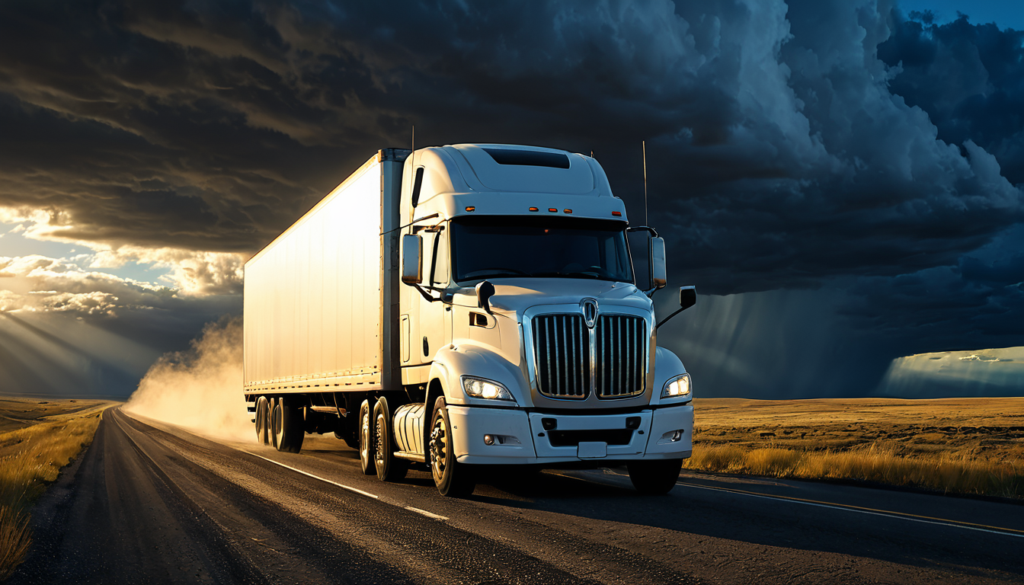
If you’ve been injured in an 18-wheeler accident on the Hi-Line or anywhere in Daniels County, you know how quickly life changes. One moment you’re traveling US-2 through the Golden Triangle wheat country, and the next, an 80,000-pound truck has turned your world upside down.
At Attorney911, we’ve spent over two decades fighting for families devastated by commercial trucking accidents. Ralph Manginello has been holding trucking companies accountable since 1998, and our team includes a former insurance defense attorney who knows exactly how companies try to minimize claims from rural Montana communities like Daniels County. We’ve recovered multi-million dollar settlements for traumatic brain injuries, spinal cord damage, and wrongful death cases—and we understand the unique challenges of litigating in Montana’s vast, weather-beaten landscape.
The clock is already ticking. Under Montana law, you have limited time to act, and critical evidence like ECM black box data could be overwritten within weeks. Call 1-888-ATTY-911 today for a free consultation. We work on contingency—you pay nothing unless we win your case.
Why 18-Wheeler Accidents in Daniels County, Montana Are Different
Daniels County isn’t like other places. When a truck crashes on the isolated stretches of US-2 or on the icy rural routes connecting Scobey to the oil fields, help isn’t always minutes away. The nearest Level I trauma center might be hours distant, requiring air medevac over vast prairie distances. That delay in medical care can affect both your health and your legal case.
The Physics of Rural Montana Truck Accidents
An 18-wheeler legally weighs up to 80,000 pounds. Your passenger vehicle weighs roughly 4,000 pounds. That twenty-to-one weight differential creates catastrophic forces on impact. On Daniels County’s rural highways—where speed limits are higher and emergency response times stretch longer—these accidents often result in more severe injuries than urban crashes.
Critical factors specific to Daniels County trucking accidents include:
- Extreme Weather Conditions: Black ice on US-2 during Montana’s brutal winters causes jackknife accidents. High winds across the plains can topple top-heavy grain trucks during wheat harvest. Sudden whiteout conditions lead to multi-vehicle pileups.
- Agricultural Traffic: During planting and harvest seasons, overloaded grain trucks crowd the narrow county roads, often operated by seasonal drivers unfamiliar with FMCSA hours-of-service regulations.
- Long-Haul Fatigue: Drivers traversing the Hi-Line corridor between Minnesota and Washington face monotonous stretches that induce highway hypnosis. When they drift across the centerline near Scobey or Whitetail, there’s often no median barrier to prevent a head-on collision.
- Limited Cell Service: In the remote reaches of Daniels County, witnesses may be unable to call 911 immediately, and critical evidence like dashcam footage from passing trucks may never be recovered.
Montana’s Legal Framework Affects Your Case
Montana gives you three years from the date of your accident to file a personal injury lawsuit (MCA § 27-2-204). That might sound generous compared to other states, but waiting is dangerous. Trucking companies begin protecting themselves immediately—sometimes dispatching rapid-response teams to the scene while you’re still being extracted from your vehicle.
Montana follows a modified comparative negligence rule with a 51% bar. This means you can recover damages if you’re 50% or less at fault, but your award is reduced by your percentage of fault. If a jury finds you 51% responsible, you recover nothing. This makes evidence preservation absolutely critical in Daniels County cases where fault might be disputed on icy roads or during whiteout conditions.
Federal Trucking Regulations That Protect Daniels County Drivers
Every 18-wheeler operating in Daniels County must comply with the Federal Motor Carrier Safety Administration (FMCSA) regulations codified in 49 CFR. When trucking companies violate these rules, they create the dangerous conditions that cause catastrophic accidents.
49 CFR Part 391—Driver Qualification Standards
Before a driver can legally operate a commercial vehicle on US-2 through Daniels County, they must meet strict federal qualifications. Motor carriers must maintain a Driver Qualification (DQ) File containing:
- Valid Commercial Driver’s License (CDL) verification
- Medical examiner’s certificate (maximum 24 months)
- Three-year driving history from previous employers (§ 391.23)
- Annual driving record reviews
- Pre-employment and random drug testing records
Why this matters for your case: If the truck driver who hit you lacked a valid medical certificate—crucial for detecting sleep apnea or cardiac issues that cause fatigue—we can prove negligent hiring against the trucking company.
49 CFR Part 395—Hours of Service (HOS) Violations
Fatigued driving causes approximately 31% of fatal truck crashes. Federal law limits property-carrying drivers to:
- 11 hours maximum driving after 10 consecutive hours off duty (§ 395.3)
- 14-hour maximum on-duty window—cannot drive beyond the 14th consecutive hour after coming on duty
- 30-minute break required after 8 cumulative hours of driving
- 60/70 hour weekly limits—cannot drive after 60/70 hours on duty in 7/8 consecutive days
Since December 2017, most trucks must use Electronic Logging Devices (ELDs) that automatically record driving time and location via GPS. This data proves whether the driver was violating hours-of-service rules while traversing Montana’s Hi-Line.
49 CFR Part 393—Vehicle Maintenance & Cargo Securement
Trucking companies must systematically inspect and maintain their fleet. Critical requirements include:
- Brake systems: Must meet minimum performance standards (§ 393.52). Brake problems factor into 29% of large truck crashes.
- Cargo securement: Tiedowns must withstand 0.8g deceleration forward and 0.5g laterally (§ 393.106). Improperly secured grain loads shift on curves, causing rollovers on county roads near Daniels County elevators.
- Tire safety: Minimum tread depth of 4/32″ on steering tires, 2/32″ on others (§ 393.75). Winter weather in Montana accelerates tire deterioration.
49 CFR Part 392—Safe Driving Practices
Drivers must operate with “extreme caution” in hazardous conditions (§ 392.14). When Montana Highway Patrol issues extreme weather warnings for northeastern Montana, truckers must reduce speed or pull off entirely. Failure to do so constitutes negligence.
Types of 18-Wheeler Accidents We See in Daniels County
We’ve handled virtually every type of trucking accident. Based on Montana’s geography and Daniels County’s agricultural economy, these accidents require specialized legal approaches:
Jackknife Accidents on Icy Highways
When a truck driver brakes suddenly on black ice covering US-2 near Whitetail, the trailer swings perpendicular to the cab, creating a deadly barrier across both lanes. These accidents often involve multiple vehicles and cause multi-million dollar damages. We investigate whether the driver was speeding for conditions or failed to properly brake, both violations of 49 CFR § 392.6.
Underride Collisions—The Most Fatal
When a smaller vehicle slides beneath the trailer of a grain truck on a dark section of rural highway, the roof of the passenger compartment is often sheared off. Federal law requires rear impact guards (§ 393.86), but many trailers lack side underride guards. These accidents are almost always fatal or result in catastrophic brain and spinal injuries.
Rollover Accidents on County Roads
The oil boom in eastern Montana brings heavy equipment trucks onto narrow county roads never designed for 80,000-pound loads. When these trucks take curves too quickly near Scobey or during sudden avoidance maneuvers, they roll, crushing smaller vehicles. We examine cargo securement records and loading documents to determine if improper weight distribution caused the rollover.
Rear-End Collisions
A fully loaded truck requires 525 feet to stop from 65 mph—nearly two football fields. When distracted or fatigued drivers fail to maintain proper following distance on US-2 (violating § 392.11), they slam into smaller vehicles with devastating force. We download ECM data to prove their speed and reaction time at the moment of impact.
Wide Turn Accidents
Tractor-trailers require enormous space to turn right. When drivers swing wide on narrow streets in Scobey without checking their right-side blind spot, they crush passenger vehicles in the “squeeze play.” These accidents often involve serious crushing injuries and amputations.
Tire Blowouts
Extreme summer heat on Montana’s highways causes tire failures. When a steer tire blows at highway speed, the driver loses immediate control. We examine maintenance records to prove the trucking company violated § 396.3 by failing to maintain safe equipment.
All Liable Parties in Your Daniels County Truck Accident
Unlike car accidents where usually only one driver is at fault, commercial trucking accidents involve multiple potentially liable parties. We investigate every avenue to maximize your recovery:
1. The Truck Driver
Direct negligence includes speeding, distracted driving (violating § 392.82 by using a handheld mobile phone), fatigued driving, or operating under the influence. We subpoena their cell phone records and ELD logs.
2. The Trucking Company (Motor Carrier)
Under respondeat superior, employers are liable for their employees’ negligent acts. Additionally, we pursue direct negligence claims for:
- Negligent hiring: Failing to verify the driver had a valid CDL or clean driving record
- Negligent training: Inadequate winter weather driving instruction
- Negligent maintenance: Skipping brake inspections to save money (§ 396.3)
- Negligent scheduling: Pressuring drivers to violate HOS regulations to meet delivery deadlines
3. Cargo Owners and Loaders
When grain elevators or oil companies overload trucks beyond capacity, or fail to properly secure cargo, they create rollover hazards. Under 49 CFR § 393.100, cargo must be secured to prevent shifting that affects vehicle stability.
4. Truck and Parts Manufacturers
Defective brake systems, tires prone to blowouts, or faulty steering mechanisms cause accidents even when drivers operate carefully. We retain engineering experts to analyze failed components.
5. Maintenance Companies
Third-party mechanics who negligently repair brakes or return trucks to service with known safety violations share liability for resulting crashes.
6. Freight Brokers
Brokers who arrange transportation but fail to verify carrier safety records or insurance status may be liable for negligent selection.
7. Government Entities
When Montana DOT fails to maintain US-2 adequately—leaving massive potholes that cause trucks to lose control, or failing to post adequate warnings for sharp curves—government liability may apply, though sovereign immunity limitations and strict notice requirements apply under Montana law.
The 48-Hour Evidence Crisis in Rural Montana
In Daniels County, evidence disappears faster than you might think. While you’re recovering at Northern Montana Hospital or being airlifted to Great Falls, the trucking company is already building its defense.
Critical timeline threats:
- ECM/Black Box Data: Overwrites in 30 days or with subsequent driving events. This data contains objective proof of speed, braking, and throttle position.
- ELD Records: FMCSA only requires 6-month retention, but trucking companies may delete sooner.
- Dashcam Footage: Often recorded over within 7-14 days.
- Witness Statements: In rural Montana, witnesses may be transient oil workers or harvest hands who leave the area quickly.
- Physical Evidence: Rural tow yards may repair or scrap the truck before we can inspect it.
We Act Immediately
When you call 1-888-ATTY-911, we send spoliation letters within 24 hours demanding preservation of:
- All ECM and ELD data
- Driver Qualification Files
- Maintenance and inspection records
- Drug and alcohol testing results
- Dispatch records showing the driver was pressured to hurry
Sending these letters creates serious legal consequences if the trucking company destroys evidence afterward, including adverse inference instructions to the jury.
Catastrophic Injuries and Your Recovery
The sheer physics of 18-wheeler accidents causes catastrophic injuries requiring millions in lifetime care:
Traumatic Brain Injury (TBI): Our firm has recovered between $1.5 million and $9.8 million for TBI victims. Symptoms include memory loss, personality changes, and chronic headaches that may not appear immediately.
Spinal Cord Injury: Paraplegia and quadriplegia cases typically settle between $4.7 million and $25.8 million due to lifetime care costs, home modifications, and lost earning capacity.
Amputations: Crush injuries requiring limb removal result in settlements ranging from $1.9 million to $8.6 million, accounting for prosthetics, rehabilitation, and psychological trauma.
Severe Burns: Fuel fires from tanker accidents cause disfigurement requiring multiple skin grafts and reconstructive surgeries.
Wrongful Death: When negligence takes a loved one, Montana families have recovered between $1.9 million and $9.5 million for lost income, loss of consortium, and mental anguish.
As client Glenda Walker told us, “They fought for me to get every dime I deserved.” We bring that same tenacity to every Daniels County case.
Montana Truck Insurance Requirements
Federal law mandates that commercial carriers maintain substantial insurance coverage:
- $750,000 minimum for non-hazardous freight
- $1,000,000 minimum for oil and large equipment (relevant to Bakken oilfield trucks transiting Daniels County)
- $5,000,000 minimum for hazardous materials
This coverage far exceeds typical car insurance policies, meaning catastrophic injuries can actually receive full compensation—if you have an attorney who knows how to access these policies.
Montana Punitive Damages: When trucking companies act with conscious disregard for safety—such as knowingly hiring drivers with DUI histories or falsifying maintenance records—Montana allows punitive damages up to the greater of $10 million or 3% of the defendant’s net worth (MCA § 27-1-220). These damages punish wrongdoing and deter future negligence.
Frequently Asked Questions About Daniels County Truck Accidents
How long do I have to file a lawsuit in Montana?
You have three years from the accident date to file a personal injury lawsuit in Daniels County (MCA § 27-2-204). However, waiting endangers evidence. Contact us immediately.
What if I was partially at fault for the accident?
Montana uses modified comparative negligence. You can recover if you’re 50% or less at fault, but your award is reduced by your fault percentage. If you’re found 51% responsible, you recover nothing. This makes accident reconstruction and ECM data critical.
Should I talk to the trucking company’s insurance adjuster?
Never. Adjusters are trained to minimize your claim. Anything you say—especially while recovering from trauma—can be used against you. As client Chad Harris said, “You are NOT just some client… You are FAMILY to them.” We handle all communications so you can focus on healing.
What if the truck driver was an independent owner-operator?
Both the driver and the motor carrier they were leased to may carry separate insurance policies. We identify all available coverage.
Can I afford an attorney?
Absolutely. We work on contingency—33.33% pre-trial, 40% if trial is necessary. You pay zero upfront costs. We advance all investigation expenses. If we don’t win, you owe us nothing.
Hablamos Español?
Sí. Associate attorney Lupe Peña provides fluent Spanish representation without interpreters. Llame al 1-888-ATTY-911 hoy mismo.
Why Choose Attorney911 for Your Daniels County Case
Experience That Matters: Ralph Manginello has fought for injury victims since 1998. He’s admitted to federal court and has litigated against Fortune 500 corporations like BP in the Texas City Refinery explosion. That federal experience allows us to handle interstate trucking cases throughout Montana.
Insurance Insider Knowledge: Lupe Peña worked for national insurance defense firms before joining Attorney911. He knows their playbook—their delay tactics, their “lowball first offer” strategies, and how they use software like Colossus to undervalue your pain. Now he uses that knowledge against them.
Proven Results: We’ve recovered over $50 million for clients, including a $5+ million settlement for a traumatic brain injury victim and a $3.8+ million recovery for an amputation case. We’re currently litigating a $10 million lawsuit against a major university for hazing injuries, demonstrating our capacity for complex, high-stakes litigation.
Personal Attention: We’re not a billboard factory. Client Donald Wilcox was turned down by another firm before we took his case and delivered what he called “a handsome check.” Mongo Slade noted he “got a very nice settlement” and praised our prompt attention.
Available 24/7: When disaster strikes on a lonely stretch of US-2 at 2 AM, we’re available. Call 1-888-288-9911 any time.
Your Next Steps
The trucking company that hit you has already called their lawyers. Their insurance adjuster is already looking for ways to minimize your claim. While you’re coping with medical bills, lost wages, and the trauma of the accident, they’re building their defense.
Don’t wait. In Daniels County’s harsh environment, evidence fades as fast as a prairie winter sunset.
Call 888-ATTY-911 now for your free consultation. We’ll evaluate your case, explain your rights under Montana law, and if you choose to hire us, we’ll send preservation letters immediately to protect the evidence that will prove your case.
You didn’t ask for this fight. But with Attorney911 in your corner, you’ll have a team that’s won multi-million dollar verdicts against the largest trucking companies in America. We’ll fight for every dime you deserve—because to us, you’re family.
Attorney911 / The Manginello Law Firm, PLLC