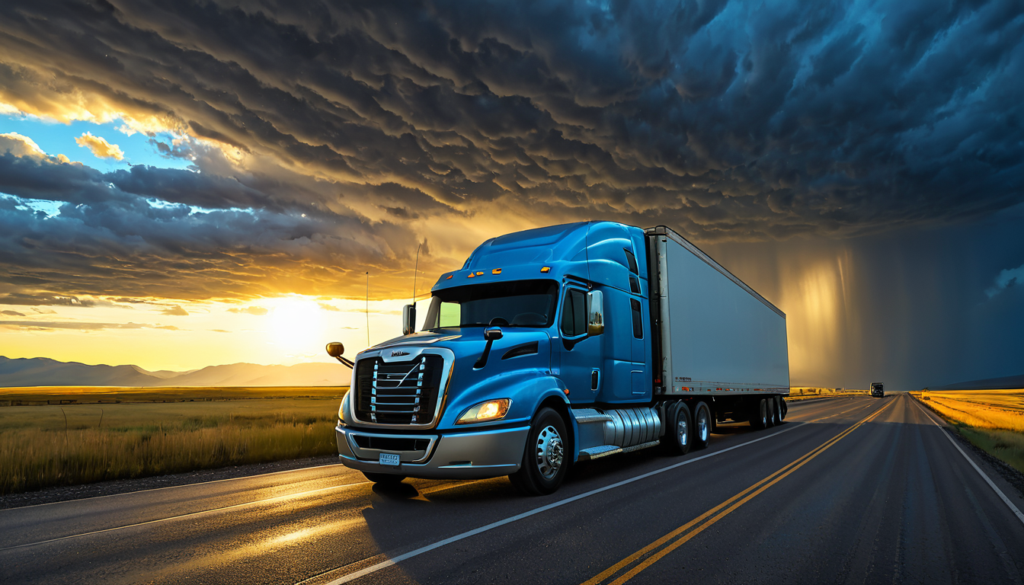
Gallatin County Montana 18-Wheeler Accident Attorneys: When 80,000 Pounds Changes Everything
The impact was catastrophic. One moment you’re driving through Gallatin County on your way to Bozeman or heading west toward Belgrade, and the next, an 80,000-pound commercial truck has jackknifed across the interstate or blown through a stop sign at the junction of US-191 and I-90. In that instant, everything changes—your health, your ability to work, your family’s security, and your future.
We see it too often in Gallatin County. While our community boasts some of Montana’s most beautiful landscapes—from the Bridger Mountains to the Gallatin River—the same highways that bring tourists to Yellowstone and commerce to Bozeman also carry massive commercial trucks. When those trucks cause accidents, the results are devastating. We’re talking about traumatic brain injuries, spinal cord damage, and fatalities that leave Gallatin County families shattered.
Since 1998, Ralph Manginello has been fighting for trucking accident victims across the country. With over 25 years of experience, federal court admission to the Southern District of Texas, and multi-million dollar verdicts against Fortune 500 companies, our firm knows exactly what it takes to hold negligent trucking companies accountable. And right now, if you’ve been hurt in an 18-wheeler crash anywhere in Gallatin County—whether you were on I-90 near the Bozeman Pass, traveling US-191 through the valley, or heading to work in Belgrade—you need that experience on your side immediately.
Don’t wait. Evidence disappears fast in these cases. That truck’s black box data? It can be overwritten in 30 days. The driver’s cell phone records? They get purged. Witness memories fade. And you can bet the trucking company’s rapid-response team is already building their defense. Call us now at 1-888-ATTY-911 or (888) 288-9911. We answer Gallatin County calls 24/7, and there’s no fee unless we win.
Why 18-Wheeler Accidents in Gallatin County Are Different
Let’s be blunt: a collision with an 18-wheeler isn’t a “car accident.” It’s a catastrophic event. The physics alone make these cases fundamentally different from standard fender-benders on North 7th Avenue.
The Weight Disparity:
A fully loaded semi-truck weighs up to 80,000 pounds. Your average passenger vehicle weighs around 4,000 pounds. That means the truck hitting you carries 20 times the mass. At highway speeds on I-90 through Gallatin County, that translates to roughly 80 times the kinetic energy of your car.
The Stopping Distance:
On a clear day on flat pavement, a truck traveling at 65 mph needs approximately 525 feet to stop—that’s nearly two football fields. Now factor in Gallatin County’s realities: black ice on the Bozeman Pass in January, sudden whiteouts near West Yellowstone, or a September hailstorm on US-191. In those conditions, that stopping distance doubles or triples.
The Regulatory Complexity:
Unlike car accidents governed largely by state law, 18-wheeler crashes involve massive federal regulations from the Federal Motor Carrier Safety Administration (FMCSA). These rules—codified in 49 CFR Parts 390 through 399—govern everything from how long a driver can stay behind the wheel to how often brakes must be inspected. When trucking companies violate these regulations in Gallatin County, they create the dangerous conditions that cause catastrophic crashes.
The Corporate Defense Machinery:
Within hours of a serious truck accident on I-90 or US-191, the trucking company dispatches its own team of investigators and attorneys to Gallatin County. Their sole job? Minimize the company’s liability. They’re photographing the scene, coaching the driver, and looking for ways to blame you—all while you’re still in the hospital at Bozeman Health Deaconess Hospital or being treated in Belgrade.
That’s why you need a team that fights back immediately. At Attorney911, we don’t just “handle” trucking cases—we specialize in them. Our managing partner, Ralph Manginello, has spent over two decades taking on the largest trucking companies in America, and our associate attorney Lupe Peña used to work for insurance companies defending these exact claims. Now he uses that insider knowledge to fight for Gallatin County victims like you.
Gallatin County’s Unique 18-Wheeler Accident Risks
We know Gallatin County’s roads because we’ve helped families here before. From the agricultural operations near Three Forks to the heavy tourist traffic heading to Big Sky and Yellowstone, our county presents specific dangers that contribute to trucking accidents.
Mountain Weather Extremes:
Gallatin County isn’t flat. Whether you’re climbing toward the Bozeman Pass on I-90 or navigating the curves of US-191 toward the park, you’re dealing with elevation changes that affect truck performance. Brake fade on long descents kills. In winter, temperatures regularly drop below zero, creating black ice that can send an 80,000-pound truck into a jackknife in seconds. The Gallatin County Sheriff’s Office and Montana Highway Patrol regularly close I-90 during severe storms, but truckers facing delivery deadlines often push through anyway—violating the FMCSA regulation that requires drivers to adjust speed for weather conditions under 49 CFR § 392.14.
Wildlife Corridors:
Montana leads the nation in wildlife-vehicle collisions. In Gallatin County, we’re talking about elk, deer, and even moose on the highways—particularly at dawn and dusk. When a truck swerves to avoid an elk near the Spanish Peaks, the result is often a rollover or a jackknife that shuts down the interstate for hours. Was the driver going too fast for conditions? Were they fatigued from driving the maximum 11 hours allowed under federal Hours of Service regulations? We investigate these questions immediately.
Mixed Traffic Patterns:
I-90 through Gallatin County serves as a critical east-west corridor connecting Seattle to Boston. You’ve got long-haul truckers mixing with local agricultural traffic—hay trucks, cattle haulers, and equipment transport—all converging on Bozeman and Belgrade. Additionally, the seasonal influx of tourists unfamiliar with mountain driving creates unpredictable conditions that professional truckers must navigate safely. When they don’t, and when they violate 49 CFR § 392.6 by driving faster than prudent for traffic conditions, devastating T-bone and rear-end collisions occur at intersections like Jackrabbit Lane and I-90.
Agricultural and Tourism Freight:
Gallatin County’s economy depends on agriculture and tourism. That means specialized trucking—everything from heavy equipment for the construction boom in Bozeman to refrigerated goods for the restaurants serving Montana State University students. Improperly secured cargo (violating 49 CFR § 393.100-136) or overweight trucks (violating axle weight limits) create instability that kills Gallatin County residents.
The 18-Wheeler Accident Types We Handle in Gallatin County
We’ve represented victims of virtually every type of commercial truck accident across Montana. In Gallatin County, we see specific patterns based on our geography and climate.
Jackknife Accidents on I-90
The Bozeman Pass and the stretch of I-90 through Gallatin Canyon are notorious for jackknife accidents—when a truck’s trailer swings perpendicular to the cab, creating an impenetrable wall of steel across the highway. These accidents often occur when:
- A driver brakes suddenly on black ice (violating 49 CFR § 392.14 regarding speed for conditions)
- The trailer is empty or lightly loaded, making it more prone to swing
- Brake systems are improperly maintained (violating 49 CFR § 396.3)
- Drivers lack training on mountain driving techniques
Jackknife accidents in Gallatin County frequently lead to multi-vehicle pileups on the interstate, with the truck blocking all lanes. Injuries include crushing trauma, traumatic brain injuries, and fatalities.
Rollover Accidents on Mountain Grades
The elevation changes throughout Gallatin County—particularly on US-191 heading toward Big Sky or I-90 approaching the Continental Divide—create rollover risks. An 18-wheeler’s high center of gravity makes it susceptible to tipping when:
- Drivers take curves too fast (violating the basic safety requirement of 49 CFR § 392.6)
- Cargo shifts due to improper securement (49 CFR § 393.100)
- Liquid cargo “sloshes,” changing the center of gravity
- Drivers overcorrect and then overcorrect again, causing the truck to flop
Rollovers in Gallatin County often result in the truck sliding down embankments or blocking scenic byways, causing secondary accidents as other drivers slam on brakes.
Underride Collisions
Perhaps the most horrific Gallatin County trucking accidents involve underride collisions—when a passenger vehicle strikes the side or rear of a trailer and slides underneath. The top of the passenger compartment gets sheared off. These accidents frequently occur:
- At night on I-90 when visibility is poor
- During Montana’s frequent fog events in the Gallatin Valley
- When trucks make wide turns at rural intersections without proper underride guards
Federal regulations under 49 CFR § 393.86 require rear impact guards on trailers, but many are poorly maintained or inadequate. Side underride guards aren’t federally mandated yet, which is why we aggressively pursue trucking companies and trailer manufacturers when these crashes occur near Belgrade or Three Forks.
Rear-End Collisions
Following distances matter on Montana highways. A truck traveling 65 mph needs 525 feet to stop—far more than a car. When truck drivers follow too closely (violating 49 CFR § 392.11) or are distracted by cell phones or dispatch devices (violating 49 CFR § 392.82), they can’t stop in time when traffic slows on I-90 near the Bozeman exit or when a vehicle turns onto US-191 from a side road.
Rear-end collisions with 18-wheelers often result in catastrophic injuries to vehicle occupants: whiplash, spinal cord injuries, traumatic brain injuries from the head striking the steering wheel, and fatalities.
Brake Failure Accidents
We see brake failure cases frequently in Gallatin County, particularly on long descents like the Bozeman Pass. Federal regulations under 49 CFR § 393.40 require functioning brake systems on all commercial vehicles. Yet trucking companies defer maintenance to save money, leading to:
- Worn brake shoes and pads
- Improper brake adjustment
- Overheated brakes causing “brake fade”
- Complete brake system failure
When an 80,000-pound truck can’t stop approaching the stoplight at Main Street and I-90 in Bozeman, the results are devastating.
Cargo Spills and Hazmat Incidents
Gallatin County’s agricultural economy means trucks carry everything from fertilizer to livestock. When cargo spills—whether it’s a load of hay bales on US-191 or chemicals tipping over near the Gallatin River—it creates immediate hazards. Improperly secured cargo violates 49 CFR § 393.100-136, and when that cargo contains hazardous materials, the trucking company faces strict liability under federal hazmat regulations (49 CFR Part 397).
Wide Turn Accidents (“Squeeze Play”)
In downtown Bozeman or at the busy intersections in Four Corners, 18-wheelers need massive space to turn. When truck drivers swing wide without proper signaling or fail to check their blind spots (violating 49 CFR § 392.11), they crush smaller vehicles in the “squeeze play.” These accidents are particularly dangerous for motorcycles and bicycles, which are common in Gallatin County during warmer months.
Tire Blowouts
The temperature fluctuations in Gallatin County—from 90°F summer days to 40°F nights—stress truck tires. Underinflated tires overheat, especially on long hauls across I-90. When a steer tire blows at 75 mph, the driver loses control instantly. “Road gators”—strips of shredded tire—create hazards for following vehicles. Federal regulations under 49 CFR § 393.75 require minimum tread depths and proper tire maintenance, but many carriers ignore these rules to save on replacement costs.
Head-On Collisions
Fatigued driving causes head-on collisions when truckers drift across the centerline on two-lane highways like Montana Highway 86 or sections of US-191. Federal Hours of Service regulations (49 CFR Part 395) limit drivers to 11 hours of driving time, yet economic pressure leads to logbook violations and drowsy driving. When a truck crosses into oncoming traffic near Manhattan or Willow Creek, the closing speed often exceeds 120 mph, resulting in fatalities.
Who Can Be Held Liable in Your Gallatin County Truck Accident?
Unlike car accidents where usually only one driver is at fault, 18-wheeler crashes involve multiple potentially liable parties. We investigate every angle to maximize your recovery because in Gallatin County, one insurance policy is rarely enough to cover catastrophic injuries.
1. The Truck Driver
We examine whether the driver was:
- Speeding for conditions (violating 49 CFR § 392.6)
- Fatigued beyond legal limits (49 CFR Part 395)
- Distracted by cell phones (49 CFR § 392.82)
- Impaired by drugs or alcohol (49 CFR § 392.4-5)
- Properly licensed and medically certified (49 CFR Part 391)
2. The Trucking Company (Motor Carrier)
Trucking companies are often the primary defendants because they carry the highest insurance limits ($750,000 to $5 million under federal law). They’re liable under “respondeat superior”—the legal doctrine that holds employers responsible for employees’ negligent acts. Additionally, we look for:
- Negligent Hiring: Did the company check the driver’s background and safety record? Under 49 CFR § 391.51, they must maintain a Driver Qualification File.
- Negligent Training: Did the driver receive training on mountain driving specific to Gallatin County’s conditions?
- Negligent Maintenance: Did they skip brake inspections to save money (violating 49 CFR § 396.3)?
- Pressured Schedules: Did dispatchers push the driver to violate Hours of Service rules to meet delivery deadlines?
3. The Cargo Owner and Loading Company
When a load shifts causing a rollover on I-90, the company that loaded the cargo may be liable. We examine bills of lading, loading contracts, and whether the cargo was properly secured per 49 CFR § 393.100-136. Overweight loads common in agricultural hauls can also create liability for the shipper.
4. Truck and Parts Manufacturers
Defective brakes, steering systems, or tires cause accidents regardless of driver skill. If a component failed on a truck traveling through Gallatin County, we pursue the manufacturer under product liability theories. This includes examining recall notices and similar failure patterns.
5. Maintenance Companies
Third-party maintenance shops that service fleets traveling through Bozeman may be liable for negligent repairs. We examine work orders and mechanic qualifications when brake failures or wheel separations occur.
6. Freight Brokers
Brokers who arrange transportation but don’t own the trucks may be liable for negligent carrier selection. Did they hire a carrier with a poor safety record to haul goods to the Costco in Bozeman or the hotels in Big Sky? We examine CSA (Compliance, Safety, Accountability) scores and insurance verification.
7. Government Entities
When poor road design or maintenance contributes to accidents—such as inadequate signage on the approaches to the Bozeman Pass or failure to address known hazardous zones on US-191—government entities may share liability. Montana has specific notice requirements for claims against state and county governments, making immediate legal consultation critical.
Federal Regulations That Protect Gallatin County Drivers
The FMCSA regulations exist to prevent exactly the types of crashes we see in Gallatin County. When trucking companies violate these rules, they create liability that strengthens your case. Here are the key regulations we cite:
49 CFR Part 390 – General Applicability
Establishes that all commercial motor vehicles (CMVs) over 10,001 pounds operating in interstate commerce must comply with federal safety standards. This includes most trucks traveling I-90 through Gallatin County.
49 CFR Part 391 – Driver Qualification
Requires trucking companies to verify that drivers:
- Are at least 21 years old
- Can read and speak English (critical for safety on Gallatin County roads)
- Hold valid Commercial Driver’s Licenses (CDL)
- Pass physical examinations every 24 months (or less if medically required)
- Have clean driving records (verified through annual reviews)
We subpoena the Driver Qualification File for any trucker involved in your Gallatin County accident. Missing documentation proves negligent hiring.
49 CFR Part 392 – Driving Rules
Prohibits:
- Operating while fatigued or ill (§ 392.3)
- Using hand-held mobile phones while driving (§ 392.82)
- Driving faster than safe for conditions (§ 392.6) – crucial during Montana winters
- Following too closely (§ 392.11)
49 CFR Part 393 – Parts and Accessories
Mandates:
- Brake systems must function properly (§ 393.40-55)
- Tires must have minimum tread depth (4/32″ steer tires, 2/32″ others) (§ 393.75)
- Cargo must be secured to withstand 0.8g deceleration forward and 0.5g laterally (§ 393.102)
- Lighting and reflectors must work (§ 393.11-26)
49 CFR Part 395 – Hours of Service
Limits driving time to prevent fatigue:
- Maximum 11 hours driving after 10 consecutive hours off-duty
- 14-hour on-duty window (cannot drive beyond the 14th hour)
- 30-minute break required after 8 hours of driving
- 60/70 hour weekly limits
- Electronic Logging Device (ELD) mandate since December 2017
ELD data is crucial evidence—it shows exactly when the driver was moving and whether they violated rest requirements while traversing Montana.
49 CFR Part 396 – Inspection and Maintenance
Requires:
- Pre-trip inspections by drivers (§ 396.13)
- Post-trip inspection reports (§ 396.11)
- Annual inspections by qualified mechanics (§ 396.17)
- Systematic maintenance records kept for 14 months
When we find deferred maintenance—brakes adjusted beyond limits, worn tires, or ignored defects—you have a strong case for punitive damages.
The 48-Hour Evidence Protocol: Why Time Is Critical
If you’re reading this shortly after a crash in Gallatin County, understand this: The trucking company is already working against you. They have rapid-response teams that arrive at the scene before the ambulance leaves. Evidence that could prove your case disappears fast:
ECM/Black Box Data: Overwrites in 30 days or less. This data shows speed, braking, and whether the driver exceeded the 11-hour limit.
ELD Records: Only required to be kept for 6 months. After that, federal law allows destruction.
Dashcam Footage: Often deleted within 7-14 days unless preservation is demanded.
Driver Qualification Files: Can be “updated” to hide previous violations.
Physical Evidence: The truck gets repaired or sold, obscuring mechanical defects.
That’s why we send spoliation letters within 24 hours of being retained. These legal notices put the trucking company on notice that destroying evidence will result in court sanctions, adverse jury instructions, and potentially punitive damages.
We also immediately:
- Download ECM and ELD data before it disappears
- Photograph the truck’s maintenance condition before repairs
- Interview witnesses while memories are fresh
- Subpoena cell phone records to prove distracted driving
- Obtain the driver’s entire safety history from FMCSA databases
In Gallatin County, where winter weather can destroy physical evidence and tourists who witness accidents leave the state quickly, immediate action isn’t just important—it’s everything.
Catastrophic Injuries: The Real Cost of Gallatin County Truck Accidents
The injuries from 18-wheeler accidents in Gallatin County aren’t sprains and strains. They’re life-altering catastrophic injuries that require millions of dollars in lifetime care.
Traumatic Brain Injuries (TBI)
When an 80,000-pound truck strikes your vehicle, your brain collides with the inside of your skull even if your head doesn’t hit the windshield. TBI symptoms include memory loss, personality changes, cognitive deficits, and inability to work. Our firm has recovered $1.5 million to $9.8 million for TBI victims, because these injuries often require lifetime care.
Spinal Cord Injuries and Paralysis
The forces involved in Gallatin County truck accidents—particularly rollovers and underride collisions—frequently sever spinal cords. Paraplegia and quadriplegia require wheelchairs, home modifications, and 24-hour care. Lifetime costs often exceed $4.7 million to $25.8 million, which is why we aggressively pursue every available insurance policy.
Amputations
Crushing injuries from underride accidents or rollover impacts often require surgical amputation of limbs. Beyond the initial surgery, victims need prosthetics ($5,000-$50,000 each, replaced every few years), rehabilitation, and psychological counseling. We’ve secured $1.9 million to $8.6 million for amputation cases.
Severe Burns
Fuel fires and hazmat spills on I-90 cause disfiguring burns requiring skin grafts, plastic surgery, and lifelong pain management.
Wrongful Death
When a Gallatin County family loses a loved one to a negligent truck driver—whether it’s a parent commuting to the university, a teenager driving to school in Bozeman, or a retiree traveling to Yellowstone—we pursue $1.9 million to $9.5 million settlements to cover lost income, loss of companionship, funeral expenses, and punitive damages when appropriate.
Montana Law: Your Rights as a Gallatin County Accident Victim
Understanding Montana law is crucial for Gallatin County cases. Unlike some states with short deadlines, Montana provides reasonable timeframes, but waiting is still dangerous for evidence preservation.
Statute of Limitations
In Montana, you have three years from the date of the accident to file a personal injury lawsuit. For wrongful death claims, you also have three years from the date of death. While this seems generous compared to Louisiana’s one-year limit, evidence disappears long before the deadline.
Comparative Negligence: The 51% Bar Rule
Montana follows a “modified comparative negligence” system. You can recover damages if you are 50% or less at fault for the accident. If you’re 51% or more responsible, you recover nothing. Your compensation is reduced by your percentage of fault.
This is critical in Gallatin County truck accidents because insurance companies try to blame victims immediately—claiming you were speeding, following too closely, or didn’t avoid the collision. We counter these arguments with ECM data, accident reconstruction, and FMCSA violations that put the blame where it belongs: on the trucking company.
Punitive Damages
Montana caps punitive damages at the greater of $10 million or 3% of the defendant’s net worth. We seek punitive damages when trucking companies:
- Knowingly hired dangerous drivers with prior DUI convictions
- Destroyed evidence (spoliation)
- Falsified logbooks to hide Hours of Service violations
- Continued operating trucks with known safety defects
Damage Caps
Unlike some states, Montana does not cap non-economic damages (pain and suffering) in trucking accident cases. However, punitive damages face the limits mentioned above.
Why Gallatin County Chooses Attorney911
You have choices for legal representation in Gallatin County. Here’s why families from Bozeman to West Yellowstone trust us after catastrophic truck accidents:
Ralph Manginello: 25+ Years of Federal Court Experience
Ralph Manginello has been fighting for injury victims since 1998. He’s admitted to the State Bar of Texas (Bar #24007597) and the U.S. District Court for the Southern District of Texas. This federal admission matters because many trucking cases involve interstate commerce and can be filed in federal court, where Ralph has experience.
But credentials are just the start. Ralph has gone toe-to-toe with the largest corporations on earth. Our firm was involved in the BP Texas City Refinery explosion litigation—the 2005 disaster that killed 15 workers and resulted in over $2.1 billion in industry-wide settlements. When the world’s biggest companies need to be held accountable, our firm knows how to do it.
We’re currently litigating a $10 million hazing lawsuit against the University of Houston and Pi Kappa Phi fraternity—demonstrating our ability to handle complex, high-stakes litigation against institutional defendants with deep resources.
Lupe Peña: The Insurance Defense Advantage
Most personal injury firms have never sat on the other side of the table. We have. Associate attorney Lupe Peña spent years working at a national insurance defense firm. He knows exactly how trucking insurers evaluate claims, train adjusters to minimize payouts, and use software like Colossus to lowball victims.
Now he uses that insider knowledge for you. When the insurance company for the truck that hit you on I-90 makes a offer, Lupe knows if it’s fair or if they’re bluffing. He knows their playbook because he helped write it.
Lupe is also fluent in Spanish. Hablamos Español. Llame al 1-888-ATTY-911.
Multi-Million Dollar Track Record
We’ve recovered over $50 million for injury victims. Specific results include:
- $5+ million for a traumatic brain injury victim struck by a falling log
- $3.8+ million for a car accident victim who suffered a partial leg amputation
- $2.5+ million for a commercial truck crash victim
- $2+ million for a maritime worker with a back injury under the Jones Act
- Multiple multi-million dollar settlements for 18-wheeler accidents resulting in traumatic brain injuries (ranging from $1.5 million to $9.8 million), amputations ($1.9 million to $8.6 million), and wrongful death ($1.9 million to $9.5 million)
Three Offices, One Mission
With offices in Houston (1177 West Loop S, Suite 1600), Austin (316 West 12th Street, Suite 311), and Beaumont, we have the geographic reach to handle Gallatin County cases while maintaining the personal touch of a boutique firm. We aren’t a faceless “settlement mill.” When you call Attorney911, you get Ralph’s cell phone number.
4.9 Stars and 251+ Reviews
Our clients say it better than we can. Donald Wilcox told us: “One company said they would not accept my case. Then I got a call from Manginello… I got a call to come pick up this handsome check.” Glenda Walker said we “fought for me to get every dime I deserved.” And Chad Harris put it simply: “You are NOT just some client… You are FAMILY to them.”
That’s the difference. We don’t see you as a case number—we see you as a Neighbor who needs help.
Frequently Asked Questions: Gallatin County 18-Wheeler Accidents
How much time do I have to file a lawsuit after a truck accident in Gallatin County?
Montana law gives you three years from the accident date. But waiting is dangerous. Black box data overwrites in 30 days, and witnesses disappear. Call immediately.
Can I recover damages if I was partially at fault?
Yes, as long as you were 50% or less at fault. Under Montana’s modified comparative negligence rule, your recovery is reduced by your fault percentage, but you can still receive substantial compensation.
Who pays for my medical bills while the case is pending?
We work with medical providers who treat patients under a Letter of Protection (LOP)—meaning they get paid when you settle. Don’t let lack of insurance stop you from getting treatment at Bozeman Health or other providers.
How much is my Gallatin County truck accident case worth?
It depends on injury severity, medical costs, lost wages, and insurance limits. Trucking companies carry $750,000 to $5 million in coverage. Catastrophic TBI cases can reach millions; wrongful death cases often exceed $1.9 million.
What if the trucking company is from out of state?
That’s common on I-90. We can sue them in Montana federal court or state court. Ralph Manginello’s federal court admission allows us to handle these interstate cases seamlessly.
Will my case go to trial?
Most settle, but we prepare every case for trial. Insurance companies offer more when they know your lawyer will go to court if necessary. We’re ready if they don’t offer fair value.
What if the truck driver was an independent contractor?
Liability still exists. We examine the lease agreements and whether the trucking company controlled the driver’s work. Often, both the driver and company are liable.
How long until I get paid?
Straightforward cases settle in 6-12 months. Complex cases with severe injuries may take 18-36 months. We move as fast as possible while maximizing your recovery.
Do you handle cases where the trucking company denies responsibility?
Absolutely. That’s our job. We gather the ECM data, ELD logs, and FMCSA violation evidence to prove negligence even when they claim innocence.
Can I afford a lawyer?
Yes. We work on contingency—33.33% if settled pre-trial, 40% if we go to trial. You pay nothing upfront. We advance all costs. If we don’t win, you owe nothing.
Call the Gallatin County 18-Wheeler Accident Lawyers Who Fight to Win
The trucking company that hit you or your loved one has already called their lawyers. Their insurance adjuster is already looking for ways to pay less. The evidence is disappearing with every passing day.
You need a team that understands Gallatin County’s unique challenges—the mountain passes, the winter weather, the agricultural traffic, and the long-haul corridors that bring dangerous trucks through our beautiful county. You need Ralph Manginello’s 25+ years of experience. You need Lupe Peña’s insider knowledge of insurance defense tactics. You need a firm that treats you like family, not a number.
One call sets you on the path to justice. One call preserves the evidence that proves your case. One call connects you with attorneys who have recovered multi-million dollar verdicts and settlements for families devastated by trucking accidents.
Call Attorney911 now at 1-888-ATTY-911 or (888) 288-9911. Available 24/7 for Gallatin County emergencies. Hablamos Español—pregunte por Lupe Peña.
Don’t let them get away with it. Don’t settle for less than you deserve. Don’t wait until the evidence is gone.
Gallatin County residents deserve justice. We deliver.
Attorney911 / The Manginello Law Firm, PLLC
Houston | Austin | Beaumont
Serving Gallatin County, Montana and nationwide
Disclaimer: Past results do not guarantee future outcomes. Every case is unique. Contact us today to discuss the specifics of your Gallatin County 18-wheeler accident case.