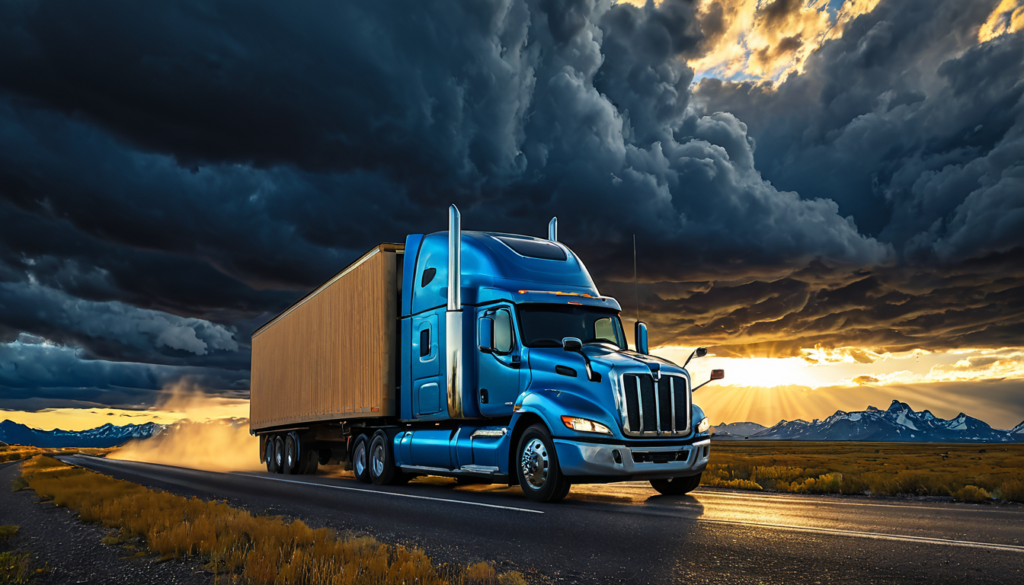
18-Wheeler Accident Attorneys in Teton County, Montana
When 80,000 Pounds Changes Everything
The Rocky Mountain Front cuts a jagged line across the horizon, and you’re driving US-89 through Teton County when it happens. An 18-wheeler carrying hay bales or fracking equipment loses traction on black ice. Maybe it’s a cattle truck coming down from the Highwood Mountains, brakes smoking on the grade. Perhaps it’s a flatbed loaded with agricultural equipment swinging wide on a county road near Choteau.
One moment you’re navigating Montana’s big sky and open roads. The next, your family’s sedan is crushed against 80,000 pounds of steel.
If you’ve been hurt in an 18-wheeler accident anywhere in Teton County—from the ranchlands near Dutton to the mountain passes near Augusta—you need more than a lawyer. You need a team that knows how to fight trucking companies and win. Ralph Manginello has spent over 25 years taking on commercial carriers and Fortune 500 corporations. He’s admitted to the U.S. District Court, fought BP in the Texas City explosion litigation, and recovered multi-million dollar settlements for families just like yours. Now he’s ready to fight for you.
Call 1-888-ATTY-911 immediately. Evidence disappears fast in trucking cases, and the trucking company already has lawyers working to minimize your claim.
Why Truck Accidents in Teton County Are Different
The Physics Are Brutal
Your car weighs roughly 4,000 pounds. A loaded semi rolling down the Rocky Mountain Front toward Great Falls can weigh 80,000 pounds. That’s not a collision—it’s a catastrophe.
The math is simple and terrifying. An 80,000-pound truck traveling at 65 mph needs nearly two football fields to stop. On Montana’s icy roads or steep mountain grades, that distance doubles. When a truck driver falls asleep on I-15 after too many hours hauling, or when brakes overheat descending the Continental Divide, physics takes over. The truck doesn’t stop. It obliterates.
Montana’s Unique Dangers
Teton County sits at the intersection of agricultural heartland and mountain terrain. This creates specific risks you won’t find in flatland states:
Mountain Grade Hazards: US-89, US-287, and secondary routes like MT-200 cut through serious elevation changes. Runaway truck ramps exist for a reason—brake failure on a 7% grade kills.
Winter Conditions: Black ice on the Rocky Mountain Front isn’t theoretical—it’s a daily risk six months of the year. Jackknives happen here when out-of-state drivers don’t respect Montana weather.
Agricultural Traffic: Combine harvesters, cattle haulers, and grain trucks share narrow county roads with passenger vehicles. Overloaded farm trucks and improperly secured livestock create deadly conditions.
Wind: The gusts coming off the Rockies can blow over empty trailers or push double-bottom rigs into adjacent lanes without warning.
Isolation: When a crash happens on a remote stretch of MT-3 or near the Teton River, emergency response takes time. That delay can turn moderate injuries into fatal ones.
FMCSA Regulations: The Rules Truckers Break
The Federal Motor Carrier Safety Administration (FMCSA) governs every commercial truck on Teton County’s highways. When drivers and carriers violate these rules—and they often do—they’re liable for the devastation they cause.
49 CFR Part 395: Hours of Service
This is where most violations happen. Federal law is clear under 49 CFR § 395.3:
- 11-hour driving limit: No driving beyond 11 hours after 10 consecutive hours off-duty
- 14-hour window: Cannot drive beyond the 14th consecutive hour after coming on duty
- 30-minute break: Required after 8 cumulative hours of driving
- Weekly limits: 60 hours in 7 days or 70 hours in 8 days
Fatigue is the silent killer on Montana’s long hauls. Drivers pushing from Billings to Kalispanna violate these rules daily. Electronic Logging Devices (ELDs) track every minute, but companies pressure drivers to fudge logs or ignore violations. We subpoena those ELD records immediately.
49 CFR Part 391: Driver Qualification
Under 49 CFR § 391.11, no one drives a commercial motor vehicle without:
- Valid Commercial Driver’s License (CDL)
- Medical examiner’s certificate (proving fitness to drive)
- Clean driving record check
- Three-year employment history verification
We investigate whether the trucking company performed these checks. Many carriers hire “ghost drivers” with suspended licenses or medical conditions that disqualify them from operating heavy trucks. That’s negligent hiring under federal law, and it makes the company liable.
49 CFR Part 393: Vehicle Safety & Cargo Securement
49 CFR § 393.100 mandates that cargo must be secured to withstand deceleration forces of 0.8g forward, 0.5g rearward, and 0.5g laterally. When hay bales spill across US-89 or drilling equipment shifts on a curve near Bynum, the trucking company broke federal law.
Brake systems fall under 49 CFR § 393.40-55. When brakes fail on a mountain descent, we immediately demand maintenance records. If the company skipped inspections to save money, that’s evidence of systemic negligence.
49 CFR Part 396: Inspection & Maintenance
49 CFR § 396.3 requires systematic inspection, repair, and maintenance. Drivers must complete pre-trip inspections covering brakes, tires, lights, and coupling devices. Post-trip reports must document defects.
Trucking companies hate producing these records because they often prove the company knew about dangerous conditions and ignored them. We send spoliation letters within 24 hours of being retained to preserve this evidence before it’s destroyed.
How Truck Accidents Happen in Teton County
Jackknife Accidents on Icy Roads
A jackknife occurs when the trailer swings perpendicular to the cab, sweeping across all lanes. On Montana’s black ice—common on US-287 near the Rocky Mountain Front—these accidents happen when drivers brake improperly or travel too fast for conditions.
Why this matters for your case: The driver violated 49 CFR § 392.6 by exceeding safe speed for conditions. The company may have violated 49 CFR § 393.48 if brakes were improperly maintained. These aren’t “accidents”—they’re predictable results of negligence.
Rollovers on Mountain Grades
The Highwood Mountains and terrain near Choteau feature curves that challenge even experienced drivers. Rollovers occur when:
- Speed is excessive on curves (violating 49 CFR § 392.6)
- Cargo shifts and changes the center of gravity (violating 49 CFR § 393.100)
- Drivers overcorrect after drifting (often due to fatigue under 49 CFR § 392.3)
When a grain truck rolls on a tight curve near Greenfield, the cargo weight shifts violently. These crashes often crush smaller vehicles beneath the trailer, causing catastrophic injuries.
Underride Collisions
The most horrific truck accidents involve underrides—when your vehicle slides under the trailer. Side underrides are particularly common at rural intersections near Teton County’s farming communities, where trucks make wide turns and passenger vehicles misjudge the space.
While 49 CFR § 393.86 requires rear impact guards, side guards remain unregulated at the federal level. When a car slides under a trailer’s side, the roof shears off at head height. These accidents are almost always fatal or result in traumatic brain injury and decapitation.
Brake Failure on Descents
Montana’s mountain passes create brake fade situations that out-of-state drivers underestimate. When brake drums overheat on a long grade, the truck becomes an 80,000-pound missile.
We investigate whether:
- The company performed required brake inspections (49 CFR § 396.11)
- The driver used proper gearing and Jake brakes
- Maintenance records show deferred brake work
- The driver skipped required pre-trip brake checks
Tire Blowouts on High Winds
The winds crossing the plains near Teton County can reach 60+ mph. Empty trailers or lightly loaded flatbeds are susceptible to wind-induced loss of control. More critically, heat buildup and underinflation cause tire blowouts on agricultural hauls.
Under 49 CFR § 393.75, tires must have minimum tread depth (4/32″ on steer tires). When a steer tire blows at highway speeds near Fairfield, the driver loses control instantly.
Cargo Spills on Rural Highways
Agricultural trucking dominates Teton County’s highways. When a poorly secured load of hay equipment or livestock shifts on a curve near Power, the results are devastating. Under 49 CFR § 393.100-136, the trucking company and loading company must ensure cargo securement.
We hold both parties liable—the carrier for accepting the load, and the agricultural shipper for improper loading.
Who’s Liable? More Than Just the Driver
Most law firms only sue the driver. That’s leaving money on the table. We investigate every potentially liable party because more defendants means more insurance coverage means higher compensation for you.
The Truck Driver
Direct liability for speeding, distracted driving, fatigue, or impairment under 49 CFR § 392.3. We pull cell phone records, ELD logs, and drug test results.
The Trucking Company (Motor Carrier)
Under respondeat superior, employers are liable for their drivers’ negligence. Plus, we pursue direct negligence claims:
- Negligent Hiring: Did they check the driver’s record? Many Teton County agricultural haulers hire seasonal workers without proper vetting.
- Negligent Training: Did the driver know how to handle mountain grades? Most don’t receive adequate winter driving training.
- Negligent Maintenance: Did they skip brake inspections to save money? We’ll know when we see their maintenance logs.
Our firm includes Lupe Peña, a former insurance defense attorney who spent years defending trucking companies. Now he fights against them. He knows exactly how carriers hide evidence and what their insurance companies look for when evaluating claims. That insider knowledge is your advantage.
Cargo Owners and Loaders
When agricultural equipment or livestock shifts and causes a rollover, the farmer or shipping company that loaded the truck may be liable under 49 CFR § 393.100. We investigate loading procedures and weight distribution.
Maintenance Companies
Third-party mechanics who performed negligent brake work or tire installations can be liable for resulting crashes. We subpoena work orders and parts invoices.
Truck and Parts Manufacturers
Defective brakes, tire blowouts from manufacturing defects, or faulty steering systems can trigger product liability claims against manufacturers. We preserve failed components for expert analysis.
Freight Brokers
Brokers who arrange transportation using unqualified carriers with poor safety records may be liable for negligent selection. We check the broker’s due diligence.
The 48-Hour Evidence Emergency
Critical: Evidence in 18-wheeler accidents disappears fast. Black box data can be overwritten in 30 days. Dashcam footage gets deleted in days. The trucking company sends a rapid-response team to the scene while you’re still in the hospital.
When you call Attorney911 at 1-888-ATTY-911, we immediately send spoliation letters to preserve:
- ECM/Black Box Data: Speed, braking, throttle position, fault codes
- ELD Records: Hours of service violations, driving time, location data
- Driver Qualification Files: Employment history, medical certifications, drug tests
- Maintenance Records: Brake inspections, tire logs, repair history
- Dispatch Communications: Evidence of schedule pressure causing HOS violations
- Cell Phone Records: Distracted driving evidence
Once we send a preservation letter, destroying evidence becomes spoliation—a serious legal violation that can result in sanctions or adverse inference instructions (the court tells the jury to assume the destroyed evidence was harmful to the trucking company).
Don’t wait. Call 1-888-ATTY-911 today.
Catastrophic Injuries and Your Recovery
Traumatic Brain Injury (TBI)
The forces involved in truck accidents cause the brain to slam against the skull, resulting in:
- Concussions and post-concussive syndrome
- Cognitive impairment affecting memory and concentration
- Personality changes and mood disorders
- Permanent disability requiring 24/7 care
We’ve recovered between $1,548,000 and $9,838,000 for TBI victims. As client Glenda Walker said, “They fought for me to get every dime I deserved.”
Spinal Cord Injury and Paralysis
When vehicles are crushed or occupants are ejected, spinal damage results in:
- Paraplegia: Loss of leg function
- Quadriplegia: Loss of all limb function
- Incomplete injuries: Partial function with chronic pain
Lifetime care costs for quadriplegia exceed $5 million. Settlement ranges we’ve achieved: $4,770,000 to $25,880,000.
Amputation
Crush injuries from underrides or rollovers often require surgical amputation. Beyond the initial surgery, victims face:
- Prosthetic limbs ($5,000-$50,000 each) requiring replacement every 3-5 years
- Phantom limb pain
- Career-ending disability
- Home modifications for accessibility
We’ve secured $1,945,000 to $8,630,000 for amputation cases.
Wrongful Death
When trucking negligence kills your loved one, Montana law allows recovery for:
- Lost future income and benefits
- Loss of companionship and guidance
- Mental anguish of surviving family
- Funeral and burial expenses
- Pre-death medical costs
Our wrongful death settlements range from $1,910,000 to $9,520,000.
Client Chad Harris described our approach: “You are NOT a pest to them and you are NOT just some client… You are FAMILY to them.”
Insurance and Compensation
Federal Minimum Coverage
Trucking companies must carry far more insurance than passenger vehicles:
| Cargo Type | Minimum Coverage |
|---|---|
| General freight | $750,000 |
| Oilfield equipment | $1,000,000 |
| Hazardous materials | $5,000,000 |
Many carriers carry $1-5 million in coverage. Accessing these policies requires understanding commercial trucking law—experience Ralph Manginello has built over 25 years.
Montana Damage Caps
Punitive damages in Montana are capped at the greater of $10,000,000 or 3% of the defendant’s net worth. There’s no cap on compensatory damages for pain and suffering in trucking cases, though non-economic damages in general personal injury cases may have limits.
This means your full medical costs, lost wages, and pain and suffering are recoverable. When trucking companies act with gross negligence—falsifying logs, knowingly hiring unsafe drivers, or destroying evidence—punitive damages may apply.
Comparative Negligence in Montana
Montana uses modified comparative negligence with a 51% bar (Section C.4). If you’re 50% or less at fault, you recover damages reduced by your fault percentage. If you’re 51% or more at fault, you recover nothing.
This makes evidence preservation critical. The trucking company will try to blame you. We use ECM data, ELD logs, and accident reconstruction to prove what really happened.
Frequently Asked Questions for Teton County Truck Accident Victims
How long do I have to file a lawsuit in Montana?
Montana’s statute of limitations for personal injury is three years (Section C.3). For wrongful death, it’s also three years. But waiting is dangerous—evidence disappears, witnesses forget, and black box data gets overwritten. Contact us immediately.
What if the truck driver was from out of state?
Interstate trucking cases often involve federal court jurisdiction. Ralph Manginello is admitted to the U.S. District Court for the Southern District of Texas and can handle cases involving interstate commerce. Federal court experience matters when you’re fighting national carriers.
Do I need to pay upfront for a lawyer?
Absolutely not. We work on contingency—33.33% pre-trial, 40% if litigation is required. You pay nothing unless we win. We advance all investigation costs. Client Donald Wilcox put it best: “One company said they would not accept my case. Then I got a call from Manginello… I got a call to come pick up this handsome check.”
What if I was partially at fault?
Under Montana law, you can recover as long as you’re not more than 50% at fault. Your recovery is reduced by your percentage of fault. So if you’re 20% at fault and your damages are $500,000, you recover $400,000.
How much is my case worth?
Every case differs. Factors include injury severity, medical costs, lost income, and the degree of negligence. We offer free consultations to evaluate your specific situation. Call 1-888-ATTY-911.
Can undocumented immigrants file claims?
Yes. Immigration status does not affect your right to compensation after a truck accident. We offer Spanish-language services through Lupe Peña. Hablamos Español. Llame al 1-888-ATTY-911.
What if the trucking company offers a settlement quickly?
Never accept the first offer. Insurance companies train adjusters to lowball victims before they understand their injuries. As Kiimarii Yup learned: “I lost everything… 1 year later I have gained so much in return plus a brand new truck.” Quick settlements cheat you out of full recovery.
How do I know if the truck driver violated FMCSA regulations?
We investigate immediately. Within days, we obtain ELD data, driver qualification files, and maintenance records. These documents often reveal hours-of-service violations, unqualified drivers, or deferred maintenance.
What makes Attorney911 different from other firms?
Three things: First, Ralph Manginello’s 25+ years of experience and federal court admission. Second, Lupe Peña’s insurance defense background—he knows their playbook because he used to run it. Third, our track record of multi-million dollar results and 4.9-star Google reviews from clients like Ernest Cano, who said, “Mr. Manginello and his firm are first class. Will fight tooth and nail for you.”
Why Choose Attorney911 for Your Teton County Truck Accident
We’re Not a Settlement Mill
Big billboard firms handle hundreds of cases simultaneously, settling each for pennies on the dollar. We’re selective. We prepare every case as if it’s going to trial. Insurance companies know which lawyers will fold and which will fight. We’re the fighters.
We Know Montana’s Roads
From the windswept plains near Dutton to the mountain curves on US-89, we understand the specific hazards of Teton County trucking. We know the logging routes, the agricultural hauls, and the oilfield traffic that makes this region dangerous.
Federal Court Experience
Many truck accident cases belong in federal court. Ralph Manginello’s admission to federal court and experience in complex litigation—including the $2.1 billion BP Texas City explosion case—means we can handle the toughest defendants.
Spanish-Language Representation
Many truck drivers and agricultural workers in Montana speak Spanish as their first language. Lupe Peña provides fluent representation without interpreters. Hablamos Español.
The Call That Changes Everything
Right now, while you’re reading this, the trucking company has lawyers working to minimize your claim. They might be downloading black box data that proves their driver was speeding. They might be “fixing” maintenance records to hide brake violations. Every hour you wait, evidence disappears.
You need someone who moves just as fast.
Call 1-888-ATTY-911 or (888) 288-9911 today. We’ll answer 24/7 because trucking accidents don’t happen on business hours.
When you hire Attorney911, you’re hiring a team that treats you like family, not a file number. You’re hiring Ralph Manginello’s 25 years of experience and Lupe Peña’s insider knowledge of insurance defense tactics. You’re hiring a firm that has recovered over $50 million for accident victims.
Don’t let the trucking company push you around. We push back harder. Call 1-888-ATTY-911 now. The consultation is free. You pay nothing unless we win. And we don’t stop until you get every dime you deserve.
Attorney911
The Manginello Law Firm, PLLC
1-888-ATTY-911
24/7 Emergency Legal Help
Hablamos Español