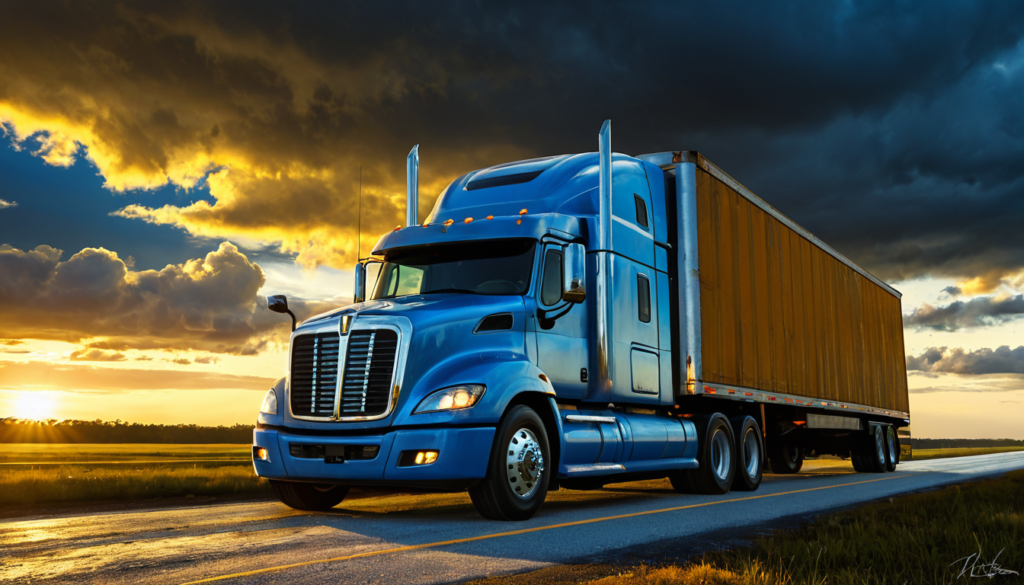
18-Wheeler Accident Attorneys Serving Duplin County, North Carolina
When an 80,000-Pound Truck Changes Everything
The stretch of US-117 running through Duplin County sees more commercial truck traffic than most rural counties in North Carolina. When one of those 18-wheelers crosses the center line, runs a stop sign, or loses control on the tight curves near Warsaw, the results are catastrophic. Your car weighs 4,000 pounds. The truck that hit you weighs up to 80,000. That’s not a fair fight—and if you’re reading this, you’re likely paying the price for someone else’s negligence.
We know what you’re going through. The pain is constant. The medical bills are mounting. And while you’re trying to figure out how to put your life back together, the trucking company’s insurance adjuster is already calling. They have teams of lawyers. Rapid-response investigators. Millions in insurance coverage. You need someone who pushes back just as hard.
At Attorney911, we’ve spent over 25 years fighting for families devastated by commercial truck accidents. Ralph Manginello, our managing partner, has secured multi-million dollar verdicts against the largest carriers in America—including Fortune 500 companies like BP after the Texas City explosion that killed 15 workers. Our associate attorney Lupe Peña spent years defending insurance companies before joining our firm. Now he uses that insider knowledge to fight for you. We have recovered over $50 million for injured clients, including a $5 million settlement for a traumatic brain injury victim and $3.8 million for a client who lost a limb due to a negligent driver.
If you’ve been hurt in an 18-wheeler accident anywhere in Duplin County—from Wallace to Warsaw, from Faison to Beulaville—you need an advocate who understands both North Carolina’s strict contributory negligence laws and the federal trucking regulations that govern every commercial vehicle on our roads. Call us now at 1-888-ATTY-911. The consultation is free, and you pay nothing unless we win.
The Duplin County Trucking Corridor: High Risk, High Stakes
Duplin County sits at a critical junction for freight moving across North Carolina. US-117 cuts through the heart of the county, carrying trucks from the Port of Wilmington inland toward I-40 and I-95. NC-24 and NC-50 see heavy agricultural traffic—massive loads of sweet potatoes, tobacco, and poultry heading to distribution centers. These aren’t just busy roads; they’re lifelines for an agricultural economy that depends on 18-wheelers moving goods efficiently.
But efficiency often conflicts with safety. Truck drivers pushing to make delivery deadlines on these narrow, winding rural highways create deadly conditions. The intersection of US-117 and NC-24 near Warsaw sees frequent accidents involving commercial vehicles. The long stretches between Kenansville and Rose Hill invite highway hypnosis. And when winter ice coats the bridges over the Northeast Cape Fear River—or when hurricane remnants flood the low-lying areas near the Duplin County Airport—truck drivers who don’t adjust their speed for conditions turn their rigs into unguided missiles.
North Carolina law gives you three years from the date of your accident to file a personal injury lawsuit, or two years if you lost a loved one to wrongful death. But waiting is dangerous. Evidence in trucking cases disappears faster than you might think. The truck’s electronic control module (ECM)—the black box that records speed, braking, and throttle position—can be overwritten in as little as 30 days. Driver log books, maintenance records, and dashcam footage have a way of vanishing once the trucking company knows a serious injury occurred. That’s why we send spoliation letters within hours of being retained, putting every responsible party on notice that destroying evidence will have serious legal consequences.
Why Duplin County Families Choose Attorney911
Inside Knowledge That Wins Cases
Most personal injury firms in Duplin County handle car accidents. They don’t understand the complex web of federal regulations that govern commercial trucking. We do. Our team includes Lupe Peña, a fluent Spanish-speaking attorney who used to work for a national insurance defense firm defending exactly the kinds of trucking companies we now sue. He knows how adjusters are trained to minimize your claim, what software they use to calculate “acceptable” settlement offers, and when they’re bluffing about going to trial. As client Glenda Walker told us after we settled her case, “They fought for me to get every dime I deserved.”
This insider advantage matters in Duplin County, where contributory negligence laws create unique challenges. North Carolina is one of only a handful of states that follows pure contributory negligence—meaning if you’re found even 1% at fault for the accident, you recover nothing. The trucking company’s insurance adjuster knows this. They’ll look for any reason to blame you: “You were in their blind spot.” “You braked suddenly.” “You were speeding too.” Without an attorney who knows how to counter these tactics with hard data from the truck’s black box and federal violation records, you could walk away with nothing despite devastating injuries.
Federal Court Experience Where It Counts
Ralph Manginello’s admission to the U.S. District Court for the Southern District of Texas—and his experience litigating against multinational corporations like BP—means we have the resources to take on the biggest carriers. When a trucking accident involves interstate commerce (which most do, given Duplin County’s connection to the Port of Wilmington and I-95 corridor), cases can be removed to federal court. Many local attorneys lack federal court experience. We don’t. In fact, we’re currently litigating a $10 million lawsuit against the University of Houston for hazing-related injuries, demonstrating our ability to handle complex, high-stakes litigation against well-funded defendants.
Our firm has handled trucking accident cases involving major carriers like Walmart, Coca-Cola, Amazon, FedEx, and UPS. We know how these companies operate. They have playbooks for denying claims. We have better playbooks for beating them.
Results That Matter
We don’t measure success by the number of cases we settle quickly. We measure it by the lives we rebuild. Our track record includes:
- $5+ million for a traumatic brain injury victim struck by a falling log
- $3.8+ million for a client who suffered a partial leg amputation after a car accident
- $2.5+ million for trucking accident victims
- Multi-million dollar settlements for wrongful death cases ranging from $1.9 million to $9.5 million
As client Chad Harris said, “You are NOT a pest to them and you are NOT just some client… You are FAMILY to them.” That’s the kind of representation you deserve when your life has been shattered by a negligent trucker.
Types of 18-Wheeler Accidents We Handle in Duplin County
Jackknife Accidents
A jackknife occurs when the truck’s cab and trailer fold in opposite directions, creating a deadly V-shape that sweeps across traffic lanes. On narrow rural highways like NC-11 or the curved sections of US-117 near Magnolia, a jackknifed 18-wheeler blocks the entire roadway with nowhere for other vehicles to go. These accidents often result from sudden braking on wet pavement or downshifting errors when drivers exceed safe speeds for conditions.
Under 49 CFR § 392.6, drivers must operate at speeds reasonable for conditions. When they don’t, and their trailer swings into oncoming traffic, they violate federal safety laws. Jackknife accidents frequently cause multi-vehicle pileups and catastrophic injuries including traumatic brain injury and spinal cord damage.
Underride Collisions
The most horrific trucking accidents involve underride—when a passenger vehicle slides underneath the trailer, shearing off the roof and crushing the occupants. Side underride guards are not federally required (despite safety advocacy), and rear impact guards frequently fail or are missing entirely. When a truck stops suddenly on US-117 near a red light, or when a driver cuts across traffic to make a delivery to one of Duplin County’s processing plants, underride accidents result in decapitation or severe head trauma.
These cases require immediate investigation of the trailer’s under-ride protection systems under 49 CFR § 393.86, which mandates rear impact guards on trailers manufactured after January 26, 1998. We examine guard integrity, maintenance records, and whether the trucking company knew the guards were defective.
Rollover Accidents
Duplin County’s agricultural economy means trucks frequently haul liquid loads—whether it’s liquid fertilizer, poultry processing waste, or fuel. Liquid cargo creates “slosh and surge” dynamics that can topple a truck on curves. Overloaded trucks exceeding 80,000 pounds (violating 49 CFR § 658.17) compound this risk. When a tanker or loaded flatbed rolls over on NC-50 or the tight turns near Kenansville, the result is often a cargo spill that creates secondary accidents and environmental hazards.
Rollovers also occur when drivers fail to account for Duplin County’s elevation changes and bridge approaches. Brake failure on descents, tire blowouts from overloaded axles, and driver fatigue all contribute to these devastating crashes.
Rear-End Collisions
An 18-wheeler needs nearly two football fields—525 feet—to stop from 65 mph. On congested stretches of US-117 near Wallace or during the harvest season when trucks queue outside processing facilities, following too closely (49 CFR § 392.11) causes devastating rear-end impacts. The height differential means the truck’s bumper hits the passenger compartment of your car, causing crushing injuries rather than just vehicle damage.
We download ECM data to prove the driver never braked, or braked too late. We subpoena cell phone records to prove distraction (49 CFR § 392.82 prohibits handheld mobile phone use by commercial drivers). And we examine hours-of-service logs under 49 CFR Part 395 to prove the driver was fatigued.
Wide Turn and “Squeeze Play” Accidents
Trucks making right turns into Duplin County’s distribution centers or farm supply stores must swing wide left first, creating a gap that invites passenger vehicles to pull alongside. When the driver completes the turn without checking blind spots, the trailer crushes the car against the curb. These accidents often involve violations of 49 CFR § 392.11 (following too closely/cluttering lanes) and failure to use turn signals.
Blind Spot and Lane Change Accidents
The “No-Zone” around an 18-wheeler includes 20 feet in front, 30 feet behind, and significant areas on both sides—especially the right side where mirrors don’t reach. When trucks merge onto US-117 from rural farm roads or change lanes to pass slower agricultural equipment, they often hit vehicles traveling in their blind spots. These accidents cause sideswipe injuries that can force smaller vehicles off the road or into oncoming traffic.
Federal regulations under 49 CFR § 393.80 require properly adjusted mirrors. We investigate whether the driver conducted pre-trip inspections (49 CFR § 396.13) and whether the trucking company trained drivers on blind spot awareness.
Tire Blowout and Brake Failure Accidents
Duplin County’s hot summers and agricultural roads littered with debris create perfect conditions for tire failures. When a steer tire blows at highway speed, the driver loses control instantly. When brakes fail on a downhill grade—often due to inadequate maintenance under 49 CFR Part 396—80,000 pounds of steel becomes an unstoppable force.
We preserve failed tires for defect analysis. We examine maintenance records to see if the trucking company deferred brake repairs to save money. And we hold maintenance companies liable when their negligent repairs caused the failure.
Cargo Spill and Shift Accidents
Improperly secured loads shift during transit, changing the center of gravity and causing rollovers. When lumber, pipes, or heavy equipment falls from flatbeds onto NC-24, secondary accidents occur as drivers swerve to avoid debris. Federal cargo securement rules under 49 CFR §§ 393.100-136 require specific tiedown strength and placement. Violations of these regulations—often committed by third-party loading companies—create liability beyond just the driver.
Catastrophic Injuries and Your Recovery
Traumatic Brain Injury (TBI)
The force of a truck impact causes the brain to collide with the skull, resulting in contusions, bleeding, and axonal shearing. TBI symptoms may not appear immediately—you might feel “shaken up” only to develop severe headaches, memory loss, and personality changes days later. Moderate to severe TBI cases typically settle for between $1.5 million and $9.8 million, depending on the victim’s age, earning capacity, and need for lifelong care.
TBI victims often cannot return to work, require extensive rehabilitation, and suffer from depression, anxiety, and cognitive deficits that strain family relationships. We work with neuropsychologists and life care planners to document every future need.
Spinal Cord Injury and Paralysis
The impact forces in truck accidents frequently fracture vertebrae or sever the spinal cord. Paraplegia (loss of use of legs) and quadriplegia (loss of use of arms and legs) require home modifications, wheelchairs, and 24/7 attendant care. Lifetime care costs for spinal cord injuries range from $4.7 million to over $25 million.
North Carolina law allows recovery for loss of consortium—your spouse’s loss of companionship and intimacy—as well as your lost earning capacity and pain and suffering. These cases require immediate preservation of evidence to prove exactly how the accident caused the spinal damage.
Amputation and Crush Injuries
When a truck’s bumper crushes a car door or when a victim is pinned between vehicles, traumatic amputation may occur at the scene, or limbs may be so damaged they require surgical removal. Beyond the initial surgery, amputees face phantom limb pain, prosthetic costs ($5,000-$50,000 per device), and repeated surgeries as the residual limb changes shape. Settlement values for amputation cases typically range from $1.9 million to $8.6 million.
Severe Burns
Tanker explosions, fuel fires, and hazmat spills cause third and fourth-degree burns requiring skin grafts, infection control, and reconstructive surgery. Duplin County’s proximity to industrial facilities and agricultural chemical transport routes creates elevated risks for these horrific injuries.
Wrongful Death
When a truck accident takes a loved one, North Carolina law allows surviving spouses, children, and parents to recover damages for lost income, loss of companionship, funeral expenses, and mental anguish. While no amount of money replaces your loved one, wrongful death settlements ranging from $1.9 million to $9.5 million can provide financial security for the family left behind. You have two years from the date of death to file these claims in North Carolina.
Every Party Responsible Will Be Held Accountable
Unlike car accidents where usually only one driver is at fault, trucking accidents involve multiple defendants with deep pockets. We investigate and pursue claims against:
1. The Truck Driver – For speeding, distraction, fatigue, impairment, or violations of traffic laws and FMCSA regulations.
2. The Trucking Company – Under respondeat superior (vicarious liability) and for direct negligence including negligent hiring, training, supervision, and maintenance. We subpoena Driver Qualification Files under 49 CFR § 391.51 to uncover whether they properly vetted the driver’s CDL status, medical certification, and accident history.
3. The Cargo Owner/Shipper – When they demanded overloaded trucks or failed to disclose hazardous materials.
4. The Loading Company – For violations of 49 CFR Part 393 cargo securement rules.
5. The Truck Manufacturer – For defective brakes, steering systems, or stability control failures.
6. The Parts Manufacturer – For defective tires, brake components, or lighting systems.
7. The Maintenance Company – For negligent repairs that returned unsafe vehicles to service.
8. The Freight Broker – For negligent carrier selection—hiring a trucking company with poor safety scores despite known risks.
9. The Truck Owner – In owner-operator arrangements where negligent entrustment applies.
10. Government Entities – When dangerous road design, inadequate signage, or poor maintenance contributed to the crash (note: North Carolina has strict notice requirements and shorter deadlines for government claims).
Federal Regulations That Protect You
The Federal Motor Carrier Safety Administration (FMCSA) sets strict standards for commercial trucks. When trucking companies violate these rules, they commit negligence per se—meaning the violation itself proves fault.
Hours of Service (49 CFR Part 395)
Truck drivers cannot drive more than 11 hours after 10 consecutive hours off duty. They cannot drive beyond the 14th consecutive hour on duty. They must take a 30-minute break after 8 hours of driving. And they cannot exceed 60 hours in 7 days or 70 hours in 8 days. Electronic Logging Devices (ELDs) record this data automatically since December 2017. We download this data to prove drivers exceeded legal limits—evidence of fatigue that juries find compelling.
Driver Qualification (49 CFR Part 391)
Trucking companies must verify drivers have valid CDLs, pass medical examinations (max certification 2 years), and possess clean driving records. They must maintain Driver Qualification Files containing employment applications, annual driving record reviews, and previous employer inquiries. Missing or incomplete files prove negligent hiring.
Vehicle Maintenance (49 CFR Part 396)
Motor carriers must systematically inspect, repair, and maintain all vehicles. Drivers must complete pre-trip and post-trip inspections, documenting brake condition, tire inflation, lighting, and coupling devices. Annual inspections are mandatory (49 CFR § 396.17). Failure to maintain records for these inspections creates a presumption of negligence.
Drug and Alcohol Testing (49 CFR Part 382)
Commercial drivers must undergo pre-employment, random, post-accident, and reasonable suspicion drug testing. A positive test for Schedule I substances or a BAC of .04 or higher creates automatic disqualification and strong evidence of impairment.
Cargo Securement (49 CFR Part 393)
Cargo must be secured to withstand 0.8g deceleration forward, 0.5g rearward, and 0.5g lateral forces. Specific rules apply to logs, metal coils, machinery, and intermodal containers. Violations cause load shifts that lead to rollovers and spills.
Prohibited Practices (49 CFR Part 392)
Drivers cannot operate while fatigued (§ 392.3), under the influence of drugs or alcohol (§§ 392.4-392.5), or while using handheld mobile phones (§ 392.82). They must obey speed limits and traffic laws, and they cannot follow other vehicles more closely than is reasonable and prudent.
Critical Evidence Preservation: The First 48 Hours
Evidence in truck accident cases has an expiration date:
- ECM/Black Box Data: Overwrites in 30 days
- ELD Logs: May be deleted after 6 months
- Dashcam Footage: Often recorded over within 7-14 days
- Driver Cell Phone Records: Must be preserved immediately
- Maintenance Records: Can be “lost” or altered
- Witness Memories: Fade within weeks
When you hire Attorney911, we immediately send spoliation letters to the trucking company, their insurer, the driver, and any maintenance companies demanding preservation of:
- All electronic data from the truck’s ECM and ELD
- Driver Qualification Files
- Maintenance and inspection records
- Dispatch records and trip sheets
- Post-accident drug and alcohol test results
- The physical truck and trailer (before repair)
- Cargo manifests and loading documentation
Courts impose severe sanctions—including adverse inference instructions (telling the jury the destroyed evidence would have been unfavorable to the trucking company)—when defendants violate spoliation notices. We don’t give them the chance to destroy the proof we need.
Insurance Coverage and Your Financial Recovery
Federal law requires trucking companies to carry substantial liability insurance:
- $750,000 for non-hazardous freight
- $1,000,000 for oil transport and large equipment
- $5,000,000 for hazardous materials and passenger transport
Many carriers carry excess coverage or umbrella policies. Unlike car accidents where you might face a $30,000 policy limit, trucking accidents typically have $1-5 million available. But accessing these funds requires proving the full extent of your damages—past and future medical expenses, lost earning capacity, and non-economic damages like pain and suffering.
North Carolina’s contributory negligence rule makes insurance battles especially fierce. The adjuster will seize on any evidence suggesting you were partially at fault—a delayed brake light, a momentary lane drift, or simply “you should have seen the truck.” We counter with objective data: ECM recordings showing the truck was speeding, ELD data proving the driver exceeded hours of service, and maintenance records showing equipment failures.
When trucking companies act with gross negligence—knowingly hiring unqualified drivers, destroying evidence, or falsifying logbooks—North Carolina law allows punitive damages to punish the wrongdoer and deter similar conduct in the future.
Frequently Asked Questions About Duplin County Truck Accidents
How long do I have to file a lawsuit after a trucking accident in North Carolina?
You have three years from the date of the accident for personal injury claims, and two years for wrongful death claims. However, you should contact an attorney immediately. Evidence disappears quickly, and North Carolina’s contributory negligence law means the trucking company is already looking for ways to blame you. The sooner we investigate, the better we can protect your rights.
What if the truck driver claims I was partially at fault?
North Carolina follows contributory negligence, which bars recovery if you’re found even 1% responsible. This harsh rule makes it critical to have an attorney who can prove the truck driver was 100% at fault. We use ECM data, ELD logs, and accident reconstruction to disprove false allegations that you contributed to the crash.
Can I sue the trucking company even if the driver was an independent contractor?
Often, yes. We examine the relationship between the driver and carrier under federal guidelines. If the company controlled the driver’s routes, schedule, and equipment, they may be liable as an employer. Additionally, we investigate whether the company negligently hired an unqualified independent contractor despite red flags in their driving history.
What damages can I recover in a Duplin County trucking accident case?
You may recover economic damages (medical bills, lost wages, future care costs, property damage) and non-economic damages (pain and suffering, mental anguish, loss of consortium, disfigurement). In cases of gross negligence, punitive damages may be available. Given the catastrophic nature of most trucking injuries, settlements often reach seven figures when properly documented.
How much does it cost to hire Attorney911?
Nothing upfront. We work on a contingency fee basis—33.33% if settled before trial, 40% if litigation is required. You pay nothing unless we recover money for you. We advance all costs for experts, depositions, and court filings. As client Donald Wilcox said after we settled his case that another firm rejected, “I got a call to come pick up this handsome check.”
Hablamos Español. Can I work with an attorney who speaks Spanish?
Yes. Associate attorney Lupe Peña is fluent in Spanish and provides direct representation without interpreters. For Duplin County’s Hispanic community working in agriculture and trucking, language should never be a barrier to justice. Llame a 1-888-ATTY-911 para una consulta gratuita.
What if the trucking company offers me a quick settlement?
Don’t sign anything. Early offers are designed to pay you pennies on the dollar before you know the full extent of your injuries. Once you accept, you waive your right to future compensation. We had a client who accepted a $15,000 offer before calling us—her case was ultimately worth over $500,000 based on the spinal injury that developed weeks after the accident.
How do I know if the truck driver violated federal regulations?
We obtain the carrier’s safety records from FMCSA’s Safety Measurement System (SMS), review their Compliance, Safety, Accountability (CSA) scores, and subpoena maintenance records. We look for patterns of hours-of-service violations, brake defects, and driver fitness issues that prove a culture of negligence.
What happens if the trucking company destroys evidence?
If this occurs after we’ve sent a spoliation letter, courts can impose sanctions including adverse inference instructions (the jury is told the destroyed evidence would have hurt the trucking company’s case), monetary penalties, or default judgment. We take aggressive steps to prevent destruction, including seeking temporary restraining orders if necessary.
Can I file a claim if my loved one died in a trucking accident?
Yes. North Carolina allows wrongful death claims by the personal representative of the estate (usually a spouse, child, or parent) for losses including lost income, loss of companionship, funeral expenses, and mental anguish. You have two years from the date of death to file.
What if the accident involved hazardous materials?
Hazmat carriers must carry $5 million in insurance, and spills create complex liability involving the shipper, carrier, and cleanup contractors. These cases require immediate environmental testing and documentation of exposure-related health effects, which may not manifest for years.
How long will my case take to resolve?
Straightforward cases with clear liability and moderate injuries may settle in 6-12 months. Complex cases involving catastrophic injuries, multiple defendants, or disputes over North Carolina’s contributory negligence may take 18-36 months. We prepare every case for trial from day one, which often motivates better settlement offers.
Will I have to go to court?
Most cases settle before trial, but we prepare every case as if it’s going to trial. Insurance companies know which lawyers are willing to try cases—and they offer better settlements to those who are. With 25 years of courtroom experience and federal court admission, we’re ready when they won’t negotiate fairly.
What if I was injured by a truck owned by a government agency?
Claims against North Carolina government entities have special rules. You must file a notice of claim within three years (or sooner depending on the entity), and damage caps may apply. These cases require immediate legal attention to preserve your rights.
Can undocumented immigrants file trucking accident claims in North Carolina?
Yes. Immigration status does not affect your right to recover compensation for injuries caused by someone else’s negligence. We protect your privacy while pursuing the full value of your claim.
Your Next Step: Call Attorney911 Today
The trucking company that changed your life has lawyers working right now to minimize what they pay you. They have investigators at the scene. They have adjusters trained to get you to say things that hurt your case. They have 25 years of experience fighting claims.
What do you have?
You have Attorney911. Ralph Manginello’s 25 years of experience. Lupe Peña’s insider knowledge of insurance defense tactics. Our team’s track record of $50 million recovered for clients. And our promise: You pay nothing unless we win.
Don’t let the trucking company win. Don’t let North Carolina’s contributory negligence law scare you into accepting less than you deserve. Don’t wait until the black box data is overwritten and the witnesses forget what they saw.
If you’ve been hurt in an 18-wheeler accident in Duplin County—whether it happened on US-117 near Warsaw, on NC-24 outside Kenansville, or on the farm roads connecting Wallace to the Port of Wilmington—call us now.
1-888-ATTY-911 (1-888-288-9911)
24 hours a day. 7 days a week. Spanish and English. Free consultation. No fee unless we win.
Your family’s future depends on what you do next. Let us fight for every dime you deserve. As we told client Angel Walle, who came to us after another firm did nothing for two years: “We solved it in a couple of months.” That’s the Attorney911 difference.
Call now. Because trucking companies shouldn’t get away with it. And in Duplin County, with Attorney911 fighting for you, they won’t.