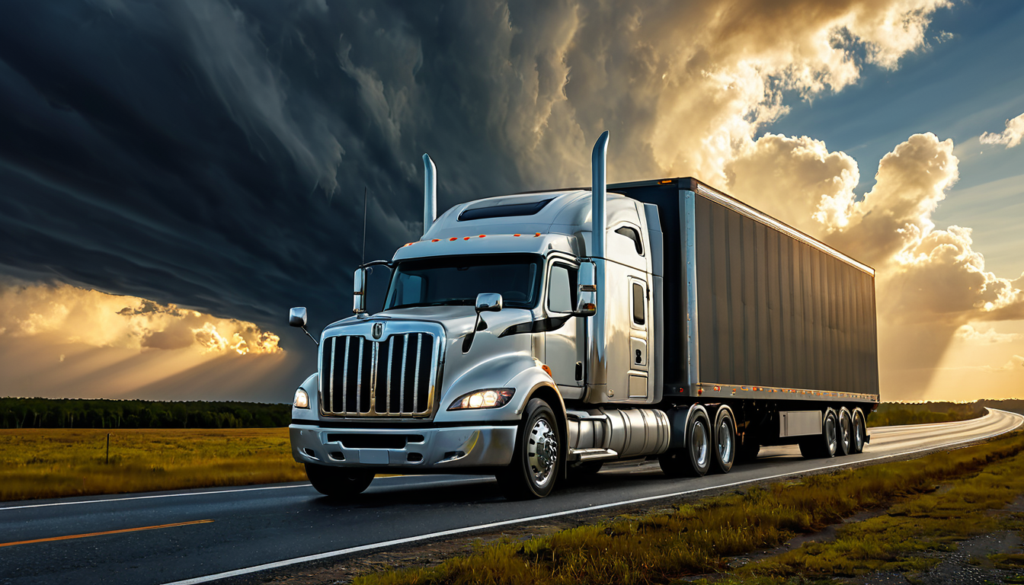
Robeson County 18-Wheeler Accident Attorneys: Your Recovery Starts Here
The 80,000-pound truck didn’t see you coming. Or maybe the driver saw you but couldn’t stop in time. Either way, on a rural Robeson County highway or the busy stretches of I-95, your life changed the moment the impact happened. You’re not alone—and you don’t have to fight the trucking company alone.
At Attorney911, we’ve spent over 25 years helping families across North Carolina and beyond pick up the pieces after catastrophic trucking accidents. We’ve recovered millions for victims facing the exact same uncertainty you’re feeling right now. And we know Robeson County’s roads, from the logging routes near Lumberton to the freight corridors feeding the Port of Wilmington.
If you’ve been hit by a commercial truck anywhere in Robeson County, you need an attorney who understands federal trucking regulations, North Carolina’s harsh contributory negligence laws, and how to preserve evidence before the trucking company destroys it. You need someone in your corner who treats you like family, not a case number.
Call us immediately at 1-888-ATTY-911. Your consultation is free, and we don’t get paid unless you win.
Why Robeson County 18-Wheeler Accidents Are Different
Robeson County isn’t just another dot on the map for us. It’s home to some of North Carolina’s most dangerous trucking corridors. When heavy timber trucks roll down rural state routes or agricultural haulers barrel toward I-95, the results can be devastating.
The Geography of Danger
Robeson County sits at a critical junction for freight moving between the Port of Wilmington and inland distribution centers. This means:
I-95 Fatalities: The I-95 corridor cutting through Robeson County carries thousands of commercial trucks daily between Florida and the Northeast. According to NHTSA data, this stretch sees some of the highest truck fatality rates in the state, particularly where the interstate intersects with rural roads near towns like Lumberton and Fairmont.
Agricultural Trucking Hazards: Our local economy depends on agriculture—tobacco, cotton, sweet potatoes, and timber. This means constant heavy truck traffic on narrow rural roads not designed for 80,000-pound vehicles. When these trucks meet passenger vehicles on two-lane highways, physics takes over.
Logging Truck Dangers: The timber industry creates unique hazards. Logging trucks often operate on rural county roads with sharp curves and limited shoulders. These trucks carry unstable loads at high speeds, creating rollover and cargo spill risks that passenger cars can’t avoid.
Port Traffic: Robeson County feeds into the Port of Wilmington, one of the fastest-growing container ports on the East Coast. This generates significant container truck traffic moving between the port and distribution centers, often on tight schedules that push drivers beyond federal hour limits.
Ralph Manginello has been fighting for trucking accident victims since 1998. He’s seen what happens when trucking companies prioritize profits over safety on North Carolina highways. With three offices—Houston, Austin, and Beaumont—we’re equipped to handle Robeson County cases with the resources of a national firm but the personalized attention you deserve.
Meet Your Advocates: Ralph Manginello & Lupe Peña
When you hire Attorney911 for your Robeson County trucking accident, you’re getting more than just a lawyer. You’re getting a team that includes a 25-year veteran of trucking litigation and a former insurance defense attorney who knows exactly how the trucking companies will try to minimize your claim.
Ralph Manginello: 25+ Years of Trucking Justice
Ralph Manginello founded Attorney911 with one mission: to treat every client like family while delivering results that rival the biggest firms in America. Since 1998, Ralph has:
- Recovered millions for catastrophic injury victims, including over $50 million in total firm recoveries
- Litigated against Fortune 500 companies, including involvement in the BP Texas City refinery explosion cases ($2.1 billion in total industry settlements)
- Admitted to federal court in the Southern District of Texas, giving him authority to handle interstate trucking cases that cross state lines
- Currently litigating a landmark $10 million hazing lawsuit against a major university, demonstrating our capacity for complex, high-stakes litigation
As client Chad Harris said, “You are NOT a pest to them and you are NOT just some client… You are FAMILY to them.” That’s the difference experience makes. Ralph doesn’t just know the law—he knows what you’re going through, and he fights accordingly.
Lupe Peña: Your Insurance Defense Advantage
Here’s what most firms won’t tell you: our associate attorney Lupe Peña used to work for insurance companies. He defended them. He knows their playbooks—their tricks for denying claims, delaying payments, and minimizing settlements.
Now he uses that insider knowledge against them.
Lupe is a third-generation Texan fluent in Spanish (Hablamos Español), giving him unique insight into the challenges facing Robeson County’s diverse workforce, including the significant Lumbee population and Hispanic communities working in agriculture and trucking. When the insurance adjuster tries to tell you your pain isn’t worth anything, Lupe knows exactly how to counter that because he’s seen it from the inside.
Hablamos Español. Llame al 1-888-ATTY-911.
Understanding FMCSA Regulations: The Trucking Company’s Rules
Every commercial truck operating in Robeson County must follow strict Federal Motor Carrier Safety Administration (FMCSA) regulations. When drivers or companies violate these rules, they’re negligent—and you deserve compensation.
Part 390: Who Must Comply
Under 49 CFR § 390.3, these regulations apply to all commercial motor vehicles (CMVs) with a gross vehicle weight rating of 10,001 pounds or more. This includes virtually every 18-wheeler on Robeson County roads. The rules cover interstate commerce, meaning trucks traveling between South Carolina and North Carolina on I-95, or between Robeson County and the Port of Wilmington.
Part 391: Driver Qualification Standards
Before a driver can legally operate a truck in Robeson County, they must meet strict qualifications under 49 CFR § 391.11:
- Be at least 21 years old for interstate commerce
- Pass a physical exam every two years (§ 391.41)
- Possess a valid Commercial Driver’s License (CDL)
- Speak and read English sufficiently
- Have a clean driving record (subject to § 391.15 disqualifications)
Why this matters: If the truck driver who hit you had a medical condition they hid from their employer, or if the trucking company failed to verify their qualifications, we can hold them liable for negligent hiring. We routinely subpoena Driver Qualification Files to prove these violations.
Part 392: Operating Rules
49 CFR § 392.3 prohibits operating while fatigued. This is critical on Robeson County’s long stretches of I-95, where drivers often push beyond their limits. Additional key rules include:
- § 392.4: No Schedule I substance use while driving
- § 392.5: No alcohol within 4 hours of duty; 0.04 BAC maximum
- § 392.6: No speeding to meet schedules
- § 392.11: Following too closely (critical on I-95)
- § 392.82: No hand-held mobile phone use while driving
Part 393: Vehicle Equipment & Cargo Securement
This section requires proper maintenance and cargo securement. Key provisions include:
- § 393.100-136: Cargo must be secured to withstand forces of 0.8g deceleration forward, 0.5g acceleration rearward, and 0.5g lateral. When logging trucks or agricultural haulers fail to properly secure loads on Robeson County’s winding roads, rollovers and cargo spills happen.
- § 393.40-55: Brake systems must meet specific performance standards. Brake problems factor into 29% of truck crashes.
Part 395: Hours of Service (HOS)
This is where trucking companies most often break the law. Under 49 CFR § 395.3, property-carrying drivers cannot:
- Drive more than 11 hours after 10 consecutive hours off duty
- Drive beyond the 14th consecutive hour after coming on duty
- Drive after 60/70 hours on duty in 7/8 consecutive days
- Must take a 30-minute break after 8 cumulative hours of driving
Since December 18, 2017, drivers must use Electronic Logging Devices (ELDs) under § 395.8. These devices record precise driving times and locations—evidence we demand immediately to prove HOS violations.
Part 396: Inspection & Maintenance
49 CFR § 396.3 requires systematic inspection, repair, and maintenance of all vehicles. Drivers must complete pre-trip and post-trip inspections under § 396.11, documenting any defects. When trucking companies defer maintenance to save money, brake failures and tire blowouts occur—often with catastrophic results on Robeson County highways.
The bottom line: If the trucking company violated any of these regulations, they’re negligent. Period.
18-Wheeler Accident Types in Robeson County
Not all truck accidents are the same. The rural highways and interstate corridors of Robeson County create specific dangers.
Jackknife Accidents
A jackknife occurs when the trailer skids out from behind the cab, forming a 90-degree angle. This often happens when truckers hit their brakes too hard on I-95 during rain, or when they take curves too fast on rural routes like US-301.
Evidence we gather: ECM data showing brake application timing, weather reports from the Robeson County area, and maintenance records showing brake condition.
Rollover Accidents
Given Robeson County’s agricultural economy, we see many rollovers involving center-heavy loads like sweet potatoes or timber. When drivers take Rural Center Road or Highway 710 too fast, or when cargo shifts unexpectedly, 50,000 pounds of truck can end up on its side—often crushing nearby vehicles.
FMCSA violations: 49 CFR § 393.100 (cargo securement) failures are common culprits.
Underride Collisions
Perhaps the most horrific accidents occur when a passenger vehicle slides under a truck’s trailer. This often results in decapitation or traumatic brain injuries. While federal law requires rear impact guards under 49 CFR § 393.86, they often fail in crashes, and side underride guards are not federally mandated—though they should be.
Liable parties: In addition to the driver and trucking company, we investigate the trailer manufacturer for defective guards.
Rear-End Collisions
A fully loaded truck needs approximately 525 feet to stop from 65 mph—that’s nearly two football fields. When traffic backs up on I-95 near Exit 10 or US-74, tired or distracted truckers often can’t stop in time.
Critical evidence: ELD data showing hours of service violations or distraction, ECM data showing following distance and speed.
Wide Turn Accidents (“Squeeze Play”)
Trucks making right turns at intersections in downtown Lumberton or along North Pine Street often swing left first, creating a gap that cars enter—only to be crushed when the truck completes its turn. These “squeeze play” accidents often involve novice drivers unfamiliar with Robeson County’s tighter urban intersections.
Blind Spot Accidents
18-wheelers have massive blind spots—20 feet in front, 30 feet behind, and entire lanes to the sides. When changing lanes on I-95’s crowded stretches or merging onto US-74, truck drivers who fail to check their No-Zones cause devastating sideswipe accidents.
Tire Blowouts
The combination of heavy loads, high summer temperatures on asphalt, and long stretches of highway makes tire blowouts common in Robeson County. When a steer tire blows at 70 mph on I-95, the driver often loses control completely.
Maintenance violations: 49 CFR § 393.75 requires minimum tread depths (4/32″ for steer tires). We inspect failed tires for age and wear patterns.
Brake Failure Accidents
Poorly maintained brakes cause 29% of truck accidents. On downhill stretches like the US-74 approach to the Cape Fear River, brake fade can leave trucks unable to stop.
Cargo Spills & Shifts
When logging trucks or agricultural haulers improperly secure loads on Robeson County’s rural highways, cargo can spill onto the road or shift, causing rollovers. Federal law requires cargo securement systems to withstand specific forces—violations are often clear-cut negligence.
All Liable Parties—Who Pays for Your Injuries?
Most firms only sue the driver. We investigate every potentially liable party because more defendants mean more insurance coverage means higher compensation for you.
1. The Truck Driver
Direct negligence includes speeding, distracted driving, fatigue, or impairment. We demand cell phone records, ELD data, and drug/alcohol test results immediately.
2. The Trucking Company (Motor Carrier)
Under respondeat superior, employers are liable for their employees’ negligence. We also pursue direct negligence:
- Negligent Hiring: Failed background checks, hiring drivers with bad records
- Negligent Training: Inadequate safety instruction on Robeson County’s specific hazards
- Negligent Supervision: Failing to monitor hours of service or driver behavior
- Negligent Maintenance: Deferred repairs to save money
3. Cargo Owner/Shipper
Companies that own the cargo—whether agricultural products from Robeson County farms or manufactured goods—may be liable if they demanded unsafe loading or expedited shipping that violated hours-of-service rules.
4. Loading Companies
Third-party companies that loaded the truck may be liable for improper cargo distribution or securement under 49 CFR § 393.100-136.
5. Truck/Trailer Manufacturers
Defective brakes, steering systems, or underride guards can create product liability claims against manufacturers like Freightliner, Peterbilt, or trailer makers.
6. Parts Manufacturers
Defective tires (Michelin, Bridgestone) or brake components can lead to product liability claims separate from the trucking company.
7. Maintenance Companies
Third-party mechanics who performed negligent repairs or inspections may be liable under 49 CFR § 396.3 violations.
8. Freight Brokers
Brokers who negligently selected unsafe carriers with poor safety ratings (checkable via FMCSA’s SAFER system) can be held liable for their poor hiring decisions.
9. Truck Owner
In owner-operator arrangements, the owner (as opposed to the motor carrier) may be liable for negligent entrustment if they knew the driver was unqualified.
10. Government Entities
If poor road design, inadequate signage, or lack of guardrails contributed to your accident on a Robeson County state route, we may have claims against the North Carolina Department of Transportation (though sovereign immunity limits apply).
Insurance Coverage: Federal law requires minimum liability coverage of $750,000 for non-hazmat freight, $1,000,000 for oil and equipment, or $5,000,000 for hazardous materials. Many carriers carry $1-5 million in coverage.
The 48-Hour Evidence Protocol: Act Now or Lose Everything
Here’s what they don’t tell you: the trucking company already has lawyers working on your case. Their rapid-response team is at the scene while you’re still in the hospital. Every hour you wait, evidence disappears.
Critical Timeline
| Evidence Type | Destruction Risk |
|---|---|
| ECM/Black Box Data | Overwrites in 30 days |
| ELD Hours-of-Service Logs | May be deleted after 6 months |
| Dashcam Footage | Often deleted within 7-14 days |
| Driver’s Phone Records | Must be preserved immediately |
| Physical Truck | May be repaired, sold, or scrapped |
Spoliation Letters—Our Immediate Response
When you call 1-888-ATTY-911, we send a spoliation letter within 24 hours. This legal notice demands preservation of:
- ECM and ELD data
- Driver Qualification Files
- Maintenance and inspection records
- Dispatch communications
- Drug and alcohol test results
- GPS and telematics data
- Dashcam footage
Once they receive this letter, destroying evidence becomes spoliation—a serious legal violation that can result in court sanctions, adverse inference instructions (the jury is told to assume the destroyed evidence was against the trucking company), or even default judgment.
The bottom line: Evidence wins cases. Data doesn’t lie. If the trucker was speeding, the ECM proves it. If they were over hours, the ELD proves it. But only if we preserve that evidence before it disappears.
Catastrophic Injuries: When Trucks Hit Cars
An 80,000-pound truck hitting a 4,000-pound car isn’t a fair fight. The physics guarantee serious injuries.
Traumatic Brain Injury (TBI)
Even “mild” TBIs can cause lifelong cognitive issues. Moderate to severe TBIs require lifetime care costing $85,000 to $3,000,000+. Our firm has recovered $1.5 million to $9.8 million for TBI victims.
Symptoms include headaches, memory loss, mood changes, and personality alterations that affect families forever.
Spinal Cord Injuries
Paralysis changes everything. Tetraplegia (quadriplegia) care costs $3.5 million to $5 million+ over a lifetime. Our settlements for spinal injuries range from $4.7 million to $25.8 million.
Amputations
Whether traumatic (severed at the scene) or surgical (required later due to crushing injuries), amputation requires prosthetics costing $5,000-$50,000+ per device, replaced every few years. We’ve secured $1.9 million to $8.6 million for amputation victims.
Severe Burns
When trucks carry hazardous materials or when fuel tanks rupture, burn injuries result. These require skin grafts and carry high infection risks.
Internal Organ Damage
Blunt force trauma often damages livers, spleens, or kidneys—injuries that may not show symptoms immediately but become life-threatening.
Wrongful Death
When a trucking accident takes a loved one, North Carolina allows wrongful death claims for lost income, loss of companionship, funeral expenses, and mental anguish. Our wrongful death recoveries range from $1.9 million to $9.5 million.
One of our clients, Glenda Walker, put it best: “They fought for me to get every dime I deserved.”
North Carolina Law: Know Your Rights
Robeson County residents face unique challenges under North Carolina law.
Statute of Limitations
You have 3 years from the accident date to file a personal injury lawsuit in North Carolina. For wrongful death, the limit is 2 years. Miss these deadlines, and you lose your right to recover forever.
Contributory Negligence: The Harsh Reality
North Carolina is one of only a few states using pure contributory negligence. This means if you’re found even 1% at fault for the accident, you recover nothing.
This makes hiring an experienced attorney critical. The trucking company will try to blame you for anything—following too closely, stopping too fast, or “sudden lane changes.” We fight these allegations aggressively with ECM data and accident reconstruction to prove the truck driver was 100% at fault.
Punitive Damages
If the trucking company acted with willful or wanton negligence—knowingly keeping a dangerous driver on the road, falsifying logbooks, or destroying evidence—North Carolina allows punitive damages. These are capped at the greater of three times compensatory damages or $250,000, except in drunk driving cases where no cap applies.
Frequently Asked Questions for Robeson County Victims
Q: What should I do immediately after a truck accident in Robeson County?
Call 911 immediately. Seek medical attention even if you feel fine—adrenaline masks injuries. Document everything: photos of damage, the truck’s DOT number, driver information, and witness contacts. Then call Attorney911 at 1-888-ATTY-911 before talking to any insurance company.
Q: Can I still recover if I was partially at fault?
Under North Carolina’s contributory negligence law, if you’re found even 1% at fault, you cannot recover. This makes it crucial to hire an attorney who can prove the truck driver was 100% responsible using ECM data and expert analysis.
Q: How much is my case worth?
Trucking accidents typically settle for more than car accidents because of higher insurance limits ($750,000-$5 million) and catastrophic injuries. We’ve recovered settlements from $1.5 million to $9.8 million depending on injury severity. Every case is unique.
Q: Will my case go to trial?
Most settle, but we prepare every case for trial. Insurance companies know we try cases—which is why they offer our clients higher settlements. As Angel Walle said, “They solved in a couple of months what others did nothing about in two years.”
Q: What if the truck driver was from out of state?
Interstate trucking cases often involve drivers from Texas, Florida, or elsewhere. Because Ralph Manginello is admitted to federal court (Southern District of Texas) and holds dual licensure (Texas and New York), we can handle multi-state jurisdictional issues that confuse local firms.
Q: Do I have to pay upfront?
Absolutely not. We work on contingency—33.33% pre-trial, 40% if trial is necessary. You pay nothing unless we win. We advance all costs and never send you a bill. Donald Wilcox, one of our clients, explained: “One company said they would not accept my case. Then I got a call from Manginello… I got a call to come pick up this handsome check.”
Q: What about my medical bills while we wait?
We can help you find doctors who will work on a Letter of Protection (LOP), meaning they get paid when we win your case. You don’t have to choose between bankruptcy and medical care.
Q: How long do I have to file?
Three years for personal injury, two years for wrongful death in North Carolina. But don’t wait—evidence disappears fast. The black box data we need to prove your case can be overwritten in 30 days.
Q: Do you speak Spanish?
Yes. Lupe Peña is fluent in Spanish and provides direct representation without interpreters. Hablamos Español. Llame al 1-888-ATTY-911.
Video Resources
Learn more about your rights by watching our educational videos:
- “The Victim’s Guide to 18-Wheeler Accident Injuries” – What to expect physically and legally after a trucking crash
- “Can I Sue for Being Hit by a Semi Truck?” – Immediate steps to protect your claim
- “The Definitive Guide To Commercial Truck Accidents” – Insurance and regulatory basics
- “Truck Tire Blowouts and When You Need a Lawyer” – Maintenance failure cases
- “What Should You Not Say to an Insurance Adjuster?” – Protecting yourself from their tactics
All available at Attorney911.com or our YouTube channel @Manginellolawfirm.
Your Next Step: Call Attorney911 Today
You’ve been through enough. The pain. The uncertainty. The medical bills piling up while the trucking company’s insurance adjuster calls trying to get you to settle for pennies on the dollar.
You need a fighter. Someone who knows that “You are FAMILY to them,” as Chad Harris said. Someone with 25+ years of experience who has gone toe-to-toe with BP, Walmart, Amazon, and the biggest insurers in the world—and won.
Ralph Manginello and Lupe Peña are ready to fight for you. With our former insurance defense attorney on your side, we know their playbook. We know when they’re bluffing. And we know how to make them pay.
Call 1-888-ATTY-911 right now. We’re available 24/7 because trucking accidents don’t happen on business hours. Your consultation is free. You pay nothing unless we win. And we won’t rest until we recover every dime you deserve.
Don’t let them push you around. Push back with Attorney911.
Offices in Houston, Austin, and Beaumont. Serving Robeson County and all of North Carolina with dedication, experience, and results that matter.
1-888-ATTY-911