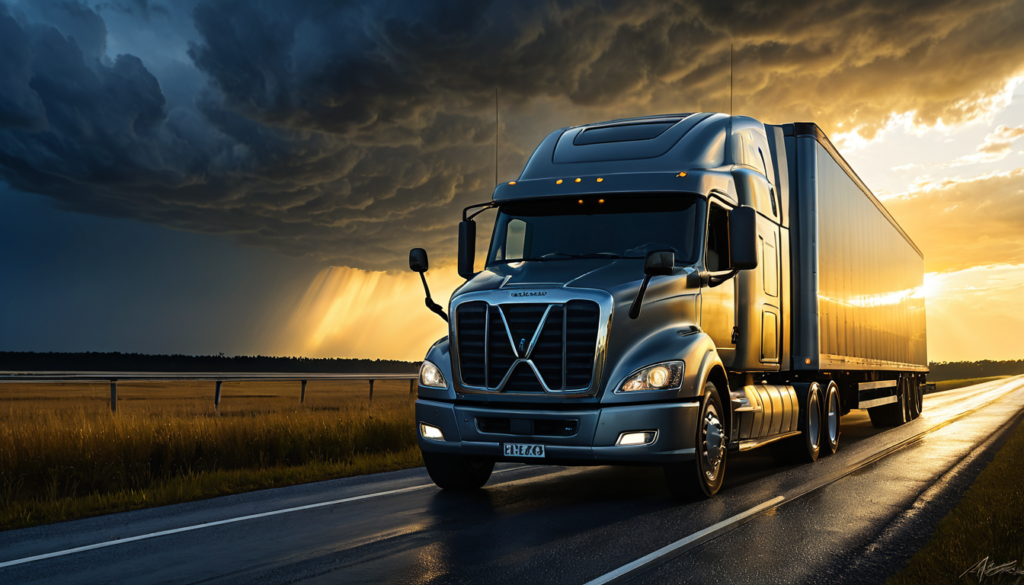
When an 80,000-pound truck changes your life on the highways around Sampson County, you don’t have time to wait. You need a team that understands North Carolina’s harsh contributory negligence laws, knows the trucking corridors through Clinton and Salemburg, and has the federal court experience to take on major carriers. At Attorney911, we’ve spent over 25 years fighting for families across North Carolina, and we’re ready to fight for you.
Understanding the Stakes: Why 18-Wheeler Accidents in Sampson County Are Different
An 18-wheeler accident isn’t just a bigger car crash. It’s a fundamentally different kind of catastrophe. When a fully loaded semi-truck—legally weighing up to 80,000 pounds—collides with a 4,000-pound passenger vehicle on I-40 near Newton Grove or US-13 through Clinton, the physics are devastating.
Here in Sampson County, we’re uniquely vulnerable to these accidents. We’re situated at the crossroads of major agricultural shipping routes and serve as a vital corridor connecting the Port of Wilmington to interstate hubs throughout North Carolina. Every day, hundreds of trucks carrying sweet potatoes, tobacco, poultry, and manufactured goods traverse our rural highways and winding backroads. These aren’t just statistics—they’re our neighbors, our families, and our livelihoods.
The Numbers Tell a Story
While national data shows that 5,100+ people die annually in truck accidents—with 76% of those deaths being occupants of the smaller vehicle—our concern is personal. Every 16 minutes, someone in America is injured in a commercial truck crash. On the stretch of I-40 that cuts through northern Sampson County, or along US-421 where agricultural haulers head to processing facilities, the risk is constant.
But here’s what many victims don’t realize: North Carolina is one of only five jurisdictions in the United States that still follows pure contributory negligence. This means if you’re found even 1% at fault for your accident in Sampson County, you cannot recover damages. The trucking companies know this. Their insurance adjusters are trained to find that 1%. That’s why you need a team that knows how to prove the truck driver—and only the truck driver—was responsible.
The Federal Regulations That Protect You (And Often Get Broken)
Every 18-wheeler operating on Sampson County roads must comply with Federal Motor Carrier Safety Administration (FMCSA) regulations, codified in Title 49 of the Code of Federal Regulations. These rules exist because trucking companies, left unchecked, often prioritize profit over safety. When they violate these regulations, they’re not just breaking rules—they’re breaking the law, and they’re liable for the consequences.
Part 390: General Applicability
Under 49 CFR § 390.3, these regulations apply to all motor carriers operating commercial vehicles across state lines, including those hauling goods from the Port of Wilmington through Sampson County to destinations west. This broad applicability means virtually every large truck on our roads must comply.
Part 391: Driver Qualification Standards
Perhaps the most critical regulations involve who can actually drive these massive vehicles. Under 49 CFR § 391.11, a driver must:
- Be at least 21 years old for interstate commerce
- Possess a valid Commercial Driver’s License (CDL)
- Pass a physical examination every two years (§ 391.45)
- Be able to read and speak English sufficiently to communicate with the public
- Be physically qualified to operate the vehicle safely
Why This Matters for Your Sampson County Case
We recently handled a case where a trucking company failed to verify a driver’s medical certification. The driver suffered from uncontrolled diabetes and blacked out behind the wheel on US-13. Under 49 CFR § 391.51, motor carriers must maintain a Driver Qualification File containing medical examiner’s certificates, driving records, and previous employment verification. When they skip these steps, it’s called negligent hiring—and it makes them liable.
Our associate attorney, Lupe Peña, used to work in insurance defense. He knows exactly how trucking companies try to hide these violations. Now he uses that insider knowledge to subpoena these files and prove the company knew, or should have known, they put a dangerous driver on Sampson County roads.
Part 392: Driving of Commercial Motor Vehicles
This section contains the operational rules that prevent accidents. Under 49 CFR § 392.3, no driver shall operate a CMV while impaired by fatigue, illness, or any cause that makes it unsafe to operate. Yet we see daily violations on I-40 and NC-24.
Fatigued Driving Violations
The Hours of Service regulations (49 CFR Part 395) are the most commonly violated—and most deadly—rules:
- 11-Hour Driving Limit: Cannot drive more than 11 hours after 10 consecutive hours off duty
- 14-Hour On-Duty Window: Cannot drive beyond the 14th consecutive hour after coming on duty
- 30-Minute Break: Required after 8 cumulative hours of driving
- 60/70-Hour Weekly Limits: Cannot drive after 60 hours in 7 days or 70 hours in 8 days
These aren’t bureaucratic technicalities. When a driver violates the 11-hour limit and causes a jackknife on the winding curves of US-701 near Garland, or rolls over on NC-242 due to fatigue, the trucking company is legally responsible.
Distracted Driving Under § 392.80 and § 392.82
Drivers are prohibited from texting or using hand-held mobile phones while driving. Violating this rule carries stiff federal penalties—and creates liability when they cause accidents near Clinton or Salemburg.
Part 393: Parts and Accessories for Safe Operation
This section covers equipment safety. Trucks must have:
- Properly functioning brakes (§ 393.40)
- Lighting devices and reflectors (§ 393.11)
- Properly secured cargo (§ 393.100-136)
Cargo Securement Requirements
Under 49 CFR § 393.102, cargo securement systems must withstand:
- Forward force of 0.8 g deceleration (sudden stop)
- Rearward force of 0.5 g acceleration
- Lateral force of 0.5 g (side-to-side)
- Downward force of at least 20% of cargo weight
When a load of agricultural equipment shifts on US-421 causing a rollover, or pipes spill onto NC-24 because of inadequate tiedowns, these regulations prove negligence.
Part 395: Hours of Service (HOS) and the ELD Mandate
Since December 18, 2017, most trucks must use Electronic Logging Devices (ELDs) that automatically record driving time. This data is objective and tamper-resistant—unlike the paper logbooks drivers used to falsify.
Critical Evidence That Disappears Fast
ELD data can be overwritten in as little as 30 days. The same applies to Engine Control Module (ECM) data—the “black box” that records speed, braking, and throttle position. That’s why, if you’ve been hurt in a trucking accident anywhere in Sampson County, you need to call us immediately at 1-888-ATTY-911. We send spoliation letters within 24 hours to preserve this evidence before the trucking company can destroy it.
Part 396: Inspection, Repair, and Maintenance
Trucking companies must systematically inspect and maintain their vehicles. Under 49 CFR § 396.3, they must keep maintenance records for 1 year. Drivers must conduct pre-trip inspections (§ 396.13) and report any defects.
When brake failure causes a rear-end collision on I-40 near the Sampson-Duplin county line, or worn tires blow out on US-13, these inspection records prove whether the company knew about the danger and ignored it.
Types of 18-Wheeler Accidents We Handle in Sampson County
Not all truck accidents are the same. In Sampson County, where we see heavy agricultural traffic mixed with interstate commerce, certain accident types predominate.
Jackknife Accidents
A jackknife occurs when the trailer and cab fold at an angle, often blocking multiple lanes of traffic. On the narrow stretches of US-701 or the curves of NC-242, these are particularly deadly. Common causes include:
- Sudden braking on wet roads (common in Sampson County’s humid climate)
- Empty or lightly loaded trailers (more prone to swing)
- Improperly loaded cargo shifting during transport
The Evidence We Gather: Skid mark analysis, ECM data showing brake application timing, and cargo manifest records.
Rollover Accidents
Sampson County’s rural roads, with their curves and occasional soft shoulders, see a disproportionate number of rollovers. When a truck’s center of gravity shifts—often due to improperly secured loads of sweet potatoes or poultry feed—the results are catastrophic.
Common Causes:
- Speeding on curves (violating 49 CFR § 392.6)
- Liquid cargo “slosh” (tankers are common on agricultural routes)
- Overcorrection after tire blowout
FMCSA Violations: § 393.100-136 (cargo securement), § 392.6 (speeding for conditions).
Underride Collisions
Among the most fatal accidents, underrides occur when a smaller vehicle slides under the trailer. Rear underride guards are required under 49 CFR § 393.86, but side underride guards are not federally mandated (though advocacy continues).
On poorly lit sections of US-421 at night, or when trucks make wide turns on NC-24 without proper lighting, these accidents often result in decapitation or catastrophic head injuries.
Rear-End Collisions
An 80,000-pound truck traveling at 65 mph needs nearly 525 feet to stop—that’s almost two football fields. On I-40, where traffic often slows unexpectedly near construction zones or agricultural checkpoints, rear-end collisions are frequent.
Common Causes:
- Following too closely (§ 392.11)
- Driver distraction (cell phone violations of § 392.82)
- Fatigue-related delayed reaction (§ 392.3)
- Brake failure from poor maintenance (§ 396.3)
Wide Turn Accidents (“Squeeze Play”)
Trucks swinging wide to make right turns frequently trap passenger vehicles. This is particularly dangerous in downtown Clinton or at rural intersections where visibility is limited. Under § 392.11, drivers must make safe lane changes and account for their trailer’s tracking.
Blind Spot Accidents (“No-Zones”)
18-wheelers have massive blind spots—20 feet in front, 30 feet behind, and extending along both sides. The right-side blind spot is the largest and most dangerous. When trucks change lanes on I-40 without checking mirrors (violating § 393.80), accidents happen.
Tire Blowout Accidents
Sampson County’s agricultural haulers often overload vehicles or drive on poorly maintained tires. Under § 393.75, tires must have adequate tread depth (4/32″ on steer tires, 2/32″ on others). When blowouts occur on US-13 or NC-24, the resulting debris causes secondary accidents, or the driver loses control entirely.
Brake Failure Accidents
Twenty-nine percent of truck accidents involve brake problems. The steep grades and stop-and-go traffic of agricultural processing routes put enormous strain on braking systems. When companies defer maintenance to save money, they violate § 396.3 and endanger everyone on the road.
Cargo Spill and Shift Accidents
When a load of sweet potatoes, tobacco, or poultry shifts during transport, the truck becomes unstable. If cargo spills onto I-40 or US-421, it creates chain-reaction accidents. The securement rules in § 393.100 are strict for a reason—violations prove negligence.
Head-On Collisions
Driver fatigue or medical emergencies cause trucks to cross center lines on two-lane roads like NC-242 or US-701. These are almost always fatal for the passenger vehicle occupants.
Who Can Be Held Liable? More Than Just the Driver
Most people think they can only sue the truck driver. That’s exactly what the trucking companies want you to think. In reality, we pursue claims against all responsible parties to maximize your recovery under North Carolina law.
1. The Truck Driver
The operator may be liable for:
- Speeding or reckless driving
- Distracted driving (texting, eating, using GPS)
- Fatigued driving beyond HOS limits
- Impaired driving (violating § 392.4 and § 392.5)
- Failure to conduct pre-trip inspections
2. The Trucking Company (Motor Carrier)
This is often where the real money is. Under the doctrine of respondeat superior, employers are liable for employees’ negligent acts within the scope of employment. Plus, we sue them for:
- Negligent Hiring: Failing to check driving records or verify CDL status
- Negligent Training: Inadequate safety instruction
- Negligent Supervision: Ignoring ELD violations or safety complaints
- Negligent Maintenance: Deferring brake or tire repairs
Our managing partner, Ralph Manginello, has been holding trucking companies accountable since 1998. He’s admitted to federal court and has gone toe-to-toe with Fortune 500 corporations. When a trucking company thinks they can bully a Sampson County family, we push back harder.
3. The Cargo Owner/Shipper
If a shipper overloads a truck or fails to disclose hazardous cargo properties, they share liability. This is common in agricultural shipping from Sampson County farms.
4. The Loading Company
Third-party loaders who fail to secure cargo properly violate § 393.100 and can be held liable for rollovers or spills.
5. Truck and Trailer Manufacturers
Defective brakes, steering systems, or fuel tanks that explode on impact create product liability claims.
6. Parts Manufacturers
Defective tires, brake components, or lighting systems can trigger claims against manufacturers.
7. Maintenance Companies
Third-party mechanics who perform negligent repairs or sign off on inspections without proper checks are liable.
8. Freight Brokers
Brokers who connect shippers with carriers have a duty to verify safety records. Choosing the cheapest carrier with poor CSA scores is negligent.
9. The Truck Owner
In owner-operator arrangements, the owner may be separately liable for negligent entrustment.
10. Government Entities
Poor road design, inadequate signage, or failure to maintain shoulders on rural Sampson County roads can create municipal liability—though North Carolina’s sovereign immunity laws make these cases complex.
Critical Evidence: The 48-Hour Rule
If you’ve been reading this after an accident in Sampson County, the clock is already ticking. Evidence in trucking accidents disappears faster than in any other type of crash.
What We Need to Preserve Immediately:
- ECM/Black Box Data: Records speed, braking, and steering input. Overwrites in 30 days.
- ELD Logs: Prove HOS violations. Only retained for 6 months under federal law unless preserved.
- Driver Qualification Files: Employment applications, medical certs, drug tests (§ 391.51).
- Maintenance Records: Brake inspections, tire logs (§ 396.3).
- Dashcam Footage: Often deleted within 7-14 days.
- Cell Phone Records: Prove distracted driving.
- Dispatch Communications: Show schedule pressure.
When you call 1-888-ATTY-911, we send a spoliation letter within 24 hours. This legal notice puts the trucking company on notice that destroying evidence will result in serious sanctions—and in North Carolina’s contributory negligence system, preserving evidence proving the trucker was 100% at fault is absolutely critical.
Catastrophic Injuries and Your Future
The injuries from 18-wheeler accidents aren’t just painful—they’re life-altering. We understand this isn’t just a legal case; it’s your future.
Traumatic Brain Injury (TBI)
From concussions to severe brain damage, TBIs affect cognition, memory, and personality. Lifetime care costs range from $85,000 to over $3 million. Our firm has recovered settlements between $1.5 million and $9.8 million for TBI victims.
Spinal Cord Injuries
Paraplegia and quadriplegia require lifetime care, home modifications, and vocational retraining. Costs often exceed $5 million over a lifetime. We’ve seen settlements from $4.7 million to $25.8 million.
Amputation
Whether traumatic (occurs at scene) or surgical (required due to crushing injuries), amputation changes everything. Prosthetics, phantom pain treatment, and therapy are lifelong needs. Our case results show recoveries from $1.9 million to $8.6 million.
Severe Burns
Truck fires from fuel tank ruptures or hazmat spills cause disfigurement and require multiple surgeries.
Wrongful Death
When a truck accident takes a loved one in Sampson County, North Carolina law allows recovery for lost income, loss of consortium, mental anguish, and funeral expenses. The statute of limitations is only two years in North Carolina for wrongful death—shorter than the three years for personal injury. Don’t wait.
As client Chad Harris told us: “You are NOT just some client… You are FAMILY to them.” We treat every Sampson County family with that same dedication. When Donald Wilcox came to us after another firm rejected his case, we took it on and got him what he called a “handsome check.” Glenda Walker said we “fought for me to get every dime I deserved.”
Insurance Coverage: What’s Available?
Federal law requires trucking companies to carry substantial insurance:
- $750,000 minimum for non-hazardous freight
- $1,000,000 for oil, equipment, and vehicles
- $5,000,000 for hazardous materials
North Carolina Cap on Punitive Damages
It’s important to note that while North Carolina allows punitive damages to punish gross negligence (drunk driving, falsified logs, intentional safety violations), they are capped under § 1D-25 at the greater of three times the compensatory damages or $250,000. However, this cap doesn’t apply to your economic and non-economic damages—medical bills, lost wages, and pain and suffering can be recovered in full.
Trucking companies often carry additional umbrella policies. We investigate every possible source of recovery, including the MCS-90 endorsement that guarantees minimum coverage regardless of policy exclusions.
What to Do After a Sampson County Trucking Accident
Immediate Steps:
- Call 911: Even if injuries seem minor. Adrenaline masks pain.
- Seek Medical Attention: Go to Sampson County Hospital in Clinton or the nearest trauma center. Documentation links injuries to the accident.
- Document the Scene: Photograph all vehicles, damage, road conditions, and the truck’s DOT number.
- Get Information: Driver’s name, CDL number, trucking company, insurance details.
- Witnesses: Get names and numbers before they leave.
- Don’t Give Statements: Insurance adjusters are not your friends. Refer them to your attorney.
- Call Attorney911: 1-888-ATTY-911. We offer free consultations 24/7.
North Carolina’s Contributory Negligence Warning
This cannot be stressed enough: North Carolina is one of the few states where being even 1% at fault bars recovery. The trucking company will try to blame you for:
- Speeding (even if the truck was going faster)
- Failure to yield (even if they ran a stop sign)
- Distracted driving (even if they were texting)
Don’t give them ammunition. Don’t post on social media. Don’t give recorded statements. Let us handle the communications while we gather evidence proving the truck driver was 100% responsible.
Frequently Asked Questions
How long do I have to file a lawsuit in Sampson County?
North Carolina gives you three years from the date of injury for personal injury claims, but only two years for wrongful death. However, waiting is dangerous—evidence disappears and witnesses forget. Contact us immediately.
Can I recover if I was partially at fault?
Under North Carolina’s contributory negligence rule, if you’re found even 1% responsible, you cannot recover damages. This makes aggressive legal representation essential—we must prove the trucker was entirely at fault.
How much is my case worth?
It depends on injury severity, medical costs, lost wages, and available insurance. Trucking cases typically involve $750,000 to $5 million in coverage. We’ve recovered multi-million dollar settlements for catastrophic injuries.
Will my case go to trial?
Most settle before trial, but we prepare every case as if it’s going to trial. Insurance companies offer better settlements when they know your lawyer is willing to go to court.
How much does it cost to hire you?
Nothing upfront. We work on contingency—33.33% pre-trial, 40% if trial is necessary. You pay nothing unless we win. Hablamos Español—Lupe Peña is fluent in Spanish and provides direct representation without interpreters.
What if the trucking company is from another state?
No problem. Ralph Manginello is admitted to federal court, and trucking companies can be sued in North Carolina if they operate here. We handle the jurisdictional issues.
Can I sue for emotional distress?
Yes. North Carolina allows recovery for mental anguish and emotional suffering as part of non-economic damages.
What if the truck driver lied about what happened?
We rely on objective data—ELD logs, ECM data, and physical evidence—not just testimony. The data tells the truth.
Do you handle cases in rural Sampson County areas?
Yes. We serve all of Sampson County, from Clinton to Garland, from Salemburg to Newton Grove. We know these roads, from the I-40 corridor to the agricultural routes on NC-242.
What if I was hurt while working?
You may have both a workers’ compensation claim and a third-party liability claim against the trucking company. We can help coordinate both.
Why Sampson County Families Choose Attorney911
When you’re facing the aftermath of an 18-wheeler crash on US-13 or I-40, you need more than a lawyer—you need a fighter. Here’s why families in Sampson County trust us:
25+ Years of Experience: Ralph Manginello has been practicing since 1998. He’s seen every insurance company trick and knows how to counter them.
Former Insurance Defense Attorney on Staff: Lupe Peña used to defend trucking companies. Now he uses that insider knowledge to fight against them. He knows their playbooks, their valuation software, and their pressure tactics.
Federal Court Experience: We’re admitted to the U.S. District Court, Southern District of Texas, and can handle interstate commerce cases involving federal regulations.
Multi-Million Dollar Results: We’ve recovered over $50 million for clients, including $5+ million for a traumatic brain injury case, $3.8+ million for an amputation case, and $2.5+ million for a truck crash victim.
24/7 Availability: Call 1-888-ATTY-911 any time, day or night. We know accidents don’t happen on business hours.
Spanish Language Services: Hablamos Español. Lupe Peña provides fluent representation for Sampson County’s Hispanic community.
Three Office Locations: While our main office is in Houston at 1177 West Loop S, Suite 1600, we serve clients in Sampson County remotely and travel as needed. With offices in Austin and Beaumont as well, we have the geographic reach to handle your case.
We Take Cases Other Firms Reject: As Donald Wilcox told us, one company said they wouldn’t accept his case. We took it, and he picked up a “handsome check.” We don’t shy away from difficult cases.
The Road Ahead: Your Next Steps
If you’ve made it this far, you’re probably dealing with medical bills, lost wages, and the overwhelming stress of recovery. You’re not alone. We’ve guided hundreds of families through this exact situation.
The trucking company has already called their lawyers. Their insurance adjuster is already looking for ways to pay you less or blame you under North Carolina’s contributory negligence laws. What are you doing to protect yourself?
Call us now at 1-888-ATTY-911. The consultation is free. There’s no obligation. And remember—you pay nothing unless we win.
Don’t let them push you around. Don’t settle for less than you deserve. Don’t wait until evidence disappears.
At Attorney911, we don’t just handle cases—we fight for families. From the moment that truck changed your life on a Sampson County highway, your fight became our fight. Let’s win it together.
Hablamos Español. Llame al 1-888-ATTY-911.
The information provided is for educational purposes and does not constitute legal advice. Past results do not guarantee future outcomes. North Carolina law applies specific statute of limitations and contributory negligence rules that may affect your case.