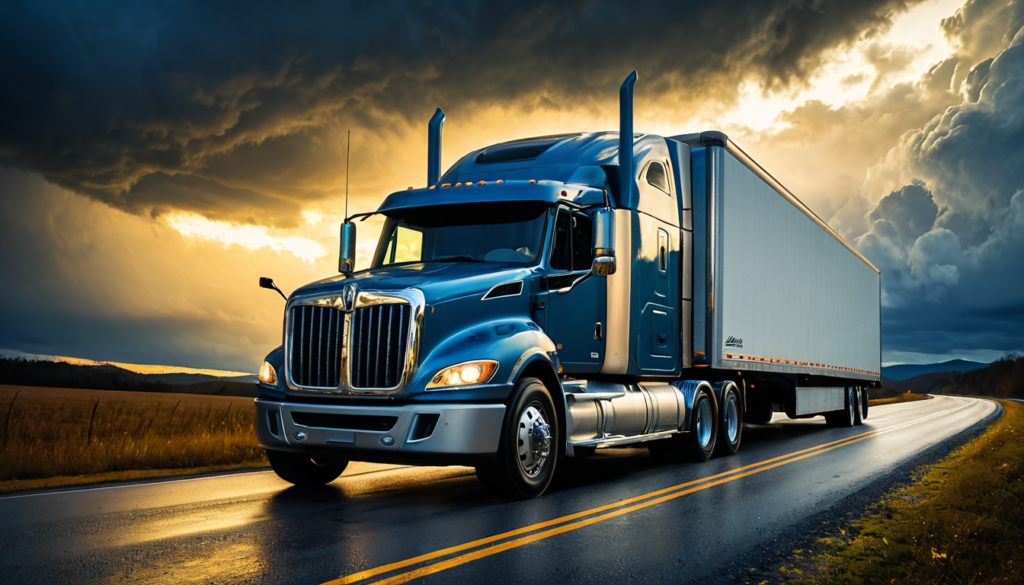
Yancey County 18-Wheeler Accident Attorneys: Fighting for Mountain Communities
The mountains of Western North Carolina don’t forgive mistakes. When an 80,000-pound truck loses control on the steep grades of US-19E or jackknifes on black ice along the winding curves of NC-80, the results are devastating. If you or someone you love has been hurt in a trucking accident in Yancey County, you need more than just a lawyer—you need a team that understands the unique dangers of mountain trucking corridors and knows how to hold negligent trucking companies accountable.
At Attorney911, we’ve spent over 25 years fighting for families just like yours. Our managing partner, Ralph Manginello, has recovered multi-million dollar settlements for catastrophic injury victims, and our associate attorney Lupe Peña brings insider knowledge from his years defending insurance companies—now he uses that expertise to fight for you. We understand the specific hazards that commercial trucks face in Yancey County’s mountain terrain, from brake fade on long descents to shifting cargo on steep grades.
Call us now at 1-888-ATTY-911 for a free consultation. The trucking company already has lawyers protecting them. You deserve the same.
Why 18-Wheeler Accidents in Yancey County Are Different
Yancey County’s geography creates unique dangers that flatland drivers never face. The steep elevation changes, sharp switchbacks, and sudden weather shifts in the Blue Ridge Mountains make commercial trucking here inherently hazardous—and when trucking companies cut corners, catastrophic accidents happen.
The Physics of Mountain Trucking
A fully loaded tractor-trailer can weigh up to 80,000 pounds—twenty times the weight of a typical passenger vehicle. On Yancey County’s mountain grades, this massive weight creates deadly momentum that overheats brakes and makes stopping nearly impossible on long descents.
Consider these critical differences in Yancey County trucking accidents:
- Stopping distances on grades: A truck traveling 55 mph downhill on a 6% grade needs approximately 40% more stopping distance than on flat terrain
- Brake fade: Continuous braking down grades like those found on NC-80 can cause brake temperatures to exceed 500°F, leading to complete brake failure
- Rollover risk: The sharp curves and uneven banking on mountain roads significantly increase the risk of cargo shifts that lead to rollovers
- Weather hazards: Sudden fog, ice, and snow are common in Yancey County’s higher elevations, creating conditions where even experienced drivers lose control
Statistics That Matter for Yancey County Families
Nationwide, over 5,100 people die annually in trucking accidents, with another 125,000+ suffering serious injuries. In North Carolina, trucking accidents claimed hundreds of lives last year alone, with a significant percentage occurring in mountainous western counties like Yancey.
The vast majority of these deaths—76%—occur to occupants of the smaller vehicle. When a truck hits a car or SUV in Yancey County, the physics are brutally simple: the smaller vehicle always loses.
Types of 18-Wheeler Accidents on Yancey County’s Mountain Roads
Mountain terrain produces specific accident patterns that require specialized legal knowledge. Here are the accident types we see most frequently in Yancey County and throughout Western North Carolina:
Brake Failure and Runaway Truck Accidents
This is the mountain truck accident we fear most. When a truck’s brakes overheat on long descents—common on the grades leading into Yancey County from surrounding counties—the driver loses the ability to stop. Runaway trucks barrel downhill at increasing speeds, often crossing into oncoming traffic or careening off the road entirely.
Why it happens in Yancey County:
- Improper braking technique (riding brakes instead of using engine braking)
- Inadequate brake maintenance (worn pads, air brake system leaks)
- Overloaded trailers exceeding brake capacity
- Inexperienced drivers unfamiliar with mountain grades
The law: Under 49 CFR § 393.40, all commercial vehicles must have adequate braking systems. 49 CFR § 396.3 requires systematic inspection and maintenance. When trucking companies ignore these regulations to save money, they put Yancey County families at risk.
Rollover Accidents on Curves
Yancey County’s winding mountain roads create perfect conditions for rollover accidents. When a truck takes a curve too fast—or when improperly secured cargo shifts mid-turn—the high center of gravity of these vehicles causes them to tip onto their sides.
Common causes:
- Speeding on curves (violating 49 CFR § 392.6)
- Cargo shifts due to improper securement (violating 49 CFR § 393.100-136)
- Top-heavy loads that exceed safe center of gravity
- Driver fatigue slowing reaction times for curve navigation
These accidents are particularly dangerous because the trailer often blocks both lanes of traffic, creating secondary collision risks for approaching vehicles.
Jackknife Accidents
During winter weather events—common in Yancey County’s higher elevations—jackknife accidents spike. A jackknife occurs when the trailer swings out perpendicular to the cab, creating a 90-degree angle that sweeps across the roadway.
Why winter increases risk:
- Black ice on shaded mountain curves
- Sudden braking causing trailer to lose traction
- Empty or lightly loaded trailers (more prone to swinging)
- Inexperienced drivers with winter weather operations
In a jackknife, the trailer often hits multiple vehicles or pushes them off the mountain road entirely.
Underride Collisions
When a smaller vehicle slides underneath the trailer of an 18-wheeler, the results are almost always fatal. These accidents are devastatingly common on two-lane mountain roads where narrow shoulders leave no room for evasive maneuvers.
Federal law (49 CFR § 393.86) requires rear impact guards, but many trucks lack adequate side underride protection—particularly dangerous on Yancey County’s narrow roads where cars may slide under during lane departures or off-tracking incidents.
Tire Blowout Accidents
Mountain driving puts extreme stress on tires. The combination of heavy loads, steep grades, and temperature fluctuations in Yancey County leads to tire failures that cause drivers to lose control.
Under 49 CFR § 393.75, tires must meet specific tread depth and condition requirements. 49 CFR § 396.13 requires drivers to inspect tires before every trip. When these inspections are skipped, blowouts happen—and “road gators” (shredded tire debris) create hazards for miles.
Head-On Collisions from Lane Departures
Fatigued or distracted drivers on long-haul routes through Yancey County may drift across the center line, especially on dark, winding mountain roads at night. These accidents are almost always fatal for the occupants of the smaller vehicle due to the combined speed of both vehicles.
FMCSA violations often present:
- 49 CFR § 392.3 (operating while fatigued)
- 49 CFR § 395 (hours of service violations)
- 49 CFR § 392.82 (distracted driving/cell phone use)
Wide Turn Accidents (“Squeeze Play”)
On Yancey County’s narrower roads, 18-wheelers often must swing into oncoming traffic to complete right turns. When drivers fail to check blind spots or signal properly, they squeeze passenger vehicles between the truck and the guardrail or mountainside.
Cargo Spills and Hazmat Incidents
Yancey County’s roads carry significant logging and agricultural traffic. When cargo spills—whether logs, gravel, or chemicals—the debris creates immediate dangers for following vehicles and can close roads for hours.
Legal requirements: 49 CFR § 393.100 requires proper cargo securement capable of withstanding specific force thresholds. When loaders violate these rules, they endanger everyone on the mountain roads.
Who Can Be Held Liable in a Yancey County Trucking Accident?
Most people assume only the truck driver is responsible after an accident. That’s exactly what the trucking companies want you to think. The reality is far more complex—and potentially far more valuable for your recovery.
In 18-wheeler accidents, multiple parties often share liability. At Attorney911, we investigate every possible defendant because more liable parties means more insurance coverage means higher compensation for you.
The Truck Driver
The driver who caused the accident may be personally liable for:
- Distracted driving (texting, GPS use, dispatch communications)
- Fatigued driving beyond federal hours-of-service limits
- Speeding or reckless driving for weather/road conditions
- Impaired driving (alcohol, prescription medications)
- Failure to conduct required pre-trip inspections
As client Ernest Cano said, “Mr. Manginello and his firm are first class. Will fight tooth and nail for you.” We fight to hold drivers accountable when their negligence hurts Yancey County families.
The Trucking Company (Motor Carrier)
This is often the primary target for recovery because trucking companies carry substantial insurance—typically $750,000 to $5 million or more.
Vicarious Liability: Under the legal doctrine of respondeat superior, employers are responsible for their employees’ negligent acts. If the driver was working within the scope of employment, the company pays.
Direct Negligence: We also pursue trucking companies for:
- Negligent hiring: Failing to check driving records or hiring drivers with histories of accidents or violations
- Negligent training: Failing to train drivers on mountain driving techniques, cargo securement, or hours-of-service rules
- Negligent supervision: Failing to monitor driver logs or enforce safety policies
- Negligent maintenance: Putting trucks on Yancey County’s mountain roads with faulty brakes, worn tires, or defective lighting
We subpoena the company’s Driver Qualification Files (required under 49 CFR § 391.51) to prove these failures.
The Cargo Owner and Loading Company
When cargo shifts cause rollovers or spills on Yancey County roads, the company that loaded the truck may be liable. Under 49 CFR § 393.100-136, cargo must be secured to withstand specific forces (0.8g forward, 0.5g rearward and lateral).
If loaders used inadequate tiedowns, failed to balance the load, or overloaded the trailer, they share responsibility for the crash.
Truck and Parts Manufacturers
Defective brakes, steering systems, or tires can cause accidents even when the driver does everything right. Product liability claims against manufacturers can result in substantial additional recoveries.
We investigate whether the truck or specific components had:
- Design defects
- Manufacturing defects
- Inadequate warnings
- Recall history
Maintenance Companies
Third-party mechanics who service trucking fleets may be liable if their negligent repairs caused the accident. This includes:
- Improper brake adjustments
- Failure to identify critical safety issues
- Using substandard parts
- Returning vehicles to service with known defects
Freight Brokers
Brokers who arrange transportation but don’t own the trucks may be liable for negligent carrier selection. If they hired a company with a poor safety record or inadequate insurance to save money, they endangered Yancey County motorists.
Government Entities
In limited circumstances, state or local government may be liable for:
- Dangerous road design on Yancey County highways
- Failure to install adequate signage for steep grades
- Improper snow/ice removal creating hazardous conditions
- Failure to maintain guardrails or barriers
Note: North Carolina’s sovereign immunity laws limit these claims, and strict notice requirements apply. Contact us immediately if you believe road conditions contributed to your accident.
The Critical 48 Hours: Evidence Preservation in Yancey County Cases
The trucking company isn’t waiting to protect themselves. Before the ambulance even leaves the scene in Yancey County, their rapid-response team is already working to minimize their liability. You need to act just as fast.
Why Timing Is Everything
| Evidence Type | Destruction Risk |
|---|---|
| ECM/Black Box Data | Overwrites in 30 days or with new driving events |
| ELD (Electronic Logging Device) Data | May be retained only 6 months |
| Dashcam Footage | Often deleted within 7-14 days |
| Physical Evidence | Truck may be repaired, sold, or evidence cleaned |
| Witness Memories | Fade significantly within weeks |
Once critical evidence is gone, it’s gone forever. That’s why we send spoliation letters within 24 hours of being retained—demanding that the trucking company preserve every piece of evidence related to your accident.
What We Preserve
Electronic Data:
- ECM/Black Box: Shows speed, braking, throttle position, and fault codes in the moments before impact
- ELD Records: Proves hours-of-service violations that indicate fatigued driving
- GPS/Telematics: Tracks the truck’s route and speed history through Yancey County
- Cell Phone Records: Reveals distracted driving (texting, calls, app usage)
- Dashcam Footage: May show exactly what the driver was doing
Driver Records:
- Driver Qualification File (CDL status, medical certification, training records)
- Previous employer inquiries (required under 49 CFR § 391.23)
- Drug and alcohol test results
- Accident and violation history
Vehicle Records:
- Maintenance and inspection logs (required under 49 CFR § 396.3)
- Brake inspection records
- Tire maintenance logs
- Out-of-service orders
Company Records:
- Dispatch logs showing schedule pressure
- Safety policies and training materials
- Previous FMCSA violations and CSA scores
The Spoliation Letter Effect
Once we send a spoliation letter and litigation is anticipated, destroying evidence becomes illegal spoliation. Courts can:
- Instruct juries to assume destroyed evidence was unfavorable to the trucking company
- Impose monetary sanctions
- Enter default judgment in extreme cases
- Award punitive damages for intentional destruction
Don’t wait. Call 888-ATTY-911 today.
Catastrophic Injuries from Yancey County Truck Accidents
When an 80,000-pound truck hits a passenger vehicle on a mountain road, catastrophic injuries are the rule, not the exception. At Attorney911, we understand that your case isn’t about numbers—it’s about your life, your family, and your future.
Traumatic Brain Injury (TBI)
The violent forces in a trucking accident often cause the brain to strike the inside of the skull, resulting in:
- Concussions and post-concussion syndrome
- Diffuse axonal injury (tearing of brain tissue)
- Hematomas (blood pooling in the brain)
- Cognitive impairment and personality changes
As client Chad Harris told us, “You are NOT a pest to them and you are NOT just some client… You are FAMILY to them.” We treat TBI victims with the compassion they deserve while aggressively pursuing the compensation needed for lifelong care.
Our firm has recovered $1.5 million to $9.8 million for TBI victims, depending on severity and long-term impact.
Spinal Cord Injuries and Paralysis
Mountain accidents frequently cause violent impacts that damage the spinal cord:
- Paraplegia: Loss of function below the waist
- Quadriplegia: Loss of function in all four limbs
- Incomplete injuries: Partial nerve damage with some function remaining
These injuries require lifelong medical care, home modifications, and assistance with daily living. Our settlements for spinal cord injuries range from $4.7 million to over $25 million.
Amputations
When trucks crush passenger compartments or when severe burns require surgical removal of limbs, victims face:
- Initial surgery and hospitalization
- Multiple prosthetic fittings (each costing $5,000-$50,000+)
- Replacement prosthetics throughout life
- Extensive physical and occupational therapy
- Psychological trauma and phantom limb pain
We’ve secured $1.9 million to $8.6 million for amputation victims, including a $3.8 million settlement for a client who lost a limb following a car accident with subsequent medical complications.
Severe Burns
Fuel tank ruptures and hazmat incidents in trucking accidents cause devastating burns requiring:
- Skin grafts and reconstructive surgery
- Long-term pain management
- Treatment for infections
- Psychological counseling for disfigurement
Wrongful Death
When trucking accidents take loved ones from Yancey County families, we pursue wrongful death claims that account for:
- Lost future income and benefits
- Loss of companionship and guidance
- Mental anguish of surviving family members
- Funeral and burial expenses
- Medical expenses incurred before death
Our wrongful death settlements range from $1.9 million to $9.5 million.
FMCSA Regulations: The Rules Trucking Companies Break
The Federal Motor Carrier Safety Administration (FMCSA) sets strict safety standards that every commercial truck must follow. When trucking companies violate these rules to save money or time, they endanger everyone on Yancey County roads.
Hours of Service Violations (49 CFR Part 395)
Fatigue causes approximately 31% of fatal truck crashes. Federal rules limit driving time:
- 11-hour driving limit: No more than 11 hours after 10 consecutive hours off duty
- 14-hour window: Cannot drive beyond the 14th consecutive hour on duty
- 30-minute break: Required after 8 cumulative hours of driving
- 60/70-hour limits: Cannot drive after 60 hours in 7 days or 70 hours in 8 days
- 34-hour restart: Required consecutive off-duty period
Since December 18, 2017, most trucks must use Electronic Logging Devices (ELDs) that automatically record driving time. This tamper-resistant data often proves drivers exceeded legal limits—exactly the evidence we use to prove negligence.
Driver Qualification Standards (49 CFR Part 391)
Before a driver can operate a commercial vehicle, the trucking company must verify:
- Valid Commercial Driver’s License (CDL)
- Medical examiner’s certificate (physical qualification)
- Clean driving record
- Ability to read and speak English
- Completion of entry-level driver training
49 CFR § 391.51 requires companies to maintain a Driver Qualification File for every driver. When these files are incomplete or falsified, it proves negligent hiring.
Vehicle Maintenance Requirements (49 CFR Part 396)
Trucking companies must maintain vehicles in safe operating condition through:
- Systematic inspection and maintenance (§ 396.3)
- Pre-trip inspections by drivers (§ 396.13)
- Post-trip reports documenting defects (§ 396.11)
- Annual inspections by qualified mechanics (§ 396.17)
Brake failures—common on mountain grades—are often caused by skipping these requirements.
Cargo Securement Rules (49 CFR Part 393)
Cargo must be secured to withstand:
- 0.8g deceleration (sudden stops)
- 0.5g acceleration (rearward forces)
- 0.5g lateral (side-to-side forces)
For Yancey County’s logging and agricultural trucks, improper securement causes rollovers when cargo shifts on curves.
Drug and Alcohol Testing (49 CFR Part 382)
Commercial drivers must submit to:
- Pre-employment drug testing
- Random testing (minimum rates set by FMCSA)
- Post-accident testing (required within 32 hours for drugs, 8 hours for alcohol)
- Reasonable suspicion testing
49 CFR § 392.5 prohibits alcohol use within 4 hours of duty or while operating the vehicle. A BAC of 0.04% or higher (half the limit for regular drivers) disqualifies a commercial driver.
Mobile Phone Restrictions (49 CFR § 392.80-392.82)
Commercial drivers cannot:
- Text while driving (manual entering of letters/numbers)
- Use hand-held mobile phones while driving (requires leaving seated position to reach)
Violations of these rules often indicate distracted driving at the moment of impact.
North Carolina Law: Critical Deadlines and Rules
Understanding Yancey County’s legal environment is crucial for protecting your rights.
Statute of Limitations
Personal Injury: 3 years from the accident date to file suit
Wrongful Death: 2 years from the date of death
Don’t wait until the last minute. Evidence disappears quickly, and North Carolina’s contributory negligence rule makes early investigation critical.
Contributory Negligence: North Carolina’s Harsh Rule
North Carolina is one of only five jurisdictions still using contributory negligence. Under this harsh rule, if you are found even 1% at fault for the accident, you recover nothing.
This makes aggressive evidence gathering and skilled legal representation essential. The trucking company will try to blame you—we gather the ECM data, witness statements, and expert testimony to prove their driver was 100% at fault.
Damage Caps
North Carolina caps punitive damages at the greater of:
- Three times compensatory damages, OR
- $250,000
There is no cap on compensatory damages (economic and non-economic damages) in personal injury cases.
Commercial Insurance Requirements
Federal law requires minimum liability coverage for trucks operating in Yancey County:
- $750,000 for non-hazardous freight
- $1,000,000 for oil and hazardous materials
- $5,000,000 for certain hazardous cargo
Many carriers carry $1-5 million or more, providing substantial coverage for catastrophic injuries.
Why Yancey County Families Choose Attorney911
When you’re facing the aftermath of a trucking accident in Yancey County, you need more than just any lawyer—you need a team with the experience, resources, and determination to take on the trucking industry and win.
25+ Years of Experience
Ralph Manginello has been fighting for injury victims since 1998. With admission to federal court (U.S. District Court, Southern District of Texas) and experience litigating against Fortune 500 corporations including BP, he brings federal-level expertise to Yancey County trucking cases.
As client Dame Haskett noted, “Consistent communication and not one time did I call and not get a clear answer… Ralph reached out personally.”
The Insurance Defense Advantage
Our associate attorney Lupe Peña spent years working for a national insurance defense firm. He knows exactly how trucking insurance companies evaluate claims, minimize payouts, and deny coverage. Now he uses that insider knowledge to fight for you.
When we negotiate with the trucking company’s insurer, we know their playbook because one of our attorneys used to write it. That’s your advantage.
Multi-Million Dollar Results
We’ve recovered over $50 million for Texas families, including:
- $5+ million for a traumatic brain injury victim struck by a falling log
- $3.8+ million for a client who suffered amputation after a car accident
- $2+ million for a Jones Act maritime back injury
- $2.5+ million for a truck crash victim
As Glenda Walker told us after her case settled, “They fought for me to get every dime I deserved.”
Currently Litigating Major Cases
We’re not a firm that rests on past laurels. We’re currently litigating a $10 million lawsuit against the University of Houston involving fraternity hazing—demonstrating our willingness to take on powerful institutions and win.
We also have deep experience in industrial disaster litigation, having been involved in the BP Texas City refinery explosion litigation following the 2005 disaster that killed 15 workers and injured 170+.
Three Office Locations
With offices in Houston (Main), Austin, and Beaumont, we serve trucking accident victims across Texas and beyond. While we have deep Texas roots, we handle cases throughout the United States using our federal court admission and network of local counsel.
For Yancey County clients, we offer remote consultations and travel to North Carolina when necessary to handle your case.
24/7 Availability and Spanish Language Services
Call us any time at 1-888-288-9911 or (888) 288-9911. Trucking accidents don’t happen on business hours, and neither does our commitment to you.
Hablamos Español. Lupe Peña provides fluent Spanish-language representation. As client Celia Dominguez noted, “Especially Miss Zulema, who is always very kind and always translates.”
What to Do After a Trucking Accident in Yancey County
If you’ve been involved in an 18-wheeler accident in Yancey County, take these steps immediately:
- Call 911 and report all injuries
- Seek medical attention immediately—adrenaline masks serious injuries
- Document everything: Photos of vehicles, scene, skid marks, and your injuries
- Get information: Truck driver’s CDL, insurance, DOT number, and company name
- Witness information: Names and contact numbers of anyone who saw the crash
- Do NOT give statements to the trucking company’s insurance without counsel
- Call Attorney911 at 888-ATTY-911 immediately
Remember: the trucking company is already building their defense. Every hour you wait, evidence disappears. Black box data can be overwritten, dashcam footage gets deleted, and witnesses’ memories fade.
Frequently Asked Questions
How long do I have to file a lawsuit after a trucking accident in Yancey County?
North Carolina gives you 3 years from the accident date to file a personal injury lawsuit, and 2 years for wrongful death claims. However, waiting is dangerous. Critical evidence like ECM data and ELD logs can be destroyed within weeks. Contact us immediately to preserve your evidence.
What if the trucking company says I was partially at fault?
North Carolina follows strict contributory negligence—if you’re found even 1% at fault, you recover nothing. This makes aggressive evidence gathering essential. We gather the ECM data, black box recordings, and witness testimony to prove the truck driver was 100% responsible.
How much is my Yancey County trucking accident case worth?
Values depend on injury severity, medical costs, lost wages, and available insurance. Trucking companies carry $750,000 to $5 million+ in coverage. Our catastrophic injury cases have settled for $1.5 million to $9.8 million+. We offer free consultations to evaluate your specific case.
Will my case go to trial?
Most cases settle before trial, but we prepare every case as if it’s going to trial. Insurance companies offer better settlements when they know your attorneys are willing and able to take the case to a jury. We have the resources and experience to try your case if necessary.
Do I need to pay anything upfront?
No. We work on contingency—33.33% pre-trial, 40% if trial is required. You pay nothing unless we win. We advance all investigation costs. If we don’t recover compensation for you, you owe us nothing.
What if the driver was an independent owner-operator?
Both the driver and the company they were hauling for may be liable. We investigate all contractual relationships and insurance policies to maximize your recovery.
How do I know if the truck driver violated FMCSA regulations?
You need an attorney who understands trucking law. We subpoend ELD records, driver qualification files, and maintenance logs to prove violations. Common violations include hours-of-service breaches, failed drug tests, and inadequate vehicle inspections.
Can I get punitive damages?
Possibly, if the trucking company acted with gross negligence—such as knowingly putting an unqualified driver on the road, falsifying logs, or willfully ignoring safety regulations. North Carolina caps punitive damages at 3x compensatory damages or $250,000, whichever is greater.
What if I don’t have health insurance?
We can help you find medical providers who will treat you on a letter of protection (LOP), meaning they get paid from your eventual settlement. Don’t let lack of insurance prevent you from getting the care you need.
Do you handle cases for Yancey County residents?
Yes. While our offices are in Texas, we handle trucking accident cases nationwide using our federal court admission and network of local counsel. We offer video consultations and travel to North Carolina when necessary for depositions and court appearances.
Contact Attorney911 Today
The trucking company has teams of lawyers working to minimize what they pay you. You deserve the same level of representation fighting for you.
Ralph Manginello and the team at Attorney911 have spent over 25 years standing up to trucking companies and winning multi-million dollar settlements for families just like yours. With Lupe Peña’s insurance defense background giving us insider knowledge of their tactics, we know how to maximize your recovery.
Don’t let the trucking company push you around. Don’t accept a lowball settlement that doesn’t cover your future medical needs. Don’t wait until it’s too late to preserve critical evidence.
Call 1-888-ATTY-911 now for a free consultation.
Hablamos Español. Llame al 1-888-ATTY-911 ahora.
We’re available 24/7, 365 days a year. We answer the phone. We fight for you. We win.
Attorney911
Yancey County 18-Wheeler Accident Attorneys
1177 West Loop S, Suite 1600, Houston, TX 77027
316 West 12th Street, Suite 311, Austin, TX 78701
Beaumont, TX (Available for meetings)
1-888-288-9911
ralph@atty911.com
lupe@atty911.com
attorney911.com
Past results do not guarantee future outcomes. Every case is unique. This information is not legal advice. Consult with an attorney regarding your specific situation.