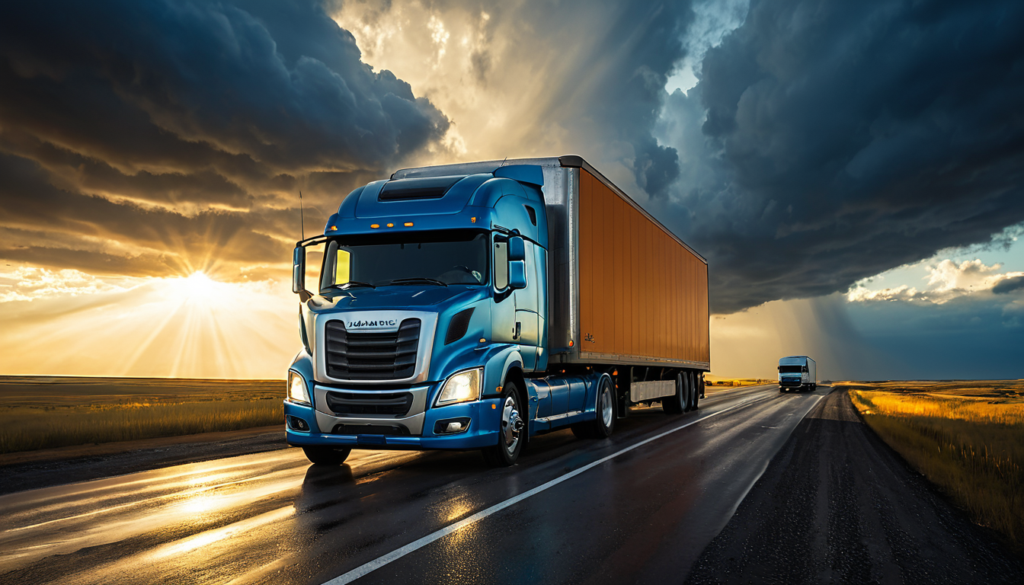
When an 80,000-pound semi-truck loses control on the ice-slicked highways of Adams County, life changes in an instant. One moment you’re headed home to Hettinger or driving toward Reeder on I-94; the next, you’re facing catastrophic injuries, mounting medical bills, and a trucking company that’s already mobilized their lawyers to protect their profits.
We’ve seen it happen too many times on the North Dakota plains. As attorneys who’ve spent over 25 years fighting for trucking accident victims—including time in federal court against the nation’s largest carriers—we know exactly what’s at stake for hardworking families in Adams County. Our managing partner, Ralph Manginello, has been holding trucking companies accountable since 1998, securing multi-million dollar settlements for clients who thought they’d never recover. And with Lupe Peña on our team—a former insurance defense attorney who used to work for the very companies we’re now fighting against—we bring insider knowledge that other firms simply don’t have.
The trucking industry thinks North Dakota’s wide-open spaces mean they can cut corners on safety. They think Adams County families won’t fight back when their drivers violate federal hours-of-service rules or send trucks with bad brakes onto roads glazed with black ice. They’re wrong. Attorney911 answers calls 24/7 at 1-888-ATTY-911, and we don’t back down from battles with Swift, Werner, or any carrier that puts profit over safety.
Why 18-Wheeler Accidents in Adams County Are Different
The Physics of Catastrophe
Your Sedan weighs roughly 4,000 pounds. A fully loaded tractor-trailer barreling down Highway 12 toward Bucyrus can hit 80,000 pounds—that’s twenty times your vehicle’s weight. When that kind of mass collides with a passenger vehicle at highway speeds, the results aren’t just accidents. They’re catastrophes.
The math is brutal: an 80,000-pound truck traveling at 65 mph needs nearly two football fields—525 feet—to come to a complete stop. On Adams County’s winter roads, when black ice forms across I-94 or sudden blizzards reduce visibility to near zero, that distance grows. Meanwhile, the truck driver might be pushing past their federal driving limits, exhausted from a long haul across the Bakken oil fields or rushing to deliver agricultural equipment before a storm hits.
Ralph Manginello knows these highways. He’s litigated cases involving trucks that jackknifed on icy patches near Reeder and rollovers caused by high winds on the open plains. He understands that North Dakota’s six-year statute of limitations for personal injury claims—one of the longest in the nation—doesn’t mean you should wait. Evidence disappears fast. Black box data can be overwritten in 30 days. Dashcam footage gets deleted. And the trucking company? They send rapid-response teams to the scene while you’re still in the ambulance.
The Regulatory Maze
Commercial trucking isn’t just governed by North Dakota traffic laws. These vehicles cross state lines on I-29 and I-94, which means Federal Motor Carrier Safety Administration (FMCSA) regulations apply. Every 18-wheeler must comply with 49 CFR Parts 390 through 399, covering everything from driver qualifications to brake maintenance.
When a trucker violates these rules in Adams County, they create devastating consequences. We’ve seen drivers operate beyond the 11-hour driving limit mandated by 49 CFR § 395.8, pushing through fatigue on the long haul from Fargo to Dickinson. We’ve seen cargo loaded improperly at agricultural facilities in the county, violating 49 CFR § 393.100’s securement standards, leading to rollovers when sudden winds hit. Each violation is proof of negligence—and proof that you deserve compensation.
Lupe Peña spent years inside the insurance defense world. He knows how adjusters use software like Colossus to minimize your pain and suffering. Now he uses that knowledge against them, exposing every tactic they deploy to undervalue Adams County claims. As client Chad Harris told us after we handled his case: “You are NOT a pest to them and you are NOT just some client… You are FAMILY to them.”
Types of 18-Wheeler Accidents We Handle in Adams County
Not all truck accidents are the same, and North Dakota’s unique geography creates specific dangers. Here are the crashes we see most often on Adams County roads:
Jackknife Accidents on Ice
When a truck driver brakes too hard on an icy stretch of I-94 or U.S. Highway 12, the trailer swings wide, creating a 90-degree angle with the cab. The trailer then sweeps across lanes, taking out everything in its path. These accidents often cause multi-vehicle pileups during North Dakota winters.
Jackknifes typically happen because drivers fail to adjust for conditions—a violation of 49 CFR § 392.3, which prohibits operating when ability is impaired by fatigue or weather, and § 392.6, which requires speeds appropriate for conditions. When ice forms near Hettinger or Reeder, truckers must slow down. When they don’t, we hold them accountable.
Rollovers in High Winds
Adams County sits on the open prairie. When winter storms sweep down from Canada or spring brings sustained winds across the plains, empty or lightly loaded trailers become sails. A sudden gust can topple a rig, spilling cargo and crushing nearby vehicles.
Rollovers also stem from cargo securement failures under 49 CFR § 393.100-136. Agricultural loads—grain, equipment, livestock—that shift during transit change a truck’s center of gravity. We’ve handled cases where improper loading at local elevators led to devastating rollovers on county roads.
Underride Collisions
Perhaps the most horrifying truck accidents occur when a passenger vehicle slides underneath the trailer, shearing off the roof. Rear underride guards are required under 49 CFR § 393.86, but many are poorly maintained or inadequate. Side underride guards aren’t federally mandated at all, creating deadly gaps.
These accidents often happen at night on rural Adams County roads when visibility is poor. The injuries are catastrophic—decapitations, traumatic brain injuries, instant death. We’ve recovered millions for families who lost loved ones in underride crashes, proving that the trucking company knew their guards were defective.
Rear-End Collisions
A loaded semi needs 40% more stopping distance than your car. When truckers follow too closely—or when brake systems fail due to poor maintenance under 49 CFR § 396—the result is a crushing impact from behind.
Adams County’s long stretches of highway between towns create fatigue hazards. Drivers zoning out on I-29 miss traffic slowing ahead. Distracted truckers checking dispatch systems or cell phones (violating 49 CFR § 392.82) slam into stopped vehicles at full speed.
Wide Turn Accidents
Rural intersections in Adams County weren’t designed for modern 18-wheelers. When trucks swing wide to make right turns—what the industry calls the “squeeze play”—they trap smaller vehicles in their blind spots. We’ve represented clients crushed between a turning semi and the curb in Hettinger’s commercial areas.
These accidents often involve violations of 49 CFR § 392.11 for improper lane changes and failure to signal. They also frequently implicate negligent training—trucking companies must teach drivers how to handle tight turns in small-town North Dakota.
Tire Blowouts
North Dakota’s extreme temperature swings wreak havoc on tires. The summer heat on asphalt followed by brutal winter cold causes rubber degradation. When a steer tire blows at 75 mph on I-94, the driver loses control instantly.
Under 49 CFR § 393.75, tires must have adequate tread depth—4/32″ on steer tires, 2/32″ on others. Yet we see companies deferring maintenance to save money, sending trucks onto Adams County roads with bald tires prone to blowouts. The debris creates secondary hazards for miles.
Brake Failure
Brake problems contribute to roughly 29% of large truck crashes. Air brake systems require meticulous maintenance under 49 CFR § 396. When companies ignore brake adjustments or allow air leaks, trucks become unguided missiles on downhill grades.
The Bakken oil region’s heavy equipment traffic puts additional strain on braking systems. We’ve investigated cases where trucks hauling oilfield equipment through Adams County failed to stop because maintenance records showed deferred repairs for months.
Cargo Spills
Adams County’s economy runs on agriculture—grain, livestock, and equipment. When loaders fail to secure cargo properly, the results range from lost loads spilling across Highway 12 to rollovers when weight shifts suddenly.
Federal law mandates specific securement for different cargo types under 49 CFR § 393.100-136. Grain loads require specific tiedown calculations. Equipment must be blocked and braced. When loaders ignore these rules—often rushing to get trucks back to the fields during harvest—we pursue every penny.
Head-On Collisions
Fatigue kills on North Dakota’s lonely highways. When truckers violate the 11-hour driving limit or fall asleep at the wheel, they cross the centerline. The closing speed of two vehicles each traveling 65 mph creates impact forces that few survive.
These cases often involve hours-of-service violations under 49 CFR Part 395. We subpoena Electronic Logging Device (ELD) data to prove the driver was logging illegal hours, then build cases for punitive damages when companies knowingly put tired drivers behind the wheel.
Who Can Be Held Liable in an Adams County Trucking Crash?
Most people think you just sue the driver. That’s exactly what the trucking industry hopes you believe. In reality, multiple parties may owe you compensation, and each carries separate insurance policies. We investigate every angle.
The Truck Driver
The individual behind the wheel may be personally liable for negligence—speeding, distracted driving, fatigued operation, or impairment. We pull their driving record, examine their CDL status under 49 CFR Part 391, and review their medical certifications. If they shouldn’t have been driving, we prove it.
The Trucking Company (Motor Carrier)
This is where the deep pockets usually reside. Under the doctrine of respondeat superior, employers are responsible for their employees’ negligent acts. But we also pursue direct negligence claims:
- Negligent Hiring: Did the company check the driver’s record? Under 49 CFR § 391.51, they must maintain Driver Qualification Files proving they verified driving history, medical fitness, and previous employment.
- Negligent Training: Did they teach the driver how to handle North Dakota winters? How to secure cargo? How to manage fatigue?
- Negligent Supervision: Did they monitor the driver’s ELD logs for violations? Did they know the driver was pushing past legal limits?
- Negligent Maintenance: Did they skip brake inspections or defer repairs to save money? Records under 49 CFR Part 396 will tell us.
We’re currently litigating cases against major carriers operating in North Dakota, and our track record includes victories against Fortune 500 companies. Ralph Manginello’s federal court admission to the Southern District of Texas—and his similar admission in New York—means we can handle interstate cases that cross jurisdictional lines.
The Cargo Owner and Loading Company
Adams County’s grain elevators and agricultural facilities often contract with trucking companies to move product. When loaders overload trucks or fail to secure cargo properly, they become liable. We examine bills of lading, loading procedures, and weight distribution records.
The Maintenance Company
Third-party mechanics who service trucks must do so properly. When brake adjustments fail or air system repairs are botched, we pursue the maintenance company under theories of negligent repair.
The Truck and Parts Manufacturers
Sometimes the truck itself is the problem. Defective brake systems, faulty steering mechanisms, or inadequate underride guards can trigger product liability claims against manufacturers like Freightliner, Peterbilt, or component suppliers.
The Freight Broker
Brokers who arrange transportation but don’t own the trucks may be liable for negligent selection. If a broker hired a carrier with a terrible safety record—visible in FMCSA’s CSA scores—to save money, they share the blame.
The Truck Owner
In owner-operator arrangements, the person who owns the tractor may carry separate insurance from the company hauling the goods. We examine lease agreements to find every policy.
Government Entities
Adams County maintains its roads, and the State of North Dakota oversees I-29 and I-94. When dangerous road conditions—poor drainage, inadequate signage, or missing guardrails—contribute to accidents, we pursue claims against the responsible agencies. Note: North Dakota requires notice within 180 days for claims against political subdivisions, so time is short.
The 48-Hour Evidence Preservation Protocol: Act Now or Lose Forever
Here’s what the trucking company doesn’t want you to know: They have rapid-response teams. Within hours of a crash on an Adams County highway, their investigators are on the scene, their lawyers are drafting statements, and their risk managers are working to minimize your claim.
Meanwhile, critical evidence is disappearing.
Black Box Data: The ECM (Engine Control Module) records speed, braking, throttle position, and fault codes. It can be overwritten in 30 days or less.
ELD Records: Electronic logs showing whether the driver violated hours-of-service rules are only required to be kept for 6 months under FMCSA regulations.
Dashcam Footage: Many trucks have forward-facing and cab-facing cameras. This footage often gets “lost” within days.
Physical Evidence: Skid marks fade. Debris gets cleaned up. The truck itself gets repaired or sold.
Witness Memories: The recollection of other drivers on I-94 that day degrades within weeks.
That’s why we send spoliation letters within 24 hours of being retained. These legal notices put the trucking company on notice that they must preserve:
- ECM/Black box downloads
- ELD data and paper logs
- Driver Qualcomm messages
- Maintenance records for the previous year
- Driver Qualification Files
- Cell phone records
- Post-trip inspection reports
- The actual truck and trailer (not just photos)
If they destroy evidence after receiving our letter, courts can instruct juries to assume the destroyed evidence was harmful to the defense. In extreme cases, we can win default judgments for spoliation.
Adams County residents shouldn’t have to worry about evidence preservation while recovering from catastrophic injuries. That’s our job. Call 1-888-ATTY-911 immediately after any trucking accident. We answer 24/7 because trucking companies don’t sleep, and neither do we when justice is on the line.
Catastrophic Injuries and What They’re Worth
Trucking accidents don’t cause fender benders. They cause devastation. Here are the injuries we see most often and the compensation ranges we’ve secured for similar cases:
Traumatic Brain Injury (TBI)
When an 80,000-pound truck strikes a passenger vehicle, the brain slams against the skull. TBI ranges from concussions with lingering cognitive issues to severe injuries requiring lifetime care.
Symptoms include memory loss, personality changes, chronic headaches, and inability to concentrate. Treatment costs range from $85,000 for moderate injuries to over $3 million for severe cases requiring round-the-clock care.
Our Track Record: We’ve recovered between $1,548,000 and $9,838,000 for traumatic brain injury victims. As client Glenda Walker said: “They fought for me to get every dime I deserved.”
Spinal Cord Injuries
Damage to the spinal cord often results in paraplegia or quadriplegia. The lifetime care costs are staggering: $1.1 million to $5 million or more, depending on the level of injury and age of the victim.
We’ve handled cases where clients lost everything—their ability to walk, work, or play with their children. Our settlements in spinal cord cases range from $4,770,000 to $25,880,000, ensuring our clients can afford home modifications, wheelchairs, and lifelong medical support.
Amputation
When trucks crush limbs or accidents cause such severe damage that surgeons must amputate, the impact is permanent. Beyond the initial trauma, victims face phantom pain, prosthetic costs ($5,000 to $50,000 per device), and multiple replacements over a lifetime.
Client Kiimarii Yup lost his leg after a collision with a commercial vehicle. We secured a settlement that allowed him to get a state-of-the-art prosthetic and resume his life. Our amputation case results range from $1,945,000 to $8,630,000.
Wrongful Death
When a trucking accident takes a loved one, the loss is immeasurable. While no amount of money brings them back, North Dakota law allows families to recover for lost income, loss of consortium, mental anguish, and funeral expenses.
We’ve recovered between $1,910,000 and $9,520,000 in wrongful death cases. These claims must be filed within North Dakota’s two-year statute of limitations for wrongful death—shorter than the six-year limit for personal injury, so families must act quickly.
Severe Burns
Tanker truck accidents in the Bakken region can cause fires and explosions. Burns covering large surface areas require skin grafts, multiple surgeries, and years of rehabilitation. The pain is excruciating and permanent.
North Dakota Law: Your Rights and Limitations
Adams County residents benefit from some of the most plaintiff-friendly laws in the nation—but also face unique challenges.
Statute of Limitations
North Dakota provides six years from the date of injury to file a personal injury lawsuit—one of the longest windows in the United States. However, wrongful death claims must be filed within two years from the date of death.
Don’t let the longer timeline lull you into complacency. Evidence preservation is immediate. Witnesses move. Trucks get repaired. Black boxes get overwritten. We recommend contacting an attorney within days, not years.
Comparative Negligence
North Dakota follows a “modified comparative fault” rule with a 50% bar. This means you can recover damages if you’re less than 50% at fault for the accident. However, your recovery is reduced by your percentage of fault. If you’re found 30% responsible, you recover 70% of your damages.
Trucking companies and their insurers will try to shift blame to you—claiming you were speeding, following too closely, or failed to avoid the collision. We combat this with ECM data, ELD records, and accident reconstruction experts who prove what really happened on that Adams County highway.
Punitive Damages
When trucking companies act with gross negligence—knowingly keeping dangerous drivers on the road, falsifying maintenance records, or destroying evidence—North Dakota allows punitive damages. These are capped at the greater of two times compensatory damages or $250,000, but in catastrophic cases, this can still result in substantial additional awards.
Insurance Coverage: Why Trucking Cases Are Different
Federal law mandates that commercial carriers carry far more insurance than passenger vehicles:
- Non-hazardous freight: $750,000 minimum
- Oil and petroleum: $1,000,000 minimum
- Hazardous materials: $5,000,000 minimum
Many carriers carry $1 million to $5 million in coverage, with excess policies above that. This means catastrophic injuries can actually be compensated, unlike typical car accidents where policies max out at $50,000 or less.
But accessing these funds requires knowing how to navigate commercial insurance policies, MCS-90 endorsements, and intermodal equipment coverage. Lupe Peña’s background defending these carriers means he knows where the money is hidden and how to access it.
Frequently Asked Questions
How long do I have to file an 18-wheeler accident lawsuit in Adams County?
You have six years from the date of injury for personal injury claims, but only two years for wrongful death. However, you should never wait that long. Critical evidence disappears within days.
What if the trucking company calls me with a settlement offer?
Don’t accept it. Early offers are designed to close your claim before you understand the full extent of your injuries. Once you accept, you waive your right to future compensation. Talk to us first at 888-ATTY-911.
Can I recover damages if I was partially at fault?
Yes, under North Dakota’s comparative negligence law, as long as you’re less than 50% at fault. Your recovery is simply reduced by your percentage of responsibility.
What is a spoliation letter and why does it matter?
It’s a legal notice requiring the trucking company to preserve evidence. Without it, they may legally destroy black box data and maintenance records. We send these immediately upon taking your case.
How much is my case worth?
It depends on injury severity, medical costs, lost earning capacity, and insurance coverage. Trucking cases often settle for hundreds of thousands to millions of dollars. We’ve recovered over $50 million for clients across all practice areas.
Who will handle my case at Attorney911?
Ralph Manginello personally oversees major trucking litigation, supported by Lupe Peña and our dedicated staff including case managers like Leonor, praised by clients for keeping them informed and getting them into doctors immediately.
Do you handle cases in rural Adams County or just the cities?
We handle trucking accidents across Adams County—whether they occur on I-94 near Reeder, on Highway 12 between Hettinger and Bucyrus, or on rural county roads. We know these roads, the local courts, and the agricultural shipping patterns that contribute to accidents.
What if I don’t have health insurance to pay for treatment?
We work with medical providers who accept letters of protection, meaning they get paid when your case settles. Don’t let lack of insurance delay treatment.
Why Adams County Families Choose Attorney911
When Donald Wilcox came to us after another firm rejected his case, we didn’t turn him away. As he later told us: “One company said they would not accept my case. Then I got a call from Manginello… I got a call to come pick up this handsome check.”
That’s the Attorney911 difference. We don’t see case numbers. We see families. We see parents who can’t play with their kids because of spinal injuries. We see widows struggling to pay bills after a breadwinner was killed by a fatigued trucker.
Ralph Manginello brings 25 years of trial experience, federal court admission, and a history of taking on Fortune 500 defendants like BP in the Texas City refinery explosion litigation. Lupe Peña brings the insider knowledge of how insurance companies evaluate claims—knowledge he now uses to maximize your recovery.
We have offices in Houston, Austin, and Beaumont, but we serve 18-wheeler accident victims nationwide, including throughout North Dakota. We offer free consultations, work on contingency (you pay nothing unless we win), and we speak Spanish. Hablamos Español—llame a Lupe Peña al 1-888-288-9911.
Don’t let the trucking company push you around. Don’t let their insurance adjuster tell you your pain isn’t worth much. Don’t let evidence disappear while you wait.
If you’ve been hurt in an 18-wheeler accident in Adams County, call 1-888-ATTY-911 now. The clock started ticking the moment the truck hit you. We’re ready to fight for every dime you deserve.
Attorney911. Because trucking companies shouldn’t get away with it.