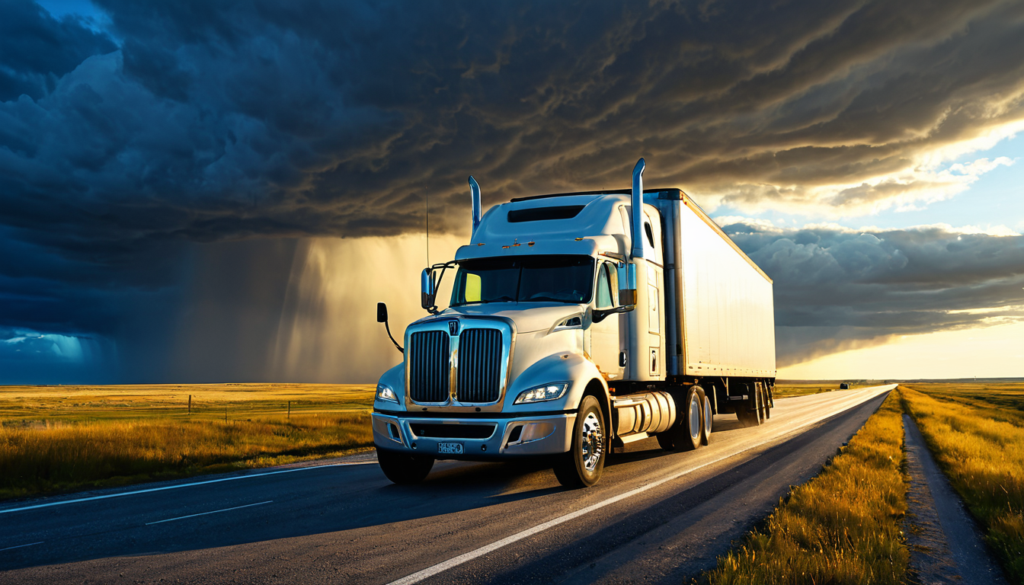
18-Wheeler Accident Attorneys in Dickey County, North Dakota
When 80,000 Pounds Changes Everything on Dickey County Roads
The impact came without warning. One moment you’re driving along US-281 through Dickey County, heading toward Ellendale or Oakes, and the next an 80,000-pound semi-truck has changed your life forever. Maybe it happened on a slick winter morning when a trucker lost control on black ice. Perhaps it was on a long stretch of rural highway where fatigue finally caught up with a driver pushing beyond federal limits. Whatever the circumstances, if you’ve been hurt in an 18-wheeler accident in Dickey County, you’re facing a battle that started the moment the collision occurred—and the trucking company started theirs before the ambulance even arrived.
We know Dickey County’s roads. We understand how North Dakota’s brutal winters create deadly conditions for trucks that can’t stop on icy US-281 or ND-11. We’ve seen what happens when trucking companies cut corners on maintenance or push drivers to violate hours-of-service regulations on the long hauls through the Great Plains. At Attorney911, we’ve spent over 25 years fighting for victims just like you—people who never asked to be caught in the path of a negligent truck driver.
Ralph Manginello, our managing partner, has been holding trucking companies accountable since 1998. With federal court admission to the Southern District of Texas and a track record that includes multi-million dollar victories against Fortune 500 corporations, he brings the kind of firepower you need when facing a trucking company with teams of lawyers. And here’s what gives our clients an unfair advantage: our associate attorney Lupe Peña spent years working inside the insurance defense industry. He knows exactly how trucking insurers evaluate claims, minimize payouts, and train their adjusters to lowball victims. Now he uses that insider knowledge to fight against them.
Time isn’t on your side. Black box data can be overwritten in 30 days. Dashcam footage often disappears within a week. The trucking company has already dispatched its rapid-response team to protect their interests. You need someone protecting yours—starting today. Call 1-888-ATTY-911 now for a free consultation. We work on contingency, which means you pay nothing unless we win your case.
Understanding Dickey County’s Trucking Corridors and Risks
Dickey County sits at the crossroads of North Dakota’s agricultural heartland. While we might not have the Bakken oil fields in our backyard, we have something just as dangerous—endless miles of rural highways where truckers hauling grain, livestock, and equipment push the limits of safety and endurance.
The Highways That Cut Through Dickey County
US-281 runs north-south through the heart of Dickey County, connecting Ellendale and Oakes to larger corridors. This isn’t just a local road—it’s a vital artery for agricultural freight moving between Canada and the central United States. Trucks rumble down US-281 day and night, hauling wheat from the elevators in Forbes and Ludden, carrying cattle to market, and transporting heavy equipment to farms across the region.
ND-11 cuts east-west through the county, intersecting with US-281 near Ellendale. These state highways might seem quieter than the interstates, but they’re often more dangerous. Narrow shoulders, limited visibility during North Dakota’s notorious blizzards, and the lack of lighting make them treacherous when 18-wheelers encounter ice or blowouts.
Proximity to I-29 and I-94 means Dickey County also sees significant overflow traffic. When accidents or weather close down the interstates, truckers divert onto our county roads—often without adjusting their speed for narrower lanes or rural intersections. This rerouting creates dangerous conditions for local drivers who aren’t expecting heavy commercial traffic on US-281 or the county’s secondary roads.
Agricultural Trucking: A Hidden Danger
Dickey County’s economy runs on agriculture. During harvest season, grain trucks, combines, and semi-trailers flood our highways. But these aren’t just any trucks—many are owner-operators or seasonal operators who might not follow the same safety protocols as major carriers. Overloaded trailers, improper cargo securement, and drivers unfamiliar with North Dakota’s weather patterns create a perfect storm for accidents.
The grain elevators in Ellendale, Oakes, and Forbes attract dozens of trucks daily during peak season. These trucks often travel short distances but make frequent stops, creating unpredictable traffic patterns on rural roads. When a grain truck blows a tire or jackknifes on an icy stretch of ND-11, the results are catastrophic for any passenger vehicle nearby.
Winter Weather: Dickey County’s Deadliest Threat
North Dakota winters are brutal, and Dickey County is no exception. From October through April, black ice, ground blizzards, and whiteout conditions turn our highways into danger zones. An 18-wheeler needs nearly two football fields to stop on dry pavement—on ice, that distance doubles or triples.
Truckers who don’t respect Dickey County’s winter conditions cause devastating accidents. They fail to chain up when crossing icy stretches. They drive too fast for visibility conditions during ground blizzards that sweep across the open plains. They underestimate how quickly temperatures drop, causing brake lines to freeze or tires to lose traction.
We recently investigated a case where a trucker claimed he was driving “safely” through a snowstorm on US-281 near Ellendale. The black box data revealed he was traveling 65 mph in near-zero visibility—violating 49 CFR § 392.14, which requires drivers to slow down or stop during hazardous conditions. That data made the difference between a denied claim and a substantial settlement for our client.
Federal Trucking Regulations: The Rules Truckers Break on Dickey County Roads
Every commercial truck rolling through Dickey County is governed by the Federal Motor Carrier Safety Administration (FMCSA) regulations, codified in 49 CFR Parts 390-399. These aren’t just bureaucratic rules—they’re lifelines designed to keep you safe. When truckers and trucking companies violate them, they become liable for the devastation they cause.
Part 395: Hours of Service—The Fatigue Factor
Federal law limits how long a truck driver can operate. Under 49 CFR § 395.3, a driver carrying property (the vast majority of trucks on Dickey County roads) cannot drive more than 11 hours after 10 consecutive hours off duty. They can’t drive beyond the 14th consecutive hour after coming on duty, and they must take a 30-minute break after 8 cumulative hours of driving.
But here’s what happens on the long stretches of I-29 and I-94 near Dickey County: Truckers get behind schedule due to weather or loading delays in Fargo or Grand Forks. To make up time, they push beyond the 11-hour limit. They falsify their Electronic Logging Devices (ELDs) or paper logs. They trade sleep for miles, creating rolling death traps on our highways.
When we investigate Dickey County trucking accidents, we subpoena the ELD data immediately. That electronic trail doesn’t lie. It shows exactly when the driver started, when they should have stopped, and how many hours of fatigue they had accumulated when they slammed into your vehicle.
Part 393: Cargo Securement—When Loads Kill
A truck hauling grain from the elevators in Forbes or Ludden might seem harmless compared to a chemical tanker, but improperly secured agricultural loads kill just as effectively. Under 49 CFR §§ 393.100-136, cargo must be contained, immobilized, or secured to prevent leaking, spilling, or shifting that affects vehicle stability.
We’ve seen cases where grain shifted suddenly on a curve along ND-11, causing a rollover that crushed a passenger vehicle. We’ve investigated accidents where unsecured farm equipment fell from flatbeds onto US-281. When a trucking company or loading facility fails to follow these federal securement standards, they’re liable for every injury they cause.
Part 391: Driver Qualification—Who’s Behind the Wheel?
Before a driver can legally operate an 18-wheeler through Dickey County, they must meet strict qualification standards under Part 391. The trucking company must maintain a Driver Qualification (DQ) File containing:
- A valid Commercial Driver’s License (CDL)
- Medical examiner’s certificate (proving they’re physically fit)
- Three years of driving history
- Drug and alcohol test results
- Proof they can safely operate the vehicle
Too often, trucking companies cut corners on hiring. They put drivers with suspended licenses behind the wheel. They hire operators with histories of DUIs or failed drug tests. They skip the medical certifications required for operating in North Dakota’s challenging conditions. When we find these violations in your case, we don’t just sue the driver—we sue the company for negligent hiring.
Part 396: Inspection and Maintenance—The Brake Failure Cases
North Dakota’s harsh weather destroys truck brakes. Salt, ice, and extreme cold cause corrosion and wear that would get a passenger car pulled over immediately. Under 49 CFR § 396.3, trucking companies must systematically inspect, repair, and maintain their vehicles. Drivers must conduct pre-trip inspections covering service brakes, parking brakes, steering mechanisms, lighting, tires, and emergency equipment.
Yet we constantly find maintenance records showing trucks were sent onto I-29 or US-281 with out-of-service brake violations, worn tires that can’t handle ice, or lighting systems that fail in blizzard conditions. When a trucking company sends an unsafe vehicle onto Dickey County roads, they’re playing Russian roulette with your family’s lives.
Part 392: Driving Rules—Speeding, Distraction, and Weather
Under 49 CFR § 392.3, no driver can operate a commercial vehicle while impaired by fatigue, illness, or any cause that makes it unsafe. Section 392.6 prohibits scheduling runs that require speeding. Section 392.82 bans handheld mobile phone use while driving.
In Dickey County, we see these violations constantly. Drivers texting while navigating the curves near Ellendale. Truckers pushing through whiteout conditions on US-281 because their dispatcher threatened their job if they stopped. Speeding to make the grain elevator before closing time. Each violation is evidence of negligence that strengthens your case.
Types of 18-Wheeler Accidents on Dickey County Roads
Not all truck accidents are the same. The geography of Dickey County and the nature of agricultural and long-haul trucking create specific accident patterns that require specialized legal approaches.
Jackknife Accidents: The Winter Killer
Jackknife accidents occur when a truck’s trailer swings out perpendicular to the cab, forming a “V” shape that sweeps across all lanes of traffic. In Dickey County, these often happen on icy stretches of US-281 or ND-11 when a driver brakes suddenly on a curve.
The physics are unforgiving. An empty or lightly loaded trailer (common when trucks are heading to pick up grain) has less traction and is more prone to swinging out. When it happens at 55 mph on a rural highway, there’s nowhere for oncoming traffic to go. We’ve represented families who met a jackknifed trailer on a blind curve near Ludden—there was no escape.
Jackknife accidents typically involve violations of 49 CFR § 393.48 (brake system malfunction) or § 392.6 (speeding for conditions). The black box data often shows the driver applied brakes improperly for the road conditions, or that the braking system was so poorly maintained it couldn’t handle an emergency stop.
Rollover Accidents: Top-Heavy and Deadly
Rollovers happen when an 18-wheeler tips onto its side or roof. On the rural roads of Dickey County, these often occur when a truck takes a curve too fast—especially when hauling liquid cargo like fuel or milk that “sloshes” and shifts the center of gravity.
ND-11 has several curves near the James River that have seen multiple rollover accidents. When a fully loaded grain truck rolls, it often spills its cargo across the highway, creating secondary accidents as other vehicles slide on grain or collide with the overturned trailer. The cleanup closes roads for hours, but the injuries last a lifetime.
Rollovers frequently involve cargo securement violations under Part 393 or speed violations under § 392.6. We investigate the loading process—if the grain elevator in Forbes overloaded the trailer or failed to distribute the weight evenly, they may share liability for your injuries.
Underride Collisions: The Invisible Killer
Underride accidents are among the most horrific. A passenger vehicle crashes into the side or rear of a trailer and slides underneath, with the trailer shearing off the roof of the car. Under 49 CFR § 393.86, trailers manufactured after January 26, 1998, must have rear impact guards to prevent this. But many trucks on rural North Dakota roads have inadequate guards, missing guards, or guards that fail upon impact.
Dickey County’s rural intersections are particularly dangerous. When a truck fails to yield or runs a stop sign on US-281, smaller vehicles T-bone the trailer and slide underneath. There are no federal requirements for side underride guards—meaning trucking companies can legally operate trucks that are essentially guillotines on wheels. When we handle underride cases, we investigate whether the trucking company chose not to install optional side guards, weighing the cost of human life against their profit margins.
Rear-End Collisions: Stopping Distance Disasters
A loaded 18-wheeler traveling at 65 mph needs 525 feet to stop—nearly two football fields. On I-29 or the straightaways near Oakes, truckers who follow too closely or drive distracted rear-end smaller vehicles with catastrophic force.
These accidents often involve Hours of Service violations. A fatigued driver on the 14th hour of his shift has slowed reaction times. By the time he sees brake lights ahead on US-281, it’s too late. We subpoena the ELD data and cell phone records to prove the driver was either beyond legal driving limits or distracted by dispatch communications at the moment of impact.
Tire Blowouts: “Road Gators” on Rural Highways
North Dakota’s extreme temperature swings—sometimes 40 degrees in a single day—destroy truck tires. Under 49 CFR § 393.75, truck tires must have minimum tread depth (4/32″ on steer tires, 2/32″ on others). But during harvest season, grain trucks often run on bald tires to save money, and long-haul trucks crossing Dickey County carry retreads that fail without warning.
When a steer tire blows at highway speed on I-94, the driver loses control immediately. The “road gator”—the rubber debris left behind—causes secondary accidents as vehicles swerve to avoid it. We investigate maintenance records to find if the trucking company deferred tire replacement to save a few hundred dollars, trading your safety for their profit.
Wide Turn Accidents: The “Squeeze Play”
Grain elevators and farm equipment dealers throughout Dickey County require trucks to make tight turns onto narrow county roads. When an 18-wheeler swings wide to the left before making a right turn into the elevator in Ellendale, they create a gap that smaller vehicles enter. The truck then cuts back right, crushing the vehicle against the curb or the truck itself.
These accidents involve failure to signal, inadequate mirror checks, or simply poor driver training. Under 49 CFR § 392.11 and state traffic laws, truckers must ensure the lane is clear before completing their turn. When they don’t, we hold them accountable.
Brake Failure on Long Descents
While Dickey County doesn’t have mountain passes, the approaches to the James River valley and the long grades on US-281 create situations where brakes overheat and fail. Under Part 396, trucking companies must maintain brake systems and drivers must conduct pre-trip inspections. But when a truck descends a long grade with improperly adjusted air brakes, the result is a runaway truck that can’t stop for the intersection at the bottom.
Who Can Be Held Liable in Your Dickey County Trucking Accident?
Unlike a simple car accident where usually only one driver is at fault, 18-wheeler accidents involve a web of potentially liable parties. We investigate every possible defendant because more liable parties mean more insurance coverage—and that means full compensation for your injuries.
The Truck Driver
The driver who caused the accident may be personally liable for negligent conduct including:
- Speeding or reckless driving on icy Dickey County roads
- Distracted driving (texting, using dispatch devices)
- Fatigued driving beyond the 11-hour federal limit
- Driving under the influence (though North Dakota has strict DUI laws for CDL holders at .04 BAC)
- Failing to conduct pre-trip inspections
- Violating traffic laws (running stop signs on rural intersections)
We gather the driver’s history, including previous accidents, violations, and whether they had the proper endorsements for their cargo.
The Trucking Company/Motor Carrier
This is often your primary recovery target because they carry the highest insurance limits ($750,000 to $5 million). Under the doctrine of respondeat superior, employers are liable for their employees’ negligent acts. But we also look for direct negligence:
- Negligent Hiring: Did they check the driver’s background? Did they know about previous DUIs?
- Negligent Training: Did they train the driver for North Dakota winter conditions?
- Negligent Supervision: Did they monitor ELD compliance or ignore HOS violations?
- Negligent Maintenance: Did they defer brake repairs to save money?
- Negligent Scheduling: Did they pressure the driver to violate hours-of-service to make a delivery deadline?
We obtain the company’s CSA (Compliance, Safety, Accountability) scores from FMCSA. A pattern of maintenance violations or hours-of-service infractions proves the company has a culture that prioritizes profit over safety.
The Cargo Owner/Shipper
The grain elevator in Forbes that loaded the truck, the farm cooperative in Oakes, or the equipment dealer in Ellendale may be liable if they:
- Provided improper loading instructions
- Overloaded the vehicle beyond legal weight limits (North Dakota highways have strict weight restrictions)
- Failed to disclose hazardous nature of cargo
- Required the driver to speed to meet delivery windows
The Cargo Loading Company
Third-party loaders at grain elevators often rush during harvest season. If they failed to properly secure the load, distributed weight unevenly, or didn’t use proper tiedowns under 49 CFR Part 393, they share liability for resulting rollover or spill accidents.
The Truck and Parts Manufacturer
Defective brakes, steering systems, or tires cause accidents even when the driver and company did everything right. If a manufacturer sent a truck onto I-29 with a defective anti-lock braking system or faulty tires, we pursue product liability claims against them.
The Maintenance Company
Many trucking companies outsource maintenance to third parties. When a mechanic in Fargo or Jamestown returns a truck to service with known brake defects, incorrectly adjusted air brakes, or faulty lighting, they can be held liable for negligent repairs.
The Freight Broker
Brokers who arrange transportation without verifying carrier safety records may be liable for negligent selection. If a broker chose the cheapest carrier despite knowing they had terrible safety scores, and that carrier then injured you on US-281, the broker shares the blame.
Government Entities
Dickey County and the State of North Dakota may be liable for dangerous road design—intersections with poor visibility, lack of signage warning of truck traffic, or failure to maintain roads during winter storms. However, sovereign immunity limits these claims and requires specific notice procedures (North Dakota Century Code § 32-12.1), so immediate legal consultation is essential.
The 48-Hour Evidence Preservation Protocol: Why You Must Act Now
Evidence in trucking accident cases disappears faster than you think. While you’re in the hospital in Jamestown or Fargo recovering from your injuries, the trucking company is already building their defense. We can’t stress this enough: the clock started ticking the moment the crash occurred.
Critical Evidence Timelines
| Evidence Type | Destruction Risk |
|---|---|
| ECM/Black Box Data | Overwrites in 30 days |
| ELD Data | May be retained only 6 months; often “lost” sooner |
| Dashcam Footage | Deleted within 7-14 days |
| Surveillance Video | Business cameras overwrite in 7-30 days |
| Driver Qualification File | Can be “updated” or altered if not preserved |
| Maintenance Records | May be conveniently lost if subpoenaed late |
The Spoliation Letter: Your Legal Shield
Within 24 hours of signing with Attorney911, we send a spoliation letter to the trucking company, their insurer, and all potentially liable parties. This formal legal notice demands preservation of:
Electronic Data:
- ECM/EDR data (speed, braking, throttle position)
- ELD records showing hours of service
- GPS and telematics data
- Dashcam footage
- Cell phone records
Driver Records:
- Complete Driver Qualification File
- Employment application and background check
- Medical certifications
- Drug and alcohol test results
- Previous accident history
Vehicle Records:
- Maintenance and repair logs
- Inspection reports (pre-trip and post-trip)
- Out-of-service orders
- Tire and brake replacement history
Company Records:
- Dispatch logs showing schedule pressure
- Safety policies and training curricula
- CSA scores and safety history
Once this letter is sent, destroying evidence becomes “spoliation”—a serious legal violation. North Dakota courts can instruct juries to assume destroyed evidence would have been unfavorable to the trucking company, or impose monetary sanctions severe enough to force a settlement.
Why North Dakota’s Weather Makes Evidence Preservation Urgent
North Dakota’s weather destroys physical evidence. Snow covers tire marks. Ice melts and washes away debris. Road conditions change within hours. We deploy accident reconstruction experts to Dickey County immediately to photograph the scene, measure skid marks, and document weather conditions before they change.
In one recent case near Ellendale, a trucking company’s insurer claimed their driver “couldn’t have avoided the accident due to ice.” Our team reached the scene within 12 hours, photographed the road conditions, and downloaded weather data showing the ice had formed hours before the crash—giving the driver ample warning to slow down. That evidence added $400,000 to the settlement.
Catastrophic Injuries: The True Cost of Dickey County Trucking Accidents
An 80,000-pound truck against a 4,000-pound car isn’t a fair fight. The physics guarantee catastrophic injuries. We’ve seen the aftermath of these crashes at the hospitals in Oakes and Jamestown, and we know the lifetime costs our clients face.
Traumatic Brain Injury (TBI)
TBI occurs when the brain impacts the skull during sudden deceleration. In trucking accidents, this happens when your head strikes the steering wheel, dashboard, or window—or even from the sheer force of the collision causing your brain to shake inside your skull.
Symptoms may not appear immediately. You might walk away from the crash feeling “shaken up,” then days later experience headaches, confusion, memory loss, mood changes, or difficulty concentrating. These “mild” TBIs can permanently alter your personality and ability to work.
Severe TBIs result in extended unconsciousness, permanent cognitive impairment, and the need for 24/7 care. Our firm has recovered $1.5 million to $9.8 million for TBI victims, ensuring they have resources for lifetime care.
Spinal Cord Injuries and Paralysis
The crushing force of an 18-wheeler often causes spinal cord damage. Depending on the level of injury, victims may suffer:
- Paraplegia: Loss of function below the waist
- Quadriplegia: Loss of function in all four limbs
- Incomplete injuries: Some nerve function remains, but with chronic pain and limitation
Lifetime care costs for spinal cord injuries range from $1.1 million (paraplegia) to $5 million+ (quadriplegia). These figures don’t include lost wages or pain and suffering—which is why we fight for every dollar our clients deserve.
Amputations
Crushing injuries in trucking accidents often require surgical amputation. Whether traumatic (limb severed at the scene) or surgical (limb too damaged to save), amputations require prosthetics ($5,000-$50,000+ each), physical therapy, occupational therapy, and lifetime maintenance. Our documented settlements for amputation cases range from $1.9 million to $8.6 million.
Severe Burns
When trucks carrying fuel or hazardous materials crash and ignite, occupants of passenger vehicles suffer devastating burns. These require multiple skin grafts, reconstructive surgery, and treatment at specialized burn centers—often requiring travel far from Dickey County to facilities in Fargo or Minneapolis.
Wrongful Death
When a trucking accident takes a loved one, North Dakota allows wrongful death claims under N.D.C.C. § 32-03.2. Survivors can recover lost income, loss of consortium (companionship and guidance), mental anguish, funeral expenses, and medical costs before death. While no amount compensates for the loss of a spouse, parent, or child, securing your family’s financial future allows you to grieve without the added burden of economic ruin.
Important: North Dakota’s statute of limitations is 6 years for personal injury claims—the longest in the nation—but only 2 years for wrongful death. Don’t wait to call us.
Insurance Coverage: Accessing the Money You Need
Federal law requires trucking companies to carry minimum liability insurance far exceeding typical auto policies:
| Cargo Type | Minimum Coverage |
|---|---|
| Non-hazardous freight | $750,000 |
| Oil/petroleum | $1,000,000 |
| Large equipment | $1,000,000 |
| Hazardous materials | $5,000,000 |
Many carriers carry $1-5 million or more. This higher coverage means catastrophic injuries can actually be compensated—if you have an attorney who knows how to access these policies.
North Dakota’s Comparative Fault Rules
North Dakota follows a “modified comparative fault” rule with a 50% bar (N.D.C.C. § 32-03.2-02). This means:
- If you are 49% or less at fault, you can recover damages reduced by your percentage of fault
- If you are 50% or more at fault, you recover nothing
Insurance companies will try to shift blame to you—claiming you were speeding, or that you “should have seen” the truck. We fight these allegations with ECM data, witness testimony, and accident reconstruction to ensure you recover the full amount you deserve.
Damages Available in North Dakota
Economic damages (measurable losses):
- Medical bills (past and future)
- Lost wages and earning capacity
- Property damage
- Home modifications for disability
- Transportation to medical appointments
Non-economic damages (quality of life):
- Pain and suffering
- Mental anguish
- Loss of enjoyment of life
- Disfigurement
- Loss of consortium
Punitive damages: North Dakota law (N.D.C.C. § 32-03.2-11) allows punitive damages for “oppression, fraud, or malice,” capped at the greater of two times compensatory damages or $250,000. We pursue these when trucking companies knowingly put dangerous drivers on the road or destroy evidence.
Frequently Asked Questions About Dickey County Trucking Accidents
What should I do immediately after an 18-wheeler accident in Dickey County?
Call 911 and report the accident. Seek medical attention immediately—even if you feel okay. Document the scene with photos if possible, including the truck’s DOT number, license plates, and company name. Get witness contact information. Do NOT give recorded statements to insurance adjusters. Then call 1-888-ATTY-911.
How long do I have to file a lawsuit in North Dakota?
Six years for personal injury claims—the longest in the United States. However, wrongful death claims must be filed within 2 years. Crucially, evidence disappears much faster than these deadlines. Black box data can be gone in 30 days. Call us immediately to preserve your evidence.
Who can be sued after a trucking accident?
Multiple parties: the driver, trucking company, cargo owner (such as the grain elevator), loading company, truck manufacturer, parts maker, maintenance company, freight broker, and potentially government entities for road defects. We investigate every possible defendant to maximize your recovery.
What if I was partially at fault for the accident?
North Dakota uses modified comparative fault. As long as you are less than 50% at fault, you can recover damages reduced by your percentage of negligence. Don’t let the trucking company convince you the accident was your fault without talking to us first.
What is a “black box” and why does it matter?
The Electronic Control Module (ECM) records speed, braking, throttle position, and other operational data in the moments before a crash. This objective data often proves the truck driver was speeding or failed to brake—directly contradicting their version of events. But this data can be overwritten in 30 days. That’s why we act fast.
How much are 18-wheeler accident cases worth?
It depends on injury severity, medical costs, lost wages, and available insurance. Trucking cases typically involve higher recoveries than car accidents because of the $750,000+ insurance minimums. We’ve recovered millions for clients with catastrophic injuries.
Why do I need a lawyer who knows trucking regulations?
Trucking cases involve Federal Motor Carrier Safety Regulations (49 CFR), specialized evidence (ELDs, ECMs), and multiple liable parties. A general personal injury attorney might miss critical violations or fail to preserve electronic evidence. Ralph Manginello’s 25+ years of experience includes specific expertise in FMCSA regulations and trucking litigation.
What if the trucking company offers me a settlement quickly?
Never accept the first offer. Insurance companies make quick, lowball offers hoping you’ll settle before you know the full extent of your injuries or hire an attorney. As client Glenda Walker told us, “They fought for me to get every dime I deserved.” That doesn’t happen when you accept the first check they wave in front of you.
Do you handle cases for Spanish-speaking clients in Dickey County?
Yes. Our associate attorney Lupe Peña is fluent in Spanish. Hablamos Español. Llame a 1-888-ATTY-911 para una consulta gratis.
What if the truck driver was an independent contractor?
The trucking company may still be liable under various legal theories, including negligent hiring or if they controlled the driver’s schedule and routes. We investigate the employment relationship to find all available insurance coverage.
How do I pay for medical treatment while my case is pending?
We can arrange for medical treatment under a Letter of Protection (LOP), where doctors treat you now and get paid when your case settles. We also work with your health insurance and help navigate Medicare/Medicaid liens.
What makes Attorney911 different from other law firms?
Experience and insider knowledge. Ralph Manginello has 25 years of federal court experience and multi-million dollar verdicts. Lupe Peña used to defend insurance companies—now he fights them. Our client Chad Harris said it best: “You are NOT just some client… You are FAMILY to them.” We treat you like family while we fight like warriors.
Can I sue if my loved one was killed in a trucking accident?
Yes. North Dakota permits wrongful death claims by surviving spouses, children, and parents. You have 2 years from the date of death to file. These cases seek compensation for lost income, loss of companionship, funeral expenses, and the decedent’s pain and suffering before death.
What if the accident happened on an icy road? Isn’t that just bad luck?
No. Truck drivers have a duty to adjust their driving for weather conditions. Under 49 CFR § 392.14, drivers must use “extreme caution” in hazardous conditions. If a trucker was driving too fast for ice on US-281 or ND-11, that’s negligence, not an accident.
How long will my case take?
Simple cases might settle in 6-12 months. Complex litigation with multiple defendants or catastrophic injuries can take 2-4 years. We work efficiently, but we never rush a case at the expense of your recovery. As client Donald Wilcox experienced, sometimes other firms reject cases we successfully resolve: “One company said they would not accept my case. Then I got a call from Manginello… I got a call to come pick up this handsome check.”
What happens during the investigation?
We send spoliation letters immediately to preserve evidence. We download ECM and ELD data. We obtain the driver’s qualification file and the company’s safety records. We hire accident reconstruction experts when needed. We handle everything so you can focus on healing.
Do most cases go to trial?
About 98% of personal injury cases settle before trial. However, we prepare every case as if it’s going to trial. That preparation—and our reputation for willingness to go to court—often results in better settlement offers. If the trucking company won’t offer fair compensation, we’re ready to present your case to a Dickey County jury.
How much does it cost to hire Attorney911?
Nothing upfront. We work on contingency—our standard fee is 33.33% if settled before trial, 40% if litigated. You pay nothing unless we win. We also advance all costs of investigation and litigation. You never receive a bill from us during the case.
What if I can’t travel to meet with you?
We come to you. Whether you’re recovering at home in Ellendale, in a hospital in Fargo, or unable to travel due to your injuries, we meet where it’s convenient for you. We also offer virtual consultations.
Why Dickey County Chooses Attorney911 for Trucking Accidents
Proven Results: We’ve recovered over $50 million for clients, including multi-million dollar settlements for traumatic brain injuries, amputations, and spinal cord damage. Our track record includes victories against Walmart, Coca-Cola, Amazon, FedEx, UPS, and BP.
Federal Court Experience: Ralph Manginello is admitted to the U.S. District Court for the Southern District of Texas and has handled complex interstate trucking litigation. When your case involves federal regulations and multi-state carriers, you need an attorney who knows federal court.
Insurance Insider Advantage: Lupe Peña spent years working for insurance defense firms. He knows their playbook—their valuation software, their negotiation tactics, their pressure points. He uses that insider knowledge to maximize your settlement.
Local Knowledge: We understand Dickey County’s roads, from the grain elevators in Forbes to the intersections on US-281. We know how North Dakota weather affects truck safety, and we know the local courts and medical providers.
24/7 Availability: Truck accidents don’t happen during business hours. Call 1-888-ATTY-911 any time, day or night. We’ll answer.
Family Treatment: As Chad Harris told us after his case settled, “You are FAMILY to them.” We don’t treat you like a case number. We return your calls. We know your name. We fight for you like we’d fight for our own family.
Contact Attorney911 Today: Your Fight Starts With One Call
The trucking company has lawyers working right now to minimize what they pay you. They have investigators at the scene. They have adjusters trained to get you to say things that hurt your case. What do you have?
You have Attorney911. Ralph Manginello. Lupe Peña. Twenty-five years of federal litigation experience. Insurance insider knowledge. A record of multi-million dollar victories. And a commitment to treating you like family while fighting the trucking company like the corporate adversary they are.
Call 1-888-ATTY-911 right now. The consultation is free. You pay nothing unless we win. And we never charge upfront fees.
Hablamos Español. Llame ahora: 1-888-ATTY-911.
Don’t let the trucking company win by waiting. Evidence disappears fast in North Dakota’s harsh weather—tire tracks fade, witnesses disappear, and black box data gets overwritten. Every day you wait makes your case harder to prove.
You didn’t ask for this fight. But now that it’s here, you deserve a warrior in your corner. We’re ready when you are. Call 1-888-ATTY-911 today.