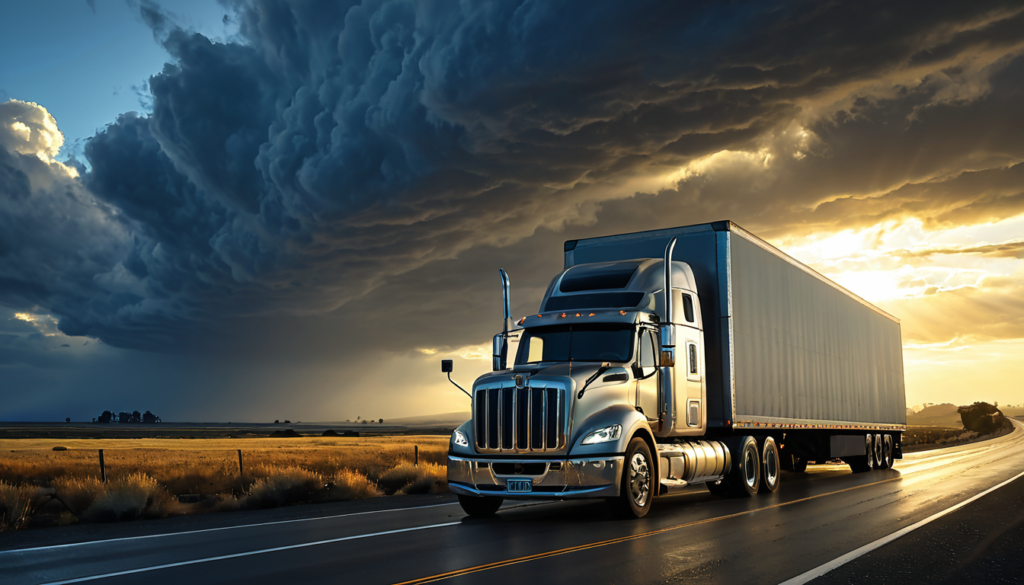
When an 80,000-pound commercial truck collides with a passenger vehicle on I-880 through Oakland or along the I-580 corridor in Livermore, the physics are devastating. The average sedan weighs 4,000 pounds. An 18-wheeler can weigh twenty times that. In Alameda County, where the Port of Oakland feeds thousands of container trucks onto our highways daily, these accidents leave catastrophic injuries and shattered families in their wake.
If you’re reading this, you or someone you love has likely experienced this nightmare. You’re facing medical bills that dwarf your savings, lost wages, and a future that looks nothing like you planned. You need more than legal help—you need fighters who understand what you’re up against. At Attorney911, we’ve spent over 25 years making trucking companies pay for the devastation they cause. Ralph Manginello, our managing partner, has been holding trucking companies accountable since 1998. Our associate attorney Lupe Peña—a former insurance defense lawyer who switched sides—knows exactly how the trucking insurers will try to minimize your claim. We’ve recovered over $50 million for injury victims, including multi-million dollar settlements for traumatic brain injuries, amputations, and wrongful death cases right here in Alameda County.
Every hour you wait to call 1-888-ATTY-911, evidence disappears. Black box data gets overwritten. Witnesses forget. Trucking companies send their rapid-response teams to the scene before the ambulance even leaves. We send spoliation letters within hours of being retained to preserve that critical evidence. Call us now at 1-888-288-9911, or hablamos español—llame a Lupe Peña directamente.
The Alameda County Trucking Crisis: Why Our Roads Are So Dangerous
Alameda County sits at one of the most critical logistics junctions in North America. The Port of Oakland is the fourth busiest container port in the United States, handling over 2.5 million containers annually. Every one of those containers leaves the port on a truck, creating a constant flow of 18-wheelers on the I-880 corridor, I-580 through the East Bay hills, and I-680 connecting to Silicon Valley.
This isn’t just about volume—it’s about context. Our roads weren’t designed for this freight density. The I-880 Nimitz Freeway, which runs through Oakland, Fremont, and Hayward, was built decades before e-commerce demanded same-day delivery. The sharp interchanges at the MacArthur Maze, where I-580 meets I-80 and the Bay Bridge, create complex merging patterns where massive trucks and passenger cars collide daily. The marine layer that rolls in from the Bay creates sudden visibility changes on the San Mateo and Bay Bridges, conditions where an 80,000-pound truck traveling at 55 miles per hour needs nearly two football fields to stop.
We’ve handled cases from Berkeley to Pleasanton where truck drivers violating Federal Motor Carrier Safety Administration (FMCSA) regulations—specifically 49 CFR Part 395 regarding hours of service—caused catastrophic fatigue-related crashes during morning rush hour. We’ve investigated rollovers on the winding stretches of CA-24 through the Caldecott Tunnel where cargo shifted because companies violated 49 CFR Part 393 cargo securement rules. We know these roads because we drive them, and we fight for the families who get hurt on them.
What Makes 18-Wheeler Accidents Different from Car Crashes
Hit by an 18-wheeler in Alameda County? What you do in the next 48 hours could determine whether your family receives the millions you need for lifelong care or gets stuck with crushing medical debt. Here’s why these cases are fundamentally different from fender-benders on city streets.
The Physics Are Brutal. An 80,000-pound truck traveling at freeway speed carries roughly 80 times the kinetic energy of a passenger car. When that energy transfers to your vehicle, the results are catastrophic. We’ve seen TBI cases from rear-end collisions where the truck was only going 30 mph. We’ve handled wrongful death cases where underride guards failed, violating 49 CFR § 393.86, causing decapitation.
Federal Regulations Create Liability. Unlike car accidents governed by state traffic laws, commercial trucking is regulated by the FMCSA under Title 49 of the Code of Federal Regulations. When truckers violate 49 CFR Part 391 (driver qualifications), 49 CFR Part 392 (driving rules), 49 CFR Part 393 (parts and accessories), 49 CFR Part 395 (hours of service), or 49 CFR Part 396 (inspection and maintenance), those violations create automatic negligence per se in California courts.
Multiple Insurance Policies. While a car accident might involve a $30,000 policy, federal law requires trucking companies to carry minimum liability coverage of $750,000 for non-hazardous freight, $1 million for oil and equipment, and $5 million for hazardous materials. Many carriers carry $2-5 million in coverage. But accessing those funds requires knowing how to navigate federal regulations and corporate structures.
Rapid Evidence Destruction. Trucking companies know that ECM (electronic control module) data—the “black box” recording speed, braking, and engine performance—can be overwritten in 30 days. Electronic Logging Device (ELD) data showing hours-of-service violations must be preserved but can disappear if you don’t act fast. We send preservation letters immediately to lock down that evidence.
As client Donald Wilcox told us after we won his case that another firm rejected: “One company said they would not accept my case. Then I got a call from Manginello… I got a call to come pick up this handsome check.” We take the cases other firms drop because we have the resources and federal court experience—Ralph Manginello is admitted to the U.S. District Court for the Southern District of Texas and handles complex interstate cases—to fight the biggest trucking companies.
FMCSA Regulations: The Safety Rules Trucking Companies Ignore
The Federal Motor Carrier Safety Administration exists because 18-wheelers are essentially 40-ton missiles on public roads. When trucking companies cut corners to increase profits, they violate federal law and endanger everyone in Alameda County. Here are the critical regulations we see violated in our cases:
49 CFR Part 391: Driver Qualification Standards
Before a driver can legally operate an 18-wheeler in interstate commerce, they must meet strict federal standards under § 391.11. They need a valid Commercial Driver’s License (CDL), must be at least 21 years old for interstate driving, must read and speak English, and must pass a physical exam conducted by a certified medical examiner every two years (§ 391.45).
We subpoena Driver Qualification Files for every case. These files must contain motor vehicle records from every state the driver was licensed in for the past three years, a road test certificate, previous employer inquiries for drug and alcohol testing history, and annual driving record reviews. When trucking companies fail to check if a driver has a history of DUIs or failed drug tests—a violation of § 391.51—that’s negligent hiring, and they’re liable for the damages.
49 CFR Part 392: Driving of Commercial Motor Vehicles
This section contains the active safety rules. Section 392.3 prohibits operating while fatigued or ill. Section 392.4 bans drug use. Section 392.5 prohibits alcohol use within four hours of duty. Section 392.11 requires following distance that is “reasonable and prudent”—not tailgating. Section 392.82 prohibits hand-held mobile phone use while driving, including reaching for a phone.
When we download ECM data and find the driver was texting at the moment of impact, or when ELD logs show they drove 14 hours straight in violation of the 11-hour driving limit, we prove negligence with objective federal violations.
49 CFR Part 393: Parts and Accessories Necessary for Safe Operation
This is where equipment failures become liability. Section 393.40 requires functioning brakes on all wheels. Section 393.75 mandates minimum tread depth: 4/32-inch on steer tires and 2/32-inch on drive tires. Sections 393.100 through 393.136 cover cargo securement—requiring tiedowns rated for specific weight limits and proper blocking to prevent shifting.
In Alameda County, we see brake failure accidents on the downhill grades of I-680 through Fremont and Sunol because companies deferred maintenance to save money. We see cargo shifts on I-880 because loading companies violated the performance criteria in § 393.102, which requires securement systems to withstand 0.8g deceleration forces.
49 CFR Part 395: Hours of Service (HOS) Regulations
These are the most commonly violated rules and the deadliest. Property-carrying drivers cannot drive more than 11 hours after 10 consecutive hours off duty (§ 395.8). They cannot drive beyond the 14th consecutive hour after coming on duty. They must take a 30-minute break after 8 hours of driving. They cannot exceed 60 hours in 7 days or 70 hours in 8 days without a 34-hour restart.
Since December 18, 2017, ELDs are mandatory. These electronic logs prove whether drivers violated these rules. We had a case where a trucker crashed on I-580 near Pleasanton after being awake for 22 hours. The ELD data showed he falsified his paper logs—clear violations of § 395.8 and § 395.32. That evidence drove a multi-million dollar settlement.
49 CFR Part 396: Inspection, Repair, and Maintenance
Section 396.3 requires systematic inspection and maintenance. Drivers must conduct pre-trip inspections (§ 396.13) and document defects in post-trip reports (§ 396.11). Annual inspections are mandatory. When trucking companies skip these steps to keep trucks rolling, brake failures happen. When they ignore the 49 CFR § 393.48 brake adjustment standards, trucks can’t stop in time to prevent rear-end collisions on the Bay Bridge approach.
Our associate attorney Lupe Peña—who used to defend these cases for insurers—knows exactly how to spot falsified inspection reports and maintenance logs. He spent years on the other side seeing how companies hide deferred maintenance. Now he uses that insider knowledge to fight for you.
The 15 Types of 18-Wheeler Accidents We See in Alameda County
Not all truck accidents are the same. Each type involves specific FMCSA violations and requires different investigative approaches. Here’s what we see on Alameda County highways:
Jackknife Accidents
A jackknife occurs when the trailer swings perpendicular to the cab, creating a “pocket knife” shape that sweeps across multiple lanes. On I-880’s narrow stretches or the tight curves of CA-24 through the Caldecott Tunnel, these accidents shut down freeways for hours.
Why They Happen: Sudden braking on wet roads (common with Bay Area morning fog), empty trailers that lack weight for traction, or brake system failures violating § 393.40. The Evidence: We analyze skid marks for trailer angle, download ECM data showing brake application timing, and review maintenance records for brake adjustment violations under § 396.3.
Rollover Accidents
The high center of gravity on 18-wheelers makes them susceptible to tipping. We’ve handled rollovers on the I-580 connector ramps and in the tight turns near the Port of Oakland where drivers took curves too fast.
Why They Happen: Speeding on curves, cargo that shifts because of § 393.100 violations, or liquid “slosh” in tankers. The Injuries: These often cause crushing injuries to vehicles caught beneath the trailer. Liability: We pursue the loading company for improper securement, the driver for excessive speed, and the trucking company for negligent training.
Underride Collisions
The deadliest of all truck accidents. When a passenger vehicle slides under the trailer, the top of the car is sheared off. Rear underride guards are required by § 393.86 for trailers manufactured after 1998, but many are poorly maintained. Side underride guards are not federally mandated—though they should be.
We’ve represented families in Alameda County where underride decapitations occurred because the trailer’s rear impact guard failed. These cases require immediate preservation of the trailer itself for engineering analysis.
Rear-End Collisions
An 18-wheeler needs 525 feet to stop from 65 mph—nearly twice what a car needs. On the stop-and-go traffic of I-880 through Oakland or the approaches to the Bay Bridge, tired truckers rear-end stopped traffic.
The Violations: Following too closely (§ 392.11), hours of service violations (Part 395), distracted driving (§ 392.82), or brake failures (§ 393.40). The Evidence: ECM data shows the following distance and whether the driver applied brakes. We often find the driver never touched the brakes because they fell asleep.
Wide Turn Accidents (“Squeeze Play”)
Trucks swing wide left before turning right. In urban Alameda County—downtown Oakland, Berkeley’s narrow streets, loading docks in Emeryville—passenger cars get caught in the “squeeze play” and crushed against curbs or buildings.
Liability: The driver for failing to signal (§ 392.2) or check mirrors, the company for inadequate training on turning procedures, and sometimes the municipality for poor intersection design.
Blind Spot Accidents (“No-Zones”)
18-wheelers have massive blind spots: 20 feet in front, 30 feet behind, and one lane to the left but two lanes to the right. When truckers change lanes on I-680 through Fremont without checking mirrors, they sideswipe vehicles.
The Violation: § 393.80 requires mirrors allowing clear view to the rear. § 392.82 prohibits cell phone use during lane changes. We subpoena cell records to prove distraction.
Tire Blowout Accidents
The extreme heat of summer on I-580 through Livermore and the heavy loads coming from the Port of Oakland cause tire failures. A “road gator” (shredded tire) causes following vehicles to lose control.
The Violation: § 393.75 requires proper tread depth. § 396.13 requires pre-trip tire inspections. When companies run retreads or underinflated tires to save money, they’re liable for the resulting crashes.
Brake Failure Accidents
Twenty-nine percent of truck crashes involve brake problems. On the steep grades of CA-17 (though mostly in Santa Clara County, trucks traverse Alameda County to get there) or simply in heavy Bay Area traffic, brake fade kills.
The Evidence: We demand maintenance records showing when brakes were last adjusted or replaced. Post-crash brake system analysis by our experts proves deferred maintenance violating § 396.3.
Cargo Spill and Shift Accidents
Improperly secured containers from the Port of Oakland shift during transit, causing rolvers or spills onto I-880. Hazmat spills from tankers on I-580 create evacuation scenarios.
The Violation: § 393.100 requires cargo to be secured to prevent shifting, falling, or leaking. The performance criteria require securement to withstand 0.5g lateral acceleration forces.
Head-On Collisions
When fatigued truckers cross the median on I-680 or two-lane highways in rural Alameda County, the closing speed often proves fatal. These usually involve hours of service violations or medical emergencies in drivers who shouldn’t have been certified under § 391.41.
T-Bone and Intersection Accidents
Running red lights at Oakland intersections or failing to yield at on-ramps. These often involve distracted driving or drivers racing to make delivery windows in violation of § 392.6 (scheduling runs that require speeding).
Sideswipe Accidents
Merge conflicts on the I-580/I-680 interchange or when trucks drift out of lanes on the Bay Bridge. These frequently involve blind spot failures.
Override Accidents
When a truck drives over a smaller vehicle in front—often because the truck couldn’t stop in time due to brake failures or following too closely.
Runaway Truck Accidents
On the descent from the Caldecott Tunnel toward Orinda (bordering Alameda County), trucks lose brakes and use runaway truck ramps. When they don’t make the ramps, catastrophe results.
Lost Wheel and Detached Trailer Accidents
Wheel studs break or fifth-wheel couplings fail because of negligent maintenance under § 396.3. The debris creates multi-car pileups.
Nine Potentially Liable Parties—Not Just the Driver
Most law firms sue the driver and the trucking company and call it a day. That’s malpractice. We investigate every possible defendant because more defendants mean more insurance coverage, and our clients need every dollar available for catastrophic injuries.
The Driver: Personally liable for negligent driving, distracted driving, or impaired driving. We get their cell phone records, drug test results, and personal driving history.
The Trucking Company (Motor Carrier): Vicariously liable under respondeat superior for their employee’s actions. Directly liable for negligent hiring (violating § 391.51 by failing to check backgrounds), negligent training, negligent supervision (ignoring ELD violations), and negligent maintenance (violating § 396.3).
Cargo Owner/Shipper: Companies like Amazon or Walmart who demand unrealistic delivery schedules, creating pressure to violate hours of service. They may also be liable for providing improper loading instructions or failing to disclose hazardous cargo.
Cargo Loading Company: Third-party loaders at the Port of Oakland or distribution centers who improperly secure containers, violating § 393.100. We sue them for negligent loading.
Truck and Trailer Manufacturer: Defective design of underride guards, defective brake systems, or failure to install electronic stability control. Product liability claims against manufacturers like Freightliner or Peterbilt.
Parts Manufacturer: Defective tires from Michelin or Goodyear, defective braking components, or defective steering systems that caused the crash.
Maintenance Company: Third-party mechanics who negligently repaired brakes or rotated tires, missing dangerous conditions that caused brake failure or blowouts.
Freight Broker: Companies like C.H. Robinson or XPO who broker loads to unsafe carriers with poor safety ratings (CSA scores) just because they’re cheaper. Negligent selection of carriers makes them liable.
Government Entities: Caltrans or Alameda County for dangerous road design, poor signage, or failure to maintain safe road conditions—like the dangerous merge patterns at the MacArthur Maze.
We identify all these parties by immediately sending spoliation letters to preserve evidence, subpoenaing FMCSA safety records, and analyzing corporate structures to find every available insurance policy.
The 48-Hour Evidence Crisis: Why You Must Act Now
Evidence in Alameda County trucking accidents doesn’t just fade—it gets destroyed. Trucking companies have “rapid response” teams of lawyers and investigators who arrive at crash scenes before the police finish their reports. Their job is to protect the company, not you.
Critical Evidence That Disappears:
- ECM/Black Box Data: Records speed, brake application, throttle position, and fault codes. Overwrites in 30 days or with subsequent driving events.
- ELD Data: Proves hours of service violations. Legally only required to be kept 6 months (§ 395.8), but we demand preservation immediately.
- Dashcam Footage: Often deleted within 7-14 days if it shows fault.
- Driver Qualification Files: Can be “lost” if they show the driver was unqualified.
- Maintenance Records: Shredded to hide deferred maintenance.
- Physical Evidence: The truck itself gets repaired or sold, destroying brake systems or tires that failed.
What We Do Immediately:
When you call 1-888-ATTY-911, we send spoliation letters to the trucking company, their insurer, the driver, the loading company, and any maintenance providers within 24 hours. These letters put them on notice that destroying evidence constitutes spoliation, which allows California courts to instruct juries to assume the destroyed evidence was unfavorable to the trucking company.
We deploy accident reconstruction engineers to the scene immediately—while skid marks are fresh, debris is in place, and surveillance cameras (from businesses along I-880 or the Port of Oakland) haven’t been overwritten.
As client Chad Harris said: “You are NOT a pest to them and you are NOT just some client… You are FAMILY to them.” We treat your case with the urgency it deserves because we know what’s at stake.
Catastrophic Injuries: The Human Cost of Trucking Negligence
The forces involved in 18-wheeler accidents don’t break bones—they shatter lives. We don’t just handle legal claims; we help families rebuild after devastating trauma.
Traumatic Brain Injury (TBI)
When the brain impacts the skull due to the violent deceleration of a truck crash, the damage is often invisible but permanent. Moderate to severe TBI cases typically settle for $1.5 million to $9.8 million because victims require lifelong cognitive therapy, may lose executive function, and often cannot return to work. Symptoms include memory loss, personality changes, and chronic headaches. We work with neurologists and life-care planners to document future care needs.
Spinal Cord Injury and Paralysis
The crushing weight of a trailer or the impact of an underride collision causes spinal cord damage ranging from herniated discs to complete transection. Paraplegia and quadriplegia cases require wheelchairs, home modifications, 24/7 attendant care, and electronic assistive devices. These cases settle for $4.7 million to $25.8 million or more depending on the victim’s age and earning capacity.
Amputation
Crushing injuries from underride accidents or severe compound fractures from override collisions often result in traumatic amputations or surgical amputation due to tissue death. Prosthetics cost $50,000-$100,000 per limb and need replacement every 3-5 years. Settlement ranges from $1.9 million to $8.6 million depending on whether multiple limbs are involved.
Severe Burns
Tanker explosions on I-580 or electrical fires from underride accidents cause third and fourth-degree burns requiring skin grafts, reconstructive surgery, and long-term pain management. These injuries often lead to contractures that limit mobility and require years of rehabilitation.
Wrongful Death
When a trucking company’s negligence kills your loved one on the Bay Bridge or I-880, California law allows recovery for lost future income, loss of companionship, mental anguish, and funeral expenses. Wrongful death settlements range from $1.9 million to $9.5 million or more depending on the decedent’s age, earnings, and dependent family members.
Our firm has recovered over $50 million for families devastated by these injuries. We currently have a $10 million lawsuit pending against the University of Houston for hazing injuries—demonstrating we have the resources and courage to take on major institutional defendants when they cause harm.
Insurance, Damages, and California Law
Federal Insurance Minimums
Under FMCSA regulations, trucking companies must carry:
- $750,000 minimum for general freight (49 CFR Part 387)
- $1,000,000 for trucks hauling oil, equipment, or motor vehicles
- $5,000,000 for hazardous materials
Most carriers carry $1-5 million in coverage, with excess policies above that. We identify all policies, including trailer interchange coverage and umbrella policies.
California Comparative Fault
Alameda County follows California’s “pure comparative fault” rule (Li v. Yellow Cab Co.). Even if you were 99% at fault for the accident, you can still recover 1% of your damages. This is more favorable than states like Texas that bar recovery if you’re 51% at fault. However, the trucking company will try to shift blame to minimize payout. We fight these allegations with ECM data and accident reconstruction.
Statute of Limitations
In California, you have two years from the date of the accident to file a personal injury lawsuit, and two years from the date of death for wrongful death claims (Cal. Code Civ. Proc. § 335.1). However, if a government entity is involved (like Caltrans), you must file a Government Claim within six months. Do not wait—evidence disappears much faster than the statutory deadline.
No Damage Caps
Unlike some states that cap non-economic damages, California has no caps on personal injury cases (except for medical malpractice). Punitive damages are available when trucking companies act with “oppression, fraud, or malice” (Cal. Civ. Code § 3294), such as intentionally falsifying logs or knowingly keeping dangerous drivers on the road.
50 Frequently Asked Questions About Alameda County 18-Wheeler Accidents
1. What should I do immediately after an 18-wheeler accident in Alameda County?
Call 911, seek immediate medical attention even if you feel okay (adrenaline masks injuries), photograph the scene and all vehicles, get the truck’s DOT number and company information, collect witness contacts, and call Attorney911 at 1-888-ATTY-911 before speaking to any insurance adjuster.
2. Should I give a recorded statement to the trucking company’s insurance?
NO. Insurance adjusters are trained to minimize claims. Our firm includes Lupe Peña, a former insurance defense attorney who knows their tactics. Let us handle all communications.
3. How long do I have to file a lawsuit in California?
Two years from the accident date for personal injury, two years for wrongful death. But evidence vanishes in weeks, so call immediately.
4. What is a spoliation letter and why does it matter?
It’s a legal demand to preserve evidence like ECM data, ELD logs, and maintenance records. Without it, trucking companies destroy evidence. We send these within 24 hours.
5. Can I recover damages if I was partially at fault?
Yes. California follows pure comparative fault. Even if you were 99% at fault, you recover 1% of damages.
6. What is a truck’s “black box”?
The ECM (electronic control module) records speed, braking, throttle, and fault codes. It overwrites in 30 days—act fast.
7. How much is my case worth?
Depends on injury severity, medical costs, lost wages, and available insurance. Trucking cases often settle for $500,000 to millions. We’ve recovered $5+ million for brain injuries and $3.8+ million for amputation cases.
8. Who can be sued besides the truck driver?
The trucking company, cargo loader, freight broker, maintenance company, truck manufacturer, parts manufacturer, and government entities if road design contributed.
9. What are hours of service violations?
Federal law limits truckers to 11 hours driving after 10 hours off duty. Violations cause fatigue crashes. We prove these with ELD data.
10. How long will my case take?
Simple cases: 6-12 months. Complex cases with multiple defendants: 1-3 years. Catastrophic injury cases often take 2-4 years to ensure full future costs are calculated.
11. Do I need to pay upfront for an attorney?
No. We work on contingency—33.33% pre-trial, 40% if trial. You pay nothing unless we win. Hablamos español—Lupe Peña offers bilingual representation.
12. What if the trucking company goes out of business?
We pursue their insurance carrier directly under MCS-90 endorsements, and we investigate successor companies and parent corporations.
13. Can undocumented immigrants sue for truck accidents?
Yes. Immigration status does not affect your right to compensation in California.
14. What is an underride accident?
When a car slides under the trailer, often causing decapitation. We sue for violations of § 393.86 and defective underride guards.
15. Should I post about my accident on social media?
NO. Insurance companies monitor social media. A photo of you smiling at a family event can be used to claim you’re not injured.
16. What if my injuries seem minor at first?
See a doctor anyway. TBI symptoms often appear days later. Soft tissue injuries worsen over time. Documentation creates the link between the accident and your injuries.
17. How do I prove the truck driver was texting?
We subpoena cell phone records and compare them to ECM timestamps. § 392.82 prohibits handheld device use while driving.
18. What if the truck was carrying hazardous materials?
Federal law requires $5 million in coverage for hazmat carriers. These cases require specialized handling due to toxic exposure risks.
19. Can I sue Amazon or Walmart directly?
Yes. If their delivery trucks caused the crash, or if their scheduling demands forced drivers to violate safety rules, we pursue the corporate defendants.
20. What is negligence per se?
Violating FMCSA regulations (like hours of service or brake maintenance rules) creates automatic negligence under California law.
21. Will my case go to trial?
Most settle, but we prepare every case for trial. Our willingness to try cases—Ralph Manginello has 25+ years of courtroom experience—forces better settlement offers.
22. What if the driver was an independent contractor?
We still sue the trucking company under joint employer theories and negligent entrustment, and we sue the driver personally.
23. How do cargo spills create liability?
Improper securement under § 393.100 causes rollovers and road debris accidents. We sue the loading company and the driver.
24. What if brake failure caused the crash?
We demand maintenance records under § 396.3. If brakes were out of adjustment or maintenance was deferred, the company is liable.
25. Can I get the truck’s GPS data?
Yes. We subpoena telematics data showing route history, speed, and locations, which proves hours of service violations.
26. What are punitive damages?
Extra damages to punish trucking companies for gross negligence—like knowingly keeping a drunk driver on payroll or falsifying maintenance logs. California allows punitive damages under Civ. Code § 3294.
27. How do you prove lost earning capacity?
We hire vocational experts and economists to calculate lifetime earnings lost due to disability, considering promotions and inflation.
28. What if I was injured in a construction zone?
Reduced speed limits apply. We sue the trucking company and potentially Caltrans if the zone was improperly marked.
29. Do I need a doctor’s referral to hire you?
No. Call us first. We can help you find medical providers who will treat you on a lien basis (paid from settlement).
30. What if the truck driver lied about what happened?
ECM data, ELD logs, and physical evidence (skid marks, damage patterns) prove the truth. Drivers often lie to protect their jobs; the data doesn’t lie.
31. Can I sue for emotional distress?
Yes. California allows recovery for past, present, and future mental anguish, PTSD, and loss of enjoyment of life.
32. What is loss of consortium?
Compensation for the impact on your marital relationship—loss of companionship, affection, and sexual relations—available to spouses in California.
33. How do wide turns cause accidents?
Trucks swing left before turning right, crushing cars in the “squeeze play.” These happen frequently in downtown Oakland and Berkeley.
34. What if a tire blowout caused the crash?
We sue the tire manufacturer for defects or the trucking company for failing to inspect tires under § 396.13.
35. Can I recover for future medical expenses?
Yes. We use life-care planners to calculate costs for future surgeries, therapy, medications, and equipment.
36. What if the accident aggravated a pre-existing condition?
You’re entitled to compensation for aggravation under the “eggshell skull” doctrine. The trucking company takes you as they find you.
37. How do you investigate trucking companies?
We obtain their CSA scores (safety ratings), inspection histories, and previous accident records from FMCSA databases.
38. What if the truck was overloaded?
Overweight trucks violate § 393.100 and California Vehicle Code § 35755. We sue the shipper and the carrier.
39. Can I sue for wrongful death if my spouse was killed?
Yes. California allows surviving spouses, children, and dependents to recover for lost income, companionship, and funeral expenses.
40. What is the difference between economic and non-economic damages?
Economic: medical bills, lost wages (provable amounts). Non-economic: pain, suffering, emotional distress (subjective value).
41. Should I accept the first settlement offer?
NO. First offers are lowball attempts to close cases cheaply. As client Glenda Walker said: “They fought for me to get every dime I deserved.” We ensure you do too.
42. What if the accident involved multiple vehicles?
We identify all liable parties and insurance policies. Chain-reaction crashes on I-880 often involve multiple defendants.
43. How do you handle cases where the victim died instantly?
Wrongful death claims focus on financial loss and loss of companionship. We work with economists to calculate lifetime earnings.
44. Can I sue if the truck driver had a medical emergency?
If the company knew the driver had a medical condition that made them unsafe (violating § 391.41), they’re liable for negligent hiring.
45. What is the MCS-90 endorsement?
It guarantees that if a trucking company’s insurance denies coverage, the insurer still pays the victim minimum damages required by federal law.
46. How do you prove the trucking company knew about safety violations?
We subpoena internal emails, safety meeting records, and previous inspection reports showing the company ignored known dangers.
47. What if the crash happened on a bridge?
Bay Bridge accidents involve Caltrans liability for road design. We handle complex jurisdictional issues between state and local agencies.
48. Do you handle cases against Uber Freight or Lyft trucks?
Yes. These tech-enabled carriers often use independent contractors, but we pursue the corporate entity and their $1 million insurance policies.
49. What happens if evidence was already destroyed?
We file for spoliation sanctions, which can result in the court assuming the destroyed evidence proved your case, or we pursue alternative evidence like 911 calls and eyewitness testimony.
50. Why should I choose Attorney911 over other firms?
We have 25+ years of experience, a former insurance defense attorney on staff who knows their playbook, over $50 million recovered, offices in Houston and Austin (serving Alameda County via remote consultation and local counsel admission), and we treat you like family—not a case number. Call 1-888-ATTY-911 now.
Why Alameda County Trucking Accident Victims Choose Attorney911
We’ve spent over two decades building a reputation as the firm that trucking companies and insurers fear. Ralph Manginello’s federal court admission allows him to handle complex interstate cases that require understanding federal regulations and multi-state jurisdictions. Lupe Peña’s insider knowledge from his years defending insurance companies gives us the advantage of knowing every tactic they’ll use before they use it.
Our track record speaks for itself: $5+ million for a traumatic brain injury victim, $3.8+ million for an amputation case, $2.5+ million for a truck crash victim, and over $50 million total recovered for families. We’ve taken on BP after the Texas City refinery explosion, fought major universities in hazing cases, and stood up to Fortune 500 companies when they harmed innocent people.
But perhaps most importantly, we treat you like family. As Chad Harris put it: “You are NOT just some client… You are FAMILY to them.” We return calls promptly—usually within 24 hours. We give you Ralph Manginello’s cell phone, not just a paralegal’s extension. We solve cases in months that other firms drag out for years, as Angel Walle told us: “They solved in a couple of months what others did nothing about in two years.”
We offer free consultations in English and Spanish (hablamos español—Llame a Lupe Peña). We advance all costs. And we don’t get paid unless you win.
The trucking company has lawyers working right now to minimize your claim. Shouldn’t you have someone fighting for you?
Call Attorney911 today at 1-888-ATTY-911 (1-888-288-9911) or (888) 288-9911. Or reach out directly at 888-ATTY-911. We’re available 24/7 because trucking accidents don’t happen on business hours. Your consultation is free, and there’s no obligation. Let us show you what 25 years of fighting for trucking accident victims looks like.
Don’t let evidence disappear. Don’t let the trucking company push you around. Don’t settle for less than you deserve. Call now.