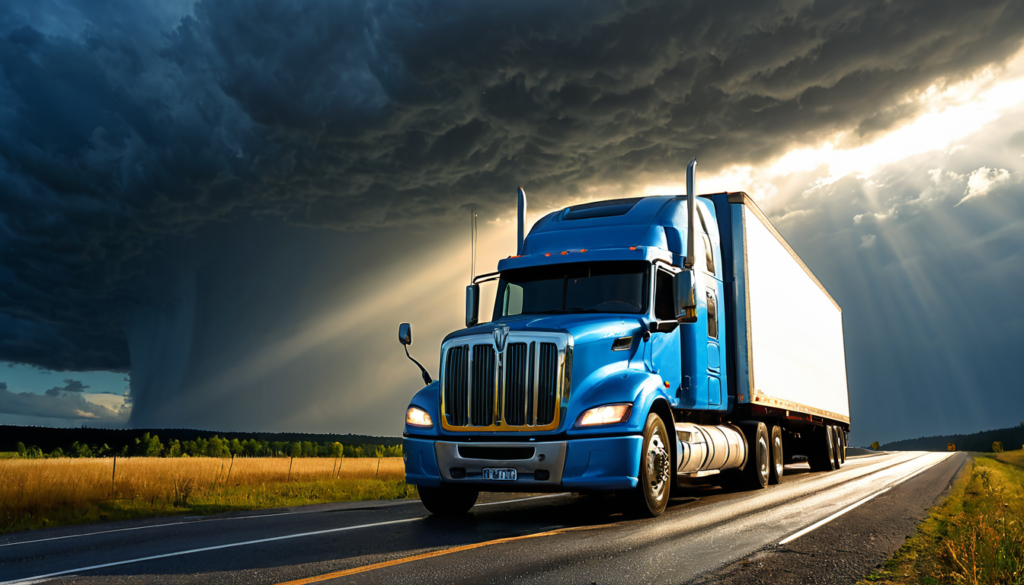
The Impact Was Devastating
One moment you’re navigating the mountain curves of I-68 through Allegany County on your way home from work. The next, 80,000 pounds of steel is jackknifing across three lanes of traffic. There’s no time to react. No room to escape. In the blink of an eye, your life changes forever.
If you’ve been hit by an 18-wheeler in Allegany County, you’re facing a fight you didn’t ask for. The pain is constant. The medical bills are mounting. And while you’re struggling to heal, the trucking company’s insurance adjuster is already working to minimize what they pay you. They have teams of lawyers. They have investigators. They have a system designed to protect their profits—not your recovery.
You don’t have to face them alone.
At Attorney911, we’ve spent over 25 years fighting for truck accident victims across Maryland and beyond. Our managing partner, Ralph Manginello, has been holding trucking companies accountable since 1998. We’ve recovered multi-million dollar settlements for families devastated by catastrophic collisions. And we bring something to your case that most firms can’t match—our associate attorney Lupe Peña spent years working for insurance companies before joining our team. Now he uses that insider knowledge to fight for you.
Don’t let the trucking company push you around. Call 1-888-ATTY-911 today for your free consultation.
Why 18-Wheeler Accidents in Allegany County Are Different
Trucking accidents aren’t just bigger car crashes. They’re complex, high-stakes cases involving federal regulations, multiple liable parties, and massive insurance policies. And here in Allegany County, the unique mountain terrain of Western Maryland creates specific dangers that make these accidents even more deadly.
The Physics Are Brutal
Your car weighs roughly 4,000 pounds. A fully loaded tractor-trailer can weigh 80,000 pounds. That’s a 20-to-1 weight disparity. When physics meets biology, biology loses every time. The force generated by an 80,000-pound truck traveling at highway speeds is catastrophic. It crushes passenger compartments. It causes traumatic brain injuries. It takes lives.
The Terrain Multiplies the Danger
Allegany County’s location in the Appalachian Mountains means our highways include steep grades, sharp curves, and elevation changes that challenge even experienced drivers. I-68, which runs through Cumberland and Frostburg, carries heavy truck traffic through mountain passes where brake systems are pushed to their limits. Winter weather brings ice and fog that can turn deadly when a fatigued truck driver loses control.
Maryland’s Contributory Negligence Rule
Here’s something critical you need to know: Maryland is one of only five states that follow pure contributory negligence. If you’re found even 1% at fault for the accident, you recover nothing. The trucking companies know this. They’ll look for any reason to blame you—whether it’s legitimate or not. You need an attorney who knows how to shut down those arguments before they start.
As client Glenda Walker told us after we handled her case, “They fought for me to get every dime I deserved.” That’s what we do. We fight to make sure contributory negligence arguments don’t steal your recovery.
Types of 18-Wheeler Accidents We Handle in Allegany County
Every trucking accident is unique, but certain crash types dominate the accidents we see in Allegany County’s mountain corridors. Understanding how these accidents happen—and why—helps us build stronger cases for our clients.
Jackknife Accidents
A jackknife occurs when the truck’s cab and trailer fold toward each other like a pocket knife, often sweeping across multiple lanes of traffic. On I-68’s mountain curves, these accidents are particularly deadly. The trailer can block the entire highway, creating a wall of steel that oncoming traffic can’t avoid.
Why They Happen:
- Sudden braking on wet or icy roads (common in Allegany County winters)
- Speeding through curves
- Empty or lightly loaded trailers that are more prone to swing
- Brake system failures
The Regulations That Matter:
Under 49 CFR § 393.48, trucking companies must maintain brake systems to prevent failures that lead to jackknifing. When they skip maintenance to save money, people get hurt.
Rollover Accidents
When an 18-wheeler’s center of gravity shifts beyond its base of support, the truck tips. On Allegany County’s steep grades and sharp curves, rollovers happen with terrifying frequency. The truck may slide off the road or roll into oncoming lanes, crushing anything in its path.
Why They Happen:
- Taking curves too fast (especially dangerous on mountain highways like I-68)
- Improperly secured cargo that shifts during turns
- Overcorrection after a tire blowout
- Driver fatigue causing delayed reaction
The Regulations That Matter:
49 CFR § 393.100-136 mandates specific cargo securement standards. Cargo must be tied down to withstand 0.8g deceleration forward and 0.5g lateral force. When loading companies cut corners, the cargo shifts, and gravity does the rest.
Underride Collisions
Among the most horrific trucking accidents, underride collisions occur when a smaller vehicle slides underneath the trailer. The trailer height aligns perfectly with a passenger vehicle’s windshield. The result is often decapitation or catastrophic head trauma.
Why They Happen:
- Inadequate or missing rear underride guards
- Truck sudden stops without warning
- Low visibility conditions (fog in the Allegany Mountains)
- Inadequate rear lighting or reflectors
The Regulations That Matter:
49 CFR § 393.86 requires rear impact guards on trailers manufactured after January 26, 1998. Despite this, many trucks on the road still lack adequate protection. Side underride guards aren’t federally mandated yet, though multiple jurisdictions are working to change that.
Brake Failure Accidents
Brake problems contribute to approximately 29% of large truck crashes. On Allegany County’s long mountain descents, brake systems can overheat and fail—a phenomenon called “brake fade.” When an 80,000-pound truck loses its brakes on a downhill grade, the results are catastrophic.
Why They Happen:
- Worn brake pads or shoes not replaced
- Improper brake adjustment
- Air brake system leaks
- Overheated brakes on long descents (like coming down Sideling Hill)
- Failure to conduct pre-trip inspections
The Regulations That Matter:
49 CFR § 396.11 requires drivers to prepare written post-trip reports on vehicle condition, specifically including brake systems. 49 CFR § 396.3 mandates systematic inspection and maintenance. When trucking companies defer maintenance to save costs, they gamble with your life.
Tire Blowout Accidents
When an 18-wheeler suffers a tire blowout—particularly a steer tire blowout—the driver often loses immediate control. The debris from exploded tires, called “road gators,” can strike following vehicles at highway speeds, causing secondary accidents.
Why They Happen:
- Underinflated tires causing overheating
- Overloaded vehicles exceeding tire capacity
- Worn tires not replaced
- Heat buildup on long hauls through mountainous terrain
The Regulations That Matter:
49 CFR § 393.75 specifies minimum tread depth requirements: 4/32″ on steer tires and 2/32″ on other positions. 49 CFR § 396.13 requires pre-trip inspections that include tire checks.
Wide Turn Accidents (“Squeeze Play”)
Trucks making right turns must swing wide to the left first, creating a gap that sedans often enter. When the truck completes its turn, it crushes the vehicle in the blind spot. These accidents happen frequently at intersections in Cumberland and Frostburg where traffic patterns are complex.
Why They Happen:
- Failure to properly signal turning intention
- Inadequate mirror checks
- Driver inexperience with trailer tracking
- Failure to yield right-of-way
Rear-End Collisions
Fully loaded trucks need 525 feet—nearly two football fields—to stop from 65 mph. When a truck driver is distracted, fatigued, or following too closely on I-68, they can’t stop in time. The rear-end impact can push smaller vehicles into other lanes or off the road entirely.
Why They Happen:
- Following too closely (tailgating)
- Driver distraction (cell phone, dispatch communications)
- Driver fatigue
- Brake failures
The Regulations That Matter:
49 CFR § 392.11 prohibits following more closely than is reasonable and prudent, having due regard for speed and traffic conditions.
Head-On Collisions
When a truck crosses the centerline—often due to driver fatigue, distraction, or impairment—the results are almost always fatal for the occupants of the smaller vehicle. These accidents are particularly devastating on Allegany County’s two-lane mountain roads where there’s nowhere to escape.
Who Can Be Held Liable? (It’s More Than Just the Driver)
Most people assume you can only sue the truck driver. That’s what the trucking companies want you to think. The reality is that 18-wheeler accidents often involve a web of liable parties, each with their own insurance policies. More defendants means more insurance coverage means higher potential recovery for you.
Here are the ten parties we investigate in every Allegany County trucking case:
1. The Truck Driver
The driver who caused the accident may be personally liable for negligent conduct including speeding, distracted driving, fatigue, or impairment. We subpoena their driving records, ELD data, and cell phone records to prove negligence.
2. The Trucking Company (Motor Carrier)
This is often your primary recovery source. Under the doctrine of respondeat superior, employers are liable for their employees’ negligent acts. Plus, trucking companies can be directly liable for:
- Negligent Hiring: Failing to check the driver’s background or hiring someone with a poor safety record
- Negligent Training: Inadequate safety training on mountain driving or cargo securement
- Negligent Supervision: Failing to monitor ELD compliance or driver behavior
- Negligent Maintenance: Skipping brake inspections or tire replacements
3. The Cargo Owner/Shipper
The company that owns the cargo may be liable if they required overweight loading, failed to disclose hazardous materials, or pressured the carrier to expedite delivery beyond safe limits.
4. The Loading Company
Third-party loading companies are responsible for properly securing cargo. When they fail to use adequate tiedowns or distribute weight properly, they violate 49 CFR § 393.100-136 and become liable for resulting rollovers or cargo shifts.
5. The Truck Manufacturer
If the accident was caused by a design defect—faulty brakes, defective steering, or unstable vehicle design—the manufacturer may be liable under product liability law.
6. The Parts Manufacturer
Companies that make brakes, tires, or steering components can be held liable when their defective products fail. We preserve failed components for expert analysis.
7. The Maintenance Company
Third-party mechanics who performed negligent repairs or failed to identify critical safety issues may share liability. We review all maintenance work orders and inspection reports.
8. The Freight Broker
Brokers who arrange transportation may be liable for negligent carrier selection—hiring a trucking company with a poor safety record or inadequate insurance.
9. The Truck Owner (If Different from Carrier)
In owner-operator arrangements, the truck owner may be liable for negligent entrustment or failure to maintain equipment.
10. Government Entities
Federal, state, or local government may be liable for dangerous road design, inadequate signage, or failure to maintain safe road conditions. In Allegany County, this might include poorly designed curves or inadequate warning signs for steep grades.
We investigate every possible defendant because our job is to maximize your recovery. As Donald Wilcox, one of our clients, said: “One company said they would not accept my case. Then I got a call from Manginello… I got a call to come pick up this handsome check.” We don’t shy away from difficult cases. We find the liable parties and make them pay.
The Federal Regulations That Prove Negligence
Trucking companies must follow Federal Motor Carrier Safety Administration (FMCSA) regulations codified in Title 49 of the Code of Federal Regulations. When they violate these rules, they’ve breached their duty of care to the public. Here are the critical regulations we use to prove negligence in your Allegany County case:
49 CFR Part 390 – General Applicability
Establishes that all motor carriers operating commercial vehicles (CMVs) over 10,001 lbs must comply with federal safety regulations. This applies to every truck on I-68 hauling through Allegany County.
49 CFR Part 391 – Driver Qualification Standards
Trucking companies must maintain a Driver Qualification (DQ) File for every driver containing:
- Employment application and background check
- Motor vehicle records from state licensing authorities
- Medical examiner’s certificate (renewed every 2 years)
- Drug and alcohol test results
- Previous employer inquiries for the past 3 years
When companies fail to check a driver’s history of accidents or violations, they’re liable for negligent hiring. We subpoena these files in every case.
49 CFR Part 392 – Driving Rules
§ 392.3 prohibits operating a CMV while impaired by fatigue, illness, or any cause making operation unsafe.
§ 392.4 and § 392.5 prohibit drug and alcohol use.
§ 392.11 mandates safe following distances.
§ 392.82 prohibits hand-held mobile phone use while driving.
49 CFR Part 393 – Vehicle Safety Equipment
This part mandates specific equipment standards:
- § 393.40-55: Brake system requirements
- § 393.75: Tire tread depth minimums
- § 393.80: Mirror requirements
- § 393.86: Rear impact guards (underride protection)
- § 393.100-136: Cargo securement standards requiring tiedowns to withstand 0.8g forward deceleration and 0.5g lateral force
49 CFR Part 395 – Hours of Service (HOS)
These are the most commonly violated regulations:
- 11-hour driving limit: Cannot drive more than 11 hours after 10 consecutive hours off duty
- 14-hour duty window: Cannot drive beyond the 14th consecutive hour after coming on duty
- 30-minute break: Required after 8 cumulative hours of driving
- 60/70-hour weekly limits: Cannot drive after 60 hours in 7 days or 70 hours in 8 days
Since December 18, 2017, most drivers must use Electronic Logging Devices (ELDs) that automatically record driving time. This data is objective evidence of HOS violations.
49 CFR Part 396 – Inspection and Maintenance
§ 396.3 requires systematic inspection, repair, and maintenance of all vehicles.
§ 396.11 requires drivers to prepare written post-trip inspection reports covering brakes, steering, tires, lighting, and emergency equipment.
§ 396.17 mandates annual comprehensive inspections.
When trucking companies skip maintenance to save money, they create killers. We prove it with their own maintenance records.
Evidence Disappears Fast: The 48-Hour Rule
Here’s what the trucking companies don’t want you to know: critical evidence in your case can disappear within days—sometimes hours—of the accident.
Black Box Data (ECM/EDR): Records speed, braking, throttle position, and fault codes. Can be overwritten in 30 days or with subsequent driving events.
ELD Data: Proves hours-of-service violations. FMCSA only requires 6-month retention, but trucking companies sometimes “lose” this data faster.
Dashcam Footage: Often deleted within 7-14 days if it shows the driver at fault.
Driver Qualification Files: If the driver was unqualified, the company might “update” these records after the accident.
Physical Evidence: The truck itself may be repaired, sold, or scrapped.
That’s why we send spoliation letters within 24 hours of being retained.
A spoliation letter is a formal legal notice demanding preservation of all evidence. Once the trucking company receives this letter, they face severe penalties for destroying evidence—including sanctions, adverse inference instructions (where the jury is told to assume destroyed evidence was unfavorable), and even default judgment.
You can’t wait. Every hour you delay, evidence is disappearing. The trucking company has already called their lawyers. They’re already building their defense. What are you doing?
Call 1-888-ATTY-911 now. We’ll send preservation letters immediately to protect the evidence that will win your case.
Catastrophic Injuries Require Maximum Compensation
The injuries caused by 18-wheeler accidents aren’t just “accidents”—they’re often life-altering catastrophes. We’ve helped victims recover from:
Traumatic Brain Injury (TBI)
The violent forces in truck accidents cause the brain to impact the inside of the skull. Symptoms include memory loss, confusion, personality changes, and permanent cognitive impairment. Our firm has recovered settlements ranging from $1.5 million to $9.8 million for TBI victims.
Spinal Cord Injury and Paralysis
Damage to the spinal cord can result in paraplegia (loss of function below the waist) or quadriplegia (loss of function in all four limbs). These injuries require lifelong care costing millions. Settlement ranges typically run from $4.7 million to $25.8 million.
Amputation
When the collision crushes a limb beyond repair, or when infections set in during treatment, amputation may be necessary. We’ve secured $1.9 million to $8.6 million for amputation victims, covering prosthetics, rehabilitation, and lifetime care.
Severe Burns
Fuel fires and hazmat spills cause third and fourth-degree burns requiring skin grafts, reconstructive surgery, and ongoing treatment for infections and pain.
Wrongful Death
When a trucking accident takes a loved one, Maryland law allows surviving family members to recover for lost income, loss of companionship, mental anguish, and funeral expenses. We’ve recovered $1.9 million to $9.5 million for families who’ve lost someone to trucking negligence.
These aren’t just numbers. They represent the resources needed to rebuild a life after devastation. As Kiimarii Yup, one of our clients, shared: “I lost everything… my car was at a total loss, and because of Attorney Manginello and my case worker Leonor, 1 year later I have gained so much in return plus a brand new truck.”
Insurance Coverage: Why Trucking Cases Are Different
Unlike car accidents where the at-fault driver might carry $30,000 in insurance, commercial trucking companies carry far more:
- $750,000 minimum for non-hazardous freight
- $1,000,000 for oil, equipment, and motor vehicles
- $5,000,000 for hazardous materials
Many carriers carry $1-5 million or more in coverage. But accessing these policies requires knowing how to work the system. Insurance companies use software like Colossus to minimize payouts. They train adjusters to offer quick, lowball settlements before you know the full extent of your injuries.
That’s where Lupe Peña’s insider knowledge becomes your advantage.
Lupe spent years working for a national insurance defense firm. He knows exactly how they evaluate claims, what makes them settle, and when they’re bluffing. Now he uses that knowledge against them. When Lupe handles your case, the insurance company knows they can’t play their usual games.
Hablamos Español. If you prefer to communicate in Spanish, Lupe Peña is fluent and provides direct representation without interpreters. Llame al 1-888-ATTY-911 para una consulta gratuita.
Why Choose Attorney911 for Your Allegany County Trucking Case?
You’ve got options when it comes to lawyers in Allegany County. Here’s why you should choose us:
25+ Years of Experience: Ralph Manginello has been fighting for injury victims since 1998. He’s admitted to federal court (Southern District of Texas) and has taken on Fortune 500 companies like BP in the Texas City refinery explosion litigation.
Insider Knowledge: Lupe Peña worked for insurance companies before joining our team. He knows their playbook.
Proven Results: We’ve recovered over $50 million for our clients, including multi-million dollar settlements for TBI, amputation, and wrongful death cases.
Current Major Litigation: We’re currently litigating a $10 million lawsuit against the University of Houston for hazing injuries, demonstrating our capability to handle high-stakes, complex cases.
Client Satisfaction: Our 251+ Google reviews average 4.9 stars. Chad Harris said it best: “You are NOT a pest to them and you are NOT just some client… You are FAMILY to them.”
No Fee Unless We Win: We work on contingency. You pay nothing upfront. We advance all investigation costs. Our fee comes from the recovery, not your pocket.
24/7 Availability: Call 1-888-ATTY-911 any time, day or night. We answer.
Maryland Law: What You Need to Know
Statute of Limitations: In Maryland, you have three years from the date of the accident to file a personal injury lawsuit. For wrongful death claims, it’s also three years from the date of death. Wait longer, and you lose your right to sue forever.
Contributory Negligence: Maryland is one of the few states that follows pure contributory negligence. If you’re found even 1% at fault, you recover nothing. This makes it critical to gather evidence proving the truck driver was 100% at fault. Don’t let the insurance company twist the facts to blame you.
Punitive Damages: Unlike some states, Maryland does not cap punitive damages in most personal injury cases. If the trucking company acted with gross negligence—like knowingly hiring a dangerous driver or falsifying maintenance records—you may be entitled to punitive damages that punish the company and deter future misconduct.
Government Claims: If your accident involved a government vehicle or dangerous road conditions maintained by the state or county, special rules apply. You must provide notice within one year for claims against Maryland state government, and shorter deadlines may apply for local municipalities.
Frequently Asked Questions About Allegany County Trucking Accidents
How long do I have to file a lawsuit after an 18-wheeler accident in Allegany County?
Three years from the date of the accident. But don’t wait. Evidence disappears and witnesses forget. Contact us immediately so we can preserve black box data and ELD records before they’re lost.
What if the truck driver says I was partially at fault?
Maryland follows contributory negligence. If you’re found even 1% at fault, you get nothing. That’s why it’s critical to have an attorney who can prove the truck driver was 100% responsible. We gather ECM data, ELD logs, and witness statements to shut down bogus liability arguments.
How much is my case worth?
It depends on the severity of your injuries, medical expenses, lost wages, and available insurance. Trucking cases often involve $750,000 to $5 million in coverage. We’ve recovered settlements ranging from hundreds of thousands to millions, depending on the case specifics.
Will my case go to trial?
Most settle before trial, but we prepare every case as if it’s going to court. Insurance companies offer better settlements when they know you’re willing to go all the way. With Ralph Manginello’s 25+ years of trial experience and federal court admission, they know we mean business.
What if I can’t afford a lawyer?
You can afford us. We work on contingency. No upfront costs. No hourly fees. We only get paid if we win your case. Call 1-888-ATTY-911 for a free consultation.
Can I sue if my loved one was killed in a trucking accident?
Yes. Maryland allows wrongful death claims by surviving spouses, children, and parents. You may recover for lost income, loss of companionship, mental anguish, and funeral expenses. Time limits apply, so call us immediately.
What is a spoliation letter and why does it matter?
It’s a legal notice demanding the trucking company preserve all evidence. Without it, they might destroy black box data or maintenance records. We send these within 24 hours of being retained.
Do you handle cases in Frostburg, Cumberland, and Westernport?
Yes. We handle 18-wheeler accident cases throughout Allegany County, including Cumberland, Frostburg, Westernport, Lonaconing, and all surrounding areas. We know the local courts, the I-68 corridor, and the specific dangers of mountain trucking.
Do you offer Spanish-language services?
Sí. Hablamos Español. Lupe Peña is fluent in Spanish and provides direct representation without interpreters. Llame al 1-888-ATTY-911 para hablar con Lupe sobre su caso de accidente de camión en Allegany County.
Call Attorney911 Now: Your Recovery Starts with One Call
The trucking company has lawyers working right now to minimize your claim. They have investigators at the scene. They have adjusters trained to get you to say things that hurt your case.
You need someone on your side who knows how to fight back.
With 25+ years of experience, multi-million dollar verdicts, and a team that includes a former insurance defense attorney, Attorney911 has the knowledge, resources, and determination to take on the biggest trucking companies and win.
The clock is ticking. Evidence is disappearing. And every day you wait makes your case harder to prove.
Don’t let them get away with it. Don’t settle for less than you deserve. Don’t try to fight Goliath with a slingshot.
Call 1-888-ATTY-911 right now. Or (888) 288-9911. We’re available 24/7. The consultation is free. And you don’t pay unless we win.
Your family is counting on you. We’re counting on the chance to fight for you.
Attorney911: Because trucking companies shouldn’t get away with it.