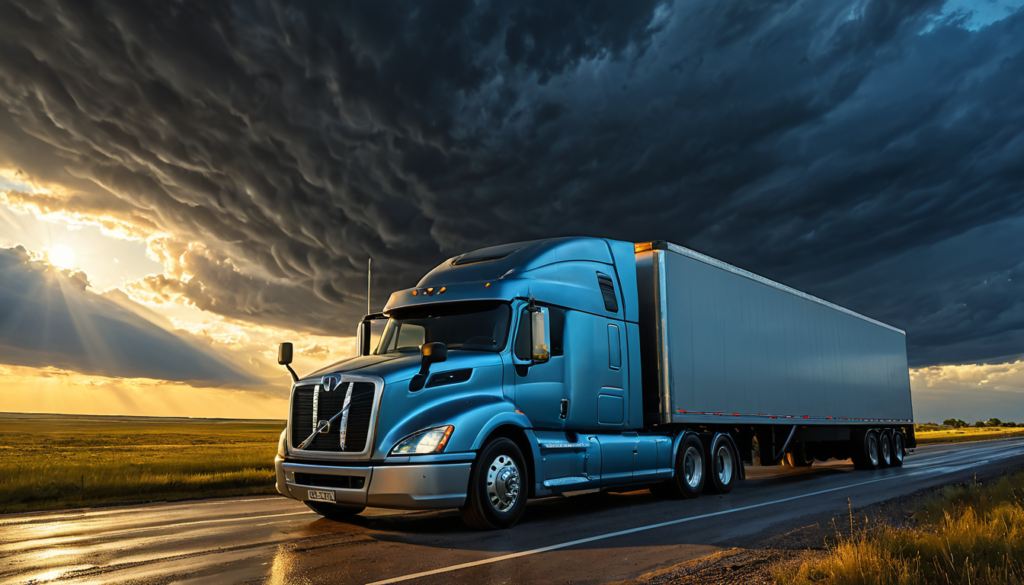
18-Wheeler & Trucking Accident Lawyers in Barber County, Kansas
When 80,000 Pounds Changes Everything
The truck came out of nowhere. One moment you’re driving through Barber County on US-160 or US-281, heading toward Medicine Lodge or crossing the prairie toward Pratt. The next, an 80,000-pound tractor-trailer has turned your life upside down. Your vehicle weighs 4,000 pounds. That truck is twenty times heavier. It is not a fair fight.
Every sixteen minutes, someone in America is hurt in a commercial truck crash. In Kansas, where long-haul corridors cross wheat fields and cattle country, those numbers hit closer to home. Barber County’s highways see constant commercial traffic—grain haulers, livestock transports, oil field equipment, and interstate freight moving between Texas and the Midwest. When that traffic turns deadly, you need advocates who understand the complexity of trucking law and the urgency of preserving evidence before it disappears.
We are Attorney911. Our managing partner, Ralph Manginello, has spent over twenty-five years fighting for accident victims—since 1998. We have recovered more than $50 million for families dealing with catastrophic injuries. Our associate attorney, Lupe Peña, used to work for insurance companies defending trucking claims. Now he uses that insider knowledge to fight for you. We handle cases across Kansas, including Barber County, and we are available twenty-four hours a day at 1-888-ATTY-911.
Understanding the Crisis on Barber County Roads
The Physics Are Brutal
An eighteen-wheeler traveling at sixty-five miles per hour needs over five hundred feet to stop. That is nearly two football fields. Your sedan needs about three hundred feet. When a truck driver is distracted, fatigued, or driving too fast for Kansas winter conditions, they cannot simply hit the brakes and avoid a collision. The results are catastrophic.
In Barber County, we see specific risks that compound the danger:
Agricultural Congestion: During harvest season, US-160 and US-281 see massive increases in farm equipment and grain truck traffic. Commercial vehicles mixing with slow-moving combines create dangerous passing situations and rear-end collision risks.
Winter Weather: Barber County winters can turn deadly fast. Ice on the prairie highways, sudden blizzards with whiteout conditions, and black ice on US-160 have caused countless jackknife accidents and multi-vehicle pileups. Truckers who do not adjust their speed for Kansas weather conditions put everyone at risk.
Rural Response Times: When an accident occurs thirty miles from Medicine Lodge or in remote areas near Lake City, emergency response takes longer. Those critical minutes can mean the difference between recovery and permanent disability.
The Federal Regulations That Protect You
Every commercial truck on Barber County highways must comply with strict Federal Motor Carrier Safety Administration (FMCSA) regulations, codified in Title 49 of the Code of Federal Regulations (49 CFR). These rules exist because trucking companies cannot be trusted to police themselves. When they violate these regulations—and they often do—we use those violations to prove negligence and maximize your compensation.
Hours of Service Violations (49 CFR Part 395):
Truck drivers may drive a maximum of eleven hours after ten consecutive hours off duty. They cannot drive beyond the fourteenth consecutive hour after coming on duty. Yet pressure to deliver loads from Wichita to Amarillo or north to Nebraska pushes drivers to violate these limits. A fatigued trucker on US-281 at 2:00 AM is a deadly weapon. We obtain Electronic Logging Device (ELD) data to prove when drivers exceeded federal limits.
Cargo Securement (49 CFR Part 393):
Kansas grain haulers and livestock transports must secure cargo to withstand specific force levels—0.8g deceleration forward, 0.5g rearward, and 0.5g laterally. When loaders in Barber County fail to properly secure wheat, cattle, or oil field equipment, the shifting weight causes rollover accidents or spilled cargo that creates secondary crashes.
Vehicle Maintenance (49 CFR Part 396):
Brake failures cause twenty-nine percent of trucking accidents. Federal law requires systematic inspection, repair, and maintenance. Drivers must complete pre-trip and post-trip inspection reports. We subpoena these records to prove trucking companies deferred maintenance to save money—putting you at risk on Kansas highways.
Driver Qualifications (49 CFR Part 391):
Commercial drivers must hold valid CDLs, pass medical examinations, and maintain clean driving records. Trucking companies must verify previous employment and check motor vehicle records for the past three years. When carriers hire unqualified drivers or fail to monitor medical conditions like sleep apnea, they commit negligent hiring—a separate basis for liability beyond the accident itself.
Types of 18-Wheeler Accidents in Barber County
Jackknife Accidents on Icy Prairie Highways
A jackknife occurs when the trailer swings perpendicular to the cab, often sweeping across both lanes of traffic. On Barber County’s US-160 or US-281, there is nowhere to hide when an eighteen-wheeler jackknives in front of you.
These accidents typically happen when drivers brake improperly on ice or when empty trailers (common after delivering grain in Kansas) lack the weight to maintain traction. Under 49 CFR § 392.6, drivers must adjust speed for conditions. A trucker doing sixty-five on an icy Barber County morning is violating federal law.
The injuries are devastating. Vehicles caught in the sweep of a jackknifing trailer suffer crushed roofs, severe traumatic brain injuries, and fatalities. We investigate the ECM data to prove speed at the time of the incident and maintenance records to check brake condition.
Rollover Accidents and Cargo Shifts
Kansas agricultural trucking creates unique rollover risks. When a grain hauler takes a curve on US-281 too fast near Medicine Lodge, or when a livestock trailer’s high center of gravity combines with prairie winds, rollovers occur. These accidents crush smaller vehicles and often result in fires from ruptured fuel tanks.
Under 49 CFR § 393.100-136, cargo must be secured to prevent shifting that affects vehicle stability. We investigate whether the loading facility—often local grain elevators or cattle operations in Barber County—improperly loaded the vehicle, creating liability separate from the driver.
Underride Collisions: The Most Deadly Crashes
Underride accidents occur when your vehicle slides underneath the trailer, shearing off the passenger compartment at windshield level. These accidents are almost always fatal or result in traumatic brain injury and spinal cord damage.
Federal law requires rear underride guards (49 CFR § 393.86), but many are poorly maintained or inadequate. Side underride guards are not federally required—a dangerous gap in regulations that kills hundreds annually. When an underride accident occurs on rural Barber County roads at night, poor lighting and visibility contribute to the tragedy. We investigate guard maintenance, rear lighting compliance, and whether the truck properly marked its width.
Rear-End Collisions and Stopping Distance
On long, straight stretches of Kansas highway, truck drivers develop highway hypnosis or follow too closely. When traffic slows for a train crossing in Medicine Lodge or a slow-moving combine on US-160, an eighty-thousand-pound truck cannot stop in time.
49 CFR § 392.11 requires drivers to maintain distance that is “reasonable and prudent.” We use ECM data to prove the truck was following too closely and ELD records to show whether fatigue slowed reaction times. These accidents frequently cause whiplash, traumatic brain injury from impact, and crushing injuries when vehicles are pushed into other obstacles.
Tire Blowouts and Road Gators
Kansas heat in summer and extreme cold in winter degrade truck tires. When a steer tire blows at highway speed, the driver loses control instantly. The shredded tire—called a “road gator”—becomes a hazard for following vehicles.
49 CFR § 393.75 mandates minimum tread depths—4/32-inch on steer tires, 2/32-inch on others. We demand tire inspection records and maintenance logs. If a trucking company failed to replace worn tires to save money, they are liable for the carnage caused when those tires fail on Barber County highways.
Wide Turn Accidents in Rural Intersections
Trucks swinging wide to make right turns at intersections in Medicine Lodge or Hazelton often trap smaller vehicles in the “squeeze play.” The truck swings left before turning right, creating a gap that drivers enter, only to be crushed when the trailer completes its turn.
These accidents involve 49 CFR § 392.11 violations for unsafe lane changes and often involve inadequate mirror checks or failure to signal intent. Rural Kansas intersections with limited visibility create perfect conditions for these catastrophic crashes.
Catastrophic Injuries and Your Future
Traumatic Brain Injury (TBI)
The force of an eighteen-wheeler impact often causes the brain to strike the inside of the skull. Even “mild” TBIs (concussions) can cause lasting cognitive issues. Moderate to severe TBIs result in memory loss, personality changes, inability to work, and need for lifelong care.
At Attorney911, we have recovered between $1,548,000 and $9,838,000 for traumatic brain injury victims. This compensation covers immediate medical care, cognitive rehabilitation, lost earning capacity, and the profound impact on quality of life. In Barber County, where specialized neurological care may require travel to Wichita or Kansas City, these funds ensure you receive the best possible treatment.
Spinal Cord Injury and Paralysis
Spinal cord injuries from trucking accidents can result in paraplegia (loss of lower body function) or quadriplegia (loss of all four limb function). These injuries require wheelchairs, home modifications, personal care assistance, and ongoing medical treatment.
Settlement ranges for spinal cord injuries typically run from $4,770,000 to over $25,880,000 depending on the level of injury and age of the victim. We work with life care planners to calculate the true lifetime cost of these injuries, ensuring you are not left financially devastated decades after the accident.
Amputation
Crushing injuries from trucking accidents often require surgical amputation of limbs. Beyond the initial surgery, amputees face prosthetic costs ($5,000 to $50,000 per prosthetic), replacement prosthetics every few years, physical therapy, and vocational retraining.
Our amputation cases have settled for between $1,945,000 and $8,630,000. These funds provide for advanced prosthetics, home modifications for accessibility, and compensation for the permanent change in lifestyle.
Wrongful Death
When a trucking accident kills a loved one on Barber County roads, surviving family members face funeral expenses, lost income, and profound grief. Kansas law allows recovery for lost companionship, mental anguish, and the financial support the decedent would have provided.
Wrongful death settlements typically range from $1,910,000 to $9,520,000. We handle these cases with compassion while aggressively pursuing accountability from every liable party.
Every Party Responsible for Your Injuries
Trucking accidents differ from car accidents because multiple parties may share liability. We investigate every potential defendant to maximize your recovery.
The Truck Driver: Direct negligence through speeding, distracted driving, fatigue, impairment, or violation of traffic laws. We obtain cell phone records, drug test results, and driving histories.
The Trucking Company/Motor Carrier: Under respondeat superior, employers are liable for employee negligence. Additionally, we pursue direct negligence claims for negligent hiring (failure to check backgrounds), negligent training, negligent supervision, and negligent maintenance. We subpoena Driver Qualification Files and CSA safety scores to prove patterns of violations.
The Cargo Owner/Shipper: When a grain elevator in Barber County overloads a truck or fails to disclose hazardous cargo, they share liability. We examine shipping contracts and loading instructions.
The Loading Company: Third-party loaders who fail to secure cargo per 49 CFR § 393 cause shift-related rollovers. We investigate loading company procedures and training records.
Truck and Parts Manufacturers: Defective brakes, tires, or steering components cause accidents. We research recall histories and similar defect complaints through NHTSA databases.
Maintenance Companies: Third-party mechanics who perform negligent repairs or return vehicles to service with known defects are liable for resulting crashes.
Freight Brokers: Brokers who arrange transportation but negligently select carriers with poor safety records or inadequate insurance share responsibility under federal regulations.
The Truck Owner: In owner-operator arrangements, the owner may bear separate liability for negligent entrustment or maintenance failures.
Government Entities: When poor road design, inadequate signage at rural intersections, or failure to maintain highways contributes to accidents, government liability may apply—though sovereign immunity limits and short deadlines apply in Kansas.
The 48-Hour Evidence Crisis
Why Immediate Action Is Critical
Trucking companies do not wait to protect themselves. Within hours of an accident on US-160 or US-281, they deploy rapid-response teams to the scene. Their lawyers and investigators are working while you are still in the hospital. Evidence that could prove your case disappears fast:
Black Box/ECM Data: Overwrites within thirty days or with subsequent driving events. This data proves speed, braking, and throttle position at the moment of impact.
ELD Records: May only be retained for six months. These prove hours-of-service violations and driver fatigue.
Dashcam Footage: Often deleted within seven to fourteen days unless preserved.
Witness Statements: Memories fade. Rural Kansas witnesses may be hard to locate weeks after the accident.
Physical Evidence: The truck itself may be repaired, sold, or destroyed. Skid marks wash away. Weather conditions change.
Our Immediate Response
When you call 1-888-ATTY-911, we act within twenty-four hours. We send spoliation letters to the trucking company, their insurer, and all potentially liable parties demanding preservation of:
- ECM/Black box data and ELD logs
- Driver Qualification Files and employment records
- Vehicle maintenance and inspection records
- Post-trip inspection reports ( 49 CFR § 396.11 )
- Dispatch records and communications
- Cell phone records
- The physical truck and trailer
- Cargo manifests and loading documentation
A spoliation letter puts the trucking company on legal notice. If they destroy evidence after receiving our letter, courts may impose sanctions, adverse inference instructions (the jury is told to assume destroyed evidence was unfavorable), or default judgment. This pressure often forces early, fair settlements.
Kansas Law and Your Rights
Statute of Limitations
In Kansas, you have two years from the date of the trucking accident to file a personal injury lawsuit. For wrongful death claims, the two-year clock starts from the date of death. Miss this deadline, and you lose your right to compensation—regardless of how severe your injuries or how clear the truck driver’s fault.
Do not wait. Evidence disappears long before the statute expires. Contact us immediately after any Barber County trucking accident.
Modified Comparative Negligence
Kansas follows a modified comparative negligence rule with a 50% bar. This means you can recover damages if you are less than fifty percent at fault. However, your recovery is reduced by your percentage of fault. If you are found twenty percent responsible for the accident, your $1,000,000 case becomes an $800,000 recovery.
If you are fifty percent or more at fault, you recover nothing. Insurance companies and trucking defense attorneys exploit this rule to shift blame onto victims. Our investigative team—led by a former insurance defense attorney who knows these tactics—works to disprove false allegations of comparative fault.
No Caps on Economic Damages
Unlike some states, Kansas does not cap economic damages (medical bills, lost wages, future care). You can recover the full cost of your injuries. Non-economic damages (pain and suffering) are also uncapped in most trucking accident cases, though Kansas does impose a cap on non-economic damages in medical malpractice cases that does not apply here.
Punitive damages are capped at the greater of the defendant’s annual gross income or $5,000,000. These damages punish gross negligence—such as knowingly hiring a dangerous driver or falsifying logbooks—and require clear and convincing evidence.
Why Barber County Victims Choose Attorney911
Twenty-Five Years of Fighting for Victims
Ralph Manginello has represented injury victims since 1998. He is admitted to federal court for the Southern District of Texas, giving us the capability to handle interstate trucking cases that touch federal jurisdiction. We have gone toe-to-toe with Fortune 500 companies, including litigation involving the BP Texas City Refinery explosion—a case resulting in over $2.1 billion in total industry settlements.
Our current active litigation includes a $10,000,000 hazing lawsuit against the University of Houston and Pi Kappa Phi fraternity, demonstrating our willingness to take on powerful institutional defendants.
The Insurance Defense Advantage
Lupe Peña, our associate attorney, spent years working for a national insurance defense firm. He knows exactly how trucking insurers evaluate claims, minimize payouts, and train adjusters to deny legitimate claims. Now he uses that insider knowledge to fight for you.
Insurance companies know which law firms are willing to go to trial—and they settle differently with those firms. We prepare every case as if it is going to trial, creating leverage that results in higher settlements without years of litigation.
Multi-Million Dollar Results
Our track record includes:
- $5,000,000+ for a traumatic brain injury victim struck by a falling log
- $3,800,000+ for a car accident victim who suffered partial leg amputation due to medical complications
- $2,500,000+ for commercial truck crash victims
- $2,000,000+ for maritime and Jones Act back injury cases
Client-Centered Service
Our Google rating of 4.9 stars from over 250 reviews reflects our commitment to treating clients like family, not case numbers. As client Chad Harris said, “You are NOT just some client… You are FAMILY to them.”
Other clients agree:
- Glenda Walker: “They fought for me to get every dime I deserved.”
- Donald Wilcox: “One company said they would not accept my case. Then I got a call from Manginello… I got a call to come pick up this handsome check.”
- Angel Walle: “They solved in a couple of months what others did nothing about in two years.”
Three Offices Serving Kansas and Texas
With offices in Houston, Austin, and Beaumont, and federal court admission allowing us to practice across state lines, we serve trucking accident victims throughout Kansas, including Barber County. We offer remote consultations and travel to you when necessary.
No Fee Unless We Win
We work on contingency. You pay zero upfront costs. We advance all investigation expenses. Our standard fee is 33.33% if settled pre-trial and 40% if litigation is required. If we do not recover compensation for you, you owe us nothing.
Hablamos Español
For Spanish-speaking clients in Barber County’s Hispanic communities, Lupe Peña provides fluent representation without interpreters. Llame a 1-888-ATTY-911 para una consulta gratuita.
Frequently Asked Questions for Barber County Trucking Accidents
What should I do immediately after a truck accident on US-160 or US-281?
Call 911, seek medical attention even if injuries seem minor, photograph everything (vehicles, road conditions, skid marks, truck DOT numbers), get witness information, and call our office immediately. Do not speak to the trucking company’s insurance adjuster.
How long do I have to file a lawsuit in Kansas?
Two years from the accident date. However, evidence disappears much faster. Call us within days.
Who can be held liable besides the truck driver?
The trucking company, cargo owner, loading company, truck manufacturer, parts manufacturer, maintenance company, freight broker, and potentially government entities if road defects contributed. More defendants mean more insurance coverage.
What is a spoliation letter and why does it matter?
It is a legal notice demanding preservation of evidence. We send these within twenty-four hours to prevent destruction of black box data, maintenance records, and driver files.
What if I was partially at fault for the accident?
Under Kansas’s 50% bar rule, you can recover if you were less than fifty percent at fault. Your recovery is reduced by your fault percentage. We work to minimize any attribution of fault to you.
How much is my case worth?
It depends on injury severity, medical costs, lost wages, and insurance coverage. Trucking cases typically have $750,000 to $5 million in available coverage. We have recovered millions for catastrophic injury victims.
Will my case go to trial?
Most settle, but we prepare every case for trial. Insurance companies offer better settlements when they know your attorney will go to court if necessary.
Do you handle wrongful death cases?
Yes. We pursue full compensation for funeral expenses, lost income, loss of companionship, and mental anguish for surviving family members.
What if the truck driver was an independent contractor?
Both the driver and the trucking company may still be liable. We investigate all contractual relationships and insurance policies.
Can undocumented immigrants file claims?
Yes. Immigration status does not affect your right to compensation for injuries caused by negligence.
Your Fight Starts Now
The trucking company has lawyers working right now to minimize your claim. They have rapid-response investigators, insurance adjusters trained to deny claims, and millions in resources. You deserve the same level of representation.
Ralph Manginello and the team at Attorney911 have spent twenty-five years making trucking companies pay for the damage they cause. We know the FMCSA regulations, we know the insurance company playbooks, and we know how to build cases that win.
If you or a loved one has been injured in an eighteen-wheeler accident in Barber County—whether on US-160 near Medicine Lodge, US-281 through Hazelton, or any rural Kansas highway—call us immediately at 1-888-ATTY-911 (1-888-288-9911). The consultation is free. You pay nothing unless we win. And we speak Spanish.
Do not let the trucking company get away with it. Your evidence is disappearing every day you wait. Call now and let us start fighting for the compensation you deserve.