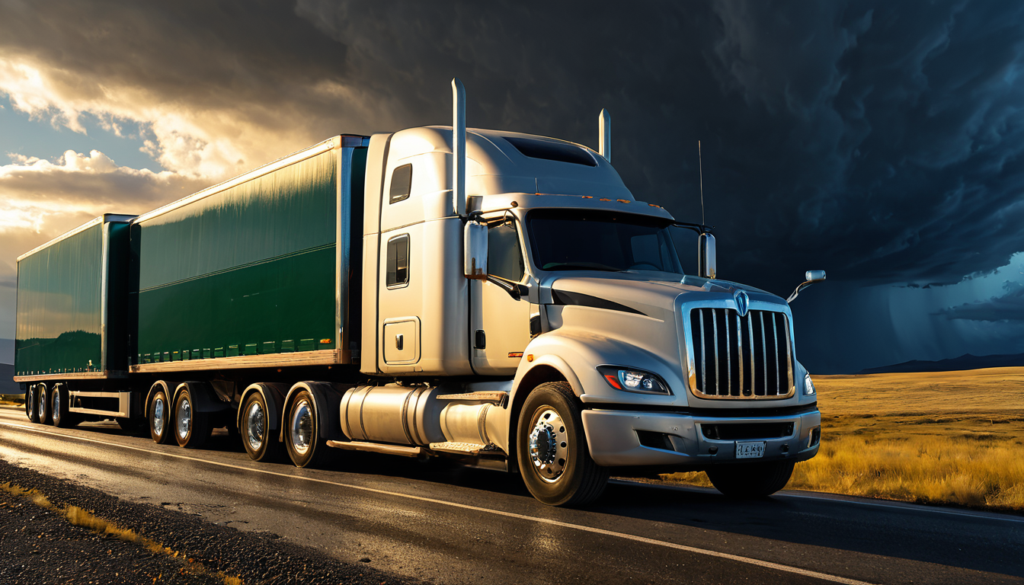
18-Wheeler Accident Attorneys in Blaine County, Montana: When Commercial Trucks Destroy Lives, We Fight Back
The Moment Everything Changed on Blaine County’s Highways
You were driving US-2 towards Havre, or maybe northbound on US-87 through Chinook, when the unthinkable happened. An 80,000-pound commercial truck—twenty times heavier than your vehicle—changed your life in an instant. Maybe it was a cattle hauler coming off the Fort Belknap Indian Community, an oil tanker service truck from the Bakken fields, or a grain transport rushing to meet elevator deadlines before the weather turned.
In Blaine County, we know the rhythm of trucking. We live alongside the constant stream of agricultural haulers, the livestock transports that keep our ranching economy moving, and the heavy equipment carriers serving eastern Montana’s energy sector. But when one of these massive vehicles causes a catastrophic accident, the devastation is incomprehensible.
At Attorney911, we don’t just understand trucking accidents—we’ve spent over 25 years holding trucking companies accountable for the carnage they cause on rural highways just like those crisscrossing Blaine County. Ralph Manginello, our managing partner, has been fighting for injury victims since 1998, securing multi-million dollar settlements for families devastated by 18-wheeler crashes, including a $5 million recovery for a traumatic brain injury victim and a $3.8 million settlement for an amputation case.
We know Blaine County’s unique challenges: the howling winds that buffet high-profile trailers on US-2, the icy conditions that turn Montana’s highways into danger zones six months of the year, and the long stretches of rural road where fatigued drivers push beyond federal limits to reach the next fuel stop. More importantly, we know how to investigate these crashes before critical evidence disappears into the winter wind.
Call us immediately at 1-888-ATTY-911. In Blaine County trucking accidents, evidence can vanish quickly—black box data overwrites within thirty days, and trucking companies deploy rapid-response teams while you’re still in the hospital. We send spoliation letters within hours, not weeks, to preserve the proof you need.
Why 18-Wheeler Accidents in Blaine County Demand Specialized Legal Expertise
Montana’s vast open spaces create unique trucking hazards that urban attorneys simply don’t understand. When you’re dealing with a crash on the Hi-Line, you’re facing different challenges than a fender-bender in Billings or Missoula.
The Physics of Devastation
An 18-wheeler can weigh up to 80,000 pounds—that’s twenty-five times the weight of a standard passenger vehicle. When a truck traveling 65 miles per hour strikes a car on US-87, the impact force isn’t just measured in speed; it’s measured in the laws of physics that favor the massive vehicle every single time.
We’ve seen the aftermath of these collisions: cargo spills that shut down Montana highways for hours, jackknifed tankers blocking both lanes of traffic in whiteout conditions, and underride crashes where passenger vehicles slide beneath trailers, shearing off roofs and causing decapitation injuries.
Montana’s Unique Trucking Landscape
Blaine County sits at the crossroads of agricultural Montana and the energy-rich eastern plains. Our highways see:
- Livestock transports moving cattle from the Fort Belknap Indian Community and surrounding ranches
- Grain haulers racing to beat weather windows during harvest season
- Oilfield service trucks traveling between the Bakken formation and maintenance facilities
- Long-haul freight crossing the Hi-Line on I-15 and US-2
Each of these carries distinct risks. Cattle trucks can experience cargo shifts that cause rollovers. Grain haulers often run overweight during peak season. Oilfield trucks carry hazardous materials and frequently operate on tight schedules that encourage Hours of Service violations.
Federal Regulations That Protect Blaine County Drivers
Commercial trucking isn’t regulated by Montana law alone. The Federal Motor Carrier Safety Administration (FMCSA) enforces strict rules under Title 49 of the Code of Federal Regulations (49 CFR). These federal laws apply to every truck crossing Blaine County lines, whether it’s hauling sugar beets to Sidney or oil equipment to the drilling fields.
At Attorney911, we know these regulations inside and out. Our associate attorney, Lupe Peña, spent years working for a national insurance defense firm before joining our team. He knows exactly how trucking insurers evaluate claims—because he used to help them minimize payouts. Now he uses that insider knowledge to fight for maximum compensation for Blaine County families.
We regularly cite violations of:
- 49 CFR Part 395: Hours of Service regulations limiting drivers to 11 hours behind the wheel
- 49 CFR Part 393: Vehicle safety standards including cargo securement and brake maintenance
- 49 CFR Part 391: Driver qualification requirements ensuring operators are medically and professionally fit
- 49 CFR Part 396: Inspection and maintenance protocols that prevent brake failures and tire blowouts
When trucking companies violate these rules—and they do, regularly—they don’t just face fines. They face liability for negligence that can result in multi-million dollar verdicts.
The 48-Hour Evidence Crisis: Why Blaine County Victims Must Act Immediately
Here’s what the trucking company doesn’t want you to know: their lawyers are already working while you’re still in the hospital.
After a serious 18-wheeler accident in Blaine County, the trucking company dispatches a rapid-response team to the scene. Their goal isn’t to help you—it’s to protect themselves. They secure the black box data before law enforcement can analyze it fully. They coach drivers on what to say. They initiate “routine maintenance” that conveniently destroys evidence of brake failures or tire defects.
You have approximately 48 hours to secure critical evidence before it disappears forever.
The Spoliation Letter: Your Legal Shield
Within hours of being retained, we send formal spoliation letters to every potentially liable party—the driver, the trucking company, the cargo owner, and maintenance contractors. These letters put them on notice that evidence destruction will result in severe legal consequences, including adverse inference instructions (where juries are told to assume destroyed evidence was unfavorable to the defense) and monetary sanctions.
At Attorney911, we’ve developed a comprehensive preservation protocol specifically for Montana trucking accidents:
Electronic Data Preservation:
- Engine Control Module (ECM) downloads showing speed, braking, and throttle position
- Electronic Logging Device (ELD) records proving Hours of Service violations
- GPS tracking data revealing route deviations or excessive speeds
- Dashcam footage (often deleted within 7-14 days)
- Cell phone records documenting distracted driving
Driver Records:
- Complete Driver Qualification Files including medical certifications and previous employer verifications
- Drug and alcohol test results (mandatory post-accident testing under 49 CFR § 382)
- Training records showing whether the driver understood mountain driving safety
- Hours of service logs revealing if the driver exceeded federal limits reaching Blaine County
Vehicle Evidence:
- Maintenance records showing deferred brake or tire service
- Pre-trip and post-trip inspection reports
- The actual truck and trailer (before they’re repaired or sold)
Hablamos Español. If your family speaks Spanish as their primary language, our associate attorney Lupe Peña provides direct representation without interpreters, ensuring nothing gets lost in translation. Llame al 1-888-ATTY-911.
Types of 18-Wheeler Accidents We Handle Across Blaine County
Not all trucking accidents are created equal, and Montana’s geography creates specific hazards that require specialized legal knowledge.
Jackknife Accidents on Montana’s Highways
A jackknife occurs when the truck cab and trailer slide toward each other at an angle, often sweeping across all lanes of traffic. In Blaine County, where US-2 and US-87 feature long, isolated stretches, a jackknifed truck can block a highway for hours, causing secondary accidents as other vehicles try to navigate around the wreckage.
These accidents typically result from:
- Sudden braking on icy surfaces (common during Montana winters)
- Improper braking techniques by inexperienced drivers
- Empty or lightly loaded trailers that are more prone to swinging
- Brake imbalances between cab and trailer
We investigate whether the trucking company provided adequate training for winter driving conditions specific to northern Montana, and whether they violated 49 CFR § 392.6 by scheduling routes that required excessive speeds for road conditions.
Rollover Accidents: The Agricultural Hazard
Blaine County’s economy depends on agriculture, and during harvest season, rollover accidents spike. Top-heavy grain trucks taking corners too quickly on county roads, or cattle haulers with shifting loads on US-87 curves, can easily tip.
Rollovers often involve:
- Cargo shifting: When grain or livestock moves unexpectedly, changing the center of gravity
- Speeding on curves: Drivers unfamiliar with Montana’s rural roadways taking turns at unsafe speeds
- Tire blowouts: Often caused by overloaded trailers exceeding weight limits
Under 49 CFR § 393.100-136, cargo must be secured to prevent shifting. When loads aren’t properly secured for the steep grades and sharp curves common in central Montana, the trucking company is liable for the devastation that follows.
Underride Collisions: The Deadliest Blaine County Crashes
Underride accidents occur when a passenger vehicle strikes a truck trailer and slides underneath. These are often fatal or result in catastrophic head and spinal injuries. Montana’s long distances between medical facilities make underride accidents particularly deadly in Blaine County, where air transport to Level I trauma centers may take critical time.
Federal law requires rear underride guards on trailers manufactured after 1998 (49 CFR § 393.86), but many trailers have inadequate guards or none at all. Side underride guards aren’t federally mandated, though they’re increasingly recognized as lifesaving devices.
Rear-End Collisions: The Braking Distance Reality
A loaded 18-wheeler traveling at 65 miles per hour requires nearly 525 feet to stop—that’s almost two football fields. When traffic slows unexpectedly on I-15 near Harlem or US-2 through the Milk River Valley, fatigued or distracted truck drivers often can’t stop in time.
These accidents frequently involve violations of:
- 49 CFR § 392.11: Following too closely
- 49 CFR § 392.3: Operating while fatigued (driving beyond the 11-hour limit)
- 49 CFR § 392.82: Distracted driving/texting
Lupe Peña’s background in insurance defense proves invaluable here. He knows that trucking companies often try to claim the victim “stopped short” or contributed to the accident. We counter these arguments with ECM data showing the truck driver’s reaction time (or lack thereof).
Wide Turn Accidents in Blaine County Communities
Tractor-trailers making right turns in Chinook, Harlem, or Fort Belknap Agency must swing wide to the left before completing their turn. Unsuspecting motorists often get caught in the “squeeze play” when they try to pass on the right, thinking the truck is changing lanes.
These accidents involve:
- Failure to properly signal turns (49 CFR § 392.2)
- Inadequate mirror checks
- Driver inexperience with trailer tracking
Blind Spot (“No-Zone”) Accidents
Trucks have massive blind spots on all four sides—the front, rear, and especially the right side. When truck drivers change lanes without checking these zones, they can crush passenger vehicles. Montana’s winds can push trailers unexpectedly, making blind spot vigilance even more critical.
Federal regulations (49 CFR § 393.80) require proper mirror adjustment, but many drivers fail to check blind spots before maneuvering.
Tire Blowouts and Brake Failures
Montana’s temperature extremes—from summer heat to winter cold—cause accelerated tire degradation. Underinflated tires (49 CFR § 393.75 requires proper inflation) can overheat and explode, sending debris across highways or causing the driver to lose control.
Brake failures are even more common in mountain west trucking. Federal regulations (49 CFR § 393.40-55) mandate specific brake maintenance, but companies often defer repairs to save money. When a truck’s air brakes fail descending from the Bear Paw Mountains or crossing the Hi-Line, the results are catastrophic.
Cargo Spills: The Agricultural and Hazardous Materials Risk
Blaine County sees significant hazardous materials traffic—oilfield chemicals, pesticides for agriculture, and fuel transports. When these spill, they create environmental hazards and secondary accident risks.
49 CFR § 393.100 requires proper cargo securement to prevent leaking, spilling, or falling. When cattle haulers lose animals on the highway or grain trucks spill loads, the trucking company is liable for multi-vehicle pileups caused by drivers swerving to avoid debris.
Head-On and T-Bone Collisions
Fatigue-related lane departures are common on Montana’s long, monotonous highways. When a truck driver falls asleep and drifts into oncoming traffic on US-87, or runs a stop sign in rural Blaine County, the resulting head-on or T-bone collision is almost always fatal for the passenger vehicle occupants.
These cases often involve:
- Hours of Service violations (49 CFR § 395)
- Sleep apnea undiagnosed during medical exams (49 CFR § 391.41)
- Drug or alcohol impairment (49 CFR § 392.4-5)
Understanding Montana Law: Your Rights in Blaine County
Montana’s legal framework provides specific protections for trucking accident victims, but also contains pitfalls for the unwary.
Statute of Limitations: The Three-Year Clock
In Montana, you have three years from the date of your trucking accident to file a personal injury lawsuit. For wrongful death claims, surviving family members also have three years from the date of death.
This is longer than many states—Texas provides only two years—but waiting is never advisable. Evidence degrades, witnesses disappear, and trucking companies destroy records. The sooner you contact Attorney911, the stronger your case.
Comparative Negligence: The 51% Rule
Montana follows a “modified comparative negligence” standard. You can recover damages if you’re 50% or less at fault for the accident. However, your recovery is reduced by your percentage of fault. If you’re found 20% at fault and your damages are $1 million, you receive $800,000.
If you’re 51% or more at fault, you recover nothing.
Trucking companies and their insurers will try to shift blame to you. They’ll claim you were speeding, failed to yield, or were distracted. We counter these tactics with objective evidence—ECM data, ELD records, and crash reconstruction—that proves what really happened on that Blaine County highway.
Damage Caps: Punitive Damages Limits
Montana limits punitive damages (meant to punish egregious misconduct) to the greater of $10 million or 3% of the defendant’s net worth. However, there’s no cap on compensatory damages for medical expenses, lost wages, and pain and suffering.
This matters in trucking cases because we often pursue punitive damages when companies knowingly put dangerous drivers on the road or falsify maintenance records. The $10 million cap is high enough to seriously impact even large national carriers.
Who Can Be Held Liable for Your Blaine County Trucking Accident?
Unlike car accidents involving only two drivers, 18-wheeler crashes often involve multiple liable parties. We investigate every potential defendant to maximize your recovery.
The Truck Driver
The most obvious defendant, but rarely the only one. We examine whether the driver:
- Violated Hours of Service regulations
- Drove while fatigued or impaired
- Failed to conduct required pre-trip inspections
- Had a history of violations the company should have discovered
The Trucking Company (Motor Carrier)
Under the doctrine of respondeat superior, employers are liable for their employees’ negligence within the scope of employment. But we also pursue direct negligence claims:
- Negligent hiring: Did they verify the driver’s CDL and medical certification?
- Negligent training: Did they prepare the driver for Montana’s winter conditions and mountain grades?
- Negligent supervision: Did they monitor ELD data showing repeated HOS violations?
- Negligent maintenance: Did they defer brake or tire repairs to save money?
Trucking companies carry substantial insurance—typically $750,000 to $5 million—but they hide behind layers of corporate structures. Ralph Manginello’s federal court admission allows us to pursue these companies in federal court when necessary, removing cases from local bias and ensuring full discovery rights.
The Cargo Owner and Loading Company
In Blaine County’s agricultural economy, separate companies often own the grain or livestock being hauled. If they overloaded the truck or failed to secure cargo properly, they’re liable for rollovers and spills.
Maintenance Companies
Third-party mechanics who performed inadequate brake repairs or tire changes can be sued for negligent maintenance. We subpoena work orders and inspection records to prove who touched the truck before the crash.
Truck and Parts Manufacturers
When brake systems fail despite proper maintenance, or when tires explode due to manufacturing defects, we pursue product liability claims against manufacturers. We’ve gone toe-to-toe with major corporations in complex litigation, including our work on the BP Texas City refinery explosion that killed 15 workers and injured over 170.
Freight Brokers
Brokers who arrange transportation but don’t own trucks may be liable for negligent carrier selection. If they hired a carrier with a poor safety record to save money, they share responsibility for the carnage.
Government Entities
Montana’s Department of Transportation and Blaine County may be liable for dangerous road design, inadequate signage, or failure to maintain highways. However, sovereign immunity limits these claims, and strict notice requirements apply—often requiring action within months rather than years.
Catastrophic Injuries: The Real Cost of Blaine County Trucking Accidents
The injuries caused by 80,000-pound vehicles aren’t minor bruises. We’re talking about life-altering, financially devastating trauma.
Traumatic Brain Injury (TBI)
From concussions to severe cognitive impairment, TBIs can rob you of your career, your personality, and your independence. Symptoms may not appear for days, including:
- Memory loss and confusion
- Personality changes and mood swings
- Chronic headaches and dizziness
- Difficulty concentrating
- Sleep disturbances
Our documented settlements for TBI cases range from $1.5 million to $9.8 million, reflecting the lifetime of care these injuries require. As client Chad Harris told us after his case settled, “You are NOT just some client… You are FAMILY to them.” We don’t just fight for settlements; we fight because we understand these injuries devastate families.
Spinal Cord Injuries and Paralysis
The impact forces in trucking accidents frequently damage the spinal cord, causing:
- Paraplegia: Loss of function in legs and lower body
- Quadriplegia: Loss of function in all four limbs
- Incomplete injuries: Partial function loss with variable prognosis
Lifetime care costs for quadriplegia can exceed $5 million. We work with life care planners and economists to ensure your settlement covers decades of medical equipment, home modifications, and lost earning capacity.
Amputations
When crushed vehicles require extraction, limbs are often too damaged to save. Amputation cases involve:
- Initial surgery and hospitalization
- Prosthetic limbs ($5,000-$50,000 each, requiring replacement every 3-5 years)
- Physical and occupational therapy
- Psychological counseling for body image and trauma
We’ve secured settlements ranging from $1.9 million to $8.6 million for amputation victims.
Wrongful Death
When a trucking accident takes a loved one, surviving family members may recover:
- Lost future income and benefits
- Loss of companionship and guidance
- Mental anguish and emotional suffering
- Funeral and burial expenses
- Medical costs incurred before death
In Montana, spouses, children, and parents (if no spouse or children) can bring wrongful death claims. Our settlements in these tragic cases range from $1.9 million to $9.5 million.
Insurance Coverage: Accessing the Deep Pockets
Federal law requires minimum insurance coverage for commercial trucks:
- $750,000: General freight (non-hazardous)
- $1,000,000: Oil, petroleum products, large equipment
- $5,000,000: Hazardous materials
But these are minimums. Many carriers carry $2-5 million in coverage. The key is accessing it.
Trucking insurers employ adjusters trained to minimize payouts. They contact victims immediately, hoping to settle before you understand the full extent of your injuries. They record statements and use every word against you.
At Attorney911, we handle all communications with insurers. Our team includes Lupe Peña, who knows their playbook because he used to work for them. He understands that “Colossus” and other claims software systematically undervalues pain and suffering, and he knows how to counter those algorithms with real evidence of your damages.
As Donald Wilcox, one of our clients, said: “One company said they would not accept my case. Then I got a call from Manginello… I got a call to come pick up this handsome check.” We take cases other firms reject because we have the resources to fight—and win.
Frequently Asked Questions About Blaine County Trucking Accidents
How long do I have to file a lawsuit after a trucking accident in Blaine County?
Montana gives you three years from the accident date for personal injury claims, and three years from the date of death for wrongful death. However, waiting is dangerous. Evidence disappears quickly in Montana—weather erodes skid marks, witnesses move away, and trucking companies destroy records. Contact us immediately at 1-888-ATTY-911 to preserve your evidence.
What should I do immediately after a trucking accident in rural Montana?
Call 911 immediately. Even if you feel fine, seek medical attention—adrenaline masks serious injuries. Document everything: take photos of the truck’s DOT number, the scene, your injuries, and get witness contact information. Do not give recorded statements to any insurance company. Call us before you speak with the trucking company’s representatives.
Can I recover damages if I was partially at fault?
Yes, under Montana’s comparative negligence law, as long as you’re not more than 50% at fault. Your recovery is reduced by your percentage of fault. We’ll work to minimize any attributed fault through evidence collection.
How much is my case worth?
It depends on injury severity, medical costs, lost wages, and insurance coverage. Blaine County trucking accidents often involve higher values than car accidents because commercial policies are larger. Catastrophic injury cases frequently settle for seven figures. We offer free consultations to evaluate your specific situation.
What if the truck driver was an independent contractor?
Both the driver and the company that hired them may be liable. We investigate all contractual relationships and insurance policies. Companies often try to shield themselves by claiming drivers are “independent,” but federal regulations and case law often expose this as a sham to avoid liability.
Will my case go to trial?
Most settle, but we prepare every case as if it’s going to trial. Insurance companies offer better settlements when they know your attorney is willing to go to court. With 25+ years of experience and admission to federal court, Ralph Manginello has the trial expertise to take your case all the way if necessary.
How do I pay for an attorney?
We work on contingency—33.33% if settled pre-trial, 40% if we go to trial. You pay nothing upfront. We advance all investigation costs, including accident reconstruction and expert witnesses. If we don’t win, you don’t pay.
What about accidents on tribal lands within Blaine County?
The Fort Belknap Indian Community lies within Blaine County. Accidents on tribal lands involve complex jurisdictional issues between tribal, state, and federal courts. Our experience with federal litigation allows us to navigate these complexities and determine the proper venue for your case.
Do you handle Spanish-language cases?
Yes. Lupe Peña provides fluent Spanish representation. Hablamos Español. Call 1-888-ATTY-911 for service in your preferred language.
The Attorney911 Advantage for Blaine County Families
When you choose Attorney911, you’re not getting a settlement mill that processes cases like cattle through a chute. You’re getting:
25+ Years of Experience: Ralph Manginello has been fighting for injury victims since 1998. He knows the federal court system (he’s admitted to the Southern District of Texas) and has handled complex litigation against Fortune 500 companies, including BP.
Former Insurance Defense on Your Side: Lupe Peña worked for the insurance companies. He knows their tactics, their valuation software, and their training manuals. Now he uses that knowledge against them.
Multi-Million Dollar Results: We’ve recovered over $50 million for clients, including $5+ million for a traumatic brain injury, $3.8+ million for an amputation, and $2.5+ million for truck crash victims.
Rapid Response: We answer calls 24/7. In Blaine County, where winter storms can delay travel and communication is spotty in rural areas, having an attorney who responds immediately matters.
Three Office Locations: While we’re based in Houston with offices in Austin and Beaumont, we handle cases throughout the United States, including Montana. We offer remote consultations and travel to Blaine County when necessary.
4.9-Star Reputation: Our 251+ Google reviews speak for themselves. As Glenda Walker wrote: “They fought for me to get every dime I deserved.”
Current Major Litigation: We’re not just handling car accidents. We’re currently litigating a $10 million hazing lawsuit against the University of Houston and have been featured on KHOU, ABC13, and the Houston Chronicle. We have the resources to take on the biggest defendants.
Contingency Fee: You pay nothing unless we win. Zero upfront costs. We advance all expenses.
Your Recovery Starts With One Call
The trucking company has lawyers working right now to protect their interests. They have investigators photographing the scene, downloading black box data, and coaching drivers on what to say. They have insurance adjusters preparing to offer you pennies on the dollar for your pain.
What do you have?
If you’ve been injured in an 18-wheeler accident anywhere in Blaine County—whether on I-15, US-2, US-87, or a county road near Harlem or Chinook—call Attorney911 immediately at 1-888-ATTY-911 or (888) 288-9911.
We’ll send a preservation letter today to prevent evidence destruction. We’ll investigate every liable party—from the driver to the trucking company to the cargo loader. We’ll fight for every dime you deserve, just as we did for Donald Wilcox, for Kiimarii Yup who told us “1 year later I have gained so much in return plus a brand new truck,” and for Chad Harris who became family to us.
Don’t let them push you around. Don’t let them destroy the evidence. Don’t let them get away with it.
Call 1-888-ATTY-911 now. Free consultation. No fee unless we win. Because in Blaine County, you deserve a fighter who treats you like family, not a file number.
Hablamos Español. Llame hoy.
Attorney911 | The Manginello Law Firm
“Legal Emergency Lawyers™”
Ralph@atty911.com | Lupe@atty911.com
1-888-ATTY-911 | (888) 288-9911