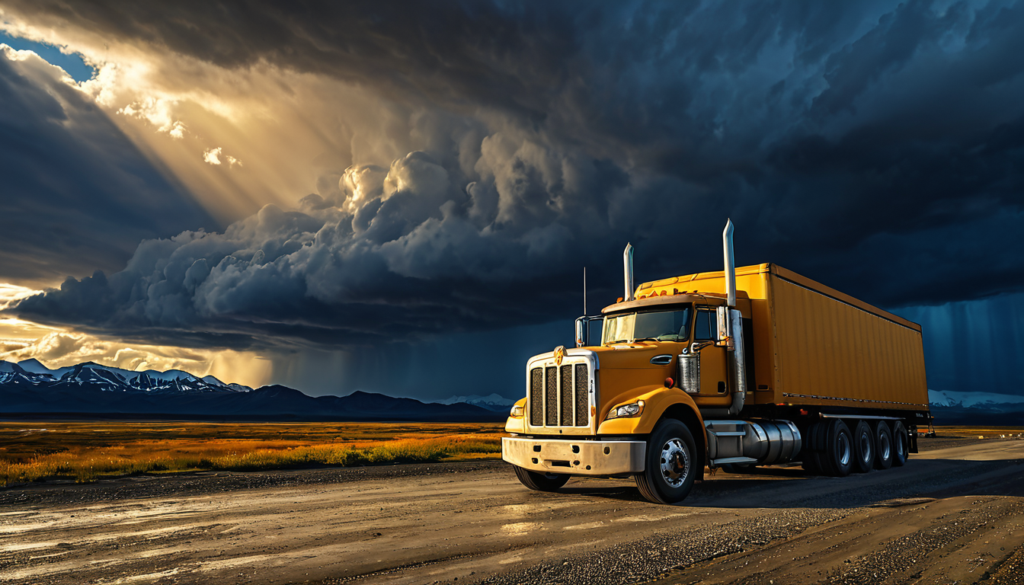
When an 80,000-Pound Truck Changes Everything in Denali Borough
The George Parks Highway winds through some of the most spectacular—and unforgiving—terrain in North America. One moment, you’re driving toward Denali National Park, anticipating a view of the Great One. The next, an 18-wheeler jackknifes on black ice, and your life changes forever.
If you’re reading this from a hospital bed in Fairbanks or Healy, if you’re mourning a loved one taken in a trucking accident on the Dalton Highway, or if you’re facing months of rehabilitation after a cargo hauler lost control on the Parks Highway, you need to know this: the trucking company has already called their lawyers. They’ve dispatched rapid-response teams to Denali Borough to protect their interests. They have investigators photographing the scene while you’re still in the ambulance.
What are you doing to protect yours?
We are Attorney911, and we fight for trucking accident victims across Alaska and the Lower 48. Ralph Manginello has spent over 25 years holding commercial carriers accountable when their negligence devastates families. Our firm has recovered multi-million dollar settlements for catastrophic injuries—$5 million for traumatic brain injury victims, $3.8 million for amputation cases, and millions more for families who lost everything to an 18-wheeler. We’ve gone toe-to-toe with Fortune 500 corporations like BP in the Texas City refinery litigation, and we bring that same relentless advocacy to Denali Borough.
The clock is already ticking. Black box data can be overwritten in 30 days. Evidence disappears in Alaska’s harsh weather. Witnesses on remote highways scatter. Call us now at 1-888-ATTY-911 before the trucking company builds a wall around the truth.
Denali Borough Isn’t Texas—and That Changes Everything About Your Case
Most personal injury law firms write generic content that could apply to any highway in America. But Denali Borough presents unique challenges that can make or break your case. We’re talking about a region where temperatures plunge to 40 below, where the sun disappears for weeks in winter, and where a serious accident might leave you hours from the nearest trauma center.
The Geography of Danger
Denali Borough spans over 12,000 square miles of Interior Alaska. The George Parks Highway (Alaska Route 3) serves as the primary artery connecting Anchorage to Fairbanks, carrying massive tour buses, fuel tankers bound for the North Slope, and freight haulers delivering supplies to remote communities. Then there’s the legendary Dalton Highway—the “Haul Road”—a 414-mile stretch of gravel and asphalt that represents some of the most dangerous trucking in North America.
These aren’t Texas interstates. When a truck loses its brakes on the steep grades of the Alaska Highway, there’s no handy runaway ramp every few miles. When black ice forms on the Parks Highway near Healy, there’s no Department of Transportation salt truck minutes away. And when you suffer catastrophic injuries near mile marker 200 on the Dalton, the nearest Level I trauma center might be hundreds of miles distant.
Trucking companies know these risks. They profit from them. And when their drivers push through whiteout conditions to meet impossible delivery schedules, they gamble with your life.
The Economic Reality
Denali Borough’s economy revolves around three industries that generate massive truck traffic: tourism, mining, and oil field support. The Usibelli Coal Mine in Healy runs 24/7 operations with heavy equipment transport. Tour operators haul massive RVs and buses along the Parks Highway during the brief summer season. And the support traffic for North Slope oil operations—everything from “rolligons” to modular housing—passes through or near Denali Borough.
Each of these sectors brings distinct liability issues. Coal haulers operate on private roads with different safety standards. Tour buses carry foreign passengers unfamiliar with Alaskan driving hazards. Oil field trucks often carry hazardous materials across the borough on their way to Prudhoe Bay.
Weather as a Weapon
Alaska weather isn’t just an inconvenience—it’s a contributing factor in hundreds of trucking accidents annually. The combination of permafrost heaving roads, “ice fog” that reduces visibility to near zero, and moose population densities that lead to sudden evasive maneuvers creates a perfect storm for 18-wheeler disasters.
Federal regulations require trucking companies to adjust operations for weather conditions under 49 CFR § 392.3—the rule prohibiting operation while impaired by fatigue, illness, or “any other cause.” When a trucker chooses to push through a winter storm to make a deadline on the Dalton Highway, that’s not just dangerous driving. That’s a federal violation that can prove negligence in your case.
The Physics of Devastation: Why 18-Wheeler Accidents Aren’t “Just Car Wrecks”
Your Subaru weighs roughly 3,500 pounds. A fully loaded tractor-trailer in Alaska can weigh 80,000 pounds—and that’s on the Dalton Highway, where special permits allow even heavier loads for oil field equipment. That weight disparity isn’t just dangerous. It’s catastrophic.
Mass × Velocity = Catastrophe
An 80,000-pound truck traveling at 55 miles per hour carries approximately 20 times the kinetic energy of a passenger vehicle at the same speed. When impact forces transfer to your body, the results are predictable: traumatic brain injuries, spinal cord damage, crush injuries, and death.
Alaska’s rural highways compound this danger. Unlike urban interstates where traffic congestion forces lower speeds, the Parks Highway and Dalton Highway allow—and often require—sustained high-speed travel. When something goes wrong at 65 miles per hour on an Alaskan highway, you don’t get a fender bender. You get a life-altering event.
Stopping Distance in the Last Frontier
Here’s a number that should terrify every driver in Denali Borough: 525 feet. That’s how much distance a loaded 18-wheeler needs to stop from 60 miles per hour on dry pavement. Add ice, packed snow, or the “cushion” effect of permafrost under the roadway, and that distance can double or triple.
49 CFR § 392.11 requires commercial drivers to follow other vehicles “more closely than is reasonable and prudent.” On Alaska’s highways, where sudden stops for wildlife are routine and weather changes instantaneously, tailgating by commercial trucks isn’t just rude—it’s deadly negligence.
We Are Attorney911: 25 Years of Making Trucking Companies Pay
When Ralph Manginello founded this firm in 1998, he had one mission: protect the little guy from corporate Goliaths. Twenty-five years later, that mission hasn’t changed—but our firepower has grown exponentially.
Ralph Manginello: Federal Court Litigator with Alaska Reach
Ralph has spent over two decades in courtrooms, and he’s been admitted to the U.S. District Court for the Southern District of Texas—a credential that matters for Alaska trucking cases involving interstate commerce. When a trucking company based in Texas, Oklahoma, or the Lower 48 injures someone in Denali Borough, federal jurisdiction often applies. Ralph’s federal court experience means he can pursue your case in whatever venue maximizes your recovery.
But credentials only matter if they translate to results. Ralph has recovered over $50 million for clients across all practice areas, including multi-million dollar brain injury settlements ($5+ million for a logging accident TBI), $3.8 million for a car accident victim who suffered amputation due to medical complications, and $2+ million for maritime back injuries.
Right now, Ralph is litigating a $10 million lawsuit against the University of Houston and the Pi Kappa Phi fraternity—a case that demonstrates our firm’s willingness to take on powerful institutions when they harm innocent people. That same tenacity applies to your trucking case in Denali Borough.
Lupe Peña: The Former Insurance Defense Attorney Who Knows Their Playbook
Here’s what separates Attorney911 from every other personal injury firm advertising on billboards: We have an attorney who used to work for insurance companies. Lupe Peña spent years defending trucking carriers and their insurers before joining our firm. He knows exactly how adjusters are trained to minimize your claim. He knows the software they use (Colossus and similar programs) to lowball settlement offers. He knows when they’re bluffing and when they’ll pay.
“Hiring Lupe was like getting the enemy’s battle plans,” one client told us. “He knew every trick they tried to pull.”
Lupe brings that insider knowledge to every Denali Borough case we handle. When the trucking company’s adjuster claims your injuries were pre-existing, Lupe knows they’re running the “Eggshell Skull” defense—and he knows how to defeat it. When they offer a “quick settlement” before you know the full extent of your injuries, Lupe recognizes the tactic because he used to deploy it.
That’s your advantage. That’s why we’re the firm insurers fear.
Three Offices, One Mission—Serving Alaska Victims
We’re headquartered in Houston at 1177 West Loop South, with additional offices in Austin and Beaumont. While we maintain deep Texas roots, our federal licensure and interstate trucking expertise allow us to represent victims throughout the United States—including Denali Borough. When an 18-wheeler crosses state lines (and virtually all do), federal Motor Carrier Safety Regulations apply. We know those regulations better than most firms in Alaska because we’ve built our practice on federal trucking litigation.
And if you speak Spanish, you won’t need an interpreter at our firm. Lupe Peña is fluent, and we have bilingual staff ready to serve Alaska’s Hispanic community—whether you’re a seasonal worker injured on the job or a resident facing the battle of your life.
Hablamos Español. Llame al 1-888-ATTY-911.
What Our Clients Say
Don’t take our word for how we treat Denali Borough clients—or clients anywhere we serve. Listen to the people we’ve fought for:
Chad Harris put it simply: “You are NOT a pest to them and you are NOT just some client… You are FAMILY to them.”
Donald Wilcox came to us after another firm rejected his case. “One company said they would not accept my case. Then I got a call from Manginello… I got a call to come pick up this handsome check.”
Glenda Walker appreciated our tenacity: “They fought for me to get every dime I deserved.”
Ernest Cano summed up our philosophy: “Mr. Manginello and his firm are first class. Will fight tooth and nail for you.”
Kiimarii Yup lost everything in an accident but found recovery with us: “I lost everything… 1 year later I have gained so much in return plus a brand new truck.”
Angel Walle compared us to the competition: “They solved in a couple of months what others did nothing about in two years.”
Every Way an 18-Wheeler Can Destroy Lives in Denali Borough
We’ve represented victims of virtually every type of trucking accident. In Denali Borough, certain accident types predominate due to the unique geography and climate.
Jackknife Accidents on Ice
When a truck driver brakes suddenly on black ice—which forms frequently on the Parks Highway during freeze-thaw cycles—the trailer can swing perpendicular to the cab, creating a massive obstruction across both lanes. Jackknifes account for approximately 10% of all trucking fatalities nationally, and the percentage is higher in Alaska where ice is a constant winter companion.
These accidents often violate 49 CFR § 393.48 (brake system requirements) when maintenance companies fail to adjust brakes for cold-weather operation. They also violate § 392.3 when drivers operate too fast for conditions.
Runaway Trucks on Steep Grades
The Elliott Highway and portions of the Dalton Highway feature grades exceeding 6%—steeper than most interstate mountain passes. When truck brakes overheat on these descents—a condition called “brake fade”—drivers lose the ability to stop. The result is often a catastrophic collision with slower traffic or a departure from the roadway.
49 CFR § 396.3 requires systematic inspection of brake systems. In Alaska, where brake components endure thermal cycling from extreme cold to friction heat, maintenance failures are common and deadly.
Wildlife-Induced Accidents
Denali Borough has one of the highest moose-to-human population ratios in the world. When a moose steps onto the Parks Highway at 3 AM, truck drivers must choose between hitting a 1,000-pound animal (which can crush a cab) or swerving into oncoming traffic or the ditch. Either choice can result in rollover or head-on collisions.
Trucking companies have a duty under 49 CFR § 392.3 to ensure drivers are alert enough to react to these predictable hazards. When companies schedule unrealistic routes that prevent adequate sleep, they create the conditions for these tragedies.
Brake Failure in Extreme Cold
Alaska’s temperatures can drop to -40°F or lower. At these temperatures, brake lines can freeze, air brakes can condensate and fail, and brake fluid can gum up. 49 CFR § 396.11 requires drivers to prepare post-trip inspection reports noting defective equipment. When drivers skip these inspections to get back to a warm hotel in Fairbanks, they endanger everyone on the road.
Cargo Shifts on Winding Roads
The curves through Hurricane Gulch and other scenic-but-dangerous stretches of Denali Borough highways require careful cargo securement. 49 CFR § 393.100-136 establishes strict securement standards—standards often violated by companies rushing to deliver oil field equipment or construction materials to remote sites. When 40,000 pounds of pipe breaks loose on a curve, the truck becomes a missile.
Fatigue-Related Crashes
The Hours of Service regulations under 49 CFR § 395 limit drivers to 11 hours of driving after 10 consecutive hours off duty. But the economics of Alaska trucking—where loads must reach Prudhoe Bay before supply caches run out—create intense pressure to violate these rules. Electronic Logging Devices (ELDs) are supposed to prevent falsification, but violations remain rampant. When a driver falls asleep on the Dalton Highway, there’s no soft shoulder to catch the drift—just tundra, trees, or oncoming traffic.
Underride Collisions
When a passenger vehicle rear-ends a trailer, the car often slides underneath, crushing the passenger compartment. 49 CFR § 393.86 requires rear impact guards, but many Alaska-operated trailers—especially older equipment used by mining and oil field contractors—lack proper guards or have guards weakened by rust from road salt and gravel abrasion.
Tire Blowouts
The Dalton Highway is notorious for destroying tires. Sharp gravel, extreme temperatures, and heavy loads cause frequent blowouts. When a steer tire blows at highway speeds, the driver loses control instantly. 49 CFR § 393.75 mandates minimum tread depths and tire conditions, but enforcement is spotty on remote highways.
Head-On Collisions
Narrow sections of the Parks Highway and the dangerous two-lane portions of the Denali Highway (Route 8) leave little room for error. When a truck crosses the centerline—due to fatigue, distraction, or ice—the results are almost always fatal for the occupants of the smaller vehicle.
The Ten Parties Who May Pay for Your Injuries
Most law firms sue the driver and the trucking company and call it a day. That’s malpractice in a complex trucking case. Under Alaska law and federal regulations, up to ten different parties may share liability for your injuries. We investigate them all because more liable parties means more insurance coverage means maximum compensation for you.
1. The Truck Driver
Obviously negligent acts—speeding, texting, driving under the influence—create direct liability. But we also look for violations of 49 CFR § 391.11 (driver qualifications). Alaska allows commercial driving at age 19 for intrastate commerce, but interstate commerce requires age 21. If an underage driver crossed state lines, that’s an automatic violation.
2. The Trucking Company (Motor Carrier)
Under the doctrine of respondeat superior, employers are liable for their employees’ negligence. More importantly, trucking companies carry the big insurance policies—$750,000 to $5 million in federal minimums. We look for negligent hiring (failure to check driving records), negligent training (inadequate winter driving instruction), and negligent supervision (forcing drivers to violate hours of service).
3. The Cargo Owner/Shipper
When a tour company loads buses improperly or a mining company overloads a coal hauler, they create dangerous conditions. 49 CFR § 393.100 places primary responsibility for cargo securement on the motor carrier, but shippers who dictate loading methods can share liability.
4. The Cargo Loading Company
Third-party loaders at the Port of Anchorage or the Usibelli Mine who fail to secure cargo properly may be liable for crashes caused by shifts.
5. The Truck Manufacturer
Defective brakes, steering systems, or stability control that fail in extreme cold can trigger product liability claims against manufacturers like Freightliner, Peterbilt, or Volvo.
6. The Parts Manufacturer
When a brake component from a supplier like Bendix or an ELD system from Qualcomm malfunctions, the component maker may be liable.
7. The Maintenance Company
Many Alaska trucking companies outsource maintenance to shops in Fairbanks or Anchorage. These shops have a duty under 49 CFR § 396.3 to perform systematic inspections. When they sign off on defective brakes to keep a truck rolling, they put lives at risk.
8. The Freight Broker
Brokers who arrange transportation to the North Slope but fail to verify carrier safety records may be liable for negligent selection. We check FMCSA’s SAFER system to see if the broker ignored red flags.
9. The Truck Owner (If Different from Operator)
In owner-operator arrangements common in Alaska’s oil patch, the truck owner may be liable for negligent entrustment if they knew the driver was unqualified.
10. Government Entities
The Alaska Department of Transportation maintains the Parks Highway and Dalton Highway. If inadequate signage, poor maintenance, or dangerous road design contributed to your accident, claims against the State of Alaska may be possible—but strict notice requirements apply (you must notify the state within 2 years, but earlier is better under Alaska’s Tort Claims Act).
When Your Body Can’t Take It: Catastrophic Injuries from Denali Borough Truck Accidents
We’ve seen the aftermath. We’ve sat with families in Fairbanks hospitals and Anchorage trauma centers. We know that “catastrophic” doesn’t begin to describe what happens when 80,000 pounds meets human flesh.
Traumatic Brain Injury (TBI)
Even with airbags and seatbelts, the forces in a truck accident cause the brain to impact the skull. Symptoms include headaches, confusion, memory loss, personality changes, and depression. Severe TBI can require lifetime care costing $85,000 to $3 million.
We’ve recovered $1.5 million to $9.8 million for TBI victims. These cases require extensive documentation of cognitive deficits and future care needs—documentation we know how to gather.
Spinal Cord Injuries and Paralysis
Denali Borough’s remote location means air ambulance transport to Anchorage—if you’re lucky. Spinal cord injuries often result in paraplegia or quadriplegia. Lifetime care costs range from $1.1 million for paraplegia to $5 million+ for quadriplegia.
In Alaska, where winter weather makes wheelchair accessibility even more challenging, these injuries carry unique costs. We’ve secured $4.7 million to $25.8 million for spinal cord injury victims.
Amputations
Crush injuries from underride accidents or rollovers often result in surgical amputation. Prosthetics cost $5,000 to $50,000 each and require replacement every few years. We’ve recovered $1.9 million to $8.6 million for amputation cases.
Severe Burns
When fuel tankers rupture or oil field equipment ignites, victims suffer thermal burns requiring skin grafts and reconstructive surgery. Burn injuries are horrifically painful and prone to infection in remote locations.
Wrongful Death
When a trucking accident kills a loved one in Denali Borough, Alaska law allows recovery for lost income, loss of consortium, and mental anguish. We’ve secured $1.9 million to $9.5 million in wrongful death settlements.
As client Glenda Walker told us, “They fought for me to get every dime I deserved.” That’s our promise to you.
The 48-Hour Evidence Crisis: Why You Must Act Immediately
Here’s what the trucking company doesn’t want you to know: Critical evidence disappears fast.
Electronic Data Destruction
The Electronic Control Module (ECM)—the truck’s “black box”—records speed, braking, throttle position, and fault codes. This data can be overwritten in 30 days or with as few as 5 new ignition cycles. The Electronic Logging Device (ELD) tracks hours of service and may only be retained for 6 months under FMCSA regulations (49 CFR § 395.8).
Dashcam footage? Often deleted within 7-14 days. GPS tracking data? Overwritten with new routes.
The Spoliation Letter
When you hire Attorney911, we send a spoliation letter within 24 hours to the trucking company, their insurer, and all potentially liable parties. This letter puts them on legal notice that destroying evidence will result in sanctions, adverse jury instructions, or default judgment.
We’ve had cases where the threat of spoliation sanctions forced trucking companies to settle for policy limits because they knew they’d destroyed driver logs or maintenance records.
Alaska’s Unique Evidence Challenges
In Denali Borough, evidence preservation is even more critical—and difficult. Weather destroys physical evidence within hours. A skid mark on packed snow vanishes with the next snowfall. Road conditions change hourly. Witnesses on the Dalton Highway may be transient workers who leave Alaska entirely within days.
We deploy investigators immediately to:
- Photograph the scene before weather changes
- Interview witnesses while memories are fresh
- Secure the physical truck before it’s repaired or sold
- Download ECM/ELD data before deletion
- Obtain police reports from the Alaska State Troopers
Insurance Coverage: Why Trucking Cases Are Worth More
Federal law requires commercial trucking companies to carry minimum liability insurance far exceeding typical auto policies:
| Cargo Type | Minimum Federal Coverage |
|---|---|
| General Freight | $750,000 |
| Oil/Petroleum Products | $1,000,000 |
| Hazardous Materials | $5,000,000 |
Many carriers carry $1-5 million in coverage. Compare that to Alaska’s minimum auto insurance of $50,000/$100,000 for private vehicles.
But there’s a catch: You have to know how to access those policies. Trucking companies use layered insurance structures, excess coverage, and captive insurers to hide assets. They often have separate policies for the tractor, the trailer, and the cargo.
We know how to find every policy. We know how to “stack” coverage when multiple policies apply. And we know when to pursue punitive damages—under Alaska law, available up to 3 times compensatory damages or $500,000, whichever is greater—when the trucking company’s conduct was reckless.
Frequently Asked Questions: Denali Borough 18-Wheeler Accidents
How long do I have to file a lawsuit after a trucking accident in Denali Borough?
Alaska gives you 2 years from the date of the accident to file a personal injury lawsuit under the Alaska Statute of Limitations. For wrongful death, it’s 2 years from the date of death. But waiting is dangerous. Evidence disappears, witnesses leave the state, and trucks get repaired or sold. Call 1-888-ATTY-911 today.
Can I recover damages if I was partially at fault for the accident?
Yes. Alaska follows pure comparative negligence under Alaska Statute § 09.17.080. You can recover even if you were 99% at fault, though your recovery is reduced by your percentage of fault. If you suffered $1 million in damages but were 30% at fault, you recover $700,000. Ralph Manginello has 25 years of experience minimizing his clients’ fault attribution.
What if the truck driver was an independent contractor, not an employee?
We sue the trucking company anyway. Under 49 CFR § 390.5, an “employee” includes independent contractors if the carrier exercises control over the driver or the vehicle. Most “independent operator” arrangements in Alaska are actually employment relationships in disguise, and we know how to prove it.
How much is my Denali Borough truck accident case worth?
Every case is unique. Factors include:
- Medical expenses (past and future)
- Lost wages and loss of earning capacity
- Pain and suffering (unlimited in Alaska)
- Property damage
- Punitive damages (for gross negligence)
We’ve recovered settlements from $500,000 to $5 million+ for trucking accident victims. The $1.9 million to $8.6 million range is typical for catastrophic injuries like amputations.
Who investigates truck accidents in Denali Borough?
The Alaska State Troopers investigate serious accidents on state highways. For accidents involving hazmat or commercial vehicle fatalities, the FMCSA may investigate. However, troopers are understaffed and often hours away. We conduct independent investigations immediately.
What if I can’t afford a lawyer?
You can. We work on contingency—you pay nothing upfront, nothing during the case, and nothing unless we win. Our fee is 33.33% pre-trial or 40% if we go to trial. We advance all investigation costs. If we don’t recover money for you, you owe us nothing.
Do you handle cases for undocumented workers injured in Denali Borough?
Yes. Immigration status does not affect your right to compensation after a trucking accident. Lupe Peña speaks Spanish and can ensure your rights are protected regardless of your documentation status. Hablamos Español.
What if the trucking company is based Outside Alaska?
Even better for your case. Interstate trucking falls under federal jurisdiction. Ralph Manginello’s admission to the U.S. District Court, Southern District of Texas, combined with federal trucking laws, allows us to pursue these companies aggressively regardless of where they’re headquartered.
How do I prove the driver was fatigued?
We subpoena ELD data under 49 CFR § 395.8, driver logs, dispatch records, and cell phone records. We analyze the ECM data for erratic driving patterns. We deprive drivers of their sleep logs and compare them to delivery schedules. As Lupe Peña often says, “The paper trail never lies, even when the driver does.”
Can I sue for emotional distress after a trucking accident?
Yes. Alaska allows recovery for mental anguish and emotional distress as part of non-economic damages. If you developed PTSD, anxiety, or depression after your accident, these are compensable damages—documented through psychological evaluation and treatment.
What’s the difference between a truck accident and car accident case?
Everything. Truck accidents involve:
- Federal regulations (49 CFR Parts 390-396)
- Higher insurance minimums ($750K vs. $50K)
- Multiple liable parties
- Black box/ELD evidence
- Corporate defendants with rapid-response teams
You need a firm with specific trucking experience, not just a “car accident lawyer.”
Will my case go to trial?
Most settle. But we prepare every case as if it’s going to trial. Insurance companies know which lawyers are bluffing—and which ones, like Ralph Manginello, have actually tried cases to verdict. That reputation gets you better settlement offers.
How quickly will you start my case?
Immediately. When you call 1-888-ATTY-911, we answer 24/7. We send preservation letters within 24 hours. We deploy investigators to Denali Borough within days. In trucking cases, speed wins.
Why shouldn’t I just use the insurance company’s recommended lawyer?
Because that’s a conflict of interest. The insurance company’s goal is to pay you as little as possible. Our goal is to get you every dime you deserve. As client Donald Wilcox learned: “One company said they would not accept my case. Then I got a call from Manginello… I got a call to come pick up this handsome check.”
What if my loved one died in the accident?
We are deeply sorry for your loss. You may file a wrongful death claim under Alaska law. Surviving spouses, children, and parents can recover for loss of consortium, lost financial support, and mental anguish. Time is critical—call us at 1-888-ATTY-911 for a compassionate consultation.
Do truck accidents happen more often in winter in Denali Borough?
Yes. From October through April, ice, snow, and limited daylight increase accident rates dramatically. However, trucking companies have a duty under 49 CFR § 392.3 to adjust for conditions. “I didn’t see the ice” is not a defense—it’s an admission of negligence.
What is the MCS-90 endorsement?
This insurance add-on guarantees that minimum damages will be covered even if the standard policy excludes the accident. Required for interstate commerce, it kicks in when the truck was operating across state lines. We know how to invoke MCS-90 coverage to increase your recovery.
Can I get my medical bills paid while the case is pending?
We work with medical providers to treat you on a Letter of Protection (LOP)—they get paid from your settlement. We also help you navigate your own health insurance, Medicaid, or Medicare to cover immediate costs.
What makes Attorney911 different from other personal injury firms?
Three things:
- Ralph Manginello’s 25 years of federal court experience and multi-million dollar results.
- Lupe Peña’s insurance defense background—we know the other side’s playbook.
- We treat you like family, not a case number. As Chad Harris said: “You are FAMILY to them.”
Your Next Move: Call Before the Evidence Melts Away
You’re facing a Goliath. The trucking company has investigators, lawyers, and insurance adjusters working right now to minimize your claim. They have teams that specialize in Denali Borough accidents who understand Alaska’s unique challenges—and how to exploit them.
You need someone who understands those same challenges but uses that knowledge to protect you.
Ralph Manginello has been fighting these battles since 1998. Lupe Peña knows every trick the insurance companies play because he used to play them himself. Our firm has recovered $50+ million for victims just like you. We offer 24/7 availability because we know accidents don’t happen on business hours.
The evidence is disappearing. The clock is ticking. And the trucking company is hoping you’ll wait too long to hire a lawyer who knows how to stop them.
Don’t let them win.
Call 1-888-ATTY-911 (1-888-288-9911) right now. Or reach out to Ralph directly at ralph@atty911.com or Lupe at lupe@atty911.com for Spanish-speaking assistance.
We answer. We fight. We win.
Attorney911—The Manginello Law Firm, PLLC
1177 West Loop S, Suite 1600, Houston, TX 77027
Also serving Austin, Beaumont, and Denali Borough, Alaska victims nationwide
Hablamos Español* | **No Fee Unless We Win | Free Consultation