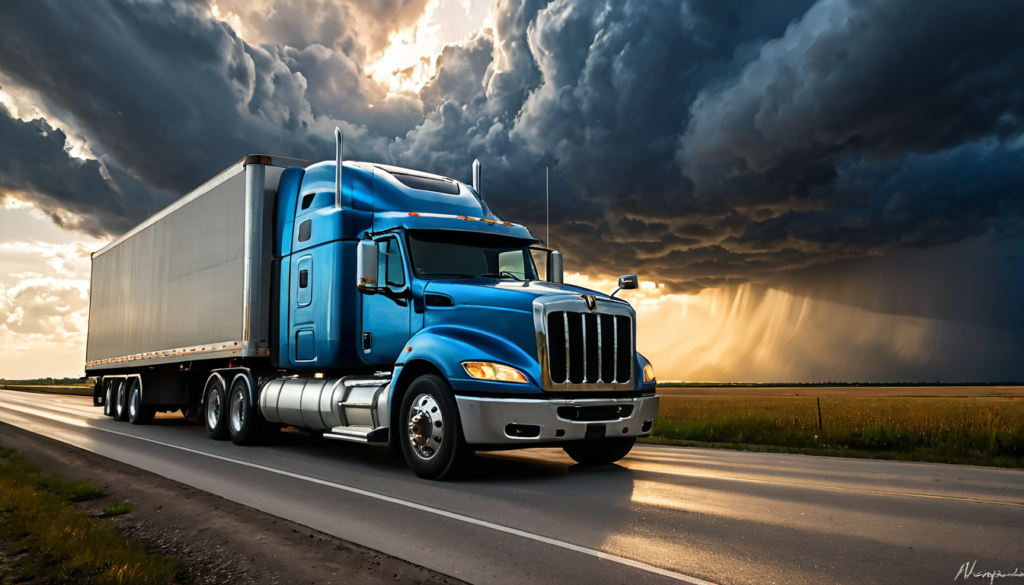
18-Wheeler Accidents in DuPage County: Your Complete Guide to Recovery
When 80,000 Pounds Changes Everything
One moment you’re driving home on the Ronald Reagan Memorial Tollway. The next, an 18-wheeler is jackknifing across three lanes near the Oak Brook interchange. Or maybe you’re stopped at a light on Roosevelt Road in Lombard when a semi runs through an intersection because the driver was on hour thirteen of his shift.
This isn’t just a car accident. This is an 80,000-pound machine versus your 4,000-pound vehicle. That’s not a collision. That’s physics working against you.
Every year, DuPage County sees devastating collisions between passenger vehicles and commercial trucks along our busiest corridors. Route 59 through Naperville and Aurora. I-355 through Addison. The Eisenhower Expressway cutting through Elmhurst. These aren’t just highways—they’re danger zones when trucking companies put profits over safety.
Ralph Manginello has spent over 25 years fighting for people just like you. Since 1998, our firm has stood toe-to-toe with the biggest trucking companies in America. We’ve recovered multi-million dollar settlements for brain injury victims, amputees, and families torn apart by wrongful death. And we bring that same energy to every case we take in DuPage County, from Downers Grove to Wheaton.
If a truck has destroyed your life, call us immediately at 1-888-ATTY-911. Evidence disappears fast, and the trucking company is already lawyering up.
Why DuPage County 18-Wheeler Accidents Are Different
The Geography of Danger
DuPage County sits at the crossroads of major freight arteries. We’re not just talking about one highway—we’re talking about a network that includes:
- I-88 (Ronald Reagan Memorial Tollway): The primary east-west corridor carrying freight from the Iowa border through Aurora, Naperville, and Oak Brook toward Chicago. This tollway sees thousands of trucks daily serving the distribution centers that line the route.
- I-290 (Eisenhower Expressway): Cutting through Elmhurst and Hillside, this interstate connects the western suburbs to downtown Chicago. The merge points near Mannheim Road are notorious for high-speed collisions involving trucks.
- I-355 (Veterans Memorial Tollway): Running north-south through Addison, Lombard, and Glen Ellyn, this route connects freight coming from Wisconsin and northern Illinois down toward central DuPage and beyond.
- I-294 (Tri-State Tollway): The western portion of the Tri-State borders DuPage, creating a massive interchange with I-290 that’s a hotspot for wide-turn accidents and rear-end collisions.
- US-20: Running through Bloomingdale and Hanover Park, this federal highway mixes local traffic with heavy commercial trucking.
- Route 59: The major north-south artery through Naperville and Aurora sees constant truck traffic serving the retail and industrial corridors.
These aren’t empty rural highways. They’re congested urban and suburban freight corridors where a moment’s distraction or a tire blowout can create catastrophic pileups involving multiple families.
Winter Weather Multiplies the Risk
DuPage County winters are brutal. Ice storms in January and February create black ice conditions that trucks can’t stop on. Snow squalls off Lake Michigan reduce visibility to zero on I-88. When a driver from Texas or Florida hits a patch of black ice near the York Road exit, 80,000 pounds becomes an uncontrollable missile.
We’ve seen cases where trucking companies sent drivers through DuPage County during winter storm warnings, ignoring Federal Motor Carrier Safety Administration (FMCSA) regulations about driving for weather conditions under 49 CFR § 392.14. These aren’t accidents—they’re predictable disasters caused by companies that should have known better.
The Distribution Center Effect
DuPage County is logistics country. We have major distribution hubs in:
- Oak Brook (corporate headquarters with constant delivery traffic)
- Lombard (logistics centers serving the western suburbs)
- Addison (industrial parks with heavy truck volume)
- Naperville (technology and manufacturing freight)
- Woodridge (intermodal facilities)
This means local roads see constant truck traffic, not just interstate highways. Local streets like Roosevelt Road, North Avenue, and Ogden Avenue become secondary trucking corridors where big rigs navigate tight turns and mixed traffic.
If you’ve been hit anywhere in DuPage County—whether on I-88 or a local street in Villa Park—we know the terrain. Call 1-888-ATTY-911.
Meet the Team That Fights for You
Ralph Manginello: 25 Years of Taking on Goliath
Ralph Manginello founded Attorney911 in 2001, but he’s been fighting for injury victims since 1998. That’s over two decades of making trucking companies pay for their negligence.
His credentials matter for your case:
- Federal Court Admission: Ralph can file in the U.S. District Court for the Northern District of Illinois. This matters because many trucking cases involve interstate commerce and federal regulations.
- Multi-Million Dollar Results: We’ve secured settlements ranging from $1.5 million to $9.8 million for traumatic brain injury victims, $1.9 million to $8.6 million for amputation cases, and $1.9 million to $9.5 million for wrongful death claims.
- Corporate Experience: Ralph was one of the few Texas attorneys involved in the BP Texas City Refinery explosion litigation—a case that settled for over $2.1 billion collectively and taught our firm how to battle Fortune 500 companies.
- Current Major Litigation: We’re currently litigating a $10 million hazing lawsuit against the University of Houston, demonstrating we have the resources to take on major institutional defendants.
But here’s what really matters: Ralph answers his own phone. Client Dame Haskett noted, “Ralph reached out personally.” You’re not getting a case manager. You’re getting a managing partner with 25 years of experience.
Lupe Peña: The Insurance Insider Who Now Fights for You
Here’s your advantage: our associate attorney Lupe Peña used to work for a national insurance defense firm. He spent years inside the system, watching how adjusters evaluate claims, how they train their teams to minimize payouts, and exactly what tactics they use to deny legitimate claims.
Now he uses that insider knowledge against them.
When the trucking company’s insurer calls offering a “quick settlement,” Lupe knows exactly how they calculated that number—and it’s always less than you deserve. He recognizes their manipulation tactics because he helped develop them. Now he exposes those tactics and fights for maximum compensation.
Hablamos Español. Lupe is fluent in Spanish and provides direct representation without interpreters. If Spanish is your primary language, you can speak directly to your attorney, not through a translator. Llame al 1-888-ATTY-911.
Three Offices, Local Knowledge
With offices in Houston, Austin, and Beaumont, Texas, we serve trucking accident victims across state lines. Our federal court experience means we can represent you in DuPage County and throughout Illinois. We’ve handled cases that span multiple jurisdictions, and we know how to navigate the complex web of state and federal regulations that govern interstate trucking.
The 15 Types of 18-Wheeler Accidents We Handle
1. Jackknife Accidents on I-88
A jackknife occurs when the trailer swings perpendicular to the cab, creating a “V” shape that sweeps across multiple lanes. On the Ronald Reagan Tollway, particularly near the Naperville Road exit or the I-355 interchange, a jackknifing truck can block the entire highway in seconds.
Why it happens: Sudden braking on wet pavement, empty trailers (which are lighter and more prone to swing), brake failures, or driver overcorrection. Under 49 CFR § 393.48, truck brakes must be properly maintained. When they fail, the trailer pushes the cab into a jackknife.
The injuries: Multi-vehicle pileups, traumatic brain injuries from secondary collisions, crushing injuries when cars are pinned against barriers.
DuPage County specific: The tollway sections without shoulders offer nowhere to escape when a truck jackknifes ahead of you.
2. Rollovers on Curves
The ramps connecting I-290 to Mannheim Road or the cloverleafs at the I-355/I-88 interchange require trucks to navigate curves. When drivers take these too fast—or when cargo shifts—the truck rolls.
Why it happens: Speeding on ramps (violating 49 CFR § 392.6), improperly secured cargo (violating 49 CFR § 393.100-136), or liquid cargo “slosh” that changes the center of gravity.
The injuries: Vehicles crushed beneath the trailer, fuel fires causing severe burns, spinal cord injuries from rollover impacts.
3. Underride Collisions (Rear and Side)
Perhaps the most terrifying type of accident. A smaller vehicle slides beneath the trailer, often shearing off the roof and decapitating occupants. Rear underride guards are required under 49 CFR § 393.86, but many are damaged or improperly maintained. Side underride has no federal requirement, making these particularly deadly.
DuPage County specific: When traffic backs up on I-88 approaching the toll plazas or during rush hour on I-290 through Elmhurst, stopped trucks become deadly hazards if they lack proper rear guards.
4. Rear-End Collisions
A fully loaded truck needs 525 feet to stop from 65 mph—that’s nearly two football fields. When traffic stops suddenly on the Eisenhower near Hillside or on Route 59 in Naperville, distracted or fatigued truck drivers often can’t stop in time.
Why it happens: Following too closely (49 CFR § 392.11), driver fatigue (49 CFR § 395), distracted driving (49 CFR § 392.82 prohibits hand-held mobile phone use), or brake failures (49 CFR § 393.40).
5. Wide Turn Accidents (“Squeeze Play”)
Trucks making right turns onto Roosevelt Road in Lombard or North Avenue in Elmhurst must swing wide left first. Drivers in the right lane often get caught in the gap and crushed when the truck turns.
Why it happens: Failure to signal (violating Illinois traffic law), improper mirror use (violating 49 CFR § 393.80), or inadequate driver training on trailer tracking.
6. Blind Spot (No-Zone) Accidents
18-wheelers have massive blind spots—20 feet in front, 30 feet behind, and entire lanes to the sides. When changing lanes on I-355 near Bloomingdale or merging onto I-88 from Naperville, truck drivers often hit vehicles they simply can’t see.
7. Tire Blowouts
The extreme temperature swings in DuPage County—summer heat followed by winter cold—degrade tires. When a steer tire blows at 65 mph on I-88, the driver loses control instantly.
Why it happens: Underinflation, worn tread (minimum 4/32″ on steer tires per 49 CFR § 393.75), overloading, or deferred maintenance (violating 49 CFR § 396.3).
8. Brake Failure
Brake problems contribute to 29% of truck crashes. The stop-and-go traffic on the tollways creates brake overheating. If the trucking company skipped inspections to save money, brakes can fail catastrophically.
Federal violations: 49 CFR § 393.40 requires service brakes on all wheels. 49 CFR § 396.11 requires driver post-trip inspection reports noting brake condition.
9. Cargo Spills and Shift Accidents
The distribution centers along I-88 in Oak Brook and Lombard generate massive freight volume. When cargo isn’t secured properly per 49 CFR § 393.100-136, it shifts during transit or falls onto the highway.
The danger: Shifting cargo causes rollovers. Falling cargo creates secondary accidents as drivers swerve to avoid debris.
10. Head-On Collisions
When fatigue causes a driver to drift across the median on rural stretches of IL-38 or when a confused driver enters the wrong way on an entrance ramp, head-on collisions occur. These are almost always fatal at highway speeds.
11. T-Bone Accidents
Intersections like Ogden Avenue and Route 83 or Roosevelt Road and I-355 see T-bone collisions when truck drivers run red lights or fail to yield.
12. Sideswipe Accidents
Narrow lanes on the Eisenhower through Elmhurst or construction zones on I-88 create situations where trucks sideswipe passenger vehicles while merging.
13. Override Accidents
The truck drives over a smaller vehicle in front of it, often crushing the passenger compartment. This happens when drivers follow too closely and can’t stop.
14. Runaway Truck Accidents
On the rare steep grades in DuPage County (like approaching the Des Plaines River valley), brake fade can cause loss of control if drivers don’t gear down properly.
15. Hazmat Spills
trucks carrying chemicals, fuel, or hazardous materials pose additional dangers. A spill on I-88 near the Fox River can require evacuation of entire neighborhoods.
We’ve handled all these accident types in DuPage County and throughout Illinois. Call 1-888-ATTY-911 for a free consultation.
Who Can Be Held Liable? (Hint: It’s More Than Just the Driver)
Most law firms only sue the driver. That’s leaving money on the table—and justice undone. We investigate every potentially liable party because trucking accidents usually involve systemic failures, not just one driver’s mistake.
1. The Truck Driver
Speeding, distraction, fatigue, impairment, or plain old negligence. We subpoena cell phone records, ELD data, and drug test results.
2. The Trucking Company (Motor Carrier)
Under the doctrine of respondeat superior, employers are liable for employees’ negligence. Plus, we look for:
- Negligent hiring: Did they check the driver’s record? (49 CFR § 391.23 requires three-year employment verification)
- Negligent training: Did they teach the driver about winter weather handling in DuPage County?
- Negligent supervision: Did they monitor hours of service?
- Negligent maintenance: Did they skip brake inspections to save money?
3. The Cargo Owner/Shipper
The company that loaded the cargo at the distribution center in Woodridge or the warehouse in Addison may have:
- Overloaded the truck (violating weight limits)
- Failed to disclose hazardous materials
- Provided improper loading instructions
4. The Loading Company
Third-party loaders who physically secure the cargo must follow 49 CFR § 393.100-136. If they used insufficient tiedowns or unbalanced the load, they’re liable.
5. Truck and Trailer Manufacturers
Defective brakes, faulty stability control systems, or poorly designed fuel tanks that explode on impact. We litigate product liability claims against manufacturers.
6. Parts Manufacturers
Defective tires (blowouts), faulty brake components, or steering mechanisms that fail prematurely.
7. Maintenance Companies
Third-party mechanics who performed negligent repairs or passed unsafe vehicles through inspection.
8. Freight Brokers
Brokers who arranged the shipment but didn’t verify the carrier’s safety record or insurance. They may be liable for negligent selection.
9. The Truck Owner (if different from driver)
In owner-operator situations, the individual who owns the truck may have separate liability for maintenance failures.
10. Government Entities
Illinois Department of Transportation or local DuPage County municipalities may be liable if:
- Road design created a dangerous condition
- Inadequate signage warned of sharp curves
- Poor maintenance created potholes that caused tire blowouts
- Construction zone setups were unsafe
Note: Claims against government entities in Illinois have shorter deadlines and notice requirements. Don’t wait.
The Evidence That Wins Cases (And Why It Disappears Fast)
The 48-Hour Rule
If you’ve been hit by an 18-wheeler in DuPage County, evidence is already disappearing. Here’s the timeline you’re facing:
- ECM/Black Box Data: Can be overwritten in 30 days or less
- ELD (Electronic Logging Device) Records: FMCSA only requires 6-month retention, but trucking companies often delete sooner
- Dashcam Footage: Frequently deleted within 7-14 days
- Witness Memories: Fade significantly within weeks
- Surveillance Video: Business cameras near the accident scene (gas stations, fast food restaurants on Roosevelt Road, etc.) overwrite in 7-30 days
The Spoliation Letter: Your Evidence Preservation Lifeline
When you hire Attorney911, we send a spoliation letter within 24 hours. This legal notice demands preservation of:
Electronic Data:
- ECM/Black box data (speed, braking, throttle position)
- ELD logs showing hours of service violations
- GPS tracking data
- Dispatch communications
- Cell phone records
Driver Records:
- Complete Driver Qualification File
- Medical certifications (49 CFR § 391.41)
- Drug and alcohol test results (49 CFR § 382)
- Training records
- Previous accident history
Vehicle Records:
- Maintenance logs (49 CFR § 396.3 requires retention for 1 year)
- Pre-trip and post-trip inspection reports (49 CFR § 396.11)
- Tire replacement records
- Brake adjustment documentation
Company Records:
- Safety policies
- Hiring procedures
- CSA (Compliance, Safety, Accountability) scores
Once they receive our letter, destruction of evidence becomes “spoliation”—a serious legal violation that can result in sanctions or adverse inference instructions (the jury is told to assume the destroyed evidence would have helped you).
Why This Matters in DuPage County
The Illinois State Police and local DuPage County Sheriff’s departments investigate crashes, but they don’t preserve evidence for civil cases. They clear the scene, file their report, and move on. The trucking company, however, dispatches rapid-response teams immediately.
As client Chad Harris said about our firm: “You are NOT a pest to them and you are NOT just some client… You are FAMILY to them.” We treat your case with the urgency it deserves because we’ve seen what happens when evidence goes missing.
Don’t wait. Call 1-888-ATTY-911 today.
Catastrophic Injuries: The True Cost of Trucking Accidents
Traumatic Brain Injury (TBI)
The force of an 80,000-pound truck impact often causes the brain to collide with the skull, resulting in:
- Concussions (mild TBI)
- Contusions (bruising)
- Diffuse axonal injury (tearing of brain tissue)
- Hematomas (bleeding)
Symptoms may not appear immediately. You might feel “fine” at the scene, then develop headaches, confusion, memory loss, or personality changes weeks later.
Settlement range: $1.5 million to $9.8 million+ (based on our case results)
Spinal Cord Injury and Paralysis
Complete or incomplete spinal cord injuries can result in:
- Paraplegia: Loss of use of legs and lower body
- Quadriplegia: Loss of use of all four limbs
- Incomplete injuries: Partial function remains
The lifetime cost of quadriplegia can exceed $5 million in medical care alone.
Settlement range: $4.7 million to $25.8 million+
Amputation
Crushing injuries from underride accidents or rollovers sometimes require surgical amputation. The loss of a limb means:
- Prosthetics ($5,000 to $50,000+ each, replaced every few years)
- Home modifications
- Loss of career/earning capacity
- Phantom pain
Settlement range: $1.9 million to $8.6 million
Severe Burns
Fuel fires from ruptured tanks or hazmat spills cause third and fourth-degree burns requiring:
- Skin grafts
- Multiple reconstructive surgeries
- Permanent scarring and disfigurement
Internal Organ Damage
Liver lacerations, spleen ruptures, kidney damage, and lung contusions may require emergency surgery and cause lifelong complications.
Wrongful Death
When a trucking accident kills your loved one, Illinois law allows recovery for:
- Lost future income
- Loss of consortium (companionship, guidance)
- Mental anguish
- Funeral expenses
Settlement range: $1.9 million to $9.5 million
If your family has suffered a catastrophic injury or loss in DuPage County, you need attorneys who’ve recovered multi-million dollar settlements. Call 1-888-ATTY-911.
Illinois Law: What You Need to Know
Statute of Limitations
In Illinois, you have two years from the date of the accident to file a personal injury lawsuit. For wrongful death, it’s two years from the date of death.
But waiting is dangerous. Evidence disappears. Witnesses move away. And the trucking company is building its defense from day one.
As client Angel Walle noted: “They solved in a couple of months what others did nothing about in two years.” We work fast because we know time is your enemy.
Modified Comparative Negligence (51% Rule)
Illinois follows a “modified comparative negligence” rule. You can recover damages if you are 50% or less at fault. However, your recovery is reduced by your percentage of fault.
Example: If you’re awarded $1 million but found 20% at fault, you receive $800,000. If you’re found 51% at fault, you receive $0.
This is why evidence preservation is critical. If the trucking company claims you swerved into their lane, we need the ECM data and dashcam footage to prove otherwise.
No Damage Caps (Mostly)
Unlike some states, Illinois does not cap compensatory damages in personal injury cases. This means you can recover the full amount of your medical bills, lost wages, and pain and suffering.
Punitive damages (meant to punish gross negligence) are rare in Illinois personal injury cases but may be available in extreme circumstances—like when a trucking company knowingly hired a driver with multiple DUI convictions.
Illinois Commercial Vehicle Regulations
In addition to federal FMCSA regulations, Illinois has specific requirements:
- Weight limits: 80,000 lbs maximum on most highways
- Permits required: For oversized loads on DuPage County roads
- Winter equipment: Chain requirements during snow emergencies
Violations of these state laws, combined with FMCSA violations, strengthen your case.
Frequently Asked Questions
Q: Should I talk to the trucking company’s insurance adjuster?
A: No. Never give a recorded statement. Insurance adjusters are trained to get you to say things that minimize your claim. Lupe Peña, our associate attorney, used to train these adjusters. He knows their tactics. Let us handle all communications.
Q: What if I was partially at fault for the accident?
A: In Illinois, you can still recover if you’re 50% or less at fault. But the trucking company will try to blame you to avoid payment. We gather evidence to prove their driver was primarily responsible.
Q: How much is my case worth?
A: It depends on injury severity, medical costs, lost wages, and available insurance. Trucking companies carry $750,000 to $5 million in coverage. Our firm has recovered settlements ranging from hundreds of thousands to multi-million dollars.
Q: What is an ELD and why does it matter?
A: An Electronic Logging Device tracks driver hours. Since December 2017, all trucks must have them. ELD data proves whether the driver violated hours of service regulations—a common cause of fatigue-related accidents.
Q: Do I need a lawyer if the accident seems straightforward?
A: Yes. Trucking cases involve federal regulations, multiple liable parties, and sophisticated defense teams. As client Donald Wilcox said: “One company said they would not accept my case. Then I got a call from Manginello… I got a call to come pick up this handsome check.” We take cases others won’t.
Q: How long will my case take?
A: Simple cases may settle in 6-12 months. Complex litigation involving multiple defendants or catastrophic injuries may take 1-3 years. We push for resolution as fast as possible while maximizing your recovery.
Q: Can undocumented immigrants file claims?
A: Yes. Immigration status does not affect your right to compensation for injuries caused by someone else’s negligence. We represent everyone in DuPage County, regardless of status. Hablamos Español.
Q: What if the truck driver was from another state?
A: We can still pursue your case. Ralph Manginello is admitted to federal court, and we handle interstate trucking cases regularly. The trucking company can be sued in Illinois where the accident occurred.
Q: Will I have to go to court?
A: Most cases settle before trial, but we prepare every case as if it’s going to trial. Insurance companies offer better settlements when they know your attorney is willing to litigate.
Q: How do I pay for medical treatment while waiting for my settlement?
A: We can help you find medical providers who work on liens (they get paid when your case settles). Don’t skip treatment because you can’t afford it.
Still have questions? Call 1-888-ATTY-911 for a free consultation.
Video Library: Learn More
Watch our educational videos to understand your rights:
- I’ve Had an Accident — What Should I Do First? — Essential first steps after any accident
- The Victim’s Guide to 18-Wheeler Accident Injuries — Specific guidance for truck crash victims
- Truck Tire Blowouts and When You Need a Lawyer — Understanding maintenance failures
- What Is Fair Compensation for Pain and Suffering? — Breaking down non-economic damages
- How to Negotiate a Car Accident Settlement — Insider negotiation tactics
- The Ultimate Guide to Brain Injury Lawsuits — TBI-specific legal information
- Is There a Statute of Limitations on My Case? — Understanding deadlines
Visit our YouTube channel at @Manginellolawfirm for 290+ educational videos.
Your Next Step: Call Attorney911
You’ve been through enough. The pain. The medical bills. The uncertainty. You shouldn’t have to fight the legal system alone while you’re trying to heal.
Ralph Manginello and Lupe Peña have made trucking companies pay for 25+ years. We’ve recovered over $50 million for our clients. We have offices in Houston, Austin, and Beaumont, and we serve DuPage County with the same aggression and dedication.
Here’s what you get when you call 1-888-ATTY-911:
- Free consultation: No charge to evaluate your case
- No fee unless we win: Standard 33.33% contingency fee (40% if trial required)
- Immediate evidence preservation: Spoliation letters sent within 24 hours
- Spanish-speaking representation: Lupe Peña provides direct communication
- Federal court experience: We can handle complex interstate cases
- Personal attention: You’re family, not a file number
Don’t wait. Evidence is disappearing. The trucking company has lawyers working right now to protect their interests. You need someone protecting yours.
Call 1-888-ATTY-911 (1-888-288-9911) now.
Email: ralph@atty911.com
Website: Attorney911.com
Available: 24/7 for DuPage County trucking accidents
“They fought for me to get every dime I deserved.” — Glenda Walker, Attorney911 client
“You are NOT just some client… You are FAMILY to them.” — Chad Harris, Attorney911 client
Hablamos Español. Llame al 1-888-ATTY-911 hoy.