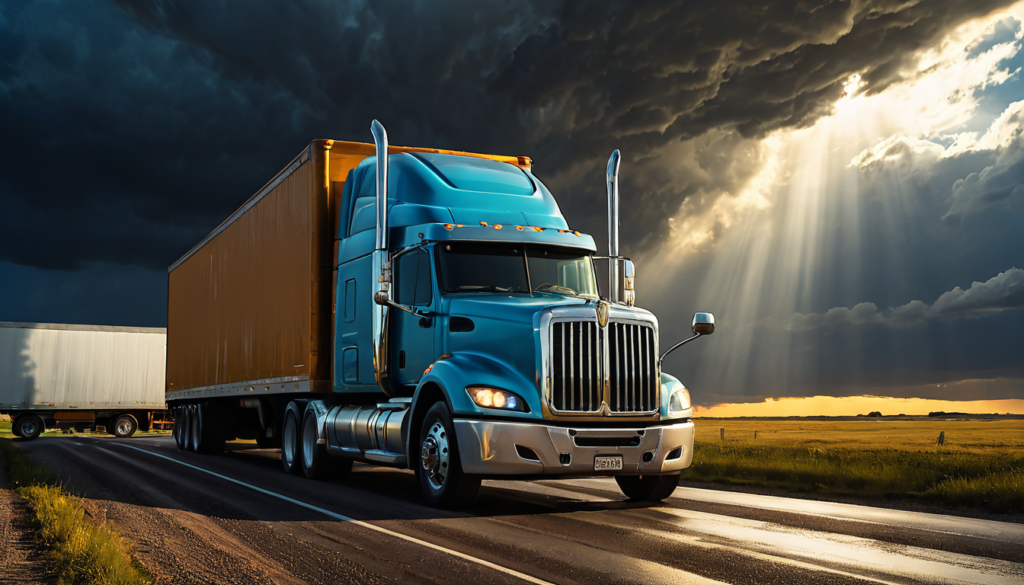
An 80,000-pound truck doesn’t give you time to react. On I-70 through Ellis County, where wheat trucks and cattle haulers mix with cross-country freight traffic, one moment of negligence changes everything. If you’re reading this, you or someone you love has already felt that impact—the crunch of metal, the scream of tires, the silence that follows when the world stops making sense.
We get it. We’ve spent 25 years helping families in Ellis County pick up the pieces after trucking companies shatter their lives. My name is Ralph Manginello, and I’m the managing partner at Attorney911. Since 1998, we’ve fought for folks just like you across Kansas—not just in Hays and Ellis, but throughout the Smoky Hills region—holding trucking companies accountable when their drivers, their equipment, or their business practices cause catastrophic harm.
Here’s what you need to know right now: the trucking company that hit you has already called their lawyers. Their insurance adjuster is already looking for ways to pay you less. Meanwhile, critical evidence—black box data, driver logs, maintenance records—is disappearing with every hour that passes. In Kansas, you have just two years to file your lawsuit, but waiting even two weeks can kill your case.
That’s why we answer our phones 24/7 at 1-888-ATTY-911. Because when an 18-wheeler changes your life on the plains of Ellis County, you need a fighter in your corner immediately.
Why 18-Wheeler Accidents in Ellis County Are Different
Ellis County sits at the heart of one of America’s most critical trucking corridors. Interstate 70 cuts straight through Hays, carrying freight from Denver to Kansas City and beyond. US-183 runs north-south, connecting agricultural communities to processing facilities. This isn’t just local traffic—this is the bloodstream of American commerce, and it’s filled with exhausted drivers pushing deadline after deadline.
But Kansas presents unique dangers you won’t find on coastal highways. Our winter storms bury I-70 in ice and snow. Spring winds gust to 40+ mph, turning high-profile trailers into sailing vessels. Summer heat pushes asphalt temperatures past 120 degrees, causing blowouts on tires that weren’t properly inspected. And harvest season? When wheat trucks and cattle haulers flood our county roads, sharing space with 80,000-pound semis, the margin for error disappears entirely.
Attorney911 knows these roads. We know the weigh stations along I-70 where overweight trucks skip inspections. We know the rural intersections where wide turns become deadly squeeze plays. And we know the local hospitals—Hays Medical Center, for instance—where emergency teams work miracles but where documentation must be precise to support your legal claim.
The Physics of Devastation: Why Truck Accidents Cause Catastrophic Injuries
Your sedan weighs roughly 4,000 pounds. A fully loaded 18-wheeler maxes out at 80,000 pounds. That’s not a collision—that’s an obliteration. The force of impact isn’t just twenty times greater; the physics of momentum mean the truck barely slows down while your vehicle absorbs the entire energy transfer.
In Ellis County, we’ve seen what this means for real families. The man driving to work on I-70 near Hays who got rear-ended by a fatigued driver who’d been awake for 19 hours. The grandmother T-boned at the US-183 intersection by a trucker running a red light because he couldn’t stop in time. The teenager who suffered a tire blowout from debris left by an unsecured load near the grain elevators.
These aren’t fender-benders. These are traumatic brain injuries requiring lifetime care. Spinal cord damage ending careers. Amputations that change how a person walks through the world. Burns from fuel fires that leave permanent scars. And too often, wrongful deaths that leave families wondering how to pay for groceries after losing their primary breadwinner.
We’ve recovered millions for Ellis County families facing exactly these scenarios—not because money fixes what happened, but because it provides the resources for the best possible recovery and holds these companies accountable.
The Ten Parties Who Could Owe You Compensation
Most law firms look at a truck accident and see two potential defendants: the driver and the trucking company. That’s lazy lawyering, and it costs victims millions. At Attorney911, we investigate every potentially liable party because more defendants means more insurance coverage means higher compensation for you.
The Driver: Speeding, distracted driving, fatigue, impairment—all direct negligence that makes the operator personally liable.
The Trucking Company (Motor Carrier): Under Kansas law and the doctrine of respondeat superior, employers answer for their employees’ negligence. But we also pursue direct negligence: negligent hiring when they failed to check driving records, negligent training when they rushed a new driver onto the road, negligent supervision when they ignored hours-of-service violations, and negligent maintenance when they deferred brake repairs to save money.
The Cargo Owner/Shipper: In Ellis County’s agricultural economy, shippers often pressure carriers to overload trucks or expedite deliveries beyond safe limits. When their instructions cause unsafe conditions, they share liability.
The Loading Company: Improperly secured grain, inadequately tied-down equipment, or unbalanced loads that cause rollovers—these third-party loaders face liability separate from the driver.
Truck/Trailer Manufacturers: Defective brake systems, faulty fuel tanks prone to explosion, or underride guards that fail to meet safety standards—these design and manufacturing defects create strict liability.
Parts Manufacturers: When a tire blowout or brake failure stems from defective components, we pursue the part maker directly.
Maintenance Companies: Third-party mechanics who perform negligent repairs or sign off on inspections without actually checking the equipment—they’re on the hook too.
Freight Brokers: These middlemen who arrange transport often select the cheapest carrier regardless of safety records. When their negligent selection puts a dangerous truck on I-70, they share the blame.
Truck Owner: In owner-operator arrangements where the driver owns the rig but leases to a carrier, the owner maintains independent liability for equipment maintenance.
Government Entities: When poor roadway design, inadequate signage, or failure to maintain I-70’s surface contributes to the accident, we pursue claims against state and local agencies—though Kansas sovereign immunity laws require careful navigation and strict notice deadlines.
Kansas Law: What Ellis County Accident Victims Must Know
Time is not your friend after a trucking accident. Kansas imposes a two-year statute of limitations on personal injury and wrongful death claims. Miss that deadline—no matter how severe your injuries, no matter how obvious the trucking company’s fault—and you lose your right to sue forever. That’s not scare tactics; that’s Kansas Statute 60-513.
Comparative negligence in Kansas follows a 50% bar rule. If you’re found 49% at fault or less, you can recover damages reduced by your fault percentage. But if you’re 50% or more at fault—even 50.1%—you recover nothing. The trucking company’s insurance adjusters know this rule. They’ll try to shift blame to you, claiming you were speeding, distracted, or failed to yield. You need an attorney who understands Kansas evidence rules to keep that percentage in your favor.
Unlike some states, Kansas does not cap non-economic damages (pain and suffering) in standard motor vehicle cases. For punitive damages—awarded when trucking companies act with gross negligence or reckless disregard for safety—Kansas caps these at the lesser of the defendant’s annual gross income or $5 million. That’s still substantial leverage when we discover a company falsified logbooks or ordered a driver to violate hours-of-service rules.
The FMCSA Regulations That Protect You—And How Truckers Break Them
The Federal Motor Carrier Safety Administration (FMCSA) writes the rules of the road for commercial trucks. When trucking companies violate these federal regulations, they create legal liability that strengthens your case. Here are the violations we find most often in Ellis County investigations:
49 CFR Part 395 – Hours of Service Violations: Federal law limits property-carrying drivers to 11 hours of driving time after 10 consecutive hours off duty. They can’t drive beyond the 14th consecutive hour after coming on duty. They’re required to take a 30-minute break after 8 cumulative hours of driving, and they’re capped at 60 hours in 7 days or 70 hours in 8 days.
Fatigue causes approximately 31% of fatal truck crashes. When ELD logs show a driver violated these limits—driving that 12th hour to make a delivery deadline in Hays—that’s automatic negligence.
49 CFR Part 393 – Vehicle Safety and Cargo Securement: Brakes must meet strict performance standards. Tires must have minimum tread depths (4/32″ on steer tires, 2/32″ on others). Cargo must be secured to withstand 0.8g deceleration forward, 0.5g rearward, and 0.5g lateral forces.
When a truck rolls over on a curve near the Smoky Hills or spills unsecured hay bales onto I-70, these regulations tell us exactly what the driver and company did wrong.
49 CFR Part 391 – Driver Qualification: Trucking companies must maintain Driver Qualification Files containing medical certifications, driving records, background checks, and drug test results. Hiring a driver with a history of DUIs or failed drug screens? That’s negligent hiring, and it exposes the company to punitive damages.
49 CFR Part 392 – Driving Rules: Following too closely, speeding for conditions, using handheld mobile phones while driving—violations of Part 392 create immediate liability when they cause crashes.
49 CFR Part 396 – Inspection and Maintenance: Drivers must conduct pre-trip inspections. Companies must maintain vehicles in safe operating condition. When brake failures cause rear-end collisions on icy I-70 stretches, we subpoena maintenance records looking for deferred repairs or ignored defect reports.
The Accident Types We See on Ellis County Highways
Jackknife Accidents: When a truck’s trailer swings perpendicular to the cab, often from sudden braking on wet roads or improper downshifting on I-70’s grades. In Kansas winters, these are deadly multi-vehicle pileup triggers.
Rollovers: Ellis County’s agricultural trucks—top-heavy with grain or pulling empty trailers that catch crosswinds—are particularly prone to tipping on curves or during evasive maneuvers. Speeding on rural county roads is often the culprit.
Underride Collisions: The most horrific crashes occur when smaller vehicles slide under truck trailers, shearing off roofs and causing decapitation or catastrophic head injuries. Federal law requires rear underride guards meeting 49 CFR § 393.86 standards, but many trucks have inadequate or damaged guards.
Rear-End Collisions: At 65 mph, a loaded truck needs nearly two football fields to stop—525 feet compared to a car’s 300 feet. When drivers follow too closely (violating 49 CFR § 392.11) or drive fatigued, they can’t stop in time for Ellis County’s traffic signals or sudden slowdowns.
Wide Turn Accidents (“Squeeze Play”): Trucks swinging left to make right turns at rural intersections, crushing vehicles that enter the gap. Common at Ellis County farm-to-market road junctions.
Blind Spot Accidents: Trucks have massive no-zones—20 feet ahead, 30 feet behind, and large areas on both sides. Lane changes without proper mirror checks cause sideswipes on I-70’s busy stretches.
Tire Blowout Accidents: Kansas heat, agricultural debris on county roads, and poor maintenance cause blowouts that send trucks careening into oncoming traffic. Evidence shows trucking companies often defer tire replacement to save costs.
Brake Failure Accidents: Brake problems contribute to 29% of large truck crashes. When companies defer maintenance to save money, the result is catastrophic failure on I-70’s downhill grades or heavy traffic.
The Evidence Window: Why the First 48 Hours Determine Your Case’s Value
Here’s what the trucking company doesn’t want you to know: they have rapid-response teams too. Within hours of an accident in Ellis County, they’re sending representatives to the scene, downloading electronic data, and coaching their driver on what to say. Meanwhile, critical evidence is vanishing.
Electronic Control Module (ECM) Data: The truck’s “black box” records speed, brake application, throttle position, and fault codes. This data overwrites in as little as 30 days—or sooner if the truck returns to service.
Electronic Logging Device (ELD) Records: Federally mandated since December 2017, these prove hours-of-service violations. FMCSA only requires 6-month retention, and some carriers delete monthly.
Dashcam Footage: Forward-facing and inward-facing cameras capture the crash and driver behavior. Many systems overwrite footage within 7-14 days.
Physical Evidence: The truck itself may be repaired, sold, or scrapped. Skid marks fade. Debris gets cleared.
That’s why Attorney911 sends spoliation letters within 24 hours of being retained. These legal notices put trucking companies on notice that destroying evidence will result in court sanctions, adverse inference instructions (where the jury is told to assume destroyed evidence was unfavorable), and even default judgment. We immediately subpoena:
- Driver Qualification Files
- Maintenance and inspection records
- Dispatch logs and communications
- Cell phone records
- GPS and telematics data
- Drug and alcohol test results
The sooner you call 1-888-ATTY-911, the sooner we start preserving this evidence before it disappears.
Catastrophic Injuries: When “Recovery” Means Learning a New Normal
The injuries from 18-wheeler accidents aren’t simple fractures that heal in six weeks. We’re talking about life-altering trauma requiring millions in lifetime care.
Traumatic Brain Injury (TBI): From concussions to severe diffuse axonal injuries, TBI affects cognition, personality, memory, and motor function. Many victims can’t return to their previous careers. Settlement ranges from $1.5 million to $9.8 million+ depending on severity and age.
Spinal Cord Injuries: Paraplegia, quadriplegia, or incomplete spinal cord injuries requiring wheelchairs, home modifications, and 24/7 attendant care. These cases often settle for $4.7 million to $25.8 million+.
Amputations: Whether traumatic (severed at scene) or surgical (due to crush injuries), amputations require prosthetics ($5,000-$50,000+ each), rehabilitation, and psychological counseling. Ranges from $1.9 million to $8.6 million.
Severe Burns: Fuel fires or hazmat spills cause third and fourth-degree burns requiring skin grafts, reconstructive surgery, and treatment for contractures.
Wrongful Death: When a trucking accident takes a loved one, Kansas law allows recovery for lost income, loss of consortium, mental anguish, and funeral expenses. Cases range from $1.9 million to $9.5 million+ depending on the decedent’s age, earning capacity, and dependents.
As client Glenda Walker told us after her settlement, “They fought for me to get every dime I deserved.” That’s our promise to every Ellis County family we represent.
Insurance Coverage: Why Trucking Cases Are Worth More Than Car Accidents
Federal law requires commercial carriers to carry minimum liability insurance far exceeding personal auto policies:
- $750,000 for non-hazardous freight (10,001+ lbs GVWR)
- $1,000,000 for oil/petroleum and large equipment
- $5,000,000 for hazardous materials
Many Ellis County agricultural carriers haul anhydrous ammonia or other chemicals requiring the higher limits. When we identify multiple liable parties—say, the trucking company ($1M), the broker ($1M), and the maintenance contractor ($500K)—we stack policies to maximize your recovery.
But accessing these funds requires knowing how trucking law works. Insurance adjusters are trained to delay, deny, and minimize. They’ll claim your injuries were pre-existing. They’ll argue Kansas’s comparative fault rules bar your recovery. They’ll offer quick settlements before you know the full extent of your damages.
Our associate attorney Lupe Peña provides a crucial advantage here. Before joining Attorney911, Lupe spent years working at a national insurance defense firm. He knows exactly how adjusters evaluate claims, what software they use to calculate “pain and suffering” (hint: it’s designed to lowball you), and when they’re bluffing about their “final offer.” Now he uses that insider knowledge against them. As Lupe says, “If this prevents harm to another person, that’s what we’re hoping to do. Let’s bring this to light. Enough is enough.”
Frequently Asked Questions: Ellis County Truck Accident Victims
How soon should I contact an attorney after a truck accident in Ellis County?
Immediately—within 24-48 hours. Evidence disappears fast. Black box data can be overwritten within 30 days. In rural Kansas, witness memories fade quickly, and physical evidence gets cleared from roadsides. The trucking company isn’t waiting; neither should you. Call 1-888-ATTY-911 now.
What if the truck driver claims I was at fault?
Kansas uses modified comparative negligence with a 50% bar. If you’re 49% or less at fault, you recover damages reduced by your percentage. Our job is to investigate thoroughly using ECM data, ELD logs, and accident reconstruction to prove the trucking company’s negligence outweighed any error on your part.
Can I afford an attorney?
Absolutely. Attorney911 works on contingency fees—you pay nothing unless we win. We advance all investigation costs, expert fees, and court expenses. Our fee comes from the settlement, not your pocket. You never write us a check. Hablamos Español—call Lupe Peña for a consulta gratis.
How long will my case take?
Simple cases with clear liability might settle in 6-12 months. Complex litigation involving catastrophic injuries or multiple defendants can take 18-36 months. We work as fast as possible while ensuring you receive maximum compensation. As client Angel Walle noted, “They solved in a couple of months what others did nothing about in two years.”
What damages can I recover?
Economic damages include medical bills (past and future), lost wages, lost earning capacity, and property damage. Non-economic damages cover pain and suffering, mental anguish, disfigurement, and loss of consortium. In cases of gross negligence—like falsified logbooks or known dangerous drivers—we pursue punitive damages to punish the company and deter future misconduct.
Will my case go to trial?
Most cases settle, but we prepare every single one as if it’s going to court. Insurance companies know which lawyers are willing to try cases—and they pay more to clients with trial-ready attorneys. With 25+ years of experience and federal court admission, Ralph Manginello has the courtroom credibility to force fair settlements.
What if the trucking company is from out of state?
Federal trucking regulations apply nationwide. We can sue out-of-state carriers in Kansas federal court or state court depending on where the accident occurred and corporate contacts. Our federal court admission to the Southern District of Texas (and Kansas federal courts) allows us to handle interstate litigation seamlessly.
Do I have to go to the doctor if I feel okay?
Yes. Adrenaline masks pain. Internal bleeding, closed head injuries, and spinal damage may not show symptoms for days. Documentation creates the causal link between the crash and your injuries. Delayed treatment gives insurance companies ammunition to claim your injuries weren’t accident-related.
Ready to Fight Back? We’re Ready to Help.
The trucking company that hit you has lawyers working right now to protect their interests. They have investigators, insurance adjusters, and rapid-response teams. You need someone equally prepared fighting for you.
Attorney911 brings Ellis County victims:
- 25+ years of trucking litigation experience
- Multi-million dollar results including a $5+ million TBI settlement and $3.8+ million amputation recovery
- Federal court experience for complex interstate cases
- Insurance defense insider knowledge through Lupe Peña
- 24/7 availability because accidents don’t happen on business hours
- No fee unless we win contingency representation
We’ve gone toe-to-toe with the largest carriers in America—Walmart, FedEx, Amazon, Coca-Cola—winning millions for Kansas families just like yours. We know the I-70 corridor. We know the Ellis County court system. And we know how to make trucking companies pay.
Don’t wait until evidence disappears and witnesses forget. Don’t let the insurance adjuster pressure you into a lowball settlement before you know the full extent of your injuries.
Call Attorney911 today at 1-888-ATTY-911. Speak with Ralph Manginello or Lupe Peña personally. Your consultation is free, and you pay nothing unless we win.
You didn’t ask for this fight. But now that you’re in it, you deserve a lawyer who treats you like family, not a file number. As client Chad Harris said, “You are NOT just some client… You are FAMILY to them.”
We’re Attorney911. We answer. We fight. We win. And we’re ready to fight for you.
Attorney911 serves truck accident victims throughout Ellis County, Kansas, including Hays, Ellis, Schoenchen, Munjor, Catharine, and communities along I-70, US-183, US-40, and K-247. Hablamos Español. Llame al 1-888-288-9911.