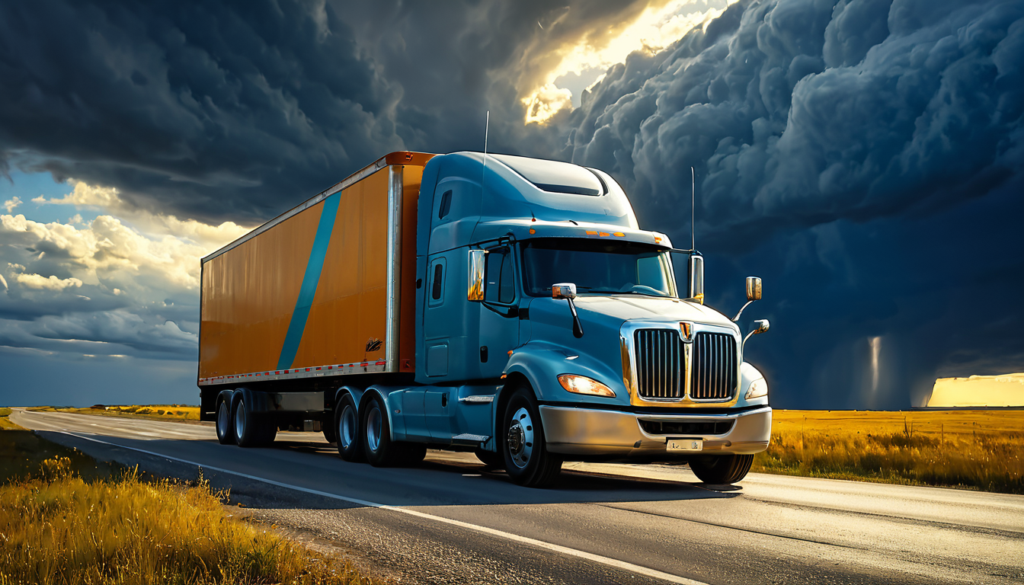
When an 80,000-pound commercial truck slams into a passenger vehicle on the highways criss-crossing Jackson County, the physics alone guarantee devastation. The impact force that transfers from 40 tons of steel and cargo into a 4,000-pound car crushes metal, shatters glass, and changes lives forever. If you’re reading this from Holton, Soldier, or along the US-75 corridor after surviving such a collision, you’re likely facing medical bills that climb higher than Kansas wheat in July, income loss while you heal, and the crushing realization that the trucking company’s insurance adjuster is already working to minimize your recovery.
We’re Attorney911, and we don’t let them get away with it.
Ralph Manginello has spent over 25 years fighting for injury victims, and since 1998, he’s built a reputation holding trucking companies accountable across the heartland. Our firm has recovered multi-million dollar settlements for families just like yours—including traumatic brain injury recoveries ranging from $1.5 million to $9.8 million, amputation cases settling between $1.9 million and $8.6 million, and wrongful death verdicts reaching up to $9.5 million. We bring federal court experience to every Jackson County case, and our team includes Lupe Peña, a former insurance defense attorney who spent years inside the system learning how carriers deny claims. Now he uses that insider knowledge to fight for you.
Why Jackson County 18-Wheeler Cases Demand Immediate Action
Jackson County sits at the crossroads of Kansas agriculture and commerce. Whether it’s grain haulers moving wheat during harvest season, oil field trucks serving the region’s energy operations, or long-haul semis barreling down US-75 toward Topeka, the trucking traffic here never stops. These aren’t just “big cars”—they’re 20 to 25 times heavier than your vehicle, require 525 feet to stop from highway speeds (nearly two football fields), and carry insurance policies worth up to twenty times what a regular driver holds.
But here’s what the trucking companies don’t advertise: evidence disappears fast. That truck’s Electronic Control Module (ECM)—its “black box”—can overwrite critical crash data in as little as 30 days. The driver’s Electronic Logging Device (ELD) might only be kept for six months. And the trucking company has already dispatched rapid-response teams to the scene while you were still in the ambulance.
The clock started ticking the moment the collision occurred. In Kansas, you have just two years from the date of the accident to file a lawsuit under our state’s statute of limitations. Wait too long, and you lose your right to compensation forever—no matter how catastrophic your injuries. Even worse, Kansas follows modified comparative negligence rules with a 50% bar. That means if you’re found 50% or more at fault, you recover nothing. If you’re less than 50% at fault, your damages get reduced by your percentage of blame. The trucking company will try to push as much liability onto you as possible. You need an attorney who moves before evidence evaporates.
The Federal Regulations That Trucking Companies Violate
Every 18-wheeler operating in Jackson County must comply with the Federal Motor Carrier Safety Administration (FMCSA) regulations codified in Title 49 of the Code of Federal Regulations (49 CFR). When drivers or carriers violate these rules, they create the dangerous conditions that cause catastrophic accidents. We prove these violations to establish negligence.
49 CFR Part 391: Driver Qualifications
Federal law requires every commercial driver to hold a valid Commercial Driver’s License (CDL), pass a medical examination certified by the Department of Transportation, and maintain a Driver Qualification File. Under 49 CFR § 391.11, drivers must be at least 21 years old for interstate commerce, physically qualified to operate the vehicle, and able to read and speak English sufficiently to converse with the general public and understand highway traffic signs.
Why this matters for your case: If the trucking company failed to verify the driver’s credentials, check his medical history for conditions like sleep apnea or seizures, or maintain his qualification file, they’ve committed negligent hiring. This makes them directly liable—not just vicariously responsible—for the crash.
49 CFR Part 392: Safe Driving Practices
This section prohibits drivers from operating while fatigued, impaired, or distracted. 49 CFR § 392.3 bars any driver from operating a commercial motor vehicle while ability or alertness is impaired through fatigue, illness, or any other cause. 49 CFR § 392.82 prohibits texting and hand-held cell phone use while driving—a violation we see constantly in jackknife and rear-end collisions on US-24.
49 CFR Part 393: Vehicle Safety and Cargo Securement
Under 49 CFR § 393.100-136, cargo must be contained, immobilized, or secured to prevent leaking, spilling, blowing, or falling from the vehicle. Tiedowns must withstand specific force thresholds: 0.8 g deceleration forward, 0.5 g rearward, and 0.5 g laterally. When improperly secured grain shifts during transport through Jackson County’s rolling terrain, it creates rollovers and jackknifes that block entire highways.
49 CFR Part 395: Hours of Service (HOS) Violations
These are the most commonly violated—and most deadly—regulations. 49 CFR § 395.3 limits property-carrying drivers to:
- 11 hours maximum driving after 10 consecutive hours off duty
- 14 hours maximum on-duty window (cannot drive beyond the 14th hour)
- 30-minute break required after 8 cumulative hours of driving
- 60/70 hour limits over 7/8 days
Since December 18, 2017, 49 CFR § 395.8 mandates Electronic Logging Devices (ELDs) that automatically record driving time and sync with the truck’s engine. This data proves when a driver was pushing beyond legal limits to meet delivery deadlines—evidence we subpoena immediately.
49 CFR Part 396: Inspection and Maintenance
Motor carriers must systematically inspect, repair, and maintain vehicles under 49 CFR § 396.3. Drivers must conduct pre-trip inspections checking brakes, steering, tires, and lighting. 49 CFR § 396.11 requires written post-trip inspection reports. When brake failures cause 29% of truck crashes, these maintenance records become smoking guns proving the company prioritized profits over safety.
The Types of 18-Wheeler Accidents We Handle in Jackson County
Not all truck accidents are the same, and Jackson County’s geography—mixing agricultural haul routes with interstate corridors—creates specific risks. We investigate every crash type:
Jackknife Accidents
A jackknife occurs when the trailer skids outward while the cab brakes, folding at the hitch like a pocket knife. These often block multiple lanes of US-75 or US-24, creating multi-car pileups. Caused by sudden braking on Kansas’s frequent wet roads, excessive speed through curves, or lightly loaded trailers that lack traction, jackknifes typically involve 49 CFR § 393.48 (brake system violations) or 49 CFR § 392.6 (speeding for conditions).
Rollover Accidents
With Kansas’s high winds and undulating terrain, rollovers happen when drivers take turns too fast or improperly secured cargo shifts the center of gravity. A fully loaded grain truck tipping onto its side becomes a 40-ton missile. These crashes violate 49 CFR § 393.100 (cargo securement) and often result in crushing injuries or wrongful death.
Underride Collisions
The most fatal accidents involve smaller vehicles sliding beneath the truck’s trailer. When a car hits the rear or side of a semi and passes underneath, the roof structure collapses into the passenger compartment—often causing decapitation or catastrophic head trauma. While 49 CFR § 393.86 mandates rear impact guards on newer trailers, many trucks lack side underride protection. We investigate guard maintenance and visibility conditions at the time of the crash.
Rear-End Collisions
An 18-wheeler needs 40% more stopping distance than passenger cars. When distracted or fatigued drivers fail to brake in time on I-70 or approaching Holton, they rear-end smaller vehicles with devastating force. These violate 49 CFR § 392.11 (following too closely) and 49 CFR § 392.82 (cell phone use).
Wide Turn Accidents (“Squeeze Play”)
Trucks swinging wide to make right turns create gaps that passenger vehicles enter—only to be crushed when the trailer completes its arc. These happen frequently at tight intersections in Jackson County’s agricultural communities where drivers must navigate equipment and traffic simultaneously.
Blind Spot Accidents (“No-Zones”)
18-wheelers have massive blind spots extending 20 feet in front, 30 feet behind, and significant zones along both sides. When drivers change lanes without checking mirrors or properly adjusting them under 49 CFR § 393.80, they sideswipe vehicles hidden in these “no-zones.”
Tire Blowout and Brake Failure Accidents
Kansas’s extreme temperature variations and long-haul distances create perfect conditions for tire failures. Under 49 CFR § 393.75, tires must have minimum tread depth (4/32″ on steer tires). When blowouts cause loss of control, or when poorly maintained brakes fail under 49 CFR § 396.3, the results are catastrophic.
Cargo Spill and Hazmat Accidents
When improperly secured agricultural loads, oil field equipment, or hazardous materials spill onto Jackson County highways, they create secondary collision risks and environmental hazards. These trigger violations of 49 CFR § 393.100-136 and 49 CFR Part 397 (hazardous materials transportation).
Every Party That Could Owe You Money
Unlike car accidents where usually only one driver is at fault, 18-wheeler crashes involve complex webs of liability. We investigate and pursue claims against all potentially responsible parties:
The Truck Driver: Personally liable for speeding, distracted driving, fatigue violations, or impairment. We pull cell phone records, ELD data, and drug test results under 49 CFR Part 382.
The Trucking Company (Motor Carrier): Vicariously liable under respondeat superior for their employee’s actions, and directly liable for negligent hiring, training, supervision, or maintenance. We subpoena their Driver Qualification Files and CSA (Compliance, Safety, Accountability) scores.
The Cargo Owner/Shipper: When they overload trucks or pressure drivers to violate Hours of Service to meet delivery schedules, they share liability.
The Loading Company: Third-party warehouses that improperly secure cargo under 49 CFR § 393.100 can be held responsible for rollovers and spills.
Truck and Parts Manufacturers: Defective brakes, tires, or steering systems create product liability claims under state and federal law.
Maintenance Companies: Third-party repair shops that negligently service brakes or tires may be liable for subsequent failures.
Freight Brokers: When brokers select carriers with poor safety records or inadequate insurance, they commit negligent entrustment.
The Truck Owner: In owner-operator arrangements, the owner may bear separate liability for negligent entrustment.
Government Entities: When road design defects, inadequate signage, or poor maintenance contribute to crashes on county or state highways, we pursue claims against the appropriate agencies—though sovereign immunity limits and strict notice requirements apply.
Catastrophic Injuries and Your Recovery
The injuries from 18-wheeler accidents aren’t minor aches. They’re life-altering traumas requiring millions in lifetime care:
Traumatic Brain Injury (TBI): Even “mild” concussions can cause permanent cognitive deficits, mood disorders, and inability to work. Severe TBIs require 24/7 care costing $85,000 to $3 million over a lifetime. Our track record includes TBI recoveries ranging from $1.548 million to $9.838 million.
Spinal Cord Injury and Paralysis: Quadriplegia and paraplegia from crushed vertebrae require wheelchairs, home modifications, and constant attendant care. Lifetime costs exceed $5 million. We’ve secured spinal cord settlements between $4.77 million and $25.88 million.
Amputations: When crush injuries necessitate limb removal, victims face prosthetics ($50,000+ per device), phantom limb pain, and permanent disability. Our amputation case results range from $1.945 million to $8.63 million.
Severe Burns: Fuel tank ruptures and hazmat spills cause third and fourth-degree burns requiring multiple skin grafts and reconstructive surgeries.
Wrongful Death: When trucking negligence kills a loved one, Kansas law allows recovery for lost income, loss of consortium, mental anguish, and funeral expenses. We’ve recovered between $1.91 million and $9.52 million for grieving families.
In Kansas, punitive damages are available when defendants act with gross negligence or willful disregard for safety. While capped at the lesser of the defendant’s annual gross income or $5 million, these damages punish reckless conduct and deter future violations.
The 48-Hour Evidence Protocol
While you’re focused on medical treatment, the trucking company is already building their defense. That’s why Attorney911 dispatches immediate preservation notices—spoliation letters—within 24 hours of your call. These demand preservation of:
- ECM/Black Box Data: Speed, braking, throttle position, and fault codes
- ELD Records: Proof of Hours of Service violations
- Driver Qualification Files: Employment applications, medical certifications, drug tests
- Maintenance Records: Brake inspections, tire logs, and repair history
- Dashcam and Telematics: GPS location data and forward-facing camera footage
- Dispatch Communications: Evidence of schedule pressure or route instructions
- Cell Phone Records: Proof of distracted driving under 49 CFR § 392.82
Once we send these letters, destroying evidence becomes spoliation—a serious offense that can result in court sanctions, adverse jury instructions, or default judgment against the trucking company.
What Kansas Law Means for Your Case
Statute of Limitations: You have exactly two years from the accident date to file suit. Miss this deadline, and you lose all rights to compensation.
Comparative Negligence: Kansas uses modified comparative fault with a 50% bar. If you’re found 49% at fault, you recover 51% of your damages. If you’re 50% or more at fault, you recover nothing. The trucking company will try to blame you—don’t let them.
Insurance Minimums: Federal law requires commercial carriers to carry:
- $750,000 for non-hazardous freight
- $1,000,000 for oil and large equipment
- $5,000,000 for hazardous materials
These higher policy limits mean catastrophic injuries can actually be compensated—but only if you have an attorney who knows how to access every available dollar from every liable party.
What to Do After a Truck Accident in Jackson County
If you’re able, take these steps immediately:
- Call 911: Ensure police respond and file a report documenting the scene.
- Seek Medical Care: Adrenaline masks pain. Internal injuries and TBIs may not show symptoms for days. Documentation links your injuries to the crash.
- Document Everything: Photograph all vehicles, damage, skid marks, the truck’s DOT number, and any cargo spill. Get witness contact information.
- Gather Information: Record the driver’s name, CDL number, trucking company, and insurance details.
- Say Nothing to Insurance: Do not give recorded statements. Adjusters are trained to minimize your claim.
- Call Attorney911 Immediately: The sooner we send spoliation letters, the more evidence we preserve.
Client Testimonials: Real Results for Real Families
“You are NOT a pest to them and you are NOT just some client… You are FAMILY to them.” — Chad Harris
“One company said they would not accept my case. Then I got a call from Manginello… I got a call to come pick up this handsome check.” — Donald Wilcox
“They fought for me to get every dime I deserved.” — Glenda Walker
“They solved in a couple of months what others did nothing about in two years.” — Angel Walle
Why Attorney911 Is Different
We don’t treat you like a case number. With offices in Houston, Austin, and Beaumont, we bring big-city resources to Jackson County cases while providing small-firm attention. Ralph Manginello personally oversees major trucking litigation, and Lupe Peña’s background as a former insurance defense attorney gives us insider knowledge of how carriers evaluate claims. We’re currently litigating a $10 million lawsuit against a major university for hazing injuries, demonstrating the same aggressive approach we bring to trucking cases.
Hablamos Español. Lupe Peña provides fluent Spanish representation without interpreters, serving Kansas’s Hispanic community with dignity and clear communication.
We work on contingency—33.33% if settled pre-trial, 40% if we go to trial. You pay nothing upfront. We advance all investigation costs. If we don’t win, you owe us nothing.
Call Now Before Evidence Disappears
The trucking company has lawyers working right now to protect their interests. You need someone fighting for yours. Evidence preservation is time-critical, and Kansas’s two-year statute of limitations is unforgiving.
Call 1-888-ATTY-911 (1-888-288-9911) 24/7. We answer immediately. We fight relentlessly. We win.
Attorney911. Because trucking companies shouldn’t get away with destroying lives.