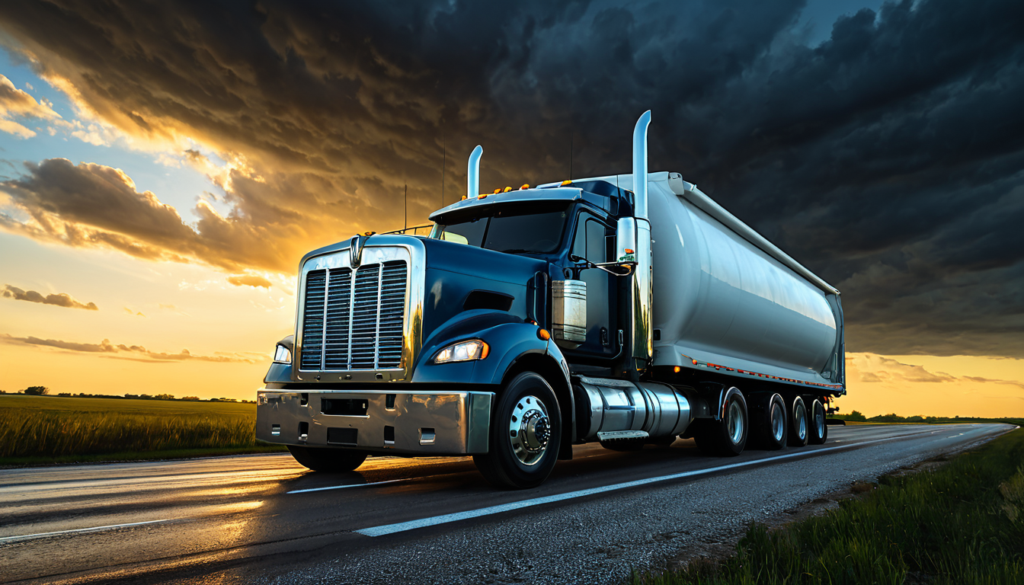
When an 80,000-pound semi-truck loses control on snow-slicked pavement along I-57 outside Kankakee, or a fatigued driver blows through a stoplight at the intersection of Route 45 and Court Street, there’s no time for second chances. In an instant, your life changes—crushed metal, catastrophic injuries, and a trucking company that’s already dispatching their rapid-response team to protect their interests. If you or someone you love has been devastated by an 18-wheeler accident anywhere in Kankakee County, you need a legal team that hits back immediately, knows the federal trucking laws inside and out, and has the resources to stand up to billion-dollar carriers.
At Attorney911, we’ve spent over 25 years fighting for families just like yours. Ralph Manginello, our managing partner, has been holding negligent trucking companies accountable since 1998. Our team includes Lupe Peña, a former insurance defense attorney who spent years inside the system defending big corporations—now he fights against them, bringing insider knowledge of every tactic they’ll use to minimize your claim. From our offices in Houston, Austin, and Beaumont, we serve truck accident victims across Illinois and the entire United States, combining small-firm attention with big-firm results. We’ve recovered over $50 million for our clients, including multi-million dollar settlements for traumatic brain injuries, amputations, and wrongful death cases.
The clock started ticking the moment the collision occurred. Evidence—black box data, driver logs, maintenance records—can disappear within days. The trucking company already has lawyers working. You need someone in your corner right now. Call us at 1-888-ATTY-911 (1-888-288-9911) for a free consultation. We work on contingency—you pay nothing unless we win.
Why 18-Wheeler Accidents in Kankakee County Are Different
Trucking accidents aren’t just bigger car crashes. The physics alone make them catastrophic—a fully loaded semi weighs up to 80,000 pounds, roughly 20 to 25 times the weight of a standard passenger vehicle. At 65 miles per hour on I-57, that truck needs nearly 525 feet to come to a complete stop—almost two football fields. A typical car needs roughly 300 feet. That extra 225 feet is often the difference between a near-miss and a funeral.
But the differences go deeper. Unlike crashes between two passenger vehicles, 18-wheeler accidents involve a complex web of federal regulations, multiple potentially liable parties, and insurance policies worth $750,000 to $5 million or more. The trucking industry is governed by the Federal Motor Carrier Safety Administration (FMCSA), which mandates strict rules about how long drivers can be on the road, how cargo must be secured, and how vehicles must be maintained. When these rules get broken in Kankakee County, people die.
Kankakee County presents unique risks for trucking accidents. Located roughly 60 miles south of Chicago, the county sits at a critical logistics junction. I-57 runs north-south through the heart of the county, serving as a primary corridor connecting Chicago with downstate Illinois and the South. I-80 crosses the southern tier, carrying transcontinental freight. Route 45 and Route 52 carry local agricultural and manufacturing traffic, mixing with high-speed interstate commerce. During winter, lake-effect snow and sudden ice storms turn these corridors into treacherous zones where jackknifes and multi-vehicle pileups become inevitable. When carriers pressure drivers to meet tight delivery windows despite whiteout conditions on I-57, tragedies happen.
The Federal Rules Trucking Companies Break
Every commercial truck operating in Kankakee County must comply with the Federal Motor Carrier Safety Regulations found in Title 49 of the Code of Federal Regulations (49 CFR Parts 390-399). These aren’t suggestions—they’re federal law. When trucking companies violate these rules to save time or money, they create lethal conditions. Here are the critical regulations we investigate in every case:
Part 391: Driver Qualification Standards
Before a driver can legally operate a commercial motor vehicle, they must meet strict qualification standards. Under 49 CFR § 391.11, drivers must be at least 21 years old, able to read and speak English, physically qualified by a certified medical examiner, and possess a valid Commercial Driver’s License (CDL).
More importantly, trucking companies must maintain a Driver Qualification File (DQ File) for every driver (49 CFR § 391.51). This file must include the driver’s employment application, three years of motor vehicle records, proof of medical certification, road test results, and verification of previous employment. When we subpoena these records, we often find that companies hired drivers with multiple DUI convictions, failed drug tests, or histories of fatigue-related crashes. That’s not just negligence—that’s negligent hiring, and it makes the company directly liable.
Part 395: Hours of Service (HOS) – The Most Violated Rule
Fatigue kills. The FMCSA strictly limits how long drivers can operate without rest. Under 49 CFR § 395.8, property-carrying drivers (most 18-wheelers) may drive a maximum of 11 hours after 10 consecutive hours off duty. They cannot drive beyond the 14th consecutive hour after coming on duty, and must take a 30-minute break after 8 cumulative hours of driving.
Since December 18, 2017, nearly all commercial trucks must use Electronic Logging Devices (ELDs) that automatically record driving time. These devices create tamper-resistant records that often prove drivers were pushed beyond legal limits. We’ve seen cases where Kankakee County accident drivers had been awake for 20+ hours, falsifying paper logs (or having companies “edit” ELD data) to hide violations.
Critical timeline: ELD data can be overwritten or deleted within 30 to 180 days. That’s why we send spoliation letters within 24 hours of being retained—to lock down this evidence before it vanishes.
Part 393: Parts and Accessories – Cargo Securement
When 80,000 pounds of steel, lumber, or chemicals aren’t properly secured, physics takes over. 49 CFR §§ 393.100-136 mandates that cargo must be immobilized to prevent shifting, falling, or leaking. Tiedowns must meet specific strength ratings based on cargo weight. For a typical flatbed hauling through Kankakee County’s agricultural zones, improper securement can cause rollovers when the driver takes the I-57 exit ramps too fast, or spills that turn highways into deadly obstacle courses.
Part 396: Inspection, Repair, and Maintenance
Brake failures cause approximately 29% of trucking accidents. Under 49 CFR § 396.3, motor carriers must systematically inspect, repair, and maintain their vehicles. Drivers must conduct pre-trip inspections (49 CFR § 396.13) and prepare written post-trip reports noting any defects (49 CFR § 396.11).
We routinely subpoena maintenance records and find “out-of-service” violations that were ignored, brake adjustments that were deferred to save money, and tires that should have been replaced months earlier. When a trucking company chooses profit over safety on I-57, we make them pay.
The 18-Wheeler Accident Types We See on Kankakee County Roads
Not all truck accidents are the same. Each type involves different mechanics, different liable parties, and different evidence preservation strategies. Here are the catastrophic scenarios we see most often in Kankakee County:
Jackknife Accidents
A jackknife occurs when the trailer swings out perpendicular to the cab, folding like a pocket knife. On I-57 during winter storms, a driver who brakes too hard on ice can easily lose control, sending the trailer sweeping across three lanes of traffic. Common causes: Improper braking technique on slick roads, empty or light trailers that lack traction, and sudden maneuvers to avoid debris. Evidence we gather: ECM data showing brake application timing, weather conditions at the time, and driver training records.
Rollover Accidents
Kankakee County’s mix of high-speed interstates and rural routes with sharp turns creates rollover risks. A fully loaded tanker taking the Route 45 curve too fast in Manteno, or a top-heavy livestock truck hitting soft shoulders near Herscher, can easily tip. Common causes: Speeding on curves, improperly distributed cargo, and driver fatigue causing delayed reaction times. These accidents often result in cargo spills that create secondary hazards.
Underride Collisions
Among the most horrific accidents we handle, underrides occur when a passenger vehicle slides under the trailer, shearing off the roof and often decapitating occupants. While rear underride guards are required under 49 CFR § 393.86 for trailers manufactured after 1998, side underride guards remain optional. When a truck makes a wide right turn from Route 52 onto a county road and cuts off a sedan, or stops suddenly on I-57 without adequate warning, the results are almost always fatal.
Rear-End Collisions
When an 18-wheeler slams into the back of a passenger vehicle stopped at the light on Kennedy Drive in Bradley, the physics are devastating. The truck’s bumper often hits at windshield level, crushing the passenger compartment. Common causes: Following too closely (violating 49 CFR § 392.11), distracted driving, and fatigued drivers with delayed reaction times. ECM data is critical here—it records the exact speed at impact and whether the driver ever applied brakes.
Wide Turn Accidents (“Squeeze Play”)
Trucks need extra space to turn right. They often swing left before turning right, creating a gap that tempts other drivers to squeeze through. When the truck completes its turn, it crushes the vehicle against the curb or another lane. These accidents happen frequently at busy intersections like Route 45 and North Street in Kankakee.
Blind Spot Accidents
18-wheelers have massive “No-Zones”—areas where the driver cannot see other vehicles. The right-side blind spot is particularly dangerous, extending several lanes wide. When a truck changes lanes on I-57 without proper mirror checks (violating 49 CFR § 393.80), they can sideswipe a passenger car, sending it spinning into other lanes or off the road entirely.
Tire Blowout Accidents
When a steer tire blows at highway speed, the driver often loses control immediately. Kankakee County’s temperature extremes—hot summers and frigid winters—accelerate tire wear. Under 49 CFR § 393.75, tires must have adequate tread depth, but we see carriers running recapped tires beyond their safe lifespan to save money. The debris from a blowout (“road gators”) also creates hazards for following vehicles.
Brake Failure Accidents
Descending the I-57 overpasses or coming off the I-80 interchange, brake fade can be catastrophic. Poorly maintained air brake systems, overheated drums from excessive use, and deferred maintenance all lead to scenarios where an 80,000-pound vehicle cannot stop. Under 49 CFR §§ 393.40-55, brake systems must meet strict standards—standards we verify through maintenance subpoenas.
Cargo Spill and Shift Accidents
Kankakee County’s industrial base means heavy shipping traffic. When cargo shifts during transit, it can cause rollovers or spills that shut down interstates for hours. Hazardous materials spills create additional dangers—chemical exposure, fires, and environmental damage. 49 CFR Part 397 imposes special rules for hazmat carriers, including route planning and notification requirements.
Head-On Collisions
Driver fatigue and distraction often cause trucks to drift across the centerline on two-lane sections of Route 45 or county roads near Bonfield. Combined speeds of 120+ mph leave little chance for survival.
Every Party Who Can Be Held Responsible
Most firms only sue the driver and trucking company. That’s a mistake. We investigate every potentially liable party because more defendants mean more insurance coverage, and more coverage means full compensation for your injuries. Under Illinois’ modified comparative negligence rules (51% bar rule), as long as you are not more than 50% at fault, you can recover—but your damages are reduced by your percentage of fault. We’ll work to minimize any attributed fault to maximize your recovery.
Here are the 10 parties we investigate:
1. The Truck Driver: Direct negligence for speeding, distraction, fatigue, or impairment. We obtain cell phone records, ELD logs, and post-accident drug tests.
2. The Trucking Company/Motor Carrier: Under respondeat superior, employers are liable for their drivers’ negligence within the scope of employment. Additionally, we pursue direct negligence claims for negligent hiring (failing to check driving records), negligent training (inadequate safety instruction), negligent supervision (ignoring HOS violations), and negligent maintenance (deferring repairs). Federal law requires minimum insurance of $750,000, but most interstate carriers carry $1-5 million.
3. The Cargo Owner/Shipper: Companies shipping from Kankakee County’s distribution centers must disclose hazardous materials and proper loading procedures. If they overload a truck or fail to warn about unstable cargo, they share liability.
4. The Loading Company: Third-party warehouses that load trailers must secure cargo per 49 CFR § 393. Improperly secured loads that shift during transit cause rollovers.
5. The Truck/Trailer Manufacturer: Defective designs in brake systems, fuel tanks, or stability control can cause accidents even when drivers do everything right.
6. Parts Manufacturers: Defective tires, brake components, or steering mechanisms that fail under stress create product liability claims.
7. Maintenance Companies: Third-party mechanics who perform negligent repairs or return vehicles to service with known defects share liability for resulting crashes.
8. Freight Brokers: These intermediaries arrange shipping between customers and carriers. Under 49 CFR Part 371, they must exercise reasonable care in selecting qualified carriers. If a broker hired a carrier with terrible safety scores to save money, they can be liable for negligent selection.
9. The Truck Owner: In owner-operator arrangements, the owner may be separate from the carrier. Negligent entrustment claims apply when owners allow unqualified drivers to operate their equipment.
10. Government Entities: While sovereign immunity limits suits against government bodies, cases involving dangerous road design on state highways (like inadequate signage for the I-57/I-80 interchange) or failure to maintain roads (potholes causing tire blowouts) may proceed with strict notice requirements.
48 Hours to Preserve Evidence—Or It’s Gone Forever
Trucking companies don’t wait. Within hours of an accident on the Kankakee River Bridge or downtown Kankakee, they dispatch rapid-response teams to the scene. These teams have one goal: protect the company from liability. They photograph the scene to control the narrative, interview witnesses before police arrive, and download electronic data.
Critical evidence disappears fast:
- ECM/Black Box Data: Overwrites in 30 days or with ignition cycles
- ELD Logs: Only required to be retained for 6 months
- Dashcam Footage: Often deleted within days
- Driver Qualification Files: Must be kept for 3 years after employment ends, but companies “lose” them
- Maintenance Records: Required for 1 year, but we’ve seen shredders working overtime
- Surveillance Video: Nearby businesses typically overwrite footage every 7-30 days
That’s why, when you call 1-888-ATTY-911, we act immediately. We send spoliation letters within 24 hours to the trucking company, their insurer, and all potentially liable parties. These letters put them on legal notice to preserve all evidence or face sanctions, adverse jury instructions, and punitive damages for destruction.
We also deploy accident reconstruction experts to Kankakee County immediately to photograph the scene, measure skid marks, and document debris patterns before they disappear. We subpoena the truck’s inspection history from FMCSA databases to identify patterns of safety violations.
Catastrophic Injuries and Multi-Million Dollar Recoveries
The force of an 18-wheeler impact doesn’t just break bones—it shatters lives. We’ve represented Kankakee County families dealing with:
Traumatic Brain Injuries (TBI): From concussions to severe diffuse axonal injuries requiring lifelong care. Symptoms include memory loss, personality changes, and inability to work. Settlement ranges: $1.5 million to $9.8 million+ depending on severity and age of victim.
Spinal Cord Injuries: Paraplegia and quadriplegia from crushed vertebrae. These cases require lifetime medical care, home modifications, and loss of earning capacity. Settlement ranges: $4.7 million to $25.8 million+.
Amputations: Whether traumatic (severed at scene) or surgical (required due to crush injuries), limb loss requires prosthetics, rehabilitation, and psychological counseling. Settlement ranges: $1.9 million to $8.6 million.
Severe Burns: From fuel fires or hazmat spills, requiring skin grafts and facing infection risks. Settlements vary significantly based on percentage of body surface affected.
Internal Organ Damage: Liver lacerations, spleen ruptures, and internal bleeding that may not show immediate symptoms but cause long-term complications.
Wrongful Death: When a trucking accident kills a loved one, surviving family members can recover for lost income, loss of consortium, mental anguish, and funeral expenses. Settlement ranges: $1.9 million to $9.5 million.
As client Chad Harris told us after we resolved his case: “You are NOT just some client… You are FAMILY to them.” Another client, Glenda Walker, said we “fought for me to get every dime I deserved.” We’ve helped families in Kankakee County and throughout Illinois recover the resources they need for the best possible medical care and quality of life.
Illinois Law and Your Rights
In Kankakee County, your case is governed by Illinois law. You have two years from the date of the accident (or date of death in wrongful death cases) to file suit. Miss this deadline, and you lose your right to recover forever.
Illinois follows a modified comparative negligence rule with a 51% bar. This means if you’re found 20% at fault for the accident, you can still recover 80% of your damages. However, if you’re 51% or more at fault, you recover nothing. The trucking company will try to blame you—claiming you were speeding, following too closely, or failed to avoid the collision. We’ll gather the ECM data, witness statements, and accident reconstruction analysis to prove what really happened.
Unlike some states, Illinois does not cap punitive damages. When a trucking company knowingly puts a dangerous driver on the road, destroys evidence, or falsifies logs, we can pursue punitive damages to punish their conduct and deter future negligence.
Insurance Company Tactics—And How We Beat Them
Here’s the truth: the trucking company’s insurance adjuster is not your friend. They’re trained to minimize payouts and protect profits. Common tactics include:
- Quick lowball offers: Made while you’re still in the hospital, before you know the full extent of your injuries
- Recorded statements: Designed to get you to say something they can use against you (“How are you feeling?” “Fine” = denied claim)
- Surveillance: Hiring investigators to video you hoping to catch you doing something that contradicts your injuries
- Delay and deny: Dragging out the process hoping you’ll accept less out of desperation
Our associate attorney Lupe Peña spent years working inside the insurance defense system. He knows these playbooks because he used them. Now he exposes them. When the insurance company sees Attorney911 on the case—knowing we have 25+ years of experience, federal court admission, and a willingness to go to trial if necessary—they offer fair settlements.
Why Kankakee County Families Choose Attorney911
We’re not a billboard firm that treats you like a number. As one client, Angel Walle, said: “They solved in a couple of months what others did nothing about in two years.” Another client, Donald Wilcox, came to us after another firm rejected his case—we got him a “handsome check” when others said no was possible.
Our advantages for Kankakee County cases:
- Federal Court Experience: Ralph Manginello is admitted to the U.S. District Court, Southern District of Texas, and can handle your case in federal court if the trucking company is from out of state or if federal regulations are central to the claim.
- Former Insurance Defense Attorney: Lupe Peña knows exactly how adjusters evaluate claims and how to counter their strategies.
- Spanish Language Services: With Illinois’ significant Hispanic population, we offer fluent Spanish representation through Lupe Peña—no interpreters needed. Hablamos Español. Llame al 1-888-ATTY-911.
- No Fee Unless We Win: We work on contingency—33.33% if settled pre-trial, 40% if we go to trial. You pay nothing upfront. We advance all investigation costs.
- 24/7 Availability: Accidents don’t happen on business hours. Call 888-ATTY-911 anytime.
- Multi-Million Dollar Track Record: From a $5 million+ settlement for a traumatic brain injury caused by a falling log, to a $3.8 million+ recovery for a car accident amputation complicated by medical negligence, to currently litigating a $10 million lawsuit against a major university for hazing, we have the resources to handle complex, high-stakes litigation.
While we’re based in Texas with offices in Houston, Austin, and Beaumont, we handle trucking accident cases throughout the United States, including Kankakee County, Illinois. We utilize modern technology for remote consultations and travel to you when necessary for depositions, court appearances, and settlement conferences.
Frequently Asked Questions About Kankakee County Truck Accidents
How long do I have to file a lawsuit after a trucking accident in Kankakee County?
Under Illinois law, you have two years from the date of the accident to file a personal injury lawsuit, and two years from the date of death for wrongful death claims. However, waiting is dangerous—evidence disappears within days. Call us immediately at 1-888-288-9911.
What if the trucking company offers me a quick settlement?
Never accept the first offer. It’s invariably a lowball offer designed to close your claim before you understand the full extent of your injuries. Once you accept, you waive your right to additional compensation. Let us review the offer first.
Can I recover if I was partially at fault?
Yes, under Illinois’ modified comparative negligence rules, as long as you are not more than 50% at fault, you can recover damages reduced by your percentage of fault. Even if you were partially responsible, don’t assume you don’t have a case—call us to evaluate the evidence.
What makes truck accidents different from car accidents?
Everything: the physics are more dangerous, the insurance policies are larger ($750K-$5M minimums), the regulations are federal (FMCSA), and the liable parties are numerous (driver, company, shipper, manufacturer, etc.). You need an attorney who understands these complexities.
Will my case go to trial?
Most cases settle before trial, but we prepare every case as if it’s going to trial. Insurance companies offer better settlements when they know your attorney is willing and able to litigate. With 25+ years of experience and multi-million dollar verdicts, we create leverage for your settlement.
How much is my case worth?
It depends on the severity of your injuries, your medical expenses (past and future), lost wages, pain and suffering, and the degree of negligence involved. Trucking companies carry commercial policies far larger than individual auto policies, allowing for meaningful compensation for catastrophic injuries.
What if my loved one was killed in the accident?
We are deeply sorry for your loss. You may be entitled to wrongful death damages including lost income, loss of consortium, mental anguish, and funeral expenses. Time is critical—contact us immediately to preserve evidence.
Call Attorney911 Today—Before Evidence Disappears
You’ve been through enough. The medical bills are piling up, the pain is constant, and the trucking company is already building its defense. You need an advocate who knows Illinois law, federal trucking regulations, and how to maximize your recovery.
Ralph Manginello and the team at Attorney911 have recovered over $50 million for injury victims. We handle cases other firms reject. We fight for every dime you deserve. And we treat you like family, not a case number.
Don’t wait. Evidence is disappearing right now.
Call 1-888-ATTY-911 (1-888-288-9911) for a free, confidential consultation. We’re available 24/7, 365 days a year. We work on contingency—you pay nothing unless we win.
Hablamos Español. If you prefer to communicate in Spanish, ask for Lupe Peña. He will handle your case directly without interpreters.
Your fight starts with one call. 1-888-ATTY-911. We answer. We fight. We win.