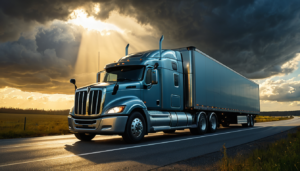
When a fully loaded grain truck loses control on the wide-open stretches of US-400 near Greensburg, the devastation is immediate and catastrophic. If you or someone you love has been struck by an 18-wheeler in Kiowa County, Kansas, you’re facing a battle against corporate insurers who’ve already dispatched their rapid-response teams to protect their interests. You need a legal team that moves just as fast—and knows exactly how to fight back.
For more than 25 years, Ralph Manginello has stood up to the largest trucking corporations in America. As the founder of Attorney911, our managing partner brings federal court experience—he’s admitted to the U.S. District Court for the Southern District of Texas—and has secured multi-million dollar settlements for families devastated by commercial truck crashes. We’ve stood toe-to-toe with Fortune 500 companies like BP during the Texas City refinery litigation, and we bring that same aggressive advocacy to the wheat fields and highways of Kiowa County.
Our firm offers something else that big insurance companies fear: insider knowledge. Associate attorney Lupe Peña spent years working for a national insurance defense firm before joining our team. He knows exactly how commercial trucking insurers evaluate claims, train their adjusters to minimize payouts, and manipulate injured victims into accepting far less than they deserve. Now Lupe uses that playbook against them—fighting for every dime you’re owed. And with bilingual services available, Hablamos Español. Llame a Lupe Peña al 1-888-ATTY-911.
Why 18-Wheeler Accidents in Kiowa County Are Devastating
The physics of a semi-truck collision are brutal and unforgiving. An 80,000-pound tractor-trailer legally traveling through Kansas weighs 20 to 25 times more than the average passenger car. When that mass collides with your vehicle at highway speeds on US-400 or US-183, the force transfers catastrophic energy directly into your passenger compartment.
Take the math seriously. An 18-wheeler traveling at 65 mph needs approximately 525 feet to stop—that’s nearly two football fields. In Kiowa County’s rural stretches, where high winds whip across the plains and sudden weather changes create black ice, that stopping distance becomes a death sentence for drivers caught in the wrong place.
Every 16 minutes, someone in America is injured in a commercial truck crash. While Kiowa County’s wide-open spaces might feel safer than urban congestion, the reality is more dangerous. Long-haul drivers pushing through western Kansas face monotonous straightaways, severe crosswinds that can topple high-profile trailers, and pressure to make delivery deadlines that leads to fatal fatigue. When these factors combine on the two-lane highways crisscrossing Kiowa County, the results are often fatal or permanently disabling.
The Unique Dangers of Trucking in Kiowa County
Kiowa County sits in the heart of Kansas wheat country, where agriculture isn’t just an industry—it’s the economic lifeblood. This creates unique trucking hazards you won’t find on every interstate in America.
Agricultural Harvest Peaks
From June through July, Kiowa County sees a massive spike in trucking traffic as combines harvest wheat and transport trucks flood US-400 and US-183. These grain haulers often operate on tight timelines during harvest season, pushing drivers to exceed safe speeds on rural roads. Overloaded trailers, poorly secured grain loads, and fatigued agricultural operators create deadly conditions around Greensburg, Haviland, and Mullinville.
Kansas Wind Corridors
The flat terrain of Kiowa County is notorious for sudden, severe crosswinds—particularly along east-west routes like US-400. These winds don’t just make steering difficult; they can actually lift empty or lightly loaded trailers off the ground, causing rollovers that block both lanes instantly. According to FMCSA regulations under 49 CFR § 392.14, drivers must exercise extreme caution in high winds, but dispatch pressure often overrides safety.
Extended Emergency Response Times
Unlike urban areas where ambulances arrive in minutes, Kiowa County’s rural nature means emergency medical services may take 20-30 minutes or longer to reach remote crash sites on county roads. That delay turns survivable injuries into life-threatening emergencies. The nearest Level I trauma center is in Wichita, over 100 miles away from most Kiowa County accidents—meaning critical stabilization happens in local hospitals like Comanche County Hospital before dangerous air transport.
The Tired Trucker Problem
Interstate trucking corridors through Kansas are some of the longest straight stretches in America. Drivers on I-70 coming from Colorado or heading toward Missouri often enter Kiowa County already fatigued from overnight drives. Under 49 CFR Part 395, drivers are limited to 11 hours of drive time, but many violate these hours-of-service regulations, risking jackknife accidents and head-on collisions on Kiowa County’s narrower state highways.
Common 18-Wheeler Accident Types We See in Kiowa County
Jackknife Accidents on Windy Plains
When sudden gusts hit an 80,000-pound trailer on US-400, or when a driver brakes improperly on the ice-slicked bridges near Bucklin, the trailer skids perpendicular to the cab—creating a deadly wall of steel across the highway. These jackknife accidents often involve multiple vehicles and violate 49 CFR § 393.48 regarding brake system maintenance and § 392.6 regarding speed appropriate for conditions.
Rollovers at Intersections
The intersection of US-183 and US-400 near Greensburg sees dangerous wide-turn accidents when semi-trucks swing left before turning right, crushing passenger vehicles in the “squeeze play.” These accidents violate 49 CFR § 392.11 regarding following distance and safe operation, and often result from inadequate training under § 391.11.
Underride Collisions
Because Kiowa County’s rural highways often have higher speed limits (65-70 mph) with minimal lighting, nighttime underride collisions—where passenger vehicles slide under trailers—are particularly deadly. Federal regulations under 49 CFR § 393.86 mandate rear impact guards, but many trailers lack adequate side underride protection, leading to decapitation injuries.
Fatigue-Related Head-On Crashes
On two-lane highways like K-1 or K-19, fatigued truckers drift across center lines after violating 49 CFR Part 395’s hours-of-service rules. These head-on collisions close the distance at combined speeds exceeding 120 mph—almost always fatal for passenger vehicle occupants.
Cargo Spills and Grain Truck Accidents
During wheat harvest, improperly secured grain loads on agricultural trucks violate 49 CFR § 393.100-136 regarding cargo securement. When these trucks take curves too fast near the Kiowa County State Lake or navigate the tight turns near Haviland, shifting loads cause rollovers that spill thousands of pounds of grain—and create secondary crash hazards for miles.
Federal Regulations That Protect You—and Prove Negligence
Every commercial truck operating in Kiowa County must comply with strict Federal Motor Carrier Safety Administration (FMCSA) regulations. When trucking companies break these rules, they endanger lives and establish legal liability for your injuries.
Driver Qualifications (49 CFR Part 391)
Trucking companies must verify that drivers hold valid Commercial Driver’s Licenses (CDLs), pass medical examinations, and have clean driving records. If a Kansan trucking company hired a driver with a history of DUIs or license suspensions without proper background checks, they committed negligent hiring under § 391.51.
Hours of Service (49 CFR Part 395)
Federal law limits property-carrying drivers to:
- Maximum 11 hours driving after 10 consecutive hours off duty
- No driving beyond the 14th consecutive hour on duty
- Mandatory 30-minute break after 8 cumulative hours driving
- 60/70 hour weekly limits
Electronic Logging Devices (ELDs) mandated since December 2017 record this data automatically. We subpoena this evidence immediately to prove fatigue violations.
Vehicle Maintenance (49 CFR Part 396)
Commercial trucks must undergo systematic inspection, repair, and maintenance. Drivers must complete pre-trip and post-trip inspections documenting brake conditions, tire wear, and lighting compliance. When trucking companies defer maintenance to save money—leading to brake failures or tire blowouts on Kansas highways—they violate § 396.3 and § 396.11.
Cargo Securement (49 CFR Part 393)
For grain haulers and flatbeds operating through Kiowa County, federal rules require tiedowns capable of withstanding specific force ratings. Improperly secured wheat loads, construction equipment, or oilfield machinery that shifts during transport violates § 393.100-136 and creates rollover hazards.
Ten Parties Who May Owe You Money
Unlike car accidents involving two drivers, 18-wheeler crashes often implicate multiple corporate defendants—each carrying separate insurance policies. We investigate every possible liable party to maximize your recovery:
- The Truck Driver – Personally liable for speeding, distraction, fatigue, or impairment
- The Trucking Company/Motor Carrier – Vicariously liable under respondeat superior, and directly liable for negligent hiring, training, or supervision
- The Cargo Owner/Shipper – Often liable for overweight loads or improper loading instructions common in agricultural transport
- The Loading Company – Responsible for securing grain or equipment that shifts during Kiowa County’s windy conditions
- Truck Manufacturers – Liable for defective brakes, steering systems, or stability control failures
- Parts Manufacturers – Responsible for defective tires that blow out on hot Kansas asphalt
- Maintenance Companies – Third-party mechanics who negligently repaired brakes or tires
- Freight Brokers – Companies arranging transport who negligently selected carriers with poor safety records
- The Truck Owner – In owner-operator situations, separate liability for negligent entrustment
- Government Entities – Kansas Department of Transportation or Kiowa County may be liable for dangerous road design, inadequate signage, or failure to maintain highways
The 48-Hour Evidence Emergency
Here’s what trucking companies don’t want you to know: critical evidence disappears fast. Black box data from the truck’s Engine Control Module (ECM) can be overwritten in as little as 30 days. ELD logs showing hours-of-service violations may be purged after six months. Dashcam footage often gets deleted within 7-14 days.
When you call Attorney911, we immediately send spoliation letters to preserve:
- ECM/EDR data showing speed, braking, and throttle position before impact
- ELD records proving hours-of-service violations
- Driver Qualification Files revealing negligent hiring
- Maintenance records showing deferred repairs
- Cell phone records proving distraction
- GPS tracking data confirming route and timing
As client Glenda Walker told us after we fought for her maximum recovery, “They fought for me to get every dime I deserved.” That starts with preserving evidence before the trucking company destroys it.
Catastrophic Injuries and Your Future
The injuries sustained in Kiowa County trucking accidents often last a lifetime. We have secured settlements ranging from $1.5 million to $9.8 million for traumatic brain injury victims because these injuries affect cognition, personality, and independence forever. Spinal cord injuries resulting in paraplegia or quadriplegia command settlements between $4.7 million and $25.8 million to cover lifetime care, home modifications, and lost earning capacity.
For amputations caused by crushing accidents with agricultural equipment or semi-trucks, we’ve recovered between $1.9 million and $8.6 million. Wrongful death claims for families who’ve lost loved ones on Kiowa County highways typically settle between $1.9 million and $9.5 million, depending on the victim’s age, earning capacity, and the circumstances of negligence.
These aren’t just numbers. As our client Kiimarii Yup shared, “I lost everything… my car was at a total loss, and because of Attorney Manginello and my case worker Leonor, 1 year later I have gained so much in return plus a brand new truck.” Similarly, Donald Wilcox came to us after another firm rejected his case, explaining, “One company said they would not accept my case. Then I got a call from Manginello… I got a call to come pick up this handsome check.”
Kansas Law: What Kiowa County Accident Victims Must Know
Statute of Limitations
Kansas law gives you just two years from the date of your trucking accident to file a lawsuit. Miss this deadline, and you lose your right to compensation permanently—regardless of how catastrophic your injuries.
Comparative Negligence: The 50% Rule
Kansas follows modified comparative negligence with a 50% bar rule. If you’re found 50% or more at fault for the accident, you recover nothing. If you’re less than 50% at fault, your recovery is reduced by your percentage of fault. This makes thorough investigation critical—trucking companies will try to blame you for the crash.
No Damage Caps on Trucking Cases
Unlike some states, Kansas does not cap compensatory damages in trucking accident cases involving non-economic losses like pain and suffering. Punitive damages are available when trucking companies act with willful disregard for safety, though Kansas caps these at the lesser of $5 million or the defendant’s annual gross income.
Why Kiowa County Families Trust Attorney911
Ralph Manginello has built his 25-year career on standing up to corporate bullies. Our firm’s involvement in the BP Texas City explosion litigation—where we fought for families facing a $2.1 billion corporate defense machine—proved we take on the toughest cases. We’re currently litigating a $10 million lawsuit against the University of Houston for hazing-related injuries, demonstrating our commitment to holding institutions accountable.
Our team includes Lupe Peña, a third-generation Texan and fluent Spanish speaker who previously defended insurance companies from the inside. He knows the algorithms adjusters use to minimize your claim, the delay tactics designed to pressure desperate families, and the lowball offers that come before you know the full extent of your injuries. As client Ernest Cano said, “Mr. Manginello and his firm are first class. Will fight tooth and nail for you.”
With 251+ Google reviews averaging 4.9 stars, Chad Harris summarized what we offer: “You are NOT a pest to them and you are NOT just some client… You are FAMILY to them.”
Frequently Asked Questions for Kiowa County Trucking Accident Victims
How long do I have to file a lawsuit after a truck accident in Kiowa County?
You have two years from the accident date under Kansas law. Critical evidence like black box data may be gone in 30 days, so contact us immediately.
Can I recover damages if I was partially at fault for the crash on US-400?
Yes, if you were less than 50% at fault. Your recovery will be reduced by your percentage of fault. We fight to minimize any attributed fault.
What if the truck driver was hauling wheat for a local farmer during harvest?
Both the driver and the agricultural operation may be liable. Commercial agricultural vehicles must still comply with FMCSA cargo securement and weight regulations. The cargo owner may share responsibility for overweight loading.
How much is my Kiowa County trucking case worth?
It depends on injury severity, medical costs, lost wages, and available insurance. Kansas trucking cases often involve higher policy limits than car accidents—typically $750,000 to $5 million in coverage.
Will my case go to trial?
Most settle through negotiation, but we prepare every case as if it’s going to trial. Insurance companies know which attorneys are willing to go to court—and they pay those attorneys’ clients more.
Do you handle cases in rural Kansas from your Texas offices?
Yes. Our federal court admission allows us to represent clients nationwide, including throughout Kansas. We offer remote consultations and travel to Kiowa County for depositions, scene investigations, and court appearances.
What if I don’t have health insurance to treat my injuries?
We work with vetted physicians who accept Letters of Protection—treating you now and receiving payment from your settlement later. Don’t let finances prevent necessary medical care.
Can undocumented immigrants file injury claims in Kansas?
Yes. Immigration status does not affect your right to compensation after a trucking accident. We handle these cases with discretion and compassion.
How do I know if the trucking company destroyed evidence?
Signs include “missing” logbooks, “malfunctioning” dashcams, or the truck being repaired before inspection. We send immediate spoliation letters to prevent—or document—evidence destruction.
What are contingency fees?
You pay nothing upfront. We receive 33.33% if settled pre-trial or 40% if we go to trial, plus reimbursement for case expenses. If we don’t win, you owe us nothing.
Take Action Before Evidence Disappears
The trucking company that hit you has already called their lawyers. Their insurance adjuster is already building a case against you. Every hour you wait, black box data inches closer to deletion, witnesses’ memories fade, and the trucking company strengthens its defenses.
Whether your accident happened during harvest season on a dusty county road near Mullinville or on the high-speed stretches of US-400 during a windstorm, you deserve an advocate who treats you like family—not a case number.
Call Attorney911 now at 1-888-ATTY-911 or (888) 288-9911. We answer 24/7, offer free consultations, and handle Kiowa County trucking cases on contingency—you don’t pay unless we win.
Hablamos Español. Llame hoy al 1-888-ATTY-911.
Your recovery starts with one call. Let Ralph Manginello and our team—including former insurance defense attorney Lupe Peña—fight for every dime you deserve while you focus on healing.