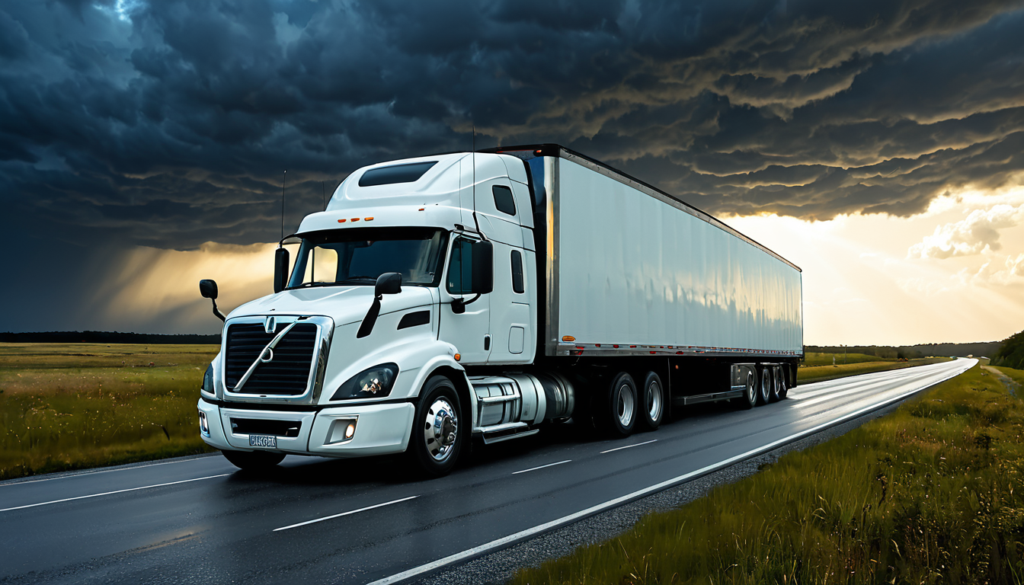
18-Wheeler Accident Attorneys in McIntosh County, Georgia
When 80,000 Pounds of Steel Changes Everything
The impact was catastrophic. One moment you’re driving along I-95 near Darien, heading into town or maybe commuting north toward Savannah. The next, an 18-wheeler is jackknifing across all lanes, or worse—coming right at you head-on. In McIntosh County, we’ve seen what happens when trucking companies cut corners. The physics aren’t fair: your car weighs 4,000 pounds. The truck that hit you? Up to 80,000 pounds. That’s not an accident. That’s a tragedy waiting to happen.
Every year, more than 5,100 Americans die in commercial truck crashes. Here in McIntosh County, sitting right on the I-95 corridor—the lifeline moving freight from Florida to the Northeast—we see our share of devastation. The 18-wheelers barreling through our coastal county don’t stop for the marshes or the historic streets of Darien. They keep moving, sometimes too fast, often too tired, and occasionally with brakes that should have been fixed months ago.
If you’re reading this, you or someone you love has probably survived a trucking accident in McIntosh County. Or maybe you didn’t survive unscathed—maybe you’re dealing with a traumatic brain injury, a spinal cord injury, or the unthinkable loss of a family member. We know you’re hurting. We know the medical bills are piling up. And we know the trucking company’s insurance adjuster has probably already called, sounding sympathetic while asking you to give a recorded statement.
Stop. Don’t sign anything. Don’t say anything. Evidence in McIntosh County trucking cases disappears fast—black box data can be overwritten in 30 days, and the trucking company has already dispatched its rapid-response team to protect their interests, not yours.
That’s why we’re here. At Attorney911, we’ve spent over 25 years fighting for people just like you. Ralph Manginello, our managing partner, has been handling catastrophic trucking cases since 1998. He’s admitted to federal court—meaning he can take your case wherever it needs to go. And here’s something that gives our clients a real edge: our associate attorney, Lupe Peña, used to work for insurance companies. He defended trucking insurers for years. Now he fights against them. He knows exactly how they evaluate claims, how they train adjusters to minimize payouts, and when they’re bluffing about going to trial.
We’ve recovered multi-million dollar settlements for families across the country, including a $5 million settlement for a traumatic brain injury victim and $3.8 million for a client who suffered an amputation. We currently have a $10 million lawsuit pending against the University of Houston for hazing injuries, and we’ve gone toe-to-toe with Fortune 500 giants like BP in the Texas City refinery explosion litigation that resulted in over $2.1 billion in industry-wide settlements.
But most importantly, we treat you like family. As our client Chad Harris once told us: “You are NOT just some client… You are FAMILY to them.” We don’t just handle cases. We fight for people.
Why 18-Wheeler Accidents in McIntosh County Are Different
Think a truck accident is just a bigger car wreck? Think again. Eighteen-wheeler cases involve federal regulations, massive insurance policies, and corporate defendants with teams of lawyers who start building their defense before the ambulance even leaves the scene.
In McIntosh County, the risks are amplified by our unique geography. We’re a coastal county bisected by Interstate 95, one of the busiest freight corridors in America. Thousands of trucks pass through daily—some heading to the Port of Savannah just north of us, others hauling timber from our pine forests or seafood from our docks. These aren’t just local delivery trucks. These are 80,000-pound behemoths traveling at highway speeds through weather that can turn dangerous fast—thick coastal fog, sudden thunderstorms, or hurricane evacuation traffic that turns I-95 into a parking lot.
The insurance landscape is different too. While a regular car accident might involve a $30,000 policy, federal law requires commercial trucks to carry minimum liability coverage of $750,000—and that’s for non-hazardous freight. Hauling oil or hazardous materials? That jumps to $1 million or $5 million. These higher limits mean there’s real money available to compensate you for catastrophic injuries, but only if you know how to access it.
The trucking companies hope you don’t know about the Federal Motor Carrier Safety Administration (FMCSA) regulations. They hope you don’t realize that the driver who hit you might have been behind the wheel for 14 hours straight—violating the 11-hour driving limit under 49 CFR Part 395. They hope you don’t know about the cargo securement rules in 49 CFR Part 393, or the brake inspection requirements in Part 396. Every violation is evidence of negligence. And we find them.
Meet the Team Fighting for McIntosh County Trucking Victims
When you hire Attorney911, you’re not getting a case manager who passes you off to a paralegal. You’re getting Ralph Manginello—a 25-year veteran of personal injury law who has been making trucking companies pay since 1998. Ralph is admitted to the U.S. District Court for the Southern District of Texas, giving him federal jurisdiction to handle complex interstate trucking cases that cross state lines. He’s a dual-licensed attorney (Texas and New York), which comes in handy when trucking companies try to forum-shop or when your case involves multi-state carriers.
Our secret weapon is Lupe Peña. Before joining Attorney911, Lupe spent years working at a national defense firm representing insurance companies. He knows the playbook. He knows that adjusters are trained to ask “How are you?” just so they can record you saying “Fine”—then use it against you later. He knows how they use software like Colossus to undervalue your pain and suffering. And he knows exactly which buttons to push to make them pay what your case is actually worth.
We have offices in Houston, Austin, and Beaumont, Texas, but we handle cases nationwide—including right here in McIntosh County, Georgia. With 251+ Google reviews averaging 4.9 stars, our track record speaks for itself. Clients like Glenda Walker tell us we “fought for me to get every dime I deserved.” Donald Wilcox came to us after another firm rejected his case—we got him what he called “a handsome check.” And Angel Walle noted we “solved in a couple of months what others did nothing about in two years.”
We offer free consultations, work on contingency (you pay nothing unless we win), and we’re available 24/7 at 1-888-ATTY-911. Hablamos Español—Lupe Peña provides fluent Spanish representation without interpreters, ensuring nothing gets lost in translation.
The Catastrophic Reality of McIntosh County Truck Crashes
Jackknife Accidents on I-95
You’re driving north through McIntosh County, maybe past the salt marshes near Townsend, when the tractor-trailer ahead of you hits its brakes too hard. The cab slows, but the trailer swings out perpendicular to the cab, sweeping across all three lanes of I-95. Suddenly there’s nowhere to go.
Jackknife accidents account for approximately 10% of all trucking-related deaths. They often result in multi-vehicle pileups because the trailer blocks the entire roadway. In coastal Georgia, these are particularly dangerous during sudden afternoon thunderstorms when roads get slick fast.
Under 49 CFR § 393.48, trucks must have properly functioning brake systems. When drivers lock up their brakes due to poor maintenance or following too closely, that’s negligence. We subpoena the maintenance records to prove it.
Rear-End Collisions: The Physics Are Brutal
An 80,000-pound truck traveling at 65 mph needs approximately 525 feet to stop—that’s nearly two football fields. In contrast, your passenger vehicle needs about 300 feet. When a truck driver follows too closely or gets distracted by their dispatch radio, they can’t stop in time.
49 CFR § 392.11 prohibits following “more closely than is reasonable and prudent.” Yet we see it constantly on I-95 through McIntosh County—trucks tailgating passenger vehicles, unable to stop when traffic slows near the Golden Isles Parkway interchange.
These rear-end collisions often cause underride accidents, where your car slides under the trailer. Under 49 CFR § 393.86, trailers must have rear impact guards to prevent exactly this scenario. But guards get damaged, rusted, or improperly maintained. When they fail, the results are often decapitation or catastrophic head trauma.
Rollover Accidents on Coastal Curves
McIntosh County’s highways include bridges and ramps that can be treacherous for top-heavy trucks. When drivers take the I-95 exit ramps too fast—or when they’re hauling liquid cargo that sloshes and shifts the center of gravity—rollovers happen.
49 CFR § 393.100-136 mandates specific cargo securement standards. Loads must be secured to withstand 0.8 g deceleration forward, 0.5 g rearward, and 0.5 g laterally. When trucking companies overload trailers or fail to properly secure cargo to save time, they create deadly rollover hazards.
Wide Turn Accidents in Darien and Townsend
Ever been caught between a turning truck and the curb in downtown Darien? When 18-wheelers make right turns, they must swing wide—sometimes into the left lane—to clear the curb. Drivers sometimes fail to check their mirrors or signal properly, crushing smaller vehicles in the process.
Tire Blowout Debris
The heat on Georgia’s coastal highways is brutal on tires. When a truck tire blows—often due to improper inflation or worn treads under 49 CFR § 393.75—the “road gator” (the tread remnant) becomes a lethal projectile. We’ve seen these cause multi-car pileups on I-95, particularly in the summer months when asphalt temperatures soar.
Blind Spot Collisions: The “No-Zone”
18-wheelers have massive blind spots—20 feet in front, 30 feet behind, and particularly dangerous on the right side where the blind spot extends the length of the trailer. When truck drivers change lanes on I-95 without checking mirrors or using turn signals, they sideswipe passenger vehicles, often forcing them off the road into the marsh grasses or guardrails.
All Parties We Hold Accountable in McIntosh County
Most people think you can only sue the truck driver. That’s exactly what the trucking company wants you to think. In reality, we investigate every potentially liable party to maximize your recovery:
The Truck Driver – Obviously the first defendant, but often not the deepest pockets. We look for distracted driving (violating 49 CFR § 392.82 by texting), fatigue (violating Part 395 Hours of Service), impairment (Part 382 drug/alcohol testing), or simple traffic violations.
The Trucking Company (Motor Carrier) – Under respondeat superior, employers are liable for employees’ negligent acts. Plus, we often find direct negligence: negligent hiring (failing to check the driver’s record under Part 391), negligent training, or negligent supervision. We demand their Driver Qualification Files and CSA safety scores.
The Cargo Owner/Shipper – If the load was improperly secured or the shipper pressured the driver to exceed weight limits or driving hours, they share liability.
The Loading Company – Third-party warehouses that loaded the cargo may have failed to secure it properly per 49 CFR § 393.100, leading to load shifts that caused the rollover.
Truck/Trailer Manufacturer – Defective brakes, faulty steering, or inadequate underride guards (violating § 393.86) can support product liability claims.
Parts Manufacturers – Defective tires, brake components, or lighting systems.
Maintenance Companies – Third-party shops that performed negligent repairs or failed to identify safety issues during required inspections under Part 396.
Freight Brokers – Companies like Amazon, Walmart, or logistics brokers who negligently selected carriers with poor safety records to haul their goods through McIntosh County.
Truck Owner (if different from carrier) – In owner-operator situations, the owner may be liable for negligent entrustment.
Government Entities – If poor road design, inadequate signage, or lack of maintenance contributed to the crash on McIntosh County roads or state highways.
Georgia Law: What McIntosh County Truck Accident Victims Need to Know
The Clock Is Ticking: Georgia’s Statute of Limitations
In Georgia, you have two years from the date of the accident to file a personal injury lawsuit. For wrongful death claims, the clock starts ticking from the date of death, not the accident—though these dates are often the same.
Two years sounds like a long time. It isn’t. Evidence disappears. Witnesses move away. And that black box data we mentioned? It can be overwritten in 30 days. We need to act immediately to send spoliation letters preserving:
- ECM/Black box data (speed, braking, throttle)
- ELD logs (hours of service violations)
- Driver Qualification Files (CDL status, medical certifications, training records)
- Maintenance and inspection records
- Dashcam footage
- Cell phone records
- GPS tracking data
Modified Comparative Negligence: The 50% Rule
Georgia follows a modified comparative negligence rule with a 50% bar. This means you can recover damages if you’re less than 50% at fault for the accident. However, your recovery is reduced by your percentage of fault. If you’re found 20% at fault, you recover 80% of your damages. If you’re 51% at fault, you recover nothing.
This is why the trucking company’s insurance adjuster is calling you for a “statement.” They’re fishing for admissions they can use to push you over that 50% threshold. Don’t give them the chance. Refer them to us.
Damages Caps in Georgia
Georgia caps punitive damages at $250,000 unless the defendant acted intentionally to harm you or was under the influence of drugs or alcohol. There’s no cap on economic damages (medical bills, lost wages) or non-economic damages (pain and suffering) in standard personal injury cases, meaning your full catastrophic injury costs are recoverable.
FMCSA Regulations That Prove Negligence
Federal regulations aren’t just bureaucratic red tape—they’re safety rules that, when broken, prove negligence. Here are the critical violations we look for:
Hours of Service (49 CFR Part 395) – Property-carrying drivers cannot drive more than 11 hours after 10 consecutive hours off duty. They cannot drive beyond the 14th consecutive hour after coming on duty. A 30-minute break is required after 8 hours of driving. We download ELD data to prove violations.
Driver Qualification (49 CFR Part 391) – Drivers must be at least 21, speak English, hold a valid CDL, pass a medical exam every 2 years, and have a clean driving record. We subpoena the Driver Qualification File to verify compliance.
Vehicle Maintenance (49 CFR Part 396) – Requires pre-trip inspections (§ 396.13), post-trip reports (§ 396.11), and annual inspections (§ 396.17). Brake system deficiencies are cited in approximately 29% of truck crashes.
Cargo Securement (49 CFR §§ 393.100-136) – Cargo must be secured with sufficient working load limits (50% of cargo weight for loose items). Violations cause rollovers and spilled cargo on I-95.
Drug and Alcohol Testing (49 CFR Part 382) – Post-accident testing is required for accidents involving fatalities or injuries requiring immediate treatment. Positive tests are automatic liability.
Mobile Phone Restrictions (49 CFR § 392.82) – No hand-held phone use while driving. Violations cause distracted driving accidents.
Catastrophic Injuries and Their Long-Term Impact
Traumatic Brain Injury (TBI)
The force of an 80,000-pound truck impact causes the brain to slam against the skull. Even “mild” concussions can lead to post-concussion syndrome with lasting cognitive deficits. Moderate to severe TBIs can require lifetime care costing $1.5 million to $9.8 million. Victims may never return to work or require 24/7 supervision.
Spinal Cord Injuries
Paraplegia and quadriplegia are common in underride and rollover accidents. Lifetime care for quadriplegia can exceed $5 million. These aren’t just medical bills—they’re lost earning capacity, home modifications, and the devastation of dependence.
Amputations
Crush injuries from trucks often require surgical amputation. Beyond the initial surgery, victims need prosthetics ($5,000-$50,000 each), replacement every 5-7 years, physical therapy, and psychological counseling. We’ve recovered $1.9 million to $8.6 million for amputation victims.
Severe Burns
Fuel fires from ruptured tanks or hazmat spills cause third and fourth-degree burns requiring skin grafts, reconstructive surgery, and permanent scarring. The pain is unimaginable, and the disfigurement affects every aspect of life.
Wrongful Death
When a trucking accident takes a loved one, Georgia allows surviving spouses and children to recover for loss of consortium, mental anguish, and lost future income. The economic devastation is compounded by the emotional trauma. Settlements in these cases can range from $1.9 million to $9.5 million or more depending on the circumstances.
The 48-Hour Evidence Preservation Protocol
Here’s what you need to understand: the trucking company is not your friend. They have a legal team on retainer. They have accident reconstructionists they fly in within hours. And they have a financial incentive to make evidence disappear.
Within 30 days, ECM data can be overwritten by new driving events.
Within 7-14 days, dashcam footage is often deleted.
Within hours, the truck can be repaired or sold, destroying physical evidence of brake failure or tire defects.
When you call 1-888-ATTY-911, we immediately dispatch spoliation letters to the trucking company, their insurer, and all potentially liable parties. These letters put them on legal notice that destroying evidence will result in court sanctions, adverse jury instructions, and potentially default judgment.
We also deploy investigators to McIntosh County to photograph the scene, measure skid marks, and interview witnesses before memories fade.
Frequently Asked Questions for McIntosh County Truck Accident Victims
How long do I have to file a lawsuit in McIntosh County, Georgia?
Two years from the accident date for personal injury, two years from the date of death for wrongful death. But waiting is dangerous—call us immediately.
What if the truck driver says I was at fault?
Georgia uses modified comparative negligence. If you’re less than 50% at fault, you can still recover. We use ECM data and accident reconstruction to prove what really happened—not what the driver claims.
How much is my case worth?
It depends on injury severity, medical costs, lost wages, and insurance limits. But trucking companies carry $750,000 to $5 million in coverage—far more than typical car accidents. We’ve recovered settlements from hundreds of thousands to millions.
What if I can’t afford a lawyer?
We work on contingency. You pay nothing upfront. We advance all costs. You pay us only if we win. The consultation is free.
Should I talk to the trucking company’s insurance adjuster?
Absolutely not. They are trained to protect their employer, not you. Anything you say can be twisted to reduce your recovery. Refer them to Attorney911.
What if the truck was from out of state?
We handle that. Ralph Manginello is admitted to federal court and can pursue cases across state lines. FMCSA regulations apply nationwide, and we know how to track down out-of-state carriers.
Do you handle Spanish-speaking clients in McIntosh County?
Sí. Lupe Peña is fluent in Spanish. Hablamos Español. Llame al 1-888-ATTY-911.
What if my loved one was killed?
We are deeply sorry for your loss. We handle wrongful death claims with compassion and determination. You may recover for funeral expenses, lost income, loss of companionship, and mental anguish.
Your McIntosh County Trucking Accident Attorneys Are Ready
You’ve been through enough. The pain. The medical bills. The calls from insurance adjusters who act like friends but work for the enemy. You don’t have to handle this alone.
At Attorney911, we bring big-firm results with small-firm service. Ralph Manginello has 25 years of experience standing up to trucking giants. Lupe Peña brings insider knowledge of insurance defense tactics. Together, we’ve recovered over $50 million for our clients, including multi-million dollar settlements for brain injuries, amputations, and wrongful death.
We know McIntosh County. We know I-95. We know the courts in Georgia and how to apply federal trucking regulations to maximize your recovery. And we know that you’re not just a case number—you’re family. As Chad Harris said, “You are FAMILY to them.”
Don’t let the trucking company push you around. Don’t accept their lowball offer. Don’t sign away your rights.
Call 1-888-ATTY-911 right now. We’re available 24/7. The consultation is free. And remember: you pay nothing unless we win.
Hablamos Español. Llame hoy.
Attorney911
Legal Emergency Lawyers™
1-888-ATTY-911
888-288-9911
Serving McIntosh County and all of Georgia