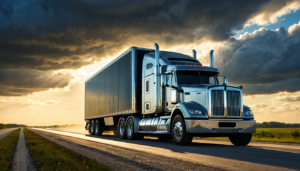
18-Wheeler Accident Attorneys in Mecklenburg County
When 80,000 Pounds Change Everything in an Instant
The impact was catastrophic. One moment you’re navigating I-85 toward Charlotte, and the next you’re facing a life forever altered by 80,000 pounds of steel and cargo. If you’ve been hit by an 18-wheeler in Mecklenburg County, you need to know something critical: North Carolina law does not give trucking accident victims much room for error. Our state follows the harsh rule of contributory negligence—meaning if you’re found even 1% at fault for the accident, you recover nothing. Zero. This isn’t a time for guessing. You need a fighter who understands federal trucking regulations, North Carolina’s unforgiving liability standards, and how to hold massive trucking companies accountable.
At Attorney911, we’ve spent over 25 years helping families devastated by commercial truck accidents. Ralph Manginello, our managing partner, has been representing injury victims since 1998, securing multi-million dollar verdicts and settlements—including recoveries exceeding $5 million for traumatic brain injuries and $3.8 million for amputation cases. Our associate attorney, Lupe Peña, spent years defending insurance companies before joining our firm. Now he uses that insider knowledge against them, knowing exactly how trucking insurers evaluate claims and deny coverage in Mecklenburg County cases.
You need us now—not later. Evidence disappears fast. Black box data overwrites in 30 days. The trucking company already has lawyers working to protect their interests. Call 1-888-ATTY-911 immediately for a free consultation. We handle 18-wheeler cases on contingency—you pay nothing unless we win.
Why Mecklenburg County Trucking Accidents Demand Specialized Legal Experience
Mecklenburg County sits at the crossroads of major freight corridors. Interstate 85 carries massive commercial traffic connecting Charlotte to Atlanta and Raleigh, while I-77 funnels heavy trucks to and from South Carolina and Virginia. The I-485 loop around Charlotte creates constant truck congestion, and the convergence of these routes near major distribution centers creates dangerous conditions for local drivers.
But it’s not just the heavy traffic that makes these cases complex. North Carolina’s contributory negligence law is one of the harshest in America. Unlike neighboring states where you can recover damages even if you’re partially at fault, here in Mecklenburg County, if the trucking company’s insurance convinces a jury you were even slightly responsible—whether you changed lanes without signaling, braked too late, or simply couldn’t prove the truck driver was 100% at fault—you walk away with nothing.
That’s why experience matters. We’ve seen trucking companies hire rapid-response teams that arrive at Mecklenburg County accident scenes before the ambulance leaves. They photograph the scene, interview witnesses, and start building their defense immediately. While they’re doing that, black box data is counting down to automatic deletion, and critical evidence is slipping away.
Our firm doesn’t wait. When you call 1-888-ATTY-911, we send preservation letters within 24 hours to lock down Electronic Logging Device (ELD) data, engine control module (ECM) records, and driver qualification files. We know the interstates, the weigh stations, and the local courts serving Mecklenburg County. We’ve gone toe-to-toe with Fortune 500 companies like BP in major industrial litigation, and we bring that same aggressive approach to every 18-wheeler case we handle.
The Federal Regulations That Prove Trucking Company Negligence
Every 18-wheeler on Mecklenburg County highways must comply with strict Federal Motor Carrier Safety Administration (FMCSA) regulations codified in Title 49 of the Code of Federal Regulations (49 CFR). These rules aren’t just guidelines—they’re federal law. When trucking companies break them, they owe you compensation.
Part 390: General Applicability and Scope
Under 49 CFR § 390.3, all commercial motor vehicles (CMVs) operating in interstate commerce must comply with federal safety standards. This includes any truck with a gross vehicle weight rating over 10,001 pounds, any vehicle designed to transport 16 or more passengers, or any vehicle hauling hazardous materials requiring placards. This broad definition means most large trucks on I-85, I-77, and local Mecklenburg County roads fall under federal jurisdiction.
The regulation establishes that motor carriers cannot operate CMVs without proper authority and insurance. When a trucking company allows an uninsured or improperly permitted truck on the road, they violate federal law—and that violation constitutes negligence per se in North Carolina courts.
Part 391: Driver Qualification Standards
Perhaps no regulation is more critical for Mecklenburg County truck accident cases than 49 CFR Part 391, which establishes who can legally operate a commercial truck. Under § 391.11, a driver must:
- Be at least 21 years old for interstate commerce
- Read and speak English sufficiently to converse with the general public
- Safely operate the vehicle and cargo type
- Be physically qualified under § 391.41
- Possess a valid Commercial Driver’s License (CDL)
- Complete required entry-level driver training
§ 391.51 requires trucking companies to maintain a Driver Qualification (DQ) File for every driver containing employment applications, three-year driving record checks, road test certifications, and current medical examiner’s certificates (valid for maximum two years). When we subpoena these files in Mecklenburg County cases, we often find missing documentation—proving the trucking company hired an unqualified driver or failed to check their history.
The physical qualification requirements under § 391.41 are strict. Drivers cannot operate if they have:
- Loss of foot, leg, hand, or arm (without exemption)
- History of epilepsy or seizures
- Mental or psychiatric disorders affecting safety
- Current alcoholism diagnosis
- Use of Schedule I controlled substances
- Vision worse than 20/40 in each eye
If the driver who hit you in Mecklenburg County had any of these conditions and was still behind the wheel, the trucking company committed negligent hiring.
Part 392: Driving of Commercial Motor Vehicles
49 CFR § 392.3 prohibits operating a CMV while fatigued or ill: “No driver shall operate a commercial motor vehicle… while the driver’s ability or alertness is so impaired, or so likely to become impaired, through fatigue, illness, or any other cause, as to make it unsafe… to operate the commercial motor vehicle.”
This regulation makes both the driver AND the trucking company liable for fatigue-related accidents. In Mecklenburg County, where I-85 traffic demands constant alertness, a drowsy driver violates federal law.
§ 392.4 and § 392.5 strictly prohibit drug and alcohol use—no alcohol within four hours before driving, no possession while on duty, and a blood alcohol concentration (BAC) limit of 0.04% (half the standard for passenger vehicles). Post-accident drug testing is mandatory, and positive results create automatic liability.
§ 392.11 requires drivers to maintain safe following distances—something we often find violated in rear-end collisions on I-77 near Charlotte.
§ 392.82 prohibits handheld mobile phone use. If ECM data or cell phone records show the driver was texting when they hit you on Independence Boulevard, that’s a federal violation creating liability.
Part 393: Parts and Accessories Necessary for Safe Operation
Cargo securement is critical. Under § 393.100-136, cargo must be contained, immobilized, or secured to prevent leaking, spilling, or shifting that affects vehicle stability. The performance criteria require securement systems withstand:
- 0.8 g deceleration forward (sudden stop)
- 0.5 g acceleration rearward
- 0.5 g lateral force (side-to-side)
When a truck rolls over on the I-485 curve because cargo shifted, or when debris spills onto I-85 creating chain-reaction crashes, the trucking company violated these federal standards. § 393.48 mandates properly functioning brake systems. Brake failures cause 29% of truck accidents, and we investigate maintenance records for violations.
Part 395: Hours of Service (HOS) Regulations
These are the most commonly violated regulations in Mecklenburg County trucking accidents. Under 49 CFR § 395.3, property-carrying drivers face strict limits:
The 11-Hour Rule: Cannot drive more than 11 hours after 10 consecutive hours off duty. Violations cause fatigue-related crashes on long hauls through Mecklenburg County.
The 14-Hour Window: Cannot drive beyond the 14th consecutive hour after coming on duty, regardless of breaks. This prevents companies from scheduling impossible routes.
The 30-Minute Break: Mandatory break after 8 cumulative hours of driving.
The 60/70-Hour Limit: Cannot drive after 60 hours in 7 days or 70 hours in 8 days, followed by a 34-hour restart.
Since December 18, 2017, § 395.8 mandates Electronic Logging Devices (ELD) that automatically record driving time, GPS location, speed, and engine hours. Unlike paper logs that drivers could falsify, ELDs provide objective evidence. We subpoena this data immediately because it proves HOS violations—evidence that often wins Mecklenburg County cases.
Part 396: Inspection, Repair, and Maintenance
§ 396.3 requires systematic inspection and maintenance. Drivers must complete pre-trip inspections under § 396.13, and post-trip reports under § 396.11 covering brakes, steering, lighting, tires, and coupling devices. Annual inspections (§ 396.17) are mandatory, and records must be retained for 14 months.
When we find deferred brake maintenance or ignored tire defects in a Mecklenburg County accident case, we prove the company prioritized profits over safety.
Every Type of 18-Wheeler Accident We Handle in Mecklenburg County
Trucking accidents aren’t just “big car crashes.” Each type involves different physics, different liable parties, and different federal violations. Here’s what we see on Mecklenburg County roads:
Jackknife Accidents
A jackknife occurs when the trailer skids perpendicular to the cab, folding like a pocket knife. This often happens on I-77 curves or I-485 ramps when drivers brake too hard on wet pavement or with empty trailers. Under 49 CFR § 393.100, improper cargo loading that shifts weight can cause jackknifes. These accidents typically block multiple lanes and create multi-vehicle pileups with catastrophic injuries.
Rollover Accidents
The high center of gravity in 18-wheelers makes rollovers common on Mecklenburg County’s curved interchanges, especially when trucks take I-485 too fast. Cargo shifts under § 393.102 performance criteria violations often cause rollovers. When a truck rolls over near Charlotte’s urban areas, it can crush smaller vehicles or spill fuel causing fires and severe burns.
Underride Collisions
Among the deadliest accidents on North Carolina roads. When a car strikes the rear or side of a trailer and slides underneath, the trailer height shears off the passenger compartment. While § 393.86 mandates rear impact guards on trailers manufactured after 1998, many trucks lack side underride guards—creating deadly risks on I-85 where traffic merges constantly. These accidents almost always cause decapitation or severe head trauma.
Rear-End Collisions
A fully loaded truck traveling 65 mph needs over 525 feet to stop—nearly two football fields. On congested Mecklenburg County interstates like I-77 or Independence Boulevard, distracted or fatigued drivers following too closely under § 392.11 cause devastating rear-end crashes. The impact often pushes smaller vehicles into other lanes or under the truck.
Wide Turn Accidents (“Squeeze Play”)
In Charlotte’s tight urban corridors and suburban intersections, trucks swing wide left before making right turns. Unsuspecting drivers in adjacent lanes get caught in the “squeeze play.” These accidents involve failure to signal under § 392.2 and inadequate mirror use under § 393.80.
Blind Spot Accidents (“No-Zone”)
18-wheelers have massive blind spots: 20 feet in front, 30 feet behind, and large areas on both sides—especially the right side. When truckers change lanes on I-85 without checking mirrors or using turn signals, they sideswipe vehicles they never saw. § 393.80 mandates proper mirrors, but improper adjustment or distracted driving causes violations.
Tire Blowout Accidents
Heat buildup on long hauls, underinflation, and worn treads cause blowouts. Under § 393.75, steer tires must have 4/32″ tread depth, while drive tires need 2/32″. When a tire blows on I-77, the driver often loses control, creating jackknifes or rollovers. Tire debris (“road gators”) also causes secondary accidents.
Brake Failure Accidents
Worn brakes, air system leaks, and deferred maintenance under § 396.3 cause trucks to lose stopping power. Brake failures are particularly dangerous on Charlotte’s hills and the Mountain-to-Sea corridor routes serving Mecklenburg County. We examine post-trip reports and maintenance records to prove the company knew about brake issues.
Cargo Spill and Shift Accidents
Improperly secured loads under § 393.100-136 shift during transit, destabilizing trucks. Hazardous material spills on I-85 or I-77 create toxic exposure risks and secondary crashes. Overweight trucks also violate cargo regulations and create dangerous handling issues.
Head-On Collisions
When fatigued drivers under § 392.3 drift across the centerline on two-lane roads in rural Mecklenburg County areas, or when impaired drivers lose control, head-on collisions with 80,000-pound trucks are almost always fatal for passenger vehicle occupants.
T-Bone and Intersection Accidents
Running red lights or failing to yield at Charlotte intersections causes broadside impacts. The truck’s height often means the impact hits the passenger compartment directly, causing crushing injuries and internal organ damage.
Sideswipe Accidents
Lane departure on congested Mecklenburg County highways sideswipes vehicles. These often result from HOS violations causing fatigue, or from § 392.82 mobile phone violations.
Runaway Truck Accidents
Brake fade on long descents, particularly problematic for trucks serving the Appalachian regions near Mecklenburg County, causes drivers to lose control. Failure to use runaway truck ramps when available constitutes negligence.
Who Pays: All Liable Parties in Mecklenburg County Trucking Cases
Unlike car accidents where usually only one driver is at fault, 18-wheeler crashes involve multiple potentially liable parties. We investigate every angle because more defendants mean more insurance coverage—and North Carolina’s contributory negligence rule makes maximizing defendants critical to your survival.
The Truck Driver
The driver is directly liable for negligent actions: speeding (§ 392.6), distracted driving (§ 392.82), fatigued driving (§ 392.3), or impaired driving (§ 392.4-5). We examine their driving record, training history, and post-accident drug tests.
The Motor Carrier (Trucking Company)
Employers are vicariously liable under respondeat superior for employees acting within the scope of employment. But we also pursue direct negligence claims:
- Negligent Hiring: Failure to check the driver’s DQ file under § 391.51
- Negligent Training: Inadequate safety instruction
- Negligent Supervision: Ignoring ELD violations or HOS fraud
- Negligent Maintenance: Violating § 396.3 inspection requirements
- Negligent Scheduling: Pressuring drivers to violate § 395 hours limits
Trucking companies carry $750,000 to $5 million in federal minimum insurance (49 CFR § 387), making them primary targets for recovery.
Cargo Owners and Shippers
Companies that overload trucks or fail to disclose hazardous cargo characteristics under § 173 hazmat regulations share liability. When a Charlotte distribution center overloads a truck beyond safe weight limits, they contribute to instability and rollovers.
Loading Companies
Third-party warehouses that improperly distribute weight or fail to secure cargo under § 393.100 are liable when shifts cause accidents. We examine bills of lading and loading procedures.
Truck and Parts Manufacturers
Defective brakes, tires, or steering components create product liability claims. If a manufacturer knew about defects under § 573 recall standards, they share responsibility.
Maintenance Companies
Third-party mechanics who perform negligent repairs or return trucks to service with known defects (§ 396.3) are liable when those failures cause crashes on Mecklenburg County roads.
Freight Brokers
Brokers who arrange transportation under § 371 regulations must exercise reasonable care in selecting carriers. If a broker used a carrier with poor CSA scores or known safety violations, they may be liable for negligent selection.
Truck Owners (Owner-Operators)
In lease arrangements, the owner may be liable for negligent entrustment or maintenance failures separate from the carrier’s liability.
Government Entities
Mecklenburg County or the North Carolina Department of Transportation may be liable for dangerous road design, inadequate signage, or unmaintained roads contributing to accidents. However, sovereign immunity and strict notice requirements apply—another reason you need experienced counsel immediately.
The 48-Hour Evidence Preservation Protocol
In Mecklenburg County trucking cases, waiting is fatal to your claim. Here’s what disappears—and when:
- ECM/Black Box Data: Overwrites in 30 days or with new driving events
- ELD Logs: Only required retention is 6 months, but companies “lose” them
- Dashcam Footage: Deleted within 7-14 days routinely
- Witness Statements: Memories fade; physical evidence clears
- Truck Physical Evidence: Repaired or sold within weeks
When you call 1-888-ATTY-911, we immediately send spoliation letters to the trucking company, their insurer, and any third parties. These letters create legal duties to preserve:
- Electronic Control Module (ECM) downloads showing speed, braking, and throttle
- ELD records proving HOS violations
- Driver Qualification Files showing hiring negligence
- Maintenance records revealing deferred repairs
- GPS and telematics data
- Cell phone records
- Dispatch communications
Under North Carolina law, destroying evidence after receiving our spoliation letter can result in adverse inference instructions—meaning the judge tells the jury to assume the destroyed evidence was unfavorable to the trucking company. This leverage often forces settlements before trial.
Catastrophic Injuries and Recovery Potential
The physics of an 80,000-pound truck hitting a 4,000-pound car creates catastrophic injuries requiring millions in lifetime care:
Traumatic Brain Injury (TBI)
From concussions to severe brain damage, TBIs cause cognitive impairment, personality changes, and lost earning capacity. Documented settlements range from $1.5 million to $9.8 million depending on severity and long-term care needs. We work with neurologists and life-care planners to document the full extent of damage.
Spinal Cord Injury and Paralysis
Quadriplegia and paraplegia cases require lifetime medical care, home modifications, and loss of all future earnings. These cases often settle between $4.7 million and $25.8 million because of the devastating permanent disability involved.
Amputation
Whether traumatic (severed at scene) or surgical (medically necessary due to crush injuries), amputations require prosthetics, rehabilitation, and career retraining. Our firm has secured settlements between $1.9 million and $8.6 million for amputation victims.
Severe Burns
Fuel fires and hazmat explosions cause third and fourth-degree burns requiring multiple skin grafts and causing permanent disfigurement. These cases involve significant pain and suffering damages.
Wrongful Death
When trucking accidents kill Mecklenburg County residents, surviving families face lost income, loss of consortium, and funeral expenses. We’ve recovered between $1.9 million and $9.5 million in wrongful death settlements, with North Carolina allowing claims for mental anguish and lost future earnings.
Under North Carolina § 1D-25, punitive damages are capped at the greater of three times compensatory damages or $250,000—but we pursue these when trucking companies act with willful or wanton negligence (like knowingly keeping dangerous drivers on the road).
Mecklenburg County Trucking Accident FAQ
How long do I have to file a lawsuit for a trucking accident in Mecklenburg County?
North Carolina gives you three years from the accident date for personal injury claims (N.C. Gen. Stat. § 1-52), and two years for wrongful death (§ 1-53). However, with evidence disappearing in days, you should contact us within 24-48 hours, not months. Call 1-888-ATTY-911 immediately.
What if I was partially at fault for the accident?
North Carolina follows contributory negligence. If you’re found even 1% at fault, you recover nothing. This makes it critical to hire attorneys who can prove the truck driver was 100% responsible. We investigate thoroughly to defeat these defenses.
Who pays my medical bills while I wait for settlement?
We can help arrange treatment under Letters of Protection with medical providers who wait for payment until we win your case. Your Personal Injury Protection (PIP) or MedPay coverage, if available, may also help. We handle the liens and negotiations so you can focus on healing.
What is a spoliation letter and why does it matter?
It’s a legal notice demanding preservation of evidence. Once sent, the trucking company cannot legally destroy ECM data, maintenance records, or driver logs. We send these within hours of being retained.
How much is my 18-wheeler accident case worth?
Trucking companies carry federal minimum insurance of $750,000 to $5 million. Case value depends on injury severity, liability clarity, and available coverage. We’ve recovered millions for Mecklenburg County clients, but every case is unique. Call for a free evaluation.
Will my case go to trial?
Most settle, but we prepare every case for trial. Insurance companies know which lawyers will try cases—and they pay more to avoid facing us in court. Our trial experience includes federal court admission for the Southern District, giving us leverage in complex interstate cases.
What if the truck driver was an independent contractor?
Both the driver and the motor carrier may be liable. We examine lease agreements and insurance policies to find all coverage. Federal regulations often still apply regardless of independent contractor status.
How do you prove the driver was fatigued?
ELD data under 49 CFR § 395.8 shows driving hours. We also examine dispatch records, delivery schedules, and toll receipts to prove the driver exceeded legal limits or falsified logs.
What if the trucking company is from out of state?
We handle interstate cases regularly. Federal regulations apply nationwide, and our federal court admission allows us to pursue cases against carriers regardless of their home state. Distance is no barrier to justice.
Can I afford an attorney?
Absolutely. We work on contingency—33.33% if settled pre-trial, 40% if trial is necessary. You pay zero upfront costs. We advance all investigation expenses. If we don’t win, you owe us nothing. Hablamos Español—Llame al 1-888-ATTY-911 para hablar con Lupe Peña.
What damages can I recover in North Carolina?
Economic damages (medical bills, lost wages, future care) and non-economic damages (pain and suffering, loss of enjoyment, disfigurement). Punitive damages are available for gross negligence but capped. We calculate lifetime costs to maximize your recovery.
Should I talk to the trucking company’s insurance adjuster?
Never give recorded statements without counsel. Adjusters are trained to minimize your claim. Let us handle all communications—our former insurance defense attorney knows their tactics and protects you from their traps.
How long will my case take?
Simple cases may settle in 6-12 months. Complex litigation involving multiple defendants or catastrophic injuries can take 18-36 months. We move as fast as possible while ensuring you receive maximum compensation—not quick lowball offers.
What if I don’t have health insurance?
We work with medical providers who accept letters of protection, meaning they get paid from your settlement. Don’t let lack of insurance stop you from getting treatment—call us immediately to arrange care.
Why choose Attorney911 over big billboard firms?
We’re not a case mill. Ralph Manginello personally handles cases with 25+ years of experience. Client Glenda Walker said we “fought for me to get every dime I deserved.” Chad Harris told us, “You are FAMILY to them.” We treat you like family, not a case number. With offices in Houston, Austin, and Beaumont, and the ability to handle Mecklenburg County cases throughout North Carolina, we provide personal attention with proven results.
Your Next Step: Call Before Evidence Disappears
The trucking company that hit you has already called their lawyers. Their insurance adjuster is already looking for ways to pay you less—or nothing at all under North Carolina’s contributory negligence laws. Every hour you wait, black box data gets closer to deletion, witnesses forget details, and the trucking company strengthens their defense.
We’ve recovered over $50 million for families across the United States, including multi-million dollar settlements for brain injuries, amputations, and wrongful death. Our team includes a former insurance defense attorney who knows exactly how they value claims and deny coverage. We speak Spanish fluently through attorney Lupe Peña—no interpreters needed.
Don’t let the trucking company push you around. Don’t accept a lowball settlement that won’t cover your future medical needs. Don’t risk losing everything because you waited too long to preserve evidence.
Call Attorney911 now at 1-888-ATTY-911 (1-888-288-9911). We’re available 24/7 for Mecklenburg County trucking accident emergencies. The consultation is free. We charge nothing unless we win. And we fight for every dime you deserve.
Hablamos Español. Llame hoy al 1-888-ATTY-911.
Attorney911 – The Manginello Law Firm, PLLC. Managing Partner Ralph Manginello, Bar No. 24007597 (TX). Associate Attorney Lupe Peña, Bar No. 24084332 (TX). Offices in Houston, Austin, and Beaumont, Texas. Serving Mecklenburg County, North Carolina and nationwide trucking accident victims.