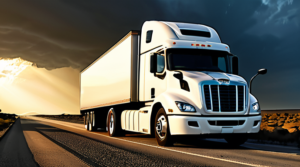
18-Wheeler Accident Attorneys in Montgomery County, North Carolina
If an 80,000-Pound Truck Changed Your Life, You Need a Fighter
The impact was catastrophic. One moment you’re driving through Montgomery County, North Carolina—perhaps on your way to Troy on Highway 24, or headed toward Charlotte via the I-73 corridor. The next moment, an 80,000-pound 18-wheeler slams into your vehicle. Your car weighs maybe 4,000 pounds. That’s not an accident. That’s a demolition.
Every sixteen minutes, someone in America is injured in a commercial truck crash. But here in Montgomery County, the stakes are even higher. Our county sits at the crossroads of major freight corridors connecting the Piedmont to the Sandhills, meaning heavy truck traffic cuts through our communities daily. When that traffic turns dangerous—when a truck driver pushes past the federal hours-of-service limits, or when a trucking company skips crucial brake maintenance—the result is often catastrophic.
Ralph Manginello has spent over 25 years fighting for families devastated by 18-wheeler accidents. Since 1998, he’s built Attorney911 into a firm that wins cases other lawyers won’t touch. With federal court admission to the Southern District of Texas and experience litigating against Fortune 500 corporations like BP in the Texas City refinery explosion, Ralph knows how to handle complex commercial litigation. Our managing partner brings a quarter-century of courtroom experience to every case, holding trucking companies accountable when they put profits over safety.
Client Chad Harris says it best: “You’re NOT just some client… You are FAMILY to them.”
If you’ve been hurt in a Montgomery County trucking accident, the clock is already ticking against you. Evidence disappears fast. Black box data can be overwritten in 30 days. The trucking company has already called their lawyers. You need to call yours. 1-888-288-9911. We’re available 24/7, and if you prefer Spanish, hablamos Español—our associate attorney Lupe Peña provides direct Spanish representation without interpreters.
The North Carolina 1% Rule: Why You Need an Immediate Investigation
Here’s the harsh reality about Montgomery County, North Carolina that many accident victims don’t realize: Our state is one of only five jurisdictions in America that still uses pure contributory negligence. What does that mean for you? If you’re found even 1% at fault for your 18-wheeler accident, you recover nothing. Not a dime for your medical bills. Not a penny for your lost wages. Nothing.
This isn’t the modified comparative negligence used in Texas or most other states, where you can recover damages reduced by your percentage of fault. In North Carolina—and specifically here in Montgomery County—if the trucking company’s insurance adjuster can pin even slight blame on you, your case could be worth zero.
That’s why you can’t wait. That’s why evidence preservation isn’t just important—it’s everything.
Our firm includes Lupe Peña, a former insurance defense attorney who spent years inside the system watching adjusters minimize claims. Now he fights against them, and he knows exactly how they’ll try to shift that 1% of blame onto you. He recognizes their manipulation tactics immediately because he used to sit on their side of the table.
Within 24 hours of taking your case, we send spoliation letters to every potentially liable party—the driver, the trucking company, the cargo owner, the maintenance shop. These legal demands prevent the destruction of critical evidence including:
- ECM/Black Box Data – Records speed, braking, throttle position (can be overwritten in 30 days)
- ELD Logs – Proves hours-of-service violations (49 CFR § 395)
- Driver Qualification Files – Shows if the driver was even legally qualified to operate that rig
- Maintenance Records – Reveals if the trucking company knew about faulty brakes and ignored them
As client Donald Wilcox told us after we took his case another firm rejected: “One company said they would not accept my case. Then I got a call from Manginello… I got a call to come pick up this handsome check.”
Understanding the Trucking Corridors of Montgomery County, North Carolina
Montgomery County sits in the heart of North Carolina’s freight network. While we don’t have the massive Interstates that cut through Raleigh or Charlotte, our county is served by critical connectors including I-73, I-74, and U.S. Highway 24/27/220, all feeding into the larger network of I-85 and I-95 just hours away.
Trucks pass through Montgomery County hauling goods between the Piedmont Triad and the Sandhills region, heading to distribution centers in Greensboro, or connecting to the Port of Wilmington via the growing freight corridors. The Troy area and our county roads see significant 18-wheeler traffic from agriculture, textiles, and manufacturing shipping.
This means our local roads bear the weight of massive commercial vehicles driven by sometimes fatigued drivers facing tight deadlines. It means when winter weather hits the Uwharrie Mountains nearby, trucks jackknife on icy curves. It means when a driver misses a turn on narrow county roads, they cause underride accidents with devastating consequences.
We know Montgomery County. We know its courts, its judges, and the specific trucking patterns that put local families at risk. With offices in Houston, Austin, and Beaumont, Texas, Attorney911 handles catastrophic trucking cases throughout the United States—including right here in Montgomery County, North Carolina. Our federal court experience allows us to represent you here, and we travel to our clients when needed.
The 13 Types of 18-Wheeler Accidents We Handle
Not all truck accidents are the same. The specific mechanics of your crash determine what evidence we pursue, which FMCSA regulations apply, and often, how much your case is worth. Here in Montgomery County, we see distinct patterns based on our geography and weather.
Jackknife Accidents
A jackknife occurs when the trailer swings out perpendicular to the cab, forming a 90-degree angle. This often happens when a driver brakes improperly on wet roads—common during North Carolina’s heavy rain seasons—or when equipment fails on the curves near the Montgomery County line.
FMCSA Violations: These accidents frequently involve violations of 49 CFR § 393.48 (brake system malfunction) or 49 CFR § 392.6 (speeding for conditions). Empty or lightly loaded trailers are particularly prone to swinging, and if the trucking company failed to train the driver on proper brake technique for empty loads, they’re liable for negligent training.
Rollover Accidents
When an 80,000-pound rig tips onto its side, the result is almost always catastrophic. Rollovers happen when drivers take curves too fast—particularly dangerous on rural Montgomery County roads—or when cargo shifts and changes the center of gravity.
FMCSA Violations: We look for 49 CFR § 393.100-136 violations (cargo securement failures). Federal law requires cargo to withstand 0.8g deceleration forces. If your accident involved spilled lumber, pipes, or agricultural equipment that shifted during transport, the loading company violated federal securement standards.
Underride Collisions
The most deadly type of truck accident. When a smaller vehicle crashes into the rear or side of a trailer and slides underneath, the trailer height often decapitates the vehicle occupants. This happens frequently in stopped traffic on narrow roads when a truck fails to use proper warning devices.
FMCSA Requirements: 49 CFR § 393.86 mandates rear impact guards on trailers manufactured after January 26, 1998. However, there is no federal requirement for side underride guards—a deadly gap in safety standards that has led to hundreds of fatalities annually.
Rear-End Collisions
An 18-wheeler needs 525 feet to stop at 65 mph—nearly two football fields. When a truck driver follows too closely or is distracted by their ELD or phone, they slam into stopped traffic with devastating force.
FMCSA Violations: 49 CFR § 392.11 prohibits following too closely, and 49 CFR § 392.82 bans hand-held mobile phone use while driving. We subpoena cell phone records and ECM data to prove the driver was distracted or fatigued.
Wide Turn Accidents (“Squeeze Play”)
Trucks need significant space to turn right. They swing wide to the left, creating a gap that smaller vehicles enter. When the truck completes its turn, it crushes the vehicle against the curb. These accidents happen frequently in Troy’s downtown intersections and near rural industrial sites in Montgomery County.
Liability Points: Failure to signal, improper mirror checking, and lack of driver training on trailer tracking all create liability for the trucking company under 49 CFR § 391 (driver qualification and training).
Blind Spot Accidents (“No-Zone”)
18-wheelers have massive blind spots on all four sides. The right-side blind spot is the largest and most dangerous. When a truck changes lanes into an occupied space, the consequences are catastrophic.
FMCSA Requirements: 49 CFR § 393.80 requires proper mirror systems. If the trucking company failed to maintain adjusted mirrors or equip the truck with blind spot detection systems, they violated federal safety standards.
Tire Blowout Accidents
“Road gators”—the debris from blown tires—cause thousands of accidents annually. In the heat of a North Carolina summer, underinflated or worn tires overheat and explode, causing the driver to lose control.
FMCSA Violations: 49 CFR § 393.75 mandates minimum tread depths (4/32″ for steer tires). Pre-trip inspections required under 49 CFR § 396.13 must include tire checks. We demand maintenance records to see if the company knowingly ran dangerous tires to save money.
Brake Failure Accidents
Brake problems factor into 29% of large truck crashes. In the rolling terrain around Montgomery County, brake fade on downhill grades leads to runaway trucks.
FMCSA Violations: 49 CFR § 393.40-55 establishes brake system requirements. 49 CFR § 396.3 requires systematic maintenance. If the company deferred brake repairs or overloaded the vehicle beyond brake capacity, we prove negligent maintenance.
Cargo Spill and Shift Accidents
Improperly secured loads shift during transit, causing rollovers or spilling onto the roadway. Montgomery County’s agricultural sector means we see trucks hauling heavy equipment, timber, and farm products that can shift dangerously.
FMCSA Requirements: 49 CFR § 393.100-136 provides specific securement requirements for different cargo types. Aggregate working load limits must equal at least 50% of cargo weight.
Head-On and T-Bone Collisions
When fatigued or impaired drivers cross centerlines or run intersections, the results are fatal. These accidents often involve 49 CFR § 392.3 violations (operating while fatigued) or 49 CFR § 382 violations (positive drug/alcohol tests).
Override Accidents
Similar to underride, but the truck drives over the smaller vehicle. These occur when brake failure combines with high speeds on highways like the future I-74 corridor.
Lost Wheel Accidents
Improperly maintained wheels detach at highway speeds, becoming 50-pound missiles. 49 CFR § 396 requires inspection of wheels, rims, and lug nuts.
Runaway Truck Accidents
On the grades near Montgomery County’s western edges, brake fade causes trucks to lose control. Drivers must use runaway truck ramps, but inexperienced drivers often don’t know when to use them.
Every Party Who Could Owe You Money
Most law firms only sue the driver and trucking company. That leaves money on the table. We investigate every potentially liable party under North Carolina law because more defendants means more insurance coverage means higher compensation for you.
The Truck Driver
Direct liability for speeding, distraction, fatigue, impairment, or traffic violations. We obtain their driving history, drug test results, and ELD data.
The Trucking Company / Motor Carrier
Vicarious liability under respondeat superior for their employee’s actions. Plus direct liability for:
- Negligent Hiring: Failing to check the driver’s FMCSA safety record or hiring a driver with a history of violations (violates 49 CFR § 391.51 regarding Driver Qualification Files)
- Negligent Training: Inadequate safety training on cargo securement, hours of service, or winter driving
- Negligent Supervision: Failing to monitor ELD compliance or ignoring known safety violations
- Negligent Maintenance: Skipping required inspections under 49 CFR § 396
The Cargo Owner / Shipper
Liable if they demanded overweight loading, failed to disclose hazardous materials, or provided improper loading instructions that violated 49 CFR § 393.100.
The Loading Company
Third-party warehouses or lumpers who physically loaded the trailer. If they failed to use proper tiedowns, blocking, or bracing per federal standards, they share liability.
The Truck Manufacturer
Design defects in braking systems, stability control, or fuel tank placement that contributed to the crash severity.
The Parts Manufacturer
Defective brakes, tires, or steering components that failed. We preserve failed parts for expert metallurgical analysis.
The Maintenance Company
Third-party shops that performed negligent repairs—adjusting brakes incorrectly or reinstalling wheels improperly.
The Freight Broker
Logistics companies that arrange shipping but don’t own trucks. They can be liable for negligent selection—using a carrier with a poor safety record or inadequate insurance.
The Truck Owner (If Different from Carrier)
In owner-operator arrangements, the equipment owner may have separate liability for negligent entrustment.
Government Entities
While sovereign immunity applies, we investigate whether the North Carolina Department of Transportation knew of dangerous road conditions—poor signage, inadequate lighting, or improper banking on curves—and failed to correct them.
Catastrophic Injuries and Their True Cost
The physics of an 80,000-pound truck against a 4,000-pound car produces catastrophic injuries. We’ve recovered multi-million dollar settlements for Montgomery County families because we understand the lifetime costs of these injuries.
Traumatic Brain Injury (TBI)
Settlement Range: $1.5 Million to $9.8 Million+
TBIs range from mild concussions to severe brain damage requiring 24/7 care. Symptoms include memory loss, personality changes, cognitive impairment, and emotional disorders. The lifetime care cost can exceed $3 million. As we tell our clients, “Document everything—every headache, every moment of confusion. Your word alone isn’t enough; you need medical proof of every symptom.”
Spinal Cord Injury and Paralysis
Settlement Range: $4.7 Million to $25.8 Million+
Paraplegia and quadriplegia require lifelong medical care, home modifications, and adaptive vehicles. The estimated lifetime cost for a 25-year-old with quadriplegia approaches $5 million in medical costs alone, excluding pain and suffering.
Amputation
Settlement Range: $1.9 Million to $8.6 Million+
Whether traumatic (severed at the scene) or surgical (due to crush injuries), amputations require prosthetics, replacement every few years, and extensive rehabilitation. Our client Kiimarii Yup lost a vehicle but gained justice: “I lost everything… my car was at a total loss, and because of Attorney Manginello… 1 year later I have gained so much in return plus a brand new truck.”
Severe Burns
Often from fuel tank ruptures or hazmat spills. These require skin grafts, multiple surgeries, and lifelong scar management. The percentage of body surface area burned dramatically affects case value.
Internal Organ Damage
Liver lacerations, spleen ruptures, and kidney damage from steering wheel impacts. These injuries often require emergency surgery and cause long-term health complications.
Wrongful Death
Settlement Range: $1.9 Million to $9.5 Million+
When a trucking accident kills a loved one in Montgomery County, North Carolina law allows wrongful death claims for:
- Lost future income and benefits
- Loss of companionship and guidance
- Mental anguish of surviving family
- Funeral and burial expenses
- Medical costs before death
- Punitive damages when the trucking company acted with gross negligence
Federal Insurance Requirements: Deep Pockets Available
Unlike regular car accidents where policies might offer $30,000, trucking companies carry massive insurance policies because federal law requires it:
| Cargo Type | Minimum FMCSA Coverage |
|---|---|
| General freight (non-hazardous) | $750,000 |
| Oil, petroleum, equipment | $1,000,000 |
| Hazardous materials | $5,000,000 |
Many carriers carry $1-5 million or more. But accessing those funds requires an attorney who understands 49 CFR § 387 (financial responsibility requirements) and knows how to discover excess coverage, umbrella policies, and MCS-90 endorsements that guarantee payment even when the insurer tries to deny coverage.
The 48-Hour Evidence Clock
Here is what the trucking company doesn’t want you to know: Critical evidence disappears within 48 hours to 30 days.
- Black Box/ECM Data: Overwrites in 30 days or less
- Dashcam Footage: Often deleted within 7-14 days
- Driver Drug Tests: Must be taken within specific windows; negative results sometimes “conveniently” not documented
- Witness Memories: Fade significantly within weeks
Montgomery County, North Carolina Specific Concerns:
Our county’s rural nature means accident scenes on remote highways may lack surveillance cameras. Witnesses may be passing through and difficult to locate later. The State Highway Patrol investigates serious crashes, but their reports take time—time during which evidence vanishes.
This is why we act immediately. We don’t wait for you to finish treatment. We send preservation letters within hours, deploy investigators to photograph the scene before tire marks fade, and download ECM data before the trucking company can “accidentally” overwrite it.
As client Glenda Walker said: “They fought for me to get every dime I deserved.” Getting every dime requires having every piece of evidence.
Frequently Asked Questions: Montgomery County Trucking Accidents
What should I do immediately after an 18-wheeler accident in Montgomery County?
Call 911. Seek medical attention immediately—even if you feel okay, adrenaline masks pain. Document the scene with photos, get the truck’s DOT number, driver’s information, and witness contacts. Then call Attorney911 at 1-888-288-9911 before you speak to any insurance adjuster.
How does North Carolina’s contributory negligence law affect my case?
Critical Warning: North Carolina is a pure contributory negligence state. If you’re found even 1% at fault, you cannot recover damages. This makes immediate investigation crucial—we must prove the truck driver was 100% at fault. Insurance companies will try to claim you contributed to the accident. Never admit fault, apologize, or speculate about the cause without an attorney present.
What is the statute of limitations for trucking accidents in North Carolina?
You have 3 years from the accident date to file a personal injury lawsuit, and 2 years for wrongful death claims. However, waiting is dangerous. Evidence disappears, and the trucking company is building their defense now.
Should I talk to the trucking company’s insurance adjuster?
Absolutely not. Insurance adjusters are trained to minimize your claim. They will use your recorded statement against you. Let your attorney handle all communications. Remember—our firm includes a former insurance defense lawyer who knows exactly how they operate.
Who can be sued in a Montgomery County trucking accident?
Multiple parties: the driver, trucking company, cargo owner, loading company, truck manufacturer, parts maker, maintenance company, freight broker, and potentially government entities if road conditions contributed. We investigate all of them.
What if the truck driver was an independent contractor?
The trucking company may still be liable for negligent hiring or supervision. Additionally, the company they were hauling for may have “vicarious liability” depending on the control they exercised.
What is ELD data and why does it matter?
Electronic Logging Devices (ELDs) are mandatory under 49 CFR § 395. They record hours of service, proving when drivers violate the 11-hour driving limit or 14-hour duty window. ELD data shows if the driver was legally fatigued.
How much are trucking accident cases worth?
Values vary based on injury severity, medical costs, lost wages, and available insurance. Catastrophic injury cases often settle for millions. We have specific documented results: $5+ Million for a TBI/logging accident, $3.8+ Million for an amputation case, and $2.5+ Million for truck crash recoveries. Currently, we’re litigating a $10 million lawsuit against a major university for hazing injuries, demonstrating our capacity for complex, high-value litigation.
What if I was partially at fault?
In North Carolina, if you’re even 1% at fault, you recover nothing. This makes experienced legal representation essential. We fight aggressively to prove 100% liability on the trucking company.
How long will my case take?
Simple cases: 6-12 months. Complex litigation with multiple defendants: 1-3 years. We work efficiently but never rush settlements that undervalue your injuries.
What is a spoliation letter?
A formal legal notice demanding preservation of all evidence. It prevents the trucking company from destroying ECM data, maintenance records, or driver files. We send these within 24 hours of being hired.
Can I get a PTSD payout after a truck accident?
Yes. Post-traumatic stress disorder is compensable under North Carolina law. Document your symptoms with mental health professionals; this isn’t “just anxiety”—it’s a recognized injury requiring treatment.
What if the trucking company offers a quick settlement?
Reject it. Early offers are lowball attempts to close your claim before you understand the full extent of your injuries. Never settle before completing medical treatment.
Do you handle cases on contingency?
Yes. You pay zero upfront costs. Our fee is 33.33% pre-trial or 40% if we go to trial. If we don’t win, you owe us nothing.
Do you provide Spanish-language services?
Sí. Associate attorney Lupe Peña is fluent in Spanish. You can reach him at 1-888-ATTY-911. No interpreters needed.
What if I don’t have health insurance?
We work with medical providers who accept “letters of protection”—payment from your settlement. You get treatment now, pay when we win.
How do you handle federal court cases?
Ralph Manginello is admitted to the U.S. District Court, Southern District of Texas, and we handle interstate trucking cases nationwide. For Montgomery County cases, we utilize North Carolina federal courts when appropriate, particularly for interstate commerce issues.
What makes your firm different from other personal injury lawyers?
- 25+ years of experience specifically in complex commercial litigation
- Former insurance defense attorney on staff (Lupe Peña) providing insider knowledge
- Multi-million dollar results against Fortune 500 companies including Walmart, Amazon, FedEx, UPS, and Coca-Cola
- Federal court experience for interstate cases
- 4.9-star Google rating from 251+ reviews
- Current $10 million litigation against University of Houston demonstrating our capacity for major cases
What is MCS-90 coverage?
An insurance endorsement required for interstate carriers that guarantees minimum damage payments regardless of policy exclusions. Even if the insurer tries to deny coverage, MCS-90 ensures victims get paid.
Can undocumented immigrants file claims?
Yes. Immigration status does not affect your right to compensation for injuries caused by someone else’s negligence.
Your Fight for Justice Starts Now
The trucking company that hit you has already called their lawyers. Their insurance adjuster is already looking for ways to pay you less. They’re hoping you don’t know about North Carolina’s contributory negligence rules. They’re hoping you wait too long and the evidence disappears.
Don’t let them win.
Ralph Manginello has been fighting for injury victims since 1998. He’s taken on BP after the Texas City explosion that killed 15 workers. He’s secured multi-million dollar settlements for brain injury victims and families who lost loved ones to negligent trucking companies. And he’ll fight for you.
Call 1-888-ATTY-911 or (888) 288-9911 right now. We’re available 24/7. The consultation is free. We advance all costs. And remember—you don’t pay unless we win.
Hablamos Español. As client Chad Harris said: “You are NOT a pest to them and you are NOT just some client… You are FAMILY to them.”
Your Montgomery County family deserves an attorney who treats you like family while fighting the trucking companies like warriors. Call Attorney911 today. Evidence disappears. Justice shouldn’t.
1-888-288-9911
Attorney911 — Legal Emergency Lawyers™