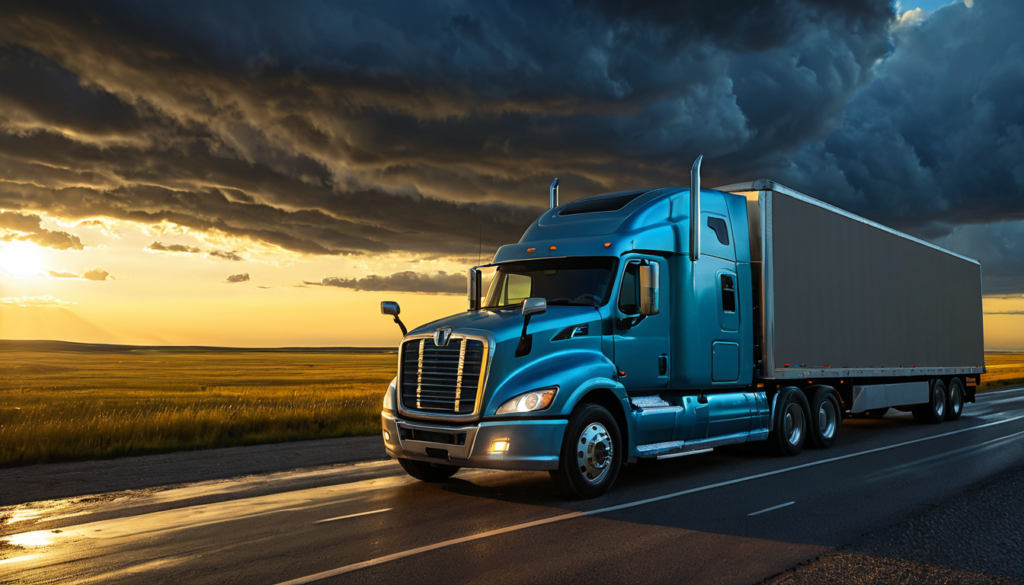
18-Wheeler Accident Attorneys in Morton County, North Dakota
When 80,000 Pounds Changes Everything on I-94
You were just driving west on I-94 toward Bismarck. Maybe you were heading home from work at one of the agricultural processing facilities. Maybe you were visiting the Fort Abraham Lincoln State Park. Suddenly, an 18-wheeler jackknifed across the interstate. The impact shattered your windshield—and your life.
If you’re reading this from a hospital bed in Bismarck or from your living room in Mandan, still shaking from a near-miss with a semi-truck on Highway 1804, you need to know something critical: the trucking company already has lawyers working to protect them. While you’re figuring out how to pay for medical care, their rapid-response team is at the scene, gathering evidence to minimize your claim.
At Attorney911, we don’t think that’s fair. Ralph Manginello has spent over 25 years fighting for trucking accident victims across the United States, including right here in Morton County, North Dakota. We’ve gone up against Fortune 500 companies like BP in the Texas City explosion litigation. We’ve recovered multi-million dollar settlements for traumatic brain injuries, spinal cord damage, and wrongful death cases. And we know exactly how trucking companies try to hide evidence—because our associate attorney Lupe Peña used to work for them.
Call 1-888-ATTY-911 right now. The clock is ticking. That truck’s black box data could be overwritten in 30 days. We send spoliation letters within 24 hours to freeze that evidence before it disappears.
Why Morton County 18-Wheeler Accidents Are Different
Morton County isn’t just any county. Located at the crossroads of I-94 and I-29, with Highway 1804 running along the Missouri River, this area sees massive commercial truck traffic. The mix of interstate commerce, agricultural haulers moving wheat and soybeans from the surrounding fields, and oil field trucks serving the Bakken formation creates a perfect storm for catastrophic accidents.
Winter is brutal here. When temperatures drop to -20°F and black ice covers the interstate, a fully loaded 80,000-pound truck needs the length of two football fields to stop. That physical reality doesn’t change just because a trucker is running behind schedule or pushing through fatigue to make a delivery deadline.
The physics are unforgiving: your 4,000-pound sedan versus an 80,000-pound commercial truck. That’s not a collision—that’s a demolition. And when these accidents happen on the rural stretches of I-94 between Mandan and Richardton, or on the busy approaches to the Bismarck Airport, emergency response times can mean the difference between life and death.
Ralph Manginello understands these dynamics. With 25+ years of experience handling complex litigation—including federal court cases in the Southern District of Texas—he brings sophisticated legal strategies to Morton County residents who’ve been devastated by negligent trucking companies.
Federal Safety Rules That Truckers Break Every Day
Every 18-wheeler on Morton County roads must comply with Federal Motor Carrier Safety Administration (FMCSA) regulations codified in Title 49 of the Code of Federal Regulations. When drivers and trucking companies violate these rules, they create the dangerous conditions that cause catastrophic crashes.
Hours of Service Violations (49 CFR Part 395)
Federal law limits property-carrying drivers to:
- 11 hours maximum driving time after 10 consecutive hours off duty
- 14-hour duty window—cannot drive beyond the 14th consecutive hour after coming on duty
- 30-minute break required after 8 cumulative hours of driving
- 60/70 hour limits—no driving after 60 hours in 7 days or 70 hours in 8 days
In North Dakota’s oil patch and agricultural sectors, pressure to deliver often pushes drivers beyond these limits. Fatigue causes approximately 31% of fatal truck crashes. When we subpoena Electronic Logging Device (ELD) data—the federally mandated digital records that replaced paper logbooks in 2017—we often find drivers who’ve been pushing past legal limits, sometimes with their trucking company’s full knowledge.
Lupe Peña, our associate attorney who previously worked in insurance defense, knows exactly how carriers manipulate these records. “The trucking companies I used to defend had systems for hiding HOS violations,” he explains. “Now I use that insider knowledge to expose them.”
Driver Qualification Standards (49 CFR Part 391)
Before a driver can legally operate a commercial motor vehicle, the trucking company must verify:
- Valid Commercial Driver’s License (CDL)
- Medical examiner’s certificate (renewed every 24 months maximum)
- Clean driving record check
- Previous employer verification for the past 3 years
- Pre-employment drug testing
Too often, Morton County accident victims discover the driver who hit them shouldn’t have been behind the wheel at all. Maybe their medical certification expired. Maybe they failed a previous employer’s safety review. When trucking companies skip these checks to fill seats during harvest season or oil booms, they’re guilty of negligent hiring—and we hold them accountable.
Vehicle Maintenance Requirements (49 CFR Part 396)
Every truck must undergo systematic inspection, repair, and maintenance. Drivers must conduct pre-trip inspections covering:
- Service brakes and parking brake
- Steering mechanism
- Lighting devices and reflectors
- Tires (minimum 4/32″ tread on steer tires, 2/32″ on others)
- Horn, windshield wipers, mirrors
- Coupling devices
Brake problems contribute to approximately 29% of large truck crashes. In North Dakota’s harsh winters, where brake lines can freeze and tire pressure drops dangerously, these inspections aren’t just paperwork—they’re matters of life and death.
We subpoena maintenance records in every case. When we find deferred repairs or “pencil-whipped” inspection reports (where drivers sign off without actually checking), we use those violations to prove negligence.
The 48-Hour Evidence Preservation Crisis
Here’s what the trucking company doesn’t want you to know: critical evidence starts disappearing immediately after a crash.
Black box data (Electronic Control Module/ECM) records speed, braking, throttle position, and fault codes. This objective data often contradicts what the driver claims happened. But it can be overwritten within 30 days—or sooner if the truck returns to service.
ELD logs prove whether the driver violated hours of service regulations. FMCSA only requires carriers to keep these for 6 months, and some systems overwrite data every 90 days.
Dashcam footage—if the truck had cameras—often gets deleted within 7-14 days unless preserved.
Witness memories fade faster than you think, especially in complex multi-vehicle accidents on busy stretches of I-29.
That’s why we send spoliation letters within 24-48 hours of being retained. These legal notices put the trucking company on notice that destroying evidence constitutes spoliation—a serious legal violation that can result in court sanctions, adverse jury instructions, or even default judgment.
As client Chad Harris told us after we handled his case: “You are NOT a pest to them and you are NOT just some client… You are FAMILY to them.” That means we move fast to protect you. While you’re focusing on healing, we’re deploying accident reconstruction experts to the scene in Morton County, downloading ECM data, and preserving the physical evidence before the trucking company can “lose” it.
Types of Catastrophic Truck Accidents We Handle
Jackknife Accidents on I-94
When a truck’s cab and trailer fold at an angle—like a pocket knife—the trailer often sweeps across all lanes of traffic. These accidents frequently occur on curves or in winter conditions when sudden braking causes the trailer to swing out.
In Morton County, where I-94 winds through the prairie and winter storms create sudden whiteout conditions, jackknife accidents are particularly dangerous. We investigate whether the driver was speeding for conditions, whether the cargo was properly secured, and whether the brakes were properly maintained per 49 CFR § 393.40-55.
Underride Collisions: The Most Deadly
When a passenger vehicle slides under the trailer of an 18-wheeler, the roof of the car is often sheared off at windshield level. Federal law (49 CFR § 393.86) mandates rear impact guards on trailers manufactured after January 26, 1998, but many trucks on rural North Dakota routes have inadequate guards or none at all. Side underride guards aren’t federally required yet, though they’re proven to save lives.
These accidents are almost always fatal or cause catastrophic head and spinal injuries. When we handle underride cases, we examine the guard’s compliance with federal standards, the driver’s failure to signal or check surroundings, and the trucking company’s maintenance records.
Rollovers on Rural Highways
Morton County’s agricultural economy means trucks hauling grain, soybeans, and oil equipment often travel Highway 1804 and rural county roads. When these trucks take curves too fast—especially with top-heavy loads or liquid cargo that “sloshes” and shifts the center of gravity—rollovers occur.
The FMCSA’s cargo securement rules (49 CFR § 393.100-136) require that cargo withstand 0.8g deceleration forces. When loaders fail to properly secure freight, or when trucking companies overload vehicles beyond safe capacity, they create deadly rollover risks.
Winter Weather Crashes
North Dakota winters are unforgiving. Black ice on the Memorial Bridge across the Missouri River, blowing snow reducing visibility to zero on I-94, and whiteout conditions near Flasher can trigger multi-vehicle pileups involving multiple 18-wheelers.
Trucking companies have a legal duty under 49 CFR § 392.14 to exercise extreme caution in hazardous conditions. When drivers refuse to pull over during blizzard warnings, or when companies pressure them to maintain schedules despite weather advisories, they put lives at risk. We use weather data, dispatch records, and driver communications to prove that economic pressure overrode safety.
Tire Blowouts and Brake Failures
Extreme temperature fluctuations in North Dakota—summer heat topping 95°F and winter plunges to -20°F—cause accelerated tire wear and brake system stress. When trucking companies defer maintenance to save money, tire blowouts and brake failures result.
A steer tire blowout can cause immediate loss of control. A total brake failure on the steep approaches to the Missouri River valley can lead to runaway trucks. We examine maintenance logs, parts invoices, and inspection reports to prove when companies knew about—and ignored—dangerous conditions.
Every Party Who Might Owe You Money
Unlike car accidents where usually only one driver is at fault, 18-wheeler crashes often involve multiple liable parties. We investigate every possible defendant because more defendants means more insurance coverage means better recovery for you.
The Truck Driver
Direct negligence includes speeding, distracted driving (cell phone use violates 49 CFR § 392.82), driving under the influence (49 CFR § 392.5 prohibits alcohol within 4 hours of duty), or fatigue (49 CFR § 392.3 prohibits driving while ability is impaired).
The Trucking Company (Motor Carrier)
Under the doctrine of respondeat superior, employers are liable for employees’ negligent acts within the scope of employment. Plus, trucking companies face direct liability for:
- Negligent hiring: Failing to check the driver’s background or hiring someone with a history of violations
- Negligent training: Inadequate safety instruction on winter driving or cargo securement
- Negligent supervision: Ignoring ELD violations or driver complaints
- Negligent maintenance: Failing to repair known defects
In North Dakota’s oil patch, some “gypsy” carriers operate with minimal safety standards. We dig deep into corporate records to find parent companies, shell entities, and affiliated operations that might carry additional insurance.
Cargo Owners and Loaders
The company that loaded the grain at the Morton County elevator or the machinery at the Bismarck terminal may have improperly secured the load. Under 49 CFR § 393, cargo must be secured to withstand specific force thresholds. When loaders use inadequate tiedowns or fail to account for North Dakota’s high winds, they share liability.
Maintenance Companies
Third-party mechanics who failed to properly service brakes, replace worn tires, or repair steering mechanisms can be held liable for negligent repairs.
Truck and Parts Manufacturers
Defective braking systems, faulty tires, or inadequate underride guards can trigger product liability claims against manufacturers.
Freight Brokers
Companies that arrange shipping but don’t own trucks may be liable for negligent selection—choosing carriers with poor safety records to save money.
Catastrophic Injuries and Their Lifetime Costs
The 20-to-1 weight advantage 18-wheelers have over passenger vehicles means injuries aren’t “minor”—they’re catastrophic, life-altering, or fatal.
Traumatic Brain Injury (TBI)
The extreme G-forces in truck crashes cause the brain to impact the inside of the skull. Symptoms range from headaches and confusion to permanent cognitive impairment, personality changes, and loss of motor function.
Settlement Range: $1,548,000 to $9,838,000+ (based on our firm’s documented results)
Lifetime care costs for severe TBI can exceed $3,000,000. But it’s not just the money—it’s the loss of who you were. As we tell our Morton County clients: we can’t undo the injury, but we can secure the resources for the best possible recovery.
Spinal Cord Injury and Paralysis
Damage to the spinal cord can result in paraplegia (loss of function below the waist) or quadriplegia (loss of function in all four limbs). North Dakota’s rural nature makes spinal cord injuries particularly challenging—access to specialized care requires travel to Bismarck or out-of-state facilities.
Settlement Range: $4,770,000 to $25,880,000+
Amputation
Crushing injuries from underride accidents or rollovers sometimes require surgical amputation. The cost of prosthetic limbs ($5,000-$50,000 each), replacement every few years, physical therapy, and home modifications can total millions over a lifetime.
Settlement Range: $1,945,000 to $8,630,000
Severe Burns
When fuel tanks rupture or hazmat cargo ignites—particularly relevant given North Dakota’s oil industry—burn injuries result. Third and fourth-degree burns require skin grafts, multiple surgeries, and leave permanent scarring.
Wrongful Death
When a trucking accident takes a loved one, North Dakota law allows surviving family members to pursue wrongful death claims. You have only 2 years from the date of death to file (compared to 6 years for personal injury), so time is critical.
Settlement Range: $1,910,000 to $9,520,000+
Damages include lost future income, loss of consortium (companionship and guidance), mental anguish, funeral expenses, and in cases of gross negligence, punitive damages.
North Dakota Law: What Makes Your Case Unique
The Six-Year Rule (Longest in America)
North Dakota has one of the most plaintiff-friendly statutes of limitations in the country: 6 years for personal injury claims (N.D.C.C. § 28-01-16). Most states give you only 2 years. This longer timeframe reflects the rural nature of the state and the recognition that injuries from agricultural and oil field accidents may take time to fully manifest.
However, don’t wait. Evidence disappears fast. While you technically have 6 years to file, you have only weeks to preserve critical black box data and witness testimony.
For wrongful death claims, the limit is 2 years from the date of death.
Modified Comparative Fault (50% Bar Rule)
North Dakota follows a modified comparative negligence rule. You can recover damages as long as you are less than 50% at fault. If you’re 49% responsible, you recover 51% of your damages. If you’re 50% or more at fault, you recover nothing.
Trucking companies and their insurers love to blame victims. “You were driving too fast for winter conditions” or “You were in the truck’s blind spot.” We fight these allegations with ECM data, accident reconstruction, and our own expert testimony.
Damage Caps and Punitive Damages
Unlike some states, North Dakota does not cap non-economic damages (pain and suffering) in general personal injury cases. However, punitive damages—awarded to punish gross negligence—are capped at the greater of:
- Two times the amount of compensatory damages, OR
- $250,000
This means if a jury awards $1 million in compensatory damages, the maximum punitive award would be $2 million. But given North Dakota’s conservative jury pools, punitive damages are rare and reserved for the most egregious misconduct—like knowingly putting a dangerous driver on the road or destroying evidence.
Oil Field and Agricultural Exceptions
North Dakota’s economy relies heavily on oil and agriculture. Trucks serving these industries often operate under different regulatory frameworks. Oil field trucks may be exempt from certain hours of service regulations during certain phases of drilling (the “oil well site” exception under 49 CFR § 390.23), but they still must operate safely.
Agricultural operations during planting and harvest seasons also have modified regulations, but they don’t get a free pass to drive negligently. When a grain truck overloaded with wheat from a Morton County farm causes a rollover on Highway 6, we investigate loading practices, weight limits, and whether the driver was properly licensed for commercial hauling.
Insurance Coverage: Why Trucking Cases Are Different
Federal law mandates that commercial carriers carry minimum liability insurance far exceeding typical auto policies:
| Cargo Type | Federal Minimum Coverage |
|---|---|
| General freight (non-hazmat) | $750,000 |
| Oil/petroleum products | $1,000,000 |
| Hazardous materials | $5,000,000 |
Many carriers carry $1-5 million in coverage, with excess policies providing additional layers. When we handle your Morton County trucking accident, we identify every applicable policy:
- The motor carrier’s primary liability policy
- The truck owner’s policy (if different from the carrier)
- Trailer interchange coverage
- Cargo insurance (sometimes accessible for hazardous spills)
- Umbrella/excess coverage
- Your own Underinsured Motorist (UIM) coverage
Our settlement ranges reflect this higher coverage availability. We’ve recovered multi-million dollar settlements because we know how to access these deep pockets, not just settle for the initial lowball offer.
As client Donald Wilcox told us: “One company said they would not accept my case. Then I got a call from Manginello… I got a call to come pick up this handsome check.” We take the cases other firms reject because we have the resources to fight.
Frequently Asked Questions for Morton County Truck Accident Victims
How soon should I contact an attorney after a trucking accident in Mandan or Bismarck?
Immediately—within 24-48 hours. The trucking company has already dispatched its rapid-response team. We need to send spoliation letters to preserve black box data, ELD logs, and driver qualification files before they’re legally destroyed or overwritten.
What if the truck driver claims I was at fault because of winter weather?
North Dakota’s modified comparative negligence rule allows you to recover as long as you’re less than 50% at fault. We use ECM data to prove the trucker’s speed, weather radar to document conditions, and expert testimony to show proper winter driving protocols. Don’t assume you’re at fault just because it was snowing.
Who pays my medical bills while we wait for settlement?
We work with medical providers who accept Letters of Protection (LOP)—they treat you now and get paid from the settlement later. We also help you navigate your own health insurance and MedPay coverage. You shouldn’t have to choose between bankruptcy and medical care.
Can I sue if the truck driver was an independent owner-operator rather than an employee?
Yes. Even if the driver owns the truck, the motor carrier they were hauling for may still be vicariously liable. Plus, the driver’s independent insurance policy and your own UIM coverage provide additional recovery sources.
What if the trucking company is from out of state?
That’s common—many trucks passing through Morton County on I-94 are based in Minnesota, Montana, or further away. Ralph Manginello is admitted to federal court (Southern District of Texas) and can handle interstate litigation. We routinely sue out-of-state carriers in North Dakota federal court or coordinate with counsel in other jurisdictions.
How much is my case worth?
It depends on injury severity, medical costs, lost wages, and available insurance. But trucking cases typically settle for significantly more than car accidents because of the higher insurance minimums and catastrophic nature of injuries. We’ve secured settlements ranging from hundreds of thousands to millions.
What if I don’t have health insurance?
We work with a network of attorney-approved doctors who treat on lien. You get the care you need now; they get paid when we win your case. Lack of insurance should never prevent you from getting treatment after a trucking accident.
How long will my case take?
Simple cases with clear liability might settle in 6-12 months. Complex catastrophic injury cases requiring litigation often take 18-36 months. We work to resolve cases as quickly as possible while maximizing value. We prepare every case as if it’s going to trial—which often forces better settlement offers.
Will I have to go to trial?
Probably not—about 95% of cases settle before trial. But we prepare every case for trial because insurance companies offer better settlements when they know your lawyer is willing to go to court. With 25+ years of experience and federal court admission, Ralph Manginello has the courtroom credibility to pressure settlements.
What if the trucking company offers a quick settlement?
Don’t accept it. Quick offers are “nuisance value” designed to make you go away before you understand the full extent of your injuries. Once you accept, you waive all future claims. We’ve seen victims accept $25,000 only to discover they needed $250,000 in future surgery. Call us before you sign anything.
Do you handle cases where the truck was hauling oil or hazardous materials?
Absolutely. Given North Dakota’s oil industry, we have experience with tanker rollovers, hazmat spills, and fires. These cases often involve the $5 million insurance minimum and complex regulatory issues under 49 CFR Part 397.
Can you help if my loved one died in a trucking accident?
Yes. We handle wrongful death claims with compassion and determination. You have 2 years to file, but evidence preservation is urgent. We’ll pursue compensation for lost income, loss of consortium, mental anguish, and funeral expenses.
What if I was partially at fault?
As long as you’re less than 50% at fault under North Dakota law, you can recover reduced damages. If you’re awarded $500,000 but found 20% at fault, you recover $400,000. Comparative fault accusations are common defense tactics—we fight them with evidence.
How do I know if the trucking company violated federal regulations?
You don’t—that’s our job. We subpoena Driver Qualification Files, ELD data, maintenance records, and drug test results. We look for patterns: Has this driver been cited for HOS violations before? Does this carrier have a history of brake problems? We dig deep.
What is a “nuclear verdict” and could my case get one?
“Nuclear verdicts” are those exceeding $10 million. They’re rare but happen when trucking companies show gross negligence—like hiring a driver with a suspended CDL or falsifying maintenance records. North Dakota juries are conservative, but we’ve seen significant awards when the misconduct is egregious.
Do you speak Spanish?
Sí. Hablamos Español. Lupe Peña is fluent in Spanish and provides direct representation without interpreters. Many agricultural workers in Morton County speak Spanish as their primary language, and we ensure nothing gets lost in translation. Llame al 1-888-ATTY-911 para una consulta gratis.
What makes Attorney911 different from other firms?
Three things: First, Ralph Manginello’s 25+ years of experience including BP Texas City explosion litigation and federal court admission. Second, Lupe Peña’s insider knowledge from working insurance defense—he knows their playbook. Third, we treat you like family, not a case number. As client Glenda Walker said: “They fought for me to get every dime I deserved.”
Your Fight Starts Now
The trucking company has lawyers. They have investigators. They have insurance adjusters trained to minimize your suffering. What do you have?
You have Attorney911. You have Ralph Manginello’s 25 years of courtroom experience. You have Lupe Peña’s insider knowledge of insurance defense tactics. You have a team that secured a $5 million settlement for a brain injury victim, a $3.8 million settlement for an amputation case, and a $2.5 million trucking crash recovery.
You have a team that answers the phone at 1-888-ATTY-911—24 hours a day, 7 days a week.
You have a team that will send a preservation letter today, before that black box data disappears forever.
You have a team that knows I-94, I-29, and the rural roads of Morton County. We know the difference between a Bismarck jury and a rural Morton County jury. We know North Dakota’s 6-year statute of limitations gives us time, but evidence preservation gives us only days.
Don’t let the trucking company push you around. Don’t accept their first lowball offer. Don’t sign away your rights while you’re still in pain.
Call 1-888-ATTY-911 now. The consultation is free. We work on contingency—you pay nothing unless we win. And we win.
Hablamos Español. Llame ahora al 1-888-288-9911.
Attorney911 — Because trucking companies shouldn’t get away with it.