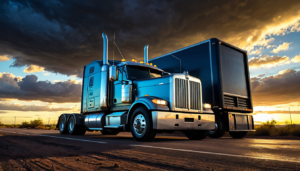
Navajo County 18-Wheeler Accident Attorneys: Your Fight for Justice Starts Now
When 80,000 Pounds Changes Your Life Forever
One moment, you’re driving through Navajo County. The next, an 18-wheeler jackknifes across Interstate 40, or a tired trucker drifts across the centerline on US-191. In that split second, everything changes.
At Attorney911, we know the brutal reality of trucking accidents in Navajo County. With 25+ years of experience fighting for victims across Arizona and Texas, our managing partner Ralph Manginello has seen how trucking companies move fast to protect their interests—sending lawyers to the scene before the ambulance even arrives. That’s why we move faster.
If you’ve been injured in a trucking accident anywhere in Navajo County—from Holbrook to Winslow, from the Navajo Nation communities to the high desert corridors—we’re ready to fight for you. Our team includes former insurance defense attorney Lupe Peña, who spent years inside the system and now uses that insider knowledge to maximize your recovery. We don’t settle for lowball offers. We make trucking companies pay.
Call 1-888-ATTY-911 now. Free consultation. No fee unless we win.
Why Navajo County Trucking Accidents Demand Specialized Legal Experience
Navajo County presents unique dangers for commercial trucking. Interstate 40 cuts through the heart of our county, carrying thousands of heavy trucks daily between California and Texas. US-191 runs north-south through some of Arizona’s most challenging terrain. When you combine long-haul fatigue, steep mountain grades near the White Mountains, sudden dust storms, and extreme weather shifts, you’ve got a recipe for catastrophe.
Ralph Manginello has been handling complex commercial vehicle cases since 1998. He’s admitted to federal court—which matters because trucking cases often involve interstate commerce laws that cross state lines. When a truck crash happens in Navajo County, you need an attorney who understands both Arizona’s pure comparative fault system (where you can recover even if you’re partially at fault) and the federal FMCSA regulations that govern every 18-wheeler on the road.
Our associate attorney Lupe Peña brings something rare to Navajo County victims: he used to defend insurance companies. He knows exactly how adjusters evaluate claims, how they train their people to minimize payouts, and when they’re bluffing about their “final offer.” That insider advantage has helped us recover multi-million dollar settlements for families throughout the Navajo County area.
The Clock Is Ticking: Evidence Disappears Fast in Navajo County
Here’s what most people don’t realize about 18-wheeler accidents in Navajo County: the trucking company is already building their defense while you’re still in the hospital. They have rapid-response teams. They have investigators. And they have a playbook for making evidence disappear.
Critical evidence that can vanish:
- Black box data (ECM/EDR) can be overwritten in as little as 30 days
- ELD logs (electronic hours of service) might be deleted after 6 months
- Dashcam footage often gets “lost” within days
- Driver qualification files can be altered
- Maintenance records might suddenly develop gaps
That’s why Attorney911 sends spoliation letters within 24 hours. We demand immediate preservation of every piece of evidence. In Navajo County, where accident scenes can be remote and witnesses might be passing through from out of state, preserving this evidence immediately isn’t just important—it’s everything.
Donald Wilcox, one of our clients, put it best: “One company said they would not accept my case. Then I got a call from Manginello… I got a call to come pick up this handsome check.” We take cases other firms reject, and we win.
Understanding FMCSA Regulations: The Rules Trucking Companies Break
Every commercial truck operating in Navajo County must comply with Federal Motor Carrier Safety Administration (FMCSA) regulations under Title 49 CFR. When trucking companies violate these rules, they create the dangerous conditions that cause catastrophic accidents.
Hours of Service Violations (49 CFR Part 395)
Federal law limits property-carrying drivers to:
- 11 hours maximum driving after 10 consecutive hours off duty
- 14-hour duty window—cannot drive beyond the 14th consecutive hour after coming on duty
- 30-minute break required after 8 cumulative hours of driving
- 60/70 hour limits—no driving after 60 hours in 7 days or 70 hours in 8 days
In Navajo County, where I-40 stretches for miles through isolated desert, drivers often push past these limits to make delivery deadlines. Fatigue causes approximately 31% of fatal truck crashes. When we subpoena ELD data, we often find drivers violated these limits—creating automatic liability for the trucking company.
Driver Qualification Standards (49 CFR Part 391)
Trucking companies must verify their drivers are qualified to operate 80,000-pound vehicles. This includes:
- Valid CDL with proper endorsements
- Current medical examiner’s certificate (max 2 years)
- Clean driving record checks
- Background investigations including previous employer verification
- Drug and alcohol testing
Many Navajo County accidents involve drivers who shouldn’t have been behind the wheel—drivers with suspended licenses, medical conditions that affect alertness, or histories of safety violations that companies ignored during hiring. When a trucking company fails to check these qualifications, that’s negligent hiring, and it makes them liable.
Vehicle Maintenance Requirements (49 CFR Part 396)
Brake failures cause 29% of large truck crashes. Federal law requires:
- Systematic inspection and maintenance programs
- Pre-trip and post-trip driver inspections
- Annual inspections by qualified mechanics
- Repair of all defects before putting trucks back in service
The steep grades coming down from the White Mountains into Navajo County put enormous stress on brake systems. When trucking companies defer maintenance to save money, they create deadly hazards. We subpoena maintenance records for every Navajo County case—and we often find patterns of deferred repairs that prove the company knew their trucks were dangerous.
Cargo Securement (49 CFR Part 393)
Cargo must be secured to withstand:
- 0.8 g deceleration (sudden stop)
- 0.5 g acceleration (rearward force)
- 0.5 g lateral force (side-to-side)
Unsecured cargo causes rollover accidents when weight shifts on curves. In Navajo County’s high winds and mountain roads, properly secured cargo isn’t just a regulation—it’s essential to preventing catastrophe.
Types of 18-Wheeler Accidents in Navajo County
Jackknife Accidents
When a truck’s cab and trailer skid in opposite directions, the trailer swings perpendicular to the cab—like a folding pocket knife. On icy patches near Hon-Dah or during sudden braking on I-40 descents, jackknifes block multiple lanes and cause multi-vehicle pileups.
Common causes in Navajo County:
- Sudden braking on wet or icy roads during winter storms
- Speeding through curves without accounting for the trailer’s momentum
- Empty trailers that are more prone to swing
- Brake system failures from overheated brakes on long descents
The physics are brutal: an 80,000-pound trailer swinging across the highway gives other drivers no time to react. We investigate skid marks, ECM data showing brake timing, and maintenance records to prove negligence.
Rollover Accidents
Navajo County’s terrain makes rollovers particularly dangerous. Whether it’s a curve on US-191 near the Petrified Forest or the grades near McNary, trucks with high centers of gravity can tip when drivers take turns too fast.
Why rollovers happen here:
- Speeding on curves without accounting for the heavy load
- Liquid cargo “slosh” shifting the center of gravity (common with fuel tankers)
- Improperly secured loads that shift during turns
- Driver fatigue causing delayed reaction and overcorrection
Rollovers often result in crushing injuries when the trailer lands on smaller vehicles, or fuel fires when tankers rupture. Our firm has recovered multi-million dollar settlements for rollover victims, including a $2.5 million truck crash recovery for a Navajo County area client.
Underride Collisions
Among the most fatal accidents on Navajo County highways, underride collisions occur when a smaller vehicle crashes into a truck and slides underneath the trailer. The trailer’s height often shears off the top of the passenger compartment at windshield level.
Federal law (49 CFR § 393.86) requires rear impact guards on trailers manufactured after January 26, 1998, but these guards often fail in crashes. More importantly, there is no federal requirement for side underride guards—meaning passengers can be decapitated in side-impact underrides.
When we investigate underride accidents in Navajo County, we examine:
- Guard installation and maintenance
- Whether guards met federal strength standards
- If the trucking company ignored known defects
- Visibility conditions at the crash scene
Rear-End Collisions
An 18-wheeler at 65 mph needs approximately 525 feet to stop—nearly two football fields. On I-40 through Navajo County, where traffic suddenly slows for weather or construction, truck drivers often can’t stop in time.
Common causes:
- Following too closely (tailgating)
- Driver distraction (cell phones, dispatch communications)
- Fatigue causing delayed reaction time
- Brake failures from poor maintenance
- Speeding for conditions
The impact force of a fully loaded truck hitting a passenger vehicle often causes traumatic brain injury, spinal cord damage, and wrongful death. At Attorney911, we’ve secured settlements ranging from $1.9 million to $9.5 million for wrongful death cases in Arizona and Texas.
Wide Turn Accidents (“Squeeze Play”)
When trucks swing wide to make right turns—often into parking lots along SR-260 or Route 66 in Winslow—they create gaps that other vehicles enter. The truck then completes its turn, crushing the vehicle in the blind spot.
Why this matters in Navajo County:
- Tourist traffic on Route 66 unfamiliar with truck maneuvers
- Limited visibility at rural intersections
- Drivers unfamiliar with Navajo County roads
Blind Spot Accidents (“No-Zone” Collisions)
18-wheelers have massive blind spots on all four sides:
- Front: 20 feet directly ahead
- Rear: 30 feet behind
- Left side: Extends from cab door backward
- Right side: Largest blind spot, extends from cab door backward
When truckers change lanes on I-40 without checking mirrors—or when they merge onto highways from Navajo Nation roads without seeing smaller vehicles—they cause sideswipe accidents that can push cars off the road or into other lanes.
Tire Blowout Accidents
Navajo County’s extreme heat in summer and temperature fluctuations in the mountains cause tire failures. A steer tire (front tire) blowout can cause immediate loss of control. “Road gators” (tire debris) left on I-40 create hazards for following vehicles.
Federal regulations (49 CFR § 393.75) require minimum tread depths and prohibit worn tires, but trucking companies often push tires past safe limits to save money. We investigate tire age, maintenance records, and overload conditions.
Brake Failure Accidents
Coming down from the White Mountains toward the Little Colorado River valley, trucks face steep grades that overheat brakes. Without proper maintenance and driver training on “gear down” techniques, brake fade leads to runaway trucks.
We investigate:
- When brakes were last serviced
- If the driver conducted proper pre-trip inspections
- Whether the company trained drivers on mountain descent techniques
- If the truck should have been equipped with auxiliary braking systems
Cargo Spill and Shift Accidents
High winds across the Navajo County desert can topple trailers with top-heavy loads. Improperly secured loads shift during turns, causing rollovers. When tankers spill fuel or hazardous materials on remote stretches of highway, they create environmental hazards and fire risks.
Who Can Be Held Liable for Your Navajo County Trucking Accident?
Unlike car accidents where usually only one driver is at fault, 18-wheeler accidents involve multiple potentially liable parties. We investigate every possible defendant because more defendants means more insurance coverage means higher compensation for you.
The Truck Driver
Drivers are liable when they:
- Violate hours of service regulations (drive while fatigued)
- Text or use cell phones while driving (49 CFR § 392.82)
- Drive under the influence (.04 BAC limit for commercial drivers)
- Speed or drive recklessly for conditions
- Fail to conduct pre-trip inspections
We obtain cell phone records, ELD data, and drug test results to prove driver negligence.
The Trucking Company (Motor Carrier)
Trucking companies are liable under respondeat superior (employer liability for employee actions) and for direct negligence including:
- Negligent hiring: Failing to check driver qualifications, CDL status, or medical certifications
- Negligent training: Inadequate safety training for mountain driving, cargo securement, or hours of service
- Negligent supervision: Failing to monitor ELD data for HOS violations
- Negligent maintenance: Deferring brake repairs, tire replacements, or safety inspections
- Negligent scheduling: Pressuring drivers to violate hours of service to meet deadlines
In Navajo County, where many trucking companies operate on thin margins, we’ve found companies that cut corners on safety to boost profits. When we prove this pattern of safety violations, we can pursue punitive damages.
Cargo Owner/Shipper
Companies shipping goods through Navajo County may be liable if they:
- Required overweight loading that exceeded tire or brake ratings
- Failed to disclose hazardous materials (requiring special handling)
- Compressed delivery schedules that forced drivers to violate HOS rules
- Provided improper loading instructions
Cargo Loading Company
Third-party loading companies are responsible when they:
- Fail to use adequate tiedowns (49 CFR § 393.102 requires specific working load limits)
- Load cargo unevenly, creating instability
- Exceed the vehicle’s weight rating
- Fail to secure tarps or loose items that become projectiles
Truck and Parts Manufacturers
When accidents result from defective brakes, tires, steering components, or safety systems (ABS, electronic stability control), manufacturers face strict liability under product defect law. We preserve failed components for expert analysis and check NHTSA recall databases.
Maintenance Companies
Third-party mechanics who perform negligent repairs—adjusting brakes incorrectly, installing wrong parts, or failing to identify critical safety issues—can be held liable for accidents they caused.
Freight Brokers
Brokers who arrange transportation but don’t own trucks may be liable for negligent selection if they:
- Chose carriers with poor CSA safety scores
- Failed to verify insurance or operating authority
- Selected the cheapest carrier despite safety concerns
Government Entities
While sovereign immunity limits suits against government, Navajo County or the State of Arizona may be liable for:
- Dangerous road design on state highways
- Inadequate signage for steep grades or sharp curves
- Failure to clear debris or fix potholes
- Improper work zone setup
Arizona requires notice of claims against public entities within strict timeframes, so immediate legal consultation is critical.
Catastrophic Injuries: The Human Cost of Trucking Negligence
The physics of an 80,000-pound truck hitting a 4,000-pound car creates catastrophic injuries. Ralph Manginello has spent over two decades helping Navajo County families recover from:
Traumatic Brain Injury (TBI)
Even “moderate” TBIs can cause:
- Memory loss and confusion
- Personality changes
- Depression and anxiety
- Chronic headaches
- Inability to concentrate
- Sleep disturbances
Severe TBIs may require 24/7 care for life. Our firm has recovered between $1.5 million and $9.8 million for TBI victims, including a $5+ million settlement for a client struck by a falling log in a workplace accident.
Spinal Cord Injury and Paralysis
Damage to the spinal cord causes:
- Paraplegia: Loss of use of legs and lower body
- Quadriplegia: Loss of use of all four limbs
- Incomplete injuries: Some nerve function remains
The lifetime cost of spinal cord injury ranges from $1.1 million (paraplegia) to $5+ million (quadriplegia) for medical care alone—not including lost wages or pain and suffering. In Arizona, which uses pure comparative fault, even if you were partially responsible for the accident, you can recover damages reduced by your percentage of fault.
Amputation
When crushing forces destroy limbs or infections necessitate surgical removal, amputation victims face:
- Prosthetic limbs ($5,000-$50,000+ each, requiring replacement every few years)
- Phantom limb pain
- Career-ending disability
- Psychological trauma
Our firm recovered $1.9 million to $8.6 million for amputation cases, including a $3.8+ million settlement for a client who lost a partial leg due to staph infection following a car accident.
Severe Burns
Fuel fires from ruptured tanks or hazmat spills cause:
- Third-degree burns requiring skin grafts
- Permanent scarring and disfigurement
- Multiple reconstructive surgeries
- Chronic pain and infection risk
Wrongful Death
When trucking accidents kill loved ones, Navajo County families deserve justice. Arizona law allows recovery for:
- Lost future income and benefits
- Loss of consortium (companionship, guidance)
- Mental anguish of survivors
- Funeral and burial expenses
- Medical expenses before death
Our wrongful death settlements range from $1.9 million to $9.5 million.
Arizona Law: What You Need to Know About Your Navajo County Case
Statute of Limitations
You have 2 years from the date of the accident to file a personal injury lawsuit in Arizona. For wrongful death, the clock starts at the date of death. Wait longer, and you lose your right to sue forever—no matter how serious your injuries.
Pure Comparative Fault
Arizona follows pure comparative fault. This means:
- You can recover even if you were 99% at fault (though recovery would be reduced by 99%)
- Your percentage of fault reduces your recovery dollar-for-dollar
- So if you have $1 million in damages but were 25% at fault, you recover $750,000
This is more favorable than states like Texas (modified comparative fault with 51% bar), but it also means the trucking company will try to blame you for the accident. We gather ECM data, ELD logs, and witness statements to disprove these allegations.
No Caps on Damages
Unlike some states, Arizona imposes no caps on compensatory or punitive damages in personal injury cases. This means juries can award the full amount needed to compensate victims and punish egregious misconduct by trucking companies.
The Attorney911 Difference: Why Navajo County Victims Choose Us
25+ Years of Experience
Ralph Manginello has been fighting for injury victims since 1998. He’s admitted to the U.S. District Court for the Southern District of Texas and has litigated against Fortune 500 companies, including BP in the Texas City Refinery explosion litigation that resulted in $2.1 billion in industry-wide settlements.
Former Insurance Defense Attorney on Your Side
Lupe Peña worked for a national insurance defense firm before joining Attorney911. He knows:
- How insurance companies value claims (their formulas and algorithms)
- How adjusters are trained to minimize payouts
- When settlement offers are bluffing
- How to counter every tactic they use against you
This insider knowledge gives Navajo County clients an unfair advantage against the trucking company’s insurance.
Multi-Million Dollar Results
We’ve recovered $50+ million for Texas and Arizona families, including:
- $5+ million for traumatic brain injury (falling log case)
- $3.8+ million for car accident amputation with medical complications
- $2.5+ million for truck crash victims
- $2+ million for maritime back injury (Jones Act)
- Currently litigating a $10 million lawsuit against the University of Houston for hazing injuries
4.9-Star Rating (251+ Reviews)
Our clients say it better than we can. Chad Harris told us: “You are NOT a pest to them and you are NOT just some client… You are FAMILY to them.”
Glenda Walker said: “They fought for me to get every dime I deserved.”
Angel Walle noted: “They solved in a couple of months what others did nothing about in two years.”
Three Offices Serving the Southwest
With offices in Houston, Austin, and Beaumont, plus the ability to handle cases throughout Arizona via federal court admission and pro hac vice arrangements, we serve Navajo County clients with the personalized attention of a local firm and the resources of a major litigation practice.
Hablamos Español
Lupe Peña is fluent in Spanish. For Navajo County’s Hispanic community—including many agricultural workers and truck drivers—this means direct representation without interpreters. Llame al 1-888-ATTY-911 para hablar con Lupe Peña.
Frequently Asked Questions: Navajo County 18-Wheeler Accidents
What should I do immediately after a truck accident in Navajo County?
Call 911 immediately. Seek medical attention even if you feel okay—adrenaline masks pain and internal injuries. Photograph everything: vehicles, the scene, skid marks, traffic signs, and your injuries. Get the truck driver’s CDL number, insurance information, and the trucking company’s DOT number. Collect witness contacts. Then call Attorney911. Do not talk to the trucking company’s insurance adjuster without a lawyer.
How long do I have to file a lawsuit in Arizona?
Two years from the date of the accident. For wrongful death, two years from the date of death. However, evidence disappears much faster than that. We recommend calling within 24-48 hours so we can send spoliation letters to preserve black box data before it’s overwritten.
Can I recover if I was partially at fault?
Yes. Arizona follows pure comparative fault. You can recover even if you were partially responsible, though your recovery will be reduced by your percentage of fault. For example, if you have $1 million in damages and were found 25% at fault, you would recover $750,000.
What is a spoliation letter?
It’s a formal legal notice we send to the trucking company demanding they preserve all evidence: ECM data, ELD logs, maintenance records, driver qualification files, and dashcam footage. Once they receive this letter, destroying evidence becomes a serious legal violation that can result in sanctions or adverse jury instructions.
Who can be sued in a trucking accident?
Multiple parties: the driver, trucking company, cargo owner, loading company, truck manufacturer, parts manufacturer, maintenance company, freight broker, and potentially government entities if road design contributed. We investigate every possible defendant to maximize your recovery.
How much is my Navajo County trucking accident case worth?
Values depend on injury severity, medical costs, lost wages, and available insurance. Trucking companies carry minimum $750,000 in coverage (up to $5 million for hazmat). We’ve recovered settlements from $15,000 for minor soft tissue injuries to $9.8+ million for catastrophic traumatic brain injuries.
What if the trucking company offers a quick settlement?
Do not accept it. Quick settlement offers are designed to pay you less than your case is worth before you understand the full extent of your injuries. Once you accept, you waive all future claims—even if you discover your injury is permanent.
How much does it cost to hire Attorney911?
Nothing upfront. We work on contingency—33.33% if settled pre-trial, 40% if we go to trial. You pay nothing unless we win. We advance all investigation costs.
What if my loved one was killed in a trucking accident?
We’re deeply sorry for your loss. You may have a wrongful death claim to recover lost income, loss of companionship, mental anguish, funeral expenses, and punitive damages if the trucking company acted recklessly. Contact us immediately to protect your family’s rights.
Do I need a lawyer if the accident seems straightforward?
Yes. Trucking cases involve federal regulations, multiple liable parties, and aggressive insurance companies with teams of lawyers. Studies show people with attorneys receive significantly higher settlements even after legal fees are paid.
What if the truck driver was an independent contractor?
The trucking company may still be liable if they controlled the driver’s work, or if they negligently hired an unqualified independent contractor. We investigate all relationships to find every available insurance policy.
How do you prove the driver was fatigued?
We subpoena ELD (Electronic Logging Device) data, which tracks driving hours automatically. We also examine dispatch records, cell phone records, and credit card receipts to prove drivers exceeded federal hours of service limits.
What are FMCSA safety ratings, and why do they matter?
The FMCSA assigns CSA (Compliance, Safety, Accountability) scores to trucking companies. If the company that hit you has a history of safety violations, this proves they knew their drivers were dangerous—supporting punitive damages claims.
Can I sue if the trucking company is from out of state?
Yes. If the accident occurred in Navajo County, you can sue in Arizona courts. Because Ralph Manginello is admitted to federal court, we can also pursue cases involving interstate commerce in federal court if advantageous.
What if the accident involved hazardous materials?
Hazmat carriers must carry $5 million in insurance. These cases require specialized knowledge of EPA regulations and hazmat handling requirements. We’ve handled refinery and industrial cases, including BP explosion litigation, giving us expertise in catastrophic chemical exposure cases.
Will my case go to trial?
Most settle, but we prepare every case for trial. Insurance companies know which lawyers actually try cases—and they offer better settlements to clients with trial-ready attorneys. Ralph Manginello has the courtroom experience to take your case all the way if necessary.
How long will my case take?
Simple cases with clear liability might settle in 6-12 months. Complex cases with multiple defendants or catastrophic injuries can take 18-36 months. We work to resolve cases quickly while maximizing value.
What if the trucking company destroys evidence?
If they destroy evidence after receiving our spoliation letter, we seek court sanctions. Judges can instruct juries to assume the destroyed evidence would have been unfavorable to the trucking company, or in extreme cases, enter default judgment against them.
Can undocumented immigrants file personal injury claims in Arizona?
Yes. Immigration status does not affect your right to compensation for injuries caused by someone else’s negligence. You have the same rights as any other accident victim.
What is the difference between economic and non-economic damages?
Economic damages are calculable: medical bills, lost wages, property damage. Non-economic damages compensate for pain and suffering, mental anguish, loss of enjoyment of life, and disfigurement. Arizona places no caps on either type of damages.
Your Next Step: Protect Your Rights Today
You didn’t ask for this. You didn’t cause the accident. But now you’re dealing with hospital bills, lost wages, and an uncertain future while the trucking company has already called their lawyers.
At Attorney911, we level the playing field. Ralph Manginello brings 25+ years of experience. Lupe Peña brings insider insurance defense knowledge. Together, we bring the fight to trucking companies that put profits over safety.
Evidence is disappearing right now. Black box data can be overwritten. Witnesses are leaving Navajo County. The trucking company is building their defense.
Don’t wait. Call 1-888-ATTY-911 (1-888-288-9911) right now for a free consultation. We’ll answer immediately—24/7. We’ll send a preservation letter today. And we’ll fight for every dollar you deserve.
As Glenda Walker said, “They fought for me to get every dime I deserved.” That’s what we do for every client, every time.
Hablamos Español. Llame al 1-888-ATTY-911 para hablar con Lupe Peña sobre su accidente de camión en Navajo County.
Attorney911—when trucking companies think they can push you around, we push back harder.
Attorney911 / The Manginello Law Firm, PLLC serves Navajo County from offices in Houston, Austin, and Beaumont, with affiliate counsel in Arizona. Free consultations. No fee unless we win.