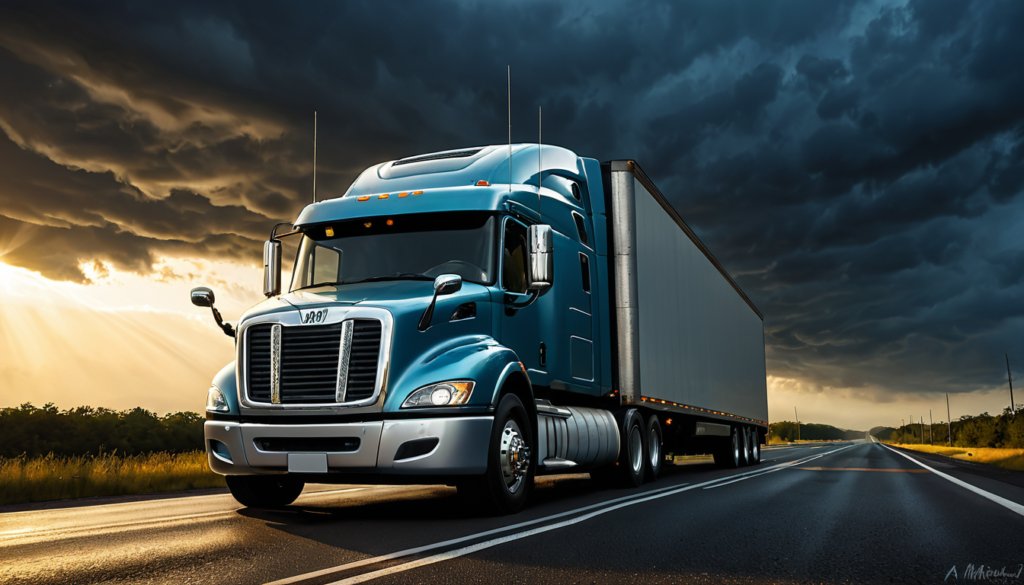
If you’ve been hit by an 18-wheeler on the New Jersey Turnpike, you already know the devastation. Eighty thousand pounds of steel against your sedan. In that instant, your life changed forever. But here’s what you might not know—the trucking company has already called their lawyers. Their insurance adjuster is already looking for ways to pay you less. And critical evidence is disappearing right now.
At Attorney911, we don’t let trucking companies get away with it. Ralph Manginello has spent over 25 years fighting for families across New Jersey, from the port corridors of Newark to the congested stretches of I-95. We’ve recovered multi-million dollar settlements for catastrophic injuries, and we know every tactic these companies use to avoid responsibility. When you’re facing medical bills, lost wages, and a future that looks nothing like your past, you need a team that treats you like family—not a case number.
Call 1-888-ATTY-911 now. The clock is ticking.
Why New Jersey 18-Wheeler Accidents Are Different
New Jersey isn’t just another state for trucking accidents—it’s a pressure cooker of risk. The Garden State hosts the Port of Newark-Elizabeth, the largest container port on the East Coast. When combined with the Port of New York, this facility handles millions of containers annually, creating a constant stream of tractor-trailers, tankers, and cargo trucks flooding onto I-95, the New Jersey Turnpike, and I-78.
This isn’t rural Texas or wide-open Arizona. New Jersey is the most densely populated state in America. That density creates unique dangers:
- The Exit 8A Warehouse District in Middlesex County serves as a massive distribution hub for Amazon, Target, and major retailers. Trucks making wide turns into these facilities createsqueeze-play accidents daily.
- I-95 and the New Jersey Turnpike rank among the most congested trucking corridors in the nation. When an 18-wheeler rear-ends a vehicle in stop-and-go traffic near the George Washington Bridge, the results are catastrophic.
- Winter nor’easters blanket the state in ice and snow. A truck driver from Georgia or Texas who’s unfamiliar with black ice on I-80 through the Delaware Water Gap can jackknife in seconds, blocking all lanes and causing multi-vehicle pileups.
- Chemical manufacturing in the northern counties means hazardous materials shipments traverse our highways daily. A hazmat spill on I-287 doesn’t just cause a crash—it evacuates entire neighborhoods.
We know these roads. We’ve litigated cases involving Walmart trucks on Route 17, Amazon delivery vehicles in Jersey City, and oil tankers on the Turnpike. When a trucking accident happens in New Jersey, local knowledge matters.
The Attorney911 Advantage: 25 Years of Fighting for Families
You can’t fight a trucking company with a general practice lawyer. You need specialists. At Attorney911, we’ve built our reputation on taking on the biggest carriers and winning.
Ralph Manginello, our Managing Partner, has been fighting for injury victims since 1998. That’s over 25 years of courtroom experience. He’s admitted to federal court in the Southern District of Texas, giving him the capability to handle interstate trucking cases that cross state lines. When you’re facing a carrier headquartered in Arkansas with insurance underwriters in New York, you need an attorney who can navigate federal jurisdiction.
But credentials on paper don’t matter as much as results. Here’s what we bring to your New Jersey trucking case:
We Used to Work for Them. Our associate attorney Lupe Peña spent years working at a national insurance defense firm. He knows exactly how trucking insurers evaluate claims, how they train adjusters to minimize payouts, and when they’re bluffing. Now he uses that insider knowledge against them. When Lupe reviews your case, he sees the same files the insurance company sees—and he knows what makes them nervous.
We’ve Gone Toe-to-Toe with Fortune 500 Companies. We weren’t intimidated by BP after the Texas City Refinery explosion killed 15 workers and injured 170 more. We’ve litigated against Walmart, Coca-Cola, Amazon, FedEx, and UPS. These companies have teams of lawyers. So do we.
We Speak Your Language. Lupe Peña is a third-generation Texan who grew up in Sugar Land, but he’s fluent in Spanish—native level. For New Jersey’s significant Hispanic community, this means direct representation without interpreters. Hablamos Español. Llame a Lupe Peña al 1-888-ATTY-911.
Family-First Treatment. Our clients aren’t case numbers. As Chad Harris told us after his settlement, “You are NOT just some client… You are FAMILY to them.” Donald Wilcox came to us after another firm rejected his case outright. We took it, fought for him, and he walked away with what he called “this handsome check.” Glenda Walker put it simply: “They fought for me to get every dime I deserved.”
Federal Safety Laws That Protect You (49 CFR)
Every 18-wheeler on New Jersey highways must comply with strict Federal Motor Carrier Safety Administration (FMCSA) regulations. When trucking companies break these rules, they cause accidents. When they cause accidents, we use these violations to prove negligence.
49 CFR Part 391—Driver Qualification Standards
Trucking companies can’t just hire anyone with a driver’s license. Under § 391.11, drivers must:
- Be at least 21 years old for interstate commerce
- Pass a medical exam every two years (§ 391.45)
- Hold a valid Commercial Driver’s License (CDL)
- Pass a road test or equivalent
Companies must maintain a Driver Qualification File containing employment history, driving records, and drug test results. If a New Jersey trucking company hired a driver with a history of DUIs or failed to verify medical certification, that’s negligent hiring—and it makes them liable for your injuries.
49 CFR Part 392—Driving of Commercial Motor Vehicles
This section governs actual operation. Key violations we see in New Jersey crashes:
- § 392.3: No driver shall operate while fatigued or ill. Given the pressure to move Port Newark cargo quickly, we often find drivers pushing beyond safe limits.
- § 392.4 & 392.5: Prohibition on drugs and alcohol. The .04 BAC limit for commercial drivers is half the standard for regular motorists.
- § 392.11: Following too closely. On congested I-95 near the Holland Tunnel, tailgating by 18-wheelers causes devastating rear-end collisions.
- § 392.82: No handheld mobile phone use while driving. We subpoena cell records to prove distraction.
49 CFR Part 393—Parts and Accessories Necessary for Safe Operation
This covers vehicle maintenance. § 393.40 requires working brakes on all wheels. § 393.75 mandates minimum tread depth (4/32″ on steer tires). § 393.100-136 governs cargo securement—critical for container trucks leaving Port Newark. When a load shifts on the Turnpike causing a rollover, we check if the trucking company violated these securement standards.
49 CFR Part 395—Hours of Service (HOS)
This is where we find the smoking gun in most fatigue cases:
- 11-hour driving limit after 10 consecutive hours off-duty
- 14-hour on-duty window maximum
- 30-minute break required after 8 cumulative hours driving
- 60/70 hour weekly limits (7 or 8 days) requiring a 34-hour restart
Since the ELD Mandate (§ 395.8) took effect in 2017, trucks must use Electronic Logging Devices that automatically record driving time. This data proves when drivers violate HOS rules—and we send spoliation letters within 24 hours to preserve it.
49 CFR Part 396—Inspection, Repair, and Maintenance
Under § 396.3, carriers must systematically inspect and maintain vehicles. Drivers must conduct pre-trip inspections (§ 396.13) and file post-trip reports (§ 396.11) noting any defects. When a truck’s brakes fail on the downhill slope of I-80 near Parsippany, we demand these maintenance records. Deferred maintenance to save money is negligence, pure and simple.
The 13 Ways 18-Wheelers Kill and Maim on New Jersey Roads
Not all trucking accidents are the same. In New Jersey’s unique environment—combining port traffic, dense urban centers, and severe winter weather—certain accident types predominate.
1. Jackknife Accidents
When a truck’s cab and trailer fold like a pocket knife, they often sweep across all lanes of the Turnpike. These happen when drivers brake improperly on wet pavement or take curves too fast—common on the tight ramps around Exit 8A. Empty trailers are especially prone to jackknifing because they lack weight to maintain traction.
2. Underride Collisions
The most fatal type of truck accident. When a passenger vehicle slides under a trailer, the roof gets sheared off at windshield level. Despite federal requirements for rear impact guards (49 CFR § 393.86), many trailers have inadequate protection. Side underride guards aren’t federally mandated at all—leaving you vulnerable when a truck changes lanes on I-95 without checking blind spots.
3. Rear-End Collisions
A fully loaded 18-wheeler needs 525 feet to stop from 65 mph—nearly two football fields. On congested New Jersey highways where traffic suddenly stops near the Lincoln Tunnel or George Washington Bridge, truckers following too closely (§ 392.11) cause catastrophic pileups. The impact force can crush a sedan to half its size.
4. Wide Turn Accidents (“Squeeze Play”)
Trucks swinging wide to make right turns into the warehouse districts near Exit 8A or Port Newark create deadly gaps. Passenger cars enter the space, then get crushed when the truck completes its turn. We see these monthly in industrial zones throughout Elizabeth and Edison.
5. Blind Spot (No-Zone) Accidents
18-wheelers have massive blind spots—20 feet in front, 30 feet behind, one lane to the left, and two lanes to the right. On the crowded New Jersey Turnpike where trucks weave between passenger vehicles, an unsignaled lane change sends cars spinning into guardrails or other vehicles.
6. Cargo Spills and Shifts
Port Newark handles everything from electronics to hazardous chemicals. When loaders violate § 393.100 by failing to properly secure containers, shifts occur on the curves of I-278 or I-287. A toppled container doesn’t just block traffic—it crushes anything in its path.
7. Brake Failure
Brake problems contribute to 29% of truck crashes. New Jersey’s steep grades—particularly on I-80 westbound and Route 78 through the Watchung Mountains—cause brake fade on poorly maintained rigs. When a truck can’t stop at the bottom of a hill in Summit or Clinton, the results are deadly.
8. Tire Blowouts
Summer heat on New Jersey’s asphalt reaches 130°F+, causing tire blowouts on long-haul trucks. When a steer tire blows at 70 mph on I-95, the driver loses control instantly. Road gators (tire debris) left on the roadway cause secondary accidents for hours.
9. Rollover Accidents
Tankers and top-heavy container trucks roll over on the curves of I-287 or the ramps connecting I-95 to the Turnpike. Speeding trucks taking these turns too fast—often pressured by delivery deadlines—create deadly barriers across entire highways.
10. Head-On Collisions
When fatigued drivers cross the center line on rural stretches of Route 206 or Route 31—often after violating HOS rules to reach Port Newark by dawn—they cause head-on impacts that are almost always fatal for passenger vehicle occupants.
11. T-Bone Intersection Accidents
Trucks running red lights in industrial areas like Linden or Bayonne—often rushing to beat dock deadlines—broadside passenger vehicles with crushing force.
12. Hazmat Spills
New Jersey’s chemical corridor means trucks transport chlorine, ammonia, and flammable materials daily. When these spill on I-95 or the Turnpike, they don’t just cause accidents—they create evacuation zones affecting thousands of residents.
13. Winter Weather Accidents
Nor’easters and ice storms hit New Jersey hard. A truck driver without proper training on black ice can jackknife on I-80 near Wayne or slide through an intersection on Routes 1&9, causing chain-reaction crashes involving dozens of vehicles.
Every Party Who Might Owe You Money
Most law firms only sue the driver. That’s a mistake. In New Jersey trucking accidents, multiple parties often share liability—and that means multiple insurance policies available to compensate you.
The Driver
Direct liability for speeding, distraction, fatigue, or impairment. We subpoena their cell phone records, ELD data, and driving history.
The Trucking Company (Motor Carrier)
Under respondeat superior, employers answer for employee negligence. Plus, we pursue direct negligence claims:
- Negligent Hiring: Did they check the driver’s CDL status and medical certification?
- Negligent Training: Did they train the driver on winter weather handling specific to New Jersey roads?
- Negligent Supervision: Did they monitor ELD violations?
- Negligent Maintenance: Did they defer brake repairs to save money?
The Cargo Owner/Shipper
If a manufacturer overloaded a container at Port Newark to save shipping costs—exceeding the truck’s weight rating—they’re liable for the rollover that followed.
The Loading Company
Third-party warehouses at Exit 8A or Port Newark that improperly secured loads under § 393.100 share fault when cargo shifts cause crashes.
The Truck/Parts Manufacturer
Defective brakes, defective tires, or faulty steering systems create products liability claims. We preserve failed components for expert analysis.
The Maintenance Company
If a third-party shop in Elizabeth or Jersey City performed negligent brake repairs or passed an unsafe truck on inspection, they’re liable for subsequent brake failure crashes.
The Freight Broker
Brokers arranging transportation from Port Newark to Chicago have a duty to select safe carriers. If they chose a carrier with terrible CSA safety scores to save a few bucks, they’re liable for negligent selection.
The Government
When the New Jersey Department of Transportation fails to repair dangerous potholes on I-95, install adequate signage for sharp curves, or properly design merge lanes on the Turnpike, they may share liability—though sovereign immunity limits require special handling.
The 48-Hour Evidence Emergency
Here’s the truth trucking companies hope you never learn: Critical evidence disappears within days.
- ECM/Black Box Data: Overwrites in 30 days or with new ignition cycles
- ELD Logs: Only required to be kept 6 months; can be deleted sooner
- Dashcam Footage: Often records over after 7-14 days
- Driver Qualification Files: If the driver quits, some companies “lose” these records
- Maintenance Records: Repair shops purge old work orders
- Surveillance Video: Local businesses near the crash site on Route 17 or Route 46 typically overwrite footage in 7-30 days
When you hire Attorney911, we send spoliation letters within 24 hours. This legal notice puts the trucking company on notice that destroying evidence will result in sanctions, adverse inference instructions (where the jury is told to assume destroyed evidence was bad for the trucker), or default judgment.
We immediately:
- Download ECM data showing speed, braking, and throttle position
- Preserve ELD records proving HOS violations
- Secure the Driver Qualification File before the driver “disappears”
- Photograph the truck before it’s repaired or sold
- Canvas for surveillance cameras near the crash scene
- Interview witnesses before memories fade
Every hour you wait, evidence vanishes. The trucking company isn’t waiting—they have rapid-response teams at the scene before the ambulance leaves.
Catastrophic Injuries and Real Settlement Values
Trucking accidents don’t cause fender-benders. They cause life-changing devastation. Based on our 25 years of experience, here are the settlement ranges for serious injuries:
Traumatic Brain Injury (TBI): $1.5 million to $9.8 million+
From concussions with lasting cognitive effects to severe TBI requiring 24/7 care. We recently recovered over $5 million for a TBI victim struck by a falling log—a case involving similar forces to a trucking collision.
Spinal Cord Injuries: $4.7 million to $25.8 million+
Paraplegia and quadriplegia require lifetime care, home modifications, and lost earning capacity. The lifetime cost of a spinal injury can exceed $5 million in medical care alone.
Amputation: $1.9 million to $8.6 million
We recovered $3.8 million for a client who suffered a partial leg amputation after a car accident led to medical complications. The cost of prosthetics, rehabilitation, and lost function drives these values up.
Severe Burns: Varies by coverage
When tankers carrying chemicals explode on the Turnpike, victims suffer third and fourth-degree burns requiring years of grafting surgery and rehabilitation.
Wrongful Death: $1.9 million to $9.5 million+
When a trucking accident takes a loved one, New Jersey families can recover lost income, loss of consortium, funeral expenses, and mental anguish. We fight for the full value of a life cut short.
Important note: New Jersey caps punitive damages at the greater of 5x compensatory damages or $350,000 (N.J.S.A. 2A:15-5.14). However, economic and non-economic damages have no caps—meaning your medical bills, lost wages, and pain and suffering are fully recoverable.
Insurance Realities: Why Trucking Cases Are Different
Federal law mandates insurance minimums far exceeding regular car accidents:
- $750,000 for non-hazardous freight
- $1,000,000 for oil and large equipment
- $5,000,000 for hazardous materials and passenger transport
Given New Jersey’s chemical manufacturing and port traffic, many trucks here carry the $1M or $5M limits. But accessing these funds requires knowing how to stack policies from the driver, carrier, cargo insurer, and excess carriers.
Insurance companies employ tactics to minimize payouts:
- Recorded statements: They call while you’re in the hospital, hoping you’ll say “I’m fine” before you know the full extent of injuries
- Surveillance: They hire investigators to film you at the grocery store, trying to prove you’re not injured
- Independent Medical Exams: Their doctors claim your injuries are “pre-existing” or “minor”
Lupe Peña knows these tactics because he used them—now he counters them. We never let clients give recorded statements without counsel. We prepare every case as if it’s going to trial, which forces insurers to offer fair settlements rather than face New Jersey juries.
Frequently Asked Questions: New Jersey 18-Wheeler Accidents
How long do I have to sue after a trucking accident in New Jersey?
New Jersey gives you two years from the accident date to file a personal injury lawsuit (N.J.S.A. 2A:14-2). For wrongful death, it’s two years from the date of death. But waiting is dangerous—evidence disappears within days. Call us immediately.
What if I was partially at fault for the accident?
New Jersey uses modified comparative negligence with a 51% bar (N.J.S.A. 2A:15-5.1). If you’re 50% or less at fault, you recover damages reduced by your percentage. If you’re 51% or more at fault, you recover nothing. This makes evidence preservation critical to proving the trucker was primarily responsible.
Who can recover in a wrongful death trucking accident?
Under New Jersey’s Wrongful Death Act (N.J.S.A. 2A:31-1), the deceased’s spouse, children, parents, or other dependents may recover. The estate administrator files the claim on behalf of beneficiaries.
Do I need a New Jersey lawyer, or can any lawyer handle this?
While we maintain offices in Houston, Austin, and Beaumont, Texas, we handle trucking cases nationwide through our federal court admission and network of local counsel. For New Jersey cases, we either associate with local New Jersey counsel or obtain pro hac vice admission to practice in New Jersey courts. More importantly, you need a lawyer who understands federal trucking regulations—which apply identically whether the crash happens in Newark or Houston.
What’s the difference between a truck accident and a car accident case?
Everything. Trucking cases involve federal regulations (FMCSA), higher insurance limits, multiple liable parties, electronic evidence (ECM/ELD), and corporate defendants with rapid-response teams. A car accident might settle for $30,000. A trucking accident often involves $750,000 to $5 million in coverage—and catastrophic injuries justifying those limits.
How much does it cost to hire Attorney911?
Nothing upfront. We work on contingency—33.33% if we settle pre-trial, 40% if we go to trial. You pay zero out of pocket. We advance all investigation costs. If we don’t win, you don’t pay.
Should I talk to the trucking company’s insurance adjuster?
Never. Not without your lawyer present. Adjusters are trained to get you to say things that minimize your claim. They’ll ask “How are you feeling?” hoping you’ll say “Okay”—then use that against you later. Refer all calls to us at 1-888-ATTY-911.
What if the trucking company is from out of state?
Makes no difference. Federal law governs interstate trucking. Whether the carrier is from Texas, Arkansas, or Canada, they must comply with FMCSA regulations. We sue out-of-state carriers regularly and know how to establish jurisdiction in New Jersey or federal court.
Can undocumented immigrants sue for trucking accidents in New Jersey?
Yes. Immigration status does not affect your right to compensation for injuries caused by someone else’s negligence. We represent all accident victims regardless of immigration status. Hablamos Español for our Spanish-speaking clients.
What happens if the trucking company declares bankruptcy?
We look for alternative defendants—the manufacturer, the loader, the broker—or insurance coverage that survives bankruptcy. The $10 million University of Houston hazing case we’re currently litigating demonstrates our ability to pursue deep pockets even when primary defendants try to avoid responsibility.
How long will my case take?
Simple cases with clear liability and moderate injuries: 6-12 months. Complex trucking cases involving multiple defendants, federal court litigation, or catastrophic injuries: 18-36 months. We push for resolution as fast as possible while maximizing value—clients like Angel Walle told us we “solved in a couple of months what others did nothing about in two years.”
What if my injuries seem minor now?
See a doctor immediately. Internal bleeding, TBI, and spinal injuries often have delayed symptoms. Plus, if you don’t document injuries immediately, insurance claims you’re “not really hurt.” We make sure you get proper medical care while we build your case.
Can I afford to see a specialist if I don’t have health insurance?
Yes. We work with medical providers who treat on a Letter of Protection (LOP)—they get paid when your case settles. Don’t let lack of insurance delay treatment that could save your life or your case.
What’s a nuclear verdict, and could my case get one?
“Nuclear verdicts” are awards exceeding $10 million. While we can’t promise specific results, recent trucking verdicts have reached staggering levels—a $462 million underride case in 2024, a $160 million rollover case. These happen when trucking companies act with gross negligence and juries want to send a message. We build every case to justify maximum compensation.
Your Next Step: Call Before the Evidence Is Gone
You’ve already suffered enough. You shouldn’t have to fight the trucking company alone while you’re trying to heal.
At Attorney911, Ralph Manginello has spent 25 years making trucking companies pay for the devastation they cause. Lupe Peña brings insider knowledge of insurance defense tactics. Together, we’ve recovered over $50 million for families, including multi-million dollar settlements for brain injuries, amputations, and wrongful death.
But more than our track record, we offer something the big billboard firms don’t: family treatment. As Chad Harris said, “You are FAMILY to them.” When you call 1-888-ATTY-911, you get Ralph’s cell number. You get updates every 2-3 weeks without having to ask. You get a team that fights for every dime you deserve—just like we did for Glenda Walker.
The trucking company has lawyers working right now to protect them. Who’s protecting you?
Call 1-888-ATTY-911 (1-888-288-9911) right now. Free consultation. No fee unless we win. Available 24 hours a day, 7 days a week.
Hablamos Español. Llame hoy para una consulta gratis con Lupe Peña.
Don’t let evidence disappear. Don’t let them push you around. Get Attorney911 on your side.
1-888-ATTY-911
Legal Emergency Lawyers™