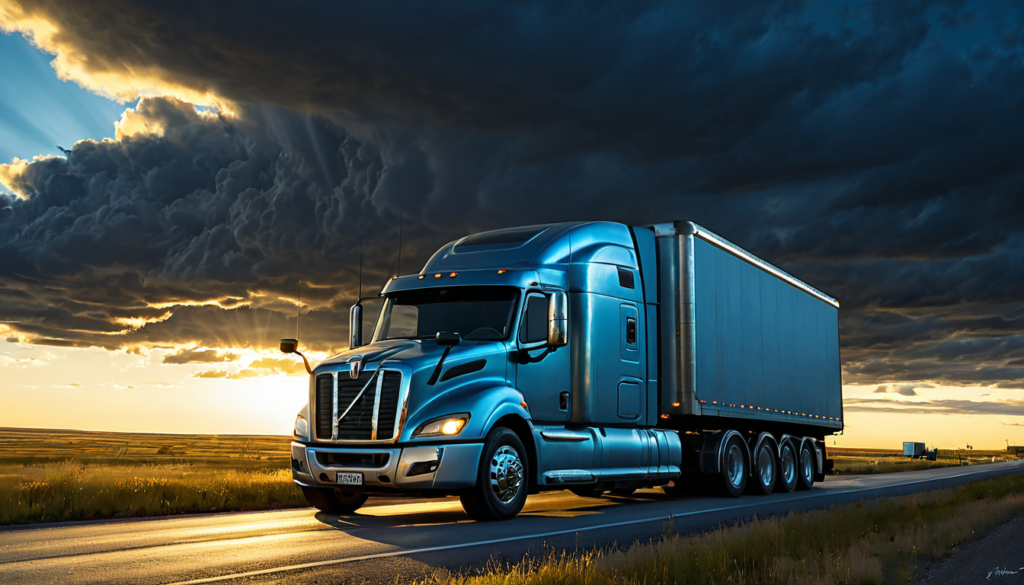
North Dakota 18-Wheeler Accident Attorneys
When 80,000 Pounds Changes Your Life Forever
The ice came out of nowhere. One moment you’re cruising along I-94 near Bismarck, heading home after a long day. The next, an 18-wheeler is jackknifing across both lanes of traffic, its trailer swinging like a steel pendulum toward your windshield. There’s no time to react. No time to brake. Just the deafening crunch of metal and the sudden, terrifying silence that follows.
If you’re reading this, you know that sound. You know the hospital bills piling up on your kitchen table in Fargo. You know the sleepless nights wondering how you’ll pay the mortgage now that you can’t work. You know the frustration of dealing with insurance adjusters who treat you like a number while you’re trying to heal.
You didn’t ask for this. But now you have to fight for what you deserve.
At Attorney911, we’ve spent the last 25 years standing between trucking companies and the families they devastate. Ralph Manginello, our managing partner, has been fighting for accident victims since 1998. He’s admitted to federal court and has gone toe-to-toe with Fortune 500 corporations. Our associate attorney Lupe Peña spent years inside the insurance industry—now he uses that insider knowledge to fight for you. And we speak Spanish. Hablamos Español. Llame al 1-888-ATTY-911.
North Dakota’s highways carry more than just commerce. They carry risk. From the Bakken oil fields to the Red River Valley, our roads see heavy truck traffic battling brutal winters and long, lonely stretches where fatigue can kill just as surely as a drunk driver. When these massive machines collide with passenger vehicles, the physics are brutal. An 80,000-pound truck traveling at 65 mph needs nearly two football fields to stop. When that weight hits a 4,000-pound car, the results are catastrophic.
You need a fighter. You need someone who knows North Dakota’s trucking corridors, its courts, and the specific regulations that govern these cases. You need Attorney911.
Call us now at 1-888-ATTY-911. The consultation is free. You pay nothing unless we win. And the clock is already ticking.
Why North Dakota Highways Are Particularly Dangerous for Truck Accidents
North Dakota’s trucking landscape is unique—and uniquely dangerous. While our state might not have the highest population density, the combination of heavy industry, extreme weather, and vast rural distances creates perfect conditions for devastating 18-wheeler crashes.
The Bakken Oil Boom and Heavy Truck Traffic
The Bakken oil formation transformed western North Dakota. What was once quiet ranchland became one of the busiest freight corridors in America. Thousands of trucks hauling equipment, water, sand, and crude oil traverse narrow county roads and state highways daily. Williston, once a sleepy ranching town, became the fastest-growing city in America during the 2010s, and the truck traffic never slowed down.
This creates a dangerous mix. Oilfield trucks often operate on roads never designed for heavy commercial traffic. They’re carrying hazardous materials under tight deadlines. And they’re sharing space with agricultural vehicles during planting and harvest seasons.
Winter Weather Creates Deadly Conditions
North Dakota winters aren’t just cold—they’re deadly for truckers and passenger vehicles alike. Temperatures can plummet to -40°F. Black ice forms without warning on I-94 and I-29. Blizzards can reduce visibility to zero in minutes, causing multi-vehicle pileups that stretch for miles.
Trucks struggle with these conditions. Brake systems can freeze. Diesel fuel can gel. Tires lose traction on ice-slicked surfaces. And when a driver loses control of an 80,000-pound rig on ice, nothing can stop the destruction.
Rural Isolation Means Delayed Emergency Response
Unlike accidents in urban areas like Fargo or Bismarck, truck crashes in rural North Dakota often happen far from trauma centers. Emergency response times can be 30 minutes or longer. In critical injury cases, that delay can mean the difference between life and death, or between full recovery and permanent disability.
The sparse population also means fewer witnesses. When evidence needs to be preserved, there might not be nearby security cameras or businesses with surveillance footage. That’s why immediate legal intervention is crucial—we send preservation letters within 24 hours because we know how fast evidence disappears in rural North Dakota.
The Transcontinental Corridors
I-94 runs east-west across the entire state, connecting Montana to Minnesota. It’s a major transcontinental freight route carrying goods from Seattle to the Great Lakes. I-29 runs north-south from Kansas City to the Canadian border, serving as a primary artery for agricultural products heading south and consumer goods heading north.
These aren’t just North Dakota roads—they’re national freight corridors. That means you’re sharing space with drivers from across the country who might be fatigued from long hauls, unfamiliar with North Dakota’s winter conditions, or rushing to meet tight delivery schedules.
The Types of 18-Wheeler Accidents We See in North Dakota
Not all truck accidents are the same. The unique geography and industry of North Dakota create specific patterns of crashes that require specialized legal knowledge.
Jackknife Accidents on Ice
A jackknife occurs when a truck’s trailer swings out perpendicular to the cab, creating an L-shape that blocks multiple lanes of traffic. In North Dakota, these accidents often happen during winter storms when a driver hits ice and brakes improperly.
The trailer then becomes a sweeping battering ram that takes out everything in its path—cars, pickups, sometimes other trucks. Survivors often describe the impossibility of avoiding a jackknifing trailer when it happens just feet ahead of them at highway speeds.
Jackknife accidents often stem from FMCSA violations. Under 49 CFR § 393.48, trucking companies must maintain proper brake systems. Under 49 CFR § 392.6, drivers must adjust their speed for road conditions. When they fail to do so, we hold them accountable.
Brake Failure Accidents
Brake problems account for approximately 29% of large truck crashes nationally, and the rate is even higher in North Dakota’s challenging terrain. Long descents on I-94 through the Badlands can overheat brakes, causing “brake fade” where the driver pushes the pedal but the truck doesn’t slow.
Worse, some trucking companies defer maintenance to save money. They let brake pads wear thin. They ignore air brake leaks. They skip the mandatory pre-trip inspections required under 49 CFR § 396.13.
When brakes fail on an 80,000-pound truck coming down a grade near Medora or rolling through the Turtle Mountains, the result is almost always a catastrophic rear-end collision or multi-vehicle pileup.
We pursue these cases aggressively by subpoenaing maintenance records. Every truck must have annual inspections under 49 CFR § 396.17. Drivers must complete daily vehicle inspection reports under 49 CFR § 396.11. When these records show deferred maintenance or ignored defects, we prove negligence.
Oilfield Truck Accidents
The Bakken oil fields create unique hazards. Tanker trucks hauling crude oil or fracking water have high centers of gravity and liquid cargo that “sloshes,” making rol more likely. These trucks often operate on gravel roads or surfaces not designed for heavy loads.
We’ve seen cases where oil companies pressured drivers to operate beyond the 11-hour driving limit mandated by 49 CFR § 395.8. We’ve seen overloaded trucks that exceeded weight limits. We’ve seen improper cargo securement of drilling equipment that came loose and crushed other vehicles.
When an oilfield truck causes an accident in North Dakota, multiple parties may be liable—the driver, the trucking company, the oil company that hired them, and sometimes the loading company that secured the cargo.
Rollover Accidents on Curves
North Dakota might seem flat, but we have terrain that challenges truck drivers. The Pembina Gorge, the Turtle Mountains, and the river valleys along the Missouri and Red Rivers create curves where trucks can roll if drivers take them too fast.
According to FMCSA data, approximately 50% of rollover crashes result from failure to adjust speed on curves. Under 49 CFR § 392.6, motor carriers cannot schedule runs that require exceeding safe speeds. When drivers are pressured to meet unrealistic deadlines, they take chances on curves.
Rollovers are particularly dangerous because the trailer can crush smaller vehicles beneath it, or the truck can block the roadway, causing secondary collisions.
Underride Collisions
Underride crashes are among the most deadly. They occur when a smaller vehicle slides underneath the trailer of an 18-wheeler, shearing off the passenger compartment at windshield level.
North Dakota’s long, straight highways can create conditions where drivers don’t see slow-moving trailers ahead until it’s too late. The federal government requires rear impact guards under 49 CFR § 393.86, but many trailers have inadequate guards or guards that fail in crashes.
These accidents often result in decapitation or severe head trauma. Survivors typically have catastrophic brain injuries requiring lifelong care.
Cargo Spill Accidents
North Dakota’s agricultural economy means trucks hauling wheat, soybeans, and sunflowers share the roads with oilfield traffic. When these loads aren’t properly secured under 49 CFR § 393.100-136, they can spill onto the roadway or shift suddenly, causing rollovers.
We’ve handled cases where grain spills on I-29 caused multiple vehicles to slide off the road. We’ve represented families whose loved ones were killed when unsecured drilling equipment fell from flatbeds.
The cargo securement rules are specific. Tiedowns must meet working load limit requirements. Blocking and bracing must prevent movement. When loading companies cut corners to save time, innocent people pay the price.
Tire Blowouts
Temperature extremes in North Dakota stress truck tires. Summer heat on asphalt can reach 100°F+, while winter cold makes rubber brittle. When tires are improperly maintained—underinflated, worn, or mismatched on dual wheels—they can explode.
A steer tire blowout on an 18-wheeler traveling at 75 mph on I-94 can cause immediate loss of control. The resulting debris—sometimes called “road gators”—can strike windshields and cause secondary accidents.
Under 49 CFR § 393.75, truck tires must meet specific tread depth requirements. Drivers must inspect tires during their pre-trip examinations under 49 CFR § 396.13. When these inspections don’t happen, blowouts do.
Fatigue-Related Crashes
North Dakota’s vast distances between cities mean long, monotonous drives. A trucker hauling from Fargo to Williston faces nearly 300 miles of mostly empty highway. Fall asleep for just three seconds at 70 mph, and you’ve traveled the length of a football field with your eyes closed.
The Hours of Service regulations under 49 CFR Part 395 exist to prevent this. Drivers may drive a maximum of 11 hours after 10 consecutive hours off duty. They can’t drive beyond the 14th consecutive hour after coming on duty. They must take a 30-minute break after 8 cumulative hours of driving.
Yet we see ELD data showing drivers violated these rules—driving 16, 18, sometimes 20 hours straight to meet delivery deadlines. When fatigue causes a driver to drift across the center line or into the shoulder, the results are often head-on collisions or run-off-road crashes.
Rear-End Collisions
A fully loaded truck needs 40% more stopping distance than a passenger car. On North Dakota’s highways, where traffic can slow suddenly for construction, weather, or accidents, truck drivers often don’t have room to stop.
Rear-end truck crashes typically cause catastrophic injuries to the occupants of the front vehicle—whiplash, spinal cord damage, traumatic brain injury, and sometimes death.
Under 49 CFR § 392.11, drivers must not follow more closely than is “reasonable and prudent.” When they tailgate or fail to adjust for conditions, we prove they violated federal safety regulations.
All the Parties Who Could Be Liable for Your North Dakota Truck Accident
Most people assume only the truck driver is responsible for an accident. That’s what the trucking companies want you to think. But in reality, multiple parties may share liability, and that means multiple insurance policies to cover your damages.
The Truck Driver
The driver is the obvious first defendant. They may be liable for:
- Speeding or driving too fast for conditions
- Distracted driving (texting, eating, adjusting GPS)
- Fatigued driving beyond Hours of Service limits
- Impaired driving (alcohol, drugs, or prescription medication)
- Failing to conduct proper pre-trip inspections
- Making improper lane changes or turns
- Following too closely
But drivers often don’t have deep pockets. That’s why we look further up the chain.
The Trucking Company (Motor Carrier)
Under the doctrine of respondeat superior, employers are responsible for their employees’ negligent acts. More importantly, we can hold trucking companies directly liable for:
Negligent Hiring: Did the company check the driver’s record before hiring? Under 49 CFR § 391.51, motor carriers must maintain a Driver Qualification File including:
- A valid commercial driver’s license (CDL)
- Medical examiner’s certificates
- Previous employer verification for 3 years
- Motor vehicle records
- Road test results or equivalent
Negligent Training: Did the company train the driver on winter driving techniques specific to North Dakota conditions? Did they teach proper cargo securement?
Negligent Supervision: Did the company monitor the driver’s ELD data for Hours of Service violations? Did they ignore complaints about unsafe driving?
Negligent Maintenance: Did the company maintain the truck’s brakes, tires, and safety systems according to 49 CFR Part 396?
Trucking companies carry significant insurance—typically $750,000 to $5 million or more. They’re the primary source of recovery in most cases.
The Cargo Owner (Shipper)
When trucks haul oil field equipment, agricultural products, or manufactured goods, the company that owns the cargo may be liable if they:
- Improperly loaded the cargo
- Demanded unrealistic delivery schedules that forced drivers to violate HOS rules
- Failed to disclose hazardous cargo
- Required overweight loading
In North Dakota’s oil patch, we’ve seen oil companies pressure carriers to move equipment “no matter what,” leading to fatigued drivers and skipped inspections.
The Loading Company
Third-party warehouses or loading docks that physically place cargo on trucks must comply with FMCSA cargo securement rules under 49 CFR § 393.100-136. When loaders fail to use sufficient tiedowns, properly balance loads, or secure hazardous materials, they can be held liable for resulting accidents.
The Freight Broker
Brokers arrange transportation between shippers and carriers. Under recent legal developments, brokers may be liable if they negligently selected a carrier with a poor safety record. We investigate whether the broker checked the carrier’s CSA (Compliance, Safety, Accountability) scores before hiring them.
The Truck or Parts Manufacturer
Sometimes the accident isn’t caused by driver error or poor maintenance—it’s caused by defective equipment. We’ve pursued claims against manufacturers for:
- Defective brake systems
- Faulty tires that blow out prematurely
- Defective steering mechanisms
- Inadequate underride guards
- Defective ELD systems
These product liability cases require immediate preservation of the failed component so we can have it analyzed by engineering experts.
The Maintenance Company
When trucking companies outsource maintenance to third-party shops, those shops owe a duty to perform repairs correctly. If a mechanic improperly adjusts brakes, installs defective parts, or signs off on unsafe equipment, they can be held liable.
The Truck Owner (If Different from the Carrier)
In owner-operator arrangements, the individual who owns the tractor may have separate liability for negligent entrustment or failure to maintain their equipment.
Government Entities
Occasionally, poor road design or maintenance contributes to accidents. When North Dakota DOT or county road departments fail to:
- Clear ice and snow from highways
- Post adequate warnings for dangerous curves
- Maintain proper signage
- Repair potholes or road damage
They may share liability. However, sovereign immunity rules apply, and strict notice requirements often limit these claims.
Why Evidence Disappears Fast—And Why You Must Act Within 48 Hours
Trucking companies don’t play fair. Within hours of a serious accident in North Dakota, the trucking company dispatches a “rapid response team” to the scene. These investigators work for the trucking company, not you. Their job is to protect the company’s interests and minimize your claim.
Meanwhile, critical evidence has an expiration date.
The 30-Day Rule for Black Box Data
Commercial trucks contain Electronic Control Modules (ECMs) and Event Data Recorders (EDRs)—the “black box” that records:
- Speed seconds before impact
- Brake application timing and force
- Throttle position
- Engine RPM
- Cruise control status
- Hard braking events
This data can be overwritten in as little as 30 days or with subsequent driving events. If we don’t download it immediately, it’s gone forever. And it often tells a very different story than the driver tells police.
ELD Data Disappears Quickly
Electronic Logging Devices (ELDs) record Hours of Service compliance under 49 CFR § 395.8. This data proves whether the driver was fatigued, falsifying logs, or violating federal driving limits.
FMCSA only requires carriers to retain ELD data for 6 months. After that, it can be legally destroyed. And if the carrier believes litigation is coming, they might “accidentally” delete it sooner.
Maintenance Records Get “Lost”
Under 49 CFR § 396.3, maintenance records must be kept for specific periods. But when a trucking company realizes a serious accident occurred, these records have a way of disappearing or being altered. We’ve seen cases where inspection reports were falsified after the fact to cover up deferred maintenance.
Dashcam Footage Vanishes
Many trucks now have dashcams facing forward and into the cab. This footage can prove distracted driving, fatigue, or traffic violations. But storage is limited—footage is often recorded over within days or weeks.
Witness Memories Fade
In rural North Dakota accidents, witnesses might be the only other people on the road for miles. But memories fade quickly. Details get confused. Contact information gets lost. We need to interview witnesses while their recollections are fresh.
The Spoliation Letter—Your Protection Against Evidence Destruction
When you hire Attorney911, we immediately send a spoliation letter to the trucking company, their insurer, and all potentially liable parties. This legal notice demands preservation of all evidence related to the accident, including:
- ECM and ELD data
- Driver Qualification Files
- Maintenance and inspection records
- Dispatch records and communications
- Dashcam and GPS data
- Cell phone records
- Drug and alcohol test results
Once this letter is sent, destroying evidence becomes “spoliation”—a serious legal violation. Courts can sanction companies for spoliation, instruct juries to assume destroyed evidence would have been unfavorable, or even enter default judgment.
But the letter only works if it goes out fast. That’s why we answer the phones 24/7 at 1-888-ATTY-911.
Understanding the Catastrophic Injuries Caused by North Dakota Truck Accidents
The force of an 80,000-pound truck hitting a passenger vehicle at highway speed causes injuries that change lives forever. At Attorney911, we’ve represented North Dakota families dealing with the aftermath of these devastating crashes.
Traumatic Brain Injury (TBI)
TBI occurs when the brain impacts the inside of the skull due to sudden deceleration or trauma. In truck accidents, this can happen when the head strikes the steering wheel, windshield, or side window, or simply from the violent whipping motion of the crash.
Symptoms include:
- Chronic headaches
- Memory loss and confusion
- Difficulty concentrating
- Personality changes
- Depression and anxiety
- Sleep disturbances
- Sensory problems
Moderate to severe TBI can require lifetime care. Our firm’s experience includes recovering multi-million dollar settlements for TBI victims, including a $5+ million recovery for a logging accident victim who suffered brain injury and vision loss. While every case is different, traumatic brain injuries in North Dakota trucking accidents often result in significant settlements to cover lifelong medical needs and lost earning capacity.
Spinal Cord Injury and Paralysis
The same forces that cause TBI can fracture vertebrae and damage the spinal cord. Depending on the level of injury, victims may suffer:
- Paraplegia: Loss of function below the waist
- Quadriplegia: Loss of function in all four limbs
- Incomplete injuries: Partial function remains but is impaired
Lifetime costs for spinal cord injury can exceed $4.7 million to $25.8 million depending on severity. These figures represent the constant care, home modifications, wheelchairs, and lost earnings these injuries cause.
Amputation
When the passenger compartment crumples under a truck trailer or side underride, victims sometimes lose limbs at the scene or require surgical amputation due to crush injuries. The phantom pain, prosthetic costs ($5,000 to $50,000+ per prosthetic), and psychological trauma last a lifetime.
Our firm secured $3.8+ million for a client who suffered partial leg amputation after a car accident. Trucking accidents, with their greater forces, often result in even more severe outcomes.
Severe Burns
Oil tanker accidents can cause fires and explosions. When fuel spills and ignites, victims suffer:
- Second-degree burns (partial thickness)
- Third-degree burns (full thickness requiring skin grafts)
- Fourth-degree burns (extending to muscle and bone)
Burn treatment involves multiple surgeries, skin grafts, and painful rehabilitation. Scarring and disfigurement cause lasting psychological trauma.
Internal Organ Damage
The blunt force trauma of a truck crash can rupture organs without breaking the skin. Liver lacerations, spleen ruptures, kidney damage, and lung contusions can be life-threatening and may not show symptoms immediately. Always seek immediate medical evaluation after a truck accident, even if you think you’re unhurt.
Wrongful Death
Too often, North Dakota truck accidents are fatal. When a loved one is taken by a trucking company’s negligence, surviving family members can pursue wrongful death claims. These claims recover:
- Lost future income
- Loss of companionship and guidance
- Mental anguish
- Funeral and burial expenses
- Pre-death medical expenses
In North Dakota, you have two years from the date of death to file a wrongful death lawsuit, though you should never wait that long.
North Dakota Law: What You Need to Know
Every state has different rules for personal injury cases. If your accident happened in North Dakota, these are the rules that apply to your case.
You Have Six Years—But Don’t Wait
North Dakota grants six years from the date of injury to file a personal injury lawsuit. That sounds like a long time. It’s not.
Evidence starts disappearing immediately. Witnesses move away. Medical records get harder to obtain. And trucking companies start building their defense the day after the crash.
We’ve seen cases where waiting even a few months meant the black box data was overwritten, maintenance records were “purged,” and witnesses couldn’t be located. The sooner you call Attorney911 at 1-888-ATTY-911, the stronger your case will be.
For wrongful death claims, the limit is two years from the date of death. For minors, different rules may apply.
Modified Comparative Negligence—The 50% Rule
North Dakota follows a “modified comparative negligence” system with a 50% bar. That means:
- If you’re less than 50% at fault, you can recover damages reduced by your percentage of fault
- If you’re 50% or more at fault, you cannot recover anything
Example: If you suffer $1 million in damages but are found 20% at fault, you can recover $800,000. But if you’re found 51% at fault, you recover nothing.
Trucking companies and their insurers will try to blame you. They’ll claim you were speeding, distracted, or contributed to the accident. That’s why you need an attorney who knows how to prove what really happened using ECM data, ELD logs, and accident reconstruction.
Punitive Damages Cap
North Dakota does cap punitive damages—the extra money awarded to punish grossly negligent behavior. The cap is the greater of two times the compensatory damages or $250,000.
However, these caps don’t apply to compensatory damages (your actual losses) or to cases involving intentional misconduct. And if the trucking company destroyed evidence or acted with conscious disregard for safety, we argue for punitive damages to punish that behavior.
FMCSA Regulations: The Rules Trucking Companies Break
The Federal Motor Carrier Safety Administration (FMCSA) created detailed regulations to keep trucks safe. When trucking companies violate these rules, we use the violations to prove negligence.
Part 390—General Applicability
These rules define who must comply with federal trucking regulations. Any vehicle over 10,001 pounds operating in interstate commerce must follow FMCSA rules. This includes most 18-wheelers, even if they’re based in North Dakota.
Part 391—Driver Qualification
Before a driver can legally operate a commercial truck, the company must verify:
- The driver is at least 21 years old (for interstate commerce)
- Holds a valid Commercial Driver’s License (CDL)
- Is medically certified (vision tests, no disqualifying conditions)
- Can read and speak English
- Has passed a road test or equivalent
- Has a clean driving record (or disclosed violations)
The Driver Qualification File must contain all this documentation. When we subpoena these files, we often find the company hired drivers with suspended licenses, recent DUIs, or medical conditions that should have disqualified them.
Part 392—Rules for Driving
This section contains critical safety rules:
- § 392.3: No driving while fatigued, ill, or impaired
- § 392.4: No drugs or Schedule I substances
- § 392.5: No alcohol within 4 hours of driving, no driving with BAC over .04%
- § 392.6: No speeding, no schedules requiring unsafe speeds
- § 392.11: No following too closely
- § 392.80: No texting while driving
- § 392.82: No hand-held mobile phone use
Violations of these rules are strong evidence of negligence.
Part 393—Vehicle Safety and Cargo Securement
This section mandates:
- Brake systems must be properly maintained
- Tires must meet tread depth requirements (4/32″ for steer tires, 2/32″ for others)
- Lighting must work properly
- Cargo must be secured to withstand 0.8g deceleration forward, 0.5g acceleration rearward, and 0.5g lateral forces
When trucks lose cargo on North Dakota highways, or when brake failures cause crashes, we turn to this section to prove violations.
Part 395—Hours of Service
The most commonly violated regulations:
- Maximum 11 hours driving after 10 consecutive hours off duty
- Maximum 14-hour duty window (driving + other duties)
- Required 30-minute break after 8 hours driving
- 60 hours in 7 days or 70 hours in 8 days maximum
- 34-hour restart available
Since December 2017, ELDs are mandatory. They create tamper-resistant records of violations. When we download ELD data, we often find drivers on the road for 16, 18, or 20 hours straight—violating these rules and creating deadly fatigue.
Part 396—Inspection and Maintenance
Trucking companies must:
- Systematically inspect, repair, and maintain vehicles
- Keep maintenance records for 14 months
- Perform annual inspections
- Require drivers to complete pre-trip and post-trip inspections (DVIRs)
When maintenance is deferred to save money, brake systems fail, tires blow out, and steering mechanisms break. We prove these violations through maintenance records that often show the company knew about dangerous defects but did nothing.
Frequently Asked Questions About North Dakota Truck Accidents
How much is my North Dakota truck accident case worth?
Every case is unique. Value depends on injury severity, medical costs, lost wages, pain and suffering, and available insurance. North Dakota trucking companies typically carry $750,000 to $5 million in coverage. We’ve recovered multi-million dollar settlements for catastrophic injuries, but we can’t promise specific dollar amounts without evaluating your specific case. Call 1-888-ATTY-911 for a free evaluation.
Can I still recover if I was partially at fault?
Yes, as long as you were less than 50% at fault. North Dakota uses modified comparative negligence. However, the trucking company’s insurance will try to blame you to reduce their payout. We gather evidence to prove the truck driver and company were primarily responsible.
What if the truck driver was from another state?
It doesn’t matter. Under the FMCSA, trucking companies must comply with federal regulations regardless of where they’re based. If an out-of-state truck caused your North Dakota accident, we can still pursue them in North Dakota courts or federal court. Ralph Manginello is admitted to federal court specifically to handle these interstate cases.
How long will my case take?
Simple cases might settle in 6-12 months. Complex litigation with multiple defendants can take 2-4 years. We prepare every case for trial from day one, which often leads to faster, fairer settlements.
Do I need money to hire Attorney911?
No. We work on contingency. You pay nothing upfront. We only get paid if we win your case. Our fee is 33.33% pre-trial or 40% if we go to trial. We also advance all investigation costs. As client Glenda Walker said, “They fought for me to get every dime I deserved.”
What should I do if the insurance company calls me?
Don’t give a recorded statement. Don’t sign anything. Tell them to speak with your attorney, then call us at 1-888-ATTY-911. As a former insurance defense attorney, Lupe Peña knows their tactics—they’re trained to minimize your claim.
Can undocumented immigrants file truck accident claims in North Dakota?
Yes. Immigration status does not affect your right to compensation for injuries caused by someone else’s negligence. Hablamos Español and can help Spanish-speaking victims navigate the system.
What if the trucking company is based out of state?
We regularly handle cases against national carriers. Federal law allows us to sue out-of-state companies in North Dakota if the accident happened here. Our federal court experience and dual-state licensure (Texas and New York) give us advantages in these interstate cases.
Will my case go to trial?
Most cases settle out of court, but we prepare every case as if it’s going to trial. Insurance companies offer better settlements when they know your attorney is willing to go to court. With 25+ years of experience and the credentials to back it up, Ralph Manginello has the trial experience that makes insurers nervous.
What if I was hurt in the oil fields?
Oil field truck accidents involve unique hazards and often multiple liable parties—the driver, the trucking company, the oil company, and sometimes equipment manufacturers. These cases often involve higher insurance limits due to hazardous materials. We have experience handling complex industrial accidents, including involvement in the BP Texas City explosion litigation.
Why Choose Attorney911 for Your North Dakota Truck Accident Case
You’ve got choices when it comes to legal representation. Here’s why North Dakota families choose Attorney911:
Insider Knowledge That Wins Cases
Lupe Peña isn’t just another associate attorney. He spent years working for a national insurance defense firm. He knows how insurance companies evaluate claims, how they train adjusters to minimize payouts, and when they’re bluffing about their settlement offers. That insider knowledge is your advantage.
Federal Court Experience
Trucking cases often involve interstate commerce and federal regulations. Ralph Manginello’s admission to the U.S. District Court for the Southern District of Texas (and his Texas Bar #24007597) means he can handle complex federal litigation that other attorneys can’t.
Multi-Million Dollar Results
While we can’t guarantee specific outcomes, our track record speaks for itself. We’ve recovered millions for traumatic brain injury victims, amputees, and families who lost loved ones. Currently, we’re litigating a $10 million lawsuit against the University of Houston for hazing-related injuries, demonstrating our willingness to take on powerful institutions.
Family-First Treatment
Our clients aren’t case numbers. As Chad Harris said in his Google review: “You are NOT a pest to them and you are NOT just some client… You are FAMILY to them.” With 251+ reviews and a 4.9-star rating, we deliver on that promise.
Spanish Language Services
Lupe Peña is fluent in Spanish. You don’t need an interpreter. Hablamos Español. Llame al 1-888-ATTY-911.
Three Offices Serving You
While this content focuses on North Dakota, our firm maintains offices in Houston (main office at 1177 West Loop S, Suite 1600), Austin (316 West 12th Street), and Beaumont. We have the resources of a larger firm with the personal touch of a boutique practice.
We Take Cases Other Firms Reject
Donald Wilcox was turned down by one firm before coming to us. We took his case, fought for him, and he got what he called “a handsome check.” If another attorney said you don’t have a case, get a second opinion from Attorney911.
Call Attorney911 Now—Before Evidence Disappears
The trucking company that hit you has lawyers working right now to protect them. Their insurance adjuster has already calculated how little they can pay you. Their rapid response team has documented the scene to minimize their liability.
What are you doing to protect yourself?
Every hour you wait, evidence disappears. Black box data overwrites. Dashcam footage deletes. Witnesses forget. And the statute of limitations clock keeps ticking.
Call Attorney911 at 1-888-ATTY-911 right now. Speak with an attorney who understands North Dakota’s highways, its trucking industry, and the specific laws that govern these cases. Get a free consultation. Pay nothing unless we win. Hablamos Español.
You didn’t ask for this fight. But you deserve someone who’ll fight for you. Ralph Manginello has been winning these battles for over 25 years. He’s ready to fight for you.
1-888-ATTY-911. Call now.