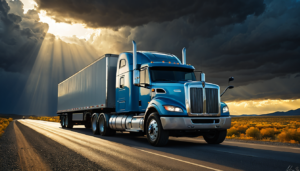
When an 80,000-pound truck loses control on the icy curves of Interstate 90 or jackknifes across the lanes of I-81, the devastation is immediate and often catastrophic. If you or someone you love has been injured in an 18-wheeler accident in Onondaga County, you are facing a crisis that demands immediate, aggressive legal action. The trucking company already has lawyers working to protect their interests. You need someone fighting for yours.
At Attorney911, we understand the unique dangers that commercial trucking poses to drivers across Onondaga County. From the lake-effect snowstorms that turn I-90 into a treacherous ice sheet to the congested corridors near Syracuse where tankers and tractor-trailers navigate tight urban turns, Onondaga County presents specific risks that require local knowledge and legal experience. We have spent over 25 years holding trucking companies accountable for shattering lives in New York and across the country, and we are ready to fight for you.
Why Onondaga County 18-Wheeler Accidents Demand Specialized Legal Experience
Commercial trucking accidents are not simply “bigger car accidents.” They involve federal regulations, corporate defendants with deep pockets, and evidence that begins disappearing within hours of the crash. In Onondaga County, where I-90 serves as a primary corridor for freight moving between Albany and Buffalo, and where I-81 funnels heavy truck traffic through Syracuse, the volume of commercial vehicles creates constant danger for local families.
Ralph Manginello, our managing partner, has been fighting for truck accident victims since 1998. With admission to the U.S. District Court for the Southern District of Texas and the State Bar of New York, he brings federal court experience that matters when your case involves interstate trucking companies. Our firm has recovered over $50 million for injured clients, including multi-million dollar settlements for traumatic brain injuries, amputations, and wrongful death cases. When we say we understand what you are facing, we mean it—we have seen the devastation that occurs when trucking companies cut corners on safety.
What sets us apart is our insider knowledge. Our associate attorney, Lupe Peña, spent years working for a national insurance defense firm. He knows exactly how trucking insurers evaluate claims, train adjusters to minimize payouts, and pressure victims into accepting lowball settlements. Now he uses that knowledge to fight against them. That is your advantage when you choose Attorney911.
Understanding the Dangers of Commercial Trucking in Onondaga County
Onondaga County’s geography creates unique hazards for commercial trucking. The intersection of Interstate 90 and Interstate 81 in Syracuse represents one of the busiest freight junctions in Upstate New York, with thousands of 18-wheelers passing through daily. These trucks carry goods from the Port of New York and New Jersey west toward Chicago, and from Canada south toward Pennsylvania.
Winter Weather Hazards
Unlike the Gulf Coast where our main offices are located, Onondaga County faces severe winter conditions that dramatically increase trucking accident risks. Lake-effect snow from Lake Ontario creates sudden, intense storms that reduce visibility to near zero and coat highways in black ice. When a fully loaded 18-wheeler traveling at 65 mph hits ice, the physics are unforgiving:
- A truck needs nearly 525 feet to stop on dry pavement at highway speeds
- On ice, that distance can triple
- Jackknife accidents occur when drivers brake improperly on slippery surfaces
- Rollover risks increase dramatically on the curved ramps connecting I-90 and I-481
These are not hypothetical scenarios. Every winter, Onondaga County sees multiple pileups involving commercial trucks that failed to adjust for conditions. Under 49 CFR § 392.14, truck drivers are required to exercise “extreme caution” in hazardous conditions, and if they fail to slow down or pull over during whiteout conditions, they violate federal law.
Urban Congestion and Blind Spots
Within Syracuse city limits and the surrounding suburbs of Onondaga County, 18-wheelers navigate tight intersections, school zones, and residential areas where their massive blind spots—known as “No-Zones”—create deadly risks. The right-side blind spot on a commercial truck can swallow an entire passenger vehicle. When truck drivers make wide turns at intersections like those along Erie Boulevard or Route 5, they often swing into opposing lanes, creating “squeeze play” accidents that crush smaller vehicles.
Types of 18-Wheeler Accidents We Handle in Onondaga County
We have seen virtually every type of trucking accident imaginable, but certain patterns emerge repeatedly on Onondaga County roads:
Jackknife Accidents on I-90
A jackknife occurs when the trailer and cab skid in opposite directions, folding like a pocket knife across multiple lanes. These accidents account for approximately 10% of all trucking-related deaths and often result in multi-vehicle pileups. On the straight stretches of I-90 through Onondaga County, jackknives typically occur when:
- Drivers brake suddenly on wet or icy roads (violating 49 CFR § 393.48 regarding brake system safety)
- Speeding beyond conditions (violating 49 CFR § 392.6)
- Empty or lightly loaded trailers lack the weight to maintain traction
The swinging trailer in a jackknife collision sweeps across traffic lanes with devastating force, often causing traumatic brain injuries, spinal cord damage, and multiple fatalities.
Rollover Accidents on Ramps and Curves
The curved interchange ramps connecting I-81 to I-690 or Route 481 to I-90 create treacherous conditions for 80,000-pound vehicles. Approximately 50% of rollover crashes result from failure to adjust speed on curves. When tankers carrying liquid cargo—common given Onondaga County’s position on major fuel transport routes—take curves too fast, the “slosh” effect can shift the center of gravity and cause immediate rollover.
Rollovers frequently involve violations of 49 CFR § 393.100-136 regarding cargo securement. Improperly secured loads shift during transit, destabilizing the trailer and causing the driver to lose control.
Underride Collisions
Among the most fatal types of trucking accidents, underride collisions occur when a passenger vehicle slides underneath the trailer. The height of commercial trailers often shears off the roof of smaller vehicles at windshield level, causing decapitation and catastrophic head trauma.
While 49 CFR § 393.86 requires rear impact guards on trailers manufactured after 1998, these guards often fail in high-speed impacts or are missing entirely. Even more dangerous are side underride collisions, which currently have no federal guard requirement despite causing hundreds of deaths annually in the United States.
Blind Spot and Wide Turn Accidents
The “No-Zone” around an 18-wheeler includes 20 feet directly in front, 30 feet behind, and large blind areas along both sides—particularly the right side. When truck drivers change lanes on I-81 through Syracuse or make wide right turns at intersections like those along Salina Street or James Street, they often strike vehicles in these blind spots.
Winter Weather Pileups
Onondaga County’s lake-effect snow creates conditions where visibility drops to zero within minutes. When truck drivers fail to heed 49 CFR § 392.14 and continue operating in hazardous weather, they often trigger chain-reaction pileups involving dozens of vehicles. These accidents involve complex liability questions regarding whether the driver or trucking company made the call to stay on the road despite weather warnings.
The Federal Regulations That Protect You
The Federal Motor Carrier Safety Administration (FMCSA) establishes strict rules governing commercial trucking. When trucking companies or drivers violate these regulations, they create liability that strengthens your case.
Hours of Service (49 CFR Part 395)
Fatigue causes approximately 31% of fatal truck crashes. Federal law limits drivers to:
- Maximum 11 hours driving after 10 consecutive hours off duty
- No driving beyond the 14th consecutive hour on duty
- Mandatory 30-minute break after 8 hours driving
- 60/70 hour weekly limits requiring a 34-hour restart
Since the ELD Mandate (49 CFR § 395.8) took effect in December 2017, drivers must use Electronic Logging Devices that automatically record driving time. This data—showing whether a driver was speeding, fatigued, or violating hours of service—can be overwritten within 30 days. That is why we send spoliation letters immediately to preserve this critical evidence.
Driver Qualification Standards (49 CFR Part 391)
Before a driver can operate a commercial vehicle, the trucking company must verify they:
- Are at least 21 years old for interstate commerce
- Possess a valid Commercial Driver’s License (CDL)
- Pass a physical examination certifying fitness to drive
- Have an acceptable driving record
- Complete entry-level driver training
The Driver Qualification File must contain all this documentation. When companies hire unqualified drivers—those with suspended licenses, medical conditions, or histories of safety violations—they commit negligent hiring, a direct basis for liability.
Vehicle Maintenance (49 CFR Part 396)
Brake failures cause 29% of large truck crashes. Federal law requires:
- Pre-trip inspections before every drive
- Post-trip inspection reports documenting any defects
- Systematic maintenance programs
- Annual comprehensive inspections
When trucking companies defer maintenance to save money, they create deadly hazards on Onondaga County roads.
Who Can Be Held Liable for Your Injuries?
Unlike standard car accidents where typically only one driver is at fault, 18-wheeler accidents often involve multiple liable parties. We investigate every potential defendant to maximize your recovery:
The Truck Driver can be held personally liable for negligent operation, speeding, distracted driving, or operating under the influence of drugs or alcohol (49 CFR § 392.4 and § 392.5).
The Trucking Company faces vicarious liability under respondeat superior doctrine for their employee’s actions. They can also face direct liability for negligent hiring, negligent training, negligent supervision, or negligent maintenance. Most carry $750,000 to $5 million in insurance coverage—far more than individual drivers.
The Cargo Owner and Loading Company may be liable if improperly secured or overloaded cargo caused the accident. Under 49 CFR § 393.100, cargo must be secured to withstand forward deceleration of 0.8 g—roughly the force of a sudden stop from highway speed.
The Freight Broker who arranged the shipment may be liable for negligently selecting a carrier with a poor safety record or inadequate insurance.
The Maintenance Company that serviced the truck can be liable if negligent repairs or failure to identify safety hazards contributed to the crash.
The Truck or Parts Manufacturer faces product liability if defective brakes, tires, steering systems, or other components caused or contributed to the accident.
Critical Evidence That Disappears Fast
The trucking company is not on your side. Within hours of an accident, they deploy “rapid response teams” to the scene—lawyers and investigators whose sole job is to protect the company, not help you. Evidence critical to your case can vanish within days:
- ECM/Black Box Data: Records speed, braking, and throttle position. Can be overwritten in 30 days.
- ELD Logs: Prove hours of service violations. FMCSA only requires 6-month retention.
- Dashcam Footage: Often deleted within 7-14 days if not preserved.
- Driver Qualification Files: Trucking companies may “lose” these if not immediately demanded.
- Maintenance Records: Prove deferred repairs or known defects.
We send spoliation letters within 24-48 hours of being retained, putting the trucking company on notice that destroying evidence will result in severe court sanctions. This immediate action has saved cases that would otherwise have been lost to “routine” data deletion.
Catastrophic Injuries and Their Long-Term Impact
The physics of an 80,000-pound truck striking a 4,000-pound passenger vehicle create forces that destroy lives. We have helped families throughout New York recover compensation for:
Traumatic Brain Injury (TBI)
The sudden deceleration forces in truck accidents cause the brain to impact the interior of the skull, resulting in concussions, contusions, or diffuse axonal injuries. TBI cases we have handled have resulted in settlements ranging from $1.5 million to $9.8 million, depending on the severity and long-term care needs.
Symptoms include memory loss, personality changes, cognitive deficits, and inability to work. Lifetime care costs can exceed $3 million.
Spinal Cord Injuries
Damage to the spinal cord can result in paraplegia (loss of function below the waist) or quadriplegia (loss of function in all four limbs). These injuries require lifetime care, home modifications, and total loss of earning capacity. Our spinal cord injury settlements have ranged from $4.7 million to $25.8 million.
Amputations
When crush injuries destroy limbs or infections following the accident necessitate surgical removal, victims face prosthetic costs ($5,000-$50,000 per device) requiring replacement every few years, plus extensive rehabilitation. Our amputation cases have settled for between $1.9 million and $8.6 million.
Wrongful Death
When trucking accidents take loved ones, families face not only emotional devastation but financial crisis from lost income, medical bills, and funeral expenses. New York law allows recovery for lost future income, loss of consortium, mental anguish, and punitive damages when gross negligence is proven. Our wrongful death recoveries have ranged from $1.9 million to $9.5 million.
New York State Law: How It Affects Your Case
Statute of Limitations: In New York, you have three years from the date of your trucking accident to file a personal injury lawsuit. For wrongful death claims, the limit is two years. While this provides more time than some states, waiting threatens critical evidence. The trucking company builds its defense from day one—your investigation should start immediately.
Pure Comparative Fault: New York follows pure comparative fault rules. This means you can recover damages even if you were partially at fault, though your recovery will be reduced by your percentage of fault. For example, if you are found 20% at fault and your damages total $1 million, you recover $800,000. Unlike states that bar recovery if you are more than 50% at fault, New York allows recovery even if you are 99% at fault—though practically, cases with high plaintiff fault are difficult to win.
No Punitive Damage Caps: Unlike many states, New York does not cap punitive damages in personal injury cases. When trucking companies act with gross negligence—such as knowingly keeping dangerous drivers on the road, falsifying logbooks, or ignoring maintenance schedules—juries can award unlimited punitive damages to punish the wrongdoer and deter similar conduct.
Insurance Coverage in Trucking Cases
Federal law requires commercial carriers to carry minimum liability insurance far exceeding typical auto policies:
- $750,000 for non-hazardous freight
- $1,000,000 for oil and large equipment
- $5,000,000 for hazardous materials
However, accessing these policies requires understanding complex commercial insurance structures. Trucking companies often carry primary coverage and excess/umbrella policies. When accidents involve multiple liable parties—such as the driver, trucking company, and cargo owner—multiple insurance policies may apply.
Our associate attorney Lupe Peña’s background in insurance defense proves invaluable here. He knows how insurers use software like Colossus to algorithmically undervalue claims, and he knows how to counter these tactics with medical documentation and expert testimony that proves the true extent of your damages.
Frequently Asked Questions: Onondaga County 18-Wheeler Accidents
What should I do immediately after a truck accident on I-90 or I-81 in Onondaga County?
Call 911 immediately. Request medical attention even if you feel okay—adrenaline masks serious injuries. If possible, photograph the scene, the truck’s DOT number (usually on the door), license plates, and your injuries. Get witness contact information. Do not give recorded statements to the trucking company’s insurer. Call Attorney911 at 1-888-ATTY-911 before speaking with any insurance representative.
How long do I have to file a lawsuit in Onondaga County?
New York provides three years for personal injury claims and two years for wrongful death. However, every day you wait, evidence disappears. Black box data overwrites in 30 days. We recommend contacting us within 24-48 hours.
Who can I sue besides the truck driver?
Potentially the trucking company (vicarious liability and negligent hiring), cargo owner, loading company, freight broker, maintenance company, and truck manufacturer. More defendants mean more insurance coverage available for your recovery.
What if the truck driver claims I caused the accident?
New York’s pure comparative fault system allows recovery even if you were partially responsible, though your award is reduced by your fault percentage. More importantly, the truck’s ECM data and ELD logs often tell a different story than the driver’s version. We subpoena this data to prove what really happened.
How much are 18-wheeler accident cases worth?
Values depend on injury severity, medical costs, lost earning capacity, and available insurance. Trucking companies carry $750,000-$5 million in coverage. Our firm has recovered settlements ranging from hundreds of thousands to several million dollars for serious injuries. As Glenda Walker, one of our clients, said: “They fought for me to get every dime I deserved.”
What is a spoliation letter and why does it matter?
A spoliation letter is a formal legal notice demanding preservation of all evidence. Once sent, destroying evidence constitutes “spoliation,” which courts punish with sanctions, adverse jury instructions, or default judgments. We send these within 24 hours of being retained.
Can I afford an attorney?
Yes. We work on contingency—you pay nothing unless we win. Our standard fee is 33.33% pre-trial and 40% if trial is necessary. We advance all investigation costs. As Donald Wilcox, another client, told us: “One company said they would not accept my case. Then I got a call from Manginello… I got a call to come pick up this handsome check.”
Do you handle cases for Spanish-speaking clients in Onondaga County?
Sí. Hablamos Español. Associate attorney Lupe Peña provides fluent Spanish representation without interpreters. Llame al 1-888-ATTY-911 para una consulta gratis.
What if my loved one was killed in a trucking accident?
We are deeply sorry for your loss. New York allows wrongful death claims by surviving spouses, children, and parents to recover lost future income, loss of parental guidance, mental anguish, funeral expenses, and punitive damages if gross negligence is proven.
How long will my case take?
Simple cases may resolve in 6-12 months. Complex litigation involving multiple defendants or catastrophic injuries may take 18-36 months. We work to resolve cases efficiently while maximizing recovery. As Angel Walle noted: “They solved in a couple of months what others did nothing about in two years.”
What types of injuries qualify for million-dollar settlements?
Catastrophic injuries including traumatic brain injury, spinal cord damage resulting in paralysis, amputations, severe burns covering large body areas, and wrongful death typically support seven-figure recoveries, particularly when clear liability and adequate insurance exist.
Will my case go to trial?
Approximately 98% of personal injury cases settle before trial. However, we prepare every case as if it is going to trial. Insurance companies offer better settlements when they know your attorney has the resources and experience to take a case to verdict. Ralph Manginello’s 25+ years of federal and state court experience sends a clear message.
What if the trucking company is from out of state?
Federal courts have jurisdiction over interstate trucking cases. Ralph Manginello’s admission to the U.S. District Court and dual New York/Texas bar licensure allows us to pursue out-of-state carriers effectively, whether they operate from Texas, Florida, or California.
How do you prove the driver was fatigued?
We subpoena Electronic Logging Device (ELD) data showing hours of service violations, review dispatch records showing unrealistic delivery schedules, and analyze the driver’s pay structure (per-mile pay incentivizes driving while fatigued).
What if road conditions contributed to the accident?
New York State, Onondaga County, or the City of Syracuse may bear partial liability for inadequate road design, poor maintenance, or failure to clear snow/ice. These claims have strict notice requirements—sometimes as short as 90 days—making immediate legal consultation critical.
Can I still recover if I was partially at fault for the accident?
Under New York’s pure comparative negligence law, yes. Even if you were 50% at fault, you recover 50% of your damages. However, insurance companies will try to inflate your fault percentage to minimize payouts. We gather evidence to minimize your allocated fault and maximize your recovery.
What records should my attorney obtain from the trucking company?
We pursue the Engine Control Module (ECM) data, ELD logs, Driver Qualification File, maintenance records, dispatch logs, drug and alcohol test results, cell phone records, and the physical truck itself for inspection.
How do I choose the right trucking accident attorney in Onondaga County?
Look for experience specifically in commercial trucking litigation (not just car accidents), federal court admission, a track record of multi-million dollar results, and resources to take on Fortune 500 trucking companies. Ask if the attorney has handled BP Texas City explosion-level litigation against major corporations—we have.
What if the trucking company offers a quick settlement?
Do not accept it. Quick offers are calculated to pay you less than you deserve before you understand the full extent of your injuries. Once you accept, you waive all future claims. Consult an attorney first. As Chad Harris told us: “You are NOT just some client… You are FAMILY to them.” We do not let family get taken advantage of by insurance companies.
Your Fight Starts With One Call
The trucking company that hit you has already called their lawyers. Their insurance adjuster is already looking for ways to pay you less. Evidence is being lost as you read this. What you do next matters.
Ralph Manginello has spent over 25 years making trucking companies pay for the devastation they cause. Our firm has recovered over $50 million for injured clients, including a $5 million settlement for a traumatic brain injury victim struck by a falling log, a $3.8 million recovery for a client who lost a limb following a car accident, and multi-million dollar verdicts for families devastated by 18-wheeler crashes. We are currently litigating a $10 million lawsuit against a major university—a case featured on KHOU 11, ABC13, and the Houston Chronicle—proving we have the resources and tenacity to take on powerful institutions.
With offices in Houston, Austin, and Beaumont, Attorney911 serves trucking accident victims nationwide, including throughout Onondaga County and Upstate New York. We offer 24/7 availability because legal emergencies do not wait for business hours.
Do not let the trucking company decide what your future looks like. Call Attorney911 today at 1-888-ATTY-911 (1-888-288-9911) for a free, confidential consultation. You pay nothing unless we win. Hablamos Español.
Your recovery starts now.