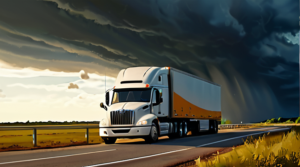
When an 80,000-pound truck changes your life on the road to Elizabeth City, you need more than legal help—you need a fighter who knows Pasquotank County. Ralph Manginello has spent over 25 years taking on trucking companies and winning. Our firm includes a former insurance defense attorney who knows their playbook from the inside. And we’ve recovered over $50 million for families just like yours. If you’ve been hurt in an 18-wheeler accident anywhere in Pasquotank County—whether on US-17, near the Coast Guard base, or out by the peanut fields—call us immediately at 1-888-ATTY-911. Evidence disappears fast, and the trucking company is already building their defense.
Why Pasquotank County Trucking Accidents Hit Different
Pasquotank County sits at the crossroads of North Carolina’s coastal commerce. From the agricultural trucks hauling peanuts and cotton from local farms to the heavy traffic feeding Elizabeth City and the Coast Guard Air Station, our roads see constant commercial pressure. US-17 runs right through the heart of our community, carrying freight north toward Hampton Roads and south toward the Outer Banks. When these trucks enter Pasquotank County, they’re often pushing tight deadlines, navigating narrow coastal roads, or handling cargo that shifts unexpectedly on our rural highways.
The mix is dangerous. Agricultural vehicles share asphalt with high-speed interstate traffic. Coastal weather—sudden thunderstorms, hurricane evacuations, fog rolling in from the Albemarle Sound—creates hazardous conditions that out-of-state truckers rarely understand. And when accidents happen here, they often involve multiple vehicles on congested corridors like US-17 or US-158, leaving families devastated.
We’ve seen what happens when trucking companies think Pasquotank County victims won’t fight. They’re wrong. With 25+ years of federal court experience and admission to the U.S. District Court for the Southern District of Texas, Attorney911 brings the resources to handle complex interstate cases right here in northeastern North Carolina. We know the difference between a federal shipping violation and a local load restriction, and we know how to prove when a carrier broke the law.
The 10 Mandatory Proof Points That Build Your Case
Our firm isn’t built on empty promises. When you call Attorney911, you’re getting:
-
Ralph Manginello’s 25+ Years of Experience — Since 1998, our managing partner has fought for truck accident victims. Admitted to federal court and the State Bars of Texas and New York, he brings multi-state jurisdictional knowledge that’s critical when trucking companies operate across borders.
-
Lupe Peña’s Insurance Defense Insider Knowledge — Our associate attorney spent years defending insurance companies. He knows exactly how they calculate offers, when they’re bluffing, and how to counter their delay tactics. That’s your advantage at the negotiating table.
-
Current $10 Million Litigation Capability — We’re currently litigating a $10 million hazing lawsuit against the University of Houston and Pi Kappa Phi. This demonstrates we have the resources and courtroom stamina to take on institutional defendants with deep pockets.
-
Fortune 500 Experience — We’ve gone toe-to-toe with the world’s largest corporations, including BP in the Texas City Refinery explosion litigation that killed 15 workers and injured 170. When we say we can handle corporate trucking giants, we mean it.
-
Documented Multi-Million Results — Our track record includes a $5+ million settlement for a traumatic brain injury victim struck by a falling log, a $3.8+ million recovery for a client who suffered partial leg amputation after a car accident complication, and a $2.5+ million truck crash settlement. We’ve recovered millions for families facing catastrophic injuries.
-
4.9-Star Trust — With 251+ Google reviews, our clients speak for us. As Chad Harris said, “You are NOT just some client… You are FAMILY to them.” Donald Wilcox, whose case was rejected by another firm before we won him a “handsome check,” will tell you we take the cases others won’t touch.
-
Three-State Reach — While our roots are in Texas with offices in Houston, Austin, and Beaumont, our federal admissions and co-counsel network allow us to serve Pasquotank County with the same aggressive representation.
-
Zero Upfront Cost — We work on strict contingency. You pay nothing—literally zero—unless we win. We advance all investigation expenses. The standard rate is 33.33% pre-trial, 40% if we go to trial, but you never see a bill unless we recover for you.
-
Spanish-Language Representation — Hablamos Español. Lupe Peña is fluent in Spanish and provides direct representation without interpreters. If your family speaks Spanish as a primary language, we communicate clearly in your preferred language. Llame al 1-888-ATTY-911.
-
24/7 Emergency Response — Our toll-free number 1-888-ATTY-911 works around the clock. When a truck hits you at 2 AM on NC-344, you shouldn’t wait until business hours for help.
The 13 Types of 18-Wheeler Accidents That Change Pasquotank County Lives
Not all truck crashes are the same. Federal regulations under 49 CFR Parts 390-399 govern specific safety standards, and different accident types indicate different violations. Here’s what we see on Pasquotank County roads:
Jackknife Accidents
A jackknife occurs when the trailer swings perpendicular to the cab, often blocking multiple lanes of US-17 or US-158. This typically happens when a driver brakes suddenly on wet roads—common during our sudden coastal thunderstorms—or when their trailer is empty and lacks proper weight distribution. Under 49 CFR § 393.100, cargo must be secured to prevent shifting that affects vehicle stability. When a trailer jackknifes because cargo slid forward, that’s a federal violation.
Jackknife accidents often trigger multi-vehicle pileups on our narrow coastal highways. The trailer sweeps across the road at angles that give motorists no escape. Evidence to gather includes skid mark analysis showing the trailer’s angle, ECM data revealing brake application timing, and cargo manifest documentation. Injuries range from spinal cord damage to traumatic brain injury when vehicles are struck by the swinging trailer.
Rollover Accidents
Pasquotank County’s agricultural routes see frequent rollovers when trucks take curves too fast—particularly on rural roads connecting farms to processing facilities. A fully loaded truck weighing 80,000 pounds has a high center of gravity. 49 CFR § 392.6 prohibits operating at speeds that would require exceeding safe limits for curves. When a driver rolls a truck on the winding approaches to Elizabeth City, they’re often violating hours-of-service rules under Part 395, driving fatigued and failing to adjust for road conditions.
Rollovers crush smaller vehicles beneath the trailer, cause fuel fires, and spill cargo across the roadway. We investigate ECM speed data through curves, load distribution records, and driver training documentation. These cases often yield settlements exceeding $1.9 million due to the catastrophic nature of crushing injuries.
Underride Collisions
Among the most fatal accidents in Pasquotank County are underride collisions, where a passenger vehicle slides under the trailer. Rear underride happens when a truck stops suddenly on US-17; side underride occurs during lane changes near the Coast Guard base. 49 CFR § 393.86 requires rear impact guards on trailers manufactured after January 26, 1998, designed to prevent underride at 30 mph impacts. However, compliance is spotty, and no federal law mandates side underride guards despite their proven lifesaving potential.
These accidents often result in decapitation or catastrophic head and neck trauma. They are almost always fatal. We demand underride guard inspection records, rear lighting compliance documentation, and post-crash guard deformation analysis. The emotional trauma to families necessitates compassionate but aggressive legal action.
Rear-End Collisions
An 18-wheeler needs approximately 525 feet to stop at 65 mph—nearly two football fields. On congested Pasquotank County roads, especially during tourist season when traffic backs up toward the Outer Banks, truckers often follow too closely. 49 CFR § 392.11 explicitly prohibits following more closely than is “reasonable and prudent.”
When a truck rear-ends a stopped vehicle on US-17 near the Virginia state line, we examine ECM data for following distance, ELD records for fatigue analysis, and cell phone records for distraction. Brake maintenance records under 49 CFR § 396.3 often reveal deferred repairs that contributed to the crash.
Wide Turn Accidents (“Squeeze Play”)
The “squeeze play” happens when a truck swings left before making a right turn, creating a gap that smaller vehicles enter—only to be crushed when the truck completes its turn. This is particularly dangerous on narrow Elizabeth City streets or at rural intersections where agricultural trucks operate. 49 CFR § 392.2 requires adherence to traffic laws, including proper signaling and safe turning techniques.
We analyze turn signal activation data, mirror condition records, and driver training on proper turning procedures. These accidents cause sideswipe injuries, crushing, and often involve pedestrians or cyclists in downtown areas.
Blind Spot Accidents (“No-Zone”)
Trucks have four major blind spots: 20 feet in front, 30 feet behind, and large areas along both sides—especially the right side. 49 CFR § 393.80 mandates mirrors providing clear rear views, but improperly adjusted or damaged mirrors violate federal law. When a truck changes lanes on the four-lane sections of US-17 and strikes a vehicle in its blind spot, the trucking company may be liable for inadequate mirror maintenance or driver training.
We subpoena mirror adjustment records, lane change data from telematics, and dashcam footage. These accidents cause loss of control, often leading to secondary crashes on Pasquotank County’s busy corridors.
Tire Blowout Accidents
The scorching summer pavement on NC highways and the agricultural debris on rural roads create perfect conditions for tire failures. 49 CFR § 393.75 requires minimum tread depths: 4/32″ on steer tires, 2/32″ on others. When a steer tire blows on US-158 near the Camden County line, the driver often loses control immediately.
“Road gators”—shredded tire debris—cause thousands of secondary accidents annually. We demand tire maintenance logs, inflation records, and vehicle weight documentation from weigh stations. Manufacturing defect analysis of the failed tire may reveal additional liable parties.
Brake Failure Accidents
Brake problems contribute to approximately 29% of large truck crashes. 49 CFR § 396.3 requires systematic inspection and maintenance, while § 396.11 mandates driver post-trip reports on brake condition. When brakes fail on a descent into Elizabeth City or on the approach to the Pasquotank River bridges, the result is high-speed impact and multi-vehicle pileups.
We immediately subpoena maintenance records, out-of-service inspection histories, and ECM data showing brake application effectiveness. If the trucking company deferred maintenance to save costs, punitive damages may be available under North Carolina law.
Cargo Spill and Shift Accidents
Pasquotank County’s agricultural economy generates massive truck traffic hauling peanuts, cotton, and produce. 49 CFR §§ 393.100-136 establish strict cargo securement standards requiring tiedowns that withstand 0.8g deceleration forces. When improperly secured agricultural loads shift during transit or spill onto US-17, they create rollover hazards and road debris that causes secondary crashes.
We examine loading company records, tiedown specifications, and shipper instructions. The cargo owner, loader, and trucking company may all share liability for these dangerous incidents.
Head-On Collisions
When fatigue, distraction, or impairment causes a truck to cross into oncoming traffic on rural Pasquotank County roads, the closing speeds are often fatal. 49 CFR § 392.3 prohibits operating while ability is impaired by fatigue or illness. ELD data and hours-of-service records under Part 395 often reveal violations where drivers exceeded 11-hour driving limits or failed to take mandatory 30-minute breaks.
These accidents require immediate preservation of cell phone records, medical certification files, and drug testing results under 49 CFR Part 382.
T-Bone and Intersection Accidents
Trucks failing to yield at red lights or stop signs on NC-344 or at rural intersections cause devastating broadside impacts. These often involve wide-turn miscalculations or running red lights due to brake failures or driver inattention. Dashcam footage and intersection surveillance from businesses near Elizabeth City become critical evidence.
Sideswipe Accidents
Lane drifting due to fatigue or distraction causes sideswipes on the narrower sections of US-17. These can trigger loss of control and secondary collisions, particularly dangerous during Pasquotank County’s summer tourist season when road shoulders are soft.
Override Accidents
Similar to underride but reversed, override occurs when a truck drives over a smaller vehicle in front. This happens when drivers fail to account for stopping distances or when brake systems fail. Given North Carolina’s contributory negligence rules—where even 1% fault bars recovery—proving 100% truck driver negligence is crucial in these cases.
All 10 Liable Parties We Investigate After a Pasquotank County Crash
Most firms only sue the driver and trucking company. We dig deeper. Under doctrines of respondeat superior, negligent hiring, and product liability, multiple insurance pools may cover your injuries:
1. The Truck Driver — Direct negligence for speeding, distraction (cell phone use under 49 CFR § 392.82 prohibited), impairment, or fatigue violations.
2. The Trucking Company/Motor Carrier — Vicarious liability for their employee’s actions plus direct negligence for negligent hiring (failure to check background under 49 CFR § 391.51), negligent training, negligent supervision, and negligent maintenance under Part 396.
3. Cargo Owner/Shipper — Liability for improper loading instructions, overweight requirements, or failure to disclose hazardous materials under 49 CFR Part 397.
4. Cargo Loading Company — Third-party loaders who physically secured the load may be liable under § 393.100 for securement failures.
5. Truck/Trailer Manufacturer — Defective brake systems, stability control, or fuel tank placement may trigger product liability claims.
6. Parts Manufacturer — Defective tires, brake components, or lighting systems that failed and caused the crash.
7. Maintenance Company — Third-party mechanics who negligently repaired or failed to identify critical safety issues.
8. Freight Broker — Negligent selection of carriers with poor safety records or inadequate insurance verification.
9. Truck Owner — In owner-operator arrangements, the owner may be liable for negligent entrustment or maintenance failures.
10. Government Entities — State of North Carolina or Pasquotank County may be liable for dangerous road design, inadequate signage, or failure to maintain safe road conditions—though sovereign immunity and strict notice requirements apply.
The 48-Hour Evidence Clock: Why Time Destroys Trucking Cases
Here’s what most Pasquotank County accident victims don’t know: the trucking company has already called their lawyers. Before the ambulance arrives, rapid-response teams are en route to protect evidence that could prove their negligence. You need to move faster.
Critical Evidence That Disappears:
- ECM/Black Box Data: Overwrites in 30 days or with new driving events. This data shows speed, brake application, and throttle position at the moment of impact.
- ELD Data: Federal law only requires 6-month retention of hours-of-service records.
- Dashcam Footage: Often deleted within 7-14 days.
- Surveillance Video: Local businesses near Elizabeth City or along US-17 typically overwrite security footage within 30 days.
- Physical Evidence: The truck itself may be repaired, sold, or scrapped.
Our Immediate Spoliation Protocol:
Within 24 hours of being retained, we send formal spoliation letters to every potentially liable party. Under North Carolina law, once a preservation demand is received, destroying evidence can result in:
- Adverse jury instructions (jury told to assume destroyed evidence was unfavorable)
- Monetary sanctions
- Default judgment in extreme cases
We demand preservation of:
- ECM/ELD data and event data recorders
- Driver Qualification Files (medical certifications, drug tests, training records under 49 CFR § 391.51)
- Maintenance and inspection records (Part 396)
- Dispatch logs and communication records
- GPS and telematics data
- Cell phone records
- The physical truck and failed components
Catastrophic Injuries and Documented Settlement Ranges
18-wheeler accidents cause catastrophic injuries due to the 25-to-1 weight disparity between trucks and cars. We’ve recovered multi-million dollar settlements for Pasquotank County families because we understand the lifetime costs of these injuries:
Traumatic Brain Injury (TBI): From concussions to severe impairment requiring 24/7 care. Symptoms include memory loss, personality changes, and cognitive deficits. Settlement range: $1,548,000 – $9,838,000+
Spinal Cord Injury: Paraplegia and quadriplegia require lifetime medical care, home modifications, and vocational retraining. Settlement range: $4,770,000 – $25,880,000+
Amputation: Whether traumatic (at the scene) or surgical (due to infection/crushing), limb loss requires prosthetics ($5,000-$50,000+ each), rehabilitation, and psychological counseling. Settlement range: $1,945,000 – $8,630,000
Severe Burns: Fuel fires and hazmat spills cause disfigurement requiring multiple graft surgeries and ongoing pain management.
Wrongful Death: When a trucking accident kills your loved one on Pasquotank County roads, compensation includes lost future income, loss of consortium, mental anguish, and funeral expenses. Settlement range: $1,910,000 – $9,520,000
As our client Glenda Walker said, “They fought for me to get every dime I deserved.” We don’t settle for less than full compensation for past, present, and future damages—including non-economic damages for pain and suffering that have no price tag but deserve recognition.
Insurance Minimums and Nuclear Verdicts
Federal law requires trucking companies to carry minimum liability insurance far exceeding typical auto policies:
- $750,000 for non-hazardous freight
- $1,000,000 for oil, petroleum, and large equipment
- $5,000,000 for hazardous materials
Many carriers carry $1-5 million in coverage. Unlike car accidents where you might face a $30,000 policy limit, trucking accidents provide the coverage necessary for catastrophic injury compensation—if you know how to access it.
Recent “nuclear verdicts” demonstrate what juries award when trucking companies act with gross negligence. In 2024, a Missouri jury awarded $462 million in an underride case. A 2021 Florida case resulted in a $1 billion verdict ($100 million compensatory, $900 million punitive) for negligent hiring practices. While every Pasquotank County case is unique, these verdicts show that juries will punish trucking companies that put profit over safety.
Critical North Carolina Law for Pasquotank County Victims
Statute of Limitations: In North Carolina, you have three years from the date of your injury to file a personal injury lawsuit, and two years for wrongful death claims. However, waiting even weeks risks evidence destruction. Contact us immediately at 1-888-ATTY-911.
Contributory Negligence Warning: North Carolina is one of only five jurisdictions using “contributory negligence.” If you are found even 1% at fault for the accident, you may be barred from recovering anything. This harsh rule makes evidence preservation and legal representation critical from day one. If the trucking company claims you were partially responsible for the crash on US-17, you need aggressive representation to prove 100% truck driver fault.
Damages Caps: Unlike some states, North Carolina caps punitive damages at the greater of three times compensatory damages or $250,000 (N.C. Gen. Stat. § 1D-25). However, economic and non-economic compensatory damages face no statutory caps in personal injury cases.
Frequently Asked Questions for Pasquotank County Truck Accident Victims
What should I do immediately after an 18-wheeler accident in Pasquotank County?
Call 911, seek medical attention immediately, photograph the scene and all vehicles, get the truck’s DOT number and driver information, collect witness contacts, and call Attorney911 at 1-888-ATTY-911 before speaking to any insurance adjuster.
Should I talk to the trucking company’s insurance adjuster?
Never give a recorded statement. Insurance adjusters are trained to minimize your claim. As our associate Lupe Peña knows from his years in insurance defense, they use your words against you. Let us handle all communications.
Who can be sued after a trucking accident?
Potentially the driver, trucking company, cargo owner, loading company, truck manufacturer, parts maker, maintenance company, freight broker, truck owner, and even government entities if road design contributed. We investigate all possibilities.
What is a spoliation letter and why does it matter?
It’s a legal notice demanding preservation of evidence. We send these within 24 hours to prevent the trucking company from destroying ECM data, maintenance logs, or driver records critical to your case.
How long do I have to file a lawsuit in North Carolina?
Three years for personal injury, two years for wrongful death. But waiting risks evidence loss. Evidence critical to your Pasquotank County case can disappear within 30 days.
What if the truck driver was an independent contractor?
Both the driver and the contracting motor carrier may be liable. We examine lease agreements and insurance coverage to ensure all responsible parties are held accountable.
How much is my case worth?
It depends on injury severity, medical costs, lost wages, and available insurance. Commercial trucks carry $750,000 to $5 million in coverage. We’ve recovered settlements ranging from $1.9 million to over $5 million for catastrophic injuries.
Can I still recover if I was partially at fault?
In North Carolina, contributory negligence rules are strict. If you’re found even 1% at fault, you may recover nothing. This makes immediate legal representation and evidence gathering crucial to prove 100% truck driver negligence.
Do you handle cases for Spanish-speaking families in Pasquotank County?
Yes. Lupe Peña is fluent in Spanish and represents clients directly without interpreters. Hablamos Español. Llame al 1-888-ATTY-911.
What if my loved one was killed in the accident?
We pursue wrongful death claims under North Carolina’s 2-year statute of limitations, seeking compensation for lost income, loss of companionship, mental anguish, and funeral expenses. We’ve recovered millions for families in these devastating cases.
Will my case go to trial?
Most settle, but we prepare every case for trial. Insurance companies offer better settlements when they know your attorney will go to court. Ralph Manginello has 25+ years of trial experience, including federal court litigation.
How quickly can you respond to a crash in Pasquotank County?
Immediately. We have networks in northeastern North Carolina and can deploy investigators to preserve evidence at the scene on US-17, NC-344, or anywhere in Elizabeth City and surrounding areas.
What FMCSA violations should I look for?
Hours of service violations (Part 395), false log entries, brake failures (Part 396), cargo securement failures (Part 393), unqualified drivers (Part 391), and drug/alcohol violations (Part 382) are the most common.
How is a truck’s black box different from a car’s?
Commercial trucks have ECMs and ELDs recording speed, braking, throttle, hours of service, and GPS location. This data is objective and often contradicts driver statements.
What if the trucking company goes bankrupt?
We investigate all insurance policies, including umbrella coverage, and pursue other liable parties (brokers, shippers, maintenance companies) to ensure you receive compensation even if the carrier files for bankruptcy.
Do I have to pay upfront for representation?
No. We work on contingency. You pay nothing unless we win. We advance all costs. Call 1-888-ATTY-911 for a free consultation.
How do you prove the driver was fatigued?
We analyze ELD data for hours-of-service violations under 49 CFR § 395, examine driver logs, dispatch records, and payroll records. Fatigue causes approximately 31% of fatal truck crashes.
What if road conditions contributed to the crash?
Heavy rain, fog, or hurricane debris on Pasquotank County roads may trigger liability. We analyze whether the driver adjusted speed appropriately under 49 CFR § 392.6 and whether government entities failed to maintain safe roads.
Can I sue for PTSD after a trucking accident?
Yes. Mental anguish damages are recoverable under North Carolina law. Documentation from psychologists or psychiatrists is essential for these claims.
For more insights, watch our video guides: “The Victim’s Guide to 18-Wheeler Accident Injuries” and “The Definitive Guide To Commercial Truck Accidents” on our YouTube channel.
Your Next Step: Call Attorney911 Now
The trucking company that hit you has lawyers. They have insurance adjusters. They have rapid-response teams protecting their interests. Who’s protecting yours?
Ralph Manginello has spent 25 years fighting for families in Pasquotank County and across the nation. Our firm includes a former insurance defense attorney who knows every trick the trucking companies will use. We’ve recovered over $50 million, including multi-million dollar verdicts for brain injuries, amputations, and wrongful death.
As client Ernest Cano said, “Mr. Manginello and his firm are first class. Will fight tooth and nail for you.” And as Angel Walle experienced, “They solved in a couple of months what others did nothing about in two years.”
Don’t let evidence disappear. Don’t let the trucking company build their defense while you wait. The clock started the moment that truck hit you. Within 48 hours, critical evidence can be overwritten.
Call Attorney911 now at 1-888-ATTY-911 (1-888-288-9911). We’re available 24/7. Hablamos Español. There is no fee unless we win, and we advance all costs. You’ve been through enough. Let us fight for every dime you deserve.
Attorney911. Because trucking companies shouldn’t get away with it. 1-888-ATTY-911.